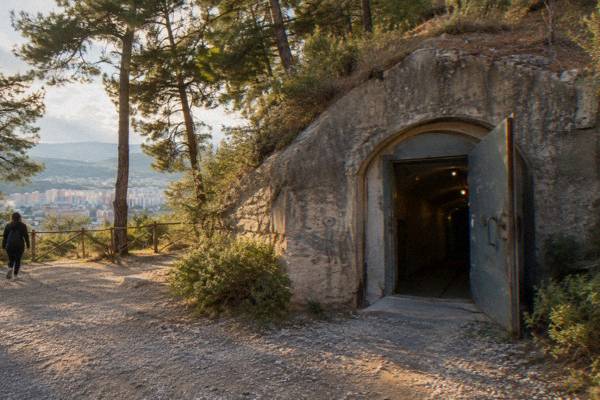
How Many Bunkers Are There In Albania?
The commonly cited estimate of Albania's concrete bunker count, why they were built, and where to see them in Tirana today, including Bunk'Art 1 and Bunk'Art 2.
Albania's communist government planted small concrete bunkers across the country for decades, and the estimate people quote most often, about 173,000 of them, is a reported figure rather than an official count. Tirana, the capital, holds the two bunkers you can actually walk through as museums, Bunk'Art 1 behind the Dajti cable car lower station and Bunk'Art 2 a two-minute walk from Skanderbeg Square.
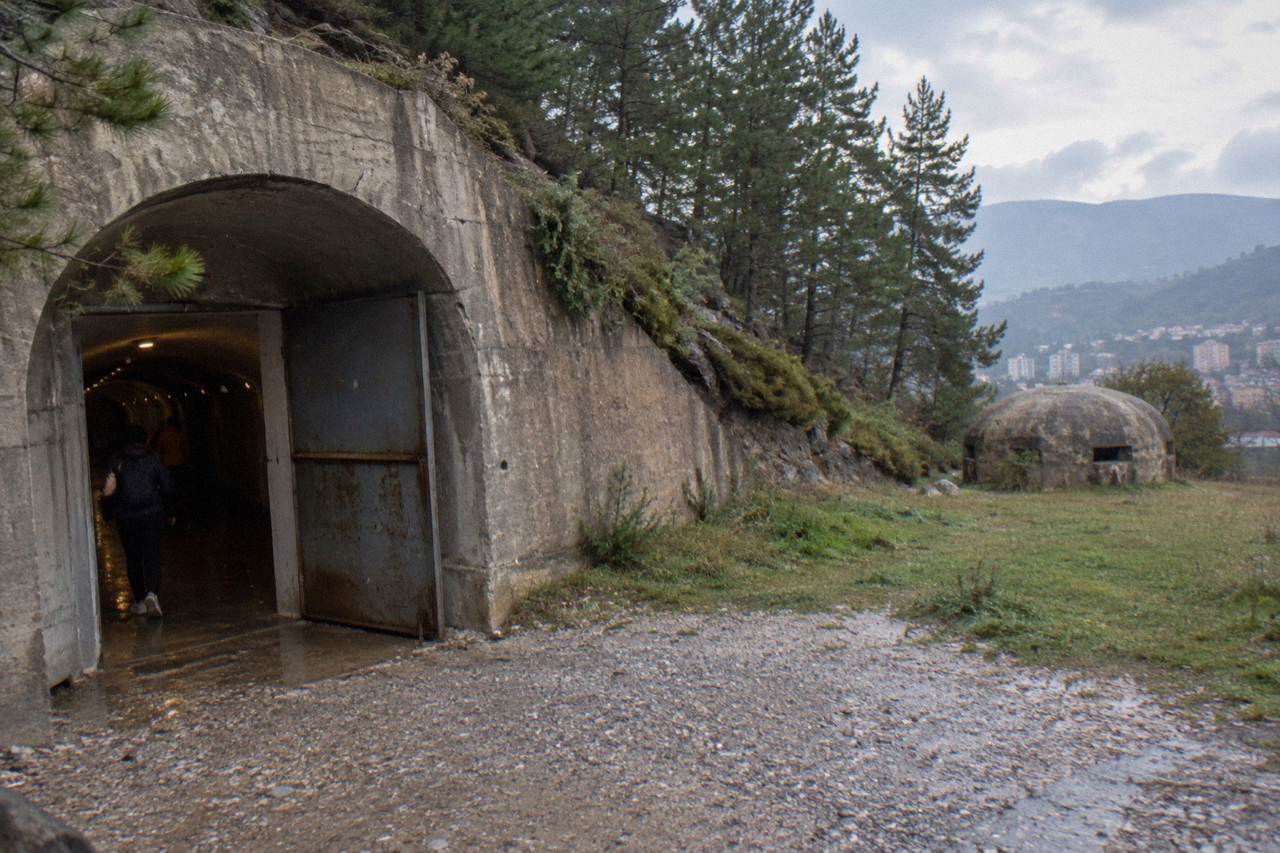
The figure quoted almost everywhere is about 173,000 concrete bunkers, and it is an estimate, not an official count. Estimates differ between sources, and the much larger number sometimes circulated, 750,000, has no archival support behind it. Treat roughly 173,000 as the commonly cited figure and expect the true surviving number today to be far lower, since thousands were demolished, buried or recycled after 1991.
The estimate covers the small mushroom-shaped fighting positions and larger command structures built during the communist years, which ran from 1944 to 1991 per standard histories. Reports attribute the programme to Enver Hoxha's government and its fixation on invasion defence. Nothing in the current sources gives a precise surviving count, and anyone who claims one is rounding an estimate.
Why the uncertainty? The bunkers were spread over mountains, fields, coastlines and city outskirts, many were never mapped in a single register, and large numbers were removed after the regime fell. What survives is uneven: some sit as monuments, like the Postbllok memorial in central Tirana, some were turned into museums, and many were simply broken up for scrap and aggregate.
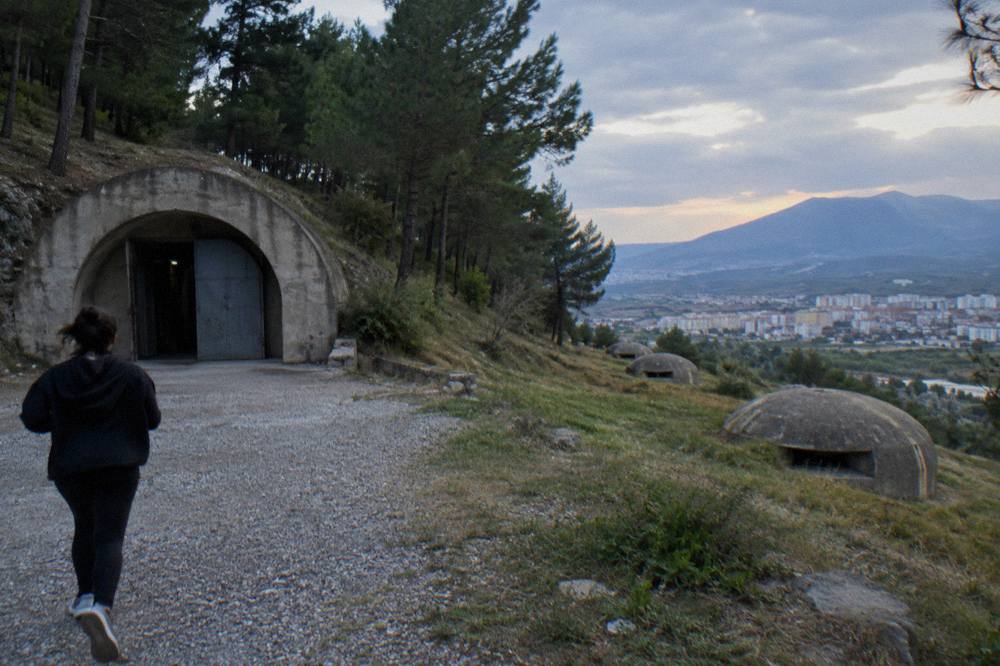
For visitors, the practical takeaway is simpler than the arithmetic. You will see bunkers without looking hard, along roads, on hillsides above Tirana, near beaches. And the two largest, most deliberate structures of the programme, the leadership shelter now called Bunk'Art 1 and the Interior Ministry bunker called Bunk'Art 2, are both open as museums in the capital.
Why Did Albania Build So Many Concrete Bunkers?
The programme belongs to the communist government that ruled Albania from 1944 to 1991, and it was driven by a policy of defending the entire country against invasion without allies. Every settlement was to be fortified, so factories, farms and hillsides received domes regardless of strategic value. The reported result was one of the densest bunker networks ever built, and the domes still dot the landscape more than three decades after the regime ended.
The logic, as later accounts describe it, was territorial defence in depth. Albania broke with its successive patrons over the decades and ended up isolated, so the leadership treated mass fortification as a substitute for a modern army. The small domes were cheap, cast in concrete and placed in the thousands; the large structures, like the leadership shelter beneath the hill east of Tirana city centre, were reserved for the political and security elite.
Two of those elite structures became the Bunk'Art museums. Bunk'Art 1 opened as a museum in November 2014, reported by secondary accounts, and covers the communist period inside the former leadership shelter behind the Dajti cable car lower station. Bunk'Art 2 opened on 19 November 2016, also reported, in the former Interior Ministry bunker on Rruga Abdi Toptani, and its subject is the secret police and its victims. For the wider picture of the era in the capital, the communist history in Tirana guide covers the sites, memorials and museums in one walkable circuit.
A third, quieter site belongs to the same story. The Postbllok memorial, about 0.9 km south of Skanderbeg Square at the edge of the former Blloku enclave, includes one of the small domes alongside pillars from the Spac prison camp and a fragment of the Berlin Wall, reported by secondary accounts. It is a roadside monument rather than a museum, free to see in a few minutes, and it compresses the whole era into one display case.
Where Can You See Bunkers In Tirana Today?
The two walk-in bunker museums are Bunk'Art 1, about 4.6 km north-east of Skanderbeg Square behind the Dajti Ekspres lower station, and Bunk'Art 2, about 0.2 km south-east of the square opposite the Municipality. Bunk'Art 1 is open daily 09:30 to 17:30 from 1 June 2026; Bunk'Art 2 is open daily from 09:30. Tickets are sold at the door at both, and no price is published online.
The pairing works well geographically. Bunk'Art 2 sits in the city centre, close to the Et'hem Bey Mosque, the Clock Tower and the Pyramid of Tirana, so it slots into a morning on foot. Bunk'Art 1 sits at the foot of Mount Dajti at the cable car station, which makes it a natural anchor for an afternoon: see the bunker museum, then ride the cable car up. The Dajti Ekspres sells tickets only at the lower station and publishes no fares online, and it is usually closed on Tuesdays for maintenance, local guides report, so plan around that day.
| Site | Position from Skanderbeg Square | Subject | Access |
|---|---|---|---|
| Bunk'Art 1 | about 4.6 km north-east | Communist-era history in the former leadership shelter | Open daily 09:30 to 17:30 from 1 June 2026; tickets at the door |
| Bunk'Art 2 | about 0.2 km south-east | The secret police, in the former Interior Ministry bunker | Open daily from 09:30; tickets at the door |
| Postbllok memorial | about 0.9 km south | Monument with a bunker, prison pillars, Berlin Wall fragment | Street-side, free |
| House of Leaves | about 0.2 km south-west | Museum of Secret Surveillance | Open daily 09:00 to 19:00 |
Beyond the museums, unplanned bunkers still turn up around the capital's outskirts and on the road east toward Mount Dajti and Lake Bovilla. None of these is an official attraction; they are simply there, half buried or painted, and they are why the estimate keeps shrinking. If a bunker-themed city circuit appeals, the Tirana communism tour is the site's dedicated product for the subject.
Which Bunker Museum Suits You, Bunk'Art 1 Or Bunk'Art 2?
Bunk'Art 1 is the bigger experience: a long tunnel complex in the hills behind the cable car station, covering the communist period broadly. Bunk'Art 2 is the central, compact one, focused on the secret police and the regime's victims, and it is easy to reach on a walking day. Both open from 09:30 and both sell tickets at the door, so the choice is about theme and time, not quality.
Bunk'Art 2 rewards visitors who want the human story and have an hour or two in the centre. Its subject matter is sombre, and it pairs naturally with the House of Leaves, which covers the surveillance apparatus from the other side of the same coin. Bunk'Art 1 rewards visitors with half a day, because the trip out to the lower station combines with the cable car ride, the views over the city from Mount Dajti and the national park at the top.
The site already compares the two museums in detail, including how to fit both into one itinerary, in Bunk'Art 1 or Bunk'Art 2. The short version: with one day in Tirana, do Bunk'Art 2 in the centre and spend the saved travel time elsewhere; with two days or more, add Bunk'Art 1 and the mountain.
Are There Bunkers Worth Seeing Beyond Tirana?
Yes, though none is a curated museum on the scale of the two in Tirana. The domes appear across the whole country, and the sites travelers encounter are along the roads to the coast, near Gjirokaster, and around the border zones, where rusting concrete mixes with farmland. In Gjirokaster the castle itself held aircraft shelters and bunker-era displays, and in the north the hills above Theth still carry lookout positions.
Treat these as scenery and impromptu photo stops rather than booked attractions. The main hazard is access: domes on private land or near military zones should be left alone, and entering any unconverted bunker is unsafe, since many hold standing water, rebar or worse. The converted sites, by contrast, are lit, walkable and documented.
For a longer route that strings several eras of Albanian history together, the UNESCO-listed town of Berat, about two hours from Tirana by road, makes a strong pairing with the bunker museums, and a Berat city full day tour from the site's roster covers the Ottoman old town and castle in one guided day. The Gjirokaster side, further south, suits a separate overnight plan rather than a day trip.
How Do You Plan A Bunker-Themed Day In Tirana?
Start at Bunk'Art 2 in the city centre when it opens at 09:30, walk the nearby Postbllok memorial and the House of Leaves, then head north-east after lunch to Bunk'Art 1 and finish with the Dajti Ekspres cable car up the mountain. Buy every museum ticket at the door, avoid Tuesday for the cable car's maintenance day, and keep the evening free in Blloku, the former leadership enclave that is now the city's cafe and bar quarter.
That sequence front-loads the walking while legs are fresh and saves the travel-heavy leg for the afternoon. The distance between the two bunker museums, roughly 4.5 km, is covered in minutes by city bus or taxi; a single city-bus ride costs about 40 lek, paid in cash on board, local transport pages report. If you would rather not organise the mountain leg yourself, the Dajti half-day trip with cable car ticket bundles the ride, the guide and the timing.
One 2026 note belongs on every central-Tirana itinerary: demonstrations have been held in the centre since 13 October 2026, some violent, and the UK FCDO updated its advice on 15 October, so check local media and keep clear of crowds. The museums and cable car have operated through this period, but central squares can close at short notice, and the Tirana Marathon was moved to 14 to 15 November 2026 because of the unrest. For fitting the day into a wider stay, the two days in Tirana itinerary sequences the city and its day trips, and the site's Tirana Albania Travel Guide homepage gathers the full set of pages.
Common Questions About Albanian Bunkers
How Many Bunkers Are There In Albania?
About 173,000 is the commonly cited estimate, and estimates differ; the much larger figure sometimes quoted has no support. Thousands have been demolished since 1991, so the surviving number today is far lower.
Are The Bunkers From World War Two?
No. The programme belongs to the communist government that ruled from 1944 to 1991, per standard histories, and the mass fortification drive came in the decades after the war, when Albania was isolated.
Can You Go Inside A Bunker In Tirana?
Yes. Bunk'Art 1 and Bunk'Art 2 are both museums inside former bunkers. Bunk'Art 1 is open daily 09:30 to 17:30 from 1 June 2026, and Bunk'Art 2 is open daily from 09:30. Buy tickets at the door; no price is published online.
Is It Safe To Enter An Old Bunker You Find In The Countryside?
No. Unconverted bunkers often hold standing water, exposed metal and unstable structure, and some sit on private or military land. Stick to the converted museums in Tirana and view the rest from outside.
What Is The Difference Between Bunk'Art 1 And Bunk'Art 2?
Bunk'Art 1 is the large leadership shelter behind the Dajti cable car lower station, covering the communist period broadly. Bunk'Art 2 is the central Interior Ministry bunker, focused on the secret police. Both open from 09:30 daily.
Where Else Can You See Bunkers Near Tirana?
The Postbllok memorial, about 0.9 km south of Skanderbeg Square, displays one of the small domes. Beyond the city, domes appear along roads and hillsides across the country, including near Gjirokaster and in the northern mountains.