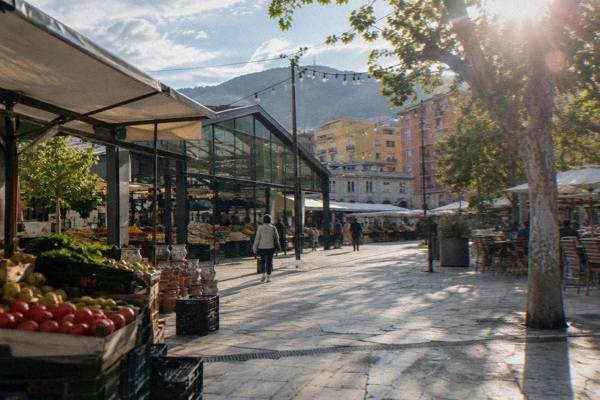
Et'hem Bey Mosque: Frescoes Beside The Clock Tower
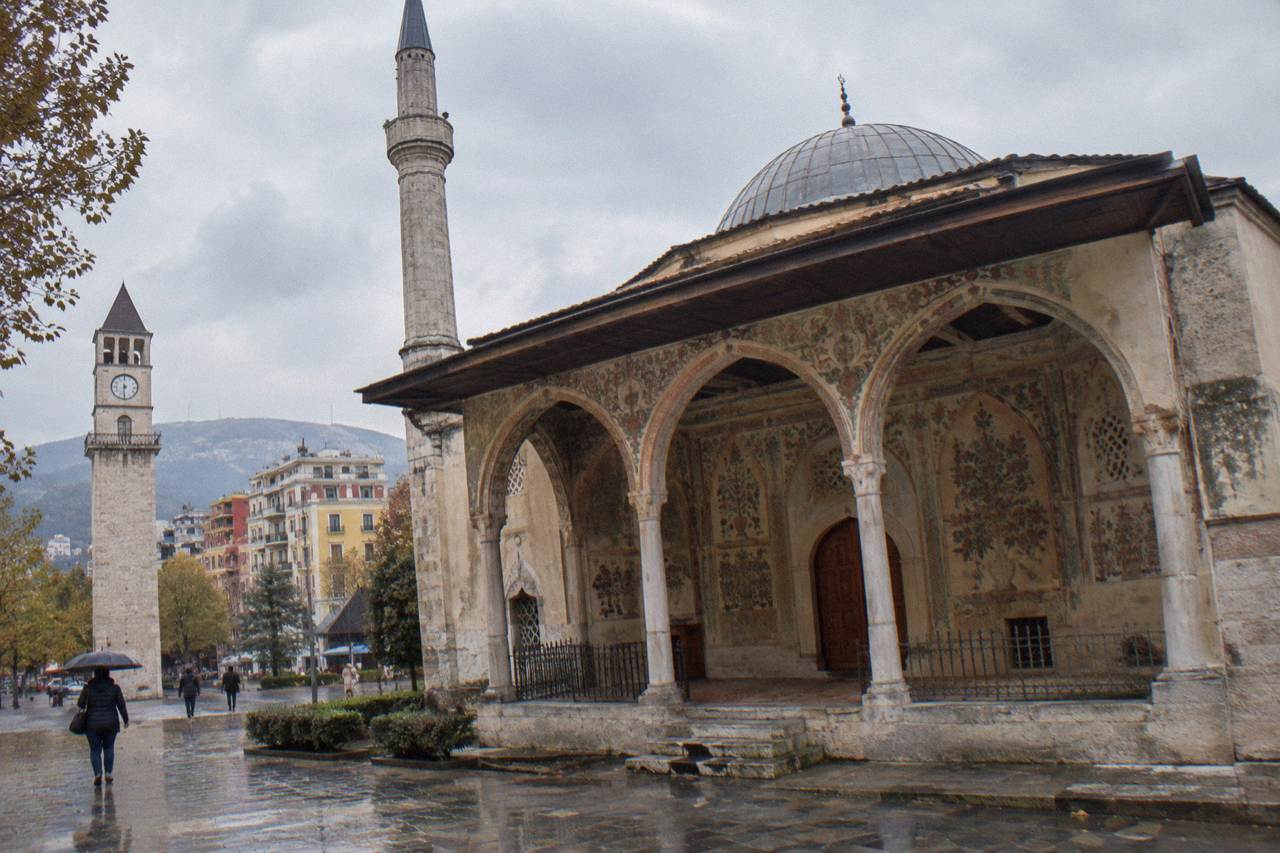
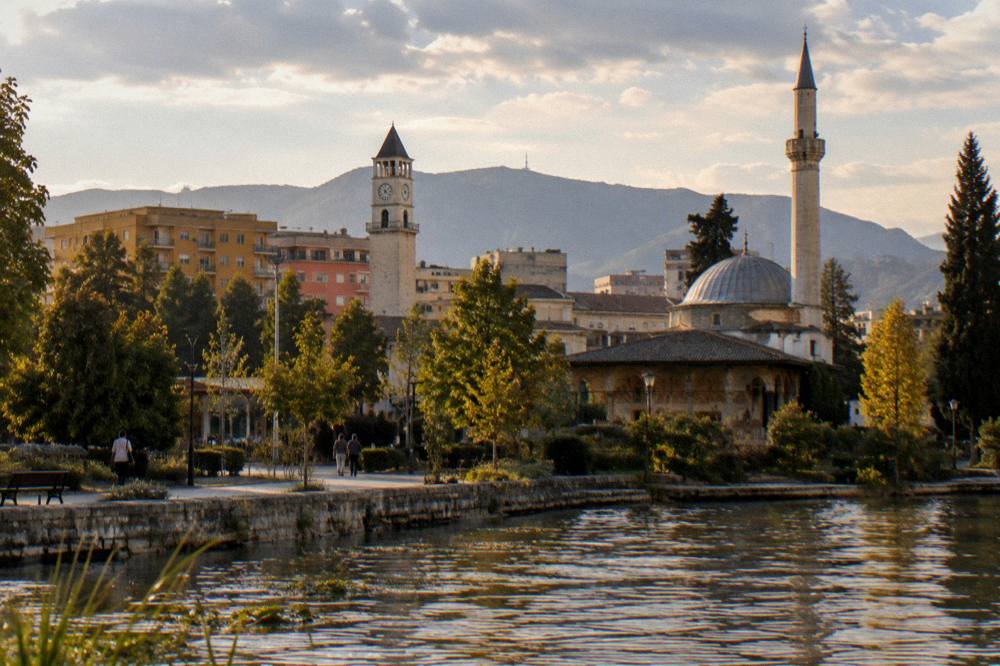
The Et'hem Bey Mosque stands at the south-eastern corner of Skanderbeg Square in Tirana, one of the few Ottoman-era buildings left in the city centre and the only mosque in Albania whose porch and walls carry figurative frescoes of trees, houses and waterfalls.
Short answer
The Et'hem Bey Mosque is a small 18th-century mosque on Skanderbeg Square in Tirana, open to visitors free of charge outside prayer times. It is known for the rare figurative frescoes on its porch, for surviving the 1967 religious crackdown, and for the events of 18 January 1991, when about 10,000 people entered it despite the authorities.
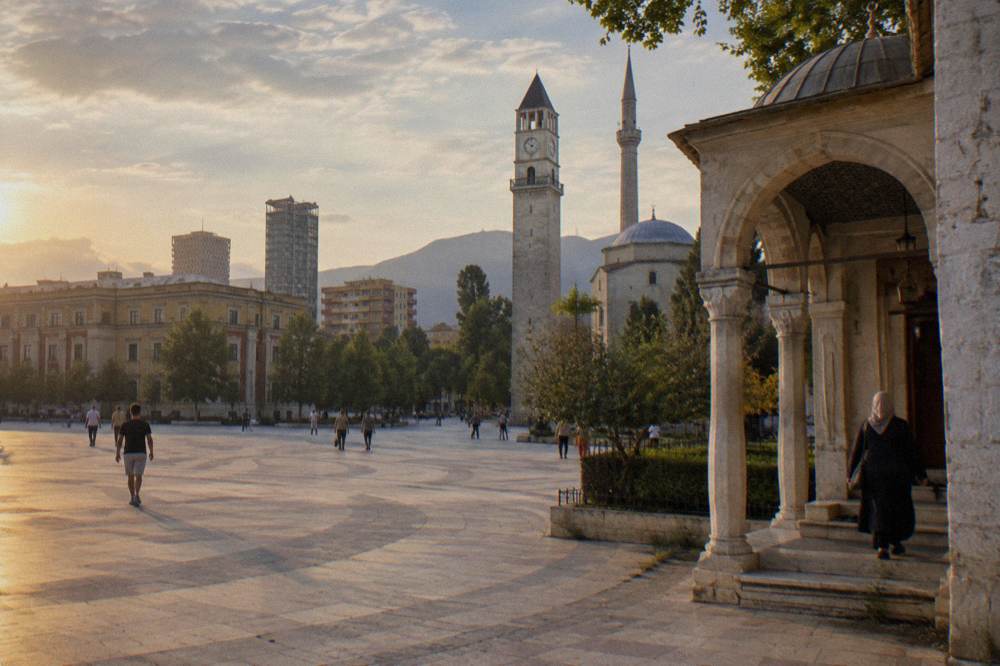
The Et'hem Bey Mosque stands about 0.2 km south-east of the centre of Skanderbeg Square in Tirana, the capital of Albania, pressed against the Clock Tower like an afterthought that outlasted everything built around it. It is the oldest standing place of worship in the city centre, and the one building on the square that remembers Tirana as an Ottoman town rather than a communist capital. Its porch and upper walls carry frescoes of trees, houses, bridges and waterfalls, figurative painting almost never found on a mosque exterior, and that oddity alone draws photographers to its steps throughout the day. This guide covers the building's history, what the frescoes show, how to visit respectfully, and how the mosque fits into a wider walk around the square and the Tirana Albania Travel Guide city centre.
What Is The Et'hem Bey Mosque In Tirana?
The Et'hem Bey Mosque is a small Ottoman-era mosque on the south-eastern edge of Skanderbeg Square in central Tirana, about 0.2 km from the square's centre, and it is the city's most significant surviving pre-communist religious building. Entry is free outside prayer times, and the mosque is best known for the figurative frescoes that cover its porch and exterior walls.
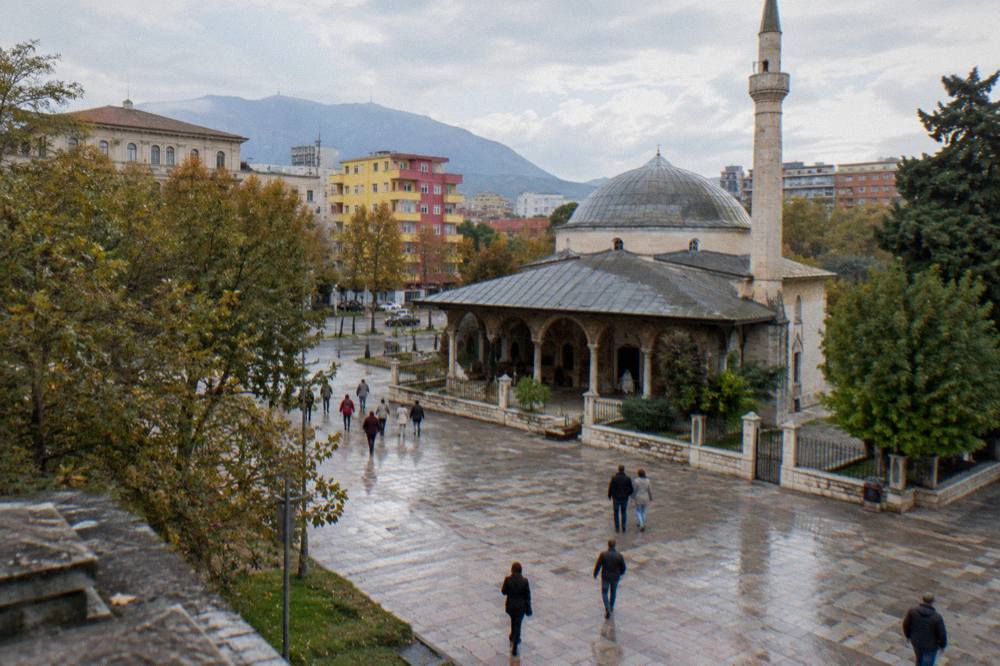
It is a compact building, a single prayer hall under a tiled roof with a slim minaret, and its scale is part of its charm. Where the Great Mosque of Tirana further south-east can hold vast crowds for Friday prayers, the Et'hem Bey Mosque belongs to the older, quieter Tirana of the 18th century, when the city was a market town of a few thousand people at the foot of Mount Dajti. Per the visit-tirana.com listing, the mosque was founded at the end of the 18th century by Mulla Bey and finished by his son Haxhi Et'hem Bey, whose name the building carries today. Visitors today step off the square, leave their shoes at the door, and walk straight into a painted interior that has watched two centuries of the city's history from the same spot.
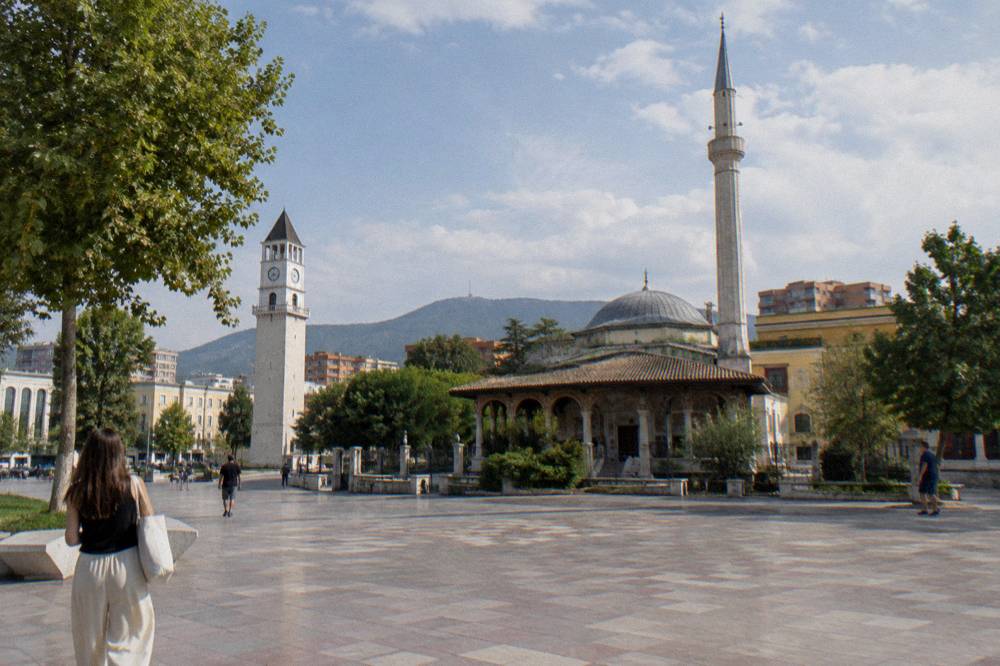
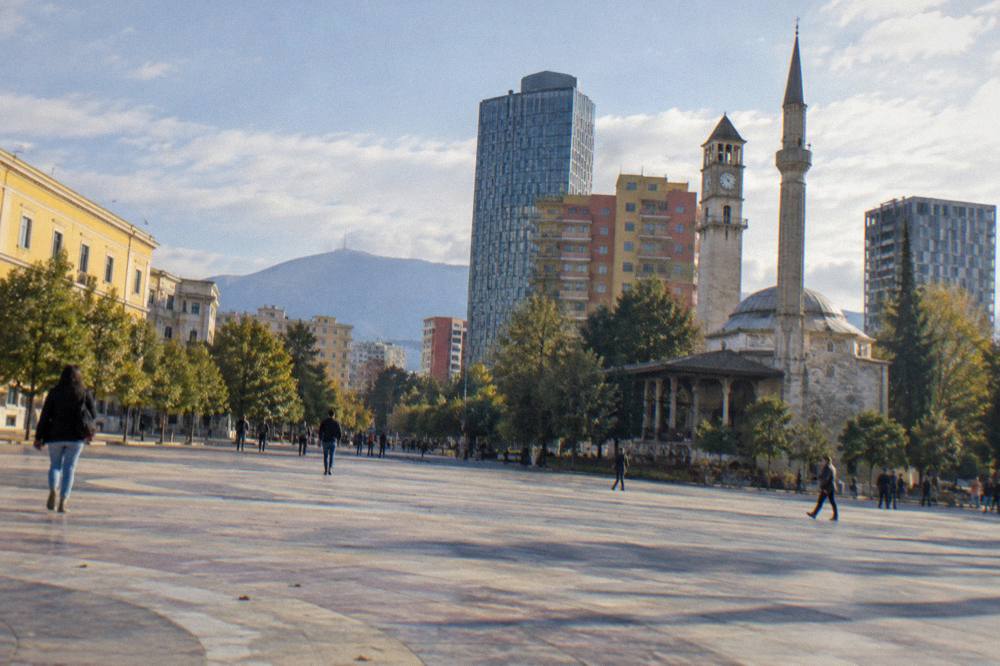
The mosque sits in the most walkable corner of Tirana. The Clock Tower of Tirana rises directly beside it, the National History Museum's mosaic facade faces it across the square, and the Palace of Culture stands a few steps north. A visit takes minutes unless you linger over the frescoes, which is why it anchors so many walking routes, including the classic Tirana walking tour route through the old centre.
When Was The Et'hem Bey Mosque Built?
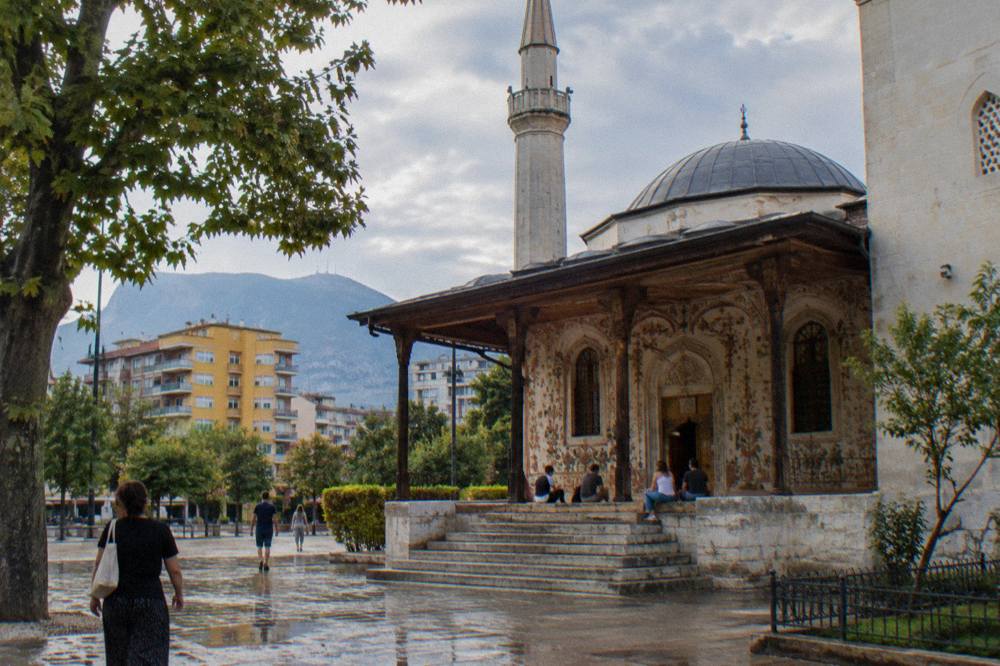
The mosque was founded at the end of the 18th century by Mulla Bey and completed by his son Haxhi Et'hem Bey, whose name it carries. Tirana itself was founded in 1614, so the mosque belongs to the city's later Ottoman decades, and it survived both the 1967 religious crackdown and the fall of communism in 1991.
Per the visit-tirana.com listing, construction began under Mulla Bey and was carried to completion by Haxhi Et'hem Bey, and the listing records that the building was spared in 1967, the year the communist regime moved decisively against organised religion. That sparing is why the mosque still stands. Tirana lost a large share of its older religious buildings in the decades that followed, and the Et'hem Bey Mosque became one of the few places of worship in the capital that kept its function through to the end of the regime.
The most famous date in its modern history is 18 January 1991. Per the same listing, about 10,000 people entered the mosque on that day despite the authorities, an act of collective defiance that has made the building a symbol of the country's re-emerging religious life as much as a work of Ottoman architecture. Tirana became the capital of Albania in 1920 by decision of the Congress of Lushnja, per ATA, and the mosque was already generations old by then, standing through the monarchy, the occupation years, the communist regime and the republic that followed.
| Year | Event | Status in the facts pack |
|---|---|---|
| 1614 | Tirana founded by Sulejman Pasha Bargjini | Reported, per Tirana.al |
| Late 18th century | Mosque founded by Mulla Bey | Reported, per visit-tirana.com |
| After the founding | Work completed by Haxhi Et'hem Bey | Reported, per visit-tirana.com |
| 1920 | Tirana becomes capital, 11 February, per the Congress of Lushnja | Reported, per ATA |
| 1967 | Building spared in the communist crackdown on religion | Reported, per visit-tirana.com |
| 18 January 1991 | About 10,000 people enter the mosque despite the authorities | Reported, per visit-tirana.com |
What Do The Frescoes Of The Et'hem Bey Mosque Show?
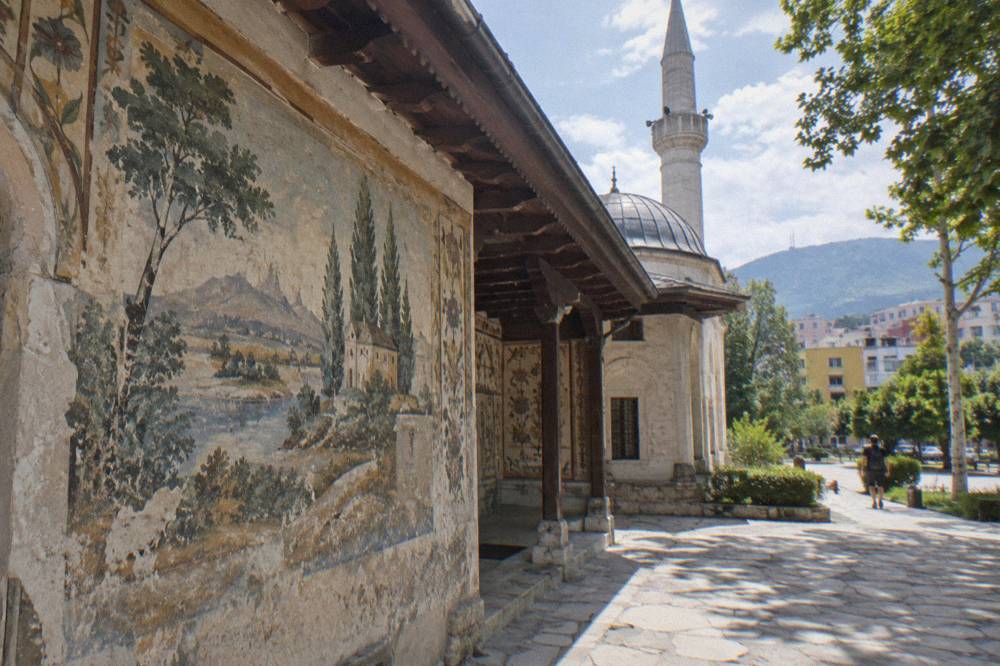
The frescoes on the mosque's porch and exterior walls depict landscapes, trees, houses, bridges and waterfalls, alongside decorative floral panels. Figurative scenes of this kind are rare on mosque exteriors, which is precisely why the building is photographed so often, and the porch paintings are the most distinctive feature visitors come to see.
Islamic architectural decoration generally leans toward geometry and calligraphy, and that convention is what makes this porch unusual. Here the painter worked naturalistic scenes into the architecture: dense trees, rustic buildings, flowing water and landscapes that read almost like rural Albania rendered in miniature across the walls. The interior continues the theme with painted decoration around the prayer hall, and visitors who step inside between prayer times will see the ceiling and walls carrying the same sensibility.
Photography from the steps is the easy part; seeing the frescoes well takes a moment of patience with the light. The porch faces the square, and in the hours around midday the paintings read brightest, while early morning and late afternoon throw softer shadows across the panels. The mosque's setting inside the wider Skanderbeg Square ensemble means the frescoes are often the first thing a new arrival in Tirana photographs, before the Clock Tower beside it, about 0.2 km south-east of the square's centre, or the closed museum across the way.
| Element | What to look for | Where it sits |
|---|---|---|
| Porch landscapes | Trees, houses, bridges and waterfall scenes | Front portico facing the square |
| Floral panels | Painted flower and vine decoration | Around the porch arches |
| Interior wall painting | Decorative schemes around the prayer hall | Inside the main hall, shoes off |
| Minaret | Slim traditional minaret beside the prayer hall | North side of the building |
| Clock Tower | About 90 steps to the top, per visit-tirana.com | Directly beside the mosque |
How Do You Visit The Et'hem Bey Mosque?
Entry to the Et'hem Bey Mosque is free, visits happen outside prayer times, and modest dress is expected: shoulders and knees covered, a headscarf for women, and shoes removed before entering the prayer hall. Allow ten to fifteen minutes, longer if you want to study the frescoes, and confirm locally that no prayer is in progress before entering.
These dress and conduct rules are standard courtesy at functioning mosques, and they apply here as everywhere in Albania. The country has no state religion, and the 2023 census as reported by ATA records Muslim about 45.9 percent, Catholic about 8.4 percent and Orthodox about 7.2 percent of the population, with large shares not declaring a denomination or religion at all. The Et'hem Bey Mosque is a working religious building within that mixed society, not a museum piece, and visiting hours bend around the daily prayers rather than a fixed timetable. Check the current situation at the door before going.
Practical points are simple. The mosque sits at the edge of a pedestrian square, so you arrive on foot from anywhere in the centre. Friday midday is the busiest prayer time of the week and the least suitable moment for a tourist visit. Visitors who want context rather than a quick look can join a guided walk; the Local Life walk covers the mosque among the city's layers of history.
| Courtesy point | What it means in practice |
|---|---|
| Dress | Shoulders and knees covered; a headscarf for women |
| Footwear | Shoes removed before entering the prayer hall |
| Timing | Visit between prayers; Friday midday is busiest |
| Entry | Free of charge |
| Behaviour | Quiet voices, no walking in front of worshippers |
| Photography | Fine outside prayer times; ask inside during a quiet moment |
What Stands Around The Mosque On Skanderbeg Square?
Within a ten-minute walk of the mosque you can reach the Clock Tower immediately beside it, the National History Museum facade across the square, the Palace of Culture on the square itself, the National Gallery of Arts about 0.4 km south-east, the Pyramid of Tirana about 0.7 km south-east, and the New Bazaar about 0.6 km east. The mosque is the natural starting point for a circuit of central Tirana.
The square around it is described by AKT, the national tourism agency, as one of Tirana's most important and best-known public spaces. Its redesigned surface, a pedestrian plane completed in 2017 per the 51N4E redesign record, pulls the landmarks into an easy loop. The Clock Tower of Tirana rises directly beside the mosque, with about 90 steps to the top, per visit-tirana.com; confirm access locally before counting on a climb, as its fee and hours vary. The National History Museum's monumental mosaic facade still commands the square's north side, though the museum itself has been closed for restoration since 15 March 2024, a closure announced to run to March 2028. Further out, the House of Leaves about 0.2 km south-west and the Bunk'Art 2 attraction about 0.2 km south-east continue the city's memory trail from Ottoman to communist times.
| Landmark | Direction and distance from the mosque area | Note |
|---|---|---|
| Clock Tower of Tirana | Directly beside the mosque | About 90 steps, per visit-tirana.com |
| National History Museum | On the square | Closed for restoration, announced to March 2028 |
| Palace of Culture | On the square | Includes the Opera and Ballet |
| House of Leaves | About 0.2 km south-west | Museum of Secret Surveillance |
| National Gallery of Arts | About 0.4 km south-east | Under renovation; check before going |
| Pyramid of Tirana | About 0.7 km south-east | Steps free to climb, reported |
| New Bazaar | About 0.6 km east | Market and eating quarter |
| Resurrection Cathedral | About 0.2 km south | Orthodox cathedral |
How Does The Et'hem Bey Mosque Fit Into A Day In Tirana?
The mosque belongs in the first two hours of any Tirana day: pair it with the Clock Tower and the square's facades in the morning, walk south to the Pyramid, the House of Leaves and Blloku before lunch, and spend the afternoon at Bunk'Art 1 or on the Dajti Ekspres cable car, about 4.4 km north-east. A half-day circuit on foot covers the mosque and five or six landmarks without transport.
Tirana is an inland city in a basin at the foot of Mount Dajti, and the whole central cluster is compact. The mosque, the tower, the closed museum facade, the Palace of Culture and the Resurrection Cathedral sit within roughly 300 metres of one another, and the Pyramid of Tirana, the Tanners' Bridge and the New Bazaar extend the walk eastward. Visitors with more time can push out to the Grand Park of Tirana about 2.1 km south-east, or ride the cable car for the mountain panorama; the Dajti Ekspres operator sells tickets only at the lower station and publishes no online fare, so check the current price at the venue before going.
A sample structure for a full day, with distances taken from the square as the crow flies:
| Time | Activity | Location note |
|---|---|---|
| Morning | Mosque frescoes, Clock Tower, square facades | All within 0.2 km of the mosque |
| Late morning | House of Leaves, National Gallery exterior | 0.2 to 0.4 km south and south-east |
| Midday | Lunch at the New Bazaar | About 0.6 km east |
| Afternoon | Pyramid climb, Blloku cafes | 0.7 to 0.8 km south-east and south |
| Late afternoon | Bunk'Art 1 or Dajti Ekspres | 4.4 to 4.6 km north-east |
| Evening | Dinner and a guided bar crawl in Blloku | About 0.8 km south |
Guided options compress the same ground efficiently. Beyond the walking-tour trio above, the Bunk'Art guided visit links the mosque's era to the bunker museum's.
How Does The Mosque Compare With Tirana's Other Places Of Worship?
The Et'hem Bey Mosque is the historic and intimate option, the Great Mosque of Tirana (Namazgah), about 0.6 km south-east, is the monumental one, and the Resurrection Cathedral, about 0.2 km south, anchors the Orthodox side of the city's religious life. Between them they tell the story the census tells: a country with no state religion and several large communities.
The Great Mosque opened on 10 October 2024 and now serves as the capital's principal mosque, a scale the old building was never meant to hold. The Et'hem Bey Mosque's importance is different: it is the survivor, the painted one, the witness to 1967 and to 18 January 1991. Visitors with an hour can see both, plus the cathedral, and read three centuries of Albanian religious architecture in a single walk. Opening hours, fees and capacities for these buildings are not fixed in any official listing, so confirm locally or at the door before planning a fixed timetable.
| Building | Distance from the mosque | Character | Visitor note |
|---|---|---|---|
| Et'hem Bey Mosque | On site | 18th-century, frescoed porch | Free, outside prayer times |
| Great Mosque of Tirana | About 0.6 km south-east | Opened 10 October 2024 | Modest dress; visit between prayers |
| Resurrection Cathedral | About 0.2 km south | Orthodox cathedral | Check hours locally |
| Clock Tower | Beside the mosque | Civic tower, about 90 steps | Fee and hours not fixed; confirm on site |
What Should You Know Before Going In 2026?
Four current conditions shape a visit to the mosque's corner of Tirana: the National History Museum is closed for restoration to about March 2028, demonstrations have been held in central Tirana since 13 October 2026 with FCDO advice updated on 15 October, the Tirana Marathon moved to 14 and 15 November 2026, and no printed admission price exists for the mosque itself because entry is free.
The demonstrations matter for the square specifically, because Skanderbeg Square is where central gatherings happen. The FCDO advises avoiding demonstrations and checking local media, and that is sensible for anyone planning to spend a morning at the mosque, since access to the square can be disrupted on protest days. Away from those days the area functions normally, and the pedestrian square fills with the usual flow of families, tour groups and cafe tables. Emergency numbers, for completeness, are Police 112, Ambulance 127 and Fire 128.
Money and access need little planning. The currency is the Albanian lek, roughly 90 lek to the euro, and the euro is not legal tender; cards are widely taken in central hotels and larger restaurants but cash is still the rule at markets and small cafes. Albania is outside the EU and Schengen and runs its own 90-in-180-day visa regime for visa-free nationals, while US passport holders can stay up to a year without a visa, per reporting; confirm with the Albanian foreign ministry before travel. For a wider picture of the city, the things to do in Tirana overview covers the whole centre, and the Tirana viewpoints guide collects the best vantage points over the basin.
Common Questions About The Et'hem Bey Mosque
Is the Et'hem Bey Mosque free to visit?
Yes. Visits are free outside prayer times, and no ticket is sold. Dress modestly with shoulders and knees covered, a headscarf for women, and remove your shoes before entering the prayer hall.
How old is the Et'hem Bey Mosque?
It was founded at the end of the 18th century by Mulla Bey and completed by his son Haxhi Et'hem Bey, per the visit-tirana.com listing. Tirana itself was founded in 1614, so the mosque belongs to the city's later Ottoman period.
What makes the Et'hem Bey Mosque famous?
Two things: the figurative frescoes of trees, houses, bridges and waterfalls on its porch and exterior walls, which are rare on a mosque, and the events of 18 January 1991, when about 10,000 people entered the building despite the authorities.
Can you go inside the Et'hem Bey Mosque?
Yes, outside prayer times. Entry is free, shoes come off at the door, and quiet, respectful behaviour is expected. Friday midday prayers are the busiest time and the least suitable for a visit.
What is next to the Et'hem Bey Mosque?
The Clock Tower of Tirana stands directly beside it, with about 90 steps to the top. The National History Museum facade and the Palace of Culture face it across Skanderbeg Square, and the New Bazaar lies about 0.6 km east.
Is the mosque open during demonstrations in Tirana?
Demonstrations have been held in central Tirana since 13 October 2026, some violent, and the UK FCDO updated its advice on 15 October 2026. Access to the square can be disrupted on protest days, so check local media before setting out and avoid any gathering.