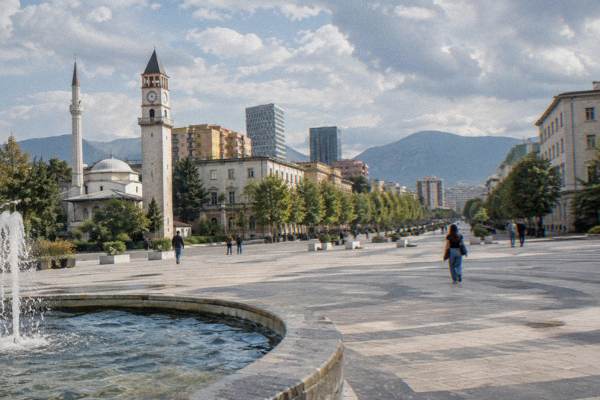
Skanderbeg Square: The Paved Heart Of The Capital
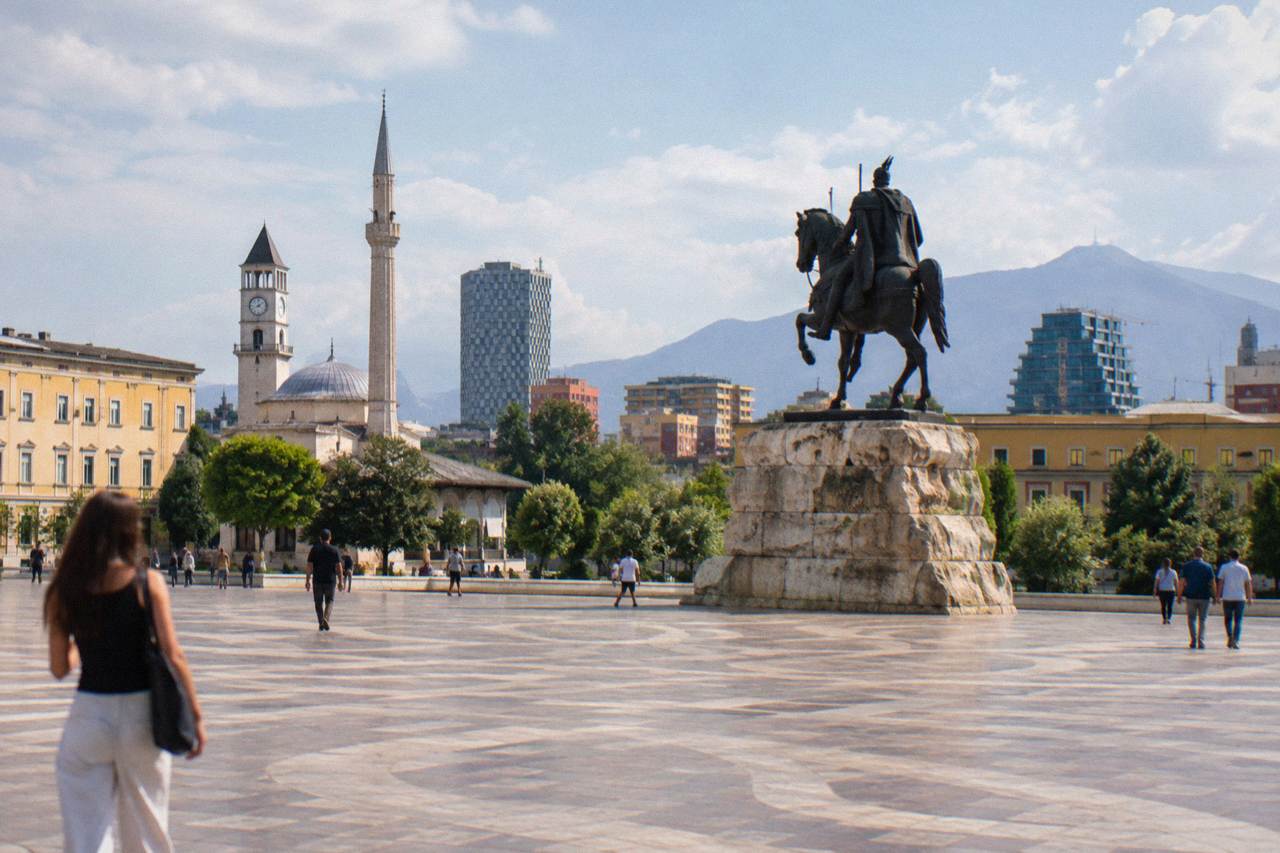
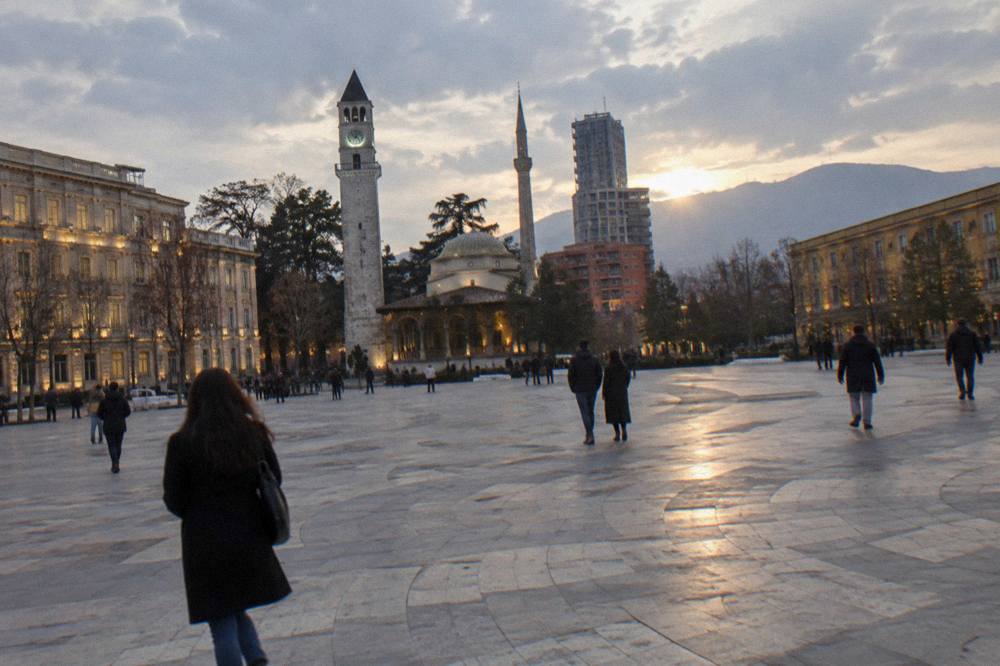
Skanderbeg Square is the centre of Tirana, the capital of Albania: a vast pedestrianised plaza ringed by the closed National History Museum, the Et'hem Bey Mosque, the Clock Tower and government buildings, with the equestrian statue of Skanderbeg at its middle.
Short answer
Skanderbeg Square is a free, open-air pedestrian plaza in central Tirana, open at all hours, best seen on foot in a half day that takes in the Et'hem Bey Mosque, the Clock Tower and the surrounding landmarks. The National History Museum on the square has been closed for restoration since March 2024.
Skanderbeg Square is the great paved centre of Tirana, the capital of Albania, an inland city in a basin at the foot of Mount Dajti, and it is the single place from which every distance in this article is measured. The national tourism agency AKT describes it as one of Tirana's most important and best-known public spaces, and the description holds: the square is pedestrian, stone-covered, ringed by the Et'hem Bey Mosque, the Clock Tower, the Palace of Culture and the long facade of the National History Museum, with the equestrian monument of Skanderbeg standing at its middle. Everything a first-time visitor needs, from Ottoman mosques to a museum closed for restoration, sits within a fifteen-minute walk of this one plaza.
What Is Skanderbeg Square In Tirana?
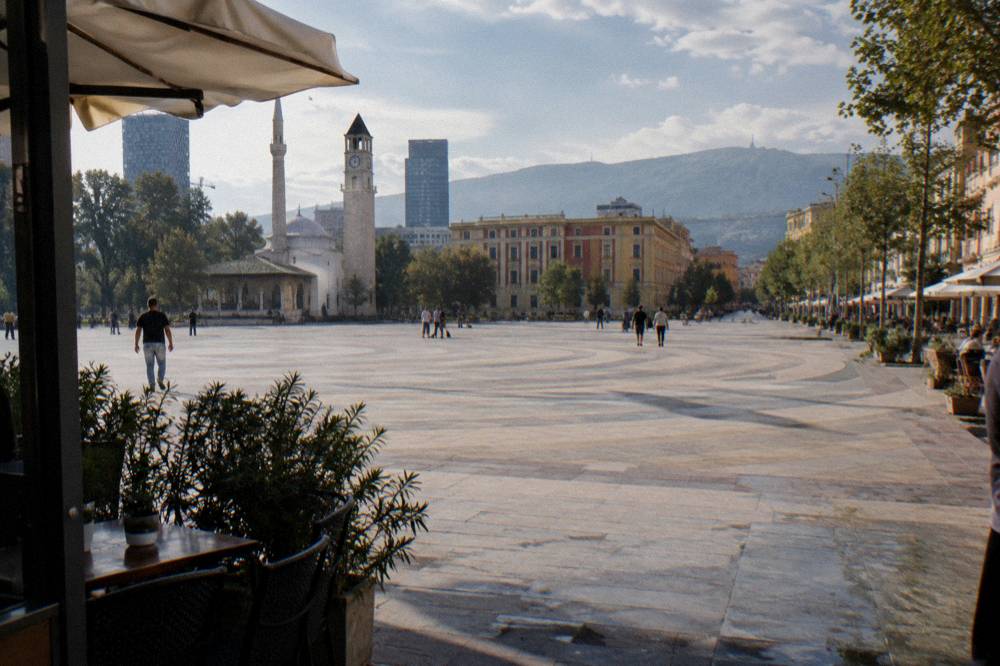
Skanderbeg Square is a large, free, pedestrianised public plaza at the centre of Tirana, the capital of Albania, open around the clock and paved in stone after a 2017 redesign that replaced the old traffic island layout with a sloping, walkable pyramid of paving. The square carries the name of Gjergj Kastrioti, called Skanderbeg, Albania's national hero, whose equestrian monument stands at its centre. According to the national tourism agency AKT, it is one of Tirana's most important and best-known public spaces, and in practice it works as the city's front room: ceremonies, concerts, protests and the daily evening passeggiata all pass across it.
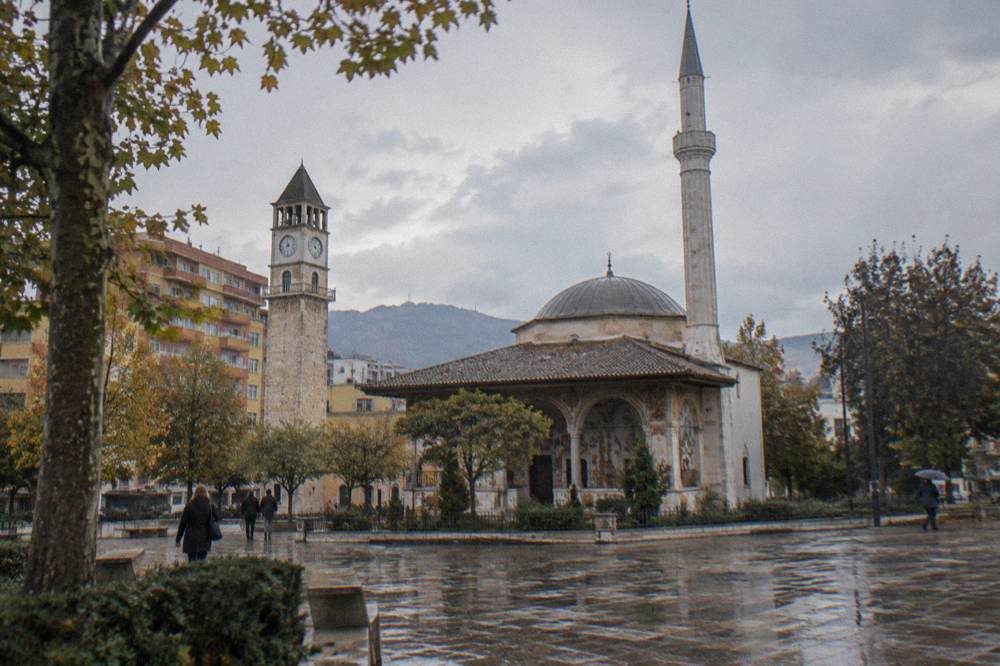
The 2017 redesign, by the studio 51N4E, turned what had been a roundabout of traffic lanes into a single car-free surface that rises gently toward the middle, so that from the edges the whole square reads as one frame. Around that frame sit the buildings that tell the city's story in a full circle: the Et'hem Bey Mosque and the Clock Tower from the Ottoman era, the Palace of Culture from the communist period, the National History Museum behind its giant mosaic facade, and ministry buildings lining the eastern side. For more on how the city grew around this spot, see the Tirana history guide.
One planning note matters more than any other in late 2026: demonstrations have been held in central Tirana since 13 October 2026, some of them violent, and the UK FCDO updated its travel advice on 15 October 2026 to tell travellers to avoid demonstrations and check local media. The Tirana Marathon was moved from 24 to 25 October to 14 to 15 November 2026 as a result. The square itself remains open public space, but check current conditions before you plan a day around it.
What Can You See On Skanderbeg Square Today?
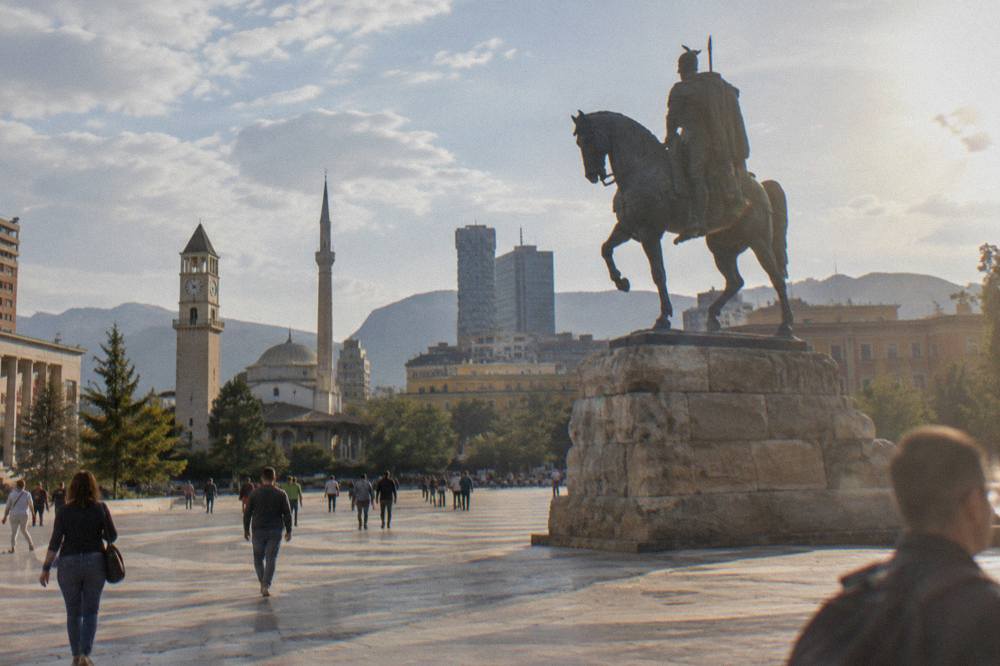
The square's own sights are the Skanderbeg equestrian monument, the Et'hem Bey Mosque about 0.2 km south-east, the Clock Tower of Tirana about 0.2 km south-east, the facade and mosaic of the National History Museum, the Palace of Culture, and the Namazgah or Great Mosque of Tirana about 0.6 km south-east, opened on 10 October 2024. Entry to the square itself is free at all hours, the mosque is free outside prayer times, and the museum is closed, which changes how a visit works. A slow loop of the square and its immediate edges takes in the city's layered public life in under an hour of walking.
| Sight | Position from the square | Status in 2026 |
|---|---|---|
| National History Museum | On the square | Closed for restoration, announced to March 2028 |
| Et'hem Bey Mosque | About 0.2 km south-east | Free outside prayer times, modest dress |
| Clock Tower of Tirana | About 0.2 km south-east | About 90 steps; check locally for access |
| Palace of Culture | On the square | Houses the opera and theatre venues |
| Great Mosque (Namazgah) | About 0.6 km south-east | Opened 10 October 2024 |
| Pyramid of Tirana | About 0.7 km south-east | Free to climb the outside steps |
| Resurrection Cathedral | About 0.2 km south | Free to enter, confirm hours locally |
| Postbllok Memorial | About 0.9 km south | Free, open air |
The Et'hem Bey Mosque deserves the longest stop. Per the visit-tirana listing, it was founded at the end of the 18th century by Mulla Bey and finished by his son Haxhi Et'hem Bey, it was spared in 1967 when religious buildings were under pressure, and on 18 January 1991 about 10,000 people entered it despite the authorities, an event now read as a landmark of the fall of communism. Visits are free outside prayer times; as a courtesy, cover shoulders and knees, women should wear a headscarf, and shoes come off at the door. Full detail is on the Et'hem Bey Mosque page.
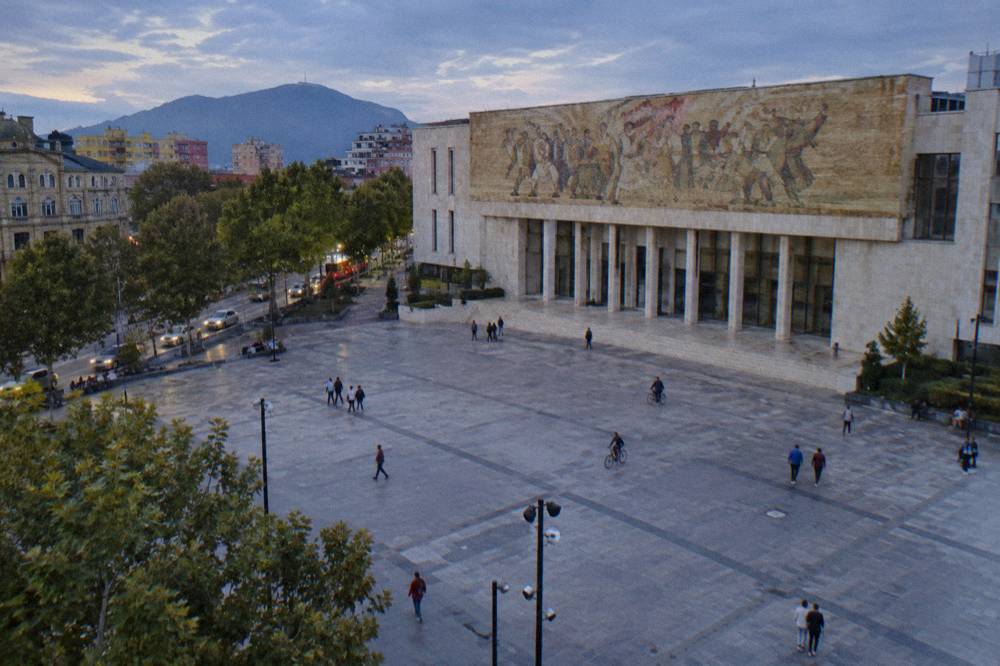
The National History Museum is the square's big absence. It was inaugurated on 28 October 1981, and it has been shut to visitors since 15 March 2024 for an EU-funded restoration that the operator of the project announced to run to March 2028; the first phase of restoration was completed in May 2026 per ATA reporting. Say it plainly: the museum is closed, and the mosaic facade above the entrance is the part you still see, from the square, for free. The National History Museum page tracks what is known.
A 24-hour hop-on hop-off open-top bus circles the city's main sights with the square at its core, which suits a first day when you want the landmarks without working out the bus map. Deeper dives into the city's communist-era history sit a short walk away at Bunk'Art 2, about 0.2 km south-east of the square.
How Much Time Do You Need On Skanderbeg Square?
The square itself is a one-hour sight: a full loop of the plaza, the Skanderbeg monument, the mosque interior outside prayer times, the Clock Tower base and the museum facade fits comfortably into 60 to 90 minutes on foot, and a half day covers the square plus everything within one kilometre of it. There is no ticket for the square and no gate, so the time you spend is set entirely by how far you walk outward from the centre. Visitors who want the surrounding museums as well, Bunk'Art 1 in particular, should budget a full day.
| Plan | Time on the square | What it adds |
|---|---|---|
| Quick pass | 30 minutes | Monument, facade loop, photos |
| Standard visit | 60 to 90 minutes | Mosque interior, Clock Tower base, all four edges |
| Half day | 3 to 4 hours | Everything above plus Bunk'Art 2, House of Leaves, New Bazaar |
| Full day | 6 to 8 hours | Above plus Bunk'Art 1 and the Dajti cable car |
The one-hour and half-day rows of that table assume the National History Museum stays closed, which the project timeline says it will until about March 2028. Bunk'Art 2, about 0.2 km south-east, is open daily from 09:30 per its own website; tickets are bought at the door. Bunk'Art 1, about 4.6 km north-east behind the Dajti cable car lower station, is open daily 09:30 to 17:30 since 1 June 2026, again with tickets at the door. The House of Leaves, the museum of secret surveillance about 0.2 km south-west of the square, lists Monday to Sunday 09:00 to 19:00 on its own site; a 700 lek adult ticket is reported by the visit-tirana listing, so confirm at the door.
When Is The Best Time Of Day To Visit Skanderbeg Square?
Early morning, from about 08:00 to 10:00, is the calm window on Skanderbeg Square: the light comes low across the paving, the mosque opens to visitors outside prayer times, and the temperature in summer stays below the afternoon peak, when ERA5 reanalysis for Tirana puts the July mean daily high at 29.8 C and the August mean at 30.4 C. Evening, from about 18:00 onward, is the second good window, when the square fills with people and the heat drops. Midday in July and August is the hour to avoid.
| Month | Mean high C | Mean low C | Rain mm | Character of a square visit |
|---|---|---|---|---|
| Jan | 10.8 | 2.3 | 106 | Cool, grey, occasionally wet |
| Apr | 18.4 | 8.4 | 105 | Mild, flowers out |
| Jul | 29.8 | 19.1 | 34 | Hot and dry, visit early |
| Aug | 30.4 | 19.5 | 31 | Hot and dry, visit early |
| Oct | 21.4 | 12.2 | 119 | Mild, rain more likely |
| Nov | 16.5 | 8.0 | 139 | Highest-rainfall month, bring a layer |
Those figures are ERA5 reanalysis, 1991-2020, a modelled climate average rather than a station record, and they describe the basin Tirana sits in, not the microclimate of the paving, which holds heat in August afternoons. November carries the highest monthly rainfall total in the table at 139 mm and August the lowest at 31 mm, so a winter visit is a museum-and-cafe day and a summer visit an early-morning-and-evening one. The Tirana weather guide carries the full monthly breakdown.
Practical hours to anchor a day: the mosque is visitable outside prayer times, with Friday the busiest religious day; the Bunk'Art sites open from 09:30; the Dajti Ekspres cable car runs from about 09:00 and is usually closed on Tuesdays for maintenance, per local reporting, so confirm before you build a Tuesday around it. Emergency numbers, worth having in any city centre: Police 112, Ambulance 127, Fire 128. The rest of the planning pages sit on Tirana Albania Travel Guide.
What Is The History Of Skanderbeg Square?
Tirana was founded in 1614 by Sulejman Pasha Bargjini, who built a mosque, bath, bakery and inn as the town's core, per the city's own history page; the square took its present pedestrian shape in a 2017 redesign by the studio 51N4E, and it carries the name of Skanderbeg, who took Kruja on 28 November 1443 and died on 17 January 1468. Between those dates the square served Ottoman, royal-Zog, Italian-era and communist governments in turn, each of which left a building on its edges.
The man on the horse came first. Gjergj Kastrioti, Skanderbeg, deserted the Ottoman army in 1443, took Kruja that November, and the League of Lezha, the alliance of Albanian lords, was formed on 2 March 1444 per the standard timeline. He died on 17 January 1468, and the equestrian monument at the square's centre stands for that resistance. Kruja itself, the castle town tied to his name, is a 45-minute drive away and covered on the Kruja day-trip page.
The city around the square grew from the 1614 Ottoman core. Tirana became the capital on 11 February 1920 by decision of the Congress of Lushnja, per ATA. Communist rule ran from 1944 to 1991, and it reshaped the square's edges with the Palace of Culture and, in 1981, the National History Museum. The 2017 redesign removed the traffic and gave the plaza its present slope and stone. The communist-era layer, including the Enver Hoxha Villa and the Postbllok memorial, is traced on the communist history trail.
Which Landmarks Sit Within Walking Distance Of Skanderbeg Square?
Everything in central Tirana is walkable from Skanderbeg Square: the Clock Tower and Et'hem Bey Mosque about 0.2 km away, the Resurrection Cathedral about 0.2 km south, the Tirana Castle quarter about 0.5 km south-east, the Pyramid about 0.7 km south-east, the New Bazaar about 0.6 km east and Blloku about 0.8 km south, all flat walking on city streets. The two Bunk'Art museums split: Bunk'Art 2 is about 0.2 km south-east, while Bunk'Art 1 is about 4.6 km north-east and better reached by bus, taxi or tour. These are straight-line positions from the square.
| Landmark | Straight-line distance | Direction |
|---|---|---|
| Clock Tower of Tirana | About 0.2 km | South-east |
| Et'hem Bey Mosque | About 0.2 km | South-east |
| Resurrection Cathedral | About 0.2 km | South |
| House of Leaves | About 0.2 km | South-west |
| Tirana Castle | About 0.5 km | South-east |
| New Bazaar (Pazari i Ri) | About 0.6 km | East |
| Great Mosque (Namazgah) | About 0.6 km | South-east |
| Pyramid of Tirana | About 0.7 km | South-east |
| Tanners' Bridge | About 0.7 km | East |
| Blloku | About 0.8 km | South |
| Grand Park of Tirana | About 2.1 km | South-east |
| Bunk'Art 1 | About 4.6 km | North-east |
| Dajti Ekspres lower station | About 4.4 km | North-east |
A sensible walking loop runs: square and mosque, then Clock Tower, then south to the Resurrection Cathedral and the House of Leaves, east through the Tirana Castle dining quarter and Tanners' Bridge to the New Bazaar, then south to the Pyramid and Blloku. That is roughly a half day at museum pace and free apart from the two Bunk'Art doors. The one-day-in-Tirana itinerary sequences the same walk with timings.
How Do You Get To Skanderbeg Square?
The airport bus from Tirana International Airport Nene Tereza at Rinas runs 24 hours a day, every full hour, takes 30 to 40 minutes and costs 400 lek or 4.50 euro, stopping in the centre behind the Palace of Opera and Ballet on the square's edge, and there is no airport train: the Tirana-Durres-Airport railway is being rebuilt, with electrification expected to finish by the end of 2027. Within the city, a single bus ride costs about 40 lek, paid in cash on board, and the square is a short walk from everywhere in the city centre.
The official airport taxi, branded "TAXI Tirana Airport", charges about 2,200 lek one way to the centre, 20 to 25 minutes, and can be pre-booked through its own site. Uber and Bolt do not operate in Tirana; local taxi apps do, per local reporting, and confirm the fare before you get in. The airport itself is 15.9 km from the square by road, about 29 minutes without traffic. The full rundown, including the 300 lek terminal shuttle, is on the airport transfer guide.
| Route | Service | Fare | Notes |
|---|---|---|---|
| Airport to centre | Airport bus, LU-NA operator | 400 lek / 4.50 euro | 24/7, hourly, 30 to 40 min |
| Airport to centre | Official airport taxi | About 2,200 lek | 24/7, 20 to 25 min |
| City centre hops | Urban bus | About 40 lek | Cash on board |
| To Kruja | Minibus | Reported about 200 lek | Confirm with the driver |
| To the coast at Durres | Intercity bus from the South and North Terminal | Pay the driver in cash | Durres is about 39 minutes by road |
The South and North Bus Terminal for intercity buses sits about 3.9 km north-west of the square, and the airport bus runs there too, for 300 lek. If you are driving, Skanderbeg Square itself is pedestrian and car-free; paid street parking zones around the centre run at 100, 40 and 20 lek per hour by zone, payable by SMS to 50500 or through the Tirana Ime app, per the municipality's parking service page.
Where Can You Eat And Drink Near Skanderbeg Square?
The closest eating cluster to Skanderbeg Square is the Tirana Castle quarter about 0.5 km south-east and the New Bazaar about 0.6 km east, with the cafe-and-bar quarter of Blloku about 0.8 km south; named venues with their own live sites near the centre include the restaurant Padam on Rruga Papa Gjon Pali II, the Italian restaurant Artigiano, the Era Blloku restaurant in Blloku and the Sophie Caffe chain. Byrek, the layered filo pie, and qofte, seasoned meatballs, are the street-food staples, and tave kosi, baked lamb under a yogurt-and-egg topping, is the plated classic.
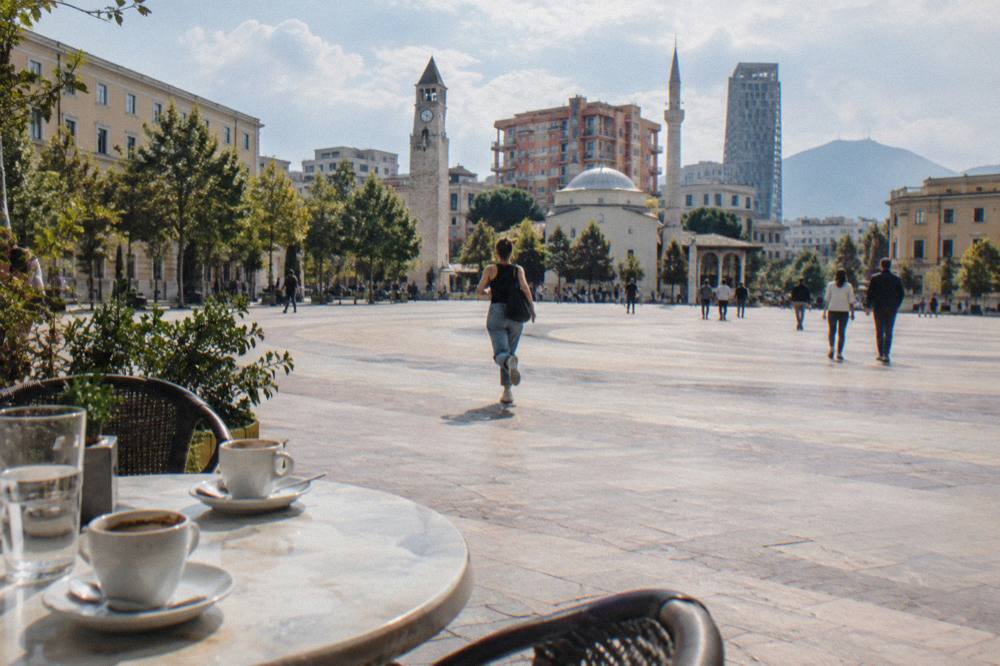
The Tirana coffee culture guide explains the cafe rhythm that makes the square's edges so lively from mid-morning onward, and the Albanian food guide covers the dishes in depth. For an evening, the Tirana nightlife guide maps Blloku, the former closed quarter that is now the city's bar district.
A cooking class is the indoor alternative when the weather turns, and Tirana has several; one that covers a full traditional menu with wine and raki alongside is listed below. Raki, the fruit brandy, closes many Albanian meals, and Gezuar is the word that goes with it, per the standard Albanian phrasebook.
Can You Combine Skanderbeg Square With Mount Dajti?
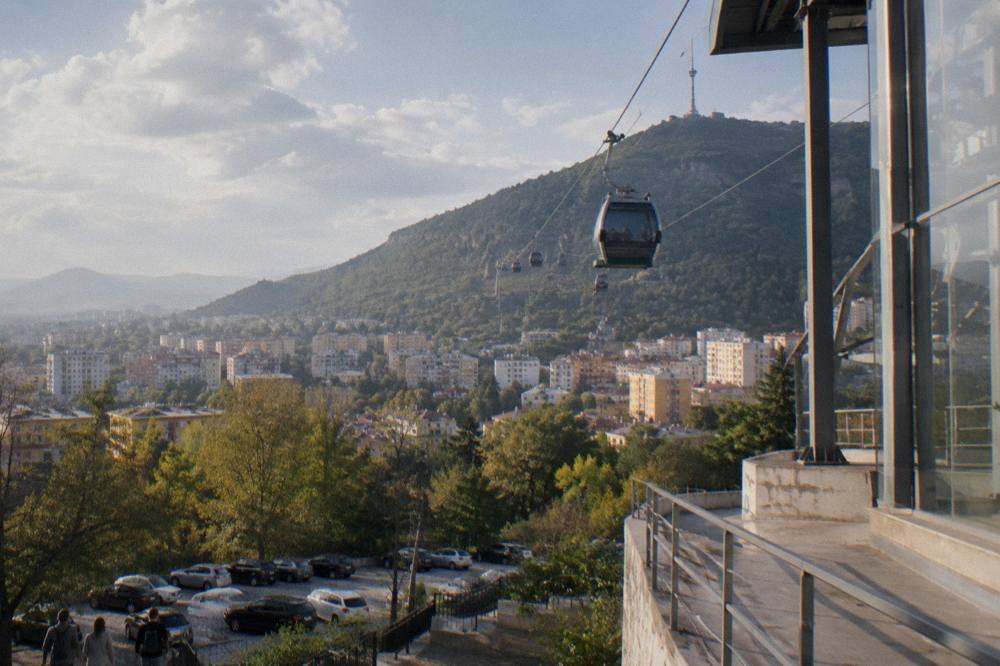
Yes: the Dajti Ekspres cable car lower station is about 4.4 km north-east of Skanderbeg Square, the Mount Dajti summit is 9.8 km from the square as the crow flies and about 53 minutes by road, and Bunk'Art 1 sits directly behind the lower station, so the standard combination is the square in the morning, Bunk'Art 1 at 09:30 opening, then the cable car up the mountain for the afternoon view. The operator, Dajti Ekspres, publishes no fares online and sells tickets only at the lower station, so check the price there. It is billed by its operator as the longest cableway in the Balkans.
The cable car usually closes on Tuesdays for maintenance, per local reporting, so confirm before committing a Tuesday. A half-day tour with the cable car ticket included removes the ticket-queue question, and one is listed below; the Dajti Ekspres page and the Mount Dajti National Park page carry the full detail, including the Grand Park alternative for a flat, free afternoon closer to the square.
What Should You Know Before You Go To Skanderbeg Square?
Bring lek in cash, check the news for demonstrations, expect the National History Museum to be closed, dress modestly for the mosque, and set your expectations on prices: Albania's currency is the lek at roughly 90 to the euro, the euro is not legal tender, cards are widely taken in central hotels and larger restaurants but cash is still needed for buses, markets and small cafes. Albania is not in the EU or Schengen and runs its own 90-in-180-day visa regime for visa-free nationals; UK citizens fall under it, and US passport holders can stay up to a year without a visa, per the reported policy table.
The current-conditions note bears repeating because it is specific to this square: demonstrations have been held in central Tirana since 13 October 2026, some violent, and the FCDO advises avoiding them and monitoring local media. The Is Tirana Safe guide covers the standing advice, which otherwise amounts to watching your belongings in crowds, as in any capital. The basics of money, plugs and phrases sit in the Albania travel tips guide.
For planning a whole stay around the square as a base, the things to see and do around Tirana page gathers what to see and do, and the Tirana city centre area page covers where to sleep within walking distance. The Bunk'Art 1 page handles the museum that pairs well with the square, and the Tirana museums guide ranks what is actually open.
Common Questions About Skanderbeg Square
Is Skanderbeg Square free to visit?
Yes. The square is open public space with no ticket and no gate, open at all hours. The Et'hem Bey Mosque is also free outside prayer times, and the Pyramid steps about 0.7 km south-east are free to climb. Paid sights nearby are the Bunk'Art museums, with tickets at the door, and the House of Leaves.
Why is the National History Museum on Skanderbeg Square closed?
It has been closed to visitors since 15 March 2024 for a restoration announced to run to March 2028; the first phase of the work was completed in May 2026 per ATA reporting. The mosaic facade remains visible from the square. The museum was inaugurated on 28 October 1981.
How far is the airport from Skanderbeg Square?
Tirana International Airport Nene Tereza at Rinas is 15.9 km by road, about 29 minutes without traffic. The airport bus runs 24 hours a day, every full hour, costs 400 lek or 4.50 euro and stops behind the Palace of Opera and Ballet on the square's edge. The official airport taxi is about 2,200 lek one way.
Can you enter the Et'hem Bey Mosque?
Yes, free of charge and outside prayer times. As a courtesy, cover shoulders and knees, women should wear a headscarf, and shoes come off at the door. No published visiting hours exist, so time your visit around the prayer schedule.
What is the best time of day for photos on Skanderbeg Square?
Early morning, roughly 08:00 to 10:00, when the light is low across the paving and the crowds are thin. In July and August, when the ERA5 1991-2020 reanalysis puts the mean daily high at 29.8 C and 30.4 C, the early window is also the comfortable one. Evening works well for the lit facades.
Is Skanderbeg Square walkable to Blloku and the New Bazaar?
Yes. Blloku is about 0.8 km south of the square and the New Bazaar about 0.6 km east, both flat walks on city streets of ten to fifteen minutes. The Pyramid of Tirana, about 0.7 km south-east, sits roughly on the way between them.
Skanderbeg Square remains the place where Tirana explains itself: a free plaza with a mosque on one edge, a closed museum on another, a communist palace on a third, and a national hero on horseback in the middle, all within a short walk of everything else this site covers.