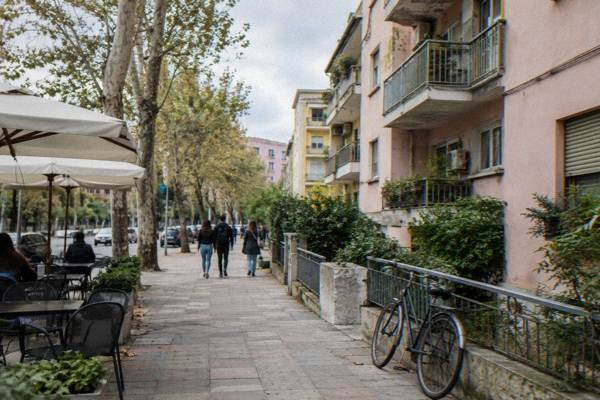
Albania's Bunkers And The Communist Years In Tirana
Tirana, the capital of Albania, wears its communist decades in concrete: the bunkers scattered across the country, the two Bunk'Art museums, the House of Leaves and the residential block that was once closed to ordinary residents.
Short answer
The communist years in Albania ran from 1944 to 1991, and Tirana holds the densest cluster of surviving sites: Bunk'Art 1, a reported leadership nuclear shelter behind the Dajti cable car lower station, Bunk'Art 2 on the secret-police years in the city centre, the House of Leaves surveillance museum, the Pyramid, the Postbllok memorial and the former closed Blloku quarter.
Tirana, the capital of Albania, is one of the few European capitals where the architecture of a communist state still sits in plain view, unhidden and largely unrenamed. The country was ruled by a communist regime from 1944 to 1991, and those decades left the city a landscape of bunkers, ministry blocks and a residential quarter that ordinary residents could not enter. Today that landscape has become one of the main reasons travellers give for spending time in the city, and this guide walks through it site by site: the reported network of about 173,000 concrete bunkers, the two Bunk'Art museums, the House of Leaves, the Pyramid of Tirana, Postbllok and the former Blloku enclave. For the wider picture of the city, start with the Tirana Albania Travel Guide or the things to do in Tirana overview.
How Many Bunkers Did Albania Build?
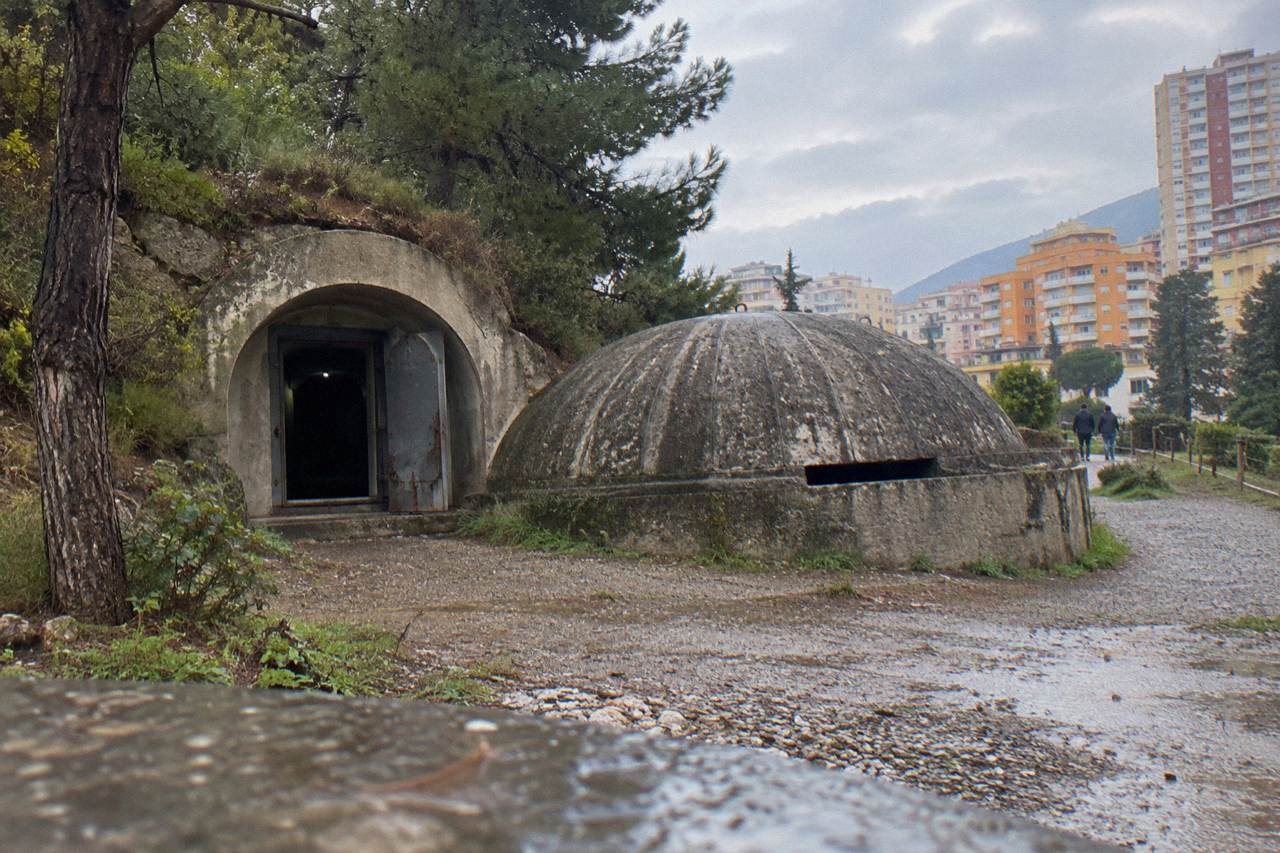
The commonly cited estimate is about 173,000 concrete bunkers built across Albania during the communist decades, a figure reported by secondary histories and repeated widely, though estimates differ and no official count stands behind it. The number should always be read as an estimate, never a record. The programme that produced them ran from 1967 to 1986, with the peak years reported as 1975 to 1983.
The bunkers were a defensive doctrine poured into concrete. The regime of the period expected invasion, and rather than a conventional army it invested in small domed emplacements, most of them one- or two-man positions, set at field edges, on hillsides, along beaches and beside roads. Visitors to Albania still stumble across them everywhere: half-buried mushrooms in a vineyard near Berat, a ringed position above the shore at Durres, a cluster on the flank of Mount Dajti above Tirana. The figure of 173,000 is the number reported by the Bunk'Art museum's own materials and by histories of the programme; the much larger figure sometimes quoted in older guidebooks has no archival support and should be ignored.
| Bunker fact | Detail | Basis |
|---|---|---|
| Commonly cited count | About 173,000 built | Reported, secondary; estimates differ |
| Programme period | 1967 to 1986 reported | Reported, secondary |
| Peak years | About 1975 to 1983 reported | Reported, secondary |
| Typical form | Small concrete dome, one or two positions | Descriptive |
| Where to see them today | Fields, hillsides, coastlines nationwide; Mount Dajti slopes above Tirana | Descriptive |
In Tirana itself the bunkers you can actually walk into are the two Bunk'Art museums, and both began life as far larger structures than the field domes: one a reported nuclear-age shelter for the political leadership, the other an Interior Ministry facility in the city centre. The question of how the count is made, and why the figures vary, is covered in more depth in the site's How Many Bunkers Are There In Albania answer page.
What Is Bunk'Art 1 And When Is It Open?
Bunk'Art 1 is a reported leadership nuclear shelter turned museum of the communist era, sitting behind the Dajti cable car lower station in the hills north-east of the centre, and per its own website it is open daily from 09:30 to 17:30 from 1 June 2026. Tickets are bought at the door; the museum publishes no ticket price online.
The museum's own site lists the opening hours plainly, and the address is Rruga Fadil Deliu, at the north-eastern edge of the city about 4.6 km from Skanderbeg Square as the crow flies, with Bunk'Art 1 sitting behind the lower station of the Dajti Ekspres cable car. The shelter is reported to have been built to house the political leadership, and it opened as a museum in November 2014, per published reports. Inside, the corridors and chambers hold exhibitions on the communist decades, the regime's leadership and the machinery of the state. The opening date and the shelter's original purpose are reported facts rather than official statements on the museum's own pages, so treat them as background rather than certainties, and confirm details before you go.
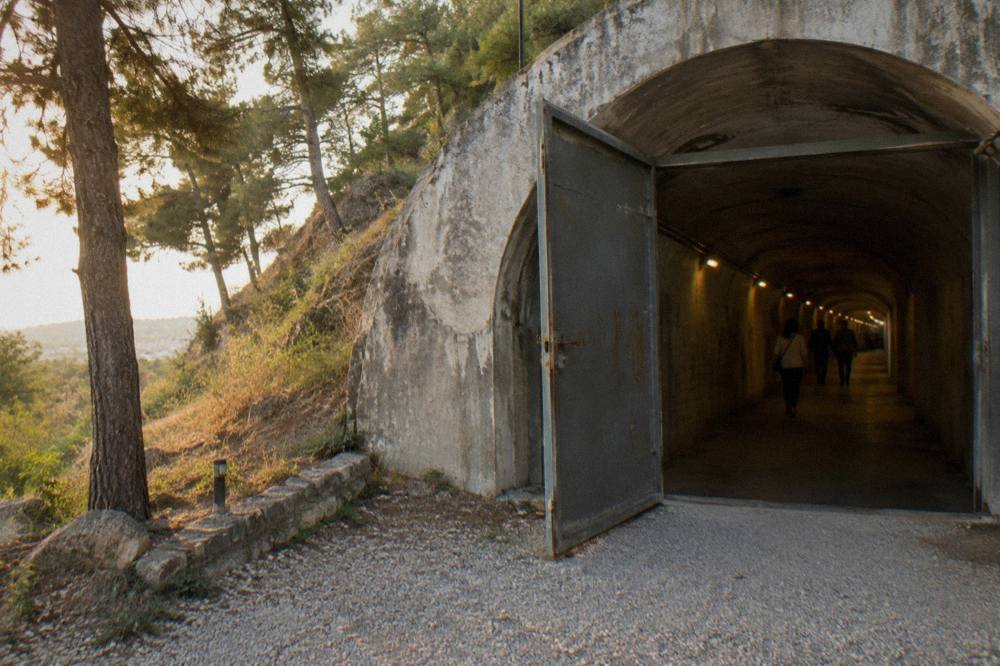
Pairing the museum with the cable car is the obvious move, and the site's Bunk'Art 1 guide covers the layout in detail, while the Dajti Ekspres guide explains the cable car side, including the reported Tuesday maintenance closure. A combined visit, bunker in the morning and the mountain in the afternoon, is a full day. The communist history tours page lists guided options that include transport out to the museum, which matters if you would rather not negotiate city buses to the north-eastern edge.
What Is Bunk'Art 2 And How Does It Differ?
Bunk'Art 2 is a reported Interior Ministry bunker in the city centre, about 0.2 km south-east of Skanderbeg Square on Rruga Abdi Toptani opposite the Municipality, and per its own website it is open daily from 09:30, with the closing time varying by season. It covers the secret-police years, and like its sister site it sells tickets at the door with no price published online.
Where Bunk'Art 1 is a sprawling shelter at the city's edge, Bunk'Art 2 is compact and central, reported to have opened as a museum on 19 November 2016. Its subject is darker and more intimate: the Interior Ministry's surveillance apparatus, the prisons and the daily machinery of control, presented in the bunker's original rooms. Because it sits a few minutes' walk from the square, it fits easily into a morning that also takes in the House of Leaves, the Et'hem Bey Mosque and the Postbllok memorial, all of which lie within about a kilometre of one another.
| Site | Reported origin | Subject | Position from Skanderbeg Square | Hours |
|---|---|---|---|---|
| Bunk'Art 1 | Leadership nuclear shelter, museum since November 2014 | The communist decades and the leadership | About 4.6 km north-east, behind the cable car lower station | Daily 09:30 to 17:30 from 1 June 2026 |
| Bunk'Art 2 | Interior Ministry bunker, museum since 19 November 2016 | The secret police and surveillance | About 0.2 km south-east, Rruga Abdi Toptani | Daily from 09:30, closing varies by season |
| House of Leaves | Museum since 23 May 2017, reported | Wiretapping and surveillance | About 0.2 km south-west | Daily 09:00 to 19:00 |
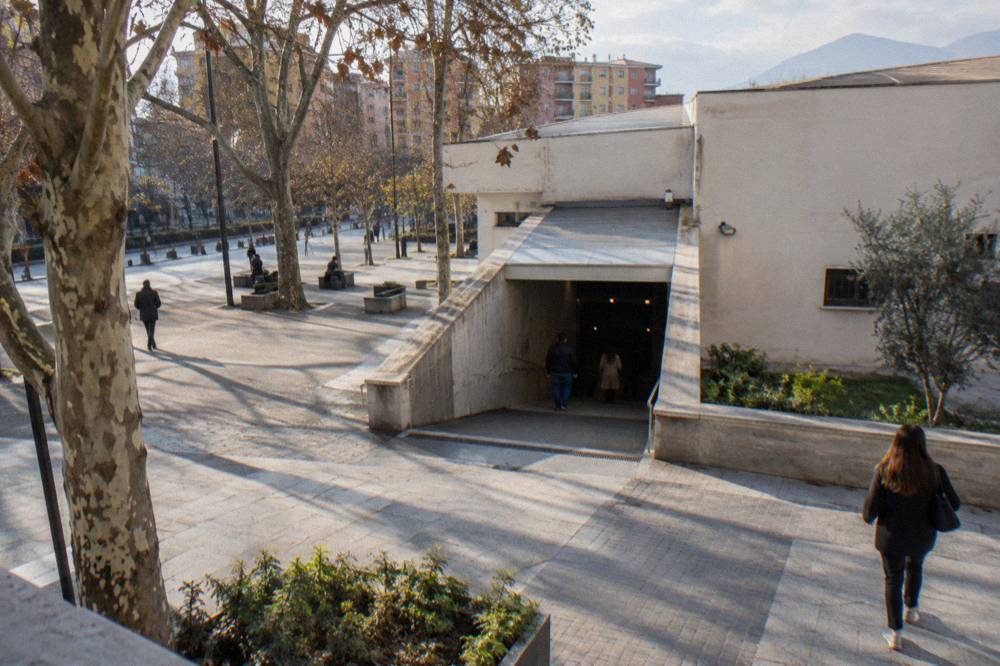
Both Bunk'Art museums should be understood as reported history: the two opening dates, the shelter purposes and the exhibition framing come from published reports, while the hours come from the museums' own website. Which of the two suits you better is covered in the site's comparison article, Which Is Better, Bunk Art 1 Or Bunk Art 2. The Bunk'Art 2 guide goes deeper on the exhibitions.
What Was The House Of Leaves?
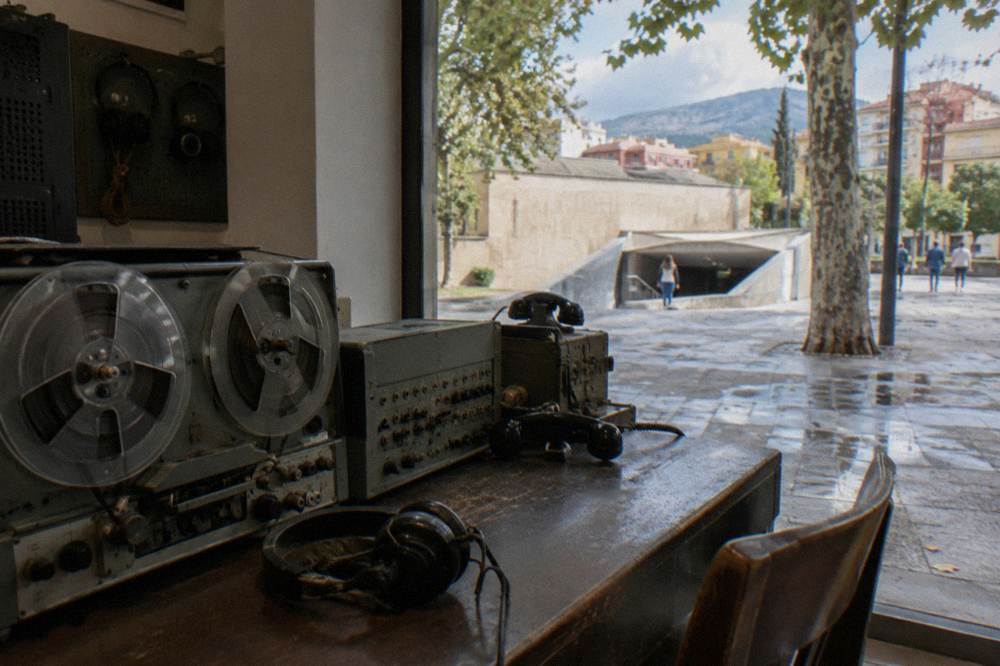
The House of Leaves, the National Museum of Secret Surveillance, is a museum in a former building of the communist-era security services about 0.2 km south-west of Skanderbeg Square, open daily from 09:00 to 19:00 per its official website, with tickets reported at 700 lek for adults, 210 lek for seniors and students, and free entry for children under 12, opened as a museum on 23 May 2017.
The name comes from the vines that covered the facade and hid the business inside from passers-by. The museum's official site confirms the daily hours; the ticket figures and the opening date are reported by the Visit Tirana portal, so confirm prices before you visit. Inside, the rooms hold wiretapping equipment, listening posts, photographs and files from the surveillance years, displayed in the spaces where the work was done. For a city museum it is unusually direct about the mechanics of watching people, and it complements Bunk'Art 2 rather than duplicating it: one shows the bunker, the other shows the paperwork. The wider set of guides lives on Tirana Albania Travel Guide.
| Ticket, House of Leaves | Reported price | Notes |
|---|---|---|
| Adult | 700 lek | Reported, confirm at the ticket office |
| Seniors and students | 210 lek | Reported |
| Groups of 12 or more | 500 lek per person | Reported |
| Children under 12 | Free | Reported |
| Hours | Daily 09:00 to 19:00 | Per the museum's official site |
What Do The Pyramid And Postbllok Tell You About The Regime?
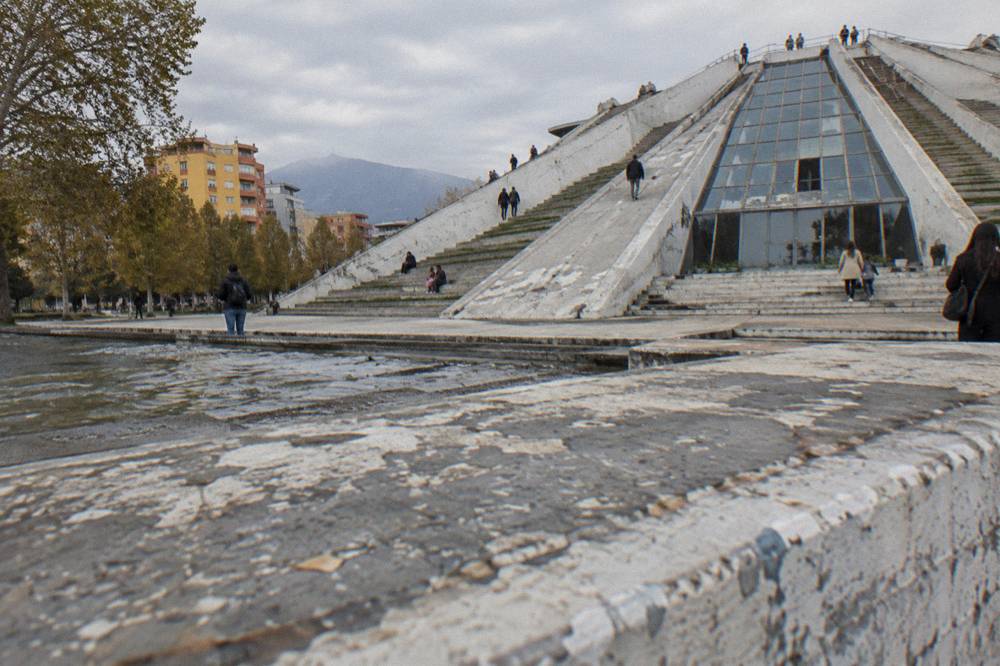
The Pyramid of Tirana, about 0.7 km south-east of Skanderbeg Square, is a building from the final years of the regime, renovated and reopened in May 2023 as a technology centre, with its exterior steps free to climb, per published reports; Postbllok, about 0.9 km south of the square, is a reported memorial at the edge of the former leadership quarter combining a bunker, prison pillars and a fragment of the Berlin Wall.
The Pyramid is the city's strangest building and its most visible relic of the late regime. The Pyramid of Tirana guide covers the details, and the site's answer page on whether you can climb the pyramid addresses the practical question directly.
Postbllok sits on the boulevard south of the centre, at the reported boundary of Blloku, the residential quarter where the leadership lived and which ordinary residents could not enter. The memorial assembles three objects: a bunker of the type built across the country, pillars from the Spac prison camp, and a segment of the Berlin Wall. It is a compact object lesson in the period and takes ten minutes to read properly.
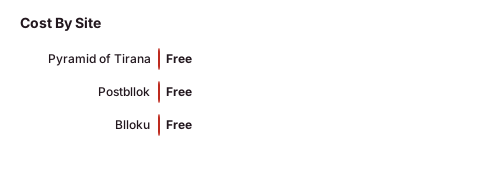
| Site | Position from Skanderbeg Square | What it is | Reported detail | Cost |
|---|---|---|---|---|
| Pyramid of Tirana | About 0.7 km south-east | Renovated building, technology centre since May 2023 | Exterior steps free to climb | Free outside |
| Postbllok | About 0.9 km south | Memorial: bunker, prison pillars, Berlin Wall segment | Marks the edge of the former enclave | Free |
| Enver Hoxha Villa | See site guide | Former leadership villa | Covered separately | See the guide |
| Blloku | About 0.8 km south | Former closed quarter, now the cafe district | Access history not established | Free to walk |
The leadership's private villa on the edge of the Grand Park is another stop on the same trail; the Enver Hoxha Villa page covers it. For a route that stitches these sites together, the site's communist history trail itinerary is the practical companion to this page, and the Tirana museums guide places the era's museums in the wider museum landscape.
How Does The Communist Story Show On Skanderbeg Square?
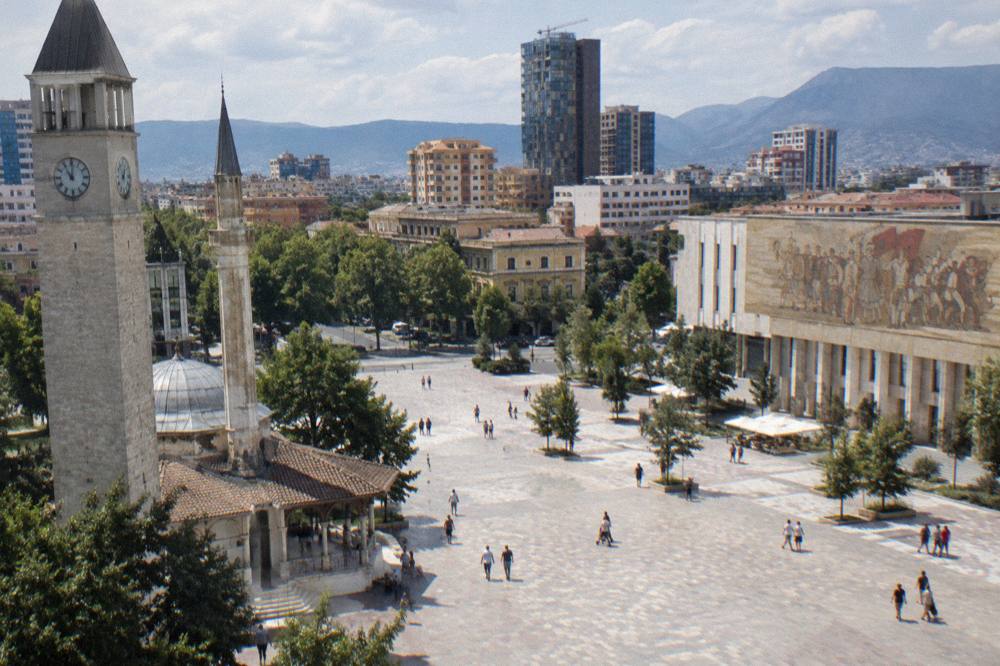
Skanderbeg Square holds the clearest layering of the city's eras in one frame: the Et'hem Bey Mosque about 0.2 km south-east of the centre, the Clock Tower beside it, the Palace of Culture from the communist decades on the square itself, and the National History Museum, closed for restoration since 15 March 2024 with the announced closure running to about March 2028, its mosaic facade still viewable from the square.
The square was redesigned in 2017 by the 51N4E practice, per published reports, into the pedestrian pyramid of stone slabs visitors see today, and the official tourism authority describes it as one of the city's most important public spaces. Around it, the eras stand shoulder to shoulder: the Ottoman-era mosque and tower, the communist-era Palace of Culture, and the closed museum whose vast mosaic facade remains the square's backdrop. Details of the mosque's visiting practice, including modest dress, are covered in the Et'hem Bey Mosque guide.
One practical note belongs here. Demonstrations have been held in central Tirana since 13 October 2026, some violent, and the UK's foreign travel advice was updated on 15 October 2026 to reflect them; avoid demonstrations and check local media during your stay. The Tirana Marathon was moved from 24 to 25 October to 14 and 15 November 2026 because of the unrest. The Is Tirana Safe? Scams, Traffic And Night Walks guide carries the current picture.
| Square landmark | Era | Source |
|---|---|---|
| Et'hem Bey Mosque | Ottoman era | Open outside prayer times, free |
| Clock Tower | Ottoman era | About 90 steps reported; confirm locally |
| Palace of Culture | Communist decades | Houses the opera and library |
| National History Museum | Communist decades | Closed since 15 March 2024, to about March 2028 |
Can You See The Communist Sites Of Tirana In One Day?
Yes: the central cluster, Bunk'Art 2, the House of Leaves, the Et'hem Bey Mosque, the Pyramid and Postbllok, all sit within about a kilometre of Skanderbeg Square and can be walked in a day, with Bunk'Art 1 added on a second day or the same one if you take the cable car side trip, since it sits about 4.6 km north-east behind the Dajti Ekspres lower station.
A sensible single day opens at Bunk'Art 2 from 09:30, crosses to the House of Leaves for its 09:00 opening hours, then returns to the square for the mosque and the museum facade, before walking south past the Pyramid to Postbllok and into Blloku for lunch. That route is about two kilometres of flat walking. Adding Bunk'Art 1 means a trip to the north-eastern edge: the site's getting around Tirana guide explains the city bus system, where a single ride costs about 40 lek paid in cash on board, and the two days in Tirana itinerary builds the full plan. If rain closes in, several of these sites are indoors, which the Tirana on a rainy day itinerary takes advantage of.
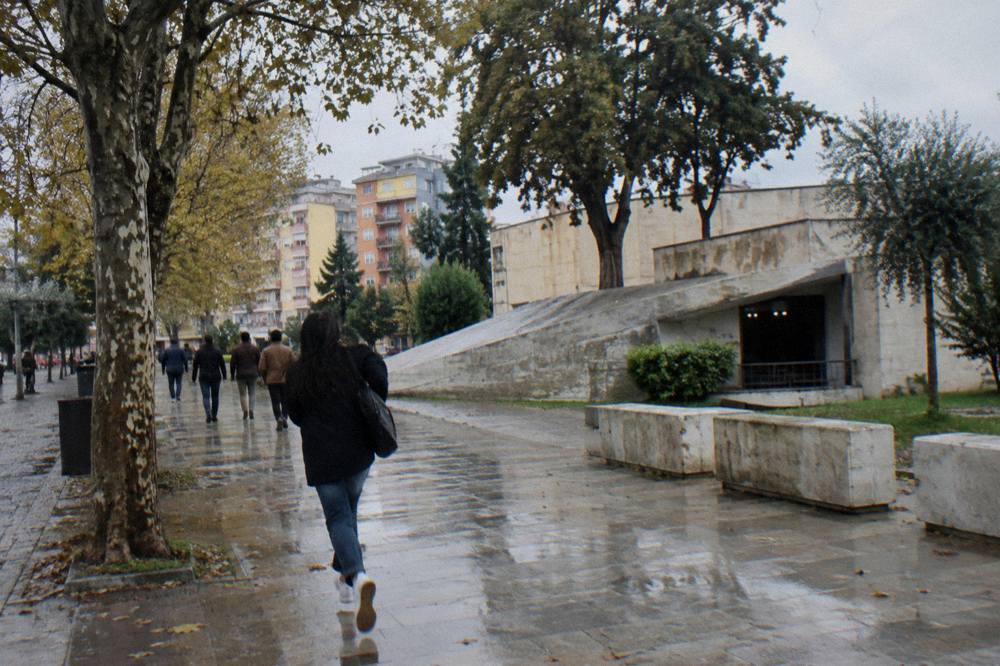
Guided options are worth weighing for the interpretive layer. The related tour on this page, the Tirana's Communist Past small-group walking tour, covers the central landmarks with a local guide: Communist Past Small-Group Tour.
| Day plan | Sites | Walking distance | Notes |
|---|---|---|---|
| Day 1, morning | Bunk'Art 2, House of Leaves | Under 1 km | Both open daily from 09:00 and 09:30 |
| Day 1, afternoon | Square, mosque, museum facade, Pyramid, Postbllok | About 1.5 km | All outdoor except mosque interior |
| Day 2, morning | Bunk'Art 1 | Bus or taxi to the north-east edge | Behind the cable car lower station |
| Day 2, afternoon | Dajti Ekspres and Mount Dajti | Cable car ride | Usually closed Tuesdays, confirm first |
How Does Tirana's Communist Past Connect To Day Trips?
Kruja, about 45 minutes by road from Skanderbeg Square, ties the communist story back to the national hero the regime itself claimed: Skanderbeg took Kruja on 28 November 1443 and the League of Lezha was formed on 2 March 1444, per secondary timelines, while Berat, about two hours by road, holds a museum quarter and Petrela Castle, about 22 minutes out, holds a reported bunker of its own in a castle setting.
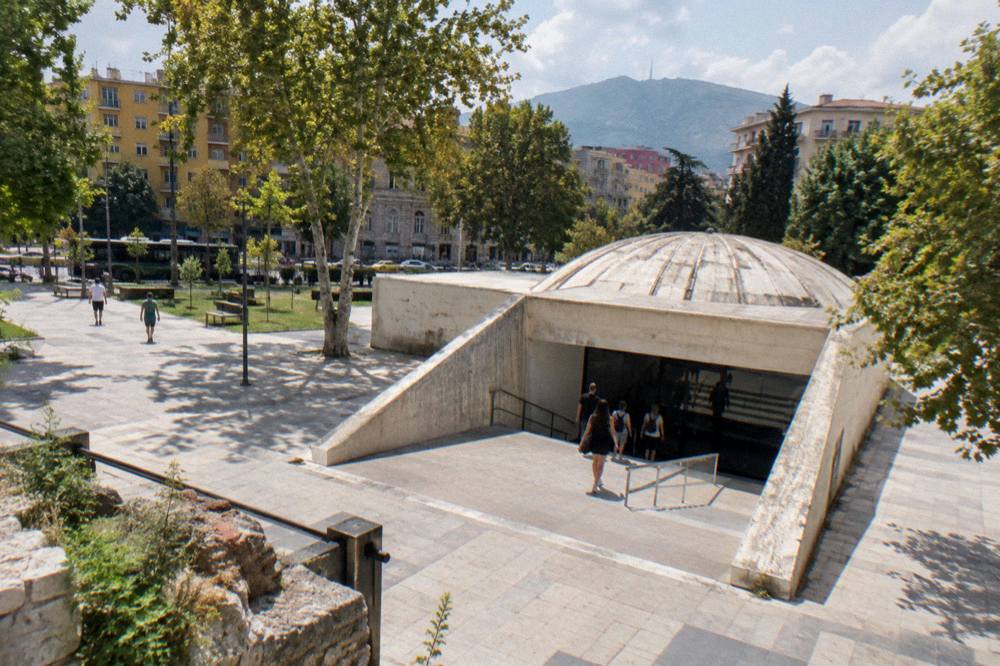
The regime wrapped itself in Skanderbeg's memory, naming squares, cities and institutions after him, so a trip to Kruja Castle and its bazaar reads differently once you have seen the iconography in Tirana. The castle's official tourism page prints no fee or hours, so check before going. Petrela Castle, the closest castle to the city, is often combined with the zipline and outdoor tours listed on this site. Further out, the museums and old quarters of Berat and Gjirokaster extend the story into the Ottoman centuries the communists replaced. Distances here are road distances from the square: Kruja about 45 minutes, Petrela about 22 minutes, Berat about two hours.
What Should You Know Before Visiting The Communist Sites?
Practical essentials: the currency is the Albanian lek, roughly 90 lek to the euro, and the euro is not legal tender; emergency numbers are Police 112, Ambulance 127 and Fire 128; Bunk'Art tickets are bought at the door with no price published online; the House of Leaves is reported at 700 lek for adults; and the country is outside the EU and Schengen, running its own 90-day-in-180 visa regime for visa-free nationals.
Cards are widely taken in hotels and larger restaurants but cash is still needed for buses, markets and small cafes, so carry lek. The Albanian lek and Tirana prices guides cover the money side, and entry rules are detailed in the Albania entry requirements guide. For timing a visit around the weather, the ERA5 reanalysis for 1991 to 2020 shows July and August as the hot, dry months with mean highs of 29.8 and 30.4 C, and November and December as the wet ones with 139 and 138 mm of rain; the best time to visit Tirana and Tirana weather guides take that further.
The communist decades gave Tirana a physical record few European capitals can match, and the city has chosen to keep it legible rather than erase it. Walk the central cluster, ride out to Bunk'Art 1, climb the Pyramid steps at sunset, and the story reads itself off the streets.
Common Questions About Communist History In Tirana
How many bunkers are there in Albania?
The commonly cited estimate is about 173,000 concrete bunkers built during the communist decades. Estimates differ, so treat it as an estimate rather than a count.
What is the difference between Bunk'Art 1 and Bunk'Art 2?
Bunk'Art 1 is a reported leadership nuclear shelter behind the Dajti cable car lower station, about 4.6 km north-east of the centre, covering the communist decades. Bunk'Art 2 is a reported Interior Ministry bunker in the city centre covering the secret-police years. Both are open daily from 09:30.
Do Bunk'Art museums publish ticket prices?
No. The official website lists hours but no prices, so buy tickets at the door and expect to pay in cash.
What was Blloku in the communist era?
Blloku, about 0.8 km south of Skanderbeg Square, was the residential quarter of the political leadership, closed to ordinary residents. Today it is the city's cafe and nightlife district, and the Postbllok memorial at its reported edge combines a bunker, prison pillars and a fragment of the Berlin Wall.
Can you climb the Pyramid of Tirana?
Yes, the exterior steps are free to climb, per published reports. The building was renovated and reopened in May 2023 as a technology centre.
Is the House of Leaves open every day?
Per its official website, the museum is open daily from 09:00 to 19:00. Tickets are reported at 700 lek for adults, with reductions for seniors, students and groups, and free entry for children under 12; confirm at the ticket office.