Do They Speak English In Tirana?
English in Tirana: where it works, where it does not, and the Albanian words worth knowing before a visit to Albania's capital.
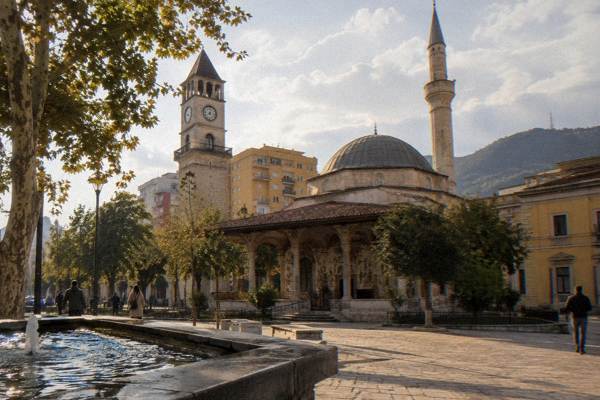
Tirana, the capital of Albania, is a city where English runs far enough for an ordinary trip, without covering everything. The centre, with Skanderbeg Square at its heart and the cafe quarter of Blloku about 0.8 km south, works in English at hotels, larger restaurants, museums and ticket counters. City buses, neighborhood markets and conversations with older residents often do not, and Albanian is the language of the street. The EF English Proficiency Index places Albania in its moderate band, which matches what that split suggests: functional English in the tourist economy, uneven beyond it.
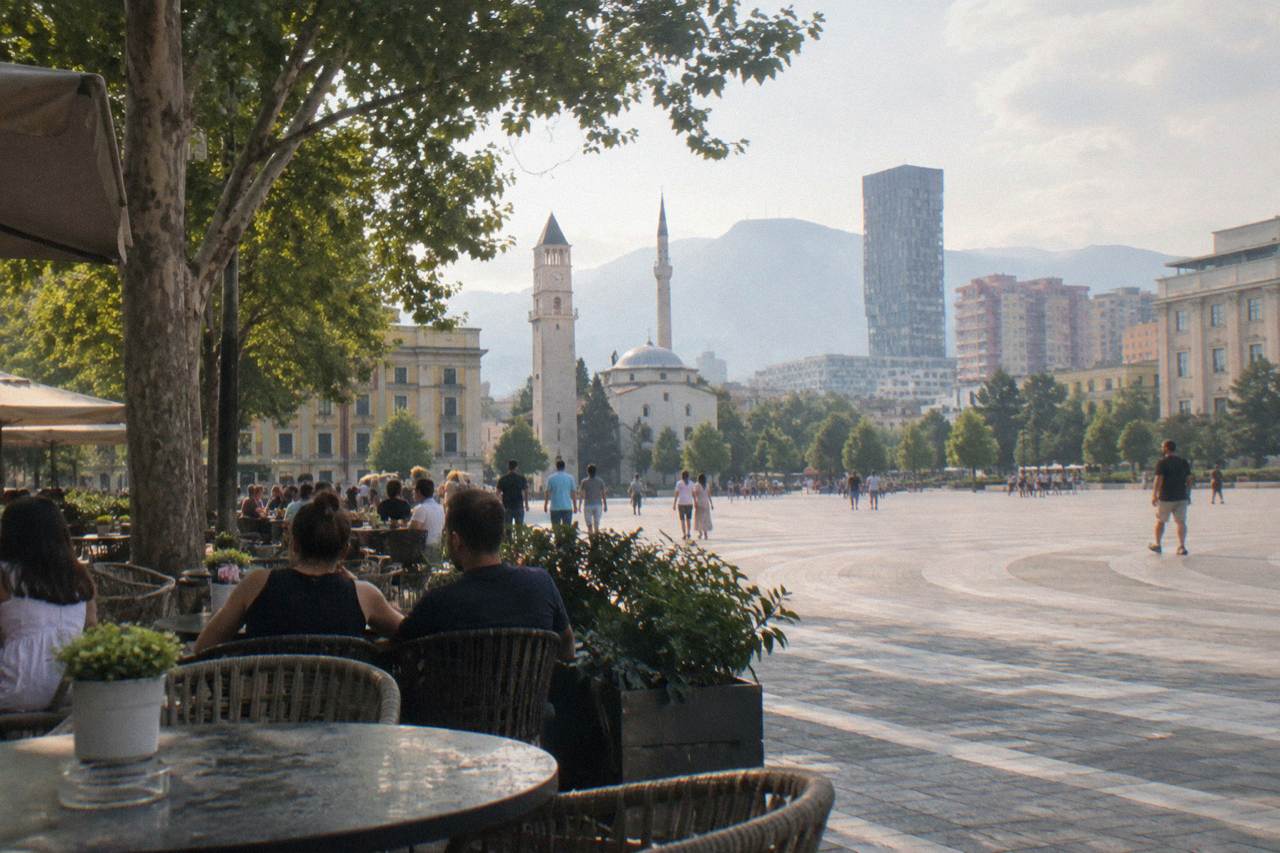
The practical answer is simple. Bring a few Albanian words, keep a translation app handy for buses and small shops, and expect the language gap to widen the further you go from the centre. The rest of this page sets out where English holds up, where it thins out, and exactly what to learn before arriving, in the words the phrasebook actually prints.
Yes, in the parts of Tirana a visitor actually uses, English is widely enough spoken that a trip runs smoothly without Albanian. Hotels, museums, restaurants in the centre, tour operators and younger people generally manage it. City buses, market stalls and many older residents do not, so a handful of Albanian words and a translation app cover the gaps. The EF English Proficiency Index places Albania in its moderate band, neither top nor bottom of Europe.
Albania sits in the index's moderate proficiency band, so English is common in the capital's service economy and thinner at its edges. Tirana does better than the national picture, as capitals usually do, but nobody should arrive expecting every interaction in English.
Three situations define the gap. Ordering in a Blloku cafe or buying a Bunk'Art ticket at the door usually works in English. Asking a bus conductor which stop serves the North-South Bus Terminal, about 3.9 km north-west of Skanderbeg Square, may not. And a minibus ride to a nearby town like Kruja, about 200 lek per local reports, is almost entirely Albanian, with fares paid in cash to the driver.
The generational line is real and worth planning around. Staff under about 35 in the centre typically speak workable English; people who grew up before 1991 more often learned Italian or Russian at school, a legacy of the communist period that ran from 1944 to 1991. Italian is genuinely useful as a second string, and Greek and German appear too, given how many Albanians have worked in Italy and Germany.
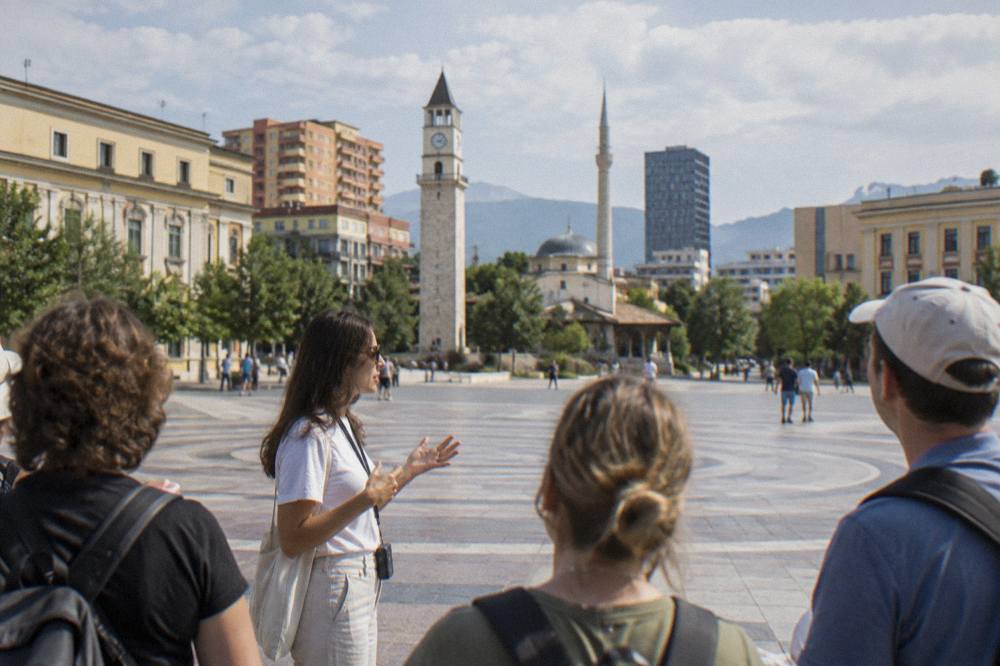
A good first or second day in the city is a guided walk, since guiding is one domain where English is the default. The Tirana guided walking tour of history, culture and local life covers the centre's main sights with a local guide, and it doubles as a low-effort orientation to the city before exploring alone. If the question behind the question is whether Tirana rewards the effort at all, Is Tirana Worth Visiting For Tourists answers that separately.
Where English Works Best In Tirana?
English works best in Tirana's paid visitor economy: hotels, museums, walking tours, cooking classes and the restaurants and cafes of the centre and Blloku. The museums that publish hours, such as Bunk'Art 1, open 09:30 to 17:30 since 1 June 2026, and the House of Leaves, open 09:00 to 19:00, operate with foreign visitors in mind. Card payments and English signage are normal at this level, and staff under about 35 usually manage a full exchange.
The further an interaction sits from that economy, the more Albanian it becomes. The pattern is predictable enough to list, and the table below maps it against places named in the city's own geography, with straight-line positions from Skanderbeg Square.
| Situation | Where | English level |
|---|---|---|
| Hotel front desk, tour meeting points | Centre, Blloku about 0.8 km south | Reliable |
| Museum ticket desks | Bunk'Art 1 about 4.6 km north-east, Bunk'Art 2 about 0.2 km south-east, House of Leaves about 0.2 km south-west | Reliable |
| Cafes and restaurants | New Bazaar about 0.6 km east, Blloku | Good |
| City bus, about 40 lek per ride, cash | Whole city | Limited to none |
| Market stalls and small shops | Pazari i Ri and neighborhoods | Limited |
| Intercity minibuses | North-South Bus Terminal about 3.9 km north-west | Rarely |
Two specific traps catch visitors. The first is the city bus: a single ride costs about 40 lek, paid in cash to the conductor on board, per local reporting, and English is not part of the transaction. The second is taxi hailing, since Uber and Bolt do not operate in Tirana and local taxi apps work in Albanian; agreeing the destination in advance, with a map shown on a phone, sidesteps the problem. The page on whether there is an Uber in Tirana covers that in detail.
Does Anyone Speak English Outside Tirana?
English thins out sharply outside Tirana, with two exceptions: organized day trips, which run with English-speaking guides, and the beach towns of the south, where tourism has pushed English and Italian forward. Berat, Shkoder and Durres have enough English in their guesthouses and sights for an independent day trip. Rural areas, mountain villages and ordinary intercity buses are largely Albanian only, so a guide or a tour fills the gap there.
Distances matter as much as language here. Durres and the Adriatic coast sit about 37 km and 39 minutes by road from Skanderbeg Square, an easy day trip. Berat is about 122 minutes, Shkoder about 118, both practical by bus or tour. Ohrid, whose town is across the border in North Macedonia at about 135 minutes plus the crossing, and the far south, Saranda at about 248 minutes, are different propositions, better done overnight or on a long organized tour day.
That is the real argument for tours beyond the city: not comfort but language. A trip such as the Berat UNESCO heritage and Belshi Lake tour, which picks up in Tirana and Durres, hands the border between English and Albanian to a guide who lives on both sides of it. The same applies to a cooking class in Tirana, where recipes are explained rather than guessed at, and where the class itself becomes the language lesson.
Do Tirana Tours And Guides Run In English?
Yes, the bookable tours that leave from Tirana, walking tours, food tours, cooking classes and day trips, are guided in English as standard, and the listings state their language. This is the one corner of the city where a visitor is guaranteed English regardless of neighborhood or season. Booking in advance also fixes meeting points and pickup logistics that would otherwise need to be negotiated in Albanian.
The roster covers the spread. Walking tours of the centre and of communist landmarks, food tours through Pazari i Ri and the New Bazaar, a cooking class with raki tasting, and day trips to Berat, Kruja, Durres, Ohrid and the Komani Lake all depart from central Tirana with English-speaking guides. The Local Life Walk link shows dates and language details on the operator's live listing.
For travelers who prefer to pay nothing up front, free, tip-based walking tours also exist in Tirana on the GuruWalk platform, free with tips at the end, though this page's featured picks are the paid, small-group walks. Meeting points and times are not fixed by the city, so confirm them at booking.
Which Albanian Words Help Most In Tirana?
Ten Albanian words cover the gaps where English fails in Tirana: hello, thank you, please, yes, no, excuse me, cheers, goodbye, water and the bill. Learning them costs an afternoon and converts bus rides, market purchases and cafe orders from mime into transactions. Albanian is the state language, unrelated to its neighbors' Slavic languages and Greek, so these borrowed words can serve as a bridge for anyone who speaks none of it.
The phrasebook entries below are the ones confirmed in the Albanian phrasebook on Wikivoyage, printed in Albanian spelling with their plain English meanings. No pronunciation guidance appears beyond what is on that page.
| Albanian | English |
|---|---|
| Përshëndetje / Tungjatjeta | hello |
| Mirëmëngjes | good morning |
| Faleminderit | thank you |
| Ju lutem | please |
| Po | yes |
| Jo | no |
| Më falni | excuse me |
| Gëzuar | cheers |
| Mirupafshim | goodbye |
| Ujë | water |
| Faturën | the bill |
One extra habit is worth adopting. Visitors often report that an upward nod of the chin can mean no in Albania, while a side-to-side tilt can mean yes, the reverse of Western convention. It is a widely repeated observation rather than a rule, but knowing it prevents a few confusing market exchanges, and confirming with a spoken po or jo settles any doubt.
For food specifically, a short dish vocabulary does more work than any phrase: tave kosi is baked lamb with a yogurt and egg topping, byrek a layered filo pie, fergese baked peppers and tomatoes with cheese, and qofte seasoned meatballs. Raki is the fruit brandy that arrives whether ordered or offered. The Albanian food guide expands on all of it.
Common Questions About Speaking English In Tirana
Do They Speak English In Tirana?
Yes, in the visitor economy of the centre: hotels, museums, tours, and the cafes and restaurants of Blloku and the New Bazaar. Buses, markets and many older residents do not speak it, so carry a few Albanian words. Albania sits in the moderate band of the EF English Proficiency Index.
Can You Visit Tirana Without Speaking Albanian?
Yes. Museums, tours and central restaurants handle English, cards are widely taken in the centre, and a translation app covers buses and small shops. The city is compact and walkable, which keeps many interactions inside the English-speaking zone.
Is English Or Italian More Useful In Tirana?
English is more useful for a visitor, especially under about 35. Italian is common among older residents, a legacy of the communist period that ended in 1991 and of later work migration to Italy, but the tourist economy runs on English.
Do Menus In Tirana Have English Translations?
Restaurants in the centre and Blloku commonly print English menus or have staff who translate them. Smaller places near markets and bus routes may have Albanian-only menus, where a translation app on the phone handles the ordering.
Do Bus Drivers In Tirana Speak English?
Not reliably. A city bus ride costs about 40 lek in cash paid on board, per local reporting, and the transaction works by pointing at a map rather than talking. Intercity minibuses from the North-South Bus Terminal work the same way.
What Language Do Tour Guides In Tirana Use?
English is the standard guiding language for Tirana's walking tours, food tours and day trips, and each listing states its language. Confirm the language at booking if traveling in a group with other needs.
Language is the last thing that should decide a trip to this city. Tirana's centre answers English well enough, its tours are built around it, and the ten words above carry the rest of the way. Once the language question is settled, the practical ones follow: how many days to give the city, what the lek actually buys, and which day trips fit the time left, all covered in the site's other guides at Tirana Albania Travel Guide.