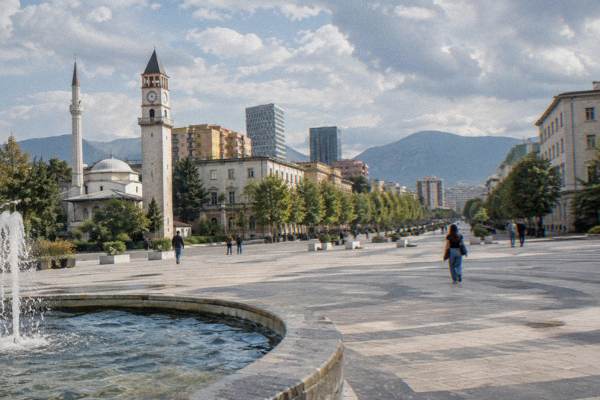
Is Tirana Worth Visiting For Tourists?
A straight answer on whether Tirana is worth visiting: what the Albanian capital offers, what it costs, how to get around and the best time to go.
Tirana, the capital of Albania, sits in an inland basin at the foot of Mount Dajti, and the Adriatic coast at Durres is about 37 km and 39 minutes away by road: it is a city trip, not a beach holiday. What it offers instead is a compact centre where an Ottoman mosque stands beside a communist-era bunker museum, a renovated pyramid you can climb, and a cable car billed by its operator as the longest cableway in the Balkans. Albania counted 2,335,930 residents on 1 January 2026, and Tirana county was the only one that grew in 2025, holding about 32.8% of the country, per INSTAT. Reported figures also put more than 12 million foreign arrivals in Albania across 2025, so the country is no longer a secret.
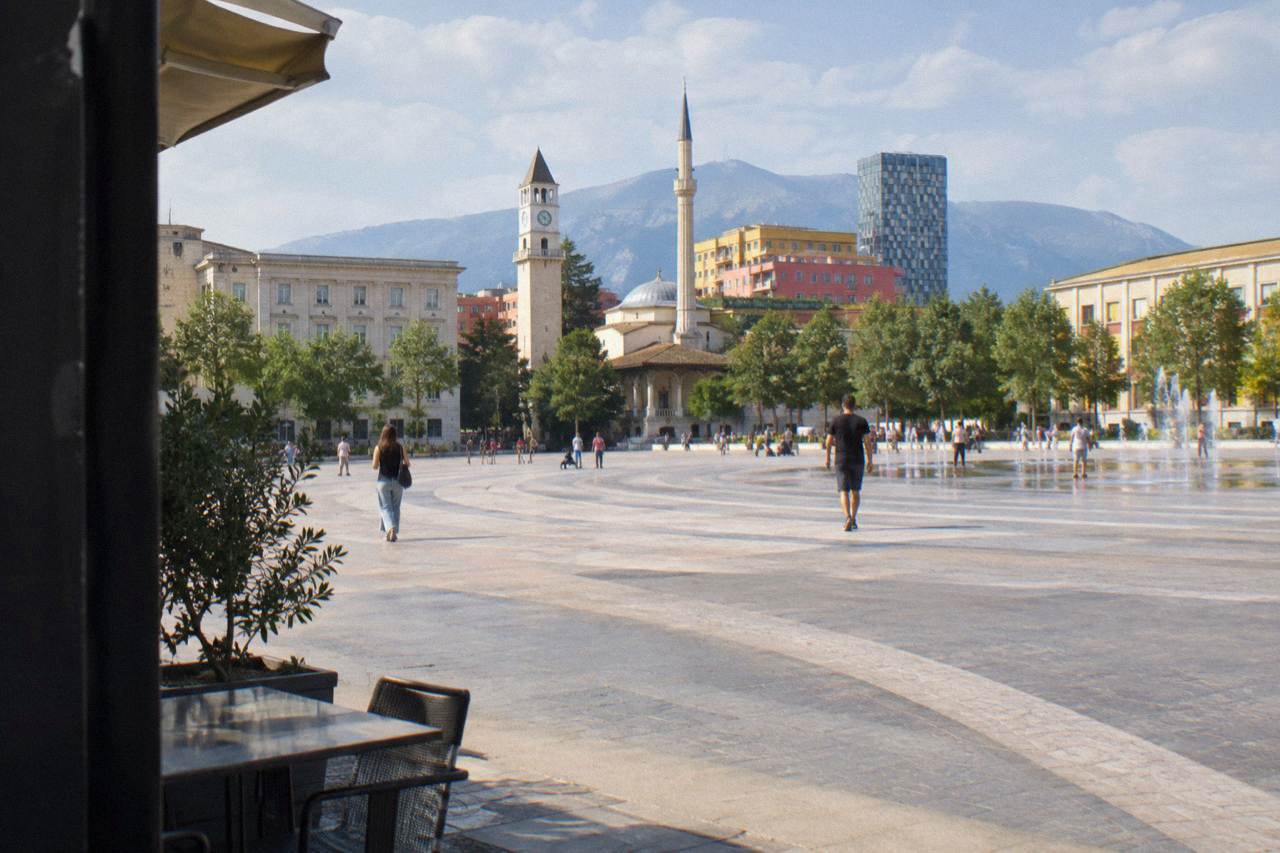
What Makes Tirana Worth The Trip?
Tirana rewards travellers who want a European capital that is still visibly changing: a walkable core of mosques, museums and painted buildings, communist history you can walk inside, mountain nature 53 minutes from the square, and costs far below the euro zone, since Albania uses the lek, not the euro. The city has no UNESCO listing of its own, but four World Heritage properties sit elsewhere in Albania, from Butrint in the far south to the Ottoman towns of Berat and Gjirokaster. The capital's own appeal is density: Et'hem Bey Mosque, the Clock Tower, the House of Leaves museum and the Pyramid of Tirana all sit within about a kilometre of Skanderbeg Square. For a fuller rundown, see What Is Tirana Famous For and the site's things to do in Tirana guide.
Three things define a first visit. First, the layering: Tirana was founded in 1614, per the city's own history page, became capital in 1920 by decision of the Congress of Lushnja, then spent 1944 to 1991 under a communist regime whose bunkers and surveillance buildings are now museums. Second, the scale: the 2023 census counted about 598,000 residents in the municipality, big enough for a real food and cafe scene, small enough that the centre is walkable. Third, the setting: Mount Dajti's summit is 9.8 km from the square as the crow flies, and the Dajti Ekspres cable car lower station sits at the city's north-eastern edge.
It is not a polished destination in the way older European capitals are. The National History Museum on Skanderbeg Square has been closed for restoration since 15 March 2024, with the announced closure running to about March 2028. Several buildings around the centre are scaffolding-wrapped. Visitors who want everything immaculate may find it rough-edged; visitors who want a city mid-story tend to find that the point.
Is Tirana Worth Visiting For Tourists?
Yes, for a two or three day city break built around history, food and a mountain afternoon, Tirana is worth visiting: the centre is genuinely walkable, the communist-era museums are unlike anything else in Europe, English is workable in the tourism economy, and prices sit well below the euro zone. It is worth less as a beach base, since the coast is a day trip at Durres, and less still if your holiday depends on one flagship museum, because the National History Museum is closed to about March 2028.
The honest framing is that Tirana works as a destination of parts rather than one blockbuster sight. Bunk'Art 1, a nuclear bunker behind the cable car lower station, is open daily 09:30 to 17:30 in the 2026 summer timetable per the museum's own site, and Bunk'Art 2, in the centre, is open daily from 09:30; neither publishes a ticket price online, so buy at the door. The House of Leaves, the museum of secret surveillance, lists Monday to Sunday 09:00 to 19:00. The Pyramid of Tirana, opened in 1988 and renovated into a technology centre that reopened in May 2023, can be climbed on its outside steps free of charge. That is a strong two-day menu before you add day trips.
Guided walks cover the centre efficiently on a first day, and a food walk introduces tave kosi, byrek and qofte faster than searching alone. For planning depth, How Many Days In Tirana Is Enough and Is Tirana Walkable both go into detail.
What Can You Actually See And Do In Tirana?
The core sights cluster within a kilometre of Skanderbeg Square: Et'hem Bey Mosque, the Clock Tower, the House of Leaves, Bunk'Art 2 and the Pyramid of Tirana, with Bunk'Art 1, the cable car and Petrela Castle as short trips out, and the main sights fit into two full days at an unhurried pace. Skanderbeg Square itself is described by the national tourism agency as one of the city's most important public spaces, and it is the natural anchor for any route. Blloku, about 0.8 km south, is the cafe and bar quarter, once a restricted communist-era enclave, now where the evening goes.
| Sight | Distance from Skanderbeg Square | Access |
|---|---|---|
| Et'hem Bey Mosque | About 0.2 km south-east | Free, outside prayer times, modest dress |
| House of Leaves | About 0.2 km south-west | Open Monday to Sunday 09:00 to 19:00 |
| Bunk'Art 2 | About 0.2 km south-east | Open daily from 09:30, tickets at the door |
| Pyramid of Tirana | About 0.7 km south-east | Outside steps free to climb |
| Blloku | About 0.8 km south | Public streets, cafes and bars |
| Grand Park of Tirana | About 2.1 km south-east | Public park and artificial lake |
| Bunk'Art 1 | About 4.6 km north-east | Open daily 09:30 to 17:30 summer 2026 |
| Dajti Ekspres lower station | About 4.4 km north-east | Tickets at the lower station only |
Two cautions belong in any 2026 plan. The Clock Tower has about 90 steps, but its fee and hours vary between sources, so check at the venue. The National Gallery of Arts is under renovation, so check before going. And note one current-conditions point: demonstrations have been held in central Tirana since 13 October 2026, some violent, and the UK FCDO updated its travel advice on 15 October 2026; avoid gatherings and check local media. The same protests pushed the Tirana Marathon from late October to 14 and 15 November 2026.
Day trips multiply the options. Durres and its Roman amphitheatre are about 39 minutes away by road, Kruja and its castle about 45 minutes, and Berat, a UNESCO-listed Ottoman town, about two hours. The far south, Gjirokaster, Saranda and Butrint, is four hours or more each way: overnight territory, not a day trip, however the listings phrase it.
A guided hidden-treasures walk is the most efficient first-day purchase.
How Easy Is Tirana To Reach And Get Around?
Tirana is easy to reach and easy to walk: the airport is 15.9 km from the centre with a 24/7 airport bus at 400 lek each way, the centre itself is compact enough to cover on foot, and a single city bus ride costs about 40 lek paid in cash on board, though there is no airport train and no Uber or Bolt. Tirana International Airport Nene Tereza at Rinas is the country's real gateway; the airports at Vlora and Kukes have no scheduled passenger flights. The airport bus runs every full hour around the clock, takes 30 to 40 minutes and stops behind the Palace of Opera and Ballet near Skanderbeg Square. The official airport taxi costs about 2,200 lek one way.
Inside the city, walking does most of the work, and taxis ordered by phone or app fill the gaps, since Uber and Bolt do not operate there. Albania is not in the EU or Schengen and runs its own visa regime, 90 days in any 180 for visa-free nationals; US passport holders can stay up to a year, a reported figure worth confirming before travel. More detail sits in Is There An Uber In Tirana.
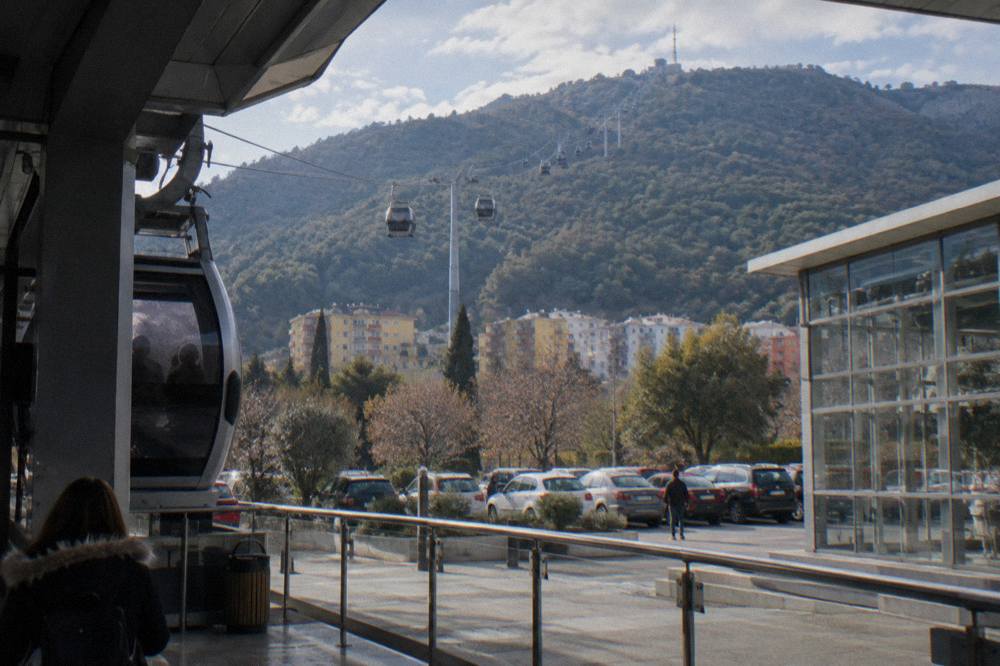
What Does A Trip To Tirana Cost?
Tirana is a budget-friendly capital by Western European standards: the currency is the Albanian lek at roughly 90 to the euro, the euro is not legal tender, cards work in hotels and larger restaurants while cash rules buses and markets, and the only fares published anywhere official are the airport bus at 400 lek, the city bus at about 40 lek and the official airport taxi at about 2,200 lek. No reliable source publishes what a coffee, a hotel night or a meal costs, so treat any number you see elsewhere as an estimate: what the structure shows is that public transport and self-guided sightseeing are cheap, and guided tours and day trips are the main variable costs.
The money mechanics are simple. Change to lek, keep some cash for buses, markets and small cafes, and use cards where they are taken. Two museums publish their entry terms, the House of Leaves among them, but neither Bunk'Art site nor the Dajti Ekspres publishes a price online, so check the current price at the venue before going. For the wider picture, including what you can and cannot pay for in euros, see Is Tirana Cheap Or Expensive and Does Albania Use The Euro.
When Is The Best Time To Visit Tirana?
May, June and September are the best months for a city break in Tirana: ERA5 reanalysis for 1991 to 2020 shows May averaging a 22.7 C high, June 26.9 C and September 25.7 C, with June rainfall at just 51 mm, while July and August average 29.8 C and 30.4 C highs, and November is the highest-rainfall month at 138.6 mm. Winters are mild rather than harsh, with a January mean high of 10.8 C and mean low of 2.3 C, but November and December together are the highest-rainfall pair of months on the calendar, so pack for wet pavements if you come then.
| Month | Mean high C | Mean low C | Rain mm |
|---|---|---|---|
| January | 10.8 | 2.3 | 105.8 |
| April | 18.4 | 8.3 | 104.5 |
| May | 22.7 | 12.5 | 89.0 |
| June | 26.9 | 16.6 | 51.2 |
| July | 29.8 | 19.1 | 33.5 |
| August | 30.4 | 19.5 | 31.0 |
| September | 25.7 | 16.0 | 98.9 |
| November | 16.5 | 8.0 | 138.6 |
These are modelled climate normals, not station records, and the basin smooths the numbers by a degree or two either way. The December trade-off is the Christmas market, which usually runs through December on and around Skanderbeg Square, and Festivali i Kenges, the national song contest, held 17 to 20 December in 2026 per fan media reporting. The site's best month to visit Tirana answer goes deeper.
Common Questions About Visiting Tirana
Is Tirana Worth Visiting For Tourists?
Yes, as a two or three day city break focused on communist-era museums, Ottoman landmarks, food and a Mount Dajti afternoon. It is not a beach city: the Adriatic coast at Durres is about 39 minutes away by road and works as a day trip.
Is Tirana Safe For Tourists Right Now?
Demonstrations have been held in central Tirana since 13 October 2026, some violent, and the UK FCDO updated its advice on 15 October 2026: avoid gatherings and check local media. Otherwise the standing advice is ordinary city care, watch your belongings in crowds. Emergency numbers are Police 112, Ambulance 127, Fire 128.
How Many Days Do You Need In Tirana?
Two days cover the centre, Bunk'Art and the Pyramid; three adds Mount Dajti by cable car and one day trip such as Kruja or Durres. Anything involving Berat, Gjirokaster or the far south is an overnight or a long tour day, since Berat is about two hours and Gjirokaster about three and a half by road.
Do People Speak English In Tirana?
In the tourism economy, yes: the EF English Proficiency Index places Albania in its moderate band, and hotel, restaurant and tour staff in the capital generally manage English. Menus and museum signage in English are common at the main sights.
Can You Visit Tirana Without A Guide?
Yes. The centre is compact and walkable, and the main museums carry their own interpretation. A guided walk adds context, especially on communist-era sites, but nothing in the centre requires a guide to enter.
Is Tirana A Beach Destination?
No. Tirana is an inland city in a basin at the foot of Mount Dajti. The nearest sea is the Adriatic coast at Durres, about 37 km and 39 minutes west by road, which makes a practical beach day trip.
The Tirana Albania Travel Guide covers every sight, day trip and practical question raised here in its own dedicated page.