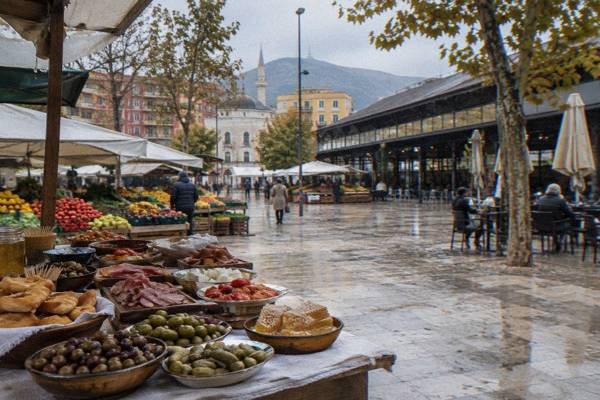
Albanian Food: What To Eat In Tirana
Albanian food in Tirana runs from byrek at a bakery counter to tave kosi in a dining room above the Artificial Lake. This guide sets out what to eat, what to drink and where each dish fits in the city.
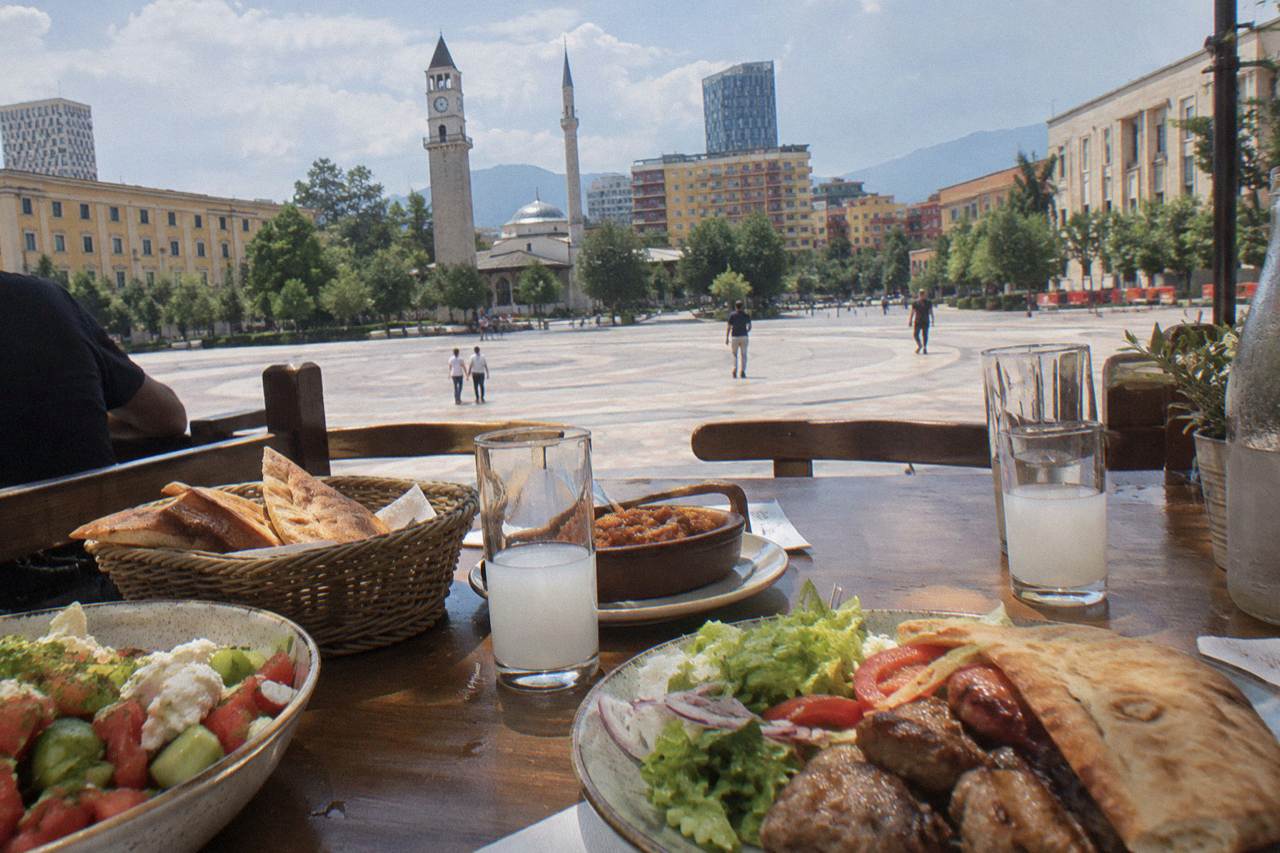
Short answer
The core Albanian dishes to eat in Tirana are byrek, tave kosi, qofte, fergese and grilled meats, with raki and Albanian coffee as the standard drinks, and the New Bazaar and Blloku as the main eating neighbourhoods.
Tirana, the capital of Albania, eats around a handful of dishes that rarely change: byrek sold by the slice, tave kosi baked with lamb and yogurt, qofte off the grill, and raki poured at the start or the end of a meal. The city sits inland in a basin at the foot of Mount Dajti, and its food reflects that position, meat, dairy, bread and vegetables, with the Adriatic at Durres about 37 km west adding fish to the menu rather than anchoring it. This Tirana Albania Travel Guide page walks through the dishes, the drinks, the neighbourhoods to eat them in, and the practical rules that shape a food-focused trip, from the lek to the tap-water advice.
What Are The Dishes To Eat In Tirana?
The five dishes that anchor Albanian food in Tirana are byrek, a layered filo pie; tave kosi, baked lamb with a yogurt and egg topping; fergese, baked peppers and tomatoes with cheese; qofte, seasoned grilled meatballs; and simple grilled meats with salad and bread. Each is served across the city, from bakery counters to dining rooms, and none needs translation into a tourist version.
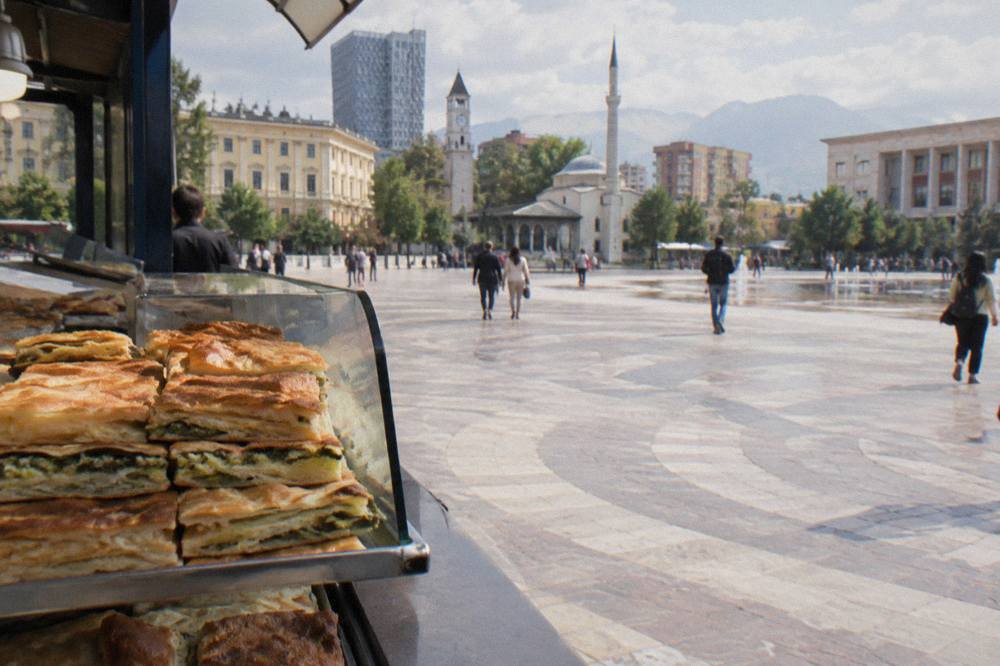
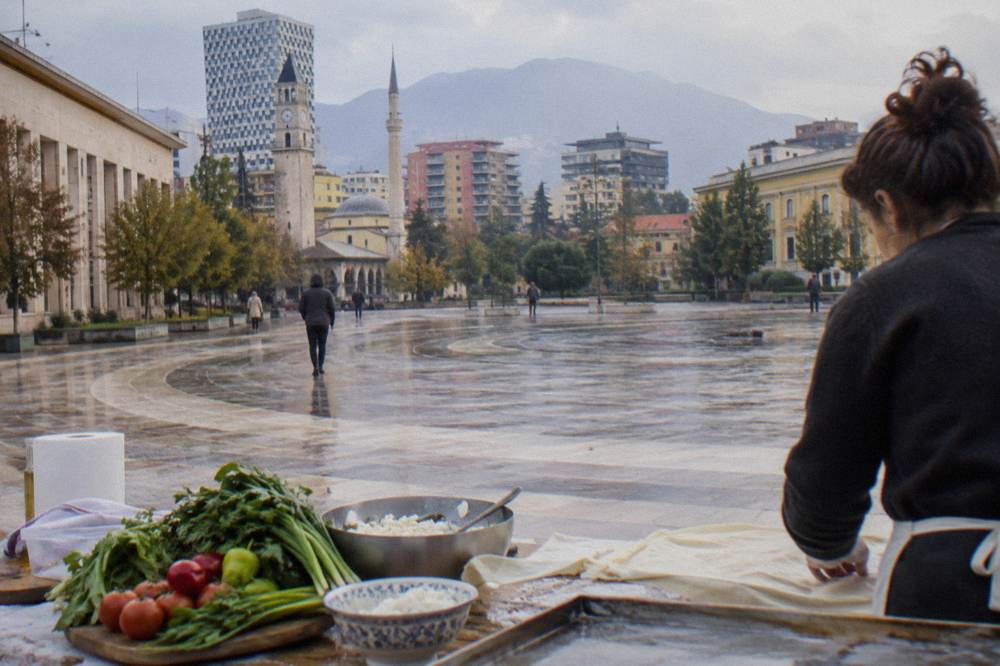
Byrek is the everyday one. It is a layered filo pie, filled with cheese, spinach or meat, cut into squares and sold warm, and it works as breakfast, a snack or a walk-around lunch. Qofte are seasoned meatballs, grilled or fried, served with bread and raw onion. Fergese, in its Tirana form, bakes peppers and tomatoes with a soft cheese until the whole dish is thick and sweet. Tave kosi is the oven dish: lamb, or sometimes chicken, baked with rice under a yogurt and egg topping, and it appears on nearly every menu that calls itself Albanian. Raki, a fruit brandy, usually grape, sits beside all of them.
None of these dishes is complicated, and that is the point. The kitchen tradition here is built on ingredients that travel short distances: vegetables from the plains, cheese and lamb from the hills, filo made fresh each morning in the bakeries that line the streets around the square. Portions run generous, bread arrives without being ordered, and a salad of tomato, cucumber, onion and cheese is the standard companion to any grilled plate. For a traveller used to tasting menus, the adjustment is to lower the ambition and raise the appetite.
| Dish | What It Is | When It Is Eaten |
|---|---|---|
| Byrek | Layered filo pie with cheese, spinach or meat | Breakfast, snack, quick lunch |
| Tave kosi | Baked lamb or chicken with rice and a yogurt-egg topping | Lunch or dinner |
| Fergese | Baked peppers and tomatoes with soft cheese | Starter or main |
| Qofte | Seasoned grilled or fried meatballs | Any meal, with bread |
| Grilled meat plate | Mixed grilled meats with salad and bread | Dinner |
Where Should You Eat In Tirana?
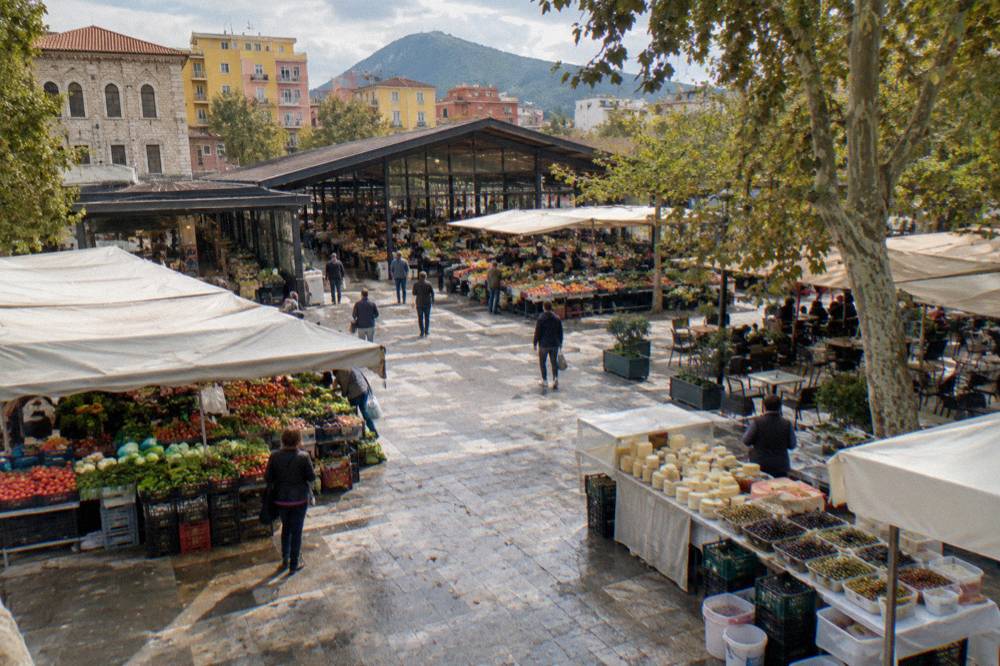
The New Bazaar, about 0.6 km east of Skanderbeg Square, is the food hub of central Tirana, with produce stalls and a dense ring of small restaurants, while Blloku, about 0.8 km south, holds the cafe and restaurant quarter around which the city's evening life runs. The streets immediately off Skanderbeg Square mix bakery counters with hotel dining rooms.
The New Bazaar, covered in its own page at Pazari I Ri, doubles as a market and a place to eat: the produce side sells vegetables, cheese, olives and meat, and the surrounding lanes hold small kitchens turning out qofte and grilled fish. Blloku, the former inner quarter south of the centre, is where cafe culture concentrates, and it carries through into the evening; the Tirana Nightlife guide covers that side. Between the two, the blocks around the square and the boulevard hold the everyday layer, bakeries selling byrek, espresso bars, and hotel restaurants. Everything else is best chosen on the spot by what is cooking.
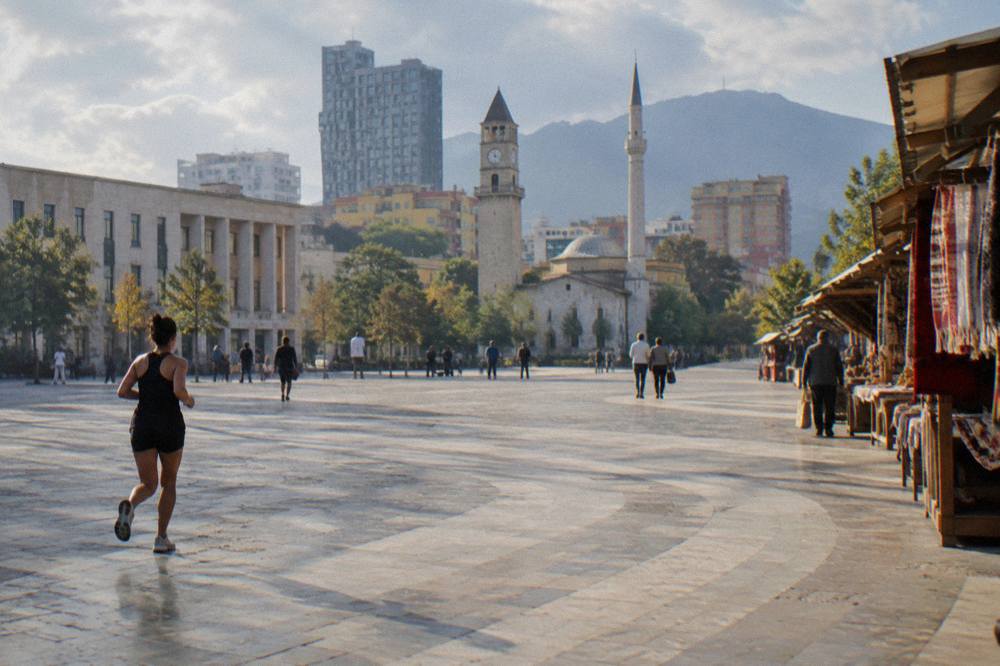
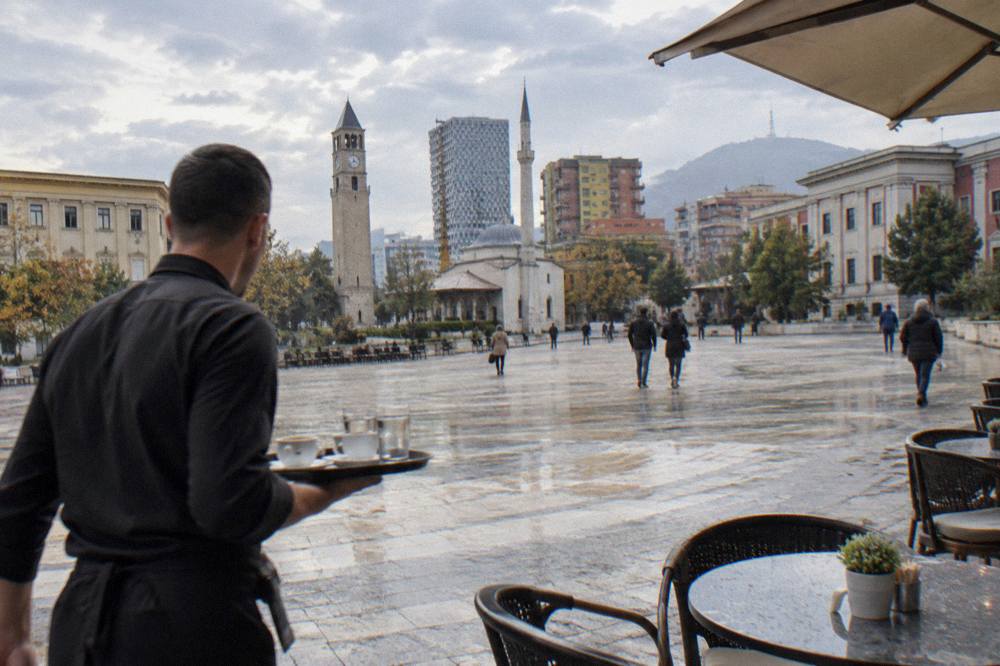
The geography makes this easy to work. Everything in the food core of the city sits within a walkable band roughly a kilometre and a half across, from the bazaar in the east to the depths of Blloku in the south, with the square in the middle and the Clock Tower, the Et'hem Bey Mosque and the House of Leaves all on the route between them. A day of eating can therefore also be a day of sightseeing without any transport beyond your own feet, and the Getting Around Tirana guide covers the city bus and taxi options for the moments when the legs give out.
What Should You Drink With Albanian Food?
The three drinks that come with Albanian food in Tirana are raki, the fruit brandy poured before or after a meal; Albanian coffee, an espresso-style coffee served in small cups; and bottled water, because the UK FCDO travel advice for Albania states plainly: do not drink the tap water, only drink bottled water. Wine, local and inexpensive by European habit, is the fourth option at table.
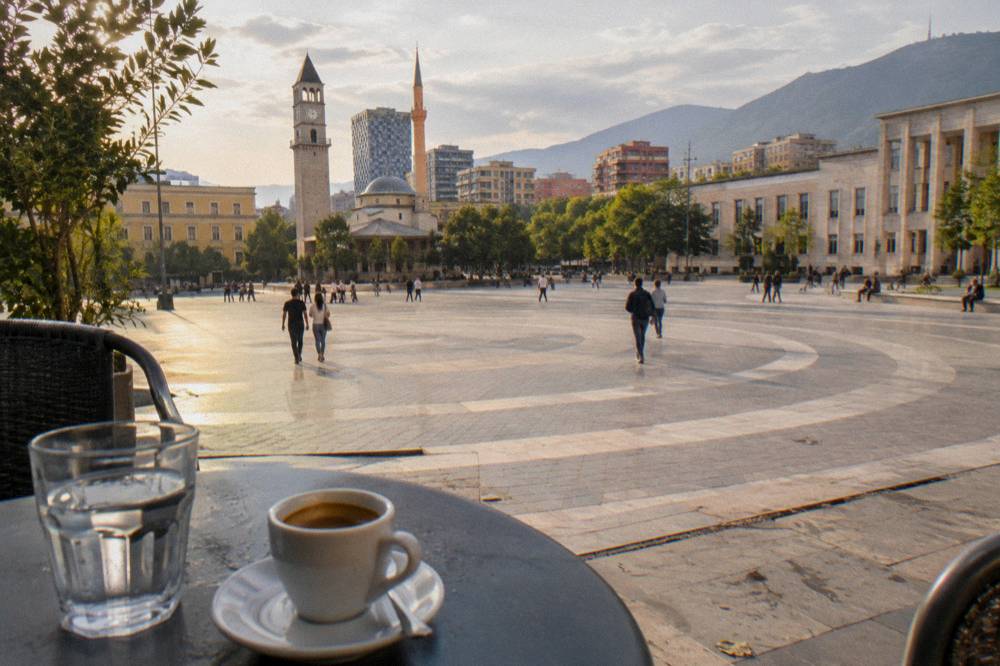
Raki is the ceremony of the Albanian table. It is a fruit brandy, usually made from grapes, served in small glasses, offered at the start of a meal or at the end of it, and refusing a first pour is harder than accepting one. Coffee is the other constant: Tirana runs on espresso-style coffee served small and often, and a cafe table is as much a workplace and a social institution as a place to drink. The tap-water point matters for planning: the FCDO health page for Albania advises against drinking tap water and recommends bottled water only, so budget for bottles, and add nothing to that advice. For alcohol, two legal notes from Albanian reporting: the sale of alcohol to anyone under 18 is prohibited under Albanian law, reported as Law No. 9518 of 2006, and drink-driving is zero tolerance, per ATA reporting on the August 2026 tightening of road rules. Neither needs elaboration, both are worth knowing.
| Drink | What It Is | How It Is Served |
|---|---|---|
| Raki | Fruit brandy, usually grape | Small glasses, before or after a meal |
| Albanian coffee | Espresso-style coffee | Small cups, standing or seated |
| Bottled water | Still or sparkling | Per the FCDO, the recommended choice |
| Local wine | Red and white, domestic bottles | By the glass or bottle at meals |
How Does A Food Tour Or Cooking Class Fit Into A Trip?
A food tour or cooking class in Tirana fits best on day two of a stay, once the centre has been walked, because it replaces the trial-and-error of finding byrek and qofte with a guided route through bakeries, markets and dining rooms, and a cooking class turns the same dishes into something you can cook at home. The vineyard experience at Durres adds the countryside version as a day out.
The product side of Albanian food runs from tasting walks built around byrek and qofte to hands-on classes that cook a full Albanian meal with wine and raki alongside. A walk suits a short stay that also has to cover Skanderbeg Square, Bunk'Art and the cable car; a class suits a slower itinerary or a rainy afternoon, and the Tirana On A Rainy Day angle is worth keeping in mind for the wetter months. The Durres countryside vineyard experience, the featured tour on this page, pairs local wine with food in a rural setting west of the capital, and makes an easy combined day with the coast, which is about 39 minutes by road from the square at Durres.
What Does Eating Out In Tirana Cost?
No meal, coffee or beer price for Tirana appears on this page: what can be said is structural, that byrek from a bakery counter is the cheapest eat in the city, that market-adjacent kitchens at the New Bazaar sit in the middle, and that hotel and Blloku dining rooms sit at the top, with payment in Albanian lek, cards widely taken in central restaurants and cash still expected at markets and small cafes.
The currency shapes every food purchase. Albania uses the lek, at roughly 90 lek to the euro, and the euro is not legal tender; the Albanian Lek page covers exchange and the Tirana Prices page covers the wider budget picture. Service is rarely added to the bill, so the amount on the menu is the amount to settle. When a price for a specific dish or a meal is wanted, check the menu at the door. What the structure gives you is enough to plan: bakery byrek for pennies, a market lunch for a little more, a dining-room dinner with raki and wine as the evening event.
Two small money habits smooth everything. First, withdraw lek rather than planning to pay in euro, because informal euro acceptance at a poor rate only costs you money. Second, keep small notes and coins on you through the day, since the byrek counter, the market stall and the city bus all settle in cash, and a large note at a bakery first thing in the morning is an awkward thing to present.
| Eating Format | Where | Payment Reality |
|---|---|---|
| Bakery byrek | Streets around the square and the bazaar | Cash, small notes |
| Market kitchens | New Bazaar lanes | Cash usual |
| Cafe coffee | Everywhere, thickest in Blloku | Card widely taken |
| Dining rooms | Blloku, hotel restaurants | Card widely taken |
When And Where Do People Eat In Tirana?
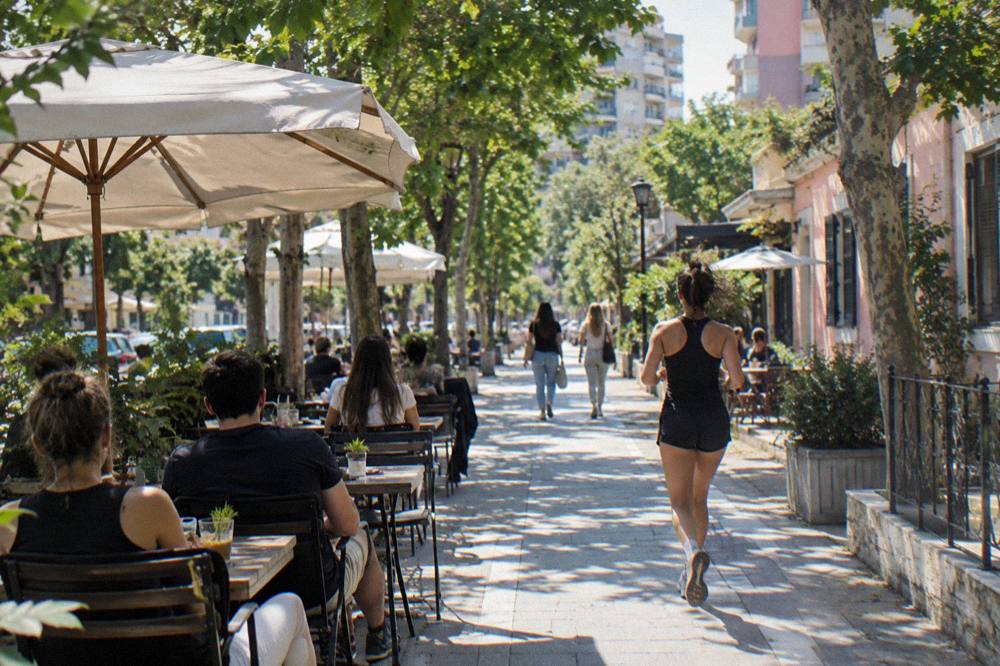
Meals in Tirana run late by northern European habit: cafes fill from morning onward on espresso, lunch lands between early and mid afternoon, dinner starts late and runs long, especially in Blloku, and the New Bazaar is busiest through the morning when the produce side of the market is at its fullest. Summer shifts everything outdoors; the ERA5 reanalysis for Tirana, 1991-2020, puts the July mean high at 29.8 C and August at 30.4 C, so tables spill onto pavements.
The rhythm of the city matters more than any single opening hour. Morning belongs to coffee and byrek, and no part of the centre is far from either. Midday is the market's hour at the New Bazaar and the lunch kitchens around it. Evening moves south to Blloku, where the cafe and bar quarter runs late, and where dinner stretches into the night once the heat drops. Winter pulls everyone indoors, and the same dining rooms keep serving: January averages a mean high of 10.8 C and a mean low of 2.3 C in the same 1991-2020 reanalysis, mild but wet, with November rainfall the heaviest of the year at 139 mm. For tying meal plans into a whole itinerary, the Things To Do In Tirana page covers the city's sights, and the Best Time To Visit Tirana page handles the seasons in full.
| Season | Mean High (ERA5 1991-2020) | Rain That Month | Eating Pattern |
|---|---|---|---|
| July | 29.8 C | 34 mm | Outdoor tables, late dinners |
| August | 30.4 C | 31 mm | Peak terrace season |
| October | 21.4 C | 119 mm | Indoor and outdoor mix |
| January | 10.8 C | 106 mm | Indoor dining rooms |
| November | 16.5 C | 139 mm | Heaviest rain, indoor eating |
How Does Coffee Culture Shape Eating In Tirana?
Coffee is not a side note to Albanian food in Tirana, it is the frame around the whole day: espresso-style coffee is served small and often from morning to night, every cafe doubles as a sitting room, a meeting room and an office, and the pace of service follows the conversation rather than the clock. A food trip that ignores the cafes misses half of how the city eats.
The cafe table is where the day is organised. Business is done over coffee, family news is exchanged over coffee, and the walk between two meetings is measured in whether there is time for a coffee in between. For a visitor, this has a practical edge: a cafe is the easiest place to rest, to plan the next meal, and to watch the city go past, and no one will hurry you off a table after one cup. The espresso habit also sets the rhythm for food: coffee and a byrek in the morning, a long lunch, coffee again in the late afternoon, and a dinner that starts when other cities are finishing theirs. Visitors who try to eat dinner at six will find kitchens warming up rather than winding down; settle into the local clock instead and the whole day flows better. Blloku is the quarter where this culture is at its densest, but every neighbourhood has its own tables.
Can You Build A Whole Trip Around Albanian Food?
Yes, and Tirana is the right base for it: a food-centred week can spend two days on the capital's bakeries, markets, dining rooms and a cooking class, a day at a Durres vineyard and the coast, a day in Berat, whose historic centre is UNESCO-listed since 2008, and a day in Kruja, about 45 minutes by road, whose old bazaar has served traders for centuries without changing its format.
The food map of Albania radiates from the capital. Berat, about 122 minutes by road from Skanderbeg Square, pairs a World Heritage old town with the cooking of the region. Kruja, about 45 minutes north, is the bazaar town: the old market street there sells the same rugs, copper and byrek format it always has. Durres adds the sea, about 39 minutes west, and the vineyard experience pairs the two in one day. Even the further stops, Gjirokaster at about 209 minutes and Saranda at about 248, work as long tour days or overnights built around a table. What the food traveller should not do is treat Albania as a beach resort with restaurants attached: Tirana is inland, the coast is a deliberate trip, and the food of the basin, the dairy, the lamb, the filo, the raki, is the reason to eat in the capital itself.
What Should You Know Before Eating In Tirana?
Five practical points cover it: pay in lek, not euro; drink bottled water per the FCDO's advice on Albania; expect service rarely to be added to the bill; keep small cash for bakeries, markets and city buses; and if a food tour, cooking class or vineyard day appeals, book through the operator's live listing and read the cancellation terms there before committing.
The money point comes first because it changes behaviour. Cards work in central restaurants, supermarkets and hotel dining rooms, but the byrek counter, the market stall and the bus all run on cash lek, so carry notes in small denominations. The water point is a one-line rule from the FCDO and needs no debate. The service point means the menu total is the settle-up total. Beyond that, the planning layers are the ones this site covers elsewhere: Where To Stay In Tirana for the neighbourhood decision, and Albania Travel Tips for the country-level rules, including the 90-in-180 visa regime for visa-free nationals and the fact that Albania is outside the EU and Schengen, so EU entry systems do not apply at its border.
One last habit worth borrowing from the locals: eat slowly. The Albanian table is not built for a fast refuel. Bread arrives, raki is poured, plates come when they come, and the bill is requested, not delivered. Asking for the bill in Albanian, "faturën", is worth learning; it is the one word that gets you out of a leisurely dinner and on to the next thing.
Common Questions About Albanian Food In Tirana
What is the most famous Albanian dish?
Byrek is the everyday one, a layered filo pie with cheese, spinach or meat sold warm by the slice, while tave kosi, baked lamb with a yogurt and egg topping, is the oven dish that appears on nearly every Albanian menu in Tirana.
Can you drink the tap water in Tirana?
The UK FCDO travel advice for Albania says not to: its health page states "Do not drink the tap water in Albania, as it may cause illness. Only drink bottled water." Follow that and buy bottles.
Do you tip in Tirana restaurants?
Service is rarely added to the bill in Albania, and no tipping percentage is set by any official source; if you want to leave something for good service, rounding up the total is the simplest approach.
What is raki?
Raki is a fruit brandy, usually made from grapes, served in small glasses at the start or end of a meal. It is the standard welcome drink of the Albanian table in Tirana.
Where is the best place to eat in Tirana?
The New Bazaar, about 0.6 km east of Skanderbeg Square, is the food hub for market-fresh eating, and Blloku, about 0.8 km south, carries the cafe and restaurant quarter; neither needs a named venue, the stalls and dining rooms speak for themselves.
Is food in Tirana expensive?
Structurally, bakery byrek is the cheapest eat, market kitchens sit in the middle and hotel dining rooms at the top, all paid in Albanian lek. Check menus at the door for current figures.