Shkoder From Tirana: Rozafa Castle And The Lake
Shkoder sits about 98 km north of Tirana, and this guide covers the drive, the bus, Rozafa Castle, Lake Shkoder and the routes that make the city the gateway to the Albanian Alps.
Short answer
Shkoder is about 98 km and 118 minutes by road from Skanderbeg Square in Tirana, the inland capital of Albania. Buses leave from the South and North Bus Terminal from about 05:00 at roughly half-hour intervals. Rozafa Castle sits above the city and Lake Shkoder, and entry details should be confirmed on site.
Shkoder is the great northern detour of an Albania trip: a city of about two hours by road from Tirana, the inland capital at the foot of Mount Dajti, standing between Lake Shkoder and the mountains that lead into the Albanian Alps. Tirana itself is not a coastal city, and Shkoder is not either, but the two frame the country neatly. One is the political and cafe capital in its basin; the other is the old trading city where the roads run out and the Alps begin. This guide lays out the drive, the bus, the castle above the Buna and Drin rivers, the lake, and the choices that follow from standing in the right place at the right time of year.
How Far Is Shkoder From Tirana And How Long Does The Drive Take?
Shkoder lies about 98 km north-west of Skanderbeg Square in Tirana, and the drive takes about 118 minutes by road in normal traffic, roughly two hours each way. That makes Shkoder a realistic day trip, with the caveat that the figures describe the road journey alone, not parking, a border or lake traffic, and winter days are short. For comparison, Kruja is about 45 minutes and 37 km, Durres about 39 minutes and 37 km, and Berat about 122 minutes and 125 km. Shkoder sits in the same middle band as Berat: close enough for a day, far enough that the day starts early.
The route leaves Tirana to the north and crosses the low hills towards the Mat river country before dropping onto the coastal plain around Lezha. From there the road turns inland towards Shkoder at the southern end of Lake Shkoder, one of the largest lakes in southern Europe, shared between Albania and Montenegro. The final stretch runs through flat farmland with the wall of the Alps ahead on clear days.
A hire car is one option, and the car rental picture in Tirana is covered elsewhere on this site, but a car is not a requirement. The bus works, tours work, and the guided option is listed further down this page. What matters for planning is the arithmetic: about four hours of driving for the round trip, plus whatever time the castle, the city centre and the lakeshore take.
| Day trip from Tirana | Distance by road | Drive time |
|---|---|---|
| Kruja | about 37 km | about 45 minutes |
| Durres | about 37 km | about 39 minutes |
| Petrela Castle | about 14 km | about 22 minutes |
| Lake Bovilla | about 21 km | about 61 minutes |
| Berat | about 125 km | about 122 minutes |
| Shkoder | about 98 km | about 118 minutes |
| Pogradec | about 123 km | about 141 minutes |
| Ohrid (North Macedonia, border crossing) | about 130 km | about 135 minutes plus the border |
How Do You Get From Tirana To Shkoder Without A Car?
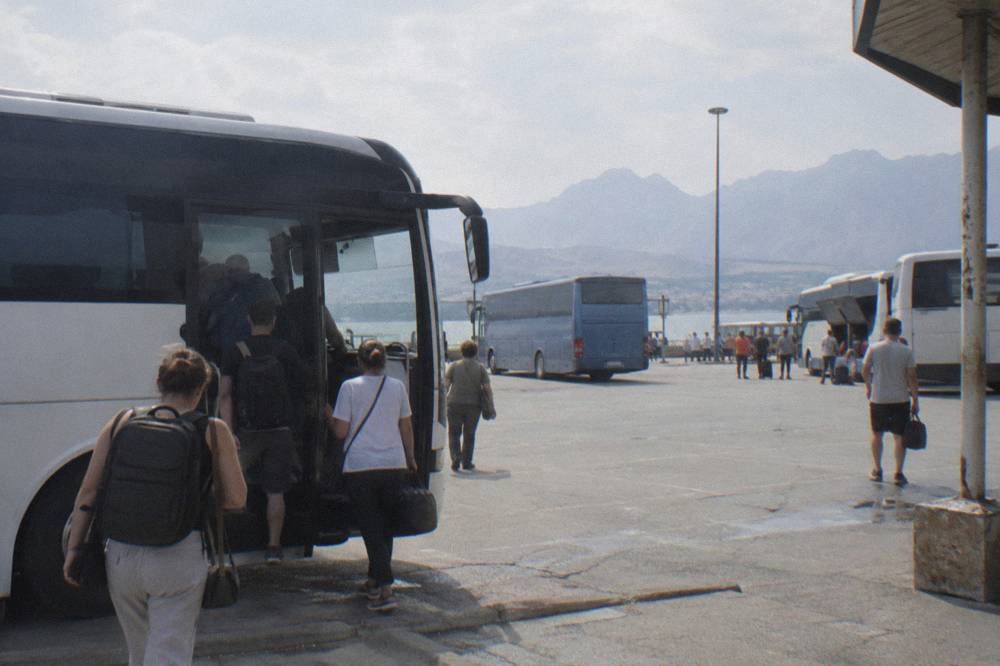
The practical public option is the intercity bus from the South and North Bus Terminal, which the terminal's own timetable page lists with Shkoder departures from 05:00 at intervals of about every 30 minutes. The terminal sits about 4 km north-west of Skanderbeg Square, reachable by city bus or taxi, and fares are paid to the driver in cash. City buses in Tirana run roughly 06:00 to 23:00 and a single ride costs about 40 lek, paid in cash on board, so an early start for the first Shkoder departures usually means a taxi to the terminal instead.
The South and North Bus Terminal is Tirana's hub for domestic routes. Its published timetable shows Durres coaches from 06:00 at short intervals, Berat from 05:40 about every 30 to 45 minutes, and Shkoder from 05:00 about every 30 minutes, alongside Kavaja, Lac, Koplik and other towns. Intercity fares are not printed on the official pages: pay the driver in cash, and expect a few hundred lek for nearby towns, confirming the Shkoder fare on boarding.
Coming from the airport changes the calculation. The official airport bus to the South and North Bus Terminal runs every full hour, costs 300 lek, and takes 20 to 30 minutes, with airport departures between 08:00 and 18:00, per the airport's own transport page. The centre line costs 400 lek, runs 24/7 hourly, and stops behind the Palace of Opera and Ballet near Skanderbeg Square. There is no airport train and no running Tirana-Durres passenger train; the rail line is being rebuilt with electrification expected by the end of 2027.
For anyone who prefers to hand the driving over, the guided Shkoder day tour from Tirana covers the castle, the city and Skadar Lake in one organised day, with Shkodra Castle and Skadar Lake on the operator's live listing. That is the only tour on this site built around Shkoder itself; the rest of the picks below are other ways to spend a day out of the capital.
The trio above spans three different day shapes: the Shkoder castle and lake tour, a quad run out to Lake Bovilla, and a small-group walk through Tirana's communist-era landmarks for a day spent in the city instead.
What Is There To See In Shkoder: Rozafa Castle, The Lake And The Old Streets?
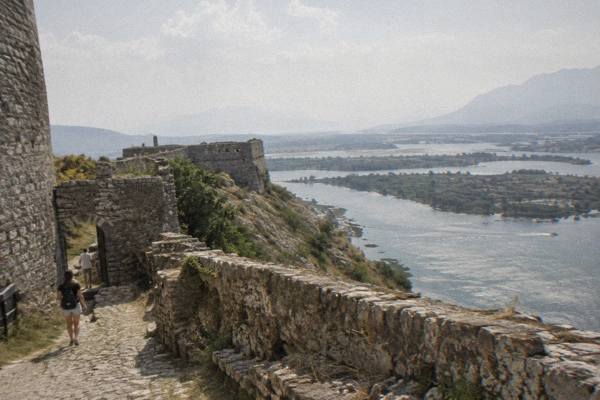
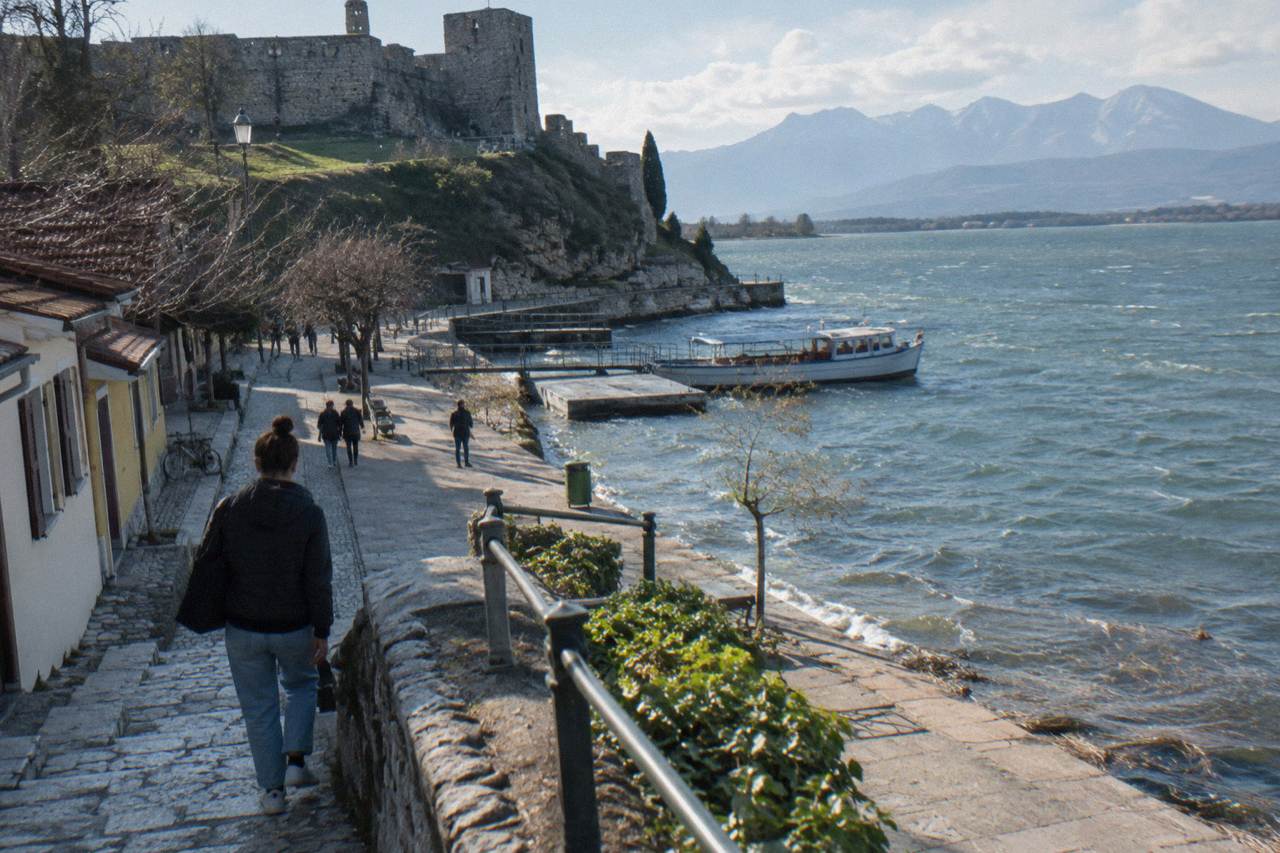
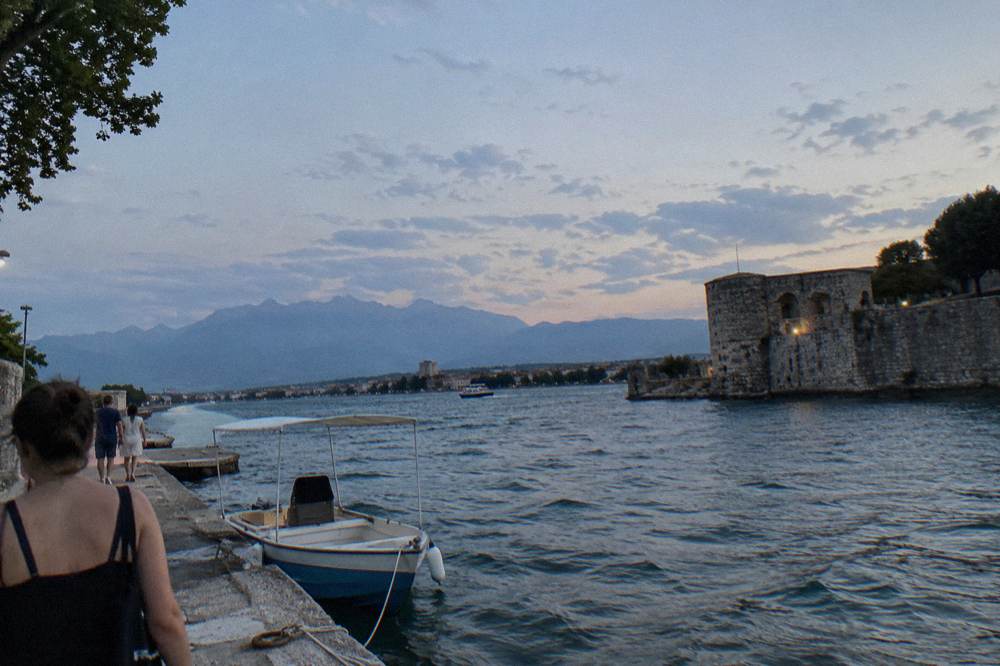
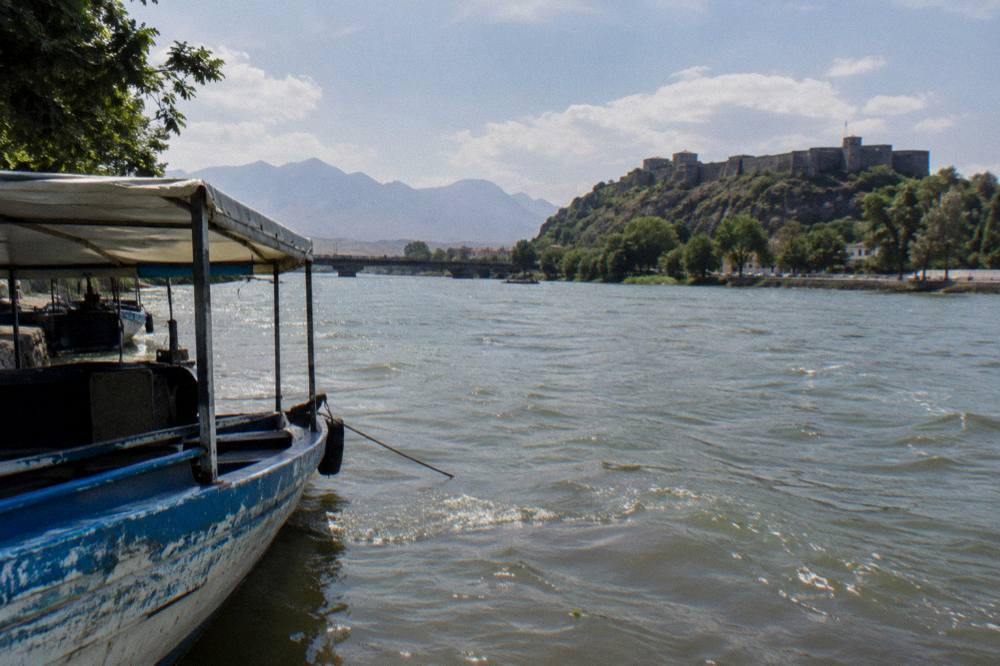
Rozafa Castle is the headline sight: a fortress wall on a hill above the junction of the Buna and Drin rivers, with views over Lake Shkoder and the mountains of both Albania and Montenegro. No admission price or opening hours for the castle are published on any official page, so confirm both at the gate; the rest of the city centre, the pedestrian streets and the lakeshore are simply public space. The castle's name carries the Rozafa legend, a Balkan folk story about a woman walled into the foundations, which local retellings place at this hill.
Inside the walls the castle encloses a large courtyard with cisterns, church ruins and terraces. The climb from the parking area is on foot, and the payoff is the panorama: the lake's western arm, the Buna river winding towards the Montenegrin border, and on clear days the ridgelines of the Albanian Alps to the east. The photographic logic of the site is morning or late afternoon light across the water.
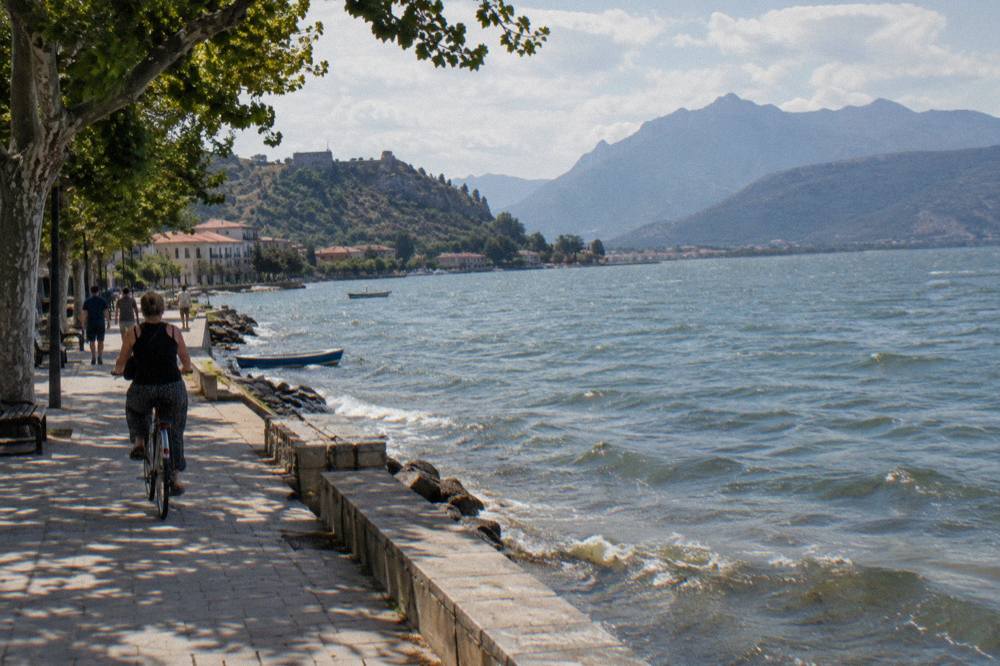
Below the castle, Shkoder's centre is a compact grid of pedestrianised streets, cafes and the kind of low-slung commercial architecture of a trading city. There is no single monument that anchors the centre the way Skanderbeg Square anchors Tirana; the city's interest is its streets and its position. The difference between an old town and a rebuilt centre is worth understanding before expecting Tirana-scale sights in Shkoder.
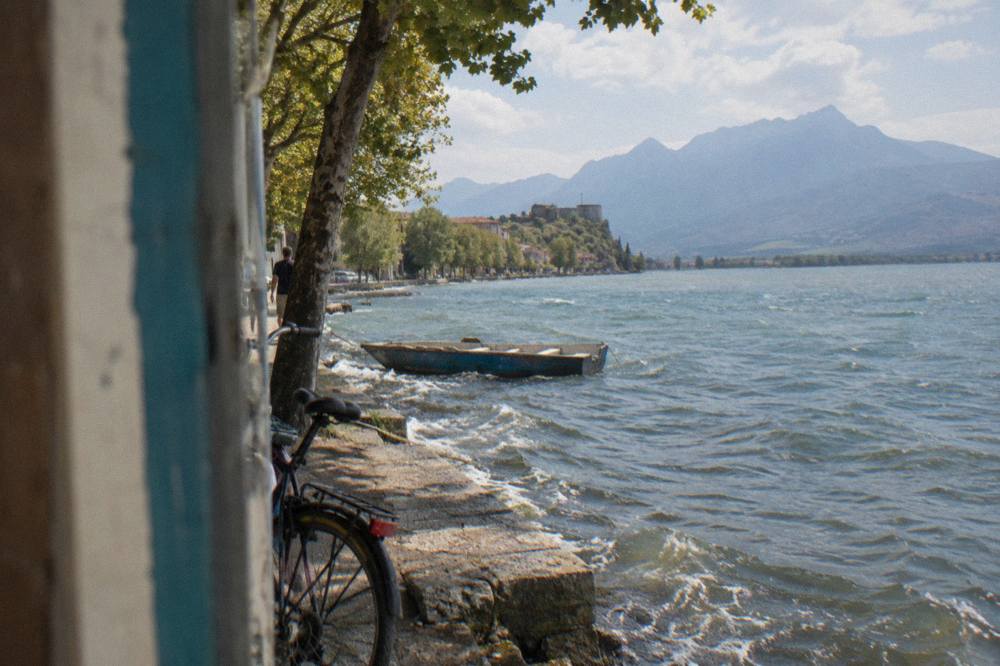
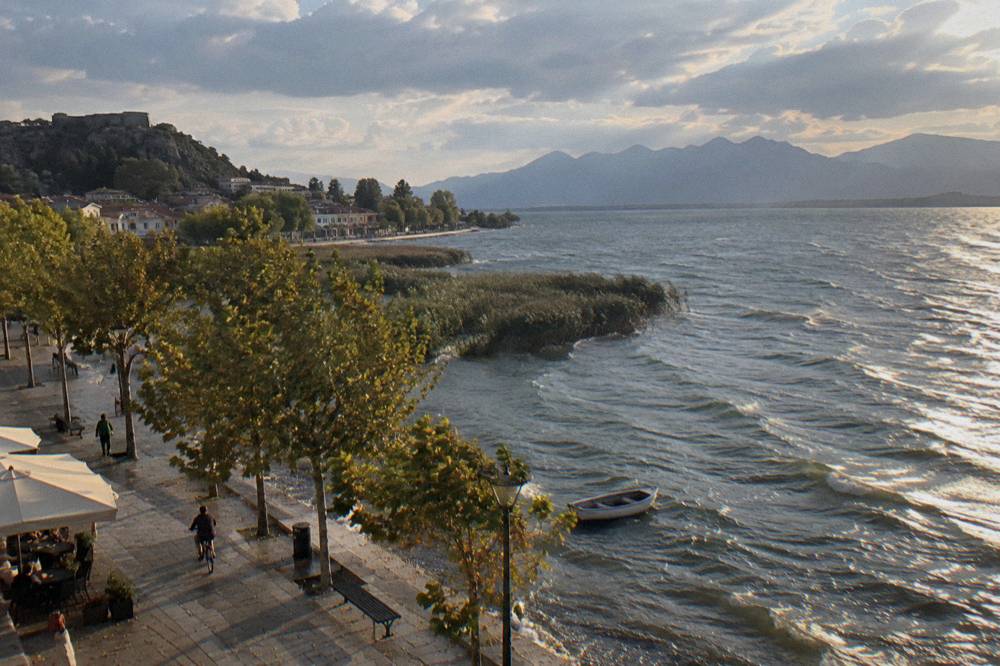
Lake Shkoder itself, known in Albanian as Shkodra and in Montenegrin as Skadarsko, is the largest lake in southern Europe by most accounts, shared between the two countries. The Albanian shore holds a handful of villages and small beach spots in summer; the lake is also one of Europe's significant bird habitats, with pelicans among the resident and migratory species that draw birders in the cooler months. Boat trips run from the Shkoder side in the season, on schedules that change yearly, so arrange them locally rather than from afar.
| Shkoder sight | What it is | Entry situation |
|---|---|---|
| Rozafa Castle | Hilltop fortress above the Buna and Drin rivers | Fee and hours not published officially; confirm at the gate |
| Castle courtyard ruins | Church remains, cisterns, terraces | Within the castle walls |
| Lake Shkoder | Shared Albanian-Montenegrin lake, major bird habitat | Shoreline is public |
| City centre streets | Pedestrian grid of cafes and shops | Public space |
| Boat trips on the lake | Seasonal, arranged locally | Confirm on site |
Can You Do Shkoder As A Day Trip From Tirana?
Yes: at about 118 minutes each way by road, Shkoder is a long but workable day trip, and the terminal timetable with departures from 05:00 every 30 minutes or so makes an early bus and a late return possible. A realistic day is the castle in the morning, lunch in the centre, and an hour or two on the lakeshore before the return leg. Two things eat into that plan: the last return buses fill and leave earlier than the timetable suggests in peak summer, and castle hours should be confirmed rather than assumed.
The honest framing is that Shkoder rewards either a full day or an overnight. As a day trip it works the way Berat as a day trip works: about two hours of road each way, one clear headline sight, and a centre built for wandering rather than queueing. Anyone trying to bolt on Theth or the Komani lake in the same day is overreaching; those are separate journeys with their own timings.
Season matters more than schedule. Tirana's climate, per the ERA5 reanalysis 1991-2020, runs July mean highs of 29.8 C and August 30.4 C with just 34 and 31 mm of rain, while November averages 139 mm and December 138 mm. Shkoder, further north and near the lake, runs broadly similar seasons: hot dry summers, mild wet winters. Castle terraces in August midday are exposed; lake views in November come with grey skies. The wider set of guides lives on Tirana Albania Travel Guide.
For travellers who want the day packaged, the tour above bundles transport, the castle and the lake with a guide, which removes the terminal logistics entirely. Independent travellers should plan the bus times on arrival at the terminal, carry cash for the fare, and treat the return departure time as the fixed point of the day.
Why Is Shkoder Called The Gateway To The Albanian Alps?
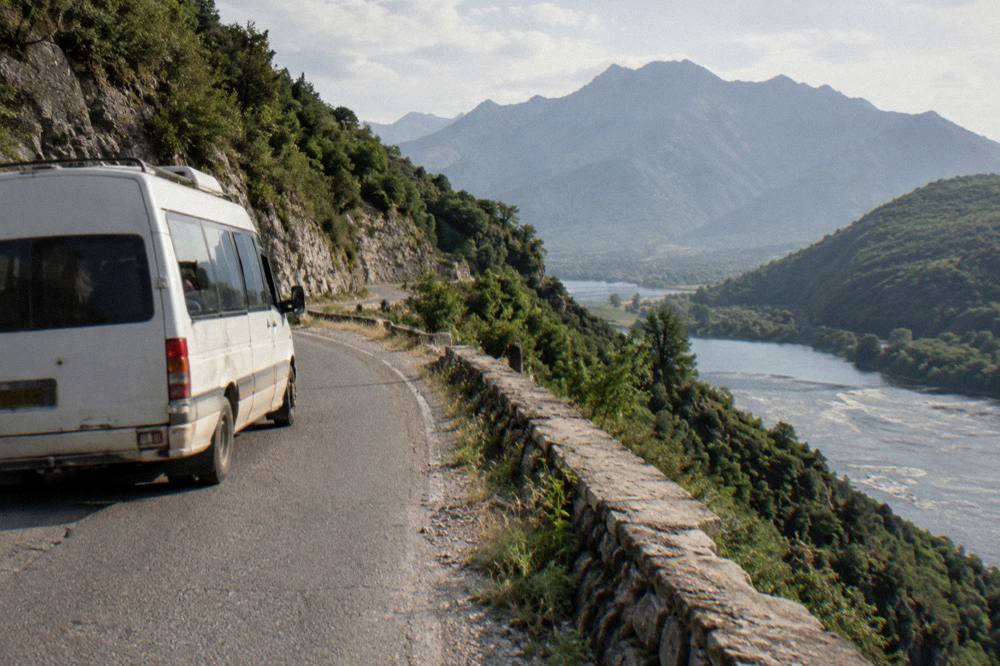
Because every overland route from the north into the Albanian Alps funnels through or near it: Theth is about 250 minutes and 172 km by road from Tirana via the mountain road, the Komani lake ferry to Fierze takes about 2.5 hours on the water, and the Valbona-Theth hike runs about 14 to 18 km over 6 to 9 hours, all accessed from the Shkoder side. The city is the last flat place with full services before the mountains, which is why trekkers, cyclists and motorbike riders all pass through it.
The classic northern loop runs Shkoder to Theth by minibus or car, a night in the village, the hike over the pass to Valbona, then the Valbona valley down to Fierze and the ferry back across Komani lake to Koman, and finally the road back south.
Road conditions on the Theth road and the season the mountain passes stay open vary year to year, and no reliable season dates exist on official pages. Locally run minibuses between Shkoder and Theth operate in the tourist season; confirm times and prices in Shkoder itself rather than in advance. The full northern circuit is covered in the Albanian Alps route guide and the Komani lake page.
For a gentler taste of the north in one day, the Kruja castle and bazaar tour above stays much closer to Tirana at about 45 minutes by road, and pairs well as a second day out after Shkoder.
| Northern route from the Shkoder side | Distance from Tirana by road | Time |
|---|---|---|
| Shkoder | about 98 km | about 118 minutes |
| Lake Komani | about 127 km | about 187 minutes |
| Theth | about 172 km | about 250 minutes |
| Komani lake ferry to Fierze | on the water | about 2.5 hours, per local reports |
| Valbona to Theth hike | about 14 to 18 km on foot | about 6 to 9 hours |
Where Does Shkoder Fit In A Wider Albania Route?
Shkoder works best as either the northern anchor of a loop or the launch point for the Alps: pair it with Pogradec or Ohrid to the east for a lakes-and-mountains circuit, or with Kruja on the way north for castles, and keep the far south, Saranda at about 248 minutes and Ksamil about 266 minutes by road, as a separate overnight region entirely. Treating Albania as a set of corridors radiating from Tirana keeps the driving sane, and the north-west corridor is Shkoder's.
A sample ten-day shape: two or three nights in Tirana for the square, the Bunk'Art museums and the Dajti cable car side of the city, then Kruja on the way north, a night in Shkoder, two nights in Theth or Valbona with the ferry, and back south via the coast at Durres. The reverse works too, ending with the mountains. Anyone extending to Ohrid should remember the town is in North Macedonia, a border crossing, and that the Albanian shore of the same lake is Pogradec, about 141 minutes from Tirana.
Montenegro is the other border option from Shkoder. Kotor lies roughly 200 km away, about six hours by road including the border per local guides, crossing at Sukobin on the coast side or Hani i Hotit inland; those figures are reported, not official, so confirm before committing. It is not a casual add-on to a Shkoder day trip, but it is a natural continuation for overland travellers with time.
| Wider route idea | From Tirana | Realistic shape |
|---|---|---|
| Tirana, Kruja, Shkoder | 45 then 118 minutes by road | Two to three days |
| Shkoder, Theth, Valbona, Komani ferry | up to 250 minutes by road | Three to four nights |
| Tirana, Berat, Gjirokaster | 122 then 209 minutes by road | Overnight stops needed |
| Shkoder, Kotor (Montenegro) | about 200 km from Shkoder, per local guides | Overnight, border crossing |
| Tirana, Pogradec, Ohrid | 141 and 135 minutes by road | Two days, one border |
What Should You Know Before Booking Or Driving?
Confirm the two unknowns locally: the Rozafa Castle entry fee and hours, and the current boat schedules on Lake Shkoder, which are seasonal and arranged on the spot. Carry lek in cash for the bus fare, the castle gate and small cafes, since cards are taken in larger Tirana businesses but cash still rules the terminal and the north. The lek is Albania's currency, roughly 90 to the euro, and the euro is not legal tender.
Practicalities worth fixing in advance: the police number is 112, ambulance 127, fire 128; Albania is outside the EU and Schengen with its own 90-in-180-day visa regime for visa-free nationals, so EU entry systems do not apply; and the driving side is the right. Zero-tolerance drink-driving rules were tightened in 2026 per ATA reporting. Paid street parking in Tirana runs 100 lek per hour in zone A, 40 in B, 20 in C, payable by SMS or app, though that matters for the capital, not for castle parking in Shkoder.
For the day itself, the packing list is short: cash, water in summer, layers for the castle terraces, and a confirmed return plan. The sunrise-to-sunset window in late October runs from about 07:01 to 17:48 around Tirana, and the north shares the pattern, so late autumn days on an exposed hilltop end early. In the other direction, the summer conditions in Tirana and the lake heat make July and August the months when a midday castle climb is best swapped for the lakeshore.
Common Questions About Shkoder From Tirana
How far is Shkoder from Tirana?
About 98 km by road and about 118 minutes of driving from Skanderbeg Square in normal traffic, roughly two hours each way.
Can you get to Shkoder by bus from Tirana?
Yes. The South and North Bus Terminal, about 4 km north-west of Skanderbeg Square, lists Shkoder departures from 05:00 at about 30-minute intervals. Fares are paid to the driver in cash.
Is Rozafa Castle worth the trip?
The castle is the region's headline sight, with walls above the Buna and Drin rivers and views over Lake Shkoder and the Alps. Entry details are not published officially, so confirm the fee and hours at the gate.
Can you visit Theth and Shkoder in one day from Tirana?
Not realistically. Theth is about 250 minutes and 172 km by road from Tirana via the mountains, so it needs its own overnight or a dedicated tour, with Shkoder as the staging town.
Is Shkoder close to Montenegro?
Yes, the border is near. Kotor is roughly 200 km away, about six hours by road including the border per local guides, crossing at Sukobin or Hani i Hotit, so it is an overnight continuation rather than a day add-on.
What is the best time of year for a Shkoder day trip?
Late spring through early autumn. Summers are hot and dry, with Tirana July mean highs of 29.8 C per the ERA5 reanalysis 1991-2020, while November and December bring the heaviest rain, about 139 and 138 mm a month.
Shkoder earns its place on a Tirana itinerary as the day trip that points north: one castle, one big lake, and the door to the Alps, all about two hours by road from the capital. Plan the bus or the tour, carry lek, and leave room in the day for the view from the walls.