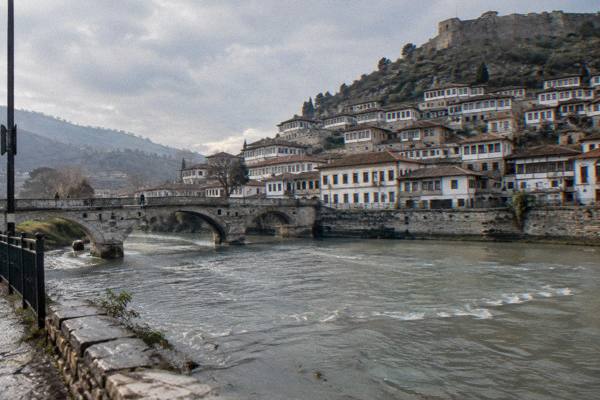
Berat From Tirana: The Town Of A Thousand Windows
Berat, a UNESCO-listed Ottoman town about two hours south of Tirana, is the most rewarding day trip from the Albanian capital. Here is how the journey, the castle and the museums actually work.
Short answer
Berat lies about 125 km and two hours by road south of Tirana. Its castle district, the Onufri Iconographic Museum and the Gorica and Mangalem quarters can be covered in one long day, though an overnight gives the town more justice.
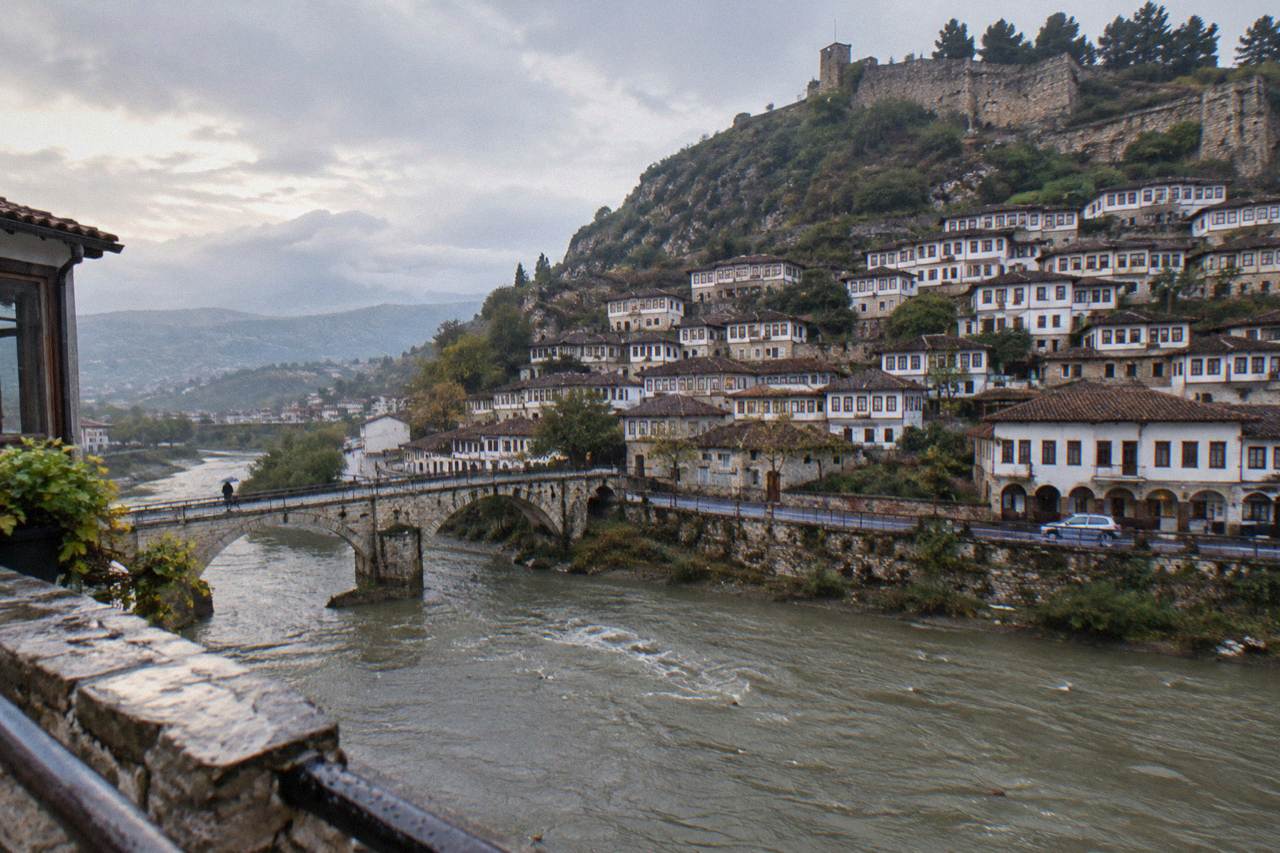
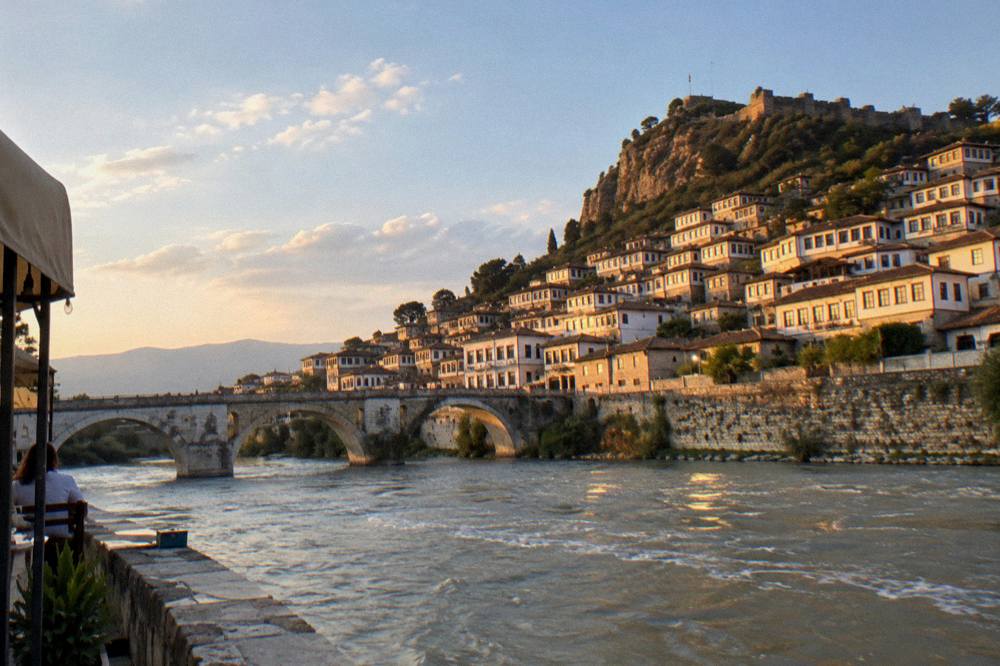
Berat is the one day trip from Tirana, the capital of Albania, that nearly every itinerary agrees on. The town sits about 125 km and roughly 122 minutes by road south of Skanderbeg Square, on the Osum river, and its stacked white Ottoman houses above the waterline earned it the name "the town of a thousand windows". The historic centres of Berat and Gjirokastra were inscribed together on the UNESCO World Heritage list, Gjirokastra in 2005 and Berat added in 2008, which makes Berat the closest World Heritage town to Tirana by a wide margin.
Where Is Berat And How Far Is It From Tirana?
Berat is about 125 km south of Tirana by road, a drive of roughly 122 minutes without stops, which makes it a comfortable there-and-back day trip from the Albanian capital. Tirana itself is an inland city in a basin at the foot of Mount Dajti, so the sea at Durres, about 37 km west, plays no part in this route: the Berat road runs inland the whole way, with no border and no ferry involved.
The route leaves Tirana to the south-west and follows the main road towards Berat without a border crossing, unlike the Ohrid day trip, which enters North Macedonia. That simplicity is part of why Berat works so well for a first excursion: no timetable uncertainty, no documents beyond what you needed to enter Albania. For comparison, Berat is closer than Shkoder (about 118 minutes) and far closer than the southern coast, which is why the Butrint and Saranda runs are overnight propositions and Berat is not.
Buses to Berat leave from the South and North Bus Terminal, about 4.0 km north-west of Skanderbeg Square, with departures listed from 05:40 at roughly 30 to 45 minute intervals on the terminal's published timetable. Intercity fares are not printed on official pages; pay the driver in cash, a few hundred lek for nearby towns, and confirm the return schedule when you board. A full three-day Tirana plan usually slots Berat into day two or three.
| Day trip from Tirana | Distance by road | Drive time |
|---|---|---|
| Berat | about 125 km | about 122 minutes |
| Kruja | about 37 km | about 45 minutes |
| Durres | about 37 km | about 39 minutes |
| Elbasan | about 40 km | about 42 minutes |
| Shkoder | about 98 km | about 118 minutes |
| Ohrid | about 130 km | about 135 minutes plus border |
| Gjirokaster | about 219 km | about 209 minutes |
What Makes Berat A UNESCO World Heritage Town?
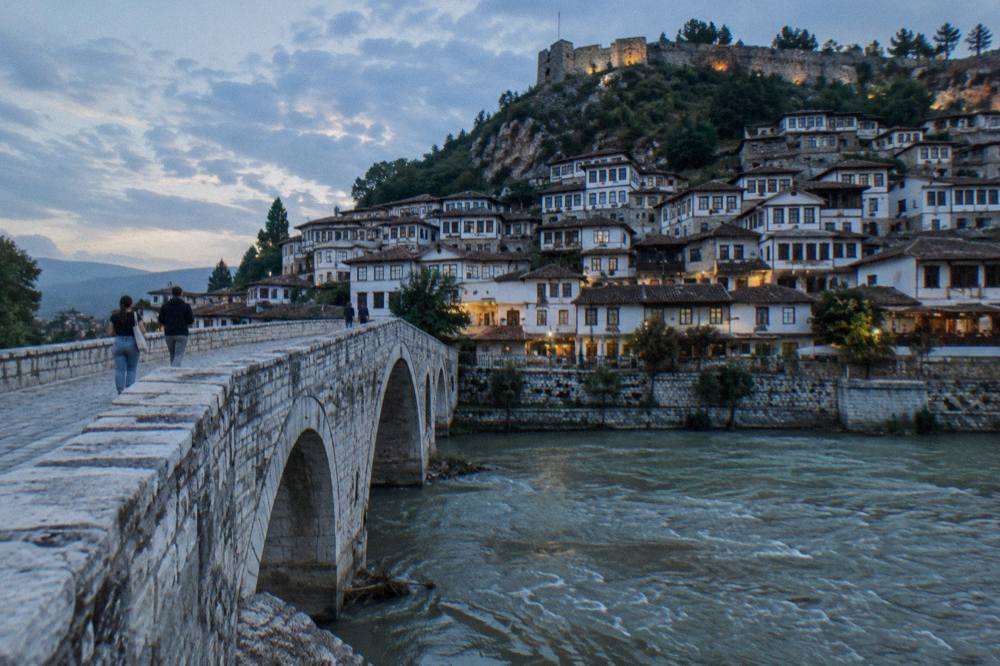
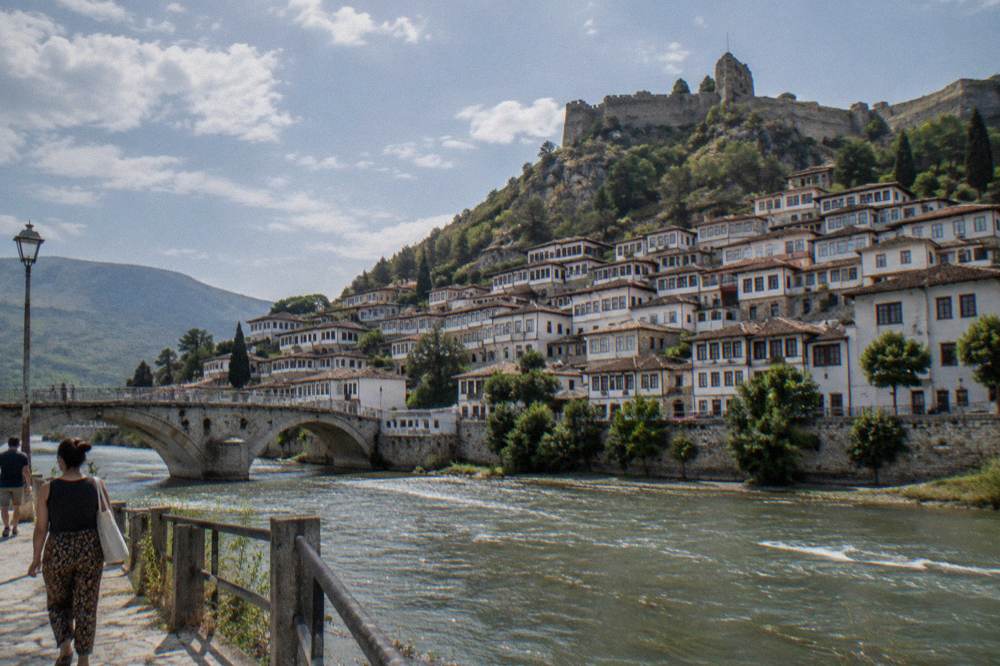
Berat was inscribed on the UNESCO World Heritage list in 2008 as an extension of the Gjirokastra listing of 2005, recognised as a rare surviving Ottoman-era townscape. Its two historic quarters, Mangalem on the castle side of the Osum river and Gorica across the water, are terraces of white houses whose rows of windows give the town its famous name. Unlike many revived old towns, Berat's castle district is still lived in, with houses inside the walls.
The UNESCO inscription covers the historic centres of both Berat and Gjirokastra, two towns in different parts of the country sharing a listing because of their Ottoman architecture. Albania has four World Heritage properties in total: Butrint, the Berat-Gjirokastra historic centres, the Ohrid region, extended to the Albanian side of the lake in 2019, and the primeval beech forests. Tirana itself has no listing, which is why the heritage day trips from the capital all point outward.
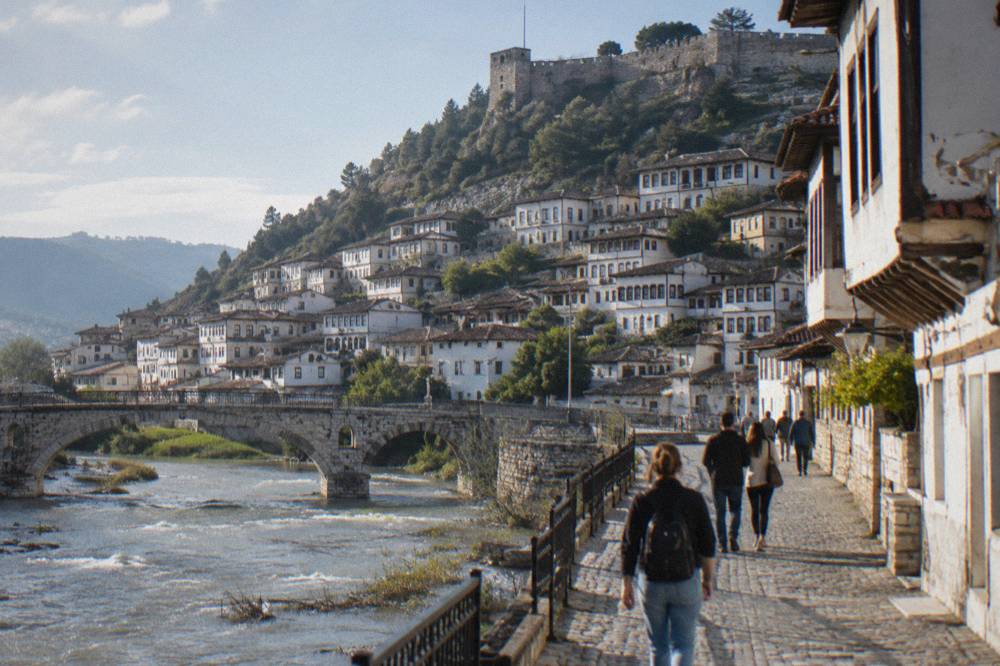
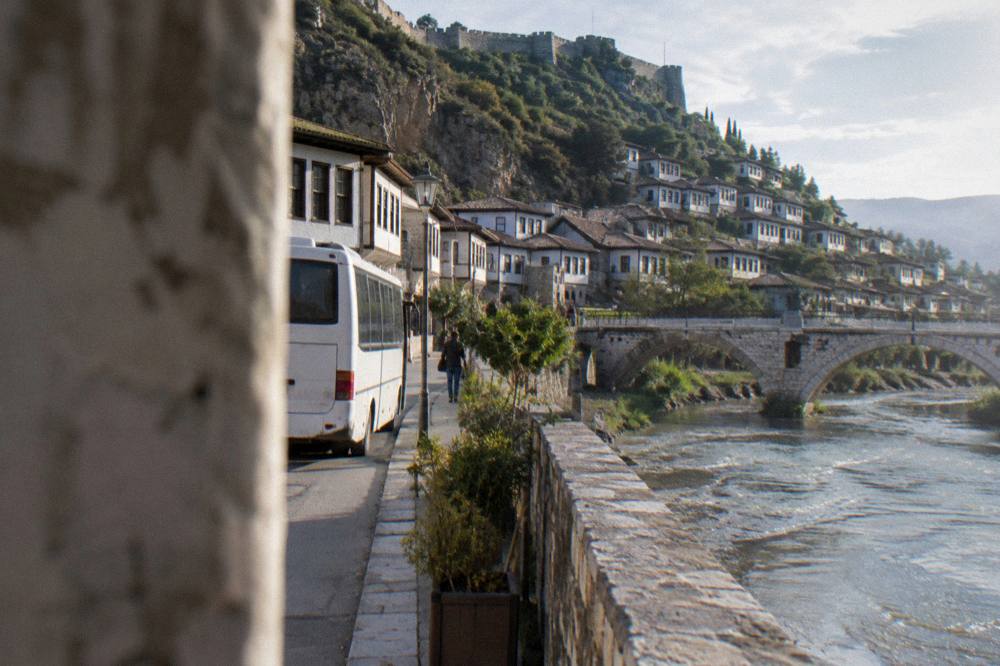
The visual identity of the town comes from the stacking: houses climb the hill in tiers, and every floor opens onto the view with close-set windows. Inside the castle walls at the top, the streets narrow to lanes between stone and plaster houses, several churches, and the two museums described below. The Gorica quarter across the old bridge mirrors Mangalem and is quieter.
A guided option such as the Berat UNESCO City full-day tour from Tirana bundles the drive, the castle hill and the quarters into one structure, useful if you would rather not negotiate buses. For more on the capital's own sights, see the things to do in Tirana overview.
What Is There To See Inside Berat Castle?
Berat Castle is a large walled hilltop district above the town, still inhabited, containing churches, ruins and two museums: the Onufri Iconographic Museum and the Ethnographic Museum. The castle grounds have no published entry fee on any primary source, so expect at most a small gate fee and confirm at the entrance. The walk up from Mangalem is steep but short, and the walls give the classic panorama over the Osum river and the stacked windows.
The castle is not a monument you tour in an hour; it is a neighbourhood. Paths wind between houses, the remains of a Red Mosque, cisterns and churches, with the Onufri museum inside the Cathedral of the Dormition of Saint Mary. Onufi was a painter of icons whose work, with its distinctive reddish tones, anchors the collection. The Ethnographic Museum sits lower in the town in a historic Ottoman house and displays domestic interiors, costume and craft.
Both museums publish their prices through the Berat Museum Center: the Onufri Iconographic Museum at 400 lek and the Ethnographic Museum at 300 lek per the Museum Center's own visit page, so confirm current prices before going. For context, that is the same order of magnitude as other state museums in Albania: the Durres Archaeological Museum is reported at about 800 lek and the Durres amphitheatre about 300 lek, while Gjirokaster castle is reported at roughly 400 lek.
| Sight in Berat | What it is | Entry |
|---|---|---|
| Berat Castle grounds | Walled hilltop district, still inhabited | no published fee, possibly a small gate fee |
| Onufri Iconographic Museum | Icons inside the castle cathedral, Berat Museum Center | 400 lek |
| Ethnographic Museum | Historic house with domestic displays | 300 lek |
| Mangalem quarter | Terraced Ottoman houses below the castle | free public streets |
| Gorica quarter | Historic quarter across the Osum river | free public streets |
| Osum river bridges | Old and new bridges linking the quarters | free |
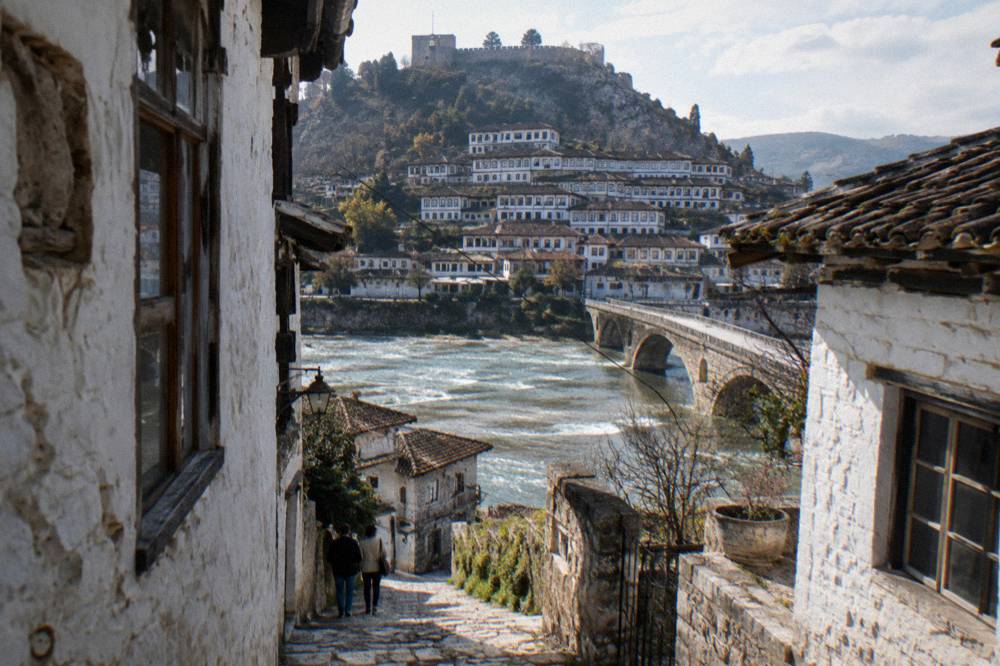
The castle hill is the town's main physical effort. There is no step-free access or ramps at any Berat sight, so anyone with mobility limits should plan for uneven stone paths and a sustained climb. Wear shoes with grip: the lanes are worn smooth.
Can You Do Berat As A Day Trip From Tirana?
Yes, Berat works as a day trip: at about 122 minutes each way by road, a round trip leaves six or more workable hours in the town itself, enough for the castle, both museums and the two quarters. It is a long day rather than a relaxed one, and anyone who wants evening light on the white facades or a slower pace should consider staying overnight. Unlike Butrint or Saranda, which need about 4.5 hours each way and are overnight trips, Berat stays inside the realistic day-trip band.
The arithmetic is straightforward. Leave Tirana by 08:00 and you are in Berat before 10:30. Give the castle and the Onufri Museum the late morning, lunch in Mangalem or Gorica, the Ethnographic Museum and the far bank in the afternoon, and a departure by 17:00 puts you back in Tirana for the evening. Bus schedules from the terminal run frequently through the day, but confirm the last departure when you arrive.
A realistic hour-by-hour frame:
| Time | Plan |
|---|---|
| 08:00 | Depart Tirana, South and North Bus Terminal or hotel pickup |
| 10:30 | Arrive Berat, coffee in Mangalem |
| 11:00 | Climb to Berat Castle, walk the walls and lanes |
| 13:00 | Onufri Iconographic Museum, then lunch |
| 15:00 | Cross to Gorica, Ethnographic Museum |
| 16:30 | Riverside photos of the thousand windows |
| 17:00 | Depart for Tirana |
If you prefer not to manage the bus terminal, the Berat UNESCO Heritage and Belshi Lake tour from Tirana or Durres adds a lake stop to the castle town, and the Tirana-based Berat full-day tour keeps the focus on the old quarters.
What Is The Best Time Of Year To Visit Berat?
The most comfortable months for Berat are May, June and September, when Tirana-region temperatures from ERA5 reanalysis, 1991-2020 average daily highs of 22.7, 26.9 and 25.7 C respectively, and rainfall is lower than in the wet half of the year. July and August bring mean highs of 29.8 and 30.4 C in the lowland basin, which makes the unshaded castle climb a hot undertaking. November is the highest-rainfall month in the record at 139 mm of rain.
Berat sits in the same climatic band as Tirana, so the capital's normals are a fair planning guide. Winter months are mild rather than cold on average, with January showing a mean high of 10.8 C, but rain days cluster from October through December. The castle lanes and stone steps are less pleasant in steady rain. The full index of guides sits on Tirana Albania Travel Guide.
| Month | Mean high C | Mean low C | Rain mm |
|---|---|---|---|
| Apr | 18.4 | 8.3 | 104.5 |
| May | 22.7 | 12.5 | 89.0 |
| Jun | 26.9 | 16.6 | 51.2 |
| Jul | 29.8 | 19.1 | 33.5 |
| Aug | 30.4 | 19.5 | 31.0 |
| Sep | 25.7 | 16.0 | 98.9 |
| Oct | 21.4 | 12.2 | 119.1 |
The figures are climate normals from the ERA5 reanalysis for 1991-2020 for the Tirana grid cell, modelled values rather than a weather-station record, and Berat's own readings will differ slightly. Treat them as a planning band, not a forecast, and check the forecast before a castle day in summer.
How Do You Get To Berat Without A Car?
The public option is the intercity bus from the South and North Bus Terminal in Tirana, about 4.0 km north-west of Skanderbeg Square, with departures listed from 05:40 at roughly 30 to 45 minute intervals and a journey of roughly two hours. Fares are paid to the driver in cash, so carry small lek notes. To reach the terminal from the centre, a single city-bus ride costs about 40 lek in cash on board.
The terminal publishes its departure timetables, and Berat is one of its most frequent routes. The practical wrinkle is the return: confirm the last Berat-to-Tirana departure when you arrive, because timetables change seasonally. City buses in Tirana run roughly 06:00 to 23:00, so an early start is easy.
Taxis and ride apps exist in Tirana, but Uber and Bolt do not operate there, and no taxi fare is fixed for a Tirana-Berat run, so agree any long-distance price before setting off if you go that route. The guided-tour alternative removes all of this friction: pickup in Tirana, the drive, and usually the museum logistics are handled. For other no-car day trips, see the Kruja day trip guide and the Durres guide.
What Should You Eat In Berat?
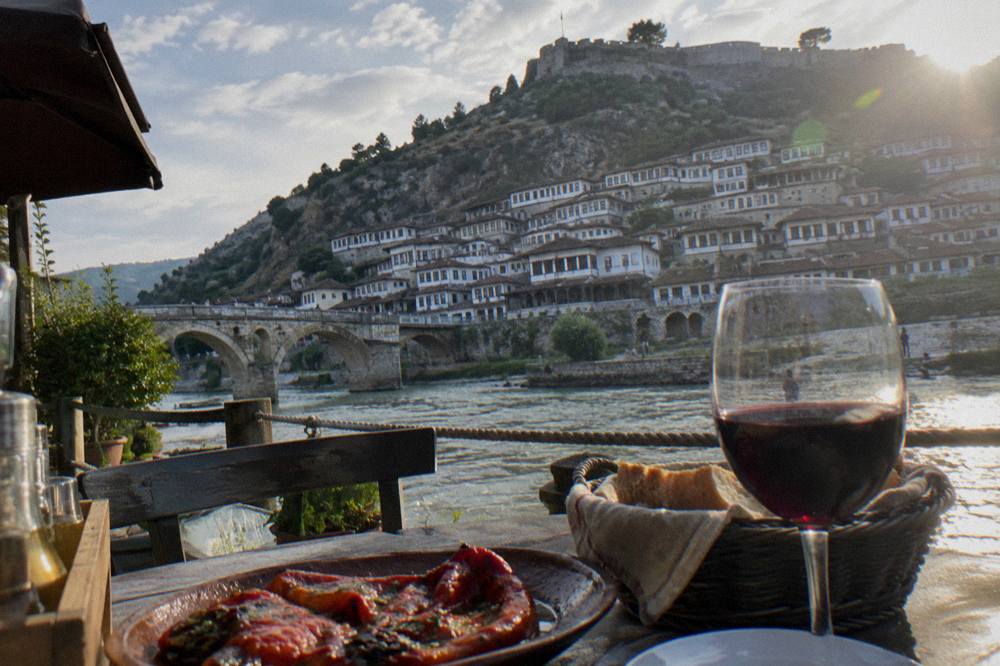
Berat sits in a region known for its olive oil and wine, and the standard Albanian restaurant repertoire applies: tave kosi, baked lamb with a yogurt and egg topping; byrek, the layered filo pie; fergese, baked peppers and tomatoes with cheese; and qofte, seasoned grilled meatballs. No restaurant in Berat is named in this guide, so expect to pay in lek and check the room.
The town's market tradition and its location in a fertile river valley mean the ingredients, not the technique, are the draw. Raki, the fruit brandy poured across Albania, and local red wine round out the meal. The Albanian food guide covers the dishes in more depth, and the Tirana coffee culture page explains the cafe habit you will meet before and after lunch.
Two practical notes on money: the currency everywhere is the Albanian lek, roughly 90 lek to the euro, and the euro is not legal tender, though some tourist businesses accept it informally at their own rate. Cards are widely taken in larger restaurants and hotels but cash is still expected at markets, small cafes and buses.
How Does Berat Compare With Other Day Trips From Tirana?
Berat is the only UNESCO World Heritage town within an easy day trip of Tirana, at about 122 minutes each way, and it pairs culture with a walkable old core. Kruja, about 45 minutes, is shorter and focuses on castle, bazaar and Skanderbeg history; Durres, about 39 minutes, adds the Roman amphitheatre and the Adriatic beach; Gjirokaster, about 209 minutes, is the other half of the same UNESCO listing but is an overnight or long-tour-day run.
Choosing between them is mostly a question of time and appetite. Kruja and Durres fit a half-hearted morning; Berat needs a full day but rewards it with the strongest single impression. Gjirokaster, the stone town to the south, shares the inscription with Berat and is often combined with it on a two-day southern loop, though some tours bundle both into a very long single day.
| Trip | Drive each way | Character | Realistic as a day trip? |
|---|---|---|---|
| Kruja | about 45 minutes | castle, bazaar, Skanderbeg | yes, a short one |
| Durres | about 39 minutes | Roman amphitheatre, beach | yes |
| Berat | about 122 minutes | UNESCO Ottoman town | yes, a full day |
| Apollonia | about 112 minutes | ancient ruins | yes |
| Ohrid | about 135 minutes plus border | lake town, North Macedonia | long but possible |
| Gjirokaster | about 209 minutes | UNESCO stone town | overnight or long tour day |
The Shkoder guide and the Gjirokaster guide cover the northern and southern alternatives, and the one week in Albania plan chains several of them together.
For a two-stop southern day, the Gjirokaster and thermal baths tour covers the other half of the UNESCO listing, though its length makes it a demanding single day.
Is One Day In Berat Enough?
One day covers the essentials of Berat: the castle district with its walls and churches, the Onufri Iconographic Museum at 400 lek, the Ethnographic Museum at 300 lek, and both historic quarters on foot. What one day misses is the town at its best hours, early morning and evening, when the light moves across the stacked windows and the day-trip traffic has gone. Travelers with flexibility often prefer an overnight in the old quarters.
The trade-off is real but not severe. A well-run day trip from Tirana delivers the panorama, the museums and a proper lunch, and leaves the capital by nightfall. If you are combining Berat with Gjirokaster or the coast, an overnight stops being optional: the southern towns are 209 minutes or more from Tirana, and stacking them into one day from the capital means more road than town.
For trip planning at the capital end, the Tirana airport to city centre guide and the getting around Tirana page cover arrival and the bus system you will use to reach the terminal.
Common Questions About Berat
How far is Berat from Tirana?
Berat is about 125 km by road from Skanderbeg Square, a drive of roughly 122 minutes without stops, which makes it one of the easiest full-day excursions from the capital.
Can you visit Berat and Gjirokaster in one day from Tirana?
It is possible on a long organised tour day, since Gjirokaster is about 209 minutes from Tirana and the two towns are in the same southern direction, but it means several hours more road than town. Independent travelers should treat the pair as an overnight loop.
How much do the Berat museums cost?
The Onufri Iconographic Museum is 400 lek and the Ethnographic Museum is 300 lek per the Berat Museum Center's published prices. The castle grounds have no published fee; there may be a small gate fee.
Is Berat worth visiting compared with Tirana itself?
The two are different experiences: Tirana is a living capital with squares, museums and the Blloku cafe quarter, while Berat is a preserved Ottoman town on a river. Given the two-hour link, pairing both in one trip is the usual pattern.
Do people in Berat speak English?
The EF English Proficiency Index places Albania in its moderate band, and tourist-facing businesses in a heritage town like Berat manage in English, but a few Albanian phrases are appreciated, and payment is in lek.
When is the best month for a Berat day trip?
May, June and September balance warm weather against the July and August mean highs of 29.8 and 30.4 C in the region's 1991-2020 climate normals. November, with 139 mm of rain, is the least reliable month for a castle day.