Best Time To Visit Tirana: Spring, Autumn Or Summer Heat
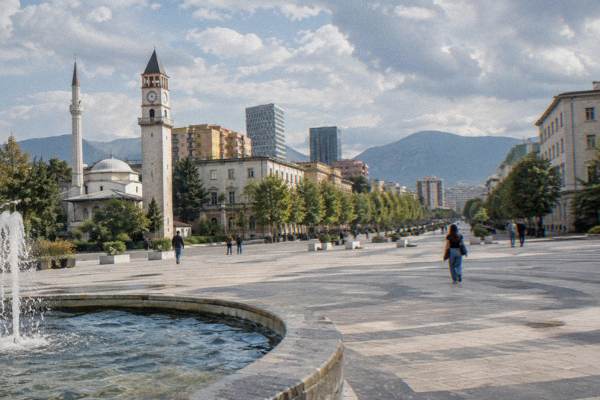
Tirana, the capital of Albania, sits in an inland basin at the foot of Mount Dajti, and its climate runs from mild wet winters to hot dry summers. Here is how to pick the right month.
Short answer
Late April to June and September to October offer the most comfortable weather in Tirana, with ERA5 mean highs between about 18 and 26 C, before the July and August heat peaks above 29 C and before the November rains arrive.
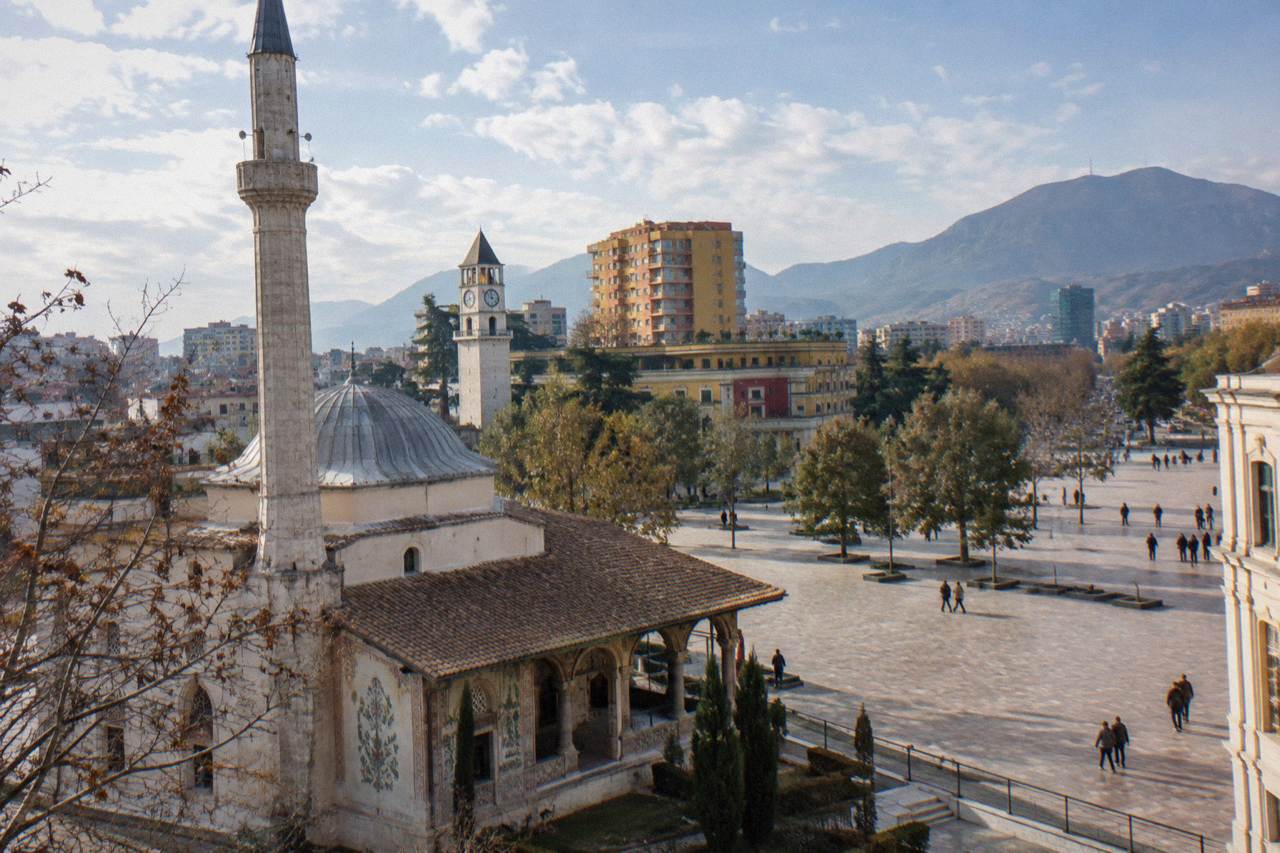
Tirana, the capital of Albania, is an inland city in a basin at the foot of Mount Dajti, roughly 37 km and about 39 minutes by road from the Adriatic coast at Durres. That geography shapes its year: hot dry summers, mild wet winters and two shoulder seasons that suit walking the city far better than the peak heat does.
When Is The Best Time To Visit Tirana?
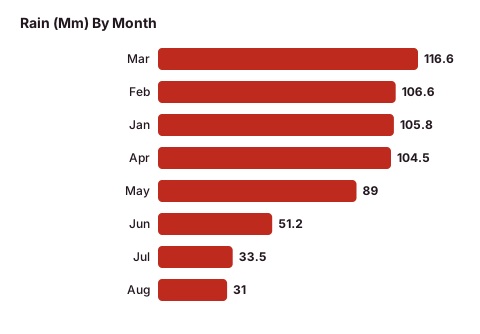
The best time to visit Tirana is late April to June and September to October, when ERA5 reanalysis 1991-2020 mean highs sit between about 18 and 26 C and monthly rainfall stays below about 105 mm. July and August bring mean highs of 29.8 and 30.4 C with only about 31 to 34 mm of rain, which suits heat-lovers and evening activity, while November is the rain peak at 138.6 mm.
The shoulder seasons win on three counts. Walking distances in central Tirana are short, but the city's interest spreads out: Skanderbeg Square, the Pyramid of Tirana about 0.7 km south-east, Blloku about 0.8 km south and the Grand Park about 2.1 km south-east all add up on foot. Cooler months make that comfortable. Day trips also open up earlier and later in the year, before summer heat makes Kruja's bazaar or Berat's castle streets heavy going. Finally, prices and crowds thin outside July and August, so treat that as a planning impression rather than a statistic.
One 2026 caveat belongs in any timing decision. Demonstrations have been held in central Tirana since 13 October 2026, some violent, and the UK FCDO updated its Albania travel advice on 15 October 2026. They pushed the Tirana Marathon from 24 to 25 October to 14 to 15 November 2026. Check current conditions before locking autumn dates; the Is Tirana Safe guide carries the detail.
| Season | Months | Mean high (C) | Rain (mm/month) | Best for |
|---|---|---|---|---|
| Spring | Mar-May | 15.0-22.7 | 89-117 | Walking, city sights, green Grand Park |
| Summer | Jun-Aug | 26.9-30.4 | 31-51 | Evening life, cafe terraces, mountain air |
| Autumn | Sep-Nov | 25.7 down to 16.5 | 99-139 | Sightseeing, film festival, long day trips |
| Winter | Dec-Feb | 10.8-12.0 | 106-138 | Museums, low season pace, Christmas market |
What Is The Weather Like In Tirana Month By Month?
ERA5 reanalysis 1991-2020 for the Tirana grid cell gives a January mean high of 10.8 C and mean low of 2.3 C, rising to July at 29.8 C and August at 30.4 C. Rainfall runs lowest in August at 31 mm and peaks in November at 138.6 mm, with December close behind at 137.5 mm. The modelled grid smooths the basin, so treat highs and lows as plus or minus 1 to 2 C.
Those normals describe a classic Mediterranean-inland rhythm. Spring warms quickly: March averages a 15.0 C high, May 22.7 C. Summer is both hot and dry, with June through August each under 52 mm of rain. September stays warm at a 25.7 C mean high but rain doubles to about 99 mm, and from October the totals climb toward the November peak. Winters are mild by northern European standards but consistently wet, and the January mean low of 2.3 C means frosty nights are normal without promising anything about snow: the table measures temperature and precipitation only, so no snow claim is made here.
For a deeper treatment of the patterns and what they mean for packing, the Tirana Weather guide expands on the same normals.
| Month | Mean high (C) | Mean low (C) | Rain (mm) |
|---|---|---|---|
| Jan | 10.8 | 2.3 | 105.8 |
| Feb | 12.0 | 2.9 | 106.6 |
| Mar | 15.0 | 5.1 | 116.6 |
| Apr | 18.4 | 8.3 | 104.5 |
| May | 22.7 | 12.5 | 89.0 |
| Jun | 26.9 | 16.6 | 51.2 |
| Jul | 29.8 | 19.1 | 33.5 |
| Aug | 30.4 | 19.5 | 31.0 |
| Sep | 25.7 | 16.0 | 98.9 |
| Oct | 21.4 | 12.2 | 119.1 |
| Nov | 16.5 | 8.0 | 138.6 |
| Dec | 11.8 | 4.0 | 137.5 |
Planning a city break around these numbers is easier with a guide in hand. The trio below covers a walking introduction and two evening options that run through the cooler months.
Is Spring The Best Season For Walking Tirana?
Spring is arguably the strongest season for exploring Tirana on foot, with ERA5 mean highs of 18.4 C in April and 22.7 C in May and rain falling from March's 116.6 mm to May's 89 mm. The compact centre, from Skanderbeg Square to Blloku about 0.8 km south and the New Bazaar about 0.6 km east, walks comfortably at those temperatures, and the Grand Park greens up through the season.
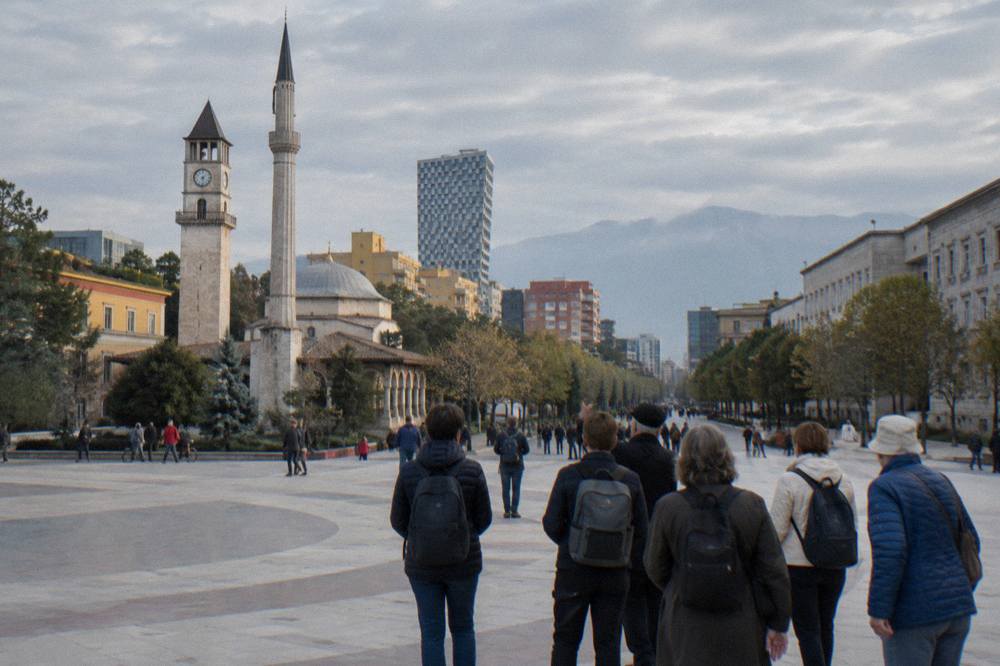
March can still deliver 116.6 mm of rain, so April is the safer bet for a dry walking week. The city's core sights cluster tightly: the Et'hem Bey Mosque and Clock Tower sit about 0.2 km south-east of the square, the Pyramid about 0.7 km south-east, the House of Leaves about 0.2 km south-west. A walking tour strings them together with the stories between them, and the spring temperatures make the distances feel short. The operator's live listing carries current departure days.
A guided walk also solves the orientation problem early. The Free Things To Do In Tirana page then covers the no-cost layer, from the square itself to the Pyramid's outside steps, reported open and free to climb.
How Hot Does Tirana Get In Summer?
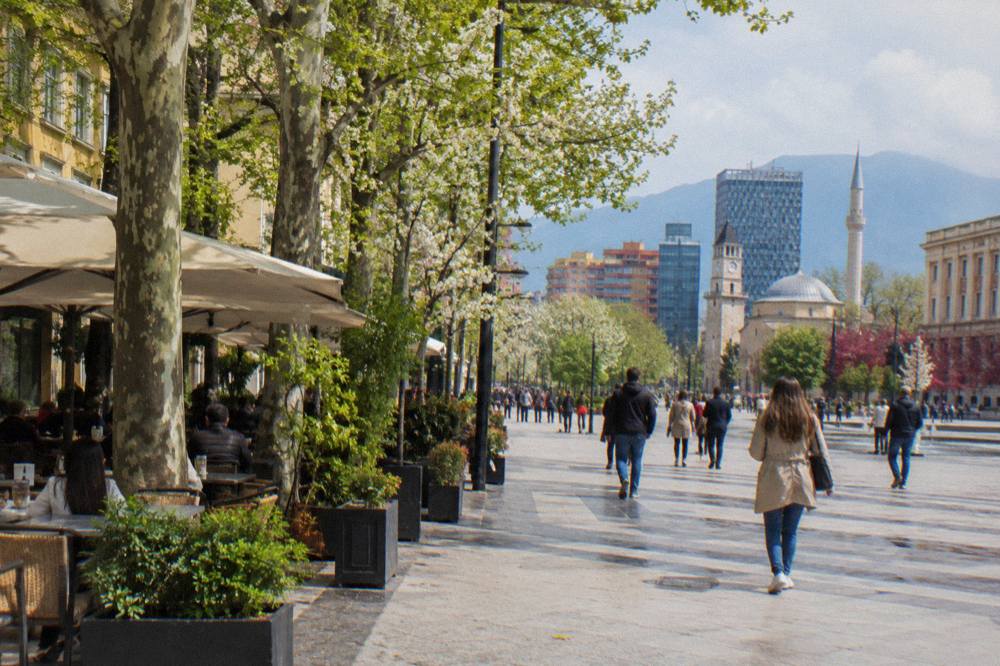
Tirana's summer is hot and dry: ERA5 1991-2020 mean highs reach 26.9 C in June, 29.8 C in July and 30.4 C in August, with mean lows near 19 C and monthly rainfall of just 51.2, 33.5 and 31 mm. August has both the highest mean daily high and the lowest rainfall total of the year in the table, and the modelled grid smooths the basin by 1 to 2 C.
That is heat with very little relief from rain, so summer visits reward a Mediterranean rhythm: sights and walks in the morning, shade or the Dajti Ekspres cable car at midday, and Blloku's cafe quarter after dark. The cable car, about 4.4 km north-east of the square, lifts you to Mount Dajti National Park, where the summit stands 9.8 km from the square as the crow flies and noticeably cooler. The operator publishes no fares online; tickets are sold only at the lower station, and Tuesdays are reported as maintenance closures, so confirm before you go. The Tirana In Summer guide expands on the season.
One note on the sea: Tirana is not a coastal city. The nearest shore is Durres, about 37 km and 39 minutes west by road, a genuine day trip rather than a stroll, and the Tirana To Durres page covers the options.
Evenings are when summer Tirana earns its keep. A pub crawl through Blloku's bars, with welcome shots and a photographer along, fits the season when terraces stay busy late; check availability for current nights.
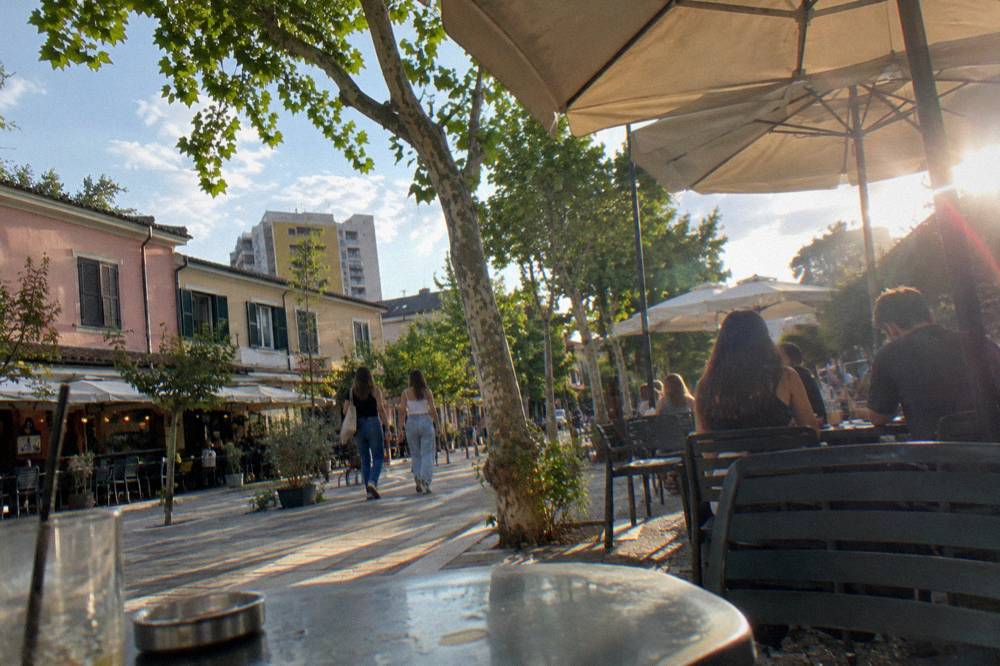
Why Visit Tirana In Autumn?
Autumn pairs September's 25.7 C mean high and October's 21.4 C with the city's densest cultural calendar: the Tirana International Film Festival ran 21 to 27 September 2026 and the Tirana Jazz Festival 23 to 25 September, while the Tirana Marathon, moved by the autumn demonstrations, is set for 14 to 15 November 2026. Rain climbs toward November's 138.6 mm peak, so early autumn is the drier window.
September is the sweet spot. The film festival's 24th edition screened about 229 films across venues including Millennium Cinema and Kino Piramida, per the festival's own site, and the jazz festival, reported by local media, offered free entry. October stays warm enough for everything on foot. From late October the rain totals rise steeply, and by November the demonstration-related disruption of 2026 showed how a calendar can shift: the marathon moved nearly three weeks. If November is your month, pack for rain and check the Albania Entry Requirements page alongside the news before booking, since Albania sits outside the EU and Schengen and runs its own 90-in-180-day visa regime.
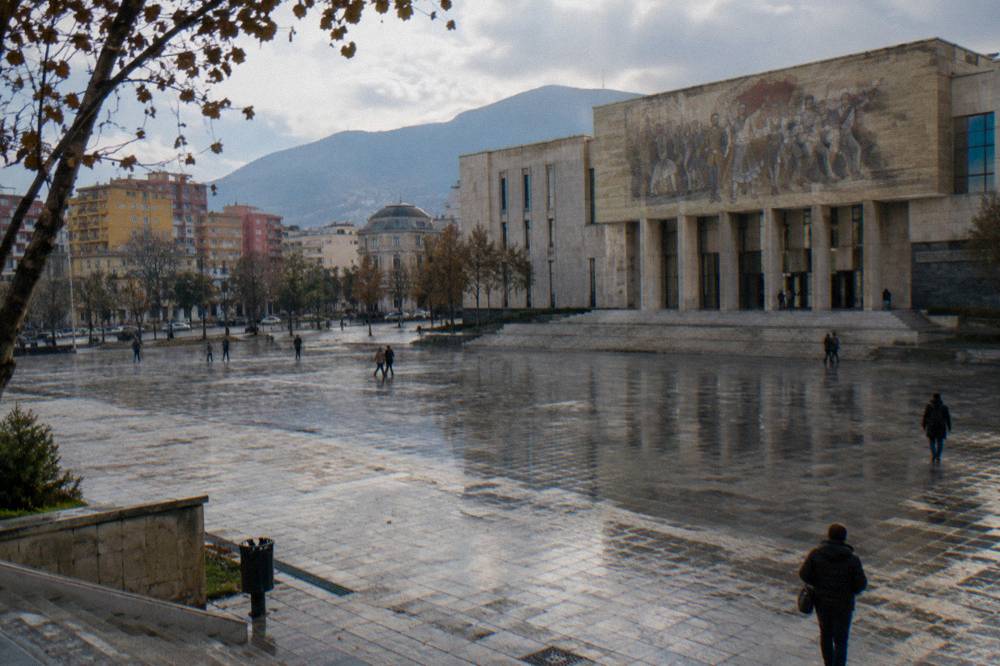
Museum weather arrives with the rain. Bunk'Art 1, about 4.6 km north-east behind the cable car lower station, is open 09:30 to 17:30 daily from 1 June 2026 per its website, with tickets bought at the door; the House of Leaves, about 0.2 km south-west of the square, lists Monday to Sunday 09:00 to 19:00. The National History Museum on Skanderbeg Square, however, is closed for restoration until about March 2028; see the mosaic facade from the square instead. The Tirana Museums guide sorts the open from the closed.
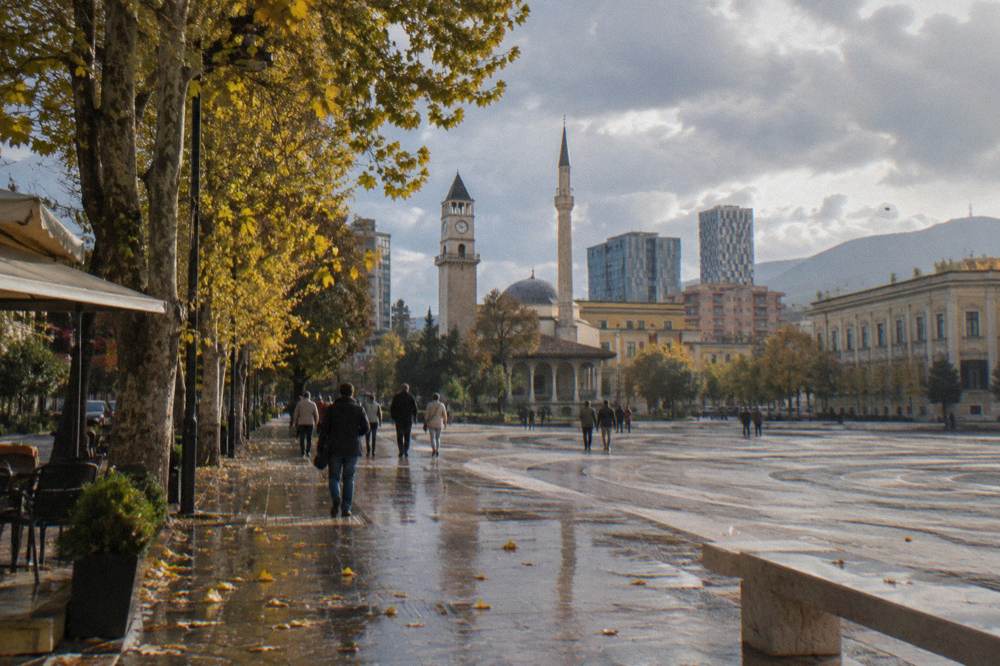
What Is Winter Like In Tirana?
Winter in Tirana is mild and wet rather than frozen: ERA5 1991-2020 gives December a mean high of 11.8 C and 137.5 mm of rain, January 10.8 C and 105.8 mm, February 12.0 C and 106.6 mm, with January's mean low at 2.3 C. The table measures temperature and rain only, so no snowfall promise can be made either way, though nights near freezing make frost more likely than snow.
The practical winter is an indoor one. Museums, the cafes of Blloku and Pazari i Ri, and the food scene carry the season; the Albanian Food and Best Restaurants In Tirana guides cover what to eat, from byrek, a layered filo pie, to tave kosi, baked lamb under a yogurt and egg topping. The Christmas market on Skanderbeg Square usually runs through December, per local reporting, though no confirmed 2026 dates exist, so treat it as a probable rather than a promise. Festivali i Kenges, Albania's Eurovision selection show, is set for 17 to 20 December 2026 at the Palace of Congresses per fan media reporting.
Winter also compresses the day-trip map. Mountain roads to Theth, about 250 minutes away even in good conditions, are not a winter proposition on a short visit, and the Tirana Prices page helps with budgeting a low-season stay. Remember the currency is the lek, roughly 90 to the euro, and the euro is not legal tender.
| Winter month | Mean high (C) | Mean low (C) | Rain (mm) | What carries the month |
|---|---|---|---|---|
| Dec | 11.8 | 4.0 | 137.5 | Christmas market (usually), Festivali i Kenges 17-20 Dec 2026 |
| Jan | 10.8 | 2.3 | 105.8 | Museums, low-season pace |
| Feb | 12.0 | 2.9 | 106.6 | Cafe season, shortening rains |
What Events Should Shape Your Timing In Tirana?
Tirana's fixed 2026 calendar anchors are the Tirana International Film Festival at 21 to 27 September, the Jazz Festival at 23 to 25 September, Festivali i Kenges at 17 to 20 December and the Marathon, rescheduled to 14 to 15 November; national days include Independence Day on 28 November and Summer Day on 14 March. The Christmas market usually runs through December, and 2027 event dates had not been announced.
Fixed national days are worth knowing because they close offices and fill squares: Summer Day on 14 March, Nevruz on 22 March, Mother Teresa Day on 19 October, Independence Day on 28 November, Liberation Day on 29 November and Christmas on 25 December. Moving feasts such as Bajram and Easter shift each year and are not dated here. The film and jazz festivals are written as annual events with their 2026 editions given as the latest; check the festival's own channels for the following year's dates.
| Event | 2026 date | Source |
|---|---|---|
| Tirana International Film Festival | 21-27 Sep | Annual, per the festival site |
| Tirana Jazz Festival | 23-25 Sep | Annual, reported by local media |
| Tirana Marathon | 14-15 Nov | Moved from 24-25 Oct |
| Independence Day | 28 Nov | Fixed national day |
| Festivali i Kenges 65 | 17-20 Dec | Per fan media reporting |
| Christmas market, Skanderbeg Square | Usually through Dec | Dates not confirmed |
Which Season Suits Day Trips From Tirana Best?
Spring and early autumn suit Tirana day trips best, with near sights like Petrela Castle at about 22 minutes, Kruja at about 45, Durres at about 39 and Lake Bovilla at about 61 minutes by road, and mid-range Berat at about 122 minutes; far southern sights such as Saranda at about 248 and Butrint at about 271 minutes are overnight or long-tour days in any season.
Timing matters more than distance for the near ring. Lake Bovilla and the Gamti hike are summer-baking trails, better in April, May or late September than at August's 30.4 C mean high. Kruja's castle and bazaar walk comfortably in spring; Durres works from late May if the beach is part of the plan. Berat, a UNESCO listed historic centre since 2008, is a warm-weather town of white walls and steep lanes, and its museums list entry at 400 lek for the Onufri museum and 300 lek for the Ethnographic museum, per the Berat Museum Center; confirm hours before going. For the far south, including the Blue Eye, plan overnight travel rather than a day return, and see the Blue Eye page.
| Destination | Drive time from Skanderbeg Square | Season advice |
|---|---|---|
| Petrela Castle | about 22 min | Any season |
| Durres (coast) | about 39 min | May-Sep for the beach |
| Kruja | about 45 min | Spring and autumn for the bazaar walk |
| Lake Bovilla | about 61 min | Avoid peak summer heat |
| Berat | about 122 min | Spring to early autumn |
| Ohrid (North Macedonia) | about 135 min plus the border | Summer lake season |
| Gjirokaster | about 209 min | Overnight stop, spring or autumn |
| Butrint | about 271 min | Overnight or long-tour day only |
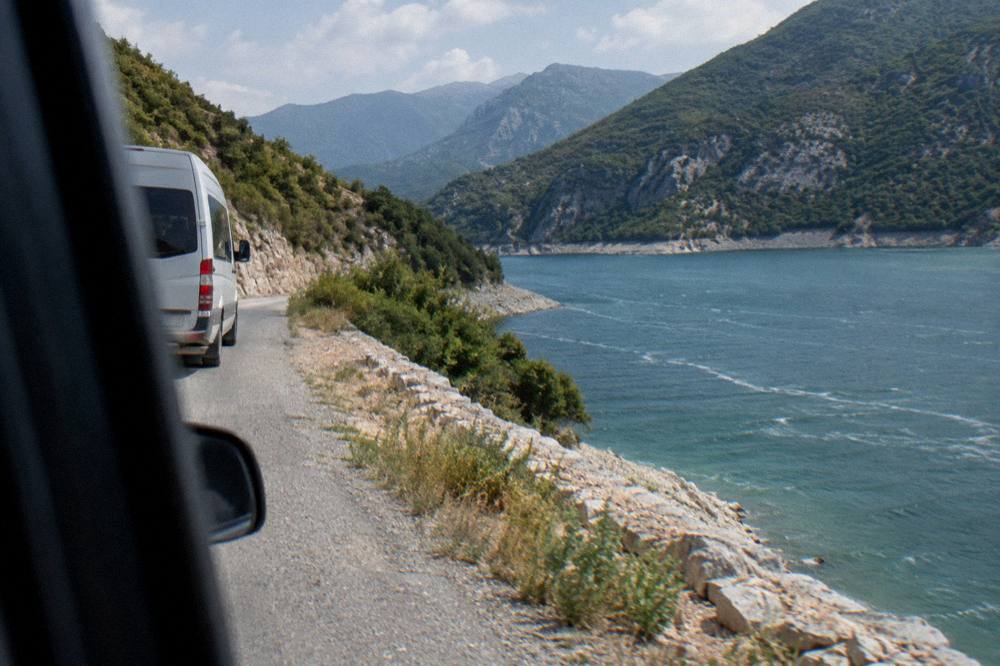
How Do You Match A Visit To Tirana's Rhythms?
Match the month to your priority: May or September for walking comfort at 22.7 C and 25.7 C mean highs, July and August for evening terrace life at about 30 C highs with minimal rain, October for festivals at 21.4 C, and December to February for museums and low-season pace at about 11 to 12 C highs with 106 to 138 mm of monthly rain.
Build the day around the sun rather than fighting it. In summer, mornings belong to the square and the Pyramid's steps, midday to the cable car or a long lunch, evenings to Blloku. In the cooler months the order flips: museums at 09:30 openings, walks in the mild afternoons. An evening of traditional music and dance with dinner moves indoors when the rain arrives, and it runs through the year; check availability for the date you land on.
Getting in and out also has a rhythm. The airport bus runs 24/7, every full hour, for 400 lek, stopping behind the Palace of Opera and Ballet near the square, and there is no airport train; the Tirana Airport To City Centre and Getting Around Tirana pages carry the full detail. Intercity buses leave from the South and North Bus Terminal about 3.9 km north-west of the square, and the Tirana Bus Stations guide maps them.
What Should You Pack For Each Season In Tirana?
Pack for Tirana's temperature spread: ERA5 mean highs run from 10.8 C in January to 30.4 C in August and mean lows from 2.3 C to 19.5 C, so summer needs sun protection and light layers, spring and autumn need a rain layer for 89 to 119 mm monthly totals, and winter needs a real coat and umbrella for 106 to 138 mm. Mosque visits call for shoulders and knees covered, as courtesy guidance.
Practicalities round out the list. Plugs are type C and F at 230 V, the same as most of Europe. Cards work in hotels, larger restaurants and supermarkets in the centre, but cash in lek is needed for buses, markets and small cafes, and the Albanian Lek page explains the currency. The emergency numbers are Police 112, Ambulance 127 and Fire 128. English proficiency sits in the moderate band per the EF English Proficiency Index, so simple English works widely in the centre. The Albania Travel Tips page collects the rest.
| Season | Layers | Rain gear | Extras |
|---|---|---|---|
| Spring (Mar-May) | Light layers, one warm evening piece | Jacket for Mar-Apr | Comfortable walking shoes |
| Summer (Jun-Aug) | Light clothing, sun hat | Rarely needed | Water bottle, sunscreen |
| Autumn (Sep-Nov) | Layers building to warm by Nov | Umbrella, waterproof from Oct | Festival tickets early |
| Winter (Dec-Feb) | Warm coat, sweater | Umbrella essential | Indoor sight list ready |
Common Questions About The Best Time To Visit Tirana
What is the best month to visit Tirana?
May and September. ERA5 1991-2020 normals give May a 22.7 C mean high with 89 mm of rain and September a 25.7 C mean high with 98.9 mm, comfortable for walking and day trips before summer heat or the November rains.
Is summer too hot in Tirana?
July and August average mean highs of 29.8 C and 30.4 C with mean lows near 19 C, and rain below 34 mm a month. It is manageable with morning sightseeing, a midday break and evening activity, but spring and autumn are cooler for long walks.
Does it rain a lot in Tirana?
It depends on the month. ERA5 reanalysis 1991-2020 totals range from 31 mm in August to 138.6 mm in November, with December at 137.5 mm. Summer is dry; late autumn and winter are the wet periods.
Is winter a bad time to visit Tirana?
Not for city content. December to February mean highs of about 11 to 12 C suit museums, markets and cafes, and the Christmas market usually runs through December, though rain is frequent. Pack an umbrella and plan indoor alternatives.
When is the rainy season in Tirana?
October through February. Monthly rainfall in the ERA5 1991-2020 normals rises from 119.1 mm in October through the November peak of 138.6 mm and stays above 105 mm through February before falling in spring.
Are there festivals worth timing a trip around?
Yes. The Tirana International Film Festival ran 21 to 27 September 2026, the Jazz Festival 23 to 25 September, the rescheduled Marathon falls on 14 to 15 November 2026, and Festivali i Kenges runs 17 to 20 December 2026. Treat them as annual events and confirm the next edition's dates.
Whenever you go, book sightseeing for the cooler hours, keep an umbrella from October onward, and check the FCDO's current advice before an autumn trip, since the October 2026 demonstrations show how quickly a Tirana calendar can move.