Tirana Food Tour And Cooking Class Options
Tirana, the inland capital of Albania, eats well: layered byrek, grilled qofte, tave kosi and raki, with guided food walks and hands-on cooking classes across the centre.
Short answer
A Tirana food tour is a guided walk or class built around Albanian dishes such as byrek, qofte, tave kosi and raki. Guided walks cover the centre and Pazari i Ri, cooking classes teach full Albanian meals, and both run year round; prices, ratings and durations are listed on each operator's live listing.
Tirana, the capital of Albania, sits inland in a basin at the foot of Mount Dajti, and its food scene runs from bakery counters selling byrek in the morning to late tables in Blloku, the cafe and bar quarter about 0.8 km south of Skanderbeg Square. A Tirana food tour is one of the most direct ways into that scene: a guided walk, a seated tasting or a hands-on cooking class, each built around Albanian dishes rather than generic sightseeing.
What Is A Tirana Food Tour And What Does One Include?
A Tirana food tour is a guided experience built around Albanian food and drink, usually a walking route through the city centre with tastings at several stops, or a seated cooking class where a full Albanian meal is prepared and eaten. Walks cluster around Skanderbeg Square, Pazari i Ri and Blloku; classes take place in kitchens around the centre. Prices, ratings, review counts and durations are listed on each operator's live listing, not on this page.
The formats fall into a few clear groups. Guided walks move on foot between stops, tasting as they go, and often fold in the city's Ottoman and communist-era landmarks between bites. Tasting tours concentrate the eating into fewer, longer stops, sometimes with a market component at Pazari i Ri, the New Bazaar about 0.6 km east of the square. Cooking classes are the most involved: a guide or cook walks a small group through a set of Albanian dishes, and the group eats the result. Evening experiences add traditional music and dance to a seated dinner, which suits visitors who want food plus atmosphere rather than a cooking lesson.
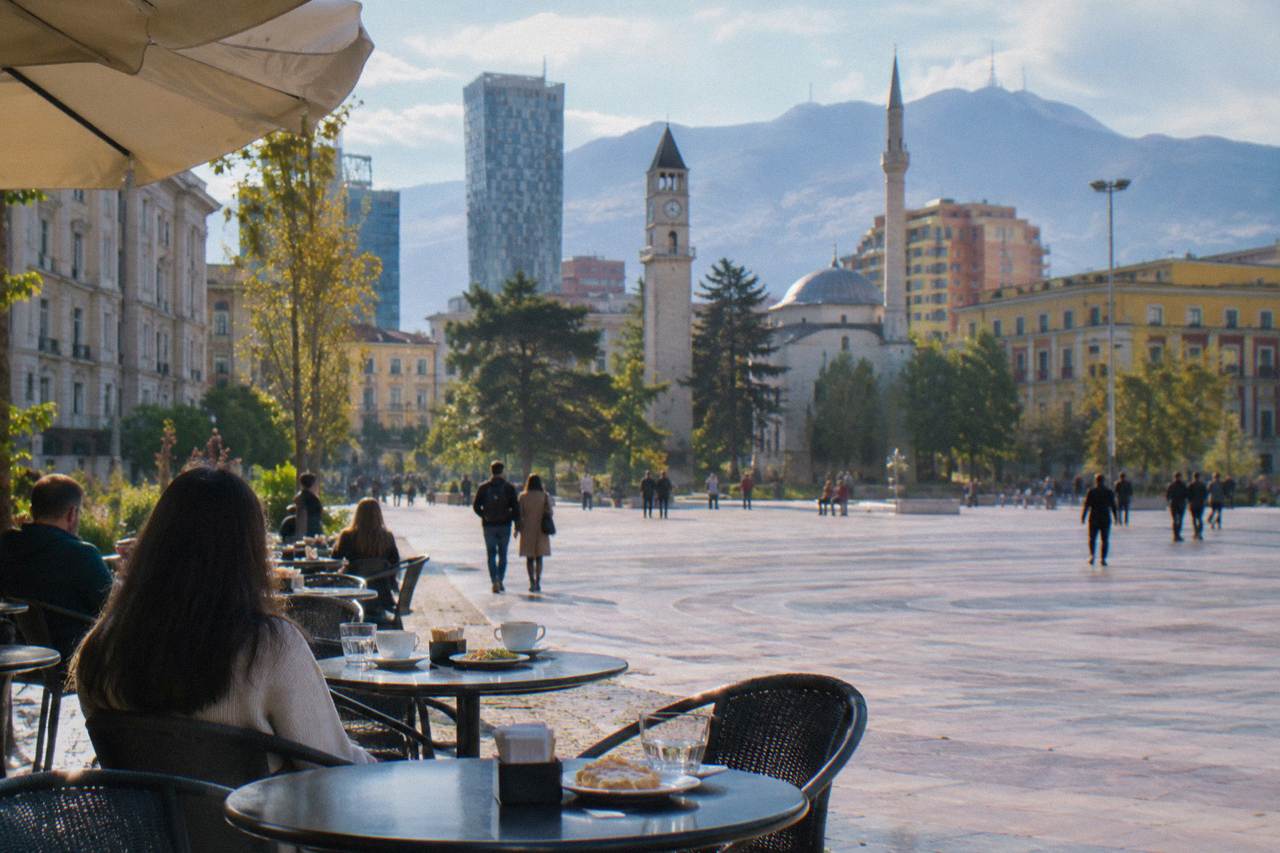
What the formats share is the city itself. Tirana is compact and walkable around the centre, with Et'hem Bey Mosque about 0.2 km south-east of the square, the Pyramid of Tirana about 0.7 km south-east and the Clock Tower beside the mosque, so a food walk doubles as an orientation walk. The Albanian food guide on this site covers the cuisine in more depth; this page stays on the tours, the dishes you will meet on them, and how to plan around them.
Which Dishes And Drinks Will You Meet On A Tirana Food Tour?
Byrek, a layered filo pie with cheese, spinach or meat fillings, is the everyday staple on nearly every food route, alongside qofte, seasoned grilled or fried meatballs, and tave kosi, baked lamb with a yogurt and egg topping. Fergese, baked peppers and tomatoes with cheese, appears on seated menus. To drink there is Albanian coffee, and raki, a fruit brandy that finishes many meals. Each dish can be described in one clause; none needs a history lecture to be enjoyed.
The dishes are simple in the best sense: built from a short list of ingredients and served without ceremony. A tasting walk usually begins with something baked, moves through grilled meat and vegetable dishes, and ends sweet or with raki. Cooking classes tend to centre on one signature bake plus accompaniments, so a group leaves with a repeatable recipe rather than a tasting list.
| Dish or drink | What it is, in one clause |
|---|---|
| Byrek | Layered filo pie with cheese, spinach or meat fillings |
| Tave kosi | Baked lamb or chicken with rice under a yogurt and egg topping |
| Qofte | Seasoned meatballs, grilled or fried |
| Fergese | Baked peppers and tomatoes with cheese |
| Raki | Fruit brandy, often grape or plum |
| Albanian coffee | Strong coffee served in small cups, cafe culture's centrepiece |
One drink rule matters more here than anywhere else on a food page: the UK FCDO health page states plainly, "Do not drink the tap water in Albania, as it may cause illness. Only drink bottled water." Order bottled water with meals and do not treat the tap as a refill source. On alcohol, Albanian law prohibits the sale of alcohol to anyone under 18, a restriction reported under law No. 9518 of 2006, and drink-driving is zero tolerance per ATA reporting of the August 2026 road-rule tightening. Neither point changes a food tour; both are worth knowing before a raki tasting ends.
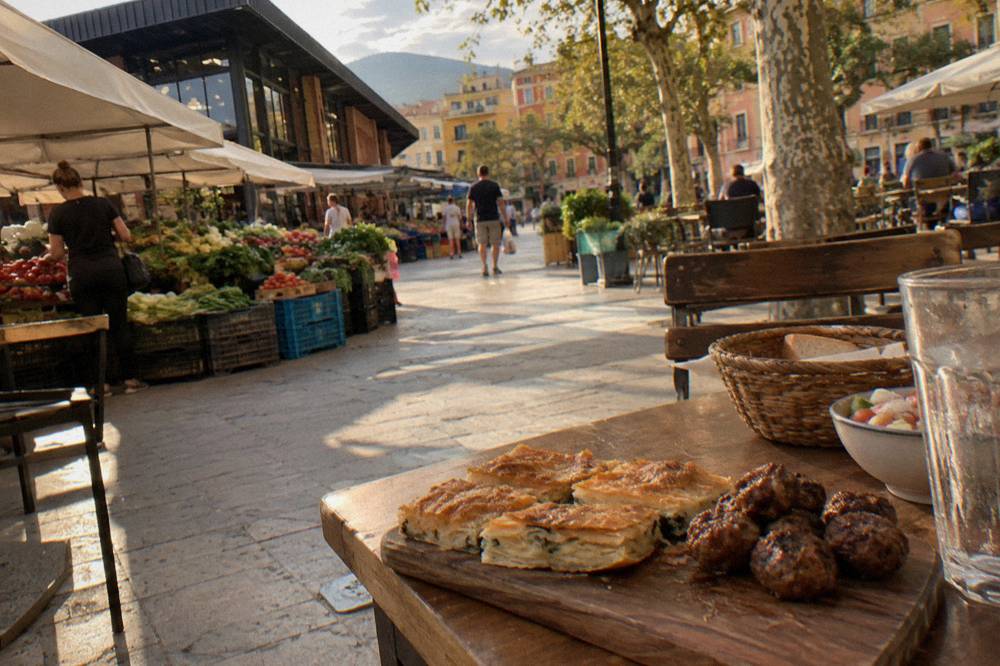
Beyond the plate, the currency matters at any market stop. Albania uses the lek, at roughly 90 lek to the euro per the Bank of Albania official rate, and the euro is not legal tender, though some tourist businesses take it informally at their own rate. Cards are widely accepted in hotels, larger restaurants and supermarkets in central Tirana, while markets, small cafes and buses still run on cash, so carry lek for the bakery and the bazaar. The wider picture of things to do in Tirana includes plenty that costs nothing, which leaves room in a budget for the food.
How Do Walking Food Tours In Tirana Work?
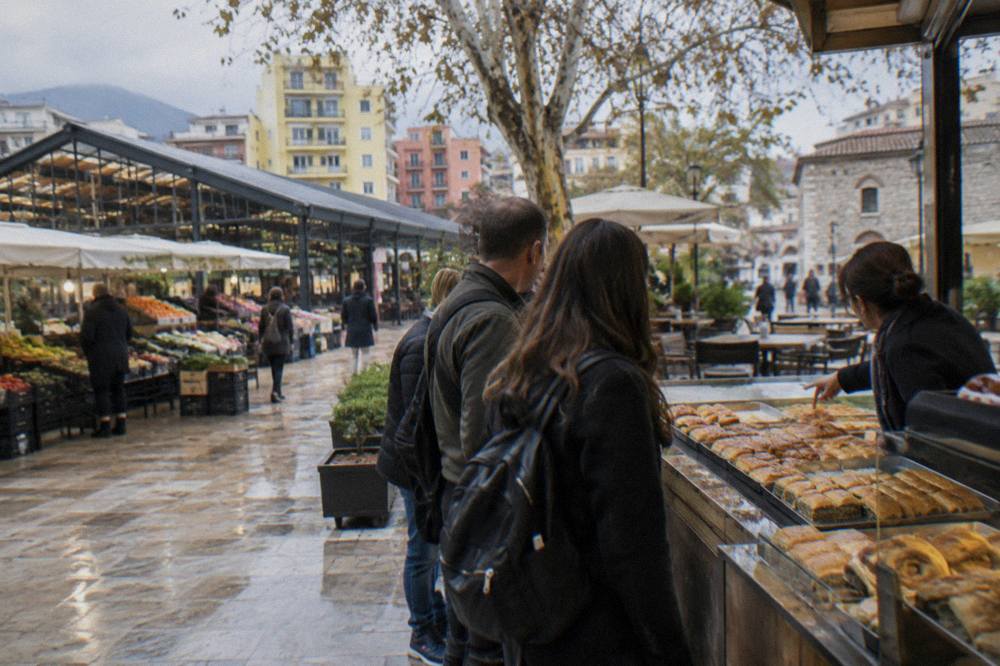
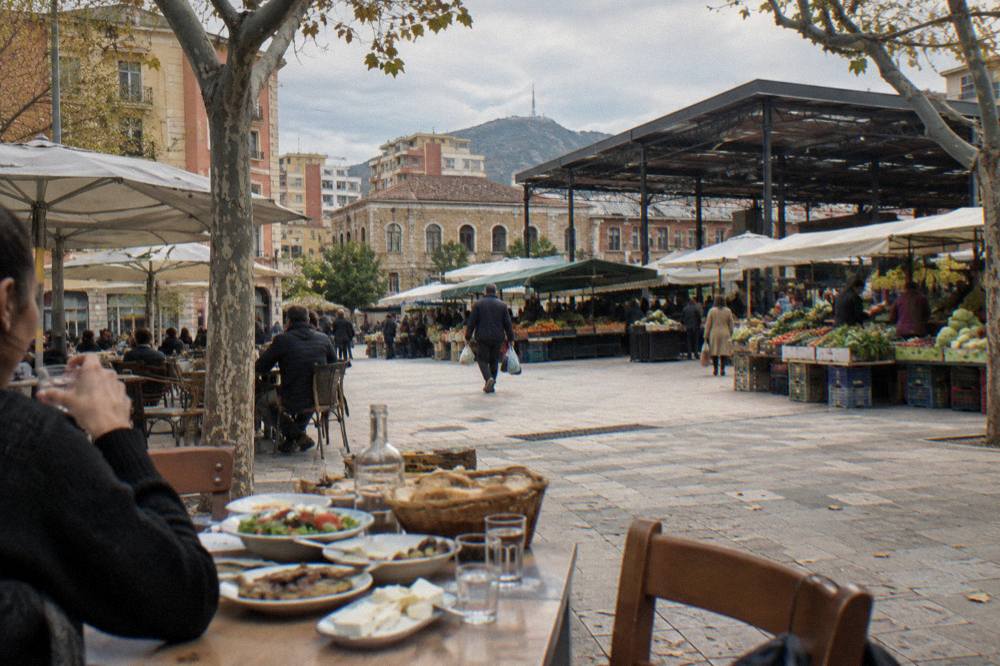
Walking food tours in Tirana run on foot through the city centre, typically starting on or near Skanderbeg Square and stopping at several eateries, bakeries and market stalls for tastings, with a local guide explaining each dish as the group goes. Routes commonly reach Pazari i Ri, the New Bazaar about 0.6 km east of the square, and some continue south toward Blloku. Bookings, prices and durations sit on each operator's live listing.
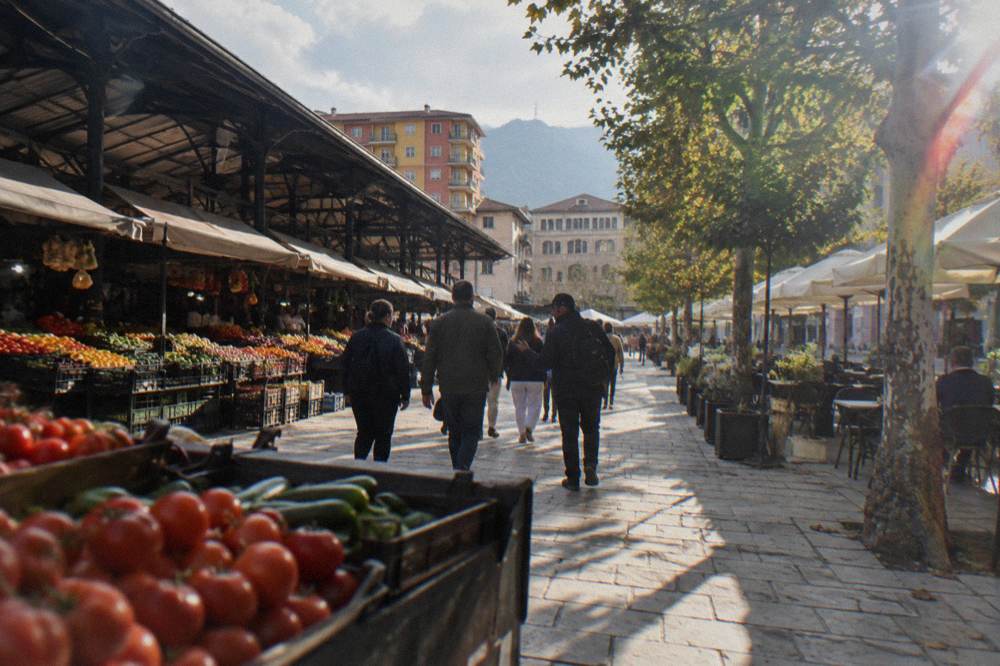
The walking format suits Tirana because the distances are short and the eating is distributed. A route that begins at the square passes the Et'hem Bey Mosque, the Clock Tower and the National History Museum's mosaic facade within a few hundred metres; the museum itself is closed for restoration until about March 2028, but the facade is visible from the square. From there it is a short walk east to Pazari i Ri, where produce stalls, butcher counters and small kitchens make up the city's most food-dense block, and where many tours pause longest.
Tasting walks differ mainly in scope. Some cover a handful of stops with one dish each; others build toward a seated finale with a full plate and a raki toast. A few pair the food with the city's communist-era history, passing Bunk'Art 2, about 0.2 km south-east of the square, or the House of Leaves, about 0.2 km south-west, between tastings. If the history interests you more than the route, the Tirana communism tour page covers that side of the city in depth, and a Tirana walking tour covers the classic route without food. For a first afternoon, a walk that mixes both, like the one day in Tirana itinerary, leaves the evening free for Blloku.
Practical notes for any walk: wear shoes that handle paving, carry lek for anything bought outside the tour's included stops, and check the meeting point before setting out. In the current October 2026 conditions, demonstrations have been held in central Tirana since 13 October, some with violence, and the FCDO updated its advice on 15 October; operators adjust routes when central streets close, so confirm the meeting point on the day.
What Happens At An Albanian Cooking Class In Tirana?
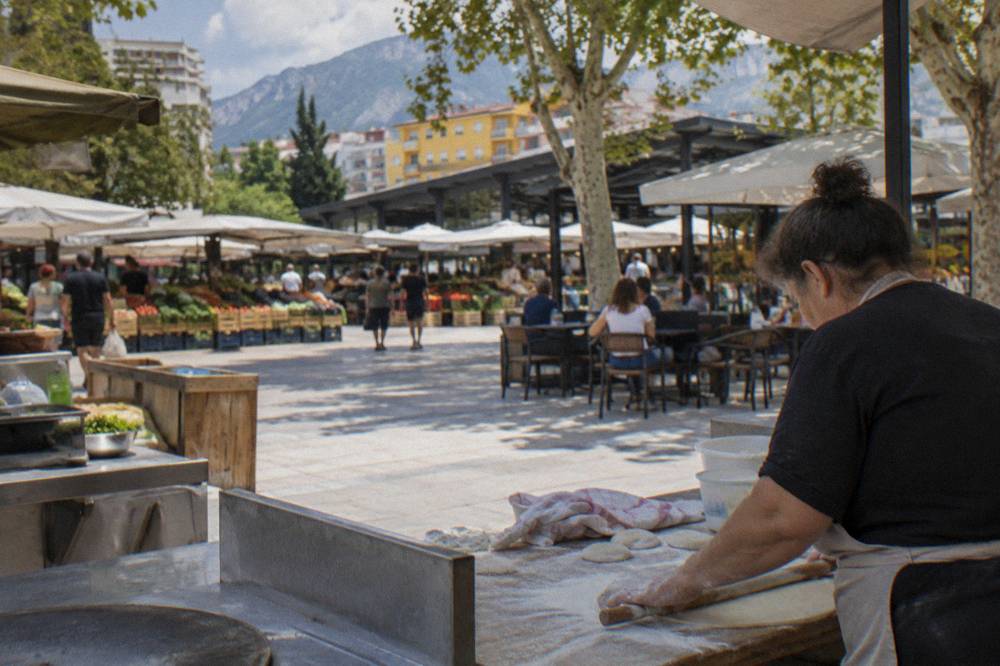
An Albanian cooking class in Tirana is a hands-on session, usually in a kitchen in or near the centre, where a cook guides a small group through preparing a set of Albanian dishes, and the group then sits down to eat what it made. Classes typically centre on byrek and a baked or grilled main, with raki or wine poured at the table. Group sizes, menus, prices and durations are listed on each operator's page.
The class format suits visitors who want a recipe to take home rather than a route to follow. The featured cooking class on this site, the Traditional Albanian Cooking Class with Unlimited Wine and Raki, works through a full Albanian meal with wine and raki included at the table; its card below carries the live price, rating and review count. Other classes in the city follow the same logic with different menus, and a couple even build the meal around a market visit first, so the shopping and the cooking run together.
Two practical points shape a class booking. First, classes are seated and indoor, which makes them the reliable choice on a wet day: Tirana's rain peaks in November at 139 mm for the month in the 1991-2020 ERA5 reanalysis, and a kitchen beats a bakery-counter walk in that weather. Second, classes tend to run at set times with fixed group sizes, so they benefit from booking ahead rather than deciding on the street, and the operator's listing carries the cancellation terms. Pair a morning class with an afternoon walk to Skanderbeg Square or the Grand Park, about 2.1 km south-east, and the day covers both food and city.
Where Should You Eat In Tirana Beyond A Tour?
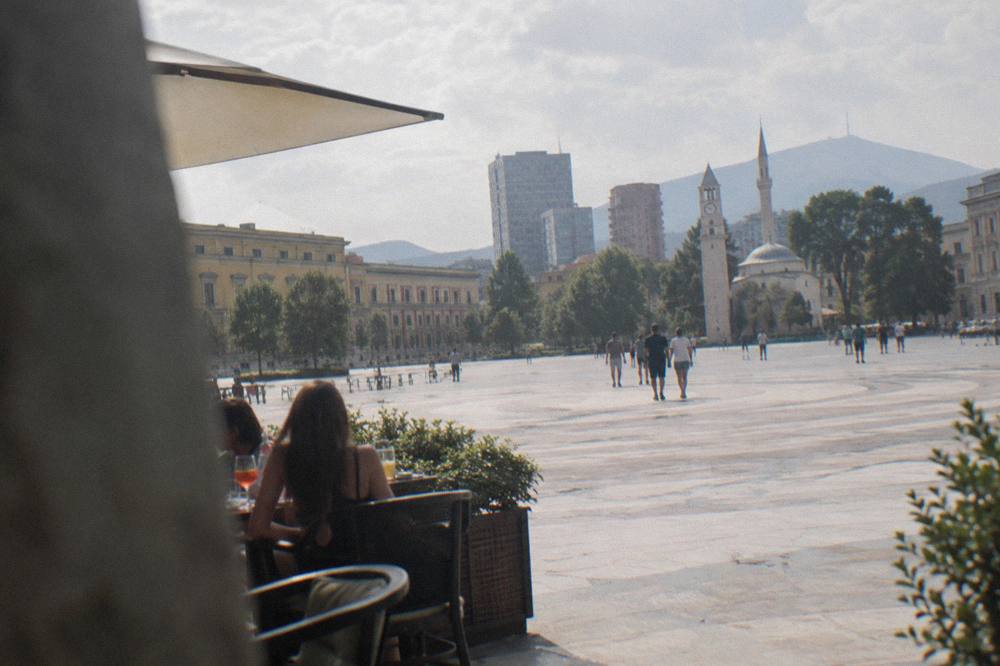
Tirana's eating concentrates in a few walkable zones: the centre around Skanderbeg Square for cafes and quick bites, Pazari i Ri about 0.6 km east for market food and small kitchens, and Blloku about 0.8 km south for restaurants, cafes and bars into the night. Rruga e Kavajes, about 0.5 km west of the square, adds older neighborhood eateries. Padam, Artigiano, Sophie Caffe and Era Blloku are four venues with official sites.
Padam is a boutique hotel and restaurant on Rruga Papa Gjon Pali II; Artigiano serves Italian and Mediterranean plates; Sophie Caffe is a cafe chain found at several locations; and Era Blloku sits in Blloku serving Albanian and Mediterranean food. No rating, price or hours claim attaches to any of them on this page: check each venue's own site before going.
| Zone | Direction from Skanderbeg Square | What it does well |
|---|---|---|
| Centre, around the square | On the square itself | Cafes, quick bites, coffee culture |
| Pazari i Ri (New Bazaar) | About 0.6 km east | Market stalls, produce, small kitchens |
| Blloku | About 0.8 km south | Restaurants, cafes, nightlife |
| Rruga e Kavajes | About 0.5 km west | Older neighborhood eateries |
| Grand Park and Artificial Lake | About 2.1 km south-east | Lakeside walks with cafe stops |
Blloku deserves its own sentence because its history is the city's in miniature: the quarter was the communist leadership's closed residential zone, and it is now the cafe and bar quarter, a shift any guide on a food walk will point out between stops. The Blloku area guide covers the streets in detail. For evenings, the pattern reported across guides is a late start, with cafes turning into bars as the night goes on, so plan to wander and pick a table.
How Does The Weather Shape A Food Day In Tirana?
Tirana's climate, per the ERA5 reanalysis for 1991-2020, runs hot and dry in summer and mild and wet in winter: August has a mean high of 30.4 C and just 31 mm of rain, while January has a mean high of 10.8 C, a mean low of 2.3 C and about 106 mm of rain, and November is the highest-rainfall month at 139 mm. Food tours run year round; cooking classes are indoor; walking tours suit the drier months best.
The practical read of those numbers is simple. June through September is the reliable window for walking routes, with monthly rainfall between 31 and 99 mm and mean highs from 25.7 to 30.4 C. October still works, at a 21.4 C mean high, but the rain rises to 119 mm. From November through February, the monthly totals sit between 106 and 139 mm, and an indoor class, a long market lunch at Pazari i Ri or a museum afternoon beats a three-hour walk. The Tirana weather page carries the full month-by-month table.
| Month | Mean high C | Mean low C | Rain mm |
|---|---|---|---|
| Jan | 10.8 | 2.3 | 106 |
| Apr | 18.4 | 8.3 | 105 |
| Jul | 29.8 | 19.1 | 34 |
| Aug | 30.4 | 19.5 | 31 |
| Oct | 21.4 | 12.2 | 119 |
| Nov | 16.5 | 8.0 | 139 |
These are modelled normals for the grid cell over Tirana, not a station record, so treat them as planning figures with a degree or two of give. Summer walks are best booked for morning or evening slots given the afternoon heat; winter walks are perfectly workable with a rain layer, and the raki at the end needs no weather at all.
Can You Combine A Food Tour With Sightseeing Or A Day Trip?
Yes, and the arithmetic favours it: Tirana's core sights sit within a 1.5 km walk of Skanderbeg Square, so a morning food walk leaves the afternoon for Bunk'Art, the Pyramid of Tirana or the Dajti cable car, and the city's best food day trips, Durres about 39 minutes by road, Kruja about 45 minutes and Berat about two hours, each pair a coast, castle or UNESCO old town with a distinct regional table.
Inside the city, the classic pairing is food plus bunkers. Bunk'Art 2 sits about 0.2 km south-east of the square, close enough to sit on a walking route, and Bunk'Art 1 sits about 4.6 km north-east, behind the Dajti cable car's lower station, which makes a morning museum visit and an afternoon cable car a natural sequence. The Dajti Ekspres sells tickets only at the lower station and publishes no fares online, and the Dajti Ekspres page covers the details. Neither Bunk'Art site prints a ticket price either; buy at the door for both.
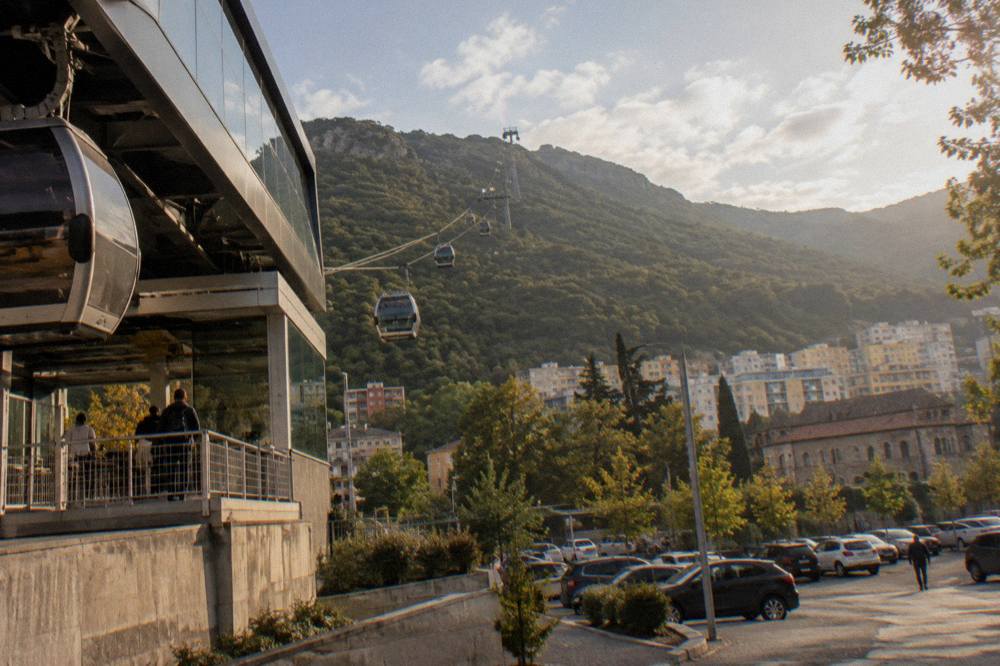
For day trips, food and destination pair naturally. Durres, about 37 km and 39 minutes west by road, adds the Adriatic coast and a Roman amphitheatre, and the Tirana to Durres guide covers the seafood case. Kruja, about 45 minutes north, pairs its castle and old bazaar with a mountain town's slow lunches. Berat, about two hours south, is the UNESCO-listed "town of a thousand windows" with its own cooking traditions and museum prices published by the Berat Museum Center, the Onufri museum at 400 lek and the Ethnographic museum at 300 lek. Ohrid, about 135 minutes plus a border crossing into North Macedonia, makes a longer food-and-lake day; the Tirana to Skopje and Ohrid pages cover the crossings.
| Day trip | Roughly, by road from Skanderbeg Square | Food angle |
|---|---|---|
| Durres | About 39 minutes | Adriatic seafood, the nearest coast |
| Kruja | About 45 minutes | Old bazaar town, mountain table |
| Berat | About two hours | UNESCO old town, regional cooking |
| Ohrid | About 135 minutes plus the border | Lakeside eating in North Macedonia |
If you are luggage-free between a checkout and an evening flight, note that left-luggage options exist near the centre, and the Tirana luggage storage guide lists them; one central operator charges 3 euro per bag per day, per its own site, and you should confirm current terms directly. The airport bus to the centre runs 24/7, hourly, for 400 lek, which makes a food stop on arrival day entirely workable.
Which Food Experience Should You Book For Your Trip?
Match the format to your days and your weather: book a walking food tour for a first day in Tirana, when orientation and eating together are worth the most; book a cooking class when you want a recipe and a seated meal, or when rain pushes you indoors; and book an evening show with dinner when food is the backdrop rather than the point. First-time visitors with two days can do a walk and a class back to back without repeating dishes.
A sample split for a two-day visit, consistent with the two days in Tirana itinerary: day one, a morning walking food tour through the centre and Pazari i Ri, an afternoon at the Pyramid of Tirana and Bunk'Art 2, and an evening in Blloku. Day two, a cooking class late morning after a slow cafe breakfast, the Dajti cable car in the afternoon, and a final dinner at one of the named venues. Families should note that classes welcome children at many operators and that walking tours move at a tasting pace rather than a march; the Tirana with kids page covers the child-angle in full.
Cancellation and pay-later terms vary by product and are shown at booking; read them before committing, especially for classes with small group sizes. For visitors planning a longer stay built around the table, the Albanian food guide and the byrek page go deeper on the cuisine itself.
Common Questions About Tirana Food Tours
What is a Tirana food tour?
A guided experience built around Albanian food: a walking route with tastings at several stops, a seated tasting, a hands-on cooking class, or an evening dinner with traditional music. Walks usually start on or near Skanderbeg Square and reach Pazari i Ri; classes run in kitchens around the centre. Prices, durations and ratings sit on each operator's live listing.
What food is Tirana known for?
Byrek, a layered filo pie with cheese, spinach or meat fillings; tave kosi, baked lamb with a yogurt and egg topping; qofte, seasoned meatballs; and fergese, baked peppers and tomatoes with cheese. Raki, a fruit brandy, finishes many meals, and coffee culture runs strong in the centre and Blloku.
Can you drink the tap water in Tirana?
No. The UK FCDO health page states: "Do not drink the tap water in Albania, as it may cause illness. Only drink bottled water." Order bottled water with meals throughout the city.
Do you tip on a food tour in Tirana?
No tipping percentage is established for Albania in any trusted source. If service was good, rounding up or leaving a small amount in cash is a practical approach; service is rarely added to the bill automatically.
Are food tours in Tirana suitable in winter?
Yes, with the format adjusted. Walking tours still run, though November rain averages 139 mm for the month in the 1991-2020 ERA5 reanalysis, so indoor-heavy routes and cooking classes are the comfortable choice from November through February, when mean highs sit between 10.8 and 16.5 C.
Where do Tirana food tours start?
Usually on or near Skanderbeg Square, the city's central public space, with routes reaching Pazari i Ri about 0.6 km east and, on some tours, Blloku about 0.8 km south. Confirm the exact meeting point on the operator's listing on the day, since central street conditions can change the plan.