Tirana Walking Tour: Which City Walk To Book
Tirana, the capital of Albania, is a compact inland city built around Skanderbeg Square, and its core sights sit close enough together that a guided walk can cover the Ottoman mosques, the communist-era landmarks and the cafe quarter of Blloku in a single loop. This guide sets out what a Tirana walking tour includes, how the options differ, and what the city itself offers on foot.
Short answer
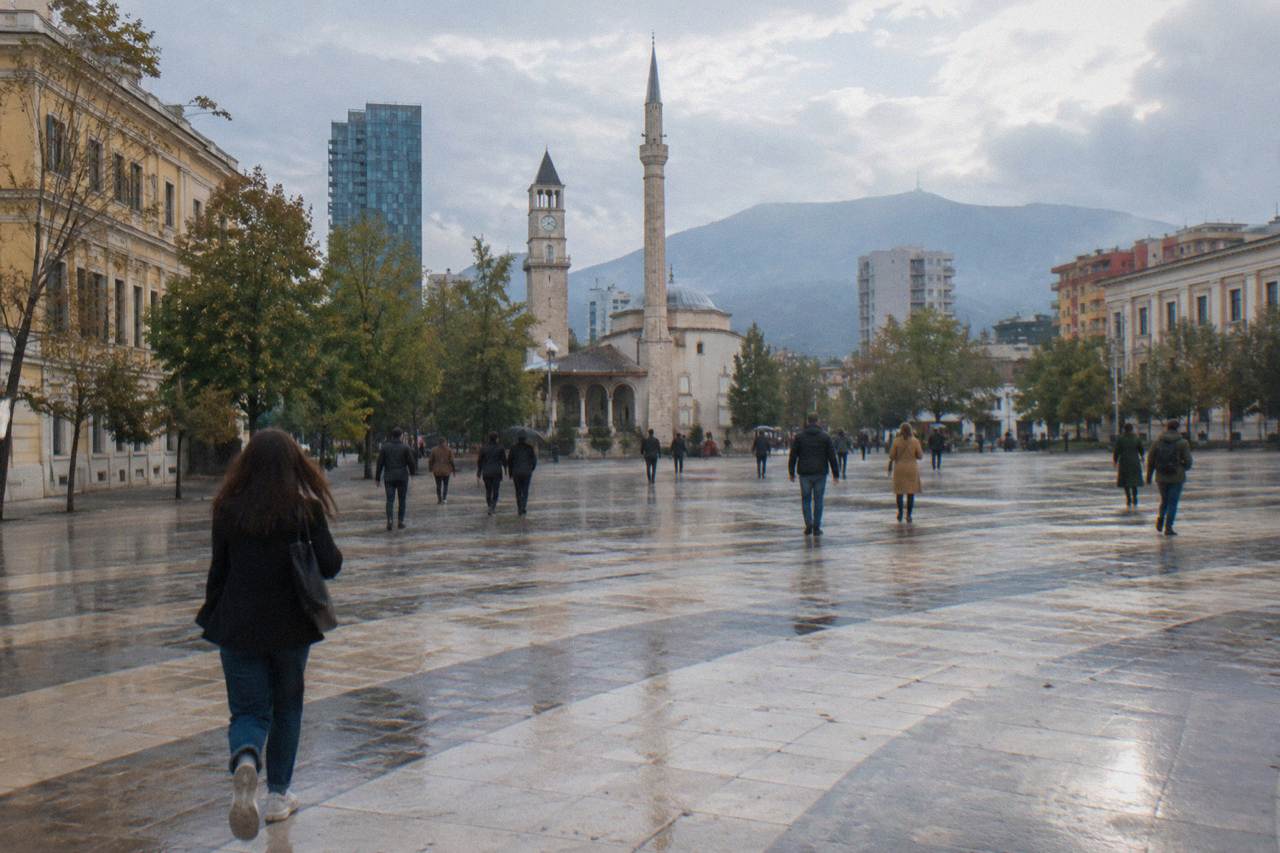
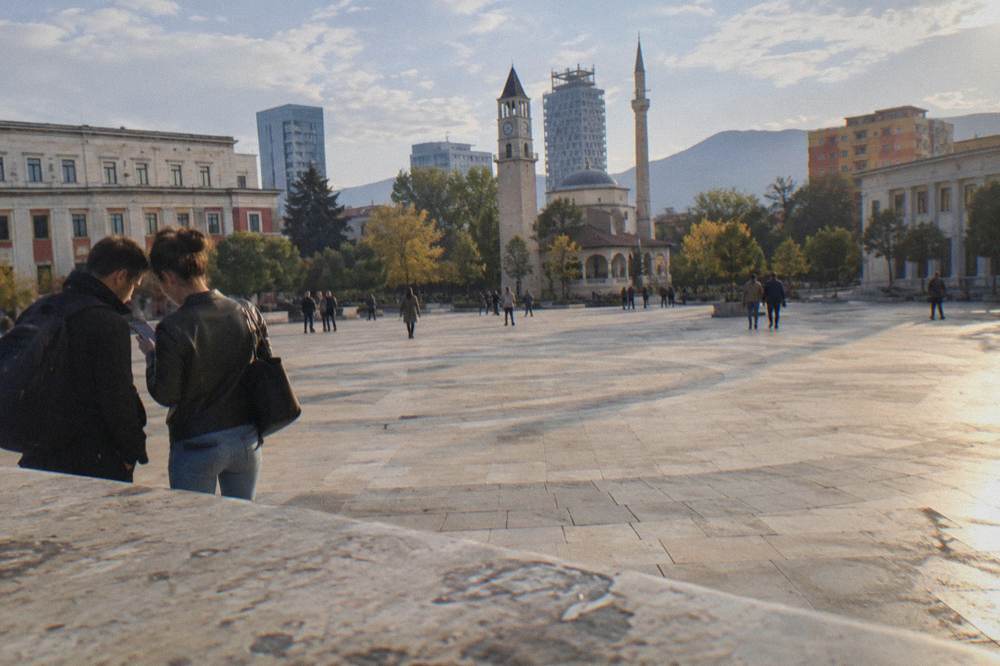
A guided Tirana walking tour covers the compact centre around Skanderbeg Square: the Et'hem Bey Mosque, the Clock Tower, the Pyramid of Tirana, the closed National History Museum facade, Pazari i Ri and the Blloku quarter. Every major landmark except Bunk'Art 1 and the Dajti cable car lies within about 1.3 km of the square, so a guided walk is a way to cover the whole core in one loop with context.
Tirana, the capital of Albania, sits inland in a basin at the foot of Mount Dajti, roughly 37 km and about 39 minutes by road from the Adriatic coast at Durres. It is not a coastal city, and that shapes what a walking tour here looks like: the reward is not a seafront promenade but a dense, layered centre where an Ottoman mosque stands beside a clock tower, a communist-era pyramid and a bunker museum, all within a short radius of Skanderbeg Square. Guided walks are one of the main ways visitors make sense of that layering, and this page from the Tirana Albania Travel Guide explains what they cover and how to choose one.
What Does A Guided Walking Tour Of Tirana Actually Cover?
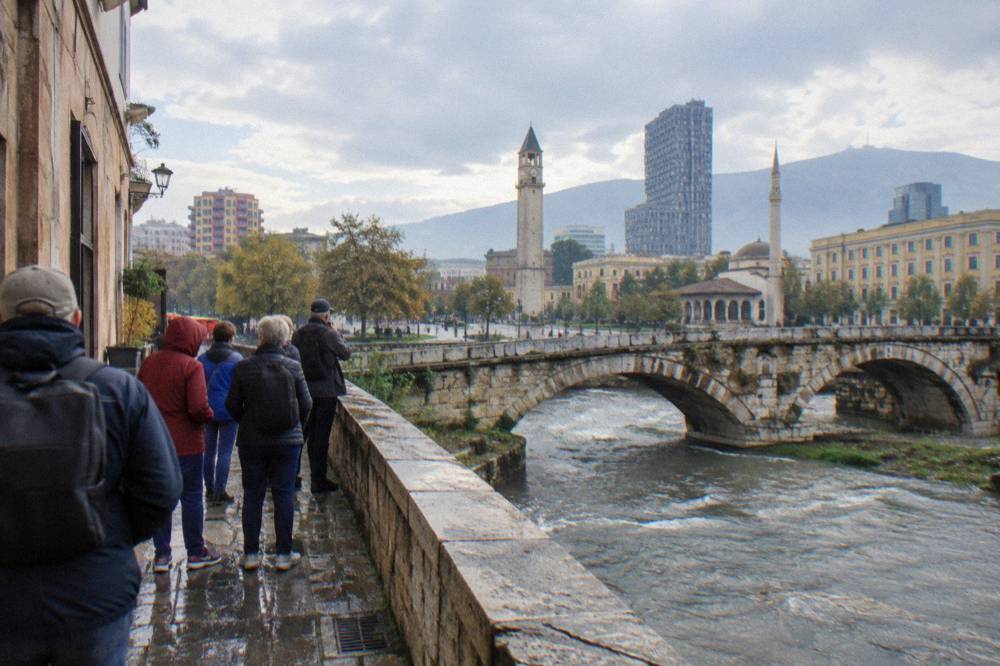
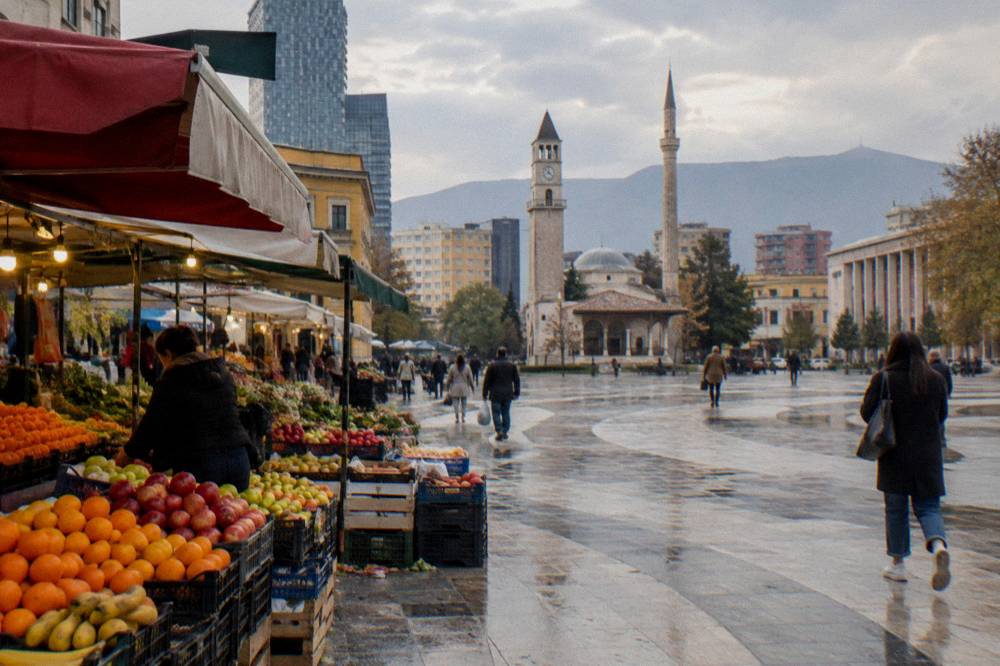
A guided Tirana walking tour typically covers the historic core within about a kilometre of Skanderbeg Square: the square itself, the Et'hem Bey Mosque and Clock Tower, the facade of the closed National History Museum, the Pyramid of Tirana, Tanners' Bridge, the Tirana Castle restaurant quarter, Pazari i Ri and the Blloku cafe district. Some walks add the House of Leaves or Bunk'Art 2, both of which sit within a few hundred metres of the square. The common thread is the city's compressed history. Tirana was founded, per the city's own history page, in 1614, became the capital on 11 February 1920 by decision of the Congress of Lushnja, spent 1944 to 1991 under a communist regime, and then reshaped itself rapidly. A guide's value is largely in narrating those transitions on ground where the physical evidence sits side by side.
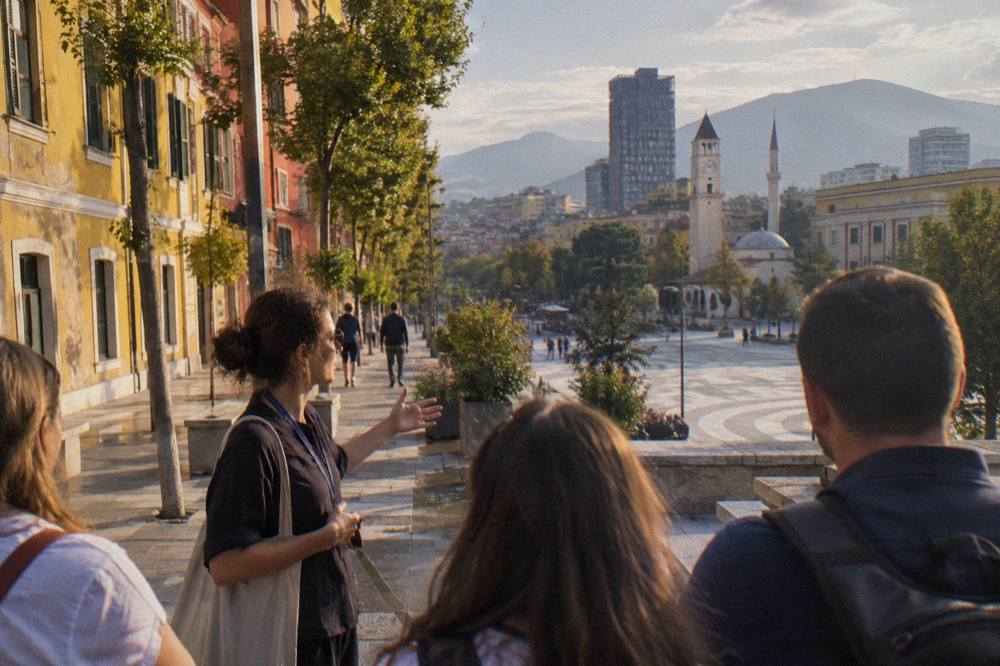
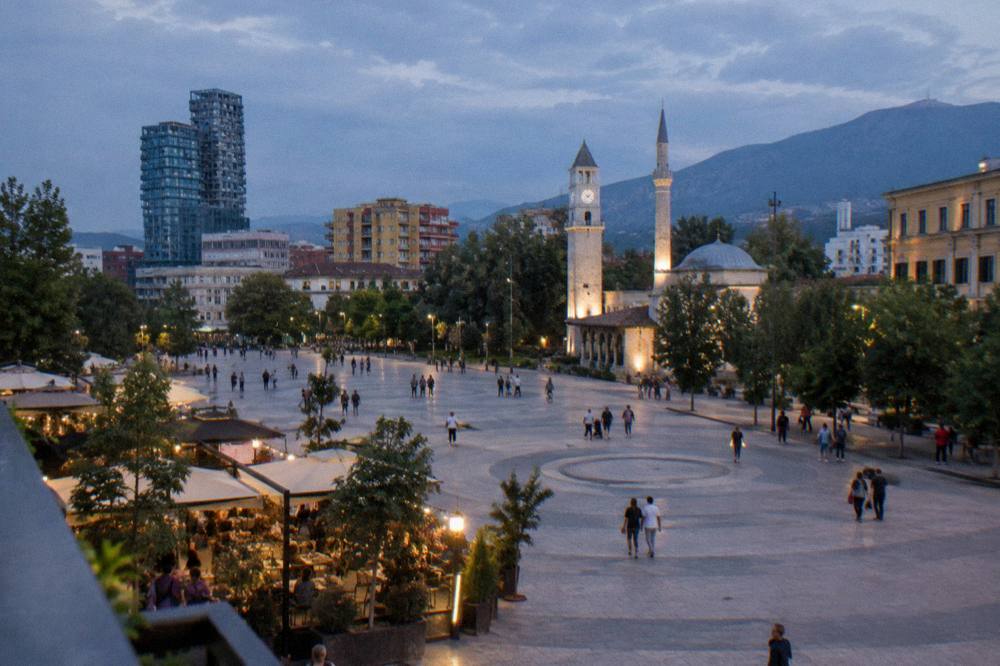
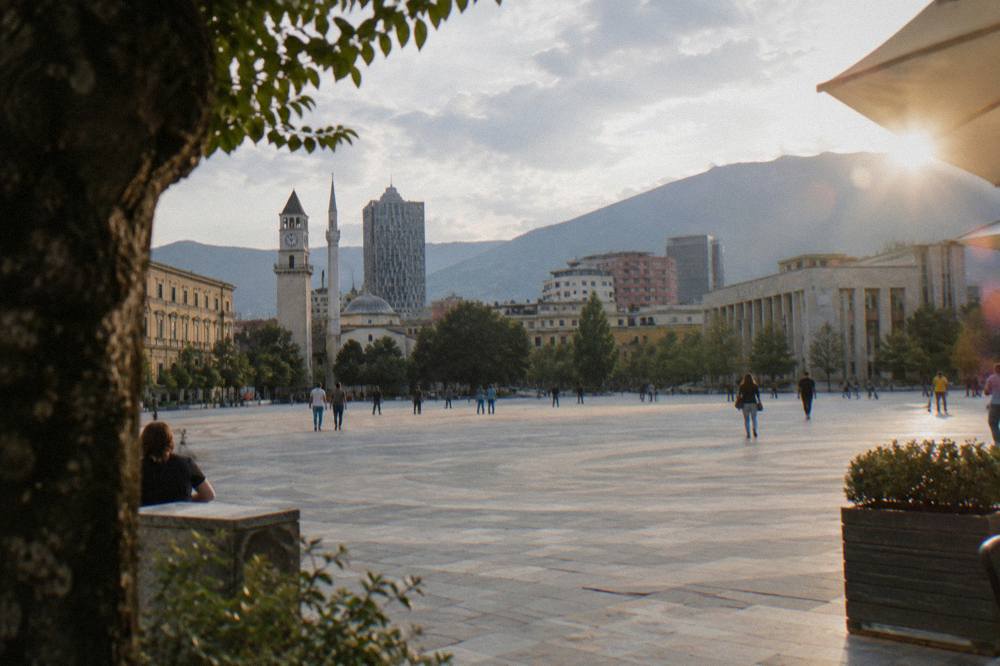
The typical route is a loop. It starts on Skanderbeg Square, which the national tourism agency describes as one of Tirana's most important public spaces, then moves past the Et'hem Bey Mosque, which the visit-tirana listing says was founded at the end of the 18th century and finished by Haxhi Et'hem Bey. From there walkers usually continue to the Pyramid of Tirana, opened in 1988 and renovated into the TUMO technology centre by May 2023, and on through Tirana Castle and the New Bazaar before finishing in Blloku, the former leadership quarter turned cafe and nightlife district.
What changes between tours is emphasis. A general city walk balances Ottoman, Italian-era and communist landmarks. A communism-focused walk spends its time on Bunk'Art 2, the House of Leaves and the Postbllok memorial, and is covered in depth on the site's Tirana communism tour page. A food-led walk, covered on the Tirana food tour page, threads the same streets but stops at bakers and grills along the way. Evening walks exist too, trading museum interiors for lit facades and cafe culture.
Which Tirana Walking Tour Should You Book For A First Visit?
For a first visit, a short guided highlights walk is the practical choice: it covers the whole core loop around Skanderbeg Square, Et'hem Bey Mosque, the Pyramid of Tirana and Blloku, and leaves the rest of the day free for a museum or a cable-car ride up Mount Dajti. Walkers who want the communist story in depth should instead pick a history-focused walk, and walkers with a free evening can pair a daytime highlights walk with a night tour. The site's featured option is the Hidden Treasures guided walk, which threads the centre's less obvious corners alongside the main landmarks; its card below carries current price, rating and availability.
The trio above spans three uses: a city highlights walk for your first day, and two day trips, Berat and Bovilla Lake, for later in the stay. Berat is one of Albania's two UNESCO-listed historic centres, inscribed with Gjirokaster in 2005 and 2008, and lies about two hours by road from Tirana. Bovilla Lake is closer, under an hour's drive, and pairs a reservoir landscape with a mountain hike. If you would rather compare the full spread of guided walks before deciding, the cards below add two more options from the roster.
For a deeper look at one option, the Local Life Walk link beside the card shows live dates and terms. The site's detailed write-up of the free walking tour option in Tirana covers the pay-what-you-want model separately for anyone comparing approaches.
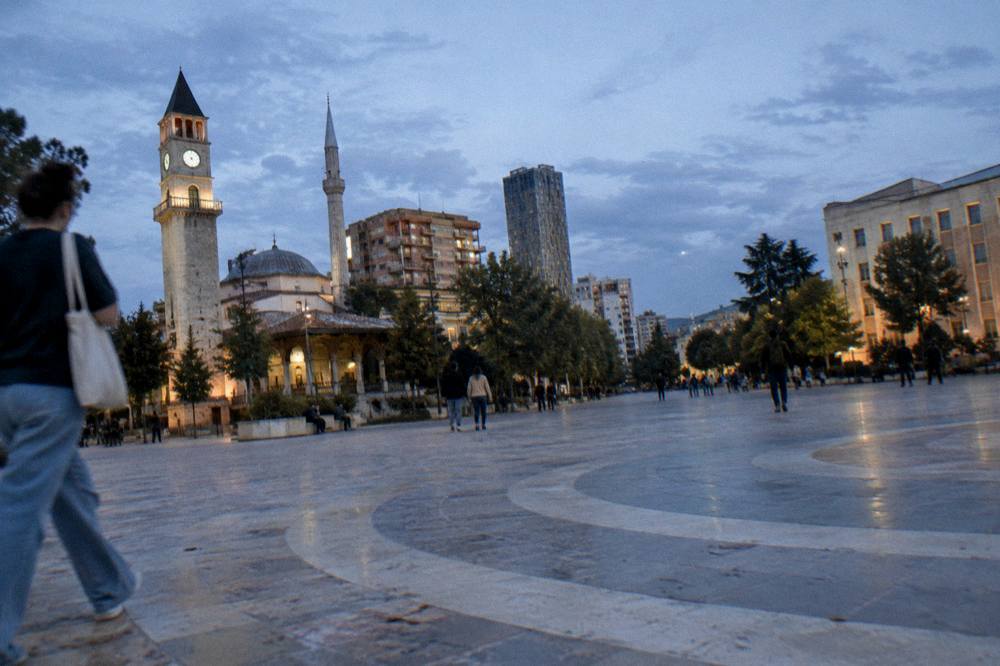
Evening walks deserve a mention of their own. Central Tirana's landmarks are modest in height and gain little from floodlighting, but the cafe terraces and the Blloku quarter come alive after dark, and a guided night walk pairs architecture commentary with a city that has shifted into its social hours. The night walking tour below is the roster's dedicated option, and the site's answer page on walking Tirana at night safely addresses the safety question directly.
Can You Walk Tirana On Your Own Without A Tour?
Yes, Tirana's core is genuinely walkable without a guide: Et'hem Bey Mosque, the Clock Tower, the Pyramid of Tirana, the House of Leaves, Bunk'Art 2, Tirana Castle, Pazari i Ri and Blloku all sit within roughly 0.2 to 1.3 km of Skanderbeg Square, and the terrain in the centre is flat. A self-guided loop of the core landmarks is a realistic half-day plan, and a tour mainly adds narration, museum context and shortcuts between them. The distances are short because the city grew outward from the square. Straight-line positions place the mosque about 0.2 km south-east of the square, the Pyramid about 0.7 km south-east, Tanners' Bridge about 0.7 km east, Blloku about 0.8 km south and the Grand Park about 2.1 km south-east. The table below gives the full spread.
| Landmark | Direction from Skanderbeg Square | Distance |
|---|---|---|
| Et'hem Bey Mosque | south-east | about 0.2 km |
| Clock Tower | south-east | about 0.2 km |
| House of Leaves | south-west | about 0.2 km |
| Bunk'Art 2 | south-east | about 0.2 km |
| Tirana Castle | south-east | about 0.5 km |
| New Bazaar | east | about 0.6 km |
| Pyramid of Tirana | south-east | about 0.7 km |
| Tanners' Bridge | east | about 0.7 km |
| Blloku | south | about 0.8 km |
| Postbllok Memorial | south | about 0.9 km |
| Mother Teresa Square | south | about 1.2 km |
| Grand Park of Tirana | south-east | about 2.1 km |
| Bunk'Art 1 | north-east | about 4.6 km |
Two things a self-guided walker should plan around. First, the National History Museum on the square is closed for restoration, with the announced closure running to about March 2028; the mosaic facade remains viewable from the square itself. Second, the outer sights are not walking distance: Bunk'Art 1 sits behind the Dajti Ekspres lower station about 4.6 km north-east, and the Dajti cable car, which does not publish fares online, shares that corner of the city. Both are covered on the site's getting around Tirana page.
What Will You See On A Walking Route Through Central Tirana?
A central Tirana walking route delivers five distinct layers inside about one kilometre: the Ottoman core of Et'hem Bey Mosque and Tanners' Bridge, the Italian-era ministries framing Skanderbeg Square, the communist landmarks of the Pyramid and the bunker museums, the post-1991 cafe culture of Blloku, and the market life of Pazari i Ri. Each layer sits within a few minutes' walk of the others, which is what makes the centre unusually rewarding on foot. The route below is the skeleton shared, with variations, by nearly every guided walk in the city.
| Route stage | What you pass | Ticket needed |
|---|---|---|
| Skanderbeg Square | equestrian statue, museum facade, Palace of Culture, Clock Tower base | no |
| Et'hem Bey Mosque | painted portico and minaret, free entry outside prayer times | no |
| Pyramid of Tirana | climbable stepped facade, TUMO centre | no |
| Blloku quarter | former leadership villas, cafes, Postbllok memorial | no |
| Tirana Castle and Pazari i Ri | fortress-wall restaurants, produce market | no for the streets |
| House of Leaves | Museum of Secret Surveillance, open 09:00-19:00 | yes |
| Bunk'Art 2 | Sigurimi bunker museum, open daily from 09:30 | yes, buy at the door |
The mosque deserves a pause on dress: it is free to enter outside prayer times, and visitors are asked to cover shoulders and knees, with a headscarf for women, and to remove shoes. The site's page on Tirana's mosques and churches covers the Great Mosque of Tirana at Namazgah, opened 10 October 2024, which sits about 0.6 km south-east of the square.
For the ticketed stops, note what is and is not published. Bunk'Art's own site lists hours but no online ticket price, so the standing advice is to buy at the door. The House of Leaves lists daily opening from 09:00 to 19:00. The Clock Tower has about 90 steps, per the visit-tirana listing, with no reliably published hours or fee, so treat the climb as a bonus rather than a plan. None of this blocks a walking route; it just means the indoor stops reward a quick check at the venue before going.
Is Central Tirana Safe To Walk In Right Now?
Central Tirana is walkable, but October 2026 needs one specific caveat: demonstrations have been held in the centre since 13 October 2026, some violent, and the UK FCDO updated its Albania travel advice on 15 October 2026, advising visitors to avoid demonstrations and check local media. Away from protests, the ordinary advice is standard city practice: watch your belongings in crowds. The police number is 112, ambulance 127 and fire 128. The demonstrations are the reason the Tirana Marathon was moved from its original late-October date to 14 to 15 November 2026, which is a useful indicator of how the situation has affected city-centre events.
A walking tour does not remove this consideration, but it does put a local guide between you and any surprise: guides reroute around gatherings, and tour operators tend to cancel or adjust when the centre is disrupted. Independent walkers should keep the same habit. If a route crosses Skanderbeg Square or the main boulevard on a day when a protest is called, shifting the loop toward Pazari i Ri, Tirana Castle or the Grand Park keeps the day moving without entering the affected area.
The FCDO also notes that tremors are common in Albania and serious earthquakes less frequent, and that same-sex relationships are legal in the country with gay-friendly venues and support groups in Tirana. The US State Department's standing guidance for Albania is its second-level advisory, to exercise increased caution. None of this is specific to walking, but it belongs on any practical page about spending a day on the city's streets.
How Do You Get To The Walking Route And Around Tirana?
Arriving walkers land at Tirana International Airport Nene Tereza at Rinas, 15.9 km and about 29 minutes by road from the centre, where the official airport bus runs 24/7 every full hour for 400 lek to a stop behind the Palace of Opera and Ballet near Skanderbeg Square; the official airport taxi costs about 2,200 lek. Within the city, buses cost about 40 lek per ride paid in cash on board and run roughly 06:00 to 23:00. There is no airport train and no running Tirana-Durres passenger train; the line is being rebuilt with electrification expected by the end of 2027.
| Journey | Option | Fare | Notes |
|---|---|---|---|
| Airport to centre | official airport bus | 400 lek | 24/7, hourly, 30-40 min |
| Airport to centre | official airport taxi | about 2,200 lek | 20-25 min, book at tiataxi.al |
| Airport to Durres | Adis coach | 600 lek | departures 08:30 to 23:00 |
| Within the city | city bus | about 40 lek | cash on board, roughly 06:00-23:00 |
| Tirana to Kruja | minibus | about 200 lek | about an hour, per local guides |
| Intercity buses | South and North Terminal | pay the driver in cash | terminal 4.0 km north-west of the square |
Uber and Bolt do not operate in Tirana, though local taxi apps do; the site's getting around Tirana guide covers the details. For intercity departures, the South and North Bus Terminal publishes timetables on Tirana.al: Durres buses run from 06:00 at short intervals, Berat from 05:40 about every 30 to 45 minutes and Shkoder from 05:00 about every 30 minutes. The national platform eTransport lists official lines and timetables.
When Is The Best Time Of Year For A Tirana Walking Tour?
The most comfortable months for walking Tirana are May, June and September: the ERA5 reanalysis for 1991-2020 shows May averaging a high of 22.7 C with 89 mm of rain, June 26.9 C with 51 mm, and September 25.7 C with 99 mm. July and August are hotter, 29.8 C and 30.4 C mean highs, with the year's lowest rainfall, 33.5 mm and 31 mm, while November is the highest-rainfall month at 138.6 mm. In other words, walk early in the day in summer, and pack a rain layer from October onward. Winters stay mild on paper, a January mean high of 10.8 C against a low of 2.3 C, but the rain totals in November, December and January, 138.6, 137.5 and 105.8 mm, make indoor-heavy itineraries the safer winter plan.
| Month | Mean high C | Mean low C | Rain mm |
|---|---|---|---|
| Jan | 10.8 | 2.3 | 105.8 |
| Feb | 12.0 | 2.9 | 106.6 |
| Mar | 15.0 | 5.1 | 116.6 |
| Apr | 18.4 | 8.3 | 104.5 |
| May | 22.7 | 12.5 | 89.0 |
| Jun | 26.9 | 16.6 | 51.2 |
| Jul | 29.8 | 19.1 | 33.5 |
| Aug | 30.4 | 19.5 | 31.0 |
| Sep | 25.7 | 16.0 | 98.9 |
| Oct | 21.4 | 12.2 | 119.1 |
| Nov | 16.5 | 8.0 | 138.6 |
| Dec | 11.8 | 4.0 | 137.5 |
These are modelled climate normals, ERA5 reanalysis for 1991-2020, not a weather-station record, and the grid smooths the basin, so treat them as plus or minus 1 to 2 C. The calendar matters for another reason: the city's event rhythm. The Tirana International Film Festival ran 21 to 27 September in 2026, the Tirana Jazz Festival followed on 23 to 25 September, the rescheduled Tirana Marathon falls on 14 to 15 November 2026, and Festivali i Kenges closes the year from 17 to 20 December. A walking tour lands differently against each of those backdrops.
Which Day Trips Pair Well With A City Walk In Tirana?
The day trips that pair best with a Tirana city walk are Kruja, Durres, Berat and Bovilla Lake: Kruja castle lies about 45 minutes by road from Skanderbeg Square, Durres about 39 minutes, Berat about two hours and Lake Bovilla about an hour. Farther destinations, Shkoder at about 118 minutes, Gjirokaster at about 209 minutes and Butrint at about 271 minutes each way, are long tour days or overnight trips rather than add-ons to a walking morning. The sensible pattern is a guided walk on day one to get the city's story, then a day trip on day two using the same booking approach.
| Day trip from Skanderbeg Square | Road distance | Drive time |
|---|---|---|
| Petrela Castle | 14.2 km | about 22 min |
| Durres | 37.2 km | about 39 min |
| Kruja | 36.7 km | about 45 min |
| Pellumbas Cave | 25.8 km | about 47 min |
| Lake Bovilla | 21.4 km | about 61 min |
| Berat | 124.6 km | about 122 min |
| Shkoder | 98.4 km | about 118 min |
| Ohrid (plus border) | 129.8 km | about 135 min |
| Gjirokaster | 219.0 km | about 209 min |
| Butrint | 267.1 km | about 271 min |
Two booking notes. The Ohrid day trip crosses into North Macedonia, so passports come out at the border even though Albania's own visa regime gives many nationals 90 days in any 180. And the Adriatic coast at Durres, the nearest sea to Tirana, is exactly that: a day trip west, not a city beach, a point the site's one week in Albania from Tirana style itineraries build around. For shorter stays, the one day in Tirana and two days in Tirana plans slot a walking tour into a fuller schedule.
Between the two bands of picks on this page, the trio covers the two most common trip shapes: the city walk first, then either a UNESCO town or a mountain-and-lake day. Berat's old centre, a World Heritage property since 2008 as an extension of the 2005 Gjirokaster inscription, is the pick for history; Bovilla Lake and the Gamti hike is the pick for air and exercise after a day on pavement.
For anyone building a longer stay, the three days in Tirana itinerary adds the bunker museums and a Dajti afternoon, and the root things to do in Tirana overview page collects every sight, area and tour on the site in one place. A walking tour is the opening move, not the whole game.
Common Questions About Tirana Walking Tours
Is Tirana walkable without a guide?
Yes. Et'hem Bey Mosque, the Clock Tower, the Pyramid of Tirana, Bunk'Art 2, the House of Leaves, Tirana Castle, Pazari i Ri and Blloku all lie within about 0.2 to 1.3 km of Skanderbeg Square on flat terrain. A guide adds narration and museum context rather than access.
Do I need to book a Tirana walking tour in advance?
It is sensible in the busy months, May through September, and around events like the Tirana Marathon on 14 to 15 November 2026. Most walking tours can be cancelled free up to 24 hours before departure, so an early booking carries little risk.
What should I wear on a walking tour in Tirana?
Comfortable shoes for paved streets, and in summer light clothing plus water, since July and August mean highs average 29.8 C and 30.4 C. If the route enters Et'hem Bey Mosque, cover shoulders and knees, with a headscarf for women, and remove shoes inside.
Are the museums on a walking route open?
House of Leaves is open daily 09:00 to 19:00 and Bunk'Art 2 opens daily from 09:30. The National History Museum is closed for restoration until about March 2028, though its mosaic facade can be seen from the square. Check the current price at the venue or at booking for any ticketed stop.
Can a walking tour include Bunk'Art 1?
Not on foot in the same loop: Bunk'Art 1 sits about 4.6 km north-east of the square, behind the Dajti cable car lower station, and opens daily 09:30 to 17:30. Some history tours reach it with transport included; otherwise a taxi or bus bridges the gap.
Is a walking tour in Tirana safe in October 2026?
The centre is walkable, but demonstrations have been held in central Tirana since 13 October 2026, some violent, and the FCDO advises avoiding them and checking local media. Guided walks reroute around gatherings, and independent walkers should do the same.