Do You Tip Waiters In Albania?
Tipping in Tirana and across Albania explained: what is customary in restaurants, cafes and taxis, how to pay a gratuity in lek, and what to check on the bill.
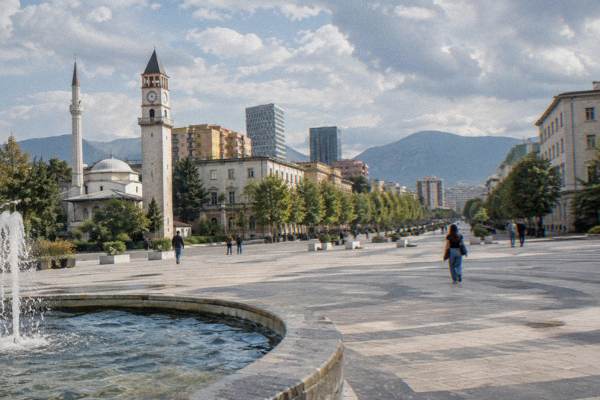
Tirana, the capital of Albania, sits in an inland basin at the foot of Mount Dajti, and its restaurant tables, from the New Bazaar about 0.6 km east of Skanderbeg Square to the cafe quarter of Blloku about 0.8 km south, are where almost every visitor first faces the Albanian tipping question. No official or widely published rule sets a percentage. What guides and travellers report is a simple pattern: rounding up the bill or leaving small change in lek is appreciated, never obligatory, and always paid in the local currency.
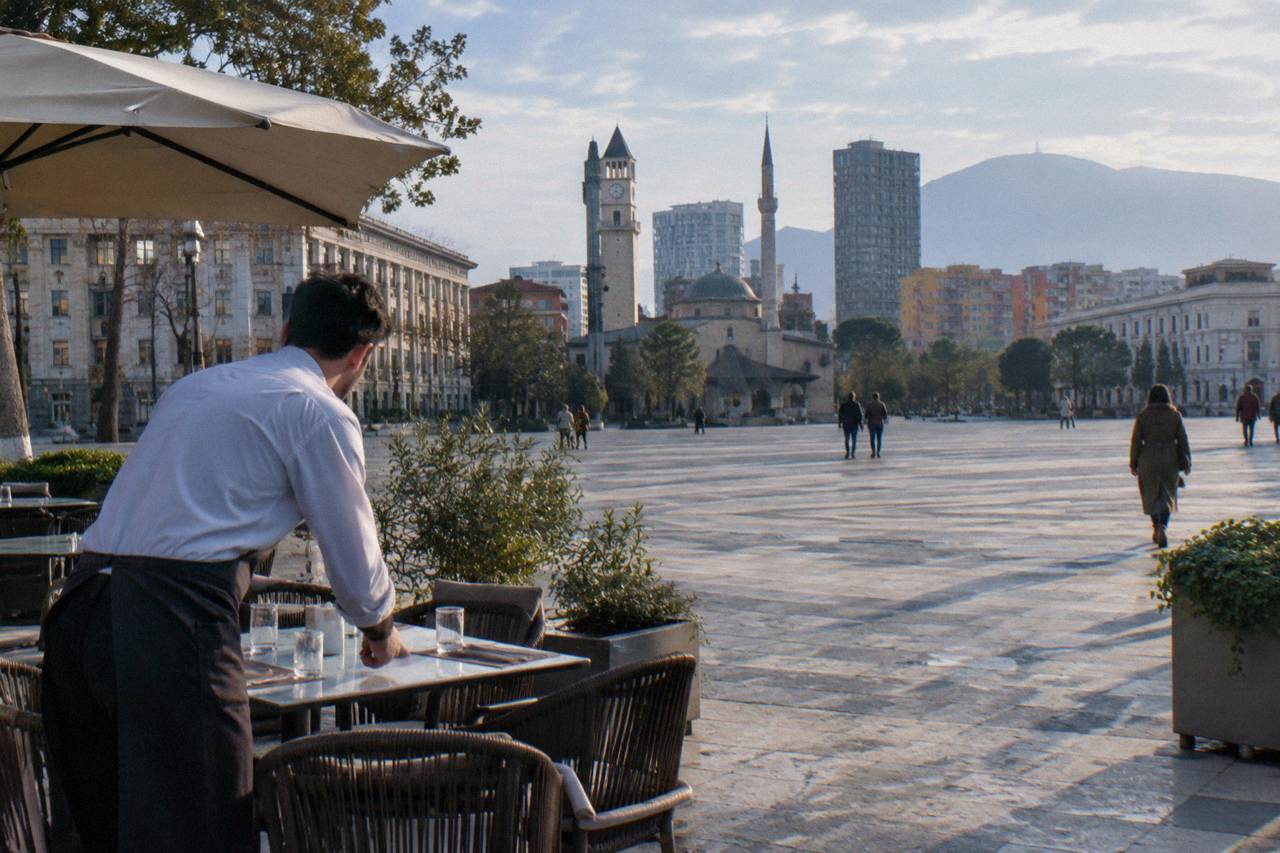
This page walks through the whole question in practical terms: what to do at a restaurant table, what to do in cafes, taxis and hotels, how cash and card payment shape the habit, and how gratuities work when a guide has spent a day showing you the city. The currency backdrop matters more here than in most of Europe, because Albania is not in the euro zone. The lek is the currency, at roughly 90 lek to the euro per the Bank of Albania, and a tip left in any other money is a favour the waiter has to sort out afterwards. For the full currency picture, see the companion answer on whether Albania uses the euro.
Tipping is appreciated in Albania but it is not an obligation, and no percentage is fixed in any official or widely accepted guide. The reported local habit in Tirana restaurants is to round the bill up or leave small change in Albanian lek, entirely at the diner's discretion. Service staff are paid wages; a gratuity is a thank you, not a supplement the system expects.
That is the clean version. Now the nuance, because a bare "tip whatever you like" is not much use at the table when the bill arrives and the waiter is standing there.
The first thing to check is the bill itself. Look at the printed total and see whether anything beyond the food and drink has been added. If nothing extra appears on the printed receipt, then any note or coins you leave on top are genuinely extra, and the choice is yours alone. If something has been added, the arithmetic is already settled and coins on the table are a pure bonus.
The second thing is the currency. The Albanian lek, abbreviated ALL, is the only legal money. The euro is not legal tender in Albania, though some hotels, taxis and tourist-facing businesses are reported to accept it informally at their own rate, with change given in lek. For a tip this matters directly: a waiter can use ten euro cents, but they can use a hundred lek without a trip to an exchange office. Small lek notes and coins are the practical medium of gratitude in Tirana.
Third, scale. Tirana is not a city where tipping culture has inflated. The habit reported across guides is modest: round the figure up, leave the loose change, move on. Nobody will chase you down the street. Equally, a waiter who has looked after a table for two hours will notice the difference between a rounded-up bill and a table left exactly to the denar, to borrow a neighbour's mistake, or exactly to the lek. If you want a fuller picture of restaurant prices in the capital, the companion page on whether Tirana is cheap or expensive covers the cost side, and the guardrails there are the same as here: no official source publishes an average meal price, so check the menu rather than a blog number.
How Much Should You Actually Leave At The Table?
There is no percentage to quote, because no official Albanian source and no major guide publisher publishes one. The working approach used by travellers in Tirana is to round the bill up to a convenient figure or leave the coins from the change, in lek, in cash, and to treat anything beyond that as a deliberate gesture for genuinely good service rather than a default.
Why so vague? Albania does not have a codified tipping norm the way the United States or, increasingly, western Europe does. In the absence of a fixed rule, behaviour is driven by convenience: the waiter brings the bill, you pay, and the rounding happens naturally with the change.
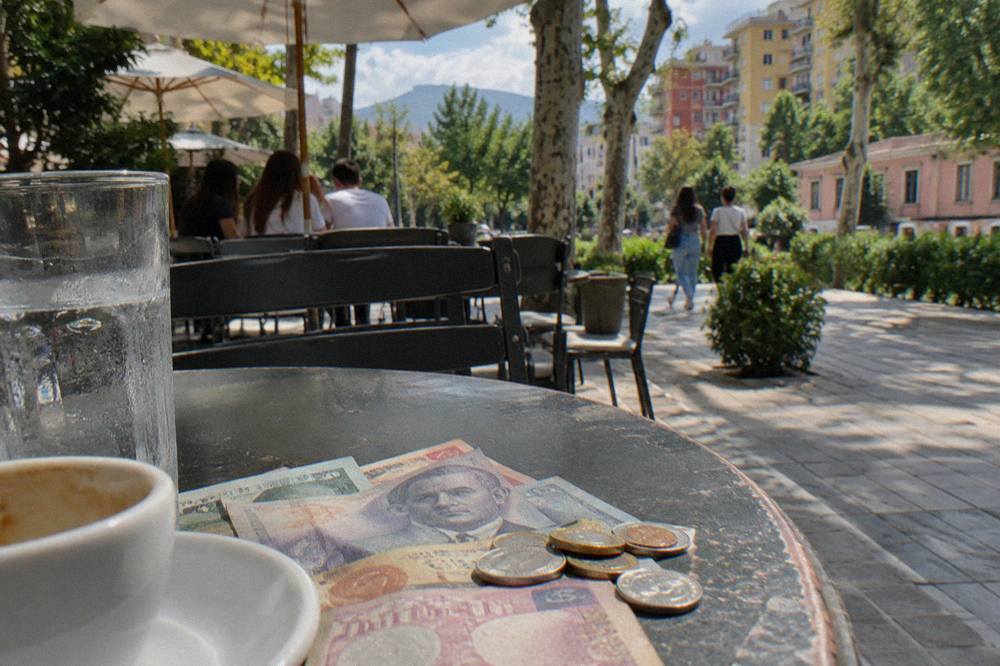
A few practical notes for the table. First, small denominations help everywhere. A tip is only useful if it is separable from the payment, and a single large note handed over with "keep the change" can turn a small courtesy into a large one. Second, paying by card complicates the mechanics: cards are reported to be widely accepted in hotels, larger restaurants and supermarkets in central Tirana, but the small cash gratuity needs actual cash, so keep a pocket of lek coins for exactly this. Third, in a small neighbourhood cafe or byrek counter, the reported habit is smaller still: the true rounding of a handful of lek, or nothing at all, and nobody takes offence either way.
For orientation, here is how the reported patterns shake out across the everyday situations a visitor in Tirana actually meets:
| Situation | What is reported locally | Practical approach in Tirana |
|---|---|---|
| Restaurant with table service | Round the bill up or leave small change; no percentage is set | Coins or a rounded total in lek, in cash |
| Cafe or bakery counter | Rounding of a few lek, or nothing | Keep small coins handy |
| Taxi | Round the fare up | Agree or meter the fare first, then round |
| Hotel housekeeping | Small change, optional | Leave lek coins in the room if you wish |
| Hotel porter | A small note per bag, optional | Have small denominations ready |
| Guided tour | Gratuity at your discretion, tip-based walks excepted | Cash, handed directly, in lek or euro notes |
The final row is the one that deserves its own section, because tours invert the question: on a tip-based walk, the gratuity is not a courtesy added to a price, it is the price.
Tipping Beyond Restaurants: Taxis, Hotels And Guides In Tirana
For taxis, the reported habit is to round the fare up to a round figure rather than calculate a percentage; for hotel staff, small change is optional and informal; for tour guides, a cash gratuity at the end is a personal thank you, while on a genuinely tip-based walk the amount you choose is the guide's entire payment. In every case cash is the medium, and in lek is the most useful form.
Taxis first. Ride-hailing apps from elsewhere do not operate in Tirana; local taxi apps do, per the city's transport picture, and meters or agreed prices are the norm. The tipping move here is the simplest in the whole article: when the driver names or meters the fare, hand over a note slightly above it and wave away the change, or ask for the change and leave the coins. Either is unremarkable. Do not pre-negotiate against a number you read online; ask the driver or the app for the fare and judge the rounding from there.
Hotels are quiet territory. Porters and housekeeping are the two touchpoints. Small change for a bag carried upstairs, a few coins left behind for a clean room: both are reported customs, both are optional, and neither carries a figure anyone could verify. If the hotel has done something genuinely above expectations, a note handed in person says more than coins left in the room.
Guides are where the etiquette shifts. On a paid guided tour, whether a short city walk or a full-day trip to Kruja or Berat, the guide is paid a fee by the operator, and a gratuity at the end is a direct personal thank you for the person rather than the company. Cash, handed over, is the form. Euro notes are usable in a way euro coins are not, but lek works everywhere and avoids the recipient having to think about exchange. The amount is genuinely open: whatever the day felt worth to you.
One more nuance worth knowing. On group tours that include meals or tastings, the restaurant staff who served the group are usually handled through the operator, and the person you tip is the guide, not the kitchen. If you eat independently at the end of a tour day, the ordinary restaurant rules at the top of this page apply again.
Cash Or Card: How Payment Habits Shape Tipping In Tirana
Cash is what makes tipping work in Albania. The Albanian lek is the currency, cards are reported to be widely accepted in hotels, larger restaurants and supermarkets in central Tirana, while buses, markets and small cafes still run on cash, so the practical routine is to pay the bill however you like and always leave the gratuity itself in physical lek.
The two-track payment culture is the single biggest practical factor in this whole topic. A card terminal settles the bill to the lek exactly, which removes the natural rounding moment that creates a tip in the first place. The fix is easy: pay the bill on card if the restaurant takes one, and keep the tip as a separate, deliberate cash gesture. That is also the only form the waiter can take home the same evening without paperwork. The rest of the planning pages sit on Tirana Albania Travel Guide.
Getting the cash itself is straightforward. ATMs are present across central Tirana and at the airport, though foreign-card fees exist at Albanian banks, so withdraw in sensible amounts rather than dribs. The Bank of Albania's official rate on 23 October 2026 was 90.74 lek to the euro, which in everyday rounding is simply "roughly 90 lek to the euro"; exchange offices around Skanderbeg Square and Blloku are plentiful. What you should not do is arrive planning to tip in dollars. The lek is the currency; the companion answer on using US dollars in Albania covers that trap in full.
Here is the payment picture in one view:
| Where you are paying | Reported payment norm | What it means for a tip |
|---|---|---|
| Larger restaurants, Blloku and centre | Cards widely taken | Pay by card, tip in cash lek |
| Small cafes, bakeries, byrek counters | Cash | Round up with coins |
| City buses | Cash to the conductor, about 40 lek a ride reported | No tipping, exact change territory |
| Markets and stalls | Cash | No tipping, bargaining is separate |
| Taxis | Meter or agreed price, cash and local apps | Round the fare up |
| Airport bus (LU-NA) | 400 lek flat, 24/7 hourly service | Fixed fare, no tip |
How Tipping Fits Into A Day Around Skanderbeg Square
A typical day in central Tirana naturally produces three or four small tipping moments: morning coffee, lunch at the New Bazaar, a taxi or bus leg, and possibly an evening guided activity. Budgeting a pocket of small lek notes for the day covers all of them without a single calculation, because every one of these gestures is a rounding exercise, not a percentage.
Trace the day. Coffee near the square in the morning: coins. A walk past the Et'hem Bey Mosque about 0.2 km south-east of the square, up the Clock Tower's roughly 90 steps, through the Pazari i Ri about 0.6 km east for lunch: a rounded bill at the table. The Pyramid of Tirana about 0.7 km south-east is free to climb, so no money changes hands there at all, and the House of Leaves museum about 0.2 km south-west has a printed 700 lek adult ticket, so no tip applies there either.
The point is that tipping moments in Tirana are small, frequent and low-stakes. The stress travellers bring to this question usually comes from countries with rigid norms. Albania has none, and the freedom is real. If you want structure, decide it before the trip: whatever rounding feels natural at home, do that, in lek, and stop thinking about it.
Evening is the one time the question can get bigger. Tirana's nightlife is concentrated in Blloku, and a guided bar crawl or an evening walk with a local guide ends with the clearest tipping moment of the whole day: the guide, standing in front of you, having spent their evening on your evening. Cash, in person, sized by what the night was worth. For the wider evening picture, the answer on walking around Tirana at night covers the practicalities, and Is Tirana Nightlife Good covers where the evenings happen.
Gratuities On Guided Tours: The One Case With A Rule
On ordinary paid tours, a gratuity is optional and personal; on tip-based walks, the amount you choose is the guide's payment, which is the only situation in Albania where tipping is not optional at all. A paid city walk, a food tour or a long day trip to Gjirokaster or Berat all follow the first model: hand the guide cash at the end if the day earned it.
The distinction is worth stating plainly because travellers confuse the two. A tour bought at a fixed price has already paid the guide. Your extra is a thank you. A tip-based model defers the entire payment to the end and lets the walker set it, which is a different economic arrangement dressed in the same word.
For a paid tour, the mechanics are simple and the amount is open. Cash beats a card tip every time, because the guide receives it directly. Lek is the most useful currency; a euro note is the one foreign form that is genuinely spendable. Hand it over with a word of thanks at the end of the walk, not left on a table, because the guide may not return to the meeting point.
A guided history and culture walk is also, incidentally, the best place to ask a local directly what they would leave at lunch. A guide who spends their working life with visitors has heard the tipping question a hundred times and will give you a straight answer with current local context, which is worth more than any fixed figure. The Tirana history and culture walk with local guides is the site's featured pick for exactly this: a central-city walk where the money questions get answered by someone who lives with them.
The same logic extends to day trips. A long day to Kruja, about 45 minutes' drive from Skanderbeg Square, or to Berat, about two hours by road, involves a driver and often a guide; cash in hand at the return drop-off is the recognised form, and the amounts remain personal. As with everything in this article, no figure is published by any operator for gratuities, and none should be invented from a blog.
Common Questions About Tipping In Tirana
Do You Tip Waiters In Albania?
You are not required to, and no official or widely published rule sets a percentage. The reported local habit in Tirana is to round the bill up or leave small change in Albanian lek, in cash, entirely at your discretion.
Do You Tip In Euros In Albania?
The euro is not legal tender in Albania. A euro note can circulate informally, but the useful form for a tip is Albanian lek in cash, since the waiter can spend it without exchanging it.
How Much Do You Tip A Tour Guide In Tirana?
There is no published figure. A cash gratuity handed to the guide at the end of a paid tour is a personal thank you sized by what the day was worth to you; on a tip-based walk, your chosen amount is the guide's payment.
Is Service Added To The Bill In Albania?
No firm rule says it is or is not. The practical step is to read the printed receipt: if nothing beyond the food and drink is listed, anything you add is entirely your choice.
Do You Tip Taxi Drivers In Tirana?
The reported habit is to round the fare up to a convenient figure. Agree or meter the fare first, then round; no percentage applies.
Do You Tip With A Card In Albania?
A gratuity is best left in cash even when the bill goes on a card. Cards are reported widely taken in central hotels and larger restaurants, but the tip itself should be physical lek so the waiter receives it directly.
The whole subject collapses into one sentence worth remembering for the flight in: Albania leaves the decision to you, cash in lek is the currency of thanks, rounding up is the local habit, and the only people who genuinely depend on the answer are the guides on tip-based walks. Enjoy the meals; the tables of Tirana, from the New Bazaar to Blloku, make this the easiest money question you will face in the country, and the Tirana Albania Travel Guide covers the rest of the practical picture, from the lek to the airport bus.