Is It Safe To Walk Around Tirana At Night?
A practical answer to whether Tirana is safe to walk at night, covering the central areas, the October 2026 demonstrations, late-night transport and the emergency numbers.
Tirana, the capital of Albania, is an inland city in a basin at the foot of Mount Dajti, and its nightlife concentrates in a compact central core where an evening walk is a normal part of local life. Safety has two layers: the ordinary one, busy squares and cafe streets that stay lively late, and a current-conditions one, because demonstrations have been held in central Tirana since 13 October 2026. This page takes both seriously and reports what the official advice actually says. The wider context is in the site's full safety guide, and the broader question of whether Albania is safe right now for tourists is covered separately.
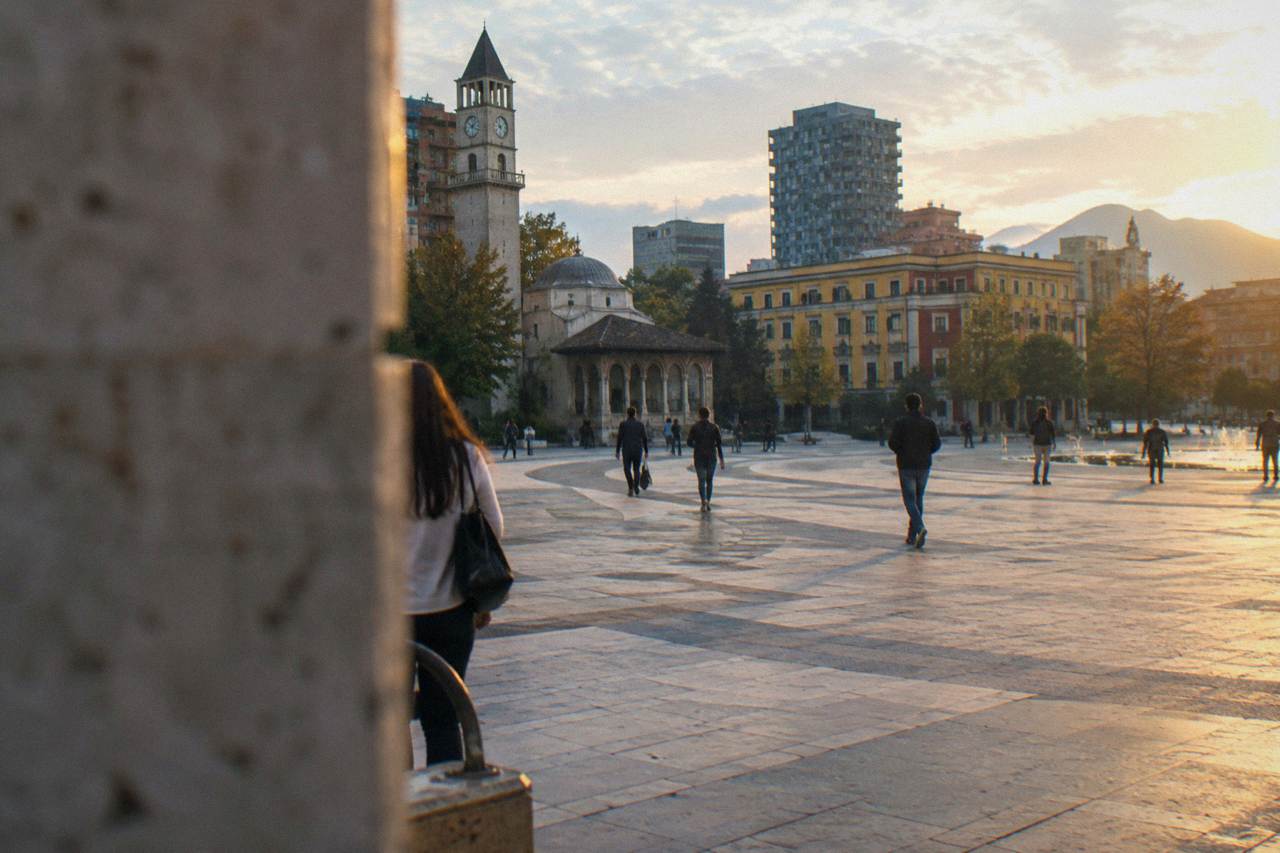
Yes, in the ordinary sense: the UK Foreign Office raises no general warning against walking in Tirana after dark, and no crime statistic, safety rating or named unsafe street appears in any official advice for the city. As in any busy capital, watch your belongings in crowds. The one live caveat is political, not criminal: demonstrations have been held in central Tirana since 13 October 2026, some violent, and the FCDO advises avoiding them.
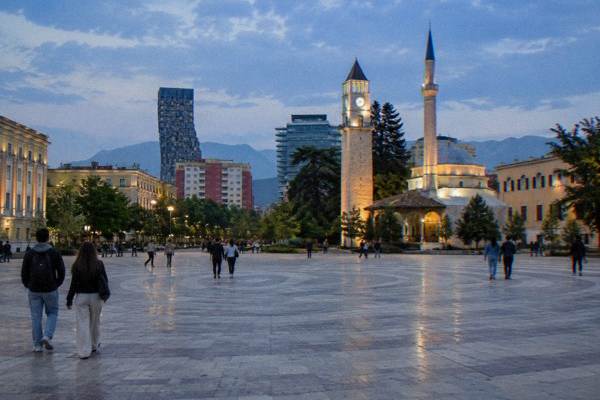
That is the whole picture in two sentences. The FCDO's updated advice of 15 October 2026 does not tell visitors to stay off the streets of Tirana; it tells them to steer clear of protest gatherings and monitor local media. Away from a demonstration, an evening in Tirana looks like an evening in any mid-sized European capital: people out at cafes, families on Skanderbeg Square, and the bar quarter of Blloku filling up later.
A few ordinary precautions carry more weight than any headline. Carry only the cash you need, keep a phone charged, and agree a taxi price or use an app before setting off, since meter tariffs are not published anywhere official. The US advises increased caution for Albania overall, which is its standard wording for much of the region, not a warning about Tirana's streets at night.
One more reassurance belongs here. Earthquake tremors are common in Albania and serious quakes are less frequent, the FCDO notes, but that is a background fact of the country rather than a nightly consideration; buildings in the capital follow modern codes and the advice contains no curfew, no no-go list and no after-dark restriction of any kind for the city.
Which Parts Of Central Tirana Stay Busy After Dark?
The busiest evening ground is the rectangle between Skanderbeg Square and Blloku, roughly a kilometre end to end, where cafes, restaurants and bars cluster and pedestrian traffic continues late. The square itself, the surrounding boulevards and the New Bazaar about 0.6 km east all stay active through the evening, and the Grand Park about 2.1 km south-east remains a popular walking route at dusk.
Everything in that description sits within a short walk of everything else, which is the practical reason the centre feels manageable at night: you are never far from a lit street, a hotel or a taxi. Blloku, about 0.8 km south of Skanderbeg Square, is the bar and nightlife district, per several current guides. Era Blloku, a restaurant with its own official site, is one named place to eat in that quarter.
Distances help you plan an evening loop:
| Evening area | Direction from Skanderbeg Square | Character after dark |
|---|---|---|
| Skanderbeg Square | City centre | Open plaza, lit, people until late |
| Blloku | About 0.8 km south | Cafe and bar quarter, busiest at night |
| New Bazaar (Pazari i Ri) | About 0.6 km east | Restaurants and market quarter |
| Grand Park and Artificial Lake | About 2.1 km south-east | Evening walking and running route |
| Rruga e Kavajes | About 0.5 km west | Shop and cafe street |
A guided orientation pays for itself on the first evening. The Tirana walking tour covers the central layout in daylight, and the same routes are the ones you will retrace at night.
The evening food-and-walk and Albanian night options above are both centred on the same district, so they double as a first guided evening in the city.
What About The Demonstrations In Central Tirana?
Demonstrations have been held in central Tirana since 13 October 2026, and some have turned violent; the FCDO updated its travel advice on 15 October 2026 and tells visitors to avoid demonstrations and check local media. The Tirana Marathon was moved from 24 to 25 October to 14 to 15 November 2026 because of them. This is a live situation, not a permanent feature of the city.
What that means for a night walk is simple. The gatherings have centred on the capital's main squares and boulevards, exactly the ground described above, so on a day when a protest is announced, shift your evening east or south: the New Bazaar, Blloku's side streets and the Grand Park are all outside the main rally ground and stay ordinary. Check local media each afternoon you are in the city, and if you see a crowd gathering, walk the other way.
Two things worth remembering about how these situations behave. Demonstrations in a capital are usually announced or at least rumoured in advance, and Albanian media cover them heavily, so an evening plan can be adjusted hours before dark rather than improvised on the spot. And the effect is geographically narrow: a rally on the main square does not reach the residential streets around Blloku, let alone the Grand Park loop, which keeps its evening walkers regardless of politics.
Two emergency details belong in your phone before your first evening out. The numbers are Police 112, Ambulance 127 and Fire 128. Store all three; 112 is the general European-style number and routes to the services.
How Do You Get Home Late In Tirana?
City buses run roughly 06:00 to 23:00, so after the last bus your options are a taxi from a local app or one flagged on the street; Uber and Bolt do not operate in Tirana, though local taxi apps do, per current guides. A single bus ride costs about 40 lek, paid in cash on board, and that fare is the only published number in the whole chain.
The practical sequence for a late night: buses cover the evening until about 23:00, and after that the city relies on taxis. Agree the destination and the rough fare before you get in, or order through an app that shows the price up front. The fuller picture, including airport transfers and intercity terminals, is in the guide to getting around Tirana, and the question of whether there is an Uber in Tirana has its own answer.
The North-South Bus Terminal sits 4.0 km north-west of Skanderbeg Square, so a last intercity bus home is a daytime consideration, not a late-night one. If your hotel is outside the centre, the last stretch is the only part of the journey that needs planning: confirm the name and address in writing before you leave for the evening, because street signage and address formats can puzzle a driver late at night, and a screenshot of the hotel's location solves it.
Does The Season Change Night Walking In Tirana?
Summer evenings are warm and dry, with July averaging a mean high of 29.8 C and August 30.4 C and the year's lowest rainfall in August at 31 mm, per ERA5 reanalysis for 1991 to 2020, so nights stay warm and streets stay full late. Winter evenings are mild but wet, with November's 139 mm the peak month for rain, which shortens evenings and thins the pavements without making them unsafe.
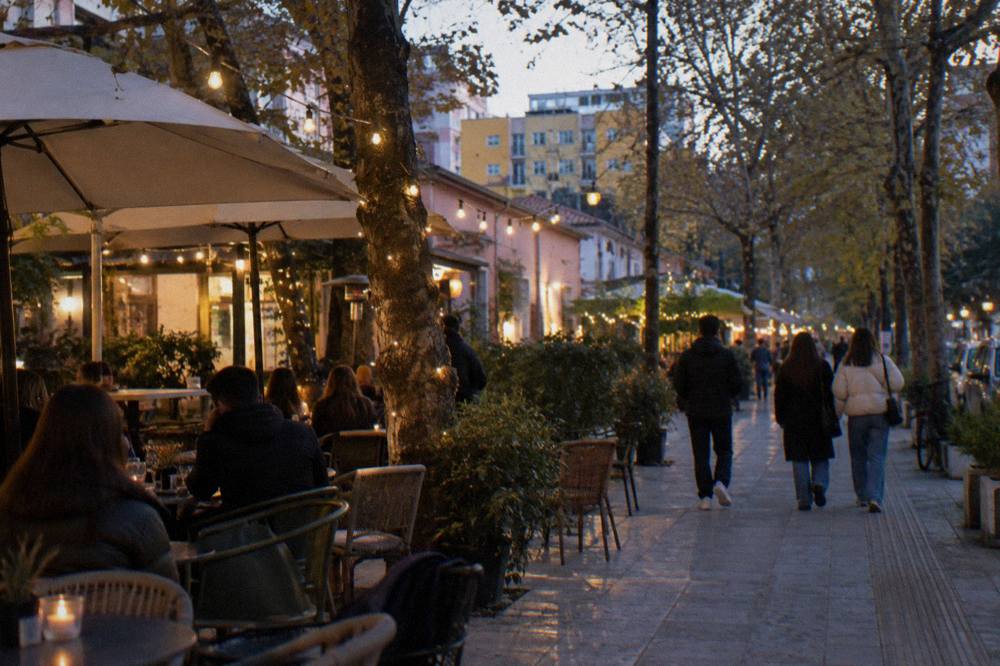
The seasonal difference is about comfort and crowd density, not risk. On an August night the outdoor tables along Blloku and the New Bazaar fill the pavements and the square stays populated well past midnight, simply because sitting outside is pleasant. In November or December the rain pushes people indoors earlier, the same streets empty sooner, and a walk that felt sociable in summer can feel quiet by 22:00. Neither version carries a specific official warning; you simply see fewer people around you in the wet months, which is worth knowing if you prefer busy streets.
| Season | Mean high / low (ERA5 1991-2020) | Evening character in Tirana |
|---|---|---|
| July | 29.8 C / 19.1 C, 34 mm rain | Warm nights, outdoor tables late |
| August | 30.4 C / 19.5 C, 31 mm rain | Warmest and lowest-rainfall evenings |
| October | 21.4 C / 12.2 C, 119 mm rain | Mild evenings, rain more likely |
| November | 16.5 C / 8.0 C, 139 mm rain | Peak rain month, quieter streets |
| January | 10.8 C / 2.3 C, 106 mm rain | Cool, damp evenings, indoor venues |
Darkness timing matters too. In late October the sun sets before 18:00 in the Europe/Tirane time zone, so a "night walk" in practice begins at dinner time, and the busiest hours of the evening shift earlier than a summer visitor expects. Plan the Grand Park or Artificial Lake loop for late afternoon daylight and keep the after-dark portion to the lit central grid.
Is Blloku Safe At Night?
Blloku is Tirana's main bar and nightlife district, per several current guides, and it is a central residential-and-cafe neighbourhood about 0.8 km south of Skanderbeg Square, not an isolated zone; the same ordinary precautions as the rest of the centre apply. The same ordinary precautions that apply elsewhere in the centre apply here as well.
Blloku's geography is its safety feature: it is small, dense and central, hemmed by apartment blocks and hotels, and the walk back toward the centre runs along lit boulevards the whole way. Guides describe a late rhythm, with cafes turning into bars as the evening goes on, but no opening or closing hours exist for any venue, and no bar in the quarter has a current official listing, so plan around the neighbourhood rather than a named venue.
Dress and behaviour norms in Tirana at night are relaxed by regional standards; shorts are a daytime matter of comfort rather than a rule, and the only strict dress codes in the city are at religious sites, covered in the guide to Tirana's mosques and churches. Same-sex relationships are legal in Albania, and the FCDO notes that Tirana has gay-friendly bars and LGBT+ support groups.
If you would rather not navigate the quarter alone on a first night, an organised evening is an alternative:
Common Questions About Walking Around Tirana At Night
Is It Safe To Walk Around Tirana At Night?
Yes, in the ordinary sense: no official advice warns against walking in Tirana after dark, and the centre stays busy and lit. The current caveat is the demonstration cycle in central Tirana since 13 October 2026; avoid gatherings and check local media, per the FCDO.
What should I do if a demonstration is happening?
Avoid the area, especially the main squares and boulevards where gatherings have centred, and check local media for the same-day picture. The FCDO advises exactly this. Shift your evening to Blloku, the New Bazaar or the Grand Park instead.
What are the emergency numbers in Tirana?
Police 112, Ambulance 127, Fire 128. Save all three before your first evening out.
Do buses run late in Tirana?
City buses run roughly 06:00 to 23:00, per current guides, with a flat fare of about 40 lek paid in cash on board. After that, use a taxi; Uber and Bolt do not operate in the city, but local taxi apps do.
Is it safe to walk from Blloku back to the centre?
The route is central, short and lit, about 0.8 km along boulevards from Skanderbeg Square. The same ordinary precautions apply as anywhere in a capital at night: keep valuables close and your phone charged.
Does winter make night walks in Tirana less safe?
No official advice says so. Winter evenings are milder than much of Europe, with a January mean low of 2.3 C per ERA5 reanalysis for 1991 to 2020, but November brings the year's peak rainfall at 139 mm, so streets are quieter and a rain layer is the real preparation.
The short version: Tirana's centre is a normal walking city after dark, the October 2026 demonstrations are the one thing to track day by day, and the rest is the usual capital-city common sense, with 112 in your pocket. For everything beyond the evening hours, the Tirana Albania Travel Guide covers the whole city and its day trips.