Is Albania Or Croatia Better?
Comparing Albania and Croatia for a trip based on Tirana: entry rules, currency, coastline, coast access, climate and what each country suits, with sourced figures.
Neither Albania nor Croatia is objectively better, and no like-for-like source ranks them. Albania's coastline runs about 362 km against Croatia's 5,835 km per the CIA World Factbook.
Neither country wins on every measure, because they differ in kind. Croatia is in the euro zone and Schengen since 1 January 2023, which smooths border-crossing and payments for many Europeans. Albania is outside both, pays in lek, and keeps its own 90-in-180-day visa rule, but it offers US passport holders a stay of up to a year visa-free, a fact Croatia, inside Schengen, cannot match.
Croatia's coast is long and famous: the CIA World Factbook puts its coastline at 5,835 km of mainland and islands. Albania's is about 362 km, and the coast is not even in the capital. Tirana sits inland in a basin below Mount Dajti, so a beach day means a bus or car west to Durres, roughly 39 minutes by road, or a longer run south to Vlore at about 133 minutes of driving.
Where Albania competes is on a different axis: a compact, cheap-feeling capital layered with Ottoman, communist and contemporary history, mountain day trips within an hour or two of the square, and visitor numbers that, while growing fast, are counted differently from Croatia's and are not directly comparable. Albania recorded more than 12 million foreign arrivals in 2025, per INSTAT figures cited in the Albanian press, while Croatia's statistics agency counted 20.7 million commercial-accommodation arrivals in the same year, a different measure that cannot be set side by side with Albania's border count.
For planning the Tirana side of the comparison, the practical pages on this site carry the detail: how long to give the city at How Many Days In Tirana Is Enough, and whether the capital rewards the trip at Is Tirana Worth Visiting For Tourists.
Which Country Is Easier To Enter And Pay In?
Croatia is administratively easier for EU travellers: it has been in Schengen and the euro zone since 1 January 2023, so a national ID card works for EU citizens, no visa is counted, and the euro is the currency. Albania is outside both: its currency is the Albanian lek, roughly 90 lek to the euro, the euro is not legal tender, and stays run 90 days in any 180 for visa-free nationals.
The entry detail that flips the comparison for some travellers: Albania lets US passport holders stay up to a year without a visa, a status confirmed on the Albanian foreign ministry's visa-regime page, and EU citizens may enter with a national ID card under the same 90-in-180 rule. Because Albania is outside Schengen, the EU's new EES and ETIAS entry systems do not apply at its border, so time spent in Albania is counted separately from any Schengen allowance.
Money works differently too. In Croatia you pay in euro. In Albania, cards are widely taken in Tirana's hotels, larger restaurants and supermarkets, but cash in lek is still what buses, markets and small cafes expect. Changing money is straightforward in the capital, and the details are on Does Albania Use The Euro and Can I Use US Dollars In Albania. The entry rules for one big passport group are covered at Do US Citizens Need A Visa For Albania.
If the Albania side of the trip appeals, the capital's communist history is the layer most distinct from anything on the Croatian coast, and a guided walk is the easiest way into it. The Small-Group Walking Tour of Communist Landmarks covers the regime-era sites of central Tirana; to book it through the operator's live listing, Communist Landmarks, Small-Group Walk.
Beach Or Mountains: How Do The Two Coastlines Compare?
Croatia has the far longer coastline, about 5,835 km including islands per the CIA World Factbook, against Albania's roughly 362 km, and its beach towns sit on the sea itself. Albania's best-known beaches, from Vlore south to Ksamil, are four hours or more by road from Tirana, so the capital works as a city-and-mountains base with the coast as a trip, not a doorstep.
The geography decides this one. Tirana is not a coastal city: Durres and its sandy Adriatic beach are the nearest sea, about 37 km and 39 minutes west by road.
| Journey from Skanderbeg Square | Road distance | Driving time |
|---|---|---|
| Durres, Adriatic coast | about 37 km | about 39 minutes |
| Kruja, castle town | about 37 km | about 45 minutes |
| Berat, UNESCO town | about 125 km | about 122 minutes |
| Vlore, southern coast start | about 156.1 km | about 133 minutes |
| Saranda, Ionian coast | about 252.6 km | about 248 minutes |
Mountains are the opposite story. From Tirana, Petrela Castle is about 22 minutes by road, Lake Bovilla about 61 and Pellumbas Cave about 47, while the Dajti Ekspres cable car, billed by its operator as the longest cableway in the Balkans, runs from the city's eastern edge up Mount Dajti. Croatia has mountains too, but the sourced comparison here is simply that Albania's capital puts them within an hour of the main square.
What Does Each Country Offer In History And Sights?
Albania's strongest card, from Tirana, is layered history in one compact capital: Ottoman mosques beside the Et'hem Bey Mosque, the House of Leaves museum of secret surveillance, the Bunk'Art bunker museums, and the renovated Pyramid of Tirana, plus UNESCO towns at Berat and Gjirokaster reachable on long day trips. Croatia's sight lists and hours are outside this site's sourced material, so no like-for-like ranking is made here.
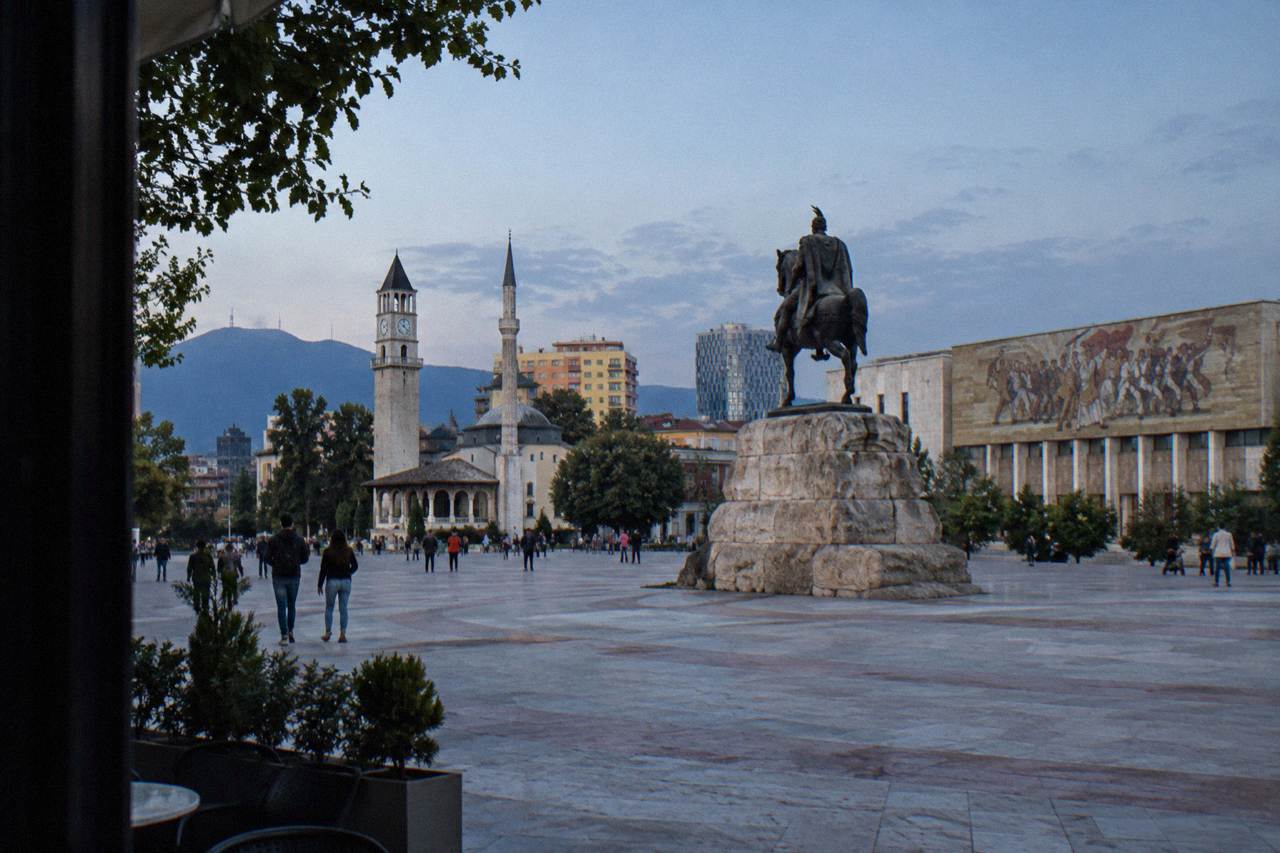
The Tirana list is concrete. Skanderbeg Square is the anchor, with the Clock Tower about 90 steps up and the National History Museum's mosaic facade visible even though the museum itself is closed for restoration until about March 2028. The Pyramid, opened in 1988 and renovated by 2023, can be climbed on its exterior steps for free, a detail many first-time visitors miss. Deciding between the two bunker museums is its own question, covered at Which Is Better, Bunk Art 1 Or Bunk'Art 2.
Beyond the city, Albania's UNESCO properties are Butrint, inscribed in 1992, the historic centres of Berat and Gjirokaster from 2005 and 2008, the Ohrid region extended to the Albanian lakeshore in 2019, and primeval beech forests with Albanian components since 2017. Berat is about 122 minutes from the square by road, Gjirokaster about 209, so both work as long day trips or overnights.
A castle day at Kruja, about 45 minutes from Tirana, pairs well with the capital's own walks: the classic city introduction and a food-and-raki stroll through Pazari i Ri cover the two halves of Tirana, Ottoman and edible, in a single afternoon each.
How Do Costs And Crowds Differ?
No price comparison exists between the two countries, and cost indices from aggregators change monthly, so this desk quotes none. Albania pays in lek with cards common in central Tirana but cash still king on buses and in markets, and no hotel, meal or taxi figure for Tirana may be printed at all. Cost, in short, must be judged on the ground, not from an index.
Every hard number a comparison needs, from hotel rates to meal prices, sits on the banned list for this site because no official Albanian source prints it. What can be said is structural: a single city-bus ride in Tirana costs about 40 lek paid in cash on board, the airport bus to the centre is 400 lek, and intercity buses charge the driver a few hundred lek for nearby towns.
Crowds are similarly hard to rank. Albania's arrival figures, more than 12 million foreign arrivals in 2025, are border counts; Croatia's 20.7 million commercial-accommodation arrivals for 2025 count hotel guests. The two methods measure different things and cannot be compared as if they did. The on-the-ground planning pages, is Tirana cheap or expensive and is it safe to walk around Tirana at night, carry what is known.
Which Should You Choose For Your Trip?
Choose Albania and Tirana if your trip is about a layered capital, communist and Ottoman history, mountain day trips and a less-processed travel experience, and if you can handle lek, cash buses and a 90-in-180 or year-long visa allowance. Choose Croatia if euro-zone convenience, Schengen movement and a long island coastline matter more than any of that. Both positions are defensible; only one of them has an inland capital under a mountain.
A concrete framing by interest: for history and museums, Tirana's Bunk'Art pair, the House of Leaves and the UNESCO towns give Albania a distinctive offer. For beaches, Croatia's 5,835 km of coastline versus Albania's roughly 362 km, and the fact that Tirana itself is inland, tilt clearly to Croatia for a sea-first holiday. For mountains, Albania's day-trip range from the capital, Dajti, Bovilla, Pellumbas and the longer drives to Theth and the Alps, is the stronger card. For administrative simplicity, Croatia's euro and Schengen membership since 1 January 2023 win, unless you hold a US passport, in which case Albania's year-long visa-free stay is the outlier benefit.
One current-conditions note belongs in any autumn 2026 decision: demonstrations have been held in central Tirana since 13 October 2026, some violent, and the UK foreign office updated its travel advice on 15 October, advising travellers to avoid protests and check local media. The Tirana Marathon was moved to 14 to 15 November 2026 as a result. None of this closes the city, but it belongs in the comparison alongside Croatia's calmer administrative picture.
Common Questions About Albania Or Croatia
Is Albania Or Croatia Better?
Neither is better outright. Croatia offers the euro, Schengen membership and a coastline of about 5,835 km; Albania offers its own currency, a distinctive layered history around Tirana, mountain day trips and a year-long visa-free stay for US passport holders. The choice depends on your priorities, not on a ranking.
Does Albania use the euro like Croatia?
No. Albania's currency is the lek, roughly 90 lek to the euro, and the euro is not legal tender. Some hotels and tourist businesses accept euros informally at their own rate. Croatia adopted the euro on 1 January 2023.
Is Albania in the EU or Schengen?
Albania is in neither. It is an EU candidate country in accession negotiations and runs its own visa regime, 90 days in any 180 for visa-free nationals, counted separately from Schengen.
Which country has better beaches?
By the sourced numbers, Croatia's coastline is about 5,835 km against Albania's roughly 362 km per the CIA World Factbook. Albania's best-known beaches are also far from its capital: Saranda is about four hours by road from Tirana, and the nearest sea at Durres is about 39 minutes away.
Is Albania cheaper than Croatia?
Albania pays in lek with cash still common outside hotels and larger restaurants, which shapes the feel of spending more than any published index can.