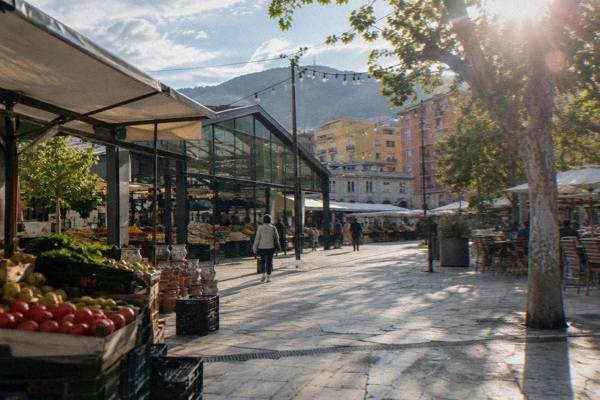
National History Museum: The Mosaic Facade And Ten Pavilions
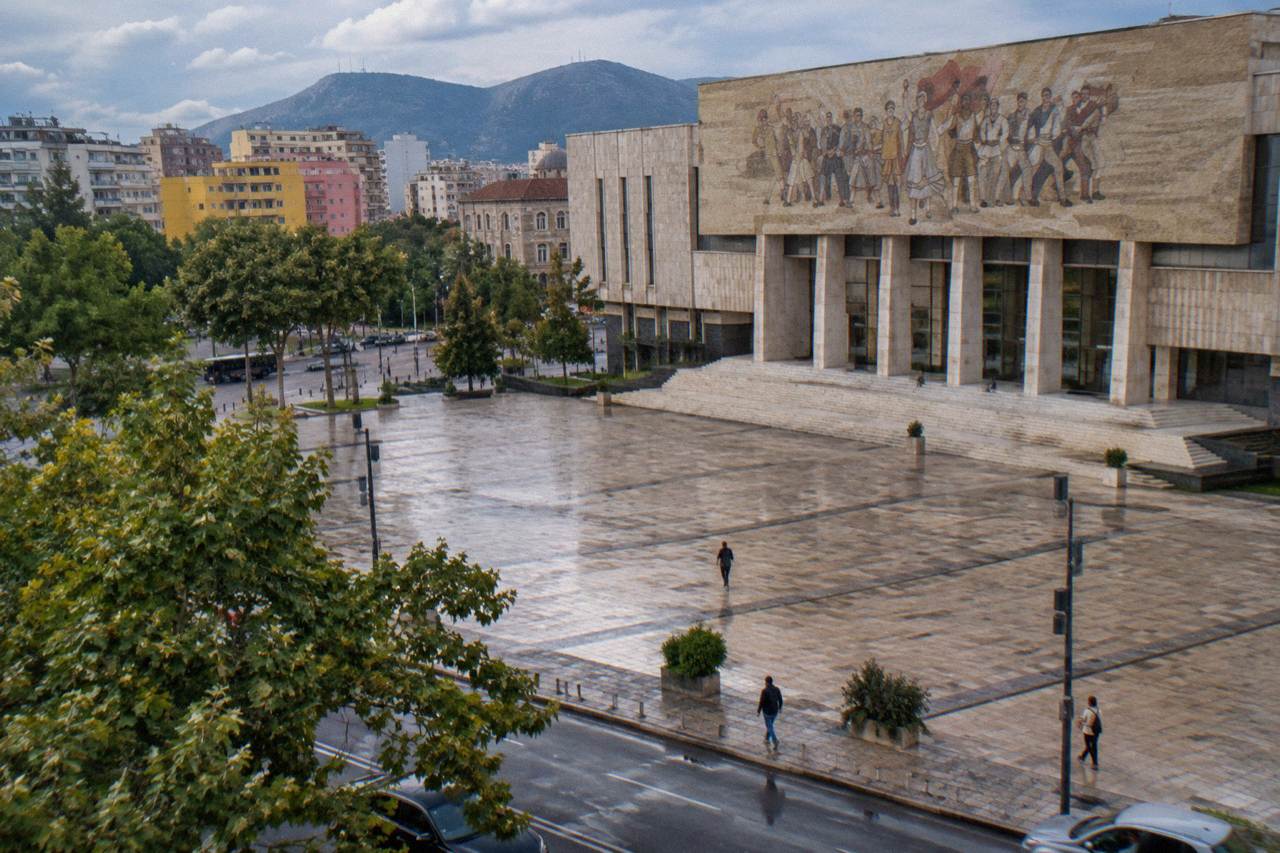
The National History Museum on Skanderbeg Square in Tirana, the capital of Albania, has been closed to visitors since 15 March 2024 for a restoration announced to run to March 2028. The mosaic facade remains the square's defining backdrop, and the rest of the city centre is within a short walk.
Short answer
The National History Museum in Tirana is closed for restoration since 15 March 2024, with the closure announced to March 2028. The mosaic facade is still visible from Skanderbeg Square. Bunk'Art 1 and 2 and the House of Leaves are open alternatives in the city.
The National History Museum stands on the northern edge of Skanderbeg Square in Tirana, the capital of Albania, an inland city in a basin at the foot of Mount Dajti with the Adriatic coast at Durres about 39 minutes away by road. The museum has been closed to visitors since 15 March 2024 for a restoration whose announced end is March 2028, so nobody walks its pavilions today. What remains in full view is the reason people still stop here: the vast mosaic facade that fills the front of the building, one of the most photographed surfaces in the country.
The closure changes how the site fits into a day in Tirana, and this page answers the questions that follow from it. The mosaic is free to see from the square, the surrounding landmarks are a two minute walk away, and the museums that are open, Bunk'Art 1, Bunk'Art 2 and the House of Leaves, carry the history the closed building can no longer show. There is also a practical upside: because the museum was always the single biggest time commitment on the square, its closure frees an afternoon for the bunkers, the surveillance museum and the food and nightlife quarters that many travellers previously skipped.
Why Is The National History Museum In Tirana Closed?
The National History Museum in Tirana has been closed to visitors since 15 March 2024 for a major restoration, and the announced closure runs to March 2028. The first phase of the restoration was completed in May 2026, per ATA reporting. No reopening date beyond the announced March 2028 window has been given, so check locally before planning a visit around it.
The closure is part of a broader EU-funded cultural restoration programme, and the building's state has been the subject of steady reporting in the Albanian press. According to ATA, the national news agency, the first phase of the work on the museum was completed in May 2026, which signals progress without changing the public timeline. The restoration is reported to cover the structure and the facade as well as the exhibition spaces.
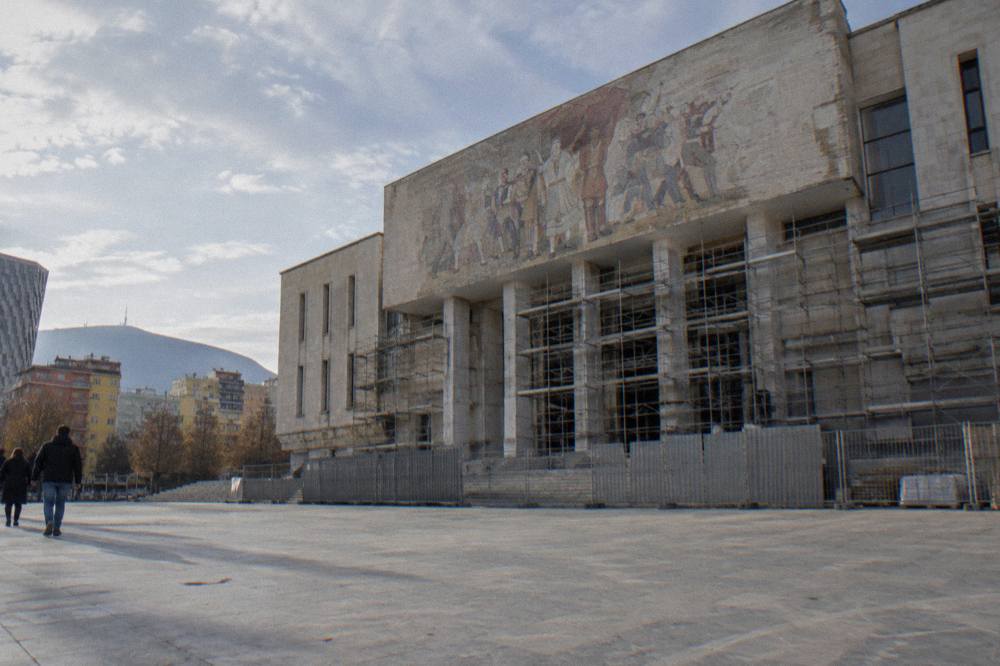
For a traveller, the practical reading is simple. The museum itself cannot be entered, and no ticket, tour or timetable will change that before the reopening. Anyone who sees an offer promising interior access to this museum is being sold something that does not exist in 2026. The building's exterior, above all the mosaic, is the experience on offer, and the square in front of it is free public space.
| Fact | Detail |
|---|---|
| Source | Closed to visitors since 15 March 2024 |
| Announced end of closure | March 2028 |
| Restoration progress | First phase completed May 2026, per ATA |
| Inaugurated | 28 October 1981 |
| Location | On Skanderbeg Square, central Tirana |
| What is visible | The mosaic facade and the building exterior, from the square |
What Can You Still See Of The National History Museum Today?
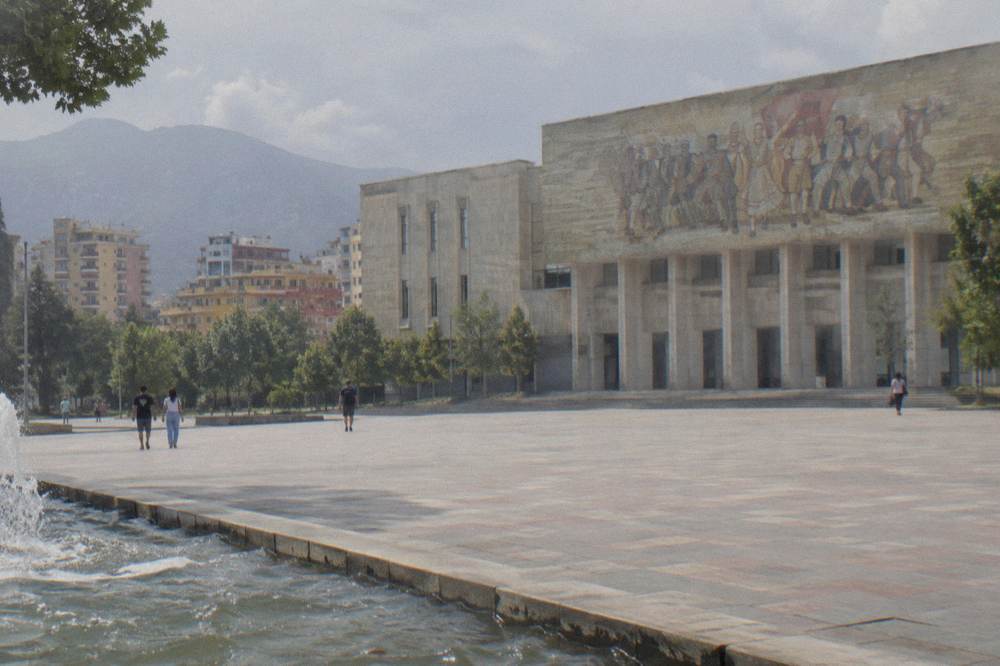
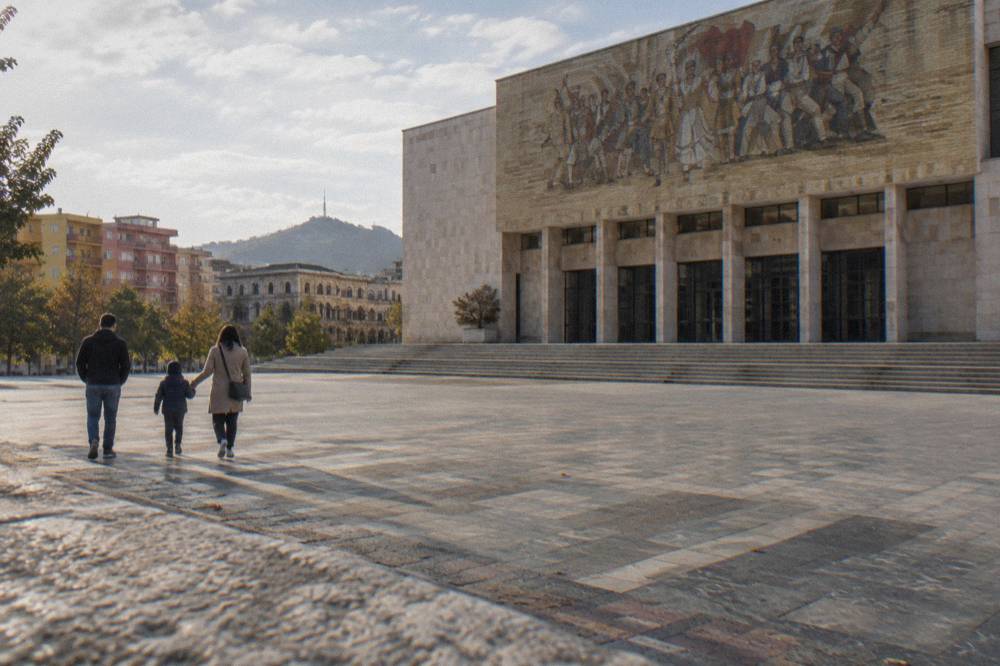
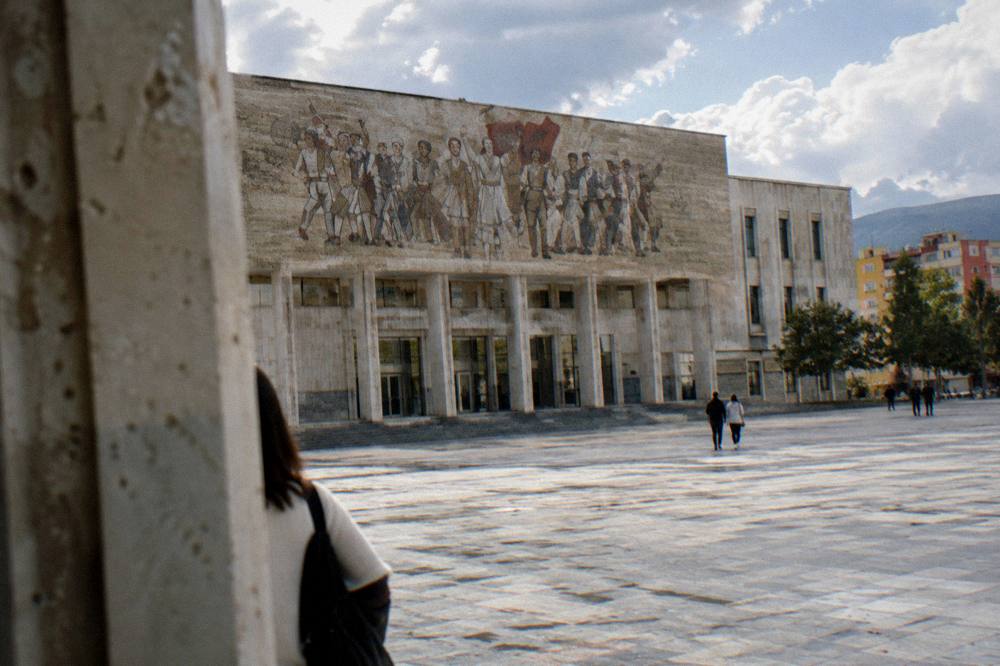
The mosaic facade is fully visible from Skanderbeg Square and costs nothing to see. The monumental mosaic that fronts the museum is one of the most recognisable images of Albania, and the square itself, described by the national tourism agency as one of Tirana's most important public spaces, is open pedestrian space with the equestrian Skanderbeg statue at its centre.
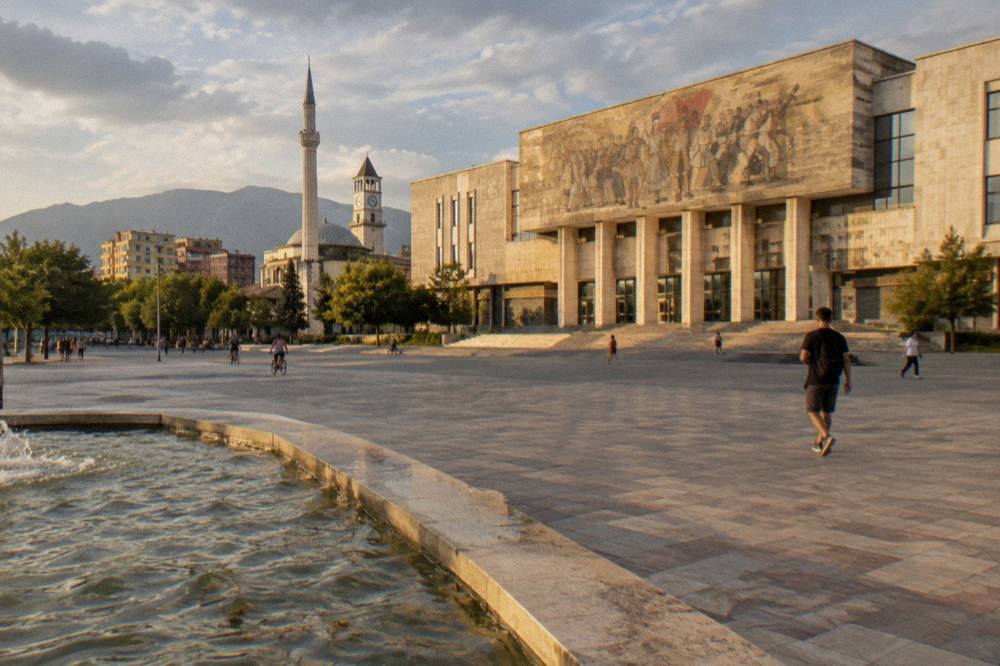
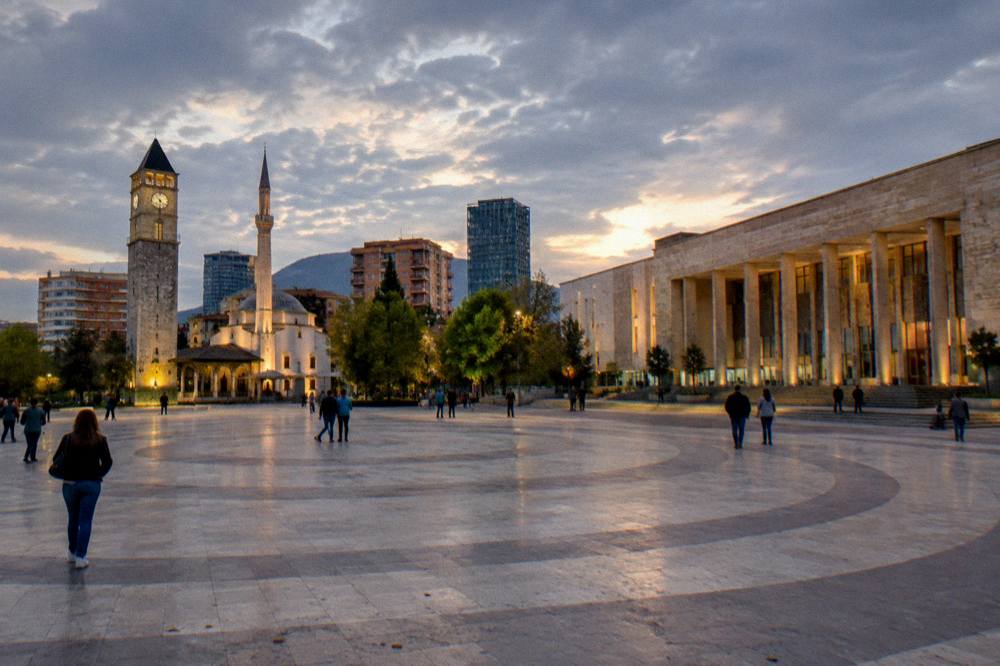
The mosaic covers the upper band of the facade and depicts figures from Albanian history in the socialist realist manner of the period in which it was made. Viewing it takes minutes: stand back toward the centre of the square and the whole facade frames the view toward the Clock Tower and the Et'hem Bey Mosque, both about 0.2 km south-east. Early morning and late afternoon light change the look of the tiled surface considerably, and the square is at its quietest before the cafe terraces fill.
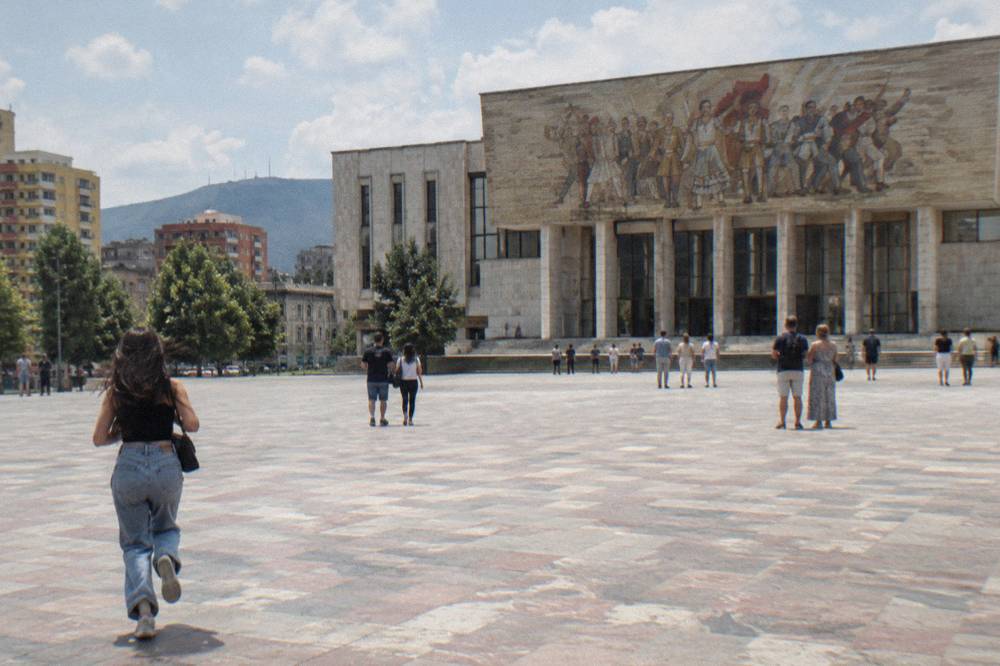
The square rewards time on its own terms. The Skanderbeg Square guide on this site covers the 2017 redesign by the 51N4E practice, which turned the centre into a gentle pedestrian pyramid of paving. Around it sit the Et'hem Bey Mosque, the Clock Tower, the Palace of Culture and the entrance streets to the old bazaar quarter. For a fuller circuit, the site's Things To Do In Tirana overview puts the museum facade in sequence with the rest of the centre.
A guided walk is the easiest way to absorb the square's layered history when the main museum is shut. The guides who work the centre carry the Ottoman, royal and communist stories that the closed pavilions would have told, and a walking tour pairs naturally with an evening of traditional music, dance and dinner, the related experience featured on this page.
How Does The Restoration Change Plans For March 2028?
The announced reopening window is March 2028, and until an official opening is confirmed no itinerary should depend on interior access. Travellers planning far ahead can treat the facade as a certainty and the galleries as a possibility, and anyone visiting in 2026 or 2027 should build the day around what is open now: Bunk'Art 1 and 2, the House of Leaves and the open landmarks of the square.
Restoration projects of this scale can move in either direction, and the only dated public marker is the May 2026 completion of the first phase reported by ATA. The museum's parent ministry announced the original closure in March 2024 and set the 2028 horizon at that time. Nothing published since promises an earlier opening, and nothing suggests a later one either: March 2028 is the announced date and local confirmation is the only kind that counts.
The good news is that the closure overlaps with a rich moment for the city's other history museums. Bunk'Art 1, the leadership nuclear shelter behind the Dajti cable car lower station about 4.6 km north-east, is open daily 09:30 to 17:30 under its summer 2026 timetable. Bunk'Art 2, the Interior Ministry bunker on the secret-police years about 0.2 km south-east of the square, is open daily from 09:30. Neither publishes a ticket price, so buy at the door. The Bunk'Art 1 and Bunk'Art 2 pages on this site carry the details.
Which Museums In Tirana Are Open While It Is Closed?
Three history museums in central Tirana are open in 2026: Bunk'Art 1 daily 09:30 to 17:30, Bunk'Art 2 daily from 09:30, and the House of Leaves daily 09:00 to 19:00. The National Gallery of Arts is under renovation with conflicting status reports, so check before going. The National History Museum is closed until about March 2028.
The House of Leaves, the National Museum of Secret Surveillance, is the closest substitute in spirit for the closed museum's modern-history rooms. It is open daily 09:00 to 19:00, and per the visit-tirana listing an adult ticket is 700 lek, with reduced prices for seniors and students and free entry for under 12s. The House of Leaves guide covers what is inside the former surveillance headquarters.
| Museum | Source | Hours | Notes |
|---|---|---|---|
| National History Museum | Closed since 15 Mar 2024 | None until reopening | Facade visible from the square |
| Bunk'Art 1 | Open | Daily 09:30 to 17:30 | Tickets at the door only |
| Bunk'Art 2 | Open | Daily from 09:30 | Closing time varies by season |
| House of Leaves | Open | Daily 09:00 to 19:00 | Reported 700 lek adult |
| National Gallery of Arts | Under renovation | Confirm locally | Status reports conflict |
The National Gallery of Arts deserves its own caution. Reports about it conflict: some listings show it open, the building's renovation has been widely covered, and map data shows construction. The only safe instruction is the one in the table: check before going. The National Gallery of Arts page keeps the details.
What Was In The Museum Before 2024?
The National History Museum was inaugurated on 28 October 1981 and held the country's national historical collection across themed pavilions covering antiquity to the communist period, which ran from 1944 to 1991, including the pavilions of iconography, the independence struggle, the anti-fascist war and the communist terror. The building was purpose-built on the square in the years before that 1981 inauguration, and its mosaic facade was designed as the public face of the collection.
The museum's story began with the building itself, raised on the square in the years before the 1981 inauguration. Its collection ranged from ancient Illyrian material to the years of communist rule, which ran from 1944 to 1991, and the pavilions were reworked repeatedly as each political era rewrote the one before it. Under communism the anti-fascist narrative dominated; after 1991 the displays grew to include the persecution and prison-camp history that earlier layouts had omitted. What the reopened museum will look like in 2028, and how the ten pavilions named in its approved page title will be arranged, is a question the restoration itself will answer.
For the deeper background, the site's Tirana history guide traces the city from its founding in 1614 by Sulejman Pasha Bargjini in the Ottoman era through its designation as capital on 11 February 1920 by decision of the Congress of Lushnja, per ATA. The museum's closed galleries told a compressed version of exactly that arc, and the open-air alternatives in the centre tell it in stone. The Skanderbeg story alone, his taking of Kruja on 28 November 1443 and his death on 17 January 1468, per the standard timelines, once filled a pavilion of its own and still names the square outside.
How To Plan A Day Around The Closed Museum?
A realistic day starts on Skanderbeg Square at the mosaic facade, moves to the Et'hem Bey Mosque and Clock Tower 0.2 km south-east, continues to the House of Leaves 0.2 km south-west, and finishes at Bunk'Art 2 or a ride up to Bunk'Art 1. Everything except Bunk'Art 1 is within a 15 minute walk, and Bunk'Art 1 sits behind the Dajti cable car lower station 4.6 km north-east.
The compactness of central Tirana is the closure's consolation. The distances below are straight-line measurements from Skanderbeg Square, and the walking versions run a little longer through the streets between.
| Sight | Direction and distance from the square | Open status |
|---|---|---|
| Et'hem Bey Mosque | 0.2 km south-east | Free, outside prayer times |
| Clock Tower | 0.2 km south-east | About 90 steps; check fee locally |
| Bunk'Art 2 | 0.2 km south-east | Open daily from 09:30 |
| House of Leaves | 0.2 km south-west | Open daily 09:00 to 19:00 |
| Tirana Castle | 0.5 km south-east | Public area |
| New Bazaar | 0.6 km east | Market and restaurants |
| Great Mosque of Tirana | 0.6 km south-east | Opened 10 October 2024 |
| Pyramid of Tirana | 0.7 km south-east | Free to climb the exterior steps |
| Postbllok Memorial | 0.9 km south | Public, always visible |
| Bunk'Art 1 | 4.6 km north-east | Open daily 09:30 to 17:30 |
Two circuits work well. A history circuit takes the facade, the Et'hem Bey Mosque, the Clock Tower, the House of Leaves and Bunk'Art 2, all inside a kilometre. A family version swaps Bunk'Art 2 for the climbable steps of the Pyramid of Tirana and the ice cream of the New Bazaar, the combination covered in the site's Tirana with kids itinerary. A third option threads the communist-era landmarks south of the square, the Postbllok memorial and the former villa quarter beyond it, following the site's communist history trail.
For travellers with a full day to spare, the closed museum is also a reason to leave the city. Berat, a UNESCO World Heritage historic centre about 122 minutes away by road, pairs a real castle and open museums with the Ottoman streetscapes Tirana lost to the years of communist rule, and a guided full-day tour handles the logistics. Berat's Onufri Iconographic Museum charges 400 lek and the Ethnographic Museum 300 lek, per the Berat Museum Center, one of the few museum pricing schemes in Albania published by the operator itself.
When Is The Best Time To See The Facade And The Square?
The most comfortable months for Skanderbeg Square are May, June and September, when ERA5 reanalysis 1991-2020 normals show mean highs of 22.7, 26.9 and 25.7 C and monthly rainfall of 89, 51 and 99 mm. July and August are hotter, 29.8 and 30.4 C mean highs, with the year's lowest rain, 34 and 31 mm. November is the highest-rainfall month at 139 mm.
The facade itself is best lit outside the middle of the day, and the square is a different place at 08:00 and at 20:00 in summer. The figures below come from ERA5 reanalysis, 1991-2020, modelled climate normals rather than a station record.
| Month | Mean high C | Mean low C | Rain mm |
|---|---|---|---|
| Jan | 10.8 | 2.3 | 105.8 |
| Feb | 12.0 | 2.9 | 106.6 |
| Mar | 15.0 | 5.1 | 116.6 |
| Apr | 18.4 | 8.3 | 104.5 |
| May | 22.7 | 12.5 | 89.0 |
| Jun | 26.9 | 16.6 | 51.2 |
| Jul | 29.8 | 19.1 | 33.5 |
| Aug | 30.4 | 19.5 | 31.0 |
| Sep | 25.7 | 16.0 | 98.9 |
| Oct | 21.4 | 12.2 | 119.1 |
| Nov | 16.5 | 8.0 | 138.6 |
| Dec | 11.8 | 4.0 | 137.5 |
Winter visitors lose nothing facade-wise: the mosaic does not close, and the Tirana in winter page covers the December Christmas market, which usually runs through December on the square, and the Festivali i Kenges song festival held 17 to 20 December in 2026.
What Should Visitors Know About Central Tirana Right Now?
Demonstrations have been held in central Tirana since 13 October 2026, some with violence, and the UK FCDO updated its travel advice on 15 October 2026 to advise avoiding demonstrations and checking local media. The Tirana Marathon was moved from late October to 14 and 15 November 2026 as a result. Skanderbeg Square remains open public space, but gatherings can change plans at short notice.
The emergency numbers are Police 112, Ambulance 127 and Fire 128. The practical habits are the usual ones for any capital: watch belongings in crowds, keep an eye on local news on demonstration days, and treat large gatherings on the square as something to view from the edge rather than the middle. The FCDO's Albania pages carry the current wording, and the site's own Is Tirana Safe? Scams, Traffic And Night Walks guide puts the picture in context for the rest of the city.
Beyond the current-conditions note, the centre works as it always has. Buses run on the boulevards, the airport bus stops behind the Palace of Opera and Ballet on the square's edge, and the Blloku cafe quarter lies about 0.8 km south for the evening that follows a day of facades and bunkers. A single city-bus ride costs about 40 lek, paid in cash on board, and the airport bus runs every full hour around the clock for 400 lek.
Common Questions About The National History Museum
Is the National History Museum in Tirana open?
No. It has been closed to visitors since 15 March 2024 for restoration, and the announced closure runs to March 2028. The mosaic facade is still visible from Skanderbeg Square.
Can you see the mosaic facade while the museum is closed?
Yes. The facade faces Skanderbeg Square and is in full public view at any hour. Viewing it is free and takes only the time you choose to give it.
When will the National History Museum reopen?
The announced reopening window is March 2028. The first phase of the restoration was completed in May 2026, per ATA. Confirm locally closer to the time before building an itinerary around interior access.
What can you do instead of the National History Museum in Tirana?
Bunk'Art 1 and Bunk'Art 2 cover the communist era and are open daily, the House of Leaves covers the surveillance years and is open daily 09:00 to 19:00, and the square's mosques, clock tower and Pyramid of Tirana fill the rest of a walking day.
How much does it cost to see the National History Museum?
Nothing, currently, because there is no entry: the museum is closed and the facade is viewed free from public space. No ticket price for the reopened museum has been announced, so check at the venue after March 2028.
How far is the National History Museum from other Tirana sights?
It sits on Skanderbeg Square itself. The Et'hem Bey Mosque and Clock Tower are about 0.2 km south-east, the House of Leaves 0.2 km south-west, the Pyramid 0.7 km south-east, and Bunk'Art 1 about 4.6 km north-east behind the Dajti cable car lower station.
The closed museum is still the anchor of Skanderbeg Square, and the facade, the square and the open museums around it together carry more history than a single building ever could. Plan for the mosaic, keep the galleries as a 2028 possibility, and the Tirana Albania Travel Guide covers every open door in between.