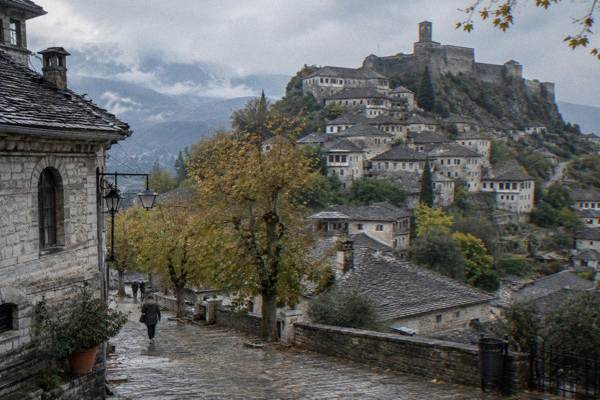
Gjirokaster From Tirana: The Stone City Overnight
Gjirokaster sits about 219 km south of Tirana, roughly three and a half hours by road, which puts it firmly in overnight or long-tour-day territory rather than a casual half-day escape from the capital.
Short answer
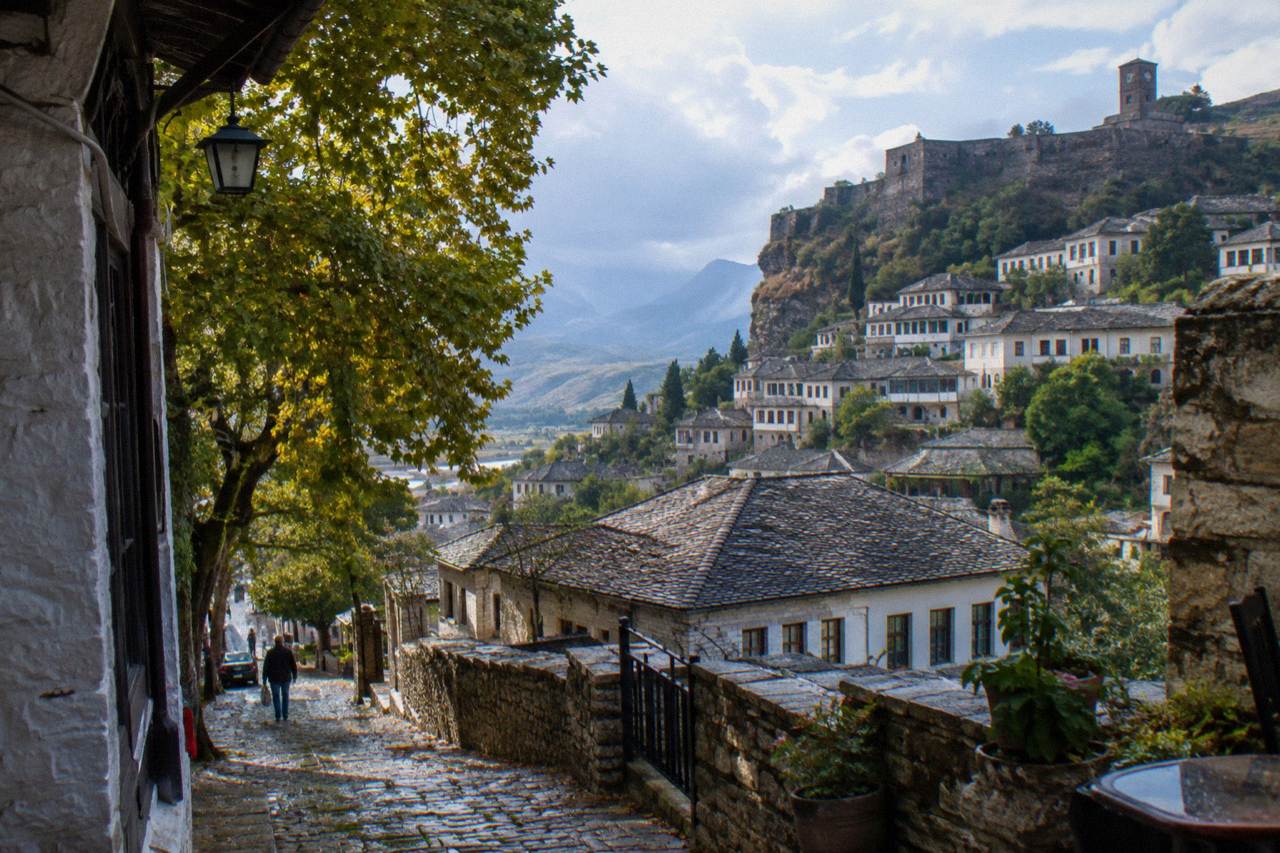
Gjirokaster is about 219 km and 209 minutes by road from Skanderbeg Square in Tirana. Its old town is a UNESCO World Heritage site, inscribed together with Berat in 2005 and 2008. The castle entry is reported at about 400 lek; confirm the current price at the gate.
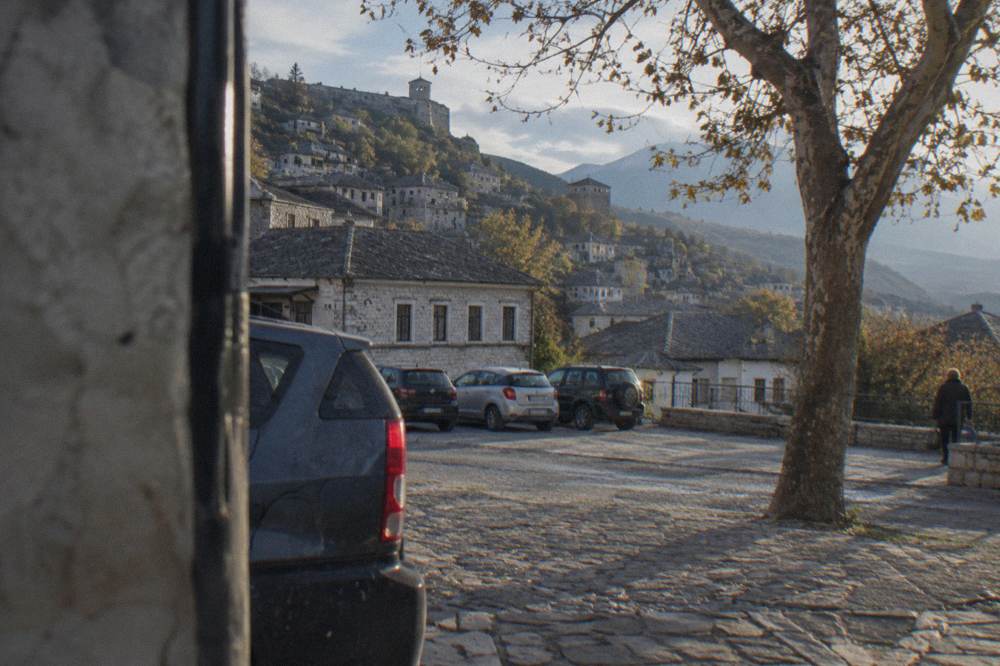
Gjirokaster, the stone city of southern Albania, sits about 219 km south of Skanderbeg Square in Tirana, roughly 209 minutes by road, and its slate-roofed Ottoman old town is one of only two historic centres in the country on the UNESCO World Heritage list. That distance matters. Tirana itself is an inland capital in a basin at the foot of Mount Dajti, and its nearest sea is the Adriatic coast at Durres about 39 minutes away; Gjirokaster is another world entirely, deep in the south, and it rewards an overnight rather than a rushed loop.
How Far Is Gjirokaster From Tirana?
Gjirokaster lies about 219 km south of Tirana, and the drive from Skanderbeg Square takes roughly 209 minutes, which makes it an overnight or long-tour-day destination rather than an easy day trip. For comparison, Kruja is about 45 minutes and Berat about 122 minutes by road. Nothing about the Gjirokaster run is compatible with a half-day plan.
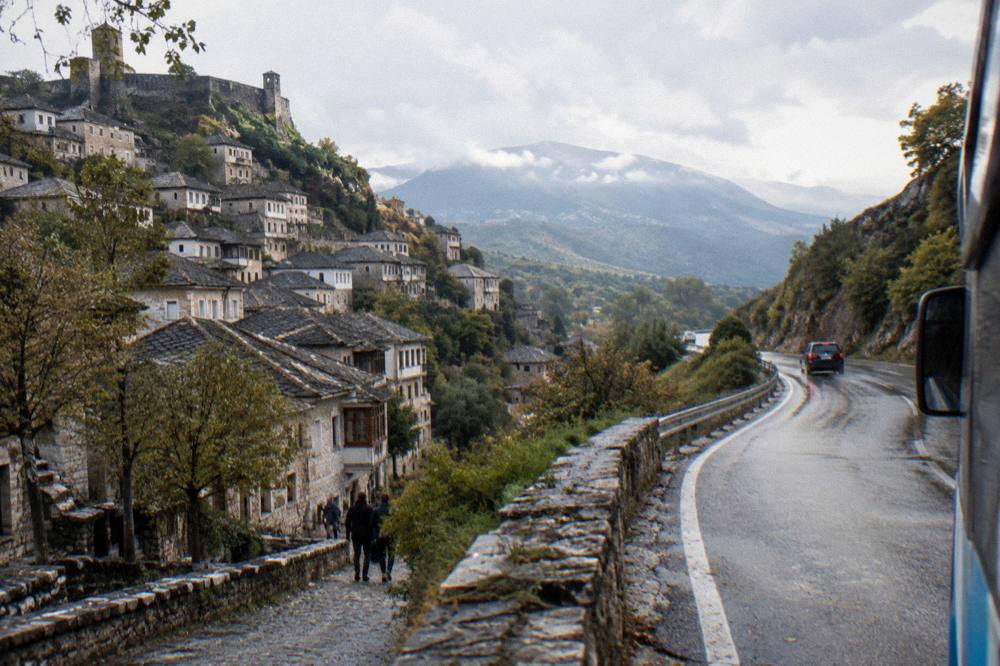
Those figures are road distances from the centre of Tirana, not timetables. Traffic leaving the capital, freight on the SH4 towards Fier, and the winding final climb into the Drino valley all stretch the real elapsed time, so a departure in the early morning is the sensible pattern for anyone determined to do it in one day. The road passes or skirts Vlore-area junctions depending on route, and the last stretch drops into the wide valley below the old town, with the castle visible for a long way off.
The practical consequence is scheduling. A day trip that leaves Tirana at 07:00 arrives close to midday, leaves three or four usable hours in the old town, and returns after dark. An overnight converts the same drive into a relaxed afternoon and a full morning, and it opens the option of continuing south the next day instead of backtracking. The stone city also changes character once the day-trip traffic thins out, and the evening light on the grey roofs is the reason photographers stay.
| Destination from Tirana | Road distance | Drive time | Realistic trip shape |
|---|---|---|---|
| Petrela Castle | 14 km | 22 min | Half day |
| Kruja | 37 km | 45 min | Day trip |
| Durres | 37 km | 39 min | Day trip |
| Berat | 125 km | 122 min | Day trip or overnight |
| Gjirokaster | 219 km | 209 min | Overnight or long tour day |
| Saranda | 253 km | 248 min | Overnight, combine with Gjirokaster |
| Butrint | 267 km | 271 min | Overnight, never a half day |
What Makes The Gjirokaster Old Town UNESCO-Listed?
Gjirokaster's old town was inscribed on the UNESCO World Heritage list in 2005, and Berat was added to the same property in 2008, making them Albania's twin historic-centre listings. UNESCO cites the Ottoman-era townscapes; Gjirokaster's defining feature is its cluster of stone houses with slate roofs climbing the slope below the castle. Albania has four World Heritage properties in total, and this is the one within reach of both Tirana and the southern coast.
The full national set: Butrint, inscribed 1992 and extended 1999; the historic centres of Gjirokaster and Berat, 2005 and 2008; the Ohrid region, whose Albanian part at Pogradec and Lin joined in 2019; and the primeval beech forest components, with the Albanian sections since 2017. Gjirokaster and Berat are therefore siblings, and travellers with three or four days sometimes pair them, Berat about two hours from Tirana, Gjirokaster about three and a half.
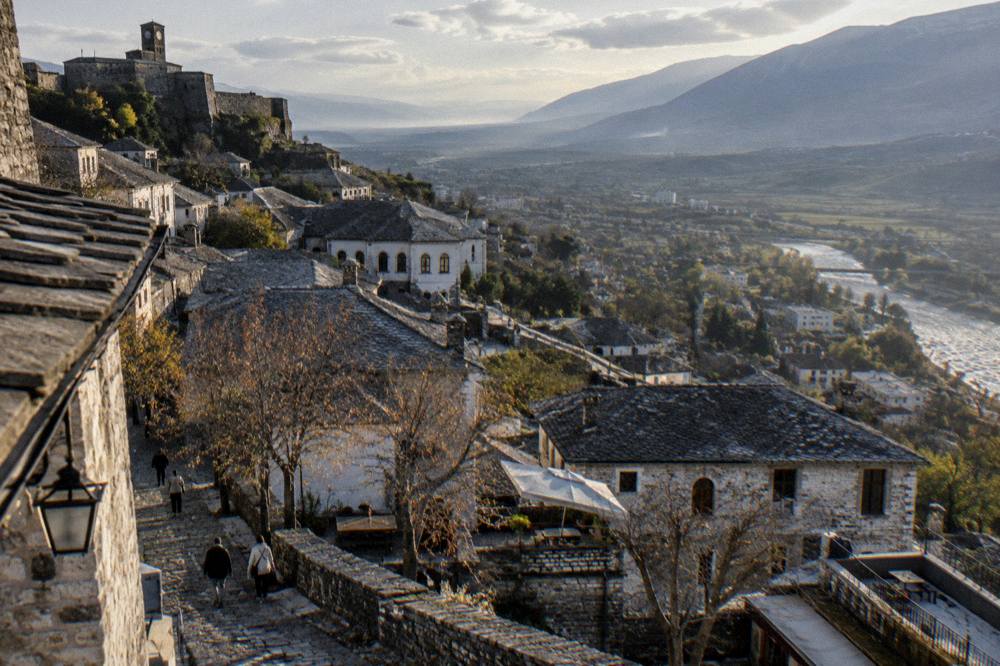
The old town itself is a steep maze of cobbled lanes. The houses are built of local stone, with roofs of flat slate slabs held down by stones, a construction that gives the whole hillside its monochrome look and the city its nickname. The lanes run up from the bazaar quarter to the castle gate, and the climb is unrelenting, so shoes with grip matter more than they do on the flat centre of Tirana around Skanderbeg Square.
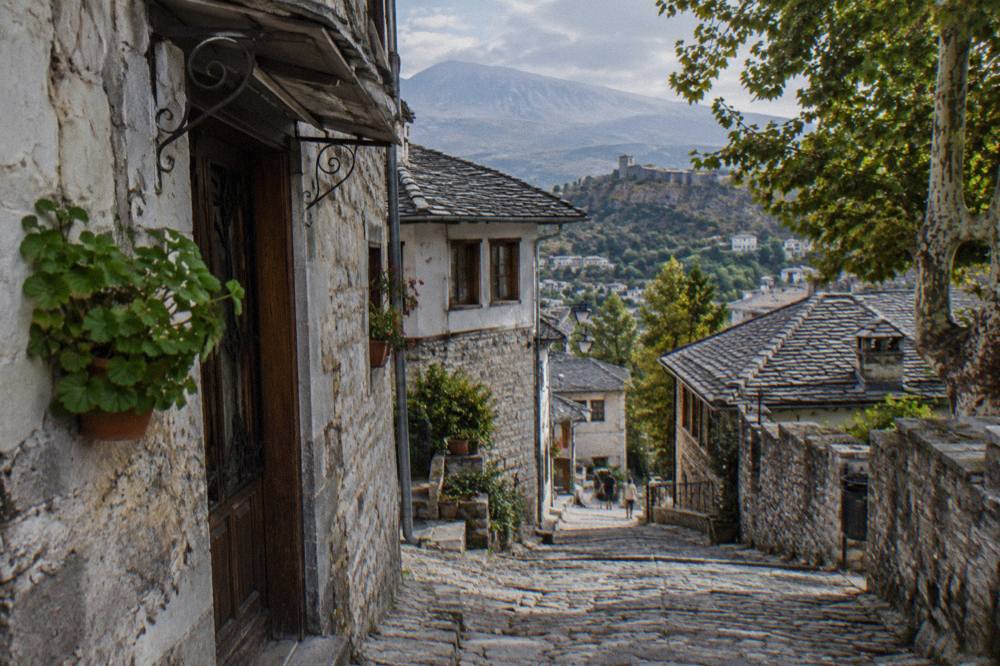
What you get for the effort is a townscape that survived the wars and rebuilding of the modern era unusually intact. Unlike Tirana, which was rebuilt around its square and its 2017 pedestrian redesign and keeps its own Ottoman survivors like the Et'hem Bey Mosque, Gjirokaster retained its pre-modern fabric wholesale. The setting is also vertical in a way the capital never is: every terrace looks either down the Drino valley or straight up at the castle walls.
Gjirokaster Castle And The Old Bazaar: What To Expect?
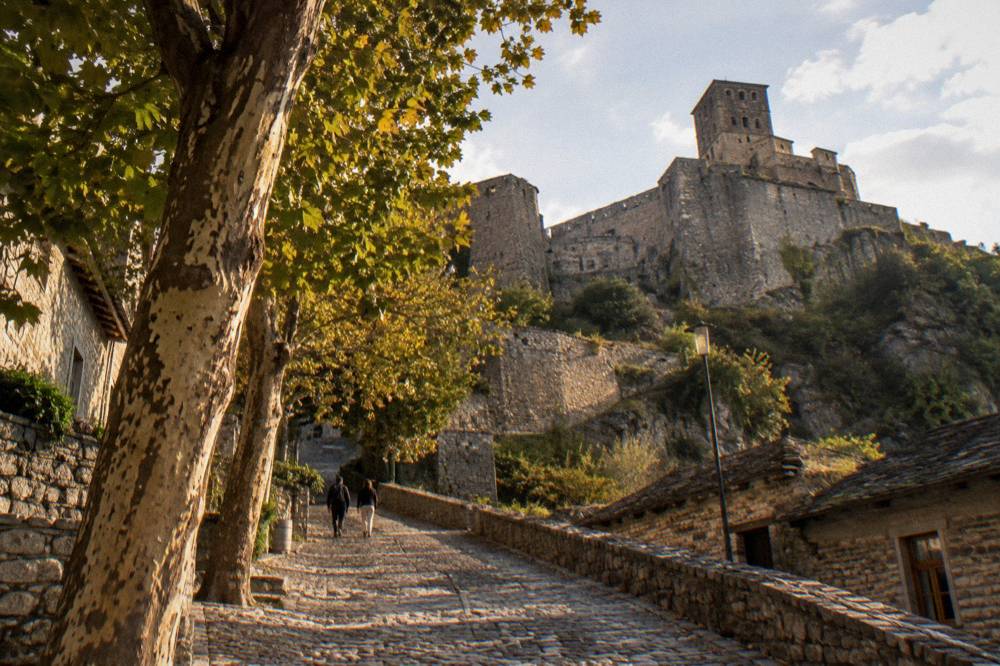
Gjirokaster Castle dominates the old town from the top of the hill, and entry is reported at about 400 lek, though confidence in that figure is low and the current price should be confirmed at the gate before going. Below it, the old bazaar quarter is the historic commercial heart of the town, a compact grid of stone shopfronts now holding craft sellers, cafes and souvenir stalls. Castle hours are not fixed, so plan around daylight.
The reported castle fee sits in the same band as other southern Albanian heritage sites: the Durres amphitheatre is reported at about 300 lek and the Durres Archaeological Museum about 800 lek, both hedged figures to confirm on arrival. In Gjirokaster, as at Kruja Castle, no fee or opening schedule appears on an official page, and the honest instruction is simply to check at the venue. Payment in cash, in lek, is the safe assumption anywhere in Albania; the euro is not legal tender, and the Bank of Albania's official rate has run at roughly 90 lek to the euro.
The castle platform gives the widest view in the city, down over the slate roofs on one side and along the Drino valley towards the Greek border mountains on the other. The walls hold museum rooms and open yards, and the walk up from the bazaar takes twenty minutes or so of steady climbing depending on where you start. Coming back down, the bazaar lanes are where the town slows down: stone arches, carpet stalls, raki and honey sellers, and the small cafes that keep the ground floors of the old shops.
For context, Tirana's own castle site, the Tirana Castle block near the centre, is a different animal entirely, a low residential-and-commercial fragment rather than a fortress hill, and Tanners' Bridge nearby is one of the capital's few Ottoman survivors. Gjirokaster is where that Ottoman world survives at full scale.
Can You Visit Gjirokaster As A Day Trip From Tirana?
Yes, but only as a long tour day: the roughly 209-minute drive each way means about seven hours on the road, leaving three to five hours in the old town. It is realistic with an early start and a late return, and guided tours built around this shape exist. It is not realistic to combine Gjirokaster with Saranda or Butrint in one day trip; those need their own overnight.
The arithmetic is unforgiving. A 06:30 departure arrives around 10:00; a 15:30 departure from Gjirokaster returns to Tirana near 19:00. That window covers the castle, the bazaar and lunch at a walking pace, with margin for one viewpoint. It does not cover the museums at a lingering pace, and it collapses entirely if anything on the road goes slowly. Anyone who values the evening atmosphere of the stone town, when the day visitors have gone and the roofs catch the last light, should book a bed instead.
The guided option solves the driving and the parking. A tour from Tirana that bundles Gjirokaster with thermal baths and canyon stops runs as a single long day with transport handled, which is a different product from a self-drive but a comfortable one for travellers who would rather not take on Albanian intercity roads. Self-drivers should read the driving basics on the Tirana to Skopje route page and the general Albania rules: driving is on the right, and drink-driving rules are zero tolerance.
For a sense of scale against the rest of the day-trip menu from Tirana, the table below places Gjirokaster among the southern options. The pattern is simple: everything past Vlore is overnight country.
| Southern destination | Distance from Tirana | Drive time | Same-day feasible? |
|---|---|---|---|
| Elbasan | 40 km | 42 min | Yes, easy |
| Vlore | 156 km | 133 min | Yes, long day |
| Saranda | 253 km | 248 min | Overnight recommended |
| Gjirokaster | 219 km | 209 min | Long tour day or overnight |
| Butrint | 267 km | 271 min | Overnight, about 4.5 hours each way |
How To Get To Gjirokaster Without A Car?
Intercity buses and minibuses to Gjirokaster leave Tirana from the South and North Bus Terminal, about 4.0 km north-west of Skanderbeg Square, which publishes departure timetables on the municipal site; intercity fares are not printed on official pages, so expect to pay the driver in cash, a few hundred lek for nearer towns and more for the south. A guided tour with transport included is the alternative that removes the terminal leg entirely.
The terminal is the city's hub for domestic routes: departures listed there include Durres from 06:00 at short intervals, Berat from 05:40 about every 30 to 45 minutes, and Shkoder from 05:00 about every 30 minutes, with Gjirokaster among the southern services. Times change, and the live listing is on the terminal's page, so check the day before. From the airport, the airport bus runs 24/7, every full hour, for 400 lek, and a separate line serves the same South and North Terminal for 300 lek, which is the cleanest airport-to-terminal connection. More of these guides are collected on Tirana Albania Travel Guide.
Inside Tirana, a single city-bus ride costs about 40 lek, paid in cash on board, per local transport reporting. Taxis work, and local ride apps operate, but Uber and Bolt do not; no meter tariff is published anywhere trustworthy, so agree the price before getting in. No passenger train runs anywhere in the country at present, including the Tirana-Durres line, which is being rebuilt with electrification expected to finish by the end of 2027.
The bus journey south is long. Without a timetable figure it would be wrong to quote a bus duration for Gjirokaster, but the road distance of about 219 km sets the floor, and buses stop. Factor a full morning or a full afternoon each way, and treat the bus as the budget option for an overnight stay rather than a day-trip tool.
What To Do In Gjirokaster Overnight And The Next Morning?
The overnight pattern that works: arrive by late afternoon, walk the bazaar lanes as the light drops, dine in the old town, and give the castle the first hours of the next morning before the day traffic arrives. The castle, the bazaar, the steep lanes between them and the valley viewpoints are the core; the museums fill the remaining slots. Allow a full morning, not an hour, because everything in the old town is uphill.
The stone city's restaurants lean traditional: tave kosi, baked lamb under a yogurt and egg topping; fergese, baked peppers and tomatoes with cheese; qofte, seasoned meatballs; and raki, the fruit brandy that closes meals across the country. Those dish descriptions come from Albanian food references and are safe to order by name anywhere in the south. Prices in lek are no more certain for Gjirokaster than for Tirana, so plan on cash and check the menu.
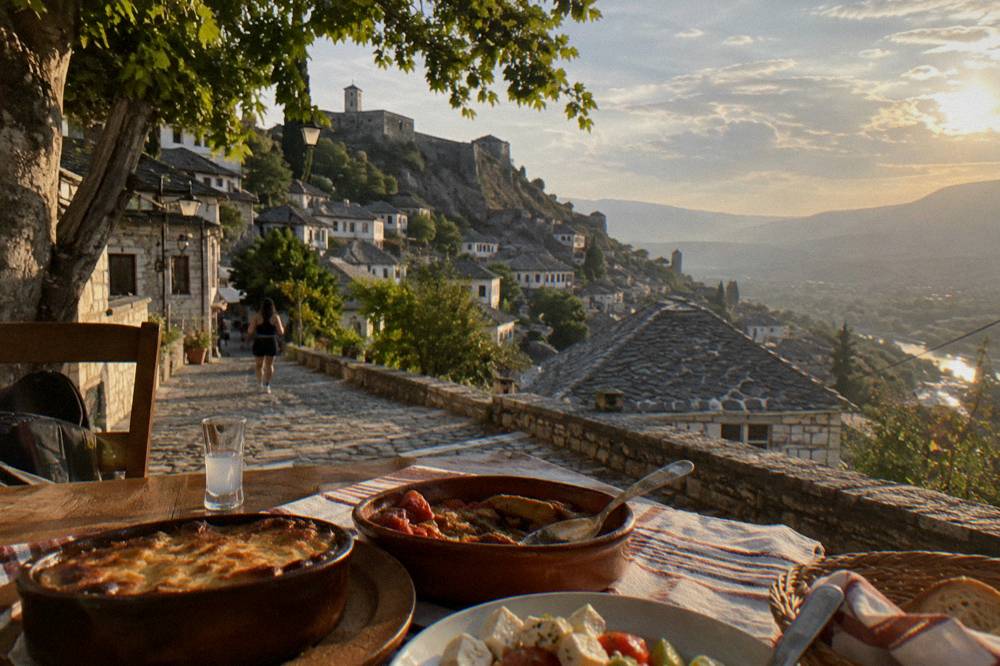
Morning is castle time. The walls open onto the whole Drino valley, and the museum rooms inside cover the fortress history without demanding a fixed schedule, since no official hours are published. After the castle, the descent through the bazaar naturally ends at the lower town, where the new boulevard runs flat towards the bus stops and the valley road. Anyone with a spare hour before departure can walk out along the ridge lanes for the classic postcard view of the stacked roofs.
Weather planning uses the Tirana climate table as the regional anchor: summers are hot and dry, with a July mean high of 29.8 C and August 30.4 C per the ERA5 reanalysis 1991-2020, while November is the highest-rainfall month at 139 mm. Gjirokaster, higher and further south, runs its own numbers, so treat those as orientation and pack layers for the hill town.
| Time block | Overnight plan | Notes |
|---|---|---|
| Day 1, afternoon | Arrive, check in, first bazaar walk | Lanes steepen towards the castle |
| Day 1, evening | Dinner in the old town, roofs at dusk | Traditional dishes, cash in lek |
| Day 2, early | Castle at opening pace | Confirm entry price at the gate |
| Day 2, mid-morning | Bazaar crafts, viewpoints | Walkable before the heat |
| Day 2, midday | Onward south, or return to Tirana | Saranda about 4 hours further by road |
Can You Combine Gjirokaster With Saranda, Butrint Or The Riviera?
Yes, and that chaining is the strongest argument for the overnight: from Gjirokaster the road continues south towards Saranda, about 248 minutes by road from Tirana itself, so the second day drops you into the coast without backtracking through the capital. Butrint, at about 271 minutes from Tirana, and Ksamil only make sense on that same southern loop, never as bolt-ons to a Gjirokaster day trip.
The geometry favours the loop. Tirana to Gjirokaster is 209 minutes; Tirana to Saranda direct is 248 minutes; the Gjirokaster to Saranda leg is the difference, a winding mountain section that is the scenic heart of any southern trip. A common shape is two nights: Gjirokaster first, then Saranda or Ksamil, with Butrint, the UNESCO site inscribed in 1992 and extended in 1999, as the archaeological anchor of the coastal day.
The Riviera west of Saranda, the Dhermi and Himara stretch, is reported at roughly four to five hours by road from Tirana without stops, which places it beyond any day trip and explains why the whole far south is sold as a multi-day circuit. For the site pages with the full breakdowns, see Butrint, Ksamil, Vlore and the Albanian Riviera guide. Going the other way, Korce and Ohrid anchor the eastern loop, Ohrid town itself across the border in North Macedonia.
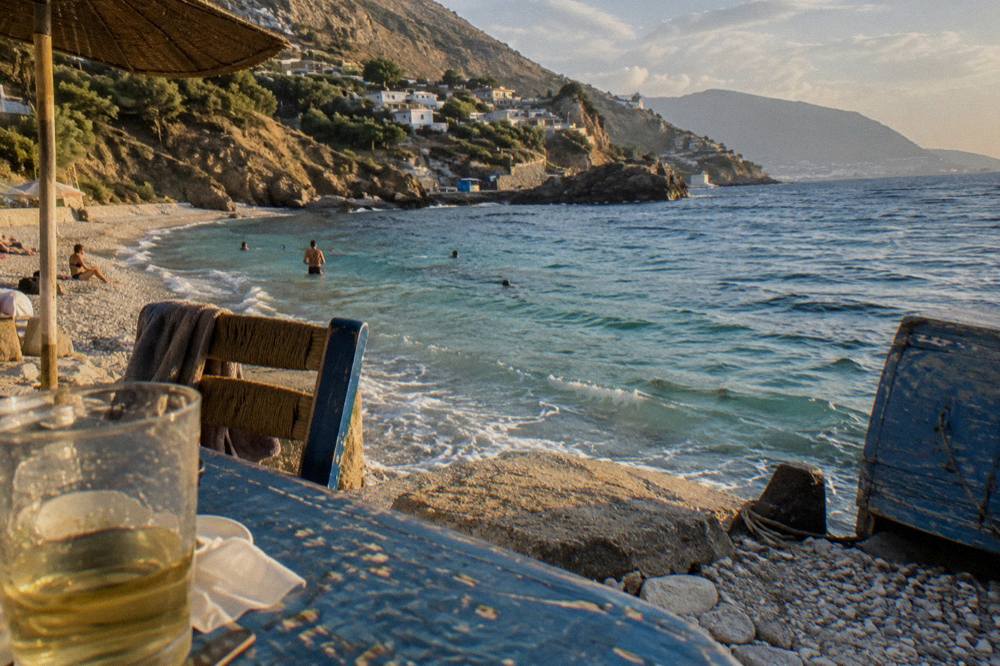
One caution on timing: the far south is at its fullest in July and August, Albania's peak after more than 12 million foreign arrivals in 2025. May, June and September trade a few degrees of heat for thinner crowds, and the mountain road segments are pleasanter outside the highest summer weeks.
Is Gjirokaster Worth It Compared With Berat?
Berat is about 122 minutes from Tirana and works as a genuine day trip; Gjirokaster is about 209 minutes and pushes you into an overnight. Both old towns share the same UNESCO listing, and the choice is usually scheduling: one spare day favours Berat, two days or a southern loop favours Gjirokaster. Neither is better on any measure; they are different distances for different trip shapes.
Berat, the city of a thousand windows, is the white counterpoint: Ottoman houses stacked above the Osum river, with the Onufri Iconographic Museum at 400 lek and the Ethnographic Museum at 300 lek per the Berat Museum Center, and castle grounds that may carry a small gate fee. Gjirokaster is grey stone and a fortress silhouette. Berat's museum prices are the only confirmed heritage admission figures in the south; in Gjirokaster, only the hedged castle fee exists, so budget loosely and pay cash.
Travellers squeezing the south into one week from Tirana often run Berat as a day trip first, then leave for the Gjirokaster, Saranda and Butrint loop with an overnight bag. The full route planner for that shape is the one week in Albania from Tirana itinerary hub, and the closer options, Kruja and Durres, cover the days when the south is too far.
| Question | Berat | Gjirokaster |
|---|---|---|
| Distance from Tirana | 125 km | 219 km |
| Drive time | 122 min | 209 min |
| Day trip feasible | Yes | Long tour day or overnight |
| UNESCO status | Added 2008 | Inscribed 2005 |
| Castle entry | Grounds may carry a small gate fee | Reported about 400 lek, confirm at gate |
| Verified museums | Onufri 400 lek, Ethnographic 300 lek | Admission not published |
| Best combined with | Apollonia, about 112 min from Tirana | Saranda, Butrint, the Riviera |
Common Questions About Gjirokaster From Tirana
How far is Gjirokaster from Tirana?
About 219 km by road, roughly 209 minutes of driving from Skanderbeg Square. In practice the run takes longer with traffic and stops, so plan on about four hours each way.
Can you do Gjirokaster as a day trip from Tirana?
Yes, as a long tour day with an early start: about seven hours of driving plus three to five hours in the old town. An overnight is more comfortable and lets you continue to Saranda or Butrint instead of backtracking.
How much does Gjirokaster castle cost?
Entry is reported at about 400 lek, but that figure carries low confidence, so confirm the current price at the gate. Confirm the current price at the gate, and carry cash in lek.
Why is Gjirokaster a UNESCO site?
Its old town, a rare surviving Ottoman stone townscape of slate-roofed houses below a castle, was inscribed on the World Heritage list in 2005; Berat was added to the same property in 2008.
Should I stay overnight in Gjirokaster?
The overnight gives you the castle in the quiet of the morning and the old town after the day visitors leave. It also turns the trip into a southern loop: Saranda is the natural next stop, not a return to Tirana.
Is Gjirokaster or Berat better from Tirana?
It is a scheduling question. Berat is about two hours away and fits a day trip; Gjirokaster is about three and a half and suits an overnight or a guided long day. Both are UNESCO-listed old towns with castles and bazaars.
The stone city is the far end of the Tirana day-trip ladder, the point where the answer stops being "which morning bus" and becomes "where do I sleep". Give it the night it needs, chain it with the coast if the calendar allows, and check the castle price at the gate when you get there.