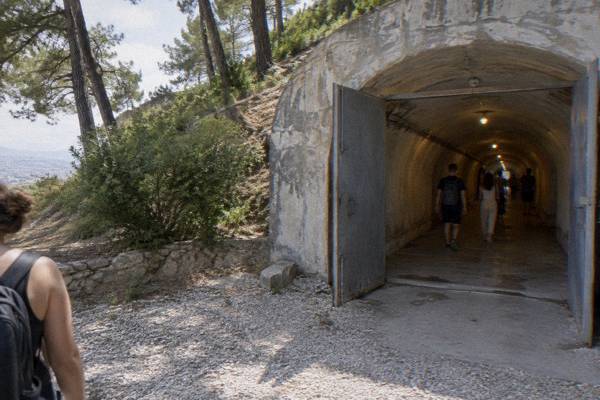
Bunk'Art 1: The Cold War Bunker Under Mount Dajti
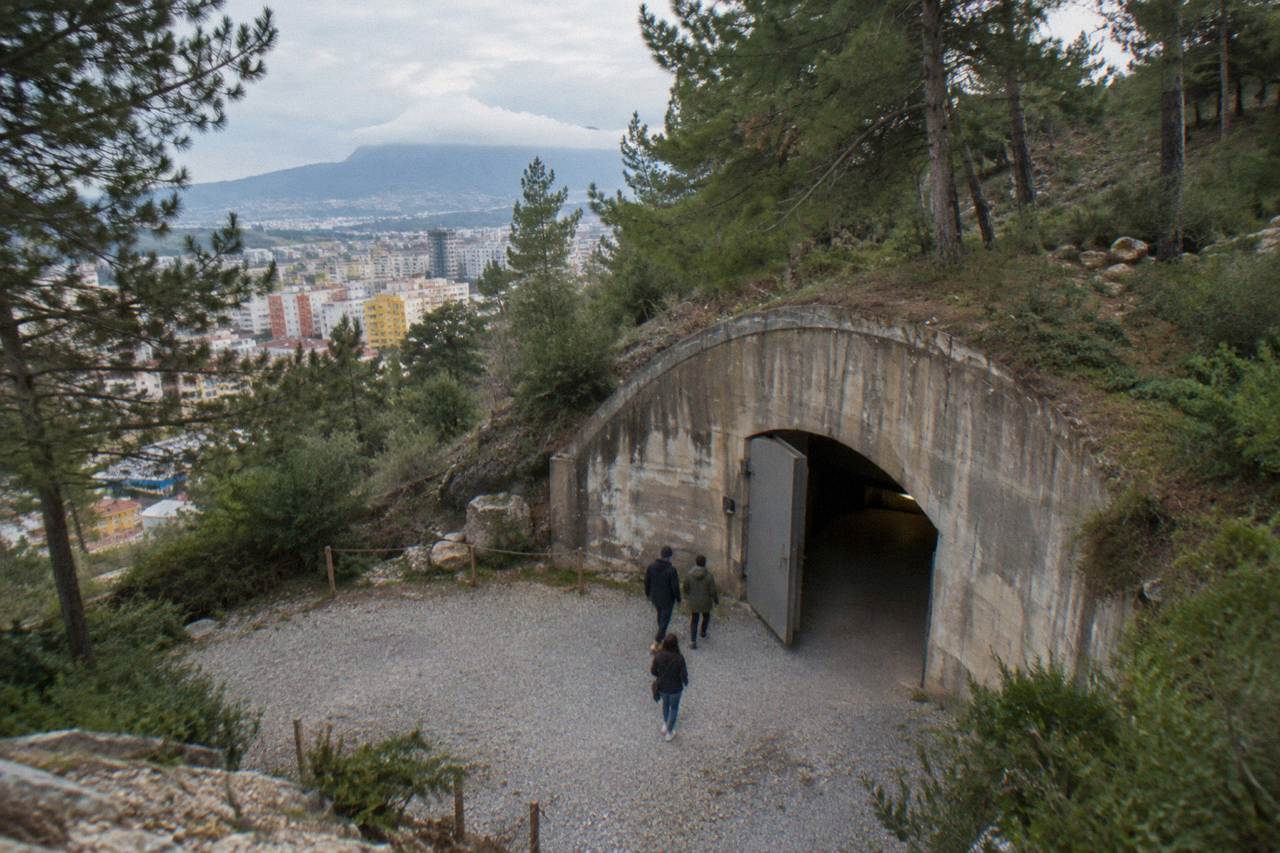
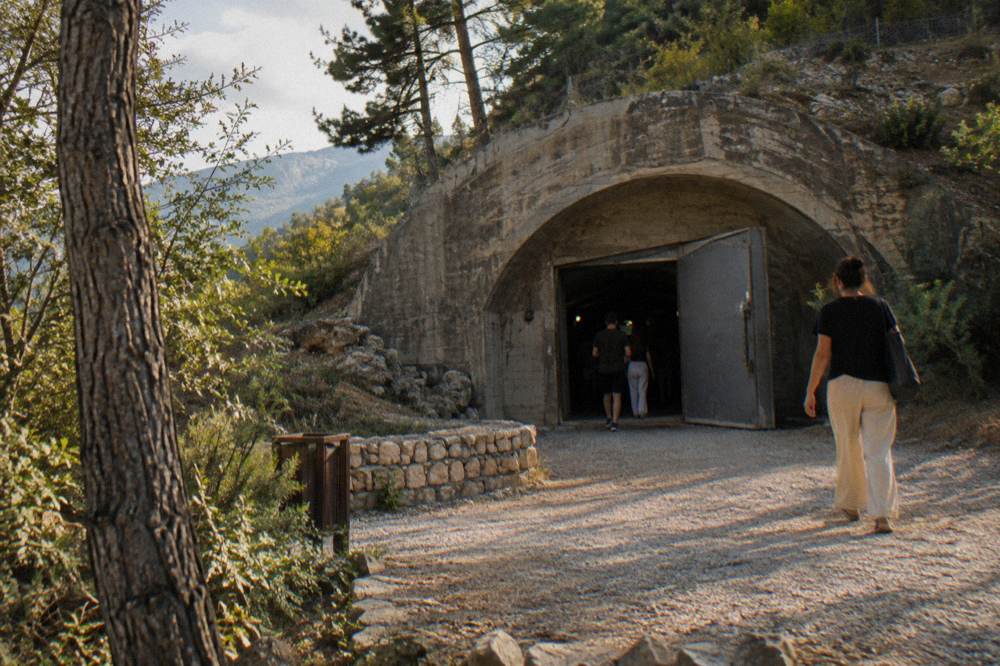
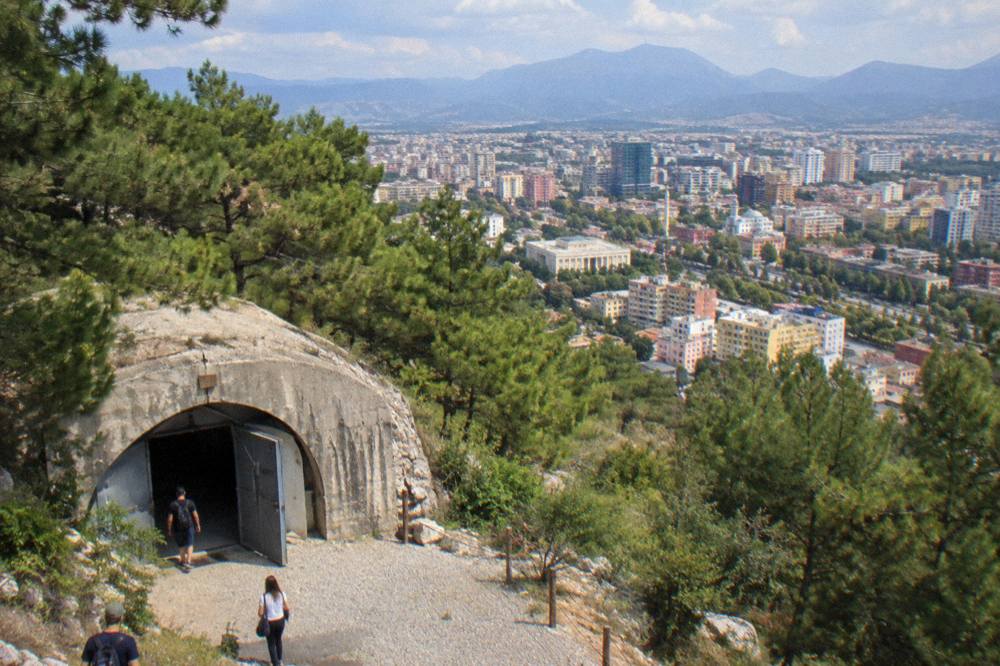
Bunk'Art 1 is the anti-nuclear bunker built for Albania's communist leadership, dug into the hillside behind the Dajti Ekspres cable car lower station on the north-eastern edge of Tirana and opened as a museum in November 2014.
Short answer
Bunk'Art 1 in Tirana is open daily 09:30 to 17:30 from 1 June 2026, sits about 4.6 km north-east of Skanderbeg Square behind the Dajti cable car lower station, and tickets are bought at the door.
Tirana keeps its strangest museum underground. Bunk'Art 1, on the north-eastern edge of the Albanian capital at the foot of Mount Dajti, is a Cold War anti-nuclear bunker built to shelter the country's communist leadership, hollowed into the hillside and reopened as a history museum in November 2014. Its tunnel mouth sits behind the lower station of the Dajti Ekspres cable car, which means one visit can pair the darkest chapter of Albania's communist era with one of the brightest views over the city.
What Is Bunk'Art 1 In Tirana?
Bunk'Art 1 is a Cold War nuclear bunker built for Albania's communist leadership, converted into a museum of the communist era that opened in November 2014, located in a tunnel behind the Dajti Ekspres cable car lower station about 4.6 km north-east of Skanderbeg Square in Tirana. It is reported to have served as the shelter intended for the political and military leadership, while its sibling, Bunk'Art 2 near the city centre, occupies the Interior Ministry bunker and covers the secret-police years.
Albania's communist government built bunkers on a scale with few parallels anywhere. The estimate most commonly cited is about 173,000 concrete bunkers scattered across the country, though estimates differ and no official count exists. Bunk'Art 1 is the largest expression of that programme: not a mushroom dome in a field but an underground complex designed to keep a state alive.
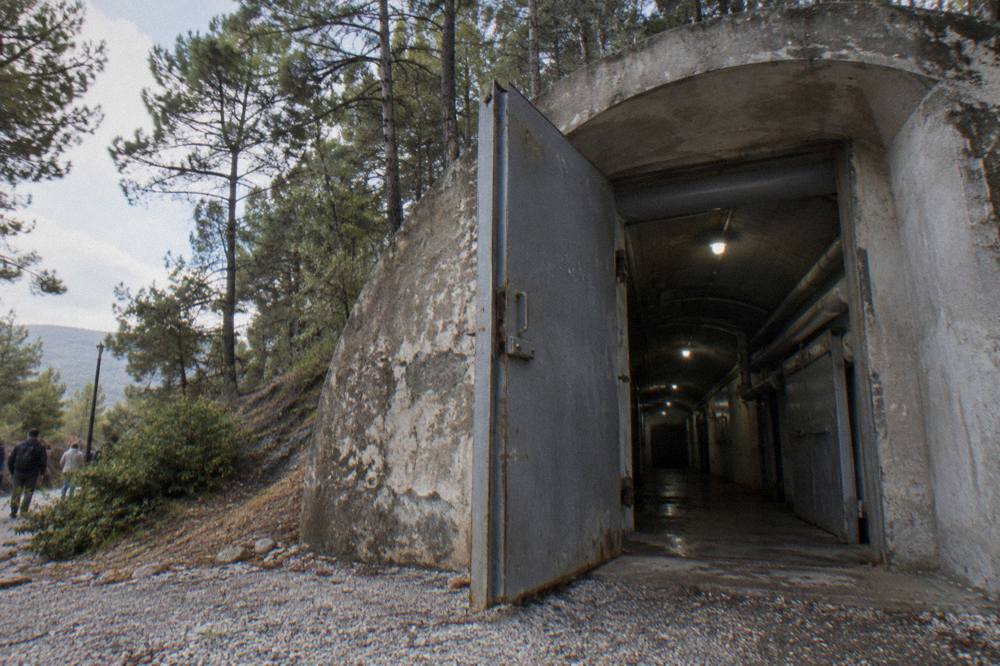
The museum's exhibition rooms run through the tunnel's corridors, mixing original machinery and fittings with displays on the period. Where a conventional museum was built to be visited, this one was built never to be used, and that inversion is the whole point of the walk through it.
For the wider picture of the era in the capital, the site's communist history trail in Tirana pages gather the other landmarks, from the Pyramid of Tirana to the House of Leaves.
Where Is Bunk'Art 1 And How Do You Get There From Central Tirana?
Bunk'Art 1 stands at Rruga Fadil Deliu on Tirana's north-eastern edge, behind the lower station of the Dajti Ekspres cable car, about 4.6 km in a straight line north-east of Skanderbeg Square, and since there is no rail link of any kind in Tirana the realistic options are a city bus, a taxi or a local tour that includes transport, which makes the bunker a natural pairing with the cable car and Mount Dajti rather than a walking-distance stop. The site is genuinely at the city's rim. The road climbs out of the basin through the eastern suburbs toward the foothills, and the bunker entrance appears where the residential streets end and the wooded slope of the mountain begins. Allow real travel time: this is not a two-minute hop from the square like Bunk'Art 2, which sits about 0.2 km south-east of Skanderbeg Square, opposite the Municipality.
| Route | Distance / position | What to know |
|---|---|---|
| Skanderbeg Square to Bunk'Art 1 | About 4.6 km north-east | Uphill through the eastern suburbs; taxi or bus |
| Skanderbeg Square to Bunk'Art 2 | About 0.2 km south-east | Walking distance from the square |
| Bunk'Art 1 to the Dajti Ekspres lower station | Directly behind it | Same trip covers both |
| Dajti Ekspres lower station to Mount Dajti summit | About 53 minutes and 28 km by road | Cable car covers the climb |
A single city-bus ride costs about 40 lek, paid in cash on board, per the fare widely reported in the city. Taxis in Tirana have no published tariff any source confirms, so agree the fare before getting in or use a local taxi app. Ride-hailing names familiar elsewhere do not operate in the city.
Visitors who would rather leave the logistics to someone else can take a tour that bundles the ride out, and the roster includes several options built around exactly this bunker.
One of them pairs the bunker with the mountain in a single day, which suits visitors with limited time in the capital.
Another covers the bunker with a guide and a transport option, for those who want interpretation without the full mountain itinerary.
What Are The Bunk'Art 1 Opening Hours And Ticket Prices?
Bunk'Art 1 is open daily from 09:30 to 17:30 under the summer timetable in force since 1 June 2026, per the museum's own website, and tickets are bought at the door because no ticket price is published online. Bunk'Art 2 in the centre is open daily from 09:30, with a closing time that varies by season. The museums publish hours, not fares, so plan to pay at the entrance and carry cash.
That last point matters more than it sounds. Albania's currency is the lek, not the euro, and while cards are widely taken in hotels, larger restaurants and supermarkets in central Tirana, cash remains the working method at smaller venues, markets and buses. Arrive with lek rather than assuming a card terminal waits at the bunker door.
| Site | Hours (museum's own site) | Tickets |
|---|---|---|
| Bunk'Art 1 (Rruga Fadil Deliu) | Daily 09:30 to 17:30 from 1 June 2026 | At the door; no price published online |
| Bunk'Art 2 (Rruga Abdi Toptani) | Open daily from 09:30; closing varies by season | At the door; no price published online |
Timetables change between summer and winter seasons, so check the museum's site shortly before a visit. Hours on national holidays can differ from the posted schedule, and Albania's fixed national days include Independence Day on 28 November and Liberation Day on 29 November.
What Can You See Inside Bunk'Art 1?
Inside, Bunk'Art 1 preserves the bunker's original function, assembly halls, machinery and dormitory space for the leadership, and fills its corridors with a museum exhibition on the communist era of Albania from 1944 to 1991, per the museum's own presentation of the site. The tunnel network itself is the main exhibit: a self-contained underground world, reported to have been intended to house the political and military leadership in the event of attack.
The displays run chronologically and thematically through Albania's post-war decades. Visitors move through rooms where the cold engineering of the shelter meets the iconography of the state it was built to protect. Original fittings remain in place alongside the exhibition panels, and the atmosphere of the tunnel does as much interpretive work as the text on the walls.
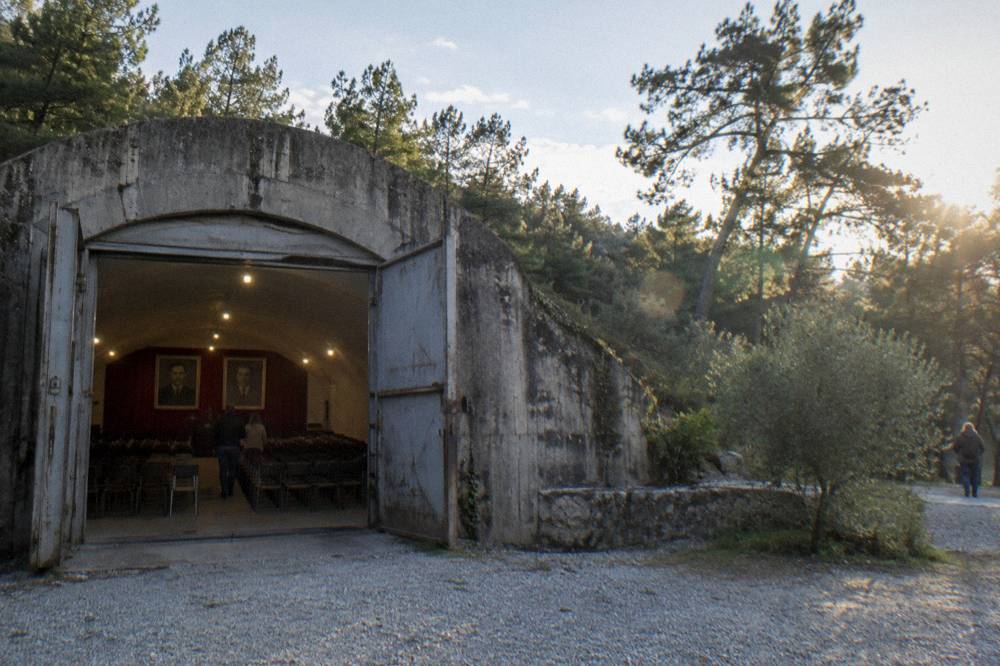
The museum opened in November 2014, according to widely repeated reporting on the site's history, and its younger sibling Bunk'Art 2 followed on 19 November 2016. The two split the subject between them: Bunk'Art 1 for the leadership shelter and the era's broader history, Bunk'Art 2, in the Interior Ministry bunker, for the secret-police machinery that enforced it.
Visitors who want the counterweight to the state's official face can continue at the House of Leaves, the Museum of Secret Surveillance in the city centre, open daily 09:00 to 19:00 with reported admission of 700 lek for adults. The National History Museum on Skanderbeg Square is closed for restoration, with the announced closure running to March 2028; its mosaic facade can still be seen from the square.
Bunk'Art 1 Or Bunk'Art 2: Which Should You Visit In Tirana?
Bunk'Art 1 is the larger leadership bunker at the foot of Mount Dajti best suited to a half-day trip combined with the cable car, while Bunk'Art 2 is the central Interior Ministry bunker within walking distance of Skanderbeg Square that fits an hour or two between city sights; both are open daily from 09:30, and visitors with time for both get two halves of one story. The choice usually comes down to time and transport.
Bunk'Art 2's position, about 0.2 km south-east of the square, makes it the effortless option. Bunk'Art 1 demands a trip to the city's edge but rewards it with the scale that only the leadership shelter has. The full comparison, including the differences in subject matter, sits in the site's dedicated answer page on Which Is Better, Bunk Art 1 Or Bunk'Art 2.
| Bunk'Art 1 | Bunk'Art 2 | |
|---|---|---|
| Position from Skanderbeg Square | About 4.6 km north-east | About 0.2 km south-east |
| Original role | Leadership nuclear shelter (reported) | Interior Ministry bunker (reported) |
| Exhibition focus | The communist era, 1944 to 1991 | The secret police and surveillance years |
| Opened as a museum | November 2014 (reported) | 19 November 2016 (reported) |
| Hours | Daily 09:30 to 17:30 from 1 June 2026 | Daily from 09:30; closing varies by season |
| Best combined with | Dajti Ekspres and Mount Dajti | The square, the mosque and city walks |
A reasonable pattern for a first visit to the capital: Bunk'Art 2 on the day spent in the centre, Bunk'Art 1 on the morning or afternoon reserved for the mountain. The site's two days in Tirana itinerary follows exactly that split.
How Much Time Do You Need At Bunk'Art 1?
Allow roughly two hours for the museum itself and half a day once travel from the centre is counted, since the bunker sits about 4.6 km north-east of Skanderbeg Square behind the cable car station, and the natural visit adds the Dajti Ekspres ride and time on the mountain. Visitors who walk quickly and read little finish sooner, but the tunnel rewards a slower pace.
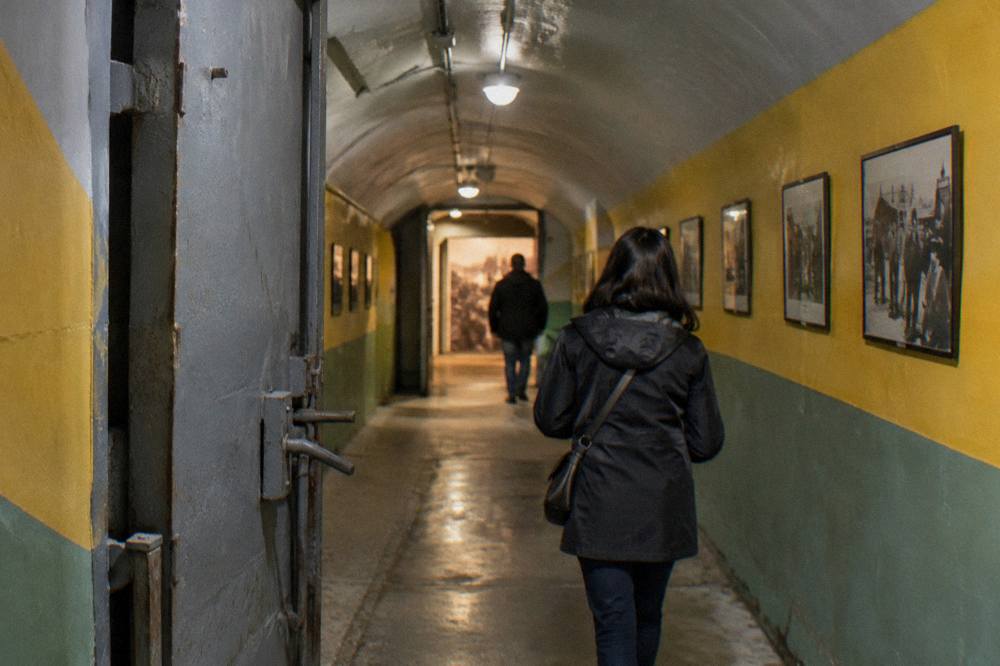
The exhibition is inside a functioning tunnel environment, so temperature and footing differ from a conventional gallery. Surfaces are hard, lighting is low in places, and the route runs through corridors that were engineered for survival, not comfort. Flat shoes and a layer for the cool air serve well in any season.
Time of year changes the surrounding trip more than the museum itself. Under the ERA5 reanalysis, 1991-2020, Tirana's July mean high is 29.8 C and August's is 30.4 C, so a morning slot keeps the climb to the bunker and the cable car queue out of the afternoon heat. In January the mean high is 10.8 C with a mean low of 2.3 C, mild enough for the visit but worth a jacket for the exposed station area.
| Season | ERA5 reanalysis, 1991-2020 | What it means for the visit |
|---|---|---|
| June to August | Mean highs 26.9 to 30.4 C; rain 31 to 51 mm per month | Go in the morning; the tunnel stays cool |
| September to October | Mean highs 21.4 to 25.7 C; rain rises to 119 mm in October | Comfortable, with more wet days by late October |
| November to January | Mean highs 10.8 to 16.5 C; rain peaks at 139 mm in November | Bring a layer; the bunker is sheltered, the walk to it less so |
Can You Combine Bunk'Art 1 With The Dajti Ekspres Cable Car?
Yes, and the pairing is the obvious plan: Bunk'Art 1 sits directly behind the Dajti Ekspres lower station, so one outward trip covers the bunker museum in the hillside and the cable car ride up Mount Dajti, whose summit area lies about 53 minutes and 28 km away by road. The operator sells tickets only at the lower station, in one-way, return and combination options, and bills the line as the longest cableway in the Balkans, Austrian-built.
The operator's own page advises arriving between 09:00 and 11:00 on national holidays, when the line is busy, and the service is reported to be usually closed on Tuesdays for maintenance, opening from about 09:00 on other days. The operator publishes no fares online, directing visitors to the lower station for current ticket prices, so budget for both the bunker door and the cable car window in cash terms.
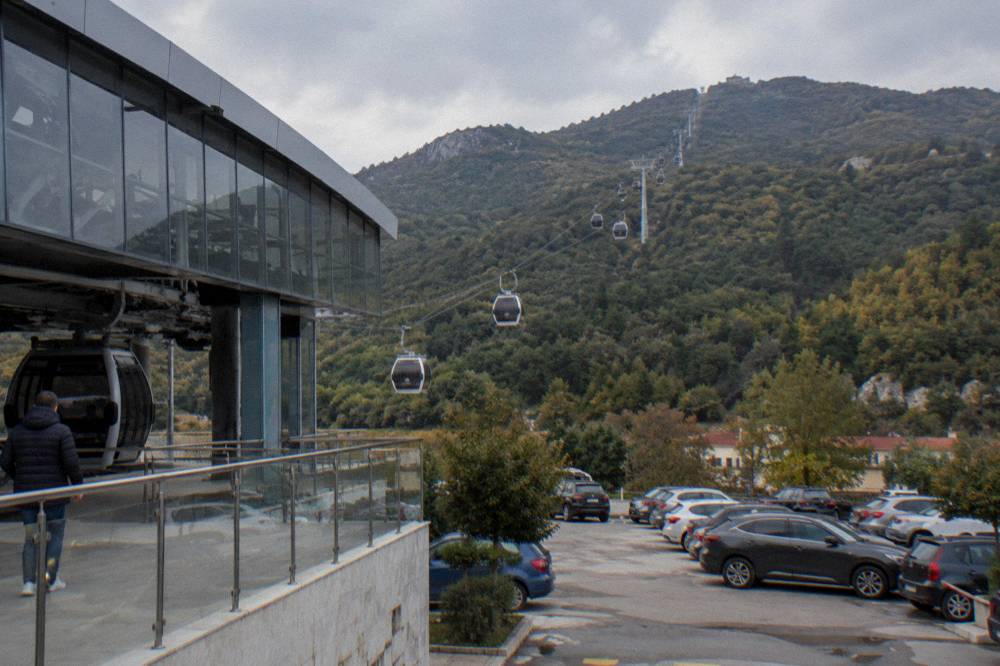
A day built this way runs: bus or taxi out to the eastern edge, the bunker first while legs are fresh, the cable car up for the panorama over the city and the basin, then the return. The mountain itself is a national park, and the site's Mount Dajti National Park and Dajti Ekspres pages carry the detail, with a dedicated answer on whether the Dajti Ekspres is worth it.
For a fuller account of the ride, the timings and what waits at the top, read the Dajti cable car guide.
What Is The History Behind The Bunker?
The bunker belongs to the communist period that ran Albania from 1944 to 1991, an era whose government fortified the country with what is commonly cited as about 173,000 concrete bunkers, estimates differ, and dug this leadership shelter into the hillside beneath Mount Dajti as insurance for the state's survival. The museum that now occupies it opened in November 2014, according to published reports.
Albania under that government turned isolation into policy. The state broke with allies, built fortifications on a national scale and drilled its population for an invasion that never came. The bunker programme left small domes in fields, along coastlines and beside roads the length of the country; many still stand. Bunk'Art 1 represents the other end of the same logic, the version built not for a machine-gun crew but for a government.
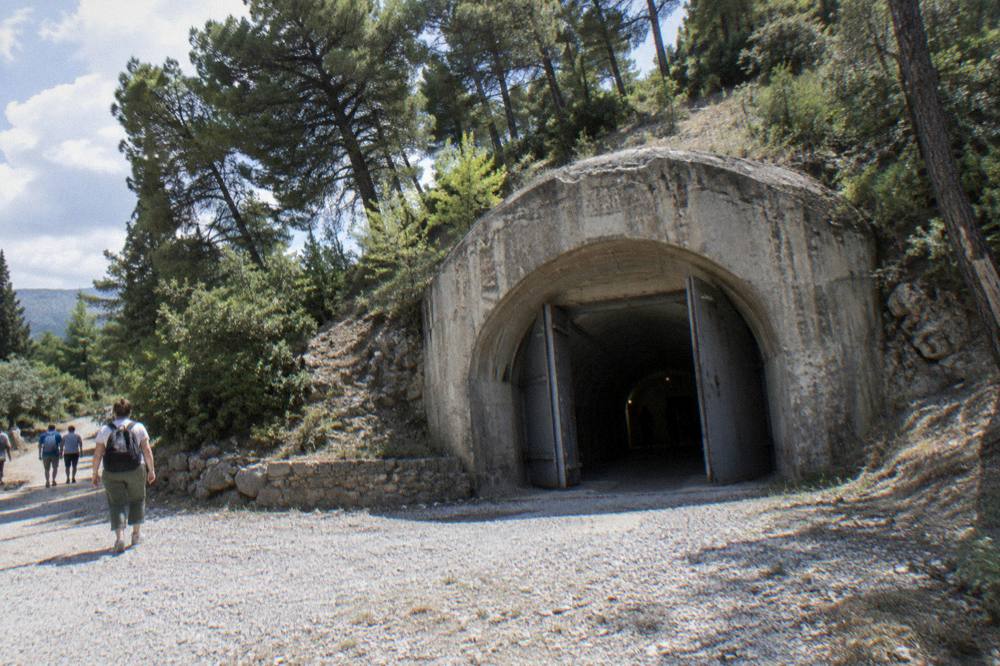
The exhibition inside walks visitors through those decades. Rooms are given to the politics, the daily life and the machinery of the state, and the tunnel's own fabric, its blast doors, ventilation plant and dormitory spaces, carries the story as much as any panel. Reporting on the museum describes it as the anti-nuclear bunker intended for the leadership, and nothing about the interior argues otherwise.
The era's traces run through the whole capital, from the Pyramid of Tirana, opened in 1988 and reborn as a technology centre after its 2023 renovation, to the Postbllok memorial at the edge of the former leadership enclave, which is reported to combine a bunker, prison pillars and a fragment of the Berlin Wall.
What Should You Know Before Visiting Bunk'Art 1?
Bring cash in lek, wear flat shoes, allow half a day including travel, check the museum's site for the current timetable before setting out, and plan the visit for opening at 09:30 if combining it with the cable car, which sells tickets only at the lower station. Those five points cover nearly everything that goes wrong at the bunker door.
The currency question deserves emphasis. Albania is not in the euro zone and the euro is not legal tender; the lek is the currency, at roughly 90 lek to the euro per the Bank of Albania's official rate. Some hotels and tourist businesses take euros informally at their own rate, but a museum door at the edge of the city is not the place to test that.
A few practical notes:
- The bunker is inside a hillside; corridors are cool year-round and a light layer helps in summer.
- Photography is generally possible, but check signage on arrival for any restricted rooms.
- Timetables shift between summer and winter seasons; the 09:30 to 17:30 daily hours reflect the timetable in force from 1 June 2026.
- The walk from the nearest bus stop to the entrance involves an uphill stretch; taxis drop closer.
- Combine with the cable car only after checking its reported Tuesday maintenance closure.
Visitors with a free evening after a bunker morning often look for the lighter side of the capital's culture, and the tour roster has options there too.
A guided option focused on the communist landmarks of the centre makes a natural second act to the bunker.
What Else Is Near Bunk'Art 1 On Tirana's Eastern Edge?
The Dajti Ekspres lower station and the slopes of Mount Dajti National Park are the bunker's immediate neighbours, while everything else a visitor needs, the square, the mosques, the museums and the cafe quarter, lies back toward the centre, so the eastern edge is best treated as its own half-day chapter of a Tirana trip. The city's basin geography concentrates the classic sights within about a kilometre of Skanderbeg Square.
| Sight | Direction from Skanderbeg Square | Rough straight-line distance |
|---|---|---|
| Et'hem Bey Mosque | South-east | About 0.2 km |
| Clock Tower of Tirana | South-east | About 0.2 km |
| Pyramid of Tirana | South-east | About 0.7 km |
| New Bazaar | East | About 0.6 km |
| Blloku | South | About 0.8 km |
| Dajti Ekspres lower station | North-east | About 4.4 km |
| Bunk'Art 1 | North-east | About 4.6 km |
After the bunker and the mountain, the centre offers the Et'hem Bey Mosque and the Great Mosque of Tirana, the New Bazaar for food stalls, and the cafe tables of Blloku for the evening. The Skanderbeg Square page covers the heart of it all.
One current note for autumn and winter planning: demonstrations have been held in central Tirana since 13 October 2026, some involving violence, and the UK's travel advice was updated on 15 October 2026 accordingly. The Bunk'Art 1 site sits outside the central demonstration area, but check local media on protest days and allow extra time for movement through the centre.
Common Questions About Bunk'Art 1
What are the Bunk'Art 1 opening hours?
Per the museum's own website, Bunk'Art 1 is open daily from 09:30 to 17:30 under the timetable in force since 1 June 2026. Winter timetables can differ, so check the museum's site shortly before visiting.
How much do Bunk'Art 1 tickets cost?
No ticket price is published on the official site, so buy tickets at the door and carry lek. Confirm the current price at the venue before going.
How do you get to Bunk'Art 1 from central Tirana?
The bunker sits about 4.6 km north-east of Skanderbeg Square at Rruga Fadil Deliu, behind the Dajti Ekspres lower station. City buses, taxis and tours with transport all reach it; there is no train option.
Which is better, Bunk'Art 1 or Bunk'Art 2?
Bunk'Art 1 is the larger leadership bunker best combined with the Dajti cable car; Bunk'Art 2 is the central Interior Ministry bunker within walking distance of the square. Both are open daily from 09:30, and visitors with time do both.
Can you visit Bunk'Art 1 and Mount Dajti on the same day?
Yes. The bunker entrance sits directly behind the Dajti Ekspres cable car lower station, so one trip covers both the museum and the ride up the mountain. Check the cable car's reported Tuesday maintenance closure before planning.
Bunk'Art 1 compresses Albania's strangest half-century into a tunnel on Tirana's eastern edge, and it pairs with the mountain above it more neatly than any other museum in the country. Buy the ticket at the door, carry lek, and give the morning to it.