The Blue Eye Spring From Tirana
The Blue Eye (Syri i Kalter) is a freshwater spring in southern Albania, and every question about reaching it from Tirana starts with one honest fact: it sits far to the south, well beyond a comfortable day return.
Short answer
The Blue Eye is a protected natural spring about 18 to 22 km from Saranda, roughly 253 km and over four hours by road from Tirana, which makes it an overnight trip or a long tour day rather than a casual excursion.
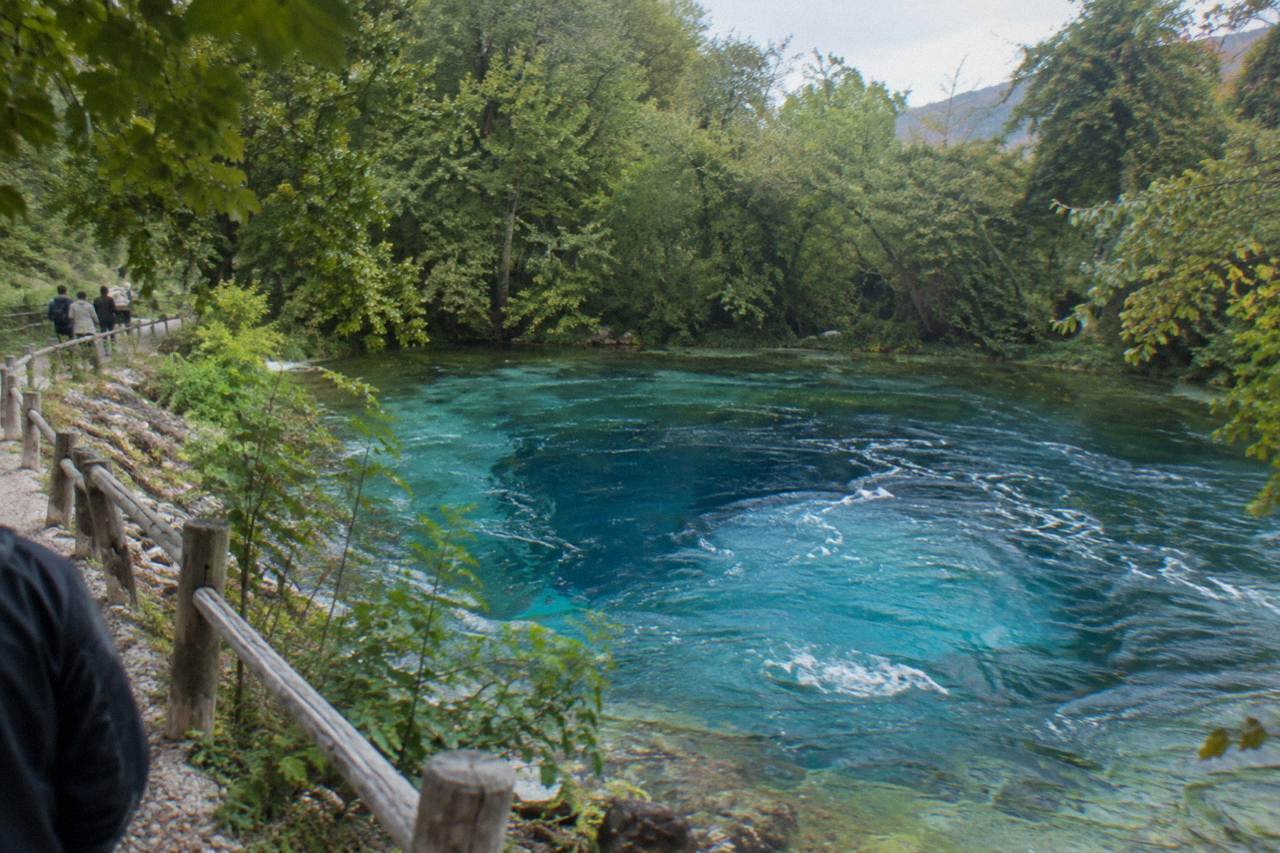
Tirana, the capital of Albania, sits inland in a basin at the foot of Mount Dajti, and the Blue Eye spring lies at the opposite end of the country, in the hills behind the southern coastal city of Saranda. The spring, known in Albanian as Syri i Kalter, is a deep pool of blue and turquoise water where groundwater surges up from a karst opening, reported to be more than fifty metres deep, set inside a protected natural park covering about 293 hectares since January 2022. It is one of the most photographed natural sights in the country. This guide lays out what the spring is, how far it sits from Tirana, what the realistic routes look like and how to plan the journey honestly, because the single biggest mistake travellers make with the Blue Eye is underestimating the distance from the capital.
What Is The Blue Eye Spring In Albania?
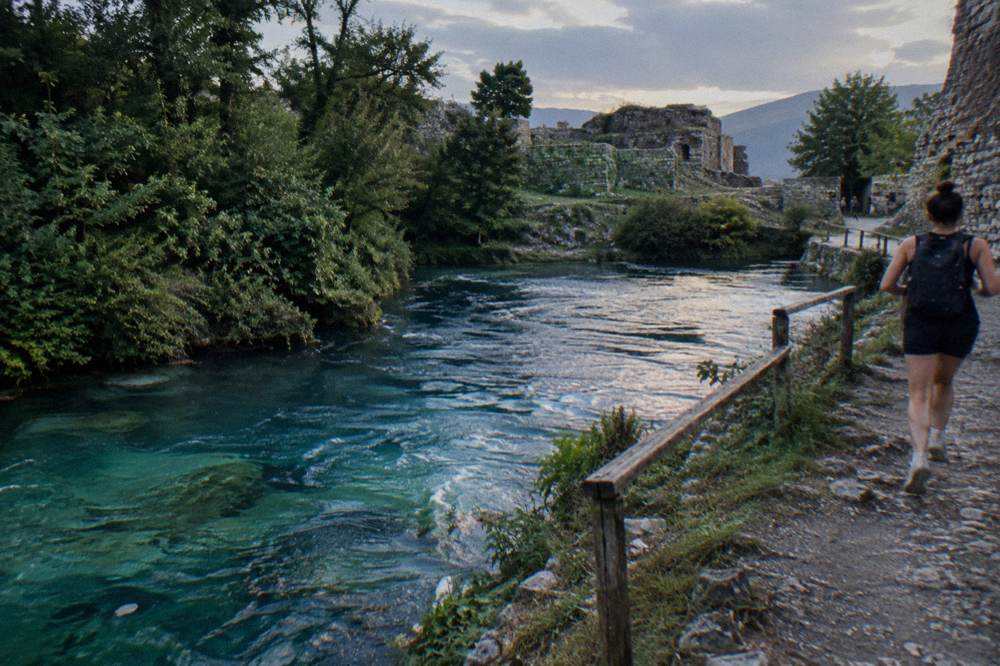
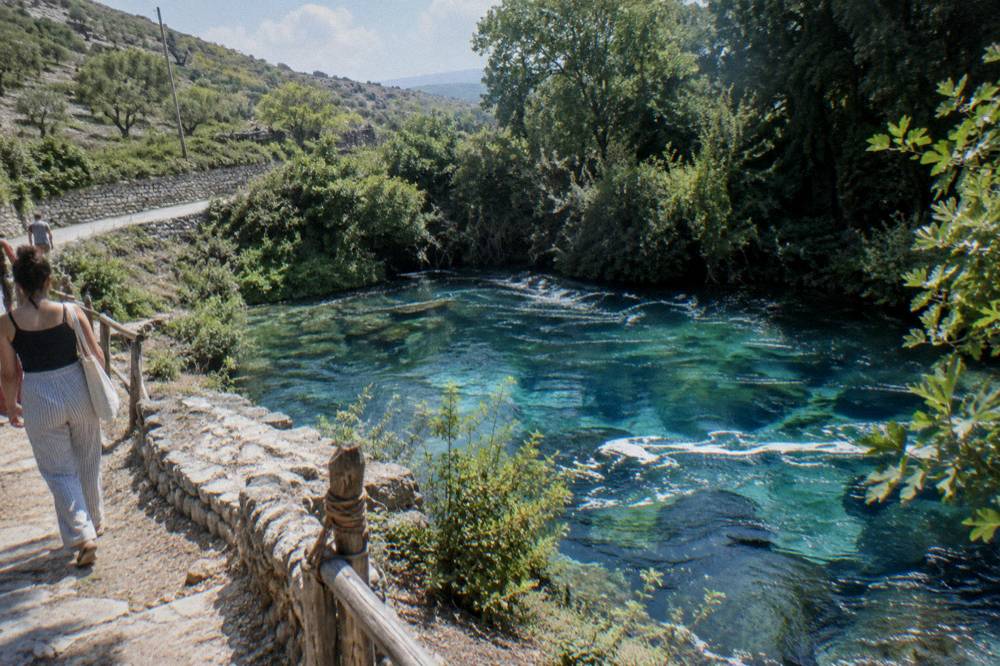
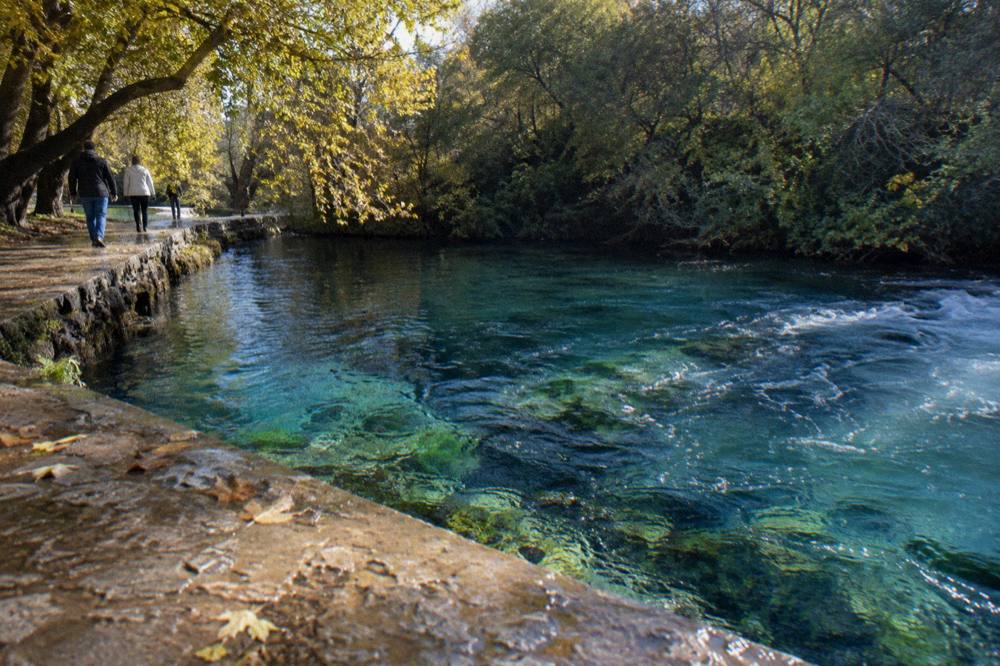
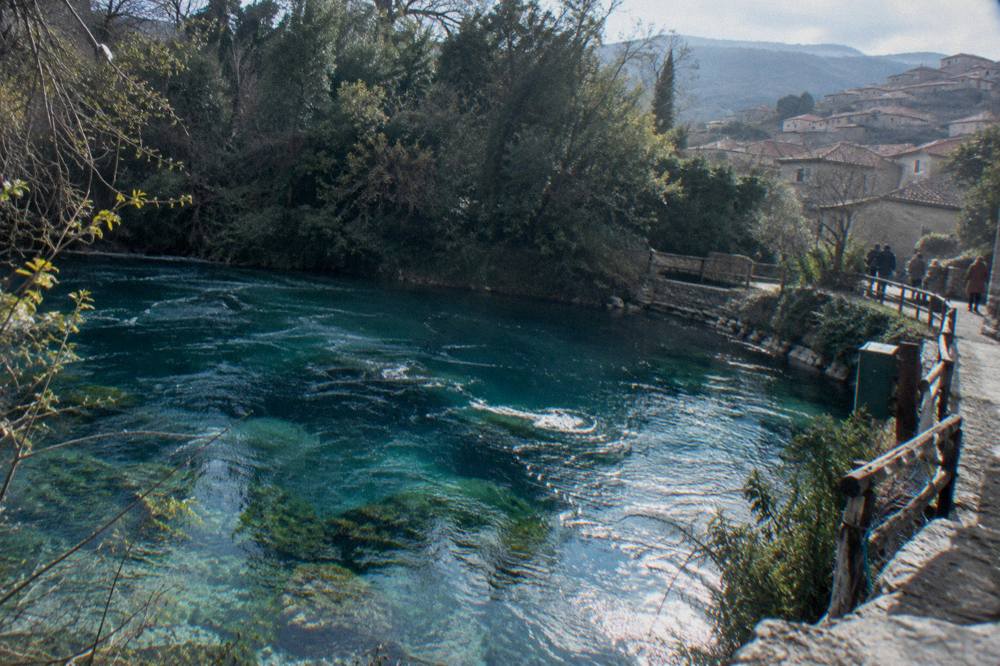
The Blue Eye (Syri i Kalter) is a karst freshwater spring in southern Albania, a pool of blue and turquoise water fed by a powerful upward flow of groundwater, protected as a natural park of about 293 hectares since January 2022. It sits roughly 18 to 22 km, or a 30 to 40 minute drive, inland from Saranda, and it is a natural monument noted on Albania's national tourism pages rather than a developed resort.
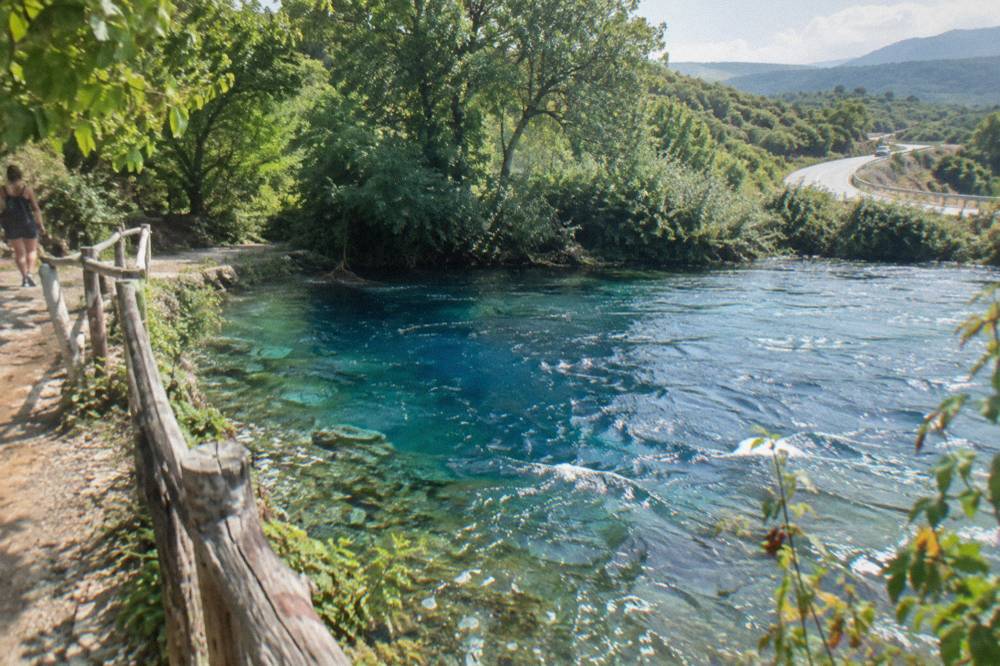
The name describes the look of the place from the viewing platforms above it: a dark centre where the water rises from depth, ringed by shifting bands of blue and turquoise where the spring water meets the daylight. The upward flow is strong enough that the surface continually boils and dimples, and local guides report that objects thrown into the centre are pushed back up rather than sinking. Visitors report that swimming is no longer permitted in the pool itself, in order to protect the site, so treat that as the current situation and confirm the rules on arrival. What remains is a short walk from the park entrance through dense greenery to the spring, with wooden platforms and a small bridge built around it.
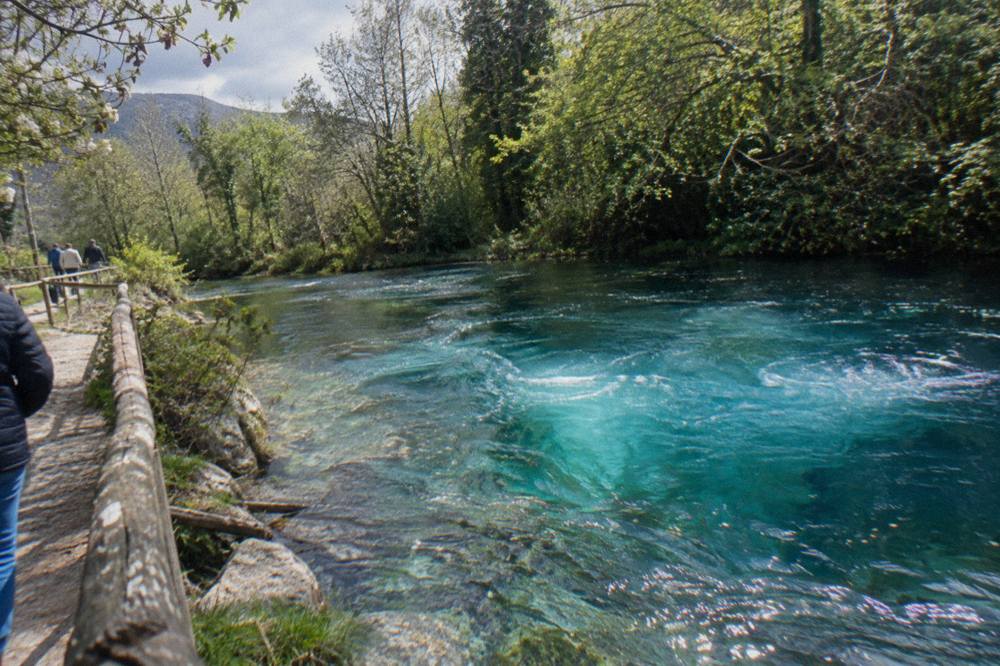
Two things catch first-time visitors out. First, the site is genuinely natural and forested, not a landscaped attraction: the path in runs through trees, and the whole visit is an outdoor one, so footwear and weather matter more than people expect. Second, the name collides with another famous Albanian "Blue Eye", the Blue Eye of Theth in the northern Alps, a glacial-fed pool in the Shala valley region that shares the nickname but sits at the opposite end of the country. If you read about a Blue Eye reached on a hiking trail from a mountain village, that is the northern one, and the two should never be confused when planning a route.
| Feature | The Blue Eye (Syri i Kalter, south) | Blue Eye of Theth (north) |
|---|---|---|
| Type of site | Karst freshwater spring | Mountain pool fed by snowmelt |
| Nearest base town | Saranda | Theth, in the Albanian Alps |
| Region | Southern Albania, inland from the coast | Northern Albania, high mountains |
| Protection | Natural park, about 293 ha, since January 2022, reported | Part of the Theth national park area |
| Typical visit | Short forest walk to viewing platforms | Reached on foot as part of a valley hike |
| Suited to | A southern overnight loop with Gjirokaster or the coast | A northern mountain trip, usually multi-day |
How Far Is The Blue Eye From Tirana?
The Blue Eye has no realistic short drive from Tirana: it sits behind Saranda, which is about 253 km and roughly 248 minutes by road from Skanderbeg Square, and then another 30 to 40 minutes inland from Saranda, so the total one-way journey is well over four and a half hours without stops. It is an overnight trip or a long, committed tour day, never a half-day excursion from the capital.
The honest arithmetic is what matters here. From Skanderbeg Square in central Tirana, the drive times are as follows:
| Southern destination | Distance from Tirana | Drive time from Tirana |
|---|---|---|
| Vlore | about 156 km | about 133 minutes |
| Gjirokaster | about 219 km | about 209 minutes |
| Saranda | about 253 km | about 248 minutes |
| Ksamil | about 263 km | about 266 minutes |
| Butrint | about 267 km | about 271 minutes |
From Saranda, the Blue Eye is 18 to 22 km and a 30 to 40 minute drive inland, per local guides, and that final stretch is a winding rural road rather than a motorway. Add the two together and the Blue Eye sits roughly four and a half to five hours of pure driving from Tirana in each direction.
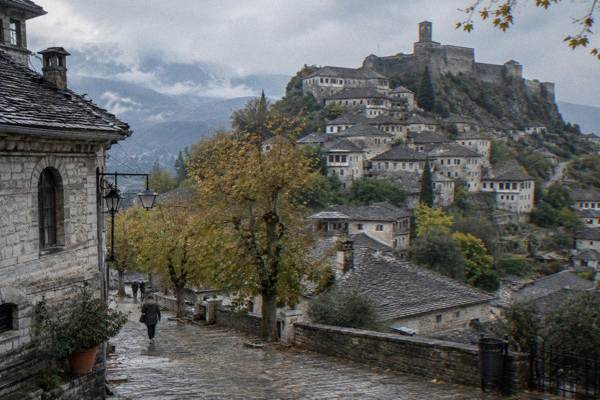
That distance is also the reason this site's own planning pages treat Gjirokaster, Saranda, Ksamil and Butrint as overnight or long-tour-day destinations. A loop that pairs the Blue Eye with the UNESCO-listed old town of Gjirokaster, roughly 209 minutes from Tirana on its own, is the classic southern itinerary, usually run over two or three days with a night in Gjirokaster or Saranda. The Albanian Riviera coast road, which you can read about in the things to do in Tirana overview of onward trips, adds scenery but also adds hours.
For travellers who would rather not drive the south alone, guided options exist. The featured long day tour below covers the northern namesake, the Theth valley and its Blue Eye, from Tirana, while the trio band shows a broader selection of bookable days out from the capital, including the Bunk'Art history tour and a food-focused walk.
Can You Visit The Blue Eye On A Day Trip From Tirana?
A single-day visit from Tirana is possible only as a long, committed tour day of roughly nine to ten hours of driving alone, and for independent travellers it is generally a poor plan: two border-free but mountainous legs each way, little time at the spring itself and no margin for error. An overnight in Saranda or Gjirokaster is the realistic and far more rewarding structure for reaching the Blue Eye from the capital.
The constraint is not the road quality, which is reported to be decent on the main SH4 corridor toward Gjirokaster, but simple duration. A day trip that leaves Tirana at 07:00, drives about four and a half hours to the spring, stops for an hour, drives on to Saranda for lunch, and returns, arrives back in Tirana late at night with the majority of the day spent inside a vehicle. Tour operators do sell long southern days that bundle Gjirokaster or the coast, and for visitors with only one free day and a strong desire to see the south, they work, but the experience is closer to a road expedition than a relaxed outing.
A two-day structure changes the trip completely. Day one carries the drive south, with a stop in Gjirokaster, whose castle entry is reported at about 400 lek, a figure to confirm on arrival, and a night in Saranda or Ksamil. Day two becomes a proper southern morning: the Blue Eye early, before the platforms fill, then the Butrint archaeological site, a UNESCO World Heritage property inscribed in 1992 and extended in 1999, whose entry fee should be confirmed at the park itself. The Butrint and Ksamil guides on this site cover both in detail.
| Plan | Nights away | Rough structure | Best for |
|---|---|---|---|
| Long tour day | 0 | Drive south, short stops, drive back same day | Visitors with one day only |
| Two-day southern loop | 1 | Tirana, Gjirokaster, night in Saranda, Blue Eye and Butrint | First-time visitors with a weekend |
| Three-day slow loop | 2 | Add Ksamil beach and the coast road each way | Travellers who dislike long drives |
| South then Riviera | 2 to 3 | Blue Eye, Saranda, then the coastal road north via Vlore | A full southern road trip |
How Do You Get To The Blue Eye From Saranda?
Saranda is the natural base. It is Albania's main southern coastal town, a ferry port with seasonal connections to Corfu that this site's planning pages treat cautiously, since operator timetables change and none are fixed. Reaching Saranda from Tirana in the first place is usually done by intercity bus from Tirana's South and North Bus Terminal, which sits about 3.9 km north-west of Skanderbeg Square and publishes departure timetables on the municipal site, though fares are paid to the driver in cash. Reported estimates put intercity fares at a few hundred lek for nearby towns, but the Tirana to Saranda fare is not published on an official page, so confirm at the terminal. The full index of guides sits on Tirana Albania Travel Guide.
Once in Saranda, the final leg is short but rural. The road inland climbs through villages and olive groves, and the spring's entrance area has a walk of several minutes through the forest to the pool. Visitors report that the site can get busy in the middle of the day in high summer, so an early start from Saranda is the common advice.
For comparison, if a long drive south does not appeal, there are dramatic water and mountain sights much closer to the capital. Lake Bovilla, about 61 minutes and 21 km by road from Skanderbeg Square, offers a turquoise reservoir ringed by cliffs, and the Gamti Mountain hike above it is one of the best half-day escapes from the city. The tour below bundles both.
What Does It Cost To Visit The Blue Eye?
Reports have circulated of a small cash entrance charge at the park gate, but nothing confirmed is published, so the working plan is a modest cash amount in lek and a confirmation at the gate. What is certain is the structure of the costs: transport to Saranda, the inland leg, and food, with Albania's currency being the lek, roughly 90 to the euro, and the euro not being legal tender.
This is a page where honesty beats invented precision. Albania's tourism materials describe the Blue Eye as a natural monument inside a protected area, and its management arrangements have changed since the 2022 protection order. Travellers should carry lek cash, since rural gates in Albania operate on cash, and should expect, rather than be surprised by, a small charge. The wider budget structure looks like this:
| Cost item | Situation | Advice |
|---|---|---|
| Blue Eye entry | Not published in a verifiable form | Carry cash, confirm at the gate |
| Tirana to Saranda bus | Fares not on official pages | Pay the driver in cash, confirm at the terminal |
| Saranda to Blue Eye taxi | Agree the fare first | Agree the price, including waiting time, before setting off |
| Car hire | Desks at Tirana airport and in the city | Check insurance and deposit terms before booking |
| Gjirokaster castle | Reported about 400 lek, low confidence | Treat as a few hundred lek, confirm on site |
| Butrint entry | Not found on official pages | Confirm at the park |
Money matters in Albania follow one rule: the lek is the currency, the official Bank of Albania rate on 23 October 2026 was 1 euro to 90.74 lek, and cards work in city hotels and larger restaurants but cash rules rural gates, taxis and small cafes. Read the site's guide to the Albanian lek for the full picture.
When Is The Best Time Of Year To Visit The Blue Eye?
The best months for the Blue Eye are late spring through early autumn, May to September, when the spring's blue colour shows at its best under strong light and southern Albania's mountain roads are clear; July and August bring the biggest crowds at midday, while the ERA5 reanalysis for the region shows Tirana's July mean high at 29.8 C and August at 30.4 C, and winter months add rain and a risk of reduced access.
Climate context from the ERA5 reanalysis, 1991-2020, for the Tirana grid cell, which sits in the same seasonal regime as the south, runs hot, dry summers against mild, wet winters. The monthly picture for the capital looks like this:
| Month | Mean high C | Mean low C | Rain mm |
|---|---|---|---|
| Jan | 10.8 | 2.3 | 106 |
| Mar | 15.0 | 5.1 | 117 |
| May | 22.7 | 12.5 | 89 |
| Jul | 29.8 | 19.1 | 34 |
| Aug | 30.4 | 19.5 | 31 |
| Sep | 25.7 | 16.0 | 99 |
| Nov | 16.5 | 8.0 | 139 |
Rainfall totals are lowest in August at 31 mm and peak in November at 139 mm. September is a strong compromise month: the sea is still warm, the summer rush has eased, and the mean high of 25.7 C is comfortable for both the coast and inland springs. October, at a mean high of 21.4 C, also works, but the chance of a wet day rises. From November through March the southern loop is still possible, yet the forest walk loses its charm in steady rain and daylight hours shrink, which matters on a route this long.
What Else To Combine With The Blue Eye In Southern Albania?
The classic pairing is Gjirokaster before the Blue Eye and Butrint or Ksamil after it: Gjirokaster's UNESCO old town lies about 209 minutes from Tirana on the same southern corridor, Saranda and Ksamil sit on the coast beyond the spring, and Butrint's ruined city completes a two-day loop that covers the three headline sights of the south in one route.
Gjirokaster is the natural first night. Its Ottoman-era stone houses and castle make it one of the two UNESCO-listed historic centres in Albania, inscribed in 2005 with Berat added in 2008, and it breaks the long drive south almost exactly in half. From there the road descends to the coast at Saranda, and the Blue Eye becomes a half-day excursion inland rather than an expedition. Travellers with a third day can add the Riviera coast road back north through Vlore, reported to take roughly four to five hours without stops on the Dhermi and Himara stretch, an unforgettable drive that deserves its own unhurried schedule.
The northern alternative deserves a fair hearing too. If your trip is based in Tirana and the southern journey feels like too much calendar, the Albanian Alps offer the other Blue Eye, the mountain pool of Theth, as part of a northern landscape of peaks, valleys and stone villages. Theth sits about 250 minutes and 172 km by road from the capital, deep in the Accursed Mountains, and the valley hike between Theth and Valbona is reported at 14 to 18 km taking six to nine hours, for those with the legs for it. The featured tour below runs the Theth and Blue Eye day trip from Tirana and is this site's pick for the northern option.
A note on naming one more time, because booking errors happen: the tour above goes to the Blue Eye of Theth in the north, not to Syri i Kalter near Saranda. Both are spectacular, and they are different places at opposite ends of the country. Check the itinerary text of anything you book against the destination, and if you mean the southern spring, your base is Saranda or Gjirokaster.
Common Questions About The Blue Eye Spring
How far is the Blue Eye from Tirana?
Roughly 253 km to Saranda at about 248 minutes by road, then another 18 to 22 km and 30 to 40 minutes inland to the spring, so over four and a half hours each way in total.
Can you swim in the Blue Eye Albania?
Visitors report that swimming in the pool is no longer permitted in order to protect the spring. Confirm the current rules at the entrance.
Is the Blue Eye a day trip from Tirana?
Only as a very long tour day dominated by driving. An overnight in Saranda or Gjirokaster is the realistic structure for independent travellers.
What is the difference between the Blue Eye and the Blue Eye of Theth?
They are different sights sharing a nickname: Syri i Kalter is a karst spring near Saranda in the south, while the Blue Eye of Theth is a mountain pool in the northern Alps reached on foot from Theth village.
Do you have to pay to enter the Blue Eye?
No official fee is published. Carry cash in lek and confirm at the gate.
When should you visit the Blue Eye?
May to September for clear water and open roads, early in the day to avoid the midday crowds of July and August, with September a strong compromise.
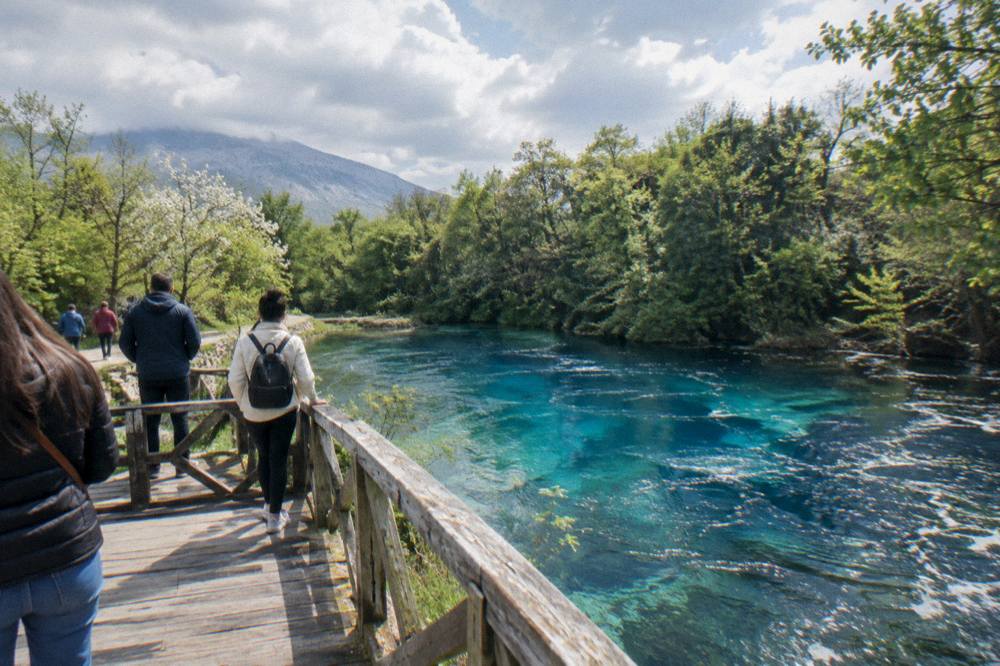
The Blue Eye rewards travellers who plan around the truth of the map. Give the south two days, base yourself in Saranda or Gjirokaster, arrive at the spring early, and the most vivid water in Albania will be the centrepiece of the trip rather than a blur at the end of a long drive.