Butrint: The Ancient Site Beyond Saranda
Butrint is Albania's best-known ancient site, a UNESCO World Heritage park of Greek, Roman, Byzantine and Venetian ruins in the far south of the country, about 267 km and 271 minutes by road from Skanderbeg Square in Tirana.
Short answer
Butrint is about 267 km and about 271 minutes by road from Tirana, in the far south of Albania near Saranda and Ksamil. It is a UNESCO World Heritage site inscribed in 1992 and extended in 1999. It is an overnight or long-tour-day trip from Tirana, never a half day.
Butrint sits in the far south of Albania, about 267 km and about 271 minutes by road from Skanderbeg Square in Tirana, the inland capital at the foot of Mount Dajti. That distance shapes everything about visiting it. The site itself is a UNESCO World Heritage park, inscribed in 1992 with boundaries extended in 1999, holding layered ruins from Greek, Roman, Byzantine and Venetian periods inside woodland between a lagoon and the strait opposite Corfu. This guide sets out what is in the park, how the journey from Tirana actually works, and how to plan the trip honestly around the time it takes.
What Is Butrint And Why Is It Famous?
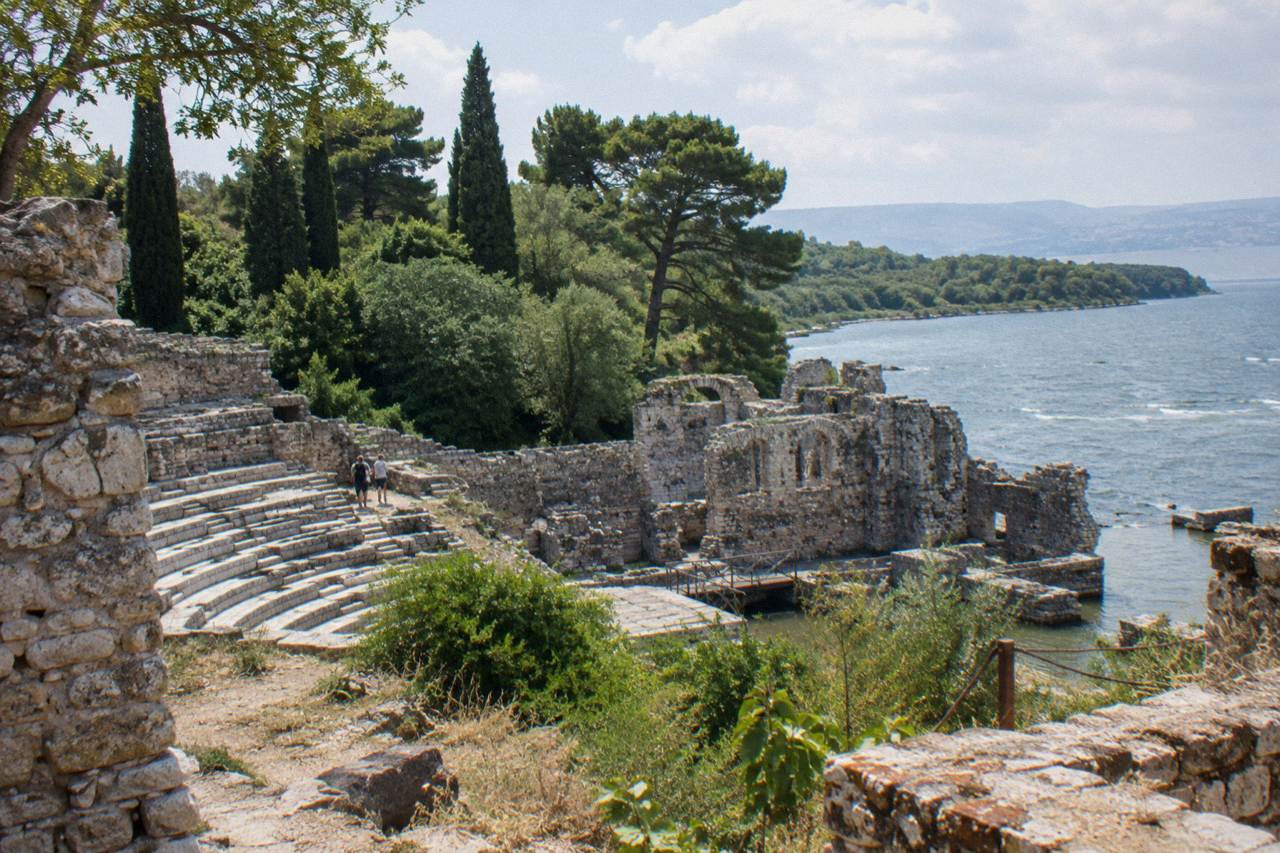
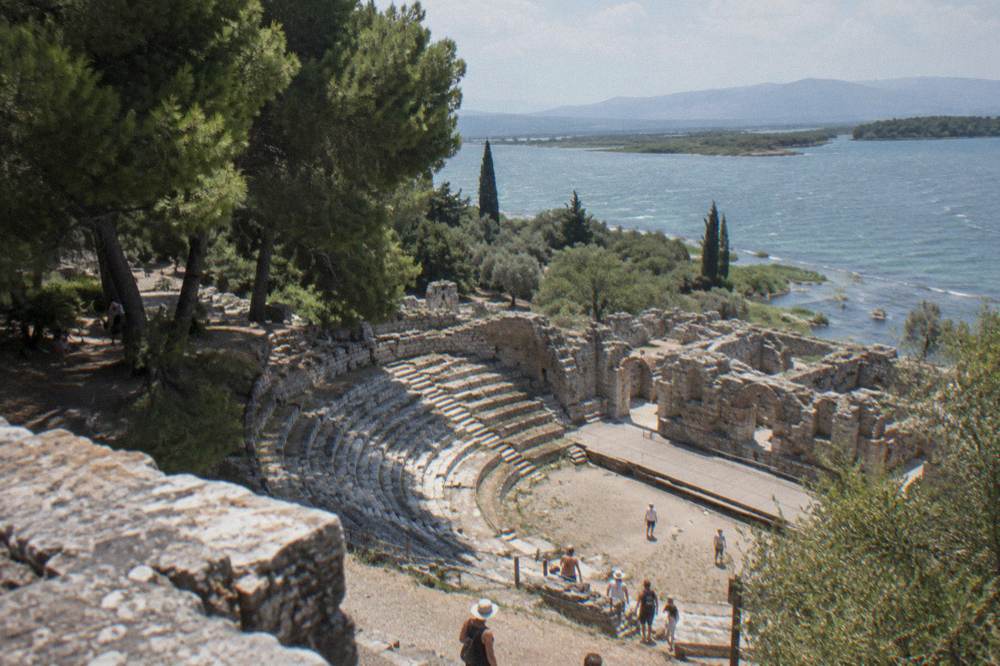
Butrint is an ancient city and national park on a wooded hill between Lake Butrint and the Vivari channel in southern Albania, about 267 km by road from Tirana, and it is one of Albania's four UNESCO World Heritage properties. UNESCO inscribed it in 1992 and extended its boundaries in 1999. The site holds a Greek theatre, a Roman forum and baths, a large late-antique baptistery, city walls and a Venetian fortress, all inside forested parkland.
The site's fame rests on its layering. A settlement that began in Greek antiquity was fortified in late antiquity, fought over in the medieval period and finally abandoned as malaria spread through the marshes, which left the ruins undeveloped and intact. UNESCO's listing recognises both the archaeology and the natural setting: the park covers the wooded peninsula, the wetlands around it and part of the lake shore.
Butrint is not near Tirana, and that matters for every plan. It sits just south of Saranda, close to the border with Greece, roughly 4.5 hours of driving each way from the capital. That places it firmly in overnight or long-tour-day territory, alongside Ksamil and Gjirokaster, and no itinerary should present it otherwise. For visitors building a wider route around the country, the site pairs naturally with the Albanian Riviera and the UNESCO-listed town of Gjirokaster.
A practical note on money: Albania is not in the EU and the currency is the Albanian lek, roughly 90 lek to the euro. Cards are widely taken in central Tirana, but cash in lek is what small businesses in the south expect. The entry fee for Butrint is not confirmed in advance, so check the current price at the gate before travelling.
How Far Is Butrint From Tirana And Can You Day Trip It?
Butrint is about 267 km and about 271 minutes by road from Skanderbeg Square in Tirana, one way and without stops. That is roughly 4.5 hours each way, so a day trip from Tirana means about nine hours of driving before any time inside the park. It can be done as a long tour day, and organised tours exist for exactly that reason, but it is more realistically an overnight trip based in Saranda or Ksamil.
The route runs south through the country, past Vlore and along or around the Riviera, or inland via Gjirokaster, before reaching Saranda and the final short stretch to the park. Compare that with the nearer day trips from Tirana: Durres about 39 minutes, Kruja about 45 minutes, Elbasan about 42 minutes and Berat about 122 minutes. Butrint belongs to a different category entirely, with only Ksamil at about 266 minutes and Saranda itself at about 248 minutes in the same range.
| Destination from Tirana | Distance by road | Drive time (one way, free-flow) |
|---|---|---|
| Durres | 37 km | about 39 minutes |
| Kruja | 37 km | about 45 minutes |
| Berat | 125 km | about 122 minutes |
| Gjirokaster | 219 km | about 209 minutes |
| Saranda | 253 km | about 248 minutes |
| Ksamil | 263 km | about 266 minutes |
| Butrint | 267 km | about 271 minutes |
Honest framing helps here. A visitor with two or three days can reach the south comfortably, break the journey at Gjirokaster or on the Riviera, and give Butrint a full morning. A visitor with one day in the country is better served by a closer destination such as Berat or Kruja, both reachable in well under two hours. The question of Tirana versus the coast comes up often, and the comparison of Tirana and Saranda covers it directly.
For travellers who want the south without the self-drive, organised long-day tours from Tirana handle the distance in one booking. A trio of options covering ancient sites, the capital and the outdoors:
What Do You Actually See Inside Butrint?
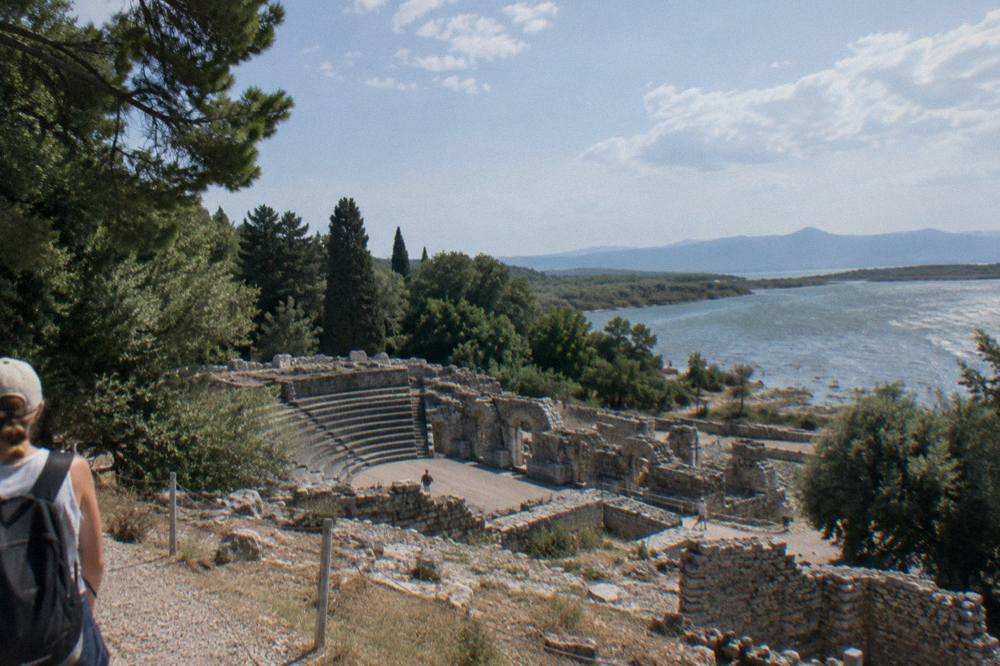
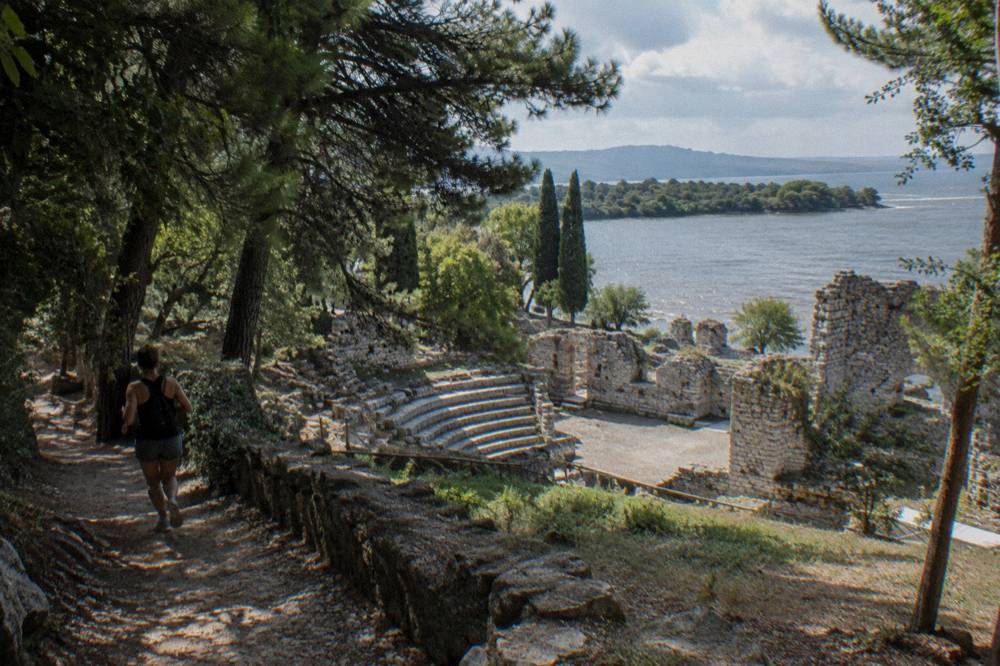
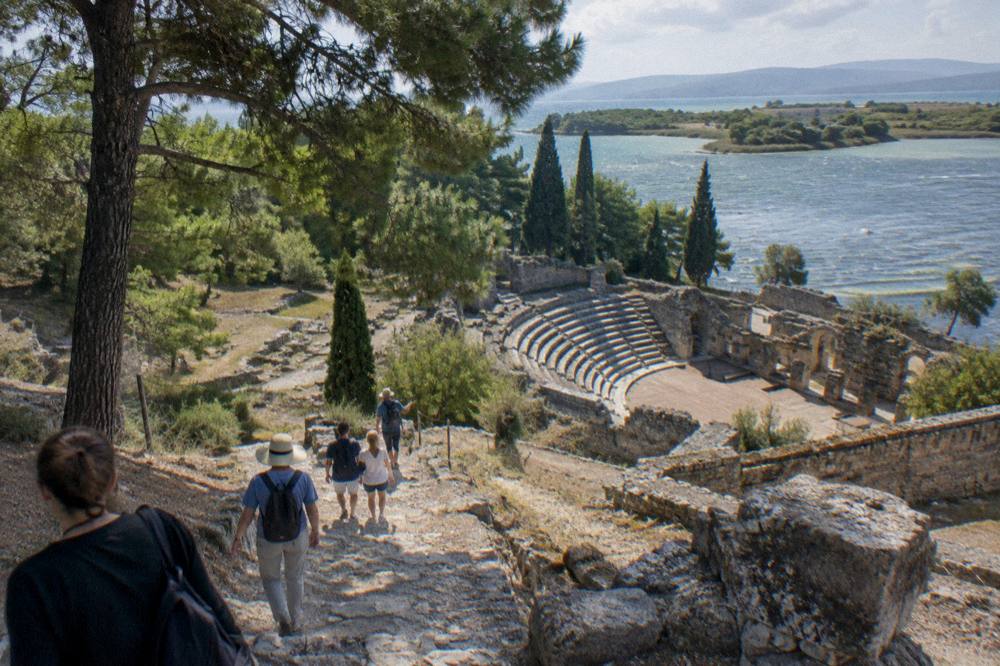
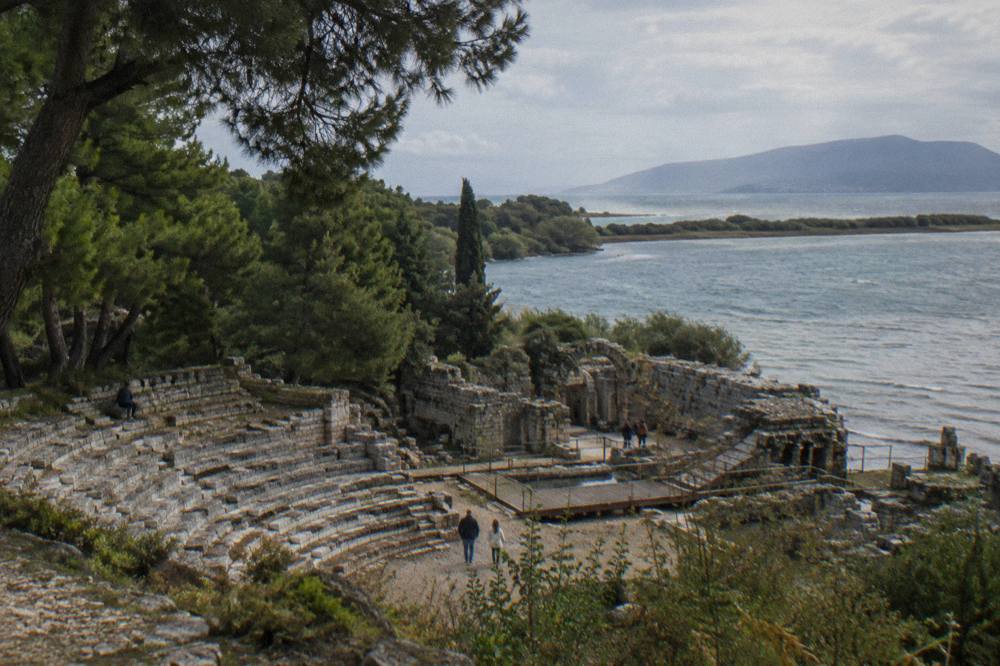
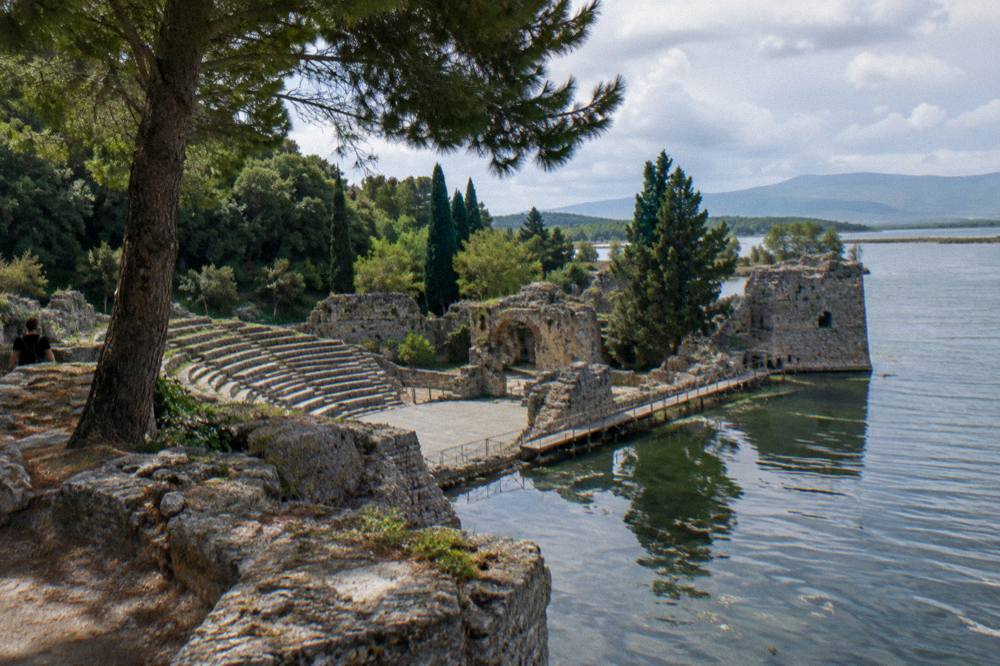
The core of a Butrint visit is the Greek theatre cut into the hillside, the Roman forum and bathhouse, the late-antique baptistery with its decorated floor, the long circuit of city walls, the sanctuary of Asclepius and the Venetian fortress at the top of the site. The ruins sit inside woodland, and the walk between them follows park paths with views over the lagoon and the Vivari channel toward Corfu.
The theatre is the landmark. Its stone seats rise against the hill, and it dates from the Greek period of the city, when Butrint, ancient Buthrotum, was a settlement tied to the island of Corfu. The Roman additions reshaped the lower city: a forum, baths and a paved street. The baptistery belongs to the late-antique phase, a round building with a mosaic floor, and the fortress at the summit marks the Venetian and later Ottoman periods of a town that had contracted to a garrison.
The setting is as much the attraction as the stones. The park is wooded, the ruins stand among tall trees, and the channel that links the lake to the sea runs past the walls. Birdlife on the lagoon is part of the protected landscape. Visitors should allow several hours on site rather than treating it as a quick stop, and wear shoes suited to uneven paths.
Opening details should be confirmed at the gate or with a tour operator before travelling.
| Structure inside Butrint | Period | What to look for |
|---|---|---|
| Theatre | Greek antiquity | Stone seating cut into the hillside |
| Sanctuary of Asclepius | Greek antiquity | Ruins of the healing sanctuary |
| Forum and baths | Roman | Paved civic space and bathhouse walls |
| Baptistery | Late antique | Round building with mosaic floor |
| City walls | Multiple phases | Long circuit with lake and channel views |
| Venetian fortress | Medieval to Venetian | Summit fortification over the strait |
How Do You Get To Butrint From Tirana Without A Car?
The realistic car-free route from Tirana to Butrint is a long-distance bus from the South and North Bus Terminal to Saranda, then a local connection south to the park, or an organised tour that covers the whole journey in one booking. Tirana has no train to the south: no passenger trains run anywhere in Albania at present, and the Tirana-Durres line is being rebuilt with electrification expected by the end of 2027.
The South and North Bus Terminal sits about 4.0 km north-west of Skanderbeg Square, reachable by city bus or taxi, and publishes departure timetables for Saranda among dozens of daily intercity lines. Fares are not printed on official pages, so pay the driver in cash, a few hundred lek for nearby towns and more for the long run south. The journey covers about 253 km to Saranda, and from Saranda the remaining stretch to Butrint is a short local hop by taxi or seasonal bus; confirm the local connection when you arrive, as schedules are not published centrally.
Two warnings from the 2026 picture. First, anyone suggesting a train is wrong: there is no airport train and no running Tirana-Durres train, let alone a southern line. Second, the airport at Vlore is not an arrival option; it has no scheduled passenger flights. Tirana International Airport Nene Tereza at Rinas remains the single entry point by air, with an official airport bus to the centre running 24/7, every full hour, for 400 lek.
Organised tours cut through all of this. The related tour on this page pairs the ancient Durres amphitheatre and the Adriatic beach in one day from Tirana, a Roman-site fix far closer to home, and it can be checked here: Durres Amphitheatre and Beach.
Where Should You Stay To Visit Butrint?
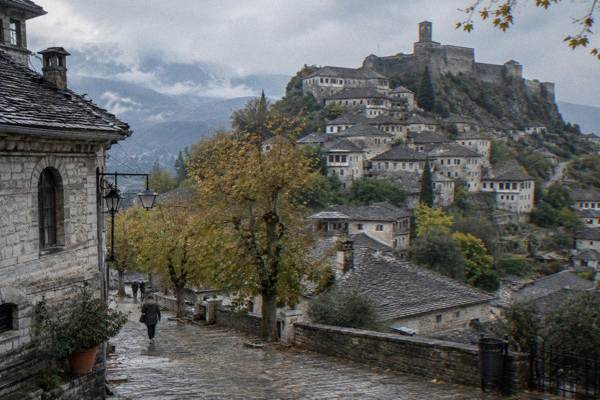
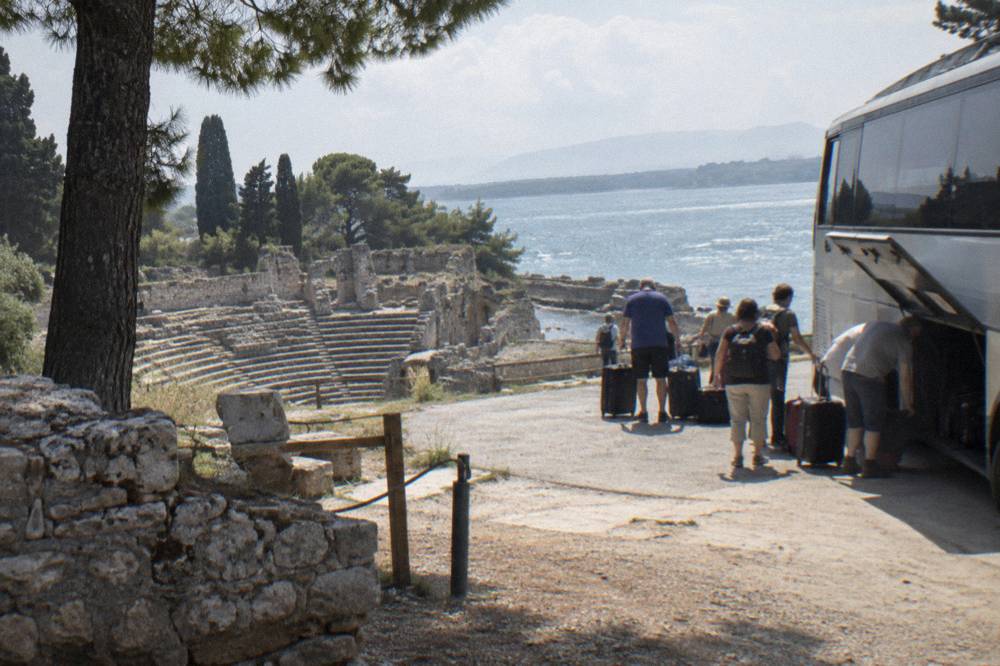
Saranda and Ksamil are the practical bases for Butrint, sitting about 248 and 266 minutes by road from Tirana respectively, with the park a short drive further south. Saranda is the transport hub of the southern coast, with buses from Tirana arriving through the day, and Ksamil is the beach town beside the islands and coves that face Corfu. Gjirokaster, about 209 minutes from Tirana, works as an inland base for combining the UNESCO town with the coast.
Saranda has the widest choice and the ferry link conceptually pointing toward Corfu, though no operator details for that crossing are published in a form this desk can carry, so confirm locally. Ksamil trades convenience for beaches: it is the closest resort strip to Butrint, and in summer it is the busiest. Gjirokaster adds depth to a southern loop, pairing a stone old town listed by UNESCO since 2005 with a castle that charges about 400 lek, per local reports, a figure to confirm on arrival.
A sensible two-day shape looks like this: leave Tirana early, break the journey at Gjirokaster or the Riviera, reach Saranda or Ksamil by evening, then give Butrint the following morning before the drive back or onward to Vlore. Attempting the round trip inside a single day is possible only as a very long tour day, and the drive times above are estimates rather than a fixed timetable.
Accommodation prices in Albania vary sharply between July and the shoulder months, and the booking platforms carry the live figures.
What Is The Best Time Of Year To Visit Butrint?
The best months to visit Butrint are late spring and early autumn, when southern Albania is warm but the peak summer crowds on the coast have thinned. ERA5 reanalysis for Tirana, 1991-2020, shows July at a mean high of 29.8 C and August 30.4 C with only about 34 and 31 mm of rain, while November carries the heaviest rainfall of the year at 139 mm. The south runs warmer than the capital.
Summer is the season of the Riviera, and Butrint sits at the end of it. The park is wooded, which shades the paths, but the drive south in July and August coincides with the heaviest coastal traffic of the year and the fullest accommodation prices. Spring and September balance the weather against the crowds. Winter is quiet and green, and rain rises through the season: December brings about 138 mm in the capital's normals, and the south is not dry either.
| Month (Tirana normals, ERA5 1991-2020) | Mean high | Rain |
|---|---|---|
| April | 18.4 C | 105 mm |
| May | 22.7 C | 89 mm |
| June | 26.9 C | 51 mm |
| July | 29.8 C | 34 mm |
| August | 30.4 C | 31 mm |
| September | 25.7 C | 99 mm |
| October | 21.4 C | 119 mm |
The figures above are modelled normals for the Tirana grid cell, not a station record, and the coast runs a degree or two warmer in summer. Use them to choose between seasons, not to pack to the decimal.
Can You Combine Butrint With Ksamil, Saranda Or The Blue Eye?
Yes, and that is the standard way to justify the distance. Butrint, Ksamil and Saranda sit within a short drive of each other at the southern tip of Albania, and the Blue Eye spring lies inland roughly 30 to 40 minutes from Saranda by road, per local guides. The natural plan is two or three days: Saranda or Ksamil as a base, one morning at Butrint, beach time at Ksamil, and the Blue Eye or Gjirokaster on the inland leg back toward Tirana.
Ksamil's draw is the water: small islands, shallow coves and beach clubs facing Corfu. Saranda is the working town of the coast, with the promenade, the ferries conceptually linking to Corfu, and the transport links inland. The Blue Eye, Syri i Kalter, is a protected natural park, reported as covering 293 hectares since January 2022, a deep blue spring pool in woodland; its entry fee is not printed in any form this desk can carry, so bring cash and check at the entrance. Gjirokaster completes the loop as the inland UNESCO stop.
| Southern combination | What it adds | Practical note |
|---|---|---|
| Ksamil | Beaches and islands facing Corfu | Busiest in July and August |
| Saranda | Coastal hub, promenade, onward links | Main bus gateway from Tirana |
| Blue Eye | Woodland spring pool, inland from Saranda | Reported 30 to 40 minutes from Saranda; confirm locally |
| Gjirokaster | UNESCO stone old town and castle | About 209 minutes from Tirana by road |
| Vlore | City on the route south | About 133 minutes from Tirana by road |
For the full southbound picture, the guide to the route from Tirana to Saranda covers the drive, and the pages on Ksamil and the Blue Eye cover the two coastal add-ons in detail.
Is Butrint Suitable For Families And Casual Visitors?
Butrint works well for families and casual visitors who enjoy walking outdoors, because the park is shaded, compact enough for a half-day inside the gates, and more atmospheric than technical: paths connect the theatre, forum and baptistery through woodland, with the fortress climb as the steepest section. The barriers are the journey and the season, not the site: a child who can walk a couple of hours on uneven ground will manage it, and summer heat and the long drive are the real constraints.
Bring water and sun hats from late spring to early autumn, and shoes with grip: the paths are natural ground and stone, not paved walkways, and the site makes no claims this desk can repeat about step-free access or ramps. Confirm any access detail with the park directly before travelling. The woodland keeps the middle of the day bearable compared with open sites, and the lagoon views give the walk a rhythm that keeps children moving between ruins.
The family logic of the trip usually decides the base. Ksamil lets a Butrint morning sit beside a beach afternoon, which is the easiest sell to younger travellers. Saranda gives more food choice and transport flexibility. Families short on time should weigh the whole equation again: with about 271 minutes of driving each way from Tirana, the site is a commitment, and a nearer day trip such as Durres with its Roman amphitheatre and beach delivers a lighter version of the same combination far closer to the capital.
How Does Butrint Compare With Albania's Other Ancient Sites?
Butrint is the deepest and best-known ancient site in Albania and the only one carrying its own UNESCO inscription, while Apollonia and Durres are the comparable ruins within reach of a shorter day trip from Tirana: Apollonia about 112 minutes and 121 km by road, Durres about 39 minutes and 37 km. Butrint's Greek, Roman, Byzantine and Venetian layering is unmatched by either, but the distance is the trade-off, and no ranking of them as best belongs on this page.
Albania's UNESCO list holds four properties: Butrint, the Historic Centres of Berat and Gjirokastra, the Ohrid region and the primeval beech forests. Apollonia, for all its atmosphere, is not on it, and neither is Durres. That inscription is what pulls international visitors to the far south, and it is why the long drive is worth making at least once.
| Ancient site | Reach from Tirana | Listing | Character |
|---|---|---|---|
| Butrint | about 271 minutes, 267 km | UNESCO 1992, extended 1999 | Layered city in woodland by a lagoon |
| Apollonia | about 112 minutes, 121 km | not inscribed | Hillside ruins and monastery |
| Durres amphitheatre | about 39 minutes, 37 km | not inscribed | Roman amphitheatre in the port city |
| Berat old town | about 122 minutes, 125 km | UNESCO 2008 | Ottoman houses, castle and churches |
The fees follow the same pattern of caution. The Durres Archaeological Museum runs about 800 lek and the amphitheatre about 300 lek, per local reports, a few hundred lek in round terms, and Gjirokaster castle about 400 lek. For Butrint, Apollonia and Kruja Castle, no fee appears on an official page, so confirm at the gate in each case. The Apollonia day-trip guide covers that site's own details.
What Should You Know Before Booking A Butrint Tour?
Before booking any Butrint tour from Tirana, check three things: whether the itinerary is a single very long day or includes an overnight, what the listed duration actually covers given about nine hours of round-trip driving, and what the price includes at the park gate, since entry arrangements vary by operator. Free cancellation matters on a long-distance booking, and the operator's live listing carries the current terms.
Tours from Tirana to the far south come in two shapes. The long-day version collects before dawn, drives south, gives the park a fixed window, and returns late. The overnight version builds in Saranda or Ksamil and usually adds the Blue Eye or Gjirokaster. Neither is wrong, but they are different products, and the duration shown before booking, which this desk never types into prose, is the number to read carefully against the drive times printed above.
Booking platforms run their own cancellation terms, and the standard free-cancellation window is generous on this route. That matters for a trip dependent on weather and on the state of the roads in the far south. Payment at booking versus pay-later is a listing-level detail; the live listing shows it.
For travellers who want ancient history without the commitment of the far south, the Durres amphitheatre and beach tour is the related pick on this page, and the quad-biking option below suits visitors who prefer the outdoors closer to the capital:
What Else Should You Plan Around A Trip To Butrint?
Plan around three practical realities: the journey is roughly 4.5 hours each way by road from Tirana, the whole southern tip of Albania runs on cash in lek more than the capital does, and the border with Greece sits immediately south of the site across the strait from Corfu, so passports should travel with you. Entry rules for Albania itself are separate from the EU: 90 days in any 180 for visa-free nationals, counted independently of Schengen.
The cash point deserves emphasis. Cards work in central Tirana hotels, larger restaurants and supermarkets, but buses, markets and small cafes run on lek, and the south is further from card coverage than the capital. The lek trades at roughly 90 to the euro; the euro is not legal tender in Albania, though some tourist businesses take it informally at their own rate. Change money in the capital before travelling south.
Border logic matters at both ends. Corfu lies across the water from Saranda, and day trips between them exist in season, but ferry details are not carried on this site, so check with operators locally. To the north, the loop back through Gjirokaster and the Riviera is the scenic return; to the east, Ohrid town is across the border in North Macedonia, a separate trip described in the Ohrid guide.
Emergency numbers for Albania are Police 112, Ambulance 127 and Fire 128. The FCDO currently notes demonstrations in central Tirana since 13 October 2026, some violent, with advice updated on 15 October; avoid gatherings and check local media, a caution that applies to the capital rather than the far south but shapes arrival plans through Tirana.
For the wider picture of the capital before or after the long drive south, the Tirana Albania Travel Guide covers the city itself, and the round-up of things to do in Tirana is the full index.
Common Questions About Butrint
How far is Butrint from Tirana?
Butrint is about 267 km and about 271 minutes by road from Skanderbeg Square in Tirana, one way and without stops. That is roughly 4.5 hours each way, which makes it an overnight trip or a very long organised tour day, never a half-day excursion.
Is Butrint a UNESCO site?
Yes. UNESCO inscribed Butrint in 1992 and extended its boundaries in 1999. It is one of Albania's four World Heritage properties, alongside the Historic Centres of Berat and Gjirokastra, the Ohrid region and the primeval beech forests.
What is the entry fee for Butrint?
No entry fee for Butrint appears on an official page available to this desk. Check the current price at the gate before travelling, or confirm with a tour operator what the booking covers at the park entrance.
Can you visit Butrint and Ksamil on the same day?
Yes, when staying in the south. Butrint and Ksamil sit within a short drive of each other at the southern tip of Albania, and the standard plan gives Butrint a morning and Ksamil's beaches the afternoon. Doing both as a day trip from Tirana is not realistic.
Is there a train from Tirana to Butrint?
No. No passenger trains run anywhere in Albania at present. The Tirana-Durres line is being rebuilt with electrification expected by the end of 2027, and no rail link exists toward the south. Buses from the South and North Bus Terminal and organised tours are the real options.
How long should you spend inside Butrint?
Several hours on site is the right scale: the theatre, forum, baptistery, walls and fortress are connected by woodland paths, and rushing them wastes the journey. Give the park a full morning, and add the lagoon viewpoints before leaving.
The distance is the whole story of Butrint from Tirana, and every honest plan starts there. Build the south into two or three days, base in Saranda or Ksamil, and the ancient city rewards the journey with the deepest archaeological layering in the country.