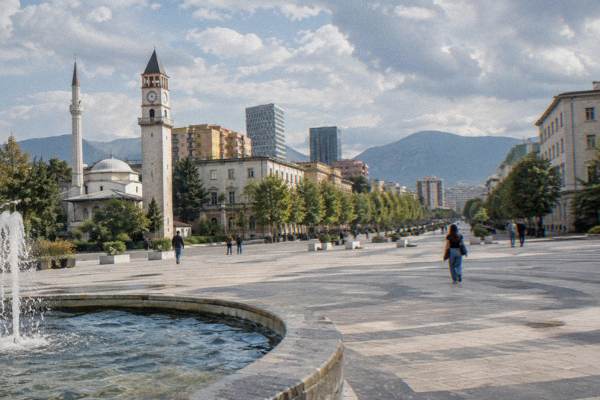
Albanian Lek: Cash, Cards And ATMs In Tirana
The Albanian lek is the only legal currency in Tirana, and knowing when you need cash and when a card works decides how smoothly a visit runs.
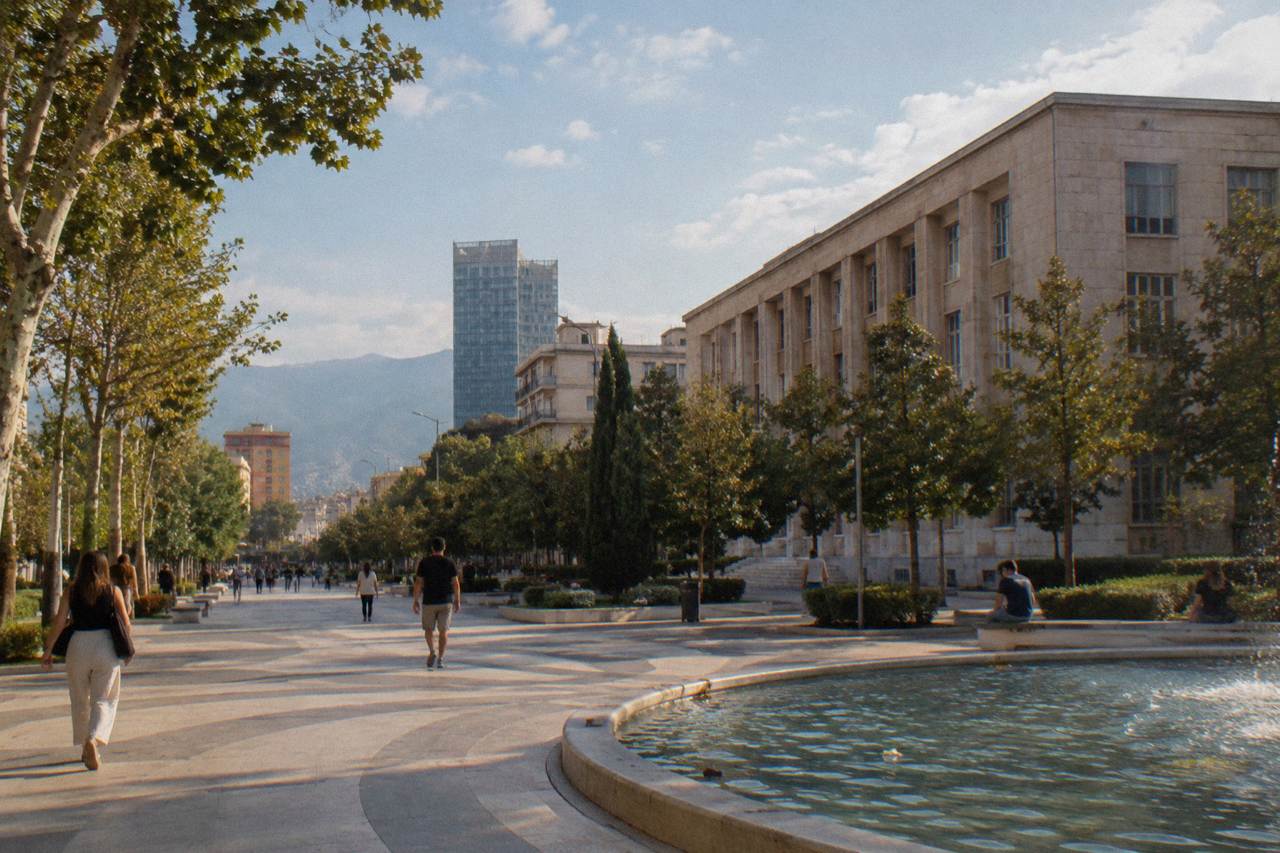
Short answer
Tirana runs on the Albanian lek (ALL), roughly 90 lek to the euro. Cards are reported to work in hotels, larger restaurants and supermarkets, while city buses, markets and small cafes still need cash.
The Albanian lek, abbreviated ALL and shown locally with the letter L before the amount, is the only legal currency in Albania and the money you will actually use in Tirana, the country's inland capital at the foot of Mount Dajti. The euro circulates in guidebook rumours but not in law: the Bank of Albania issues the lek, sets the official rate and is the authority on both. Getting the cash-versus-card balance right in Tirana matters more than in many European capitals, because the city bus, the airport bus, market stalls and plenty of small cafes still run on notes and coins.
What Is The Albanian Lek?
The Albanian lek (ALL) is the official currency of Albania and the only legal tender in Tirana, issued by the Bank of Albania, the country's central bank. It is not the euro, and Albania is not in the euro zone, the EU or the Schengen area, so no euro-denominated coins or notes have legal status there. Amounts are written with the letter L or the code ALL, and prices across the capital, from bus fares to museum doors, are quoted in lek.
The currency is named after Skanderbeg, the national hero whose equestrian statue stands at the centre of Skanderbeg Square: Alexander is Skender in Albanian, and the lek takes its name from that shortened form. The Bank of Albania, headquartered in Tirana, controls issue and publishes the official exchange rate every working day.
For context on scale, the Bank of Albania's official rate on 23 October 2026 put one euro at 90.74 lek, one US dollar at 81.03 lek and one pound at 108.39 lek. In everyday prose that means roughly 90 lek to the euro, a useful anchor for quick mental arithmetic anywhere in the city. For everything a first visit involves beyond money, the site's main overview at Tirana Albania Travel Guide collects the capital's sights, day trips and practical pages in one place.
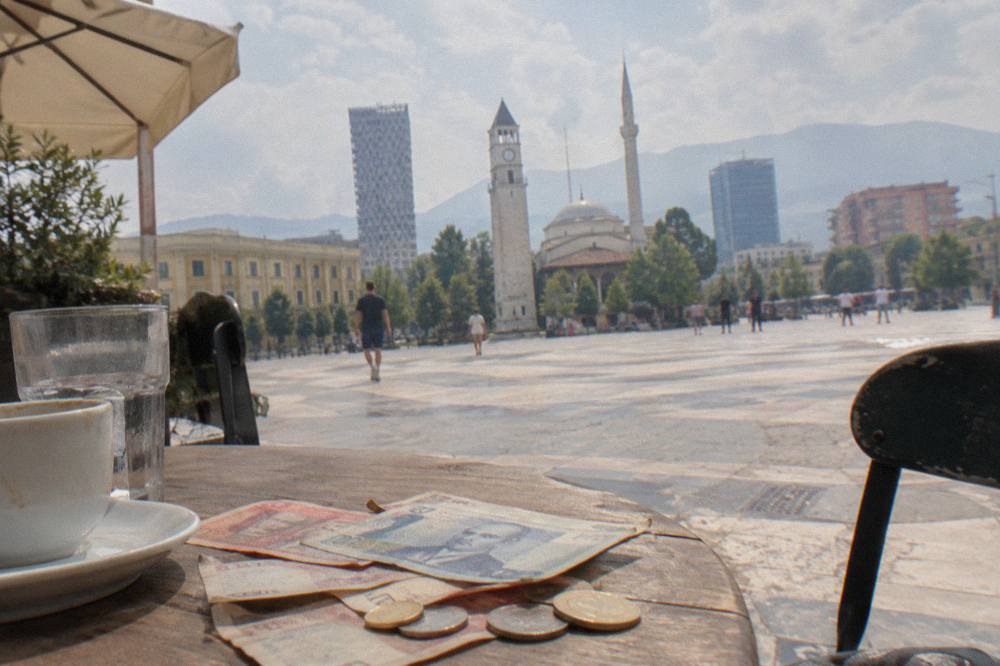
How Many Lek To The Euro, The Dollar Or The Pound?
At the Bank of Albania's official rate on 23 October 2026, one euro was 90.74 lek, one US dollar was 81.03 lek and one pound sterling was 108.39 lek. In quick conversation the euro pair rounds to roughly 90 lek, and the dollar pair to roughly 81 lek, while the pound sits just over 100 lek. Rates move daily, so treat any printed figure as a snapshot and check the current rate before exchanging money.
The Bank of Albania publishes the official rate on its markets pages, and exchange offices and banks in Tirana apply their own buying and selling margins around it. A quick sanity check when you change money: divide the lek amount you were quoted by roughly 90 to get an approximate euro value, and compare that with what the board in the window promised.
| Currency | Official rate, 23 Oct 2026 | Rough figure for mental arithmetic |
|---|---|---|
| 1 EUR | 90.74 lek | about 90 lek |
| 1 USD | 81.03 lek | about 81 lek |
| 1 GBP | 108.39 lek | just over 100 lek |
Two rules of thumb serve visitors well. First, always compare the rate on the board with the lek prices you actually see, not with a rate you remember from another Balkan country. Second, change money in Albania rather than at home, since the lek is a small currency and rates outside the country are reported to be poor. The Albania travel tips page carries more of this kind of practical planning advice.
Money questions come up most often at the start and end of a trip, at the airport and in the first hours in the centre. The Tirana airport to city centre guide walks through that first leg, including the airport bus fare in lek.
Where Can You Exchange Money In Tirana?
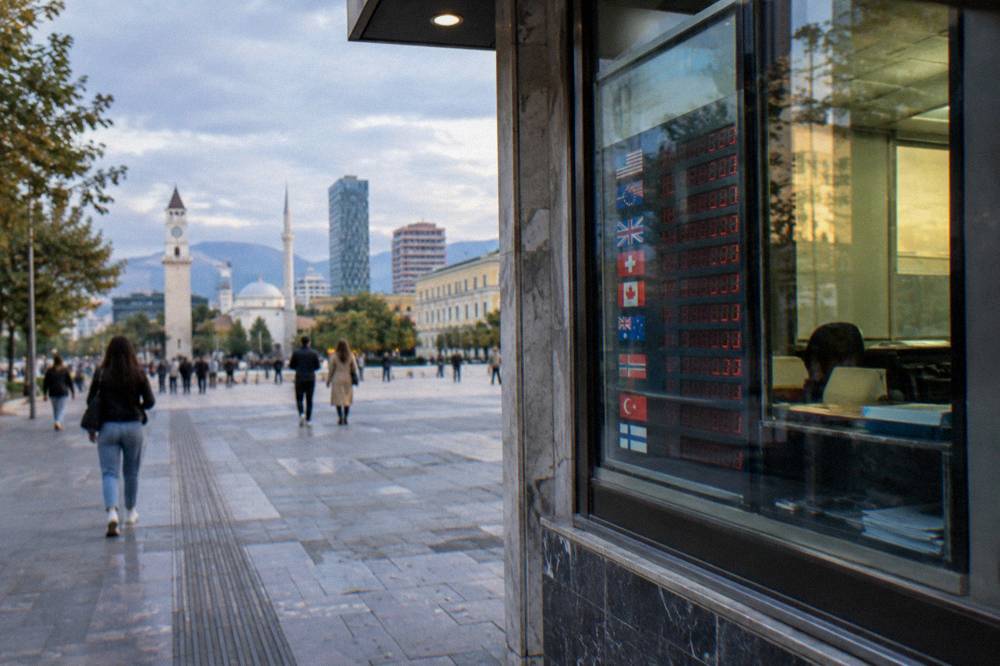
Banks and licensed exchange offices in central Tirana both change foreign currency into lek, and the area around Skanderbeg Square and the main boulevards has a dense cluster of both. The Bank of Albania sets the reference rate each working day, and each counter applies its own margin, so comparing two or three boards within a few minutes' walk usually earns a better deal than taking the first one.
Exchange offices post their rates visibly, and reputable ones display a licence. Banks take a little longer but are the safe option for larger amounts. Keep the receipt when you change money at a bank: some will change lek back into euros at the end of a trip, and the receipt makes that simpler.
A few practical points worth knowing before changing money in Tirana:
- Change euros rather than exotic currencies if you can, since euro boards are the most competitive and the most standardised.
- Avoid changing money with individuals on the street, a rule that applies in any capital.
- Keep some small notes: the airport bus, the city bus and market stalls all take cash, and large notes can be awkward early in the morning.
- Change a sensible amount rather than everything, because changing leftover lek back out of Albania is reported to be inconvenient.
- Ask for a receipt at any counter, since it is the record you need if a note turns out to be damaged or a dispute arises later.
The question of how much cash to hold ties directly into what things cost, and the Tirana prices page explains the structure: what is free, what is ticketed and what to budget for publish.
Are Cards Accepted In Tirana?
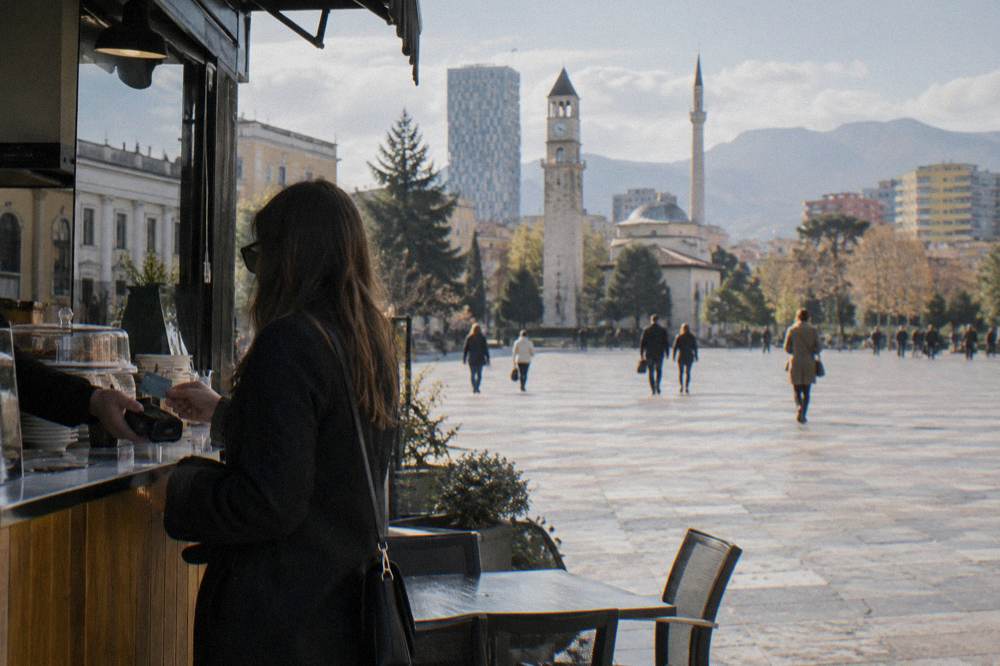
Cards are reported to be widely accepted in Tirana's hotels, larger restaurants, supermarkets and shops in the central areas around Skanderbeg Square and Blloku, while cash is still the working method for city buses, market stalls, small cafes and many independent shops. Contactless payment is common where cards are taken at all, so a card plus a day or two of lek in cash covers nearly every situation in the capital.
The split is predictable by venue type. A hotel, a chain supermarket or a well-established restaurant in Blloku will almost certainly take a card. The bus you catch to the North and South Bus Terminal, the byrek stall near Pazari i Ri and the mini-market on a residential street almost certainly will not.
| Situation | Card reported to work? | Cash needed? |
|---|---|---|
| Hotels and larger restaurants | Yes, widely | Optional |
| Supermarkets and malls in the centre | Yes | Optional |
| Small cafes and bakeries | Sometimes | Usually |
| City buses | No | Yes, cash on board |
| Airport bus (LU-NA) | No, cash or euro fare | Yes |
| Pazari i Ri market stalls | Rarely | Yes |
| Street vendors and small shops | No | Yes |
That pattern repeats across the country, so the same advice holds on day trips: carry cash. If you are planning excursions, the site's day-trip pages, including Tirana to Durres for the nearest coastal city, note what each destination involves.
How Do ATMs Work In Tirana And Which Ones Should You Use?
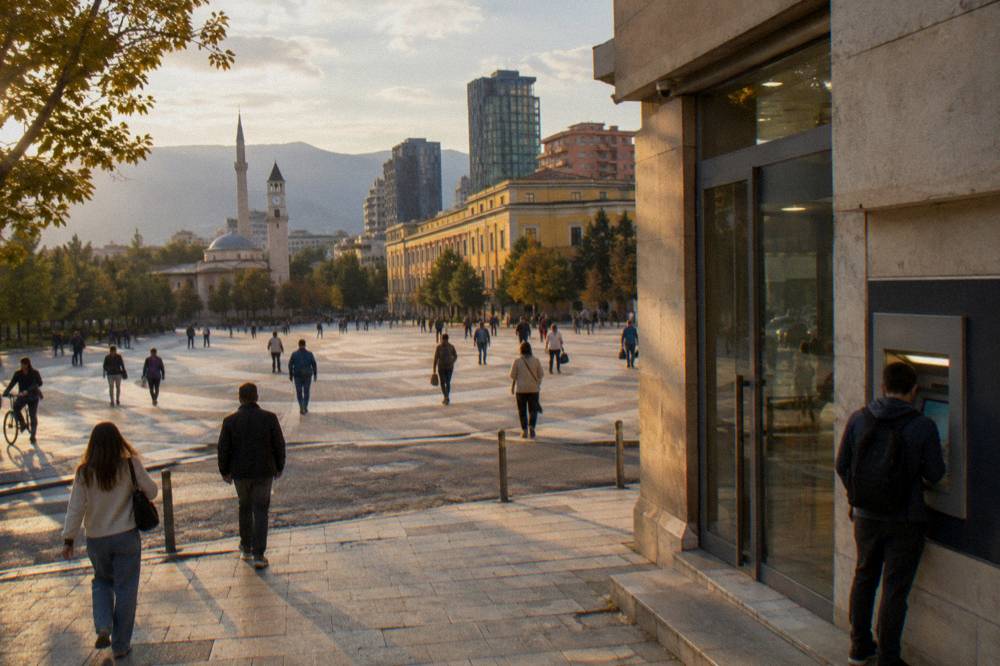
ATMs are easy to find across central Tirana, clustered around Skanderbeg Square, the boulevards, Blloku and the shopping malls, and they dispense lek to foreign cards. Most Albanian banks charge a withdrawal fee for foreign cards, so fewer larger withdrawals beat many small ones. Decline the machine's offer to convert the amount into your home currency and choose to be charged in lek instead.
That last point is the one that saves real money. When an ATM offers to handle the conversion itself, it applies its own rate, which is worse than what your own bank applies. Choosing the local-currency option, sometimes labelled "without conversion", keeps the transaction in lek at your bank's rate.
A short checklist for ATM use in Tirana:
- Use machines attached to bank branches where possible.
- Withdraw larger amounts less often, since per-transaction fees are the main cost.
- Always choose to be charged in lek, never in euros or your home currency.
- Keep some cash for the day and store the rest securely.
- Tell your bank you are travelling, so a foreign withdrawal does not trigger a block on the card.
A card that works abroad for everyday spending is one half of the money plan; the other half is a sensible amount of cash held for the places cards do not reach. Visitors planning a longer stay may also want the Where To Stay In Tirana: Centre, Blloku Or Near The Lake guide, since payment terms at apartments and guesthouses are one place where cash still matters.
What Still Needs Cash In Tirana: Buses, Markets And Entry Doors
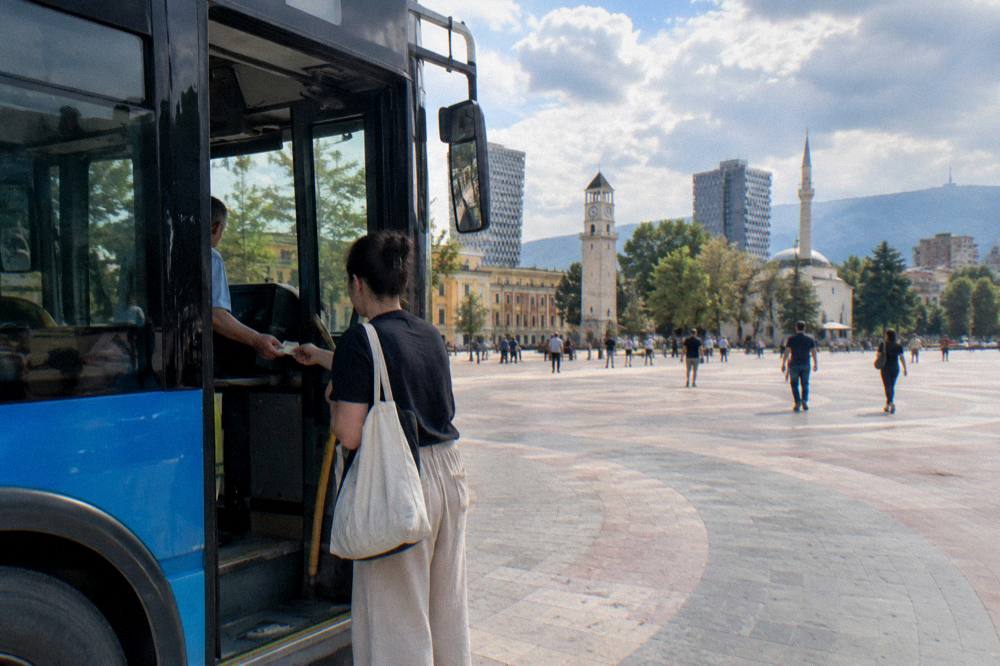
The city bus network runs on cash paid to the conductor on board, with a single ride reported to cost about 40 lek, and the official airport bus to the centre costs 400 lek, or 4.50 euro, paid on the vehicle. Intercity buses and minibuses from the North and South Bus Terminal are paid to the driver in cash, and several Tirana museums, including Bunk'Art, sell tickets at the door rather than online, so a day out still needs notes.
The transport fares that are published all point the same way: this is a cash-first system. The official airport bus runs 24 hours a day, every full hour, and stops behind the Palace of Opera and Ballet near Skanderbeg Square. Its ticket is valid all day until 23:59, not tied to a single departure.
| Journey | Fare as published | Notes |
|---|---|---|
| Airport bus to Tirana centre | 400 lek / 4.50 euro | 24/7, hourly, 30-40 minutes |
| Airport bus to South and North Bus Terminal | 300 lek | hourly, 20-30 minutes |
| Airport coach to Durres | 600 lek | departures from 08:30 to 23:00 |
| Official airport taxi to centre | about 2,200 lek | fixed one-way fare, 24/7 |
| City bus, single ride | about 40 lek | cash to the conductor |
| Kruja minibus from Tirana | about 200 lek | reported fare, confirm with the driver |
Intercity fares are not printed on official pages, so the practical rule is to pay the driver in cash and expect a few hundred lek for nearby towns. The Tirana bus stations page covers where each line leaves from and how the terminals are organised, and getting around Tirana explains the city network itself.
For sightseeing, note that neither Bunk'Art museum nor the Dajti Ekspres cable car publishes a ticket price online, so both are paid at the point of entry: check the current price at the venue before going. The Bunk'Art 1 and Dajti Ekspres pages give the opening hours that are published and explain what each visit involves.
Is The Euro Accepted In Tirana?
The euro is not legal tender in Albania, and the lek is the currency of record everywhere in Tirana. Some hotels, taxis and tourist-facing businesses are reported to accept euros informally at their own rate, with any change given in lek, but this is a courtesy rather than a right, and the rate applied is set by whoever takes the note. Paying in lek avoids that ambiguity.
Where a business does take euros, expect the transaction to favour the business. A hotel may quote a room in euro equivalents and settle the bill in lek at its own conversion. A taxi driver may accept a euro note and return change in lek at a round rate. Neither is a scam in itself, but both are reasons to carry lek for anything beyond a hotel bill.
Visitors arriving with euros should not worry: euros are the easiest foreign currency to change in Tirana, and the exchange offices around the centre compete on exactly that pair. Arriving with dollars or pounds is also workable, though boards for those currencies are less universal.
Tipping And Service Charges: What Is Actually Settled?
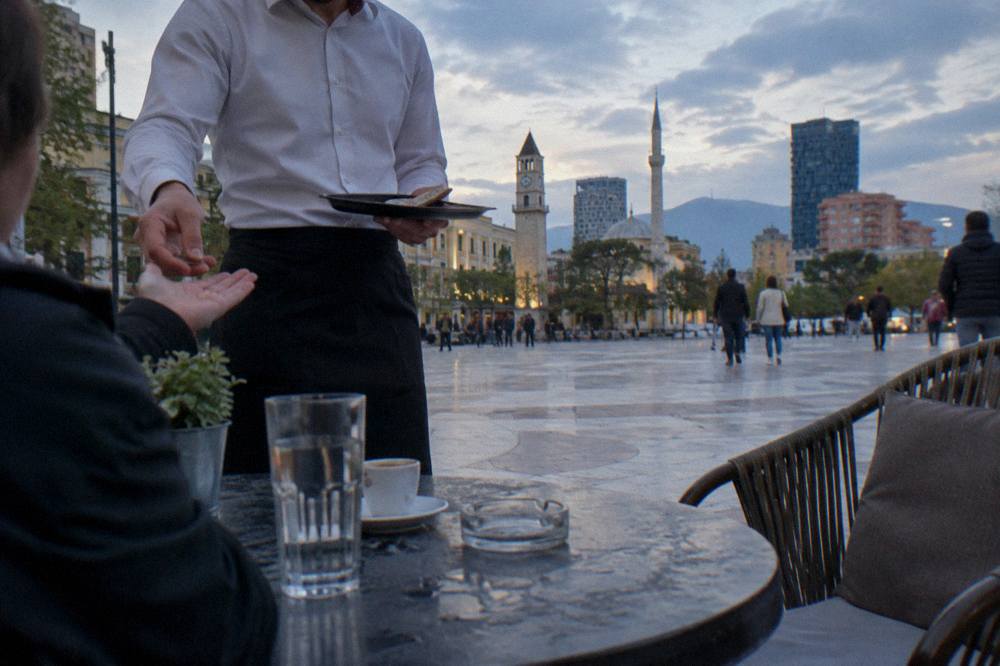
No tipping percentage is set in any trusted source on Albania, so there is no figure to quote: rounding up a restaurant bill or leaving small change in a cafe is a personal choice rather than an obligation. Service is rarely added to the bill automatically, and any claim of a standard percentage would be invented. When in doubt, check the bill and tip in lek if you choose to tip at all.
Some travel blogs print percentages, but none of them reflect an official or widely documented Albanian standard, and repeating one here would manufacture a rule that does not exist. Cash tips in lek are the practical form whenever you do tip, since cards leave no route for it.
The same caution applies to other money habits: no tourist-tax figure, no taxi-meter tariff and no meal-price average belongs on this page, because none was confirmed on an official source. For what is actually known about costs, see Tirana prices, and for the entry rules that govern a visit in the first place, Albania entry requirements covers the 90-days-in-180 regime and passport validity.
A Practical Money Plan For A Few Days In Tirana
A workable plan is a small amount of lek on arrival for the airport bus and the first day, a card for hotels, restaurants and supermarkets, and one or two larger cash withdrawals as needed rather than daily drips. On the day of departure, spend down remaining lek at the airport or accept that small amounts are hard to exchange back, and keep separate a card and some cash so one lost wallet does not end the trip.
Breaking that into stages makes it easier to follow.
| Stage of the trip | Cash plan | Card plan |
|---|---|---|
| Airport arrival | 400 lek per person for the airport bus, or euros accepted on it | Card as backup for the official taxi at about 2,200 lek |
| First day in the centre | Small notes for the city bus and cafes | Pay the hotel and main meals by card |
| Sightseeing days | Cash for museum doors and market snacks | Card where displayed |
| Day trips | Cash for intercity buses and entry fees | Card for optional extras |
| Departure | Spend remaining lek at the airport | Keep the second card separate |
The reason this works is the city's shape. Tirana's paid attractions, its buses and its markets are all cash points of contact, while its hotels and its established restaurants are card-friendly. A visitor who carries both never has to think about which type of place they are standing in.
For travellers combining the capital with the coast, the same money rules apply nationwide, and Tirana to Saranda explains the long southern route. Those with connectivity questions on arrival can read the Albania eSIM guide, since paying for data is one of the first transactions many visitors make.
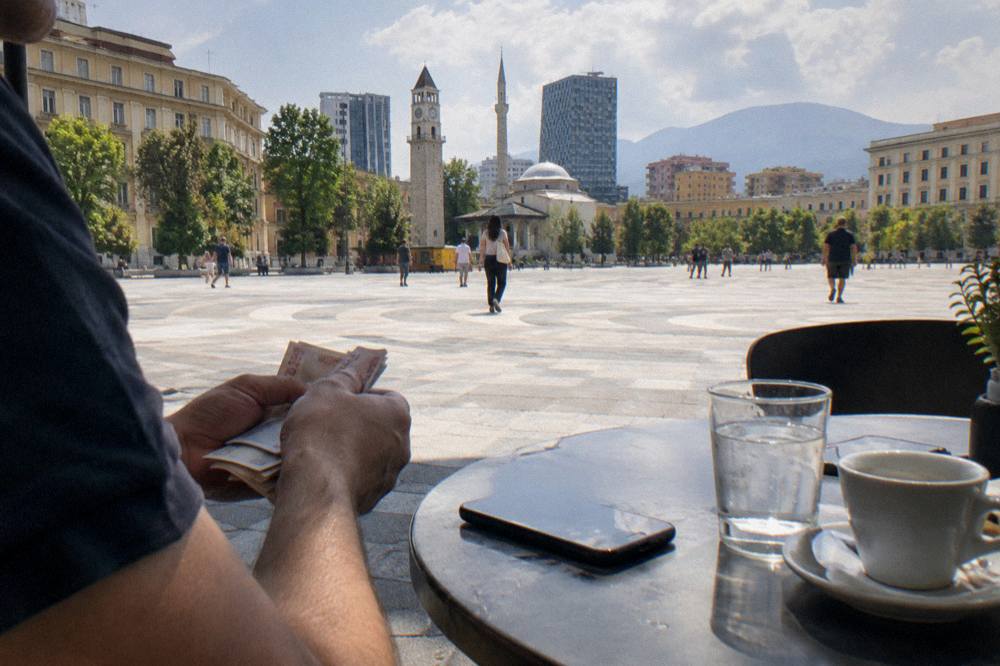
Common Questions About The Albanian Lek
Can I use euros in Tirana?
The euro is not legal tender in Albania. Some hotels, taxis and tourist businesses are reported to accept euros informally at their own rate, with change given in lek, but the lek is the currency everywhere in the capital.
Should I exchange money before arriving in Albania?
There is no need to. Exchange offices and banks across central Tirana change euros, dollars and pounds into lek, and rates in Albania are reported to be better than those available outside the country for such a small currency.
Do ATMs in Tirana charge fees?
Most Albanian banks apply a fee to foreign-card withdrawals. Fewer, larger withdrawals keep the total cost down, and choosing to be charged in lek rather than your home currency avoids the machine's own conversion rate.
Can I pay by card on Tirana city buses?
No. A single ride costs about 40 lek, paid in cash to the conductor on board, so keep small notes handy for the city network.
Is tipping expected in Albania?
No tipping percentage is set in any trusted source, so there is no standard figure to follow. Rounding up or leaving small change in lek is a personal choice, and service is rarely added to the bill automatically.
Can I use US dollars in Tirana?
The currency of Albania is the lek, and prices across Tirana are quoted in lek. US dollars are not a payment currency in the city; change dollars into lek at a bank or exchange office instead.
Handed well, money in Tirana fades into the background: enough lek for the buses and the market, a card for everything that displays a terminal, and the roughly-90-to-the-euro anchor for quick sums. That is the whole system, and it is one of the simpler parts of visiting the capital.