Can I Drink Albania Tap Water?
No, the UK FCDO advises against drinking tap water anywhere in Albania, including Tirana. What the official advice says, what to drink instead, and how to plan for a trip to the capital.
Tirana, the capital of Albania, is an inland city in a basin at the foot of Mount Dajti, roughly 37 km and 39 minutes by road from the Adriatic coast at Durres, and its cafe culture runs on bottled water for one simple reason. The UK Foreign, Commonwealth and Development Office health page for Albania states: "Do not drink the tap water in Albania, as it may cause illness. Only drink bottled water." That single sentence settles the question for the whole country, the capital included, and everything else on this page is about what it means in practice, from brushing teeth to ice in a glass on Skanderbeg Square.
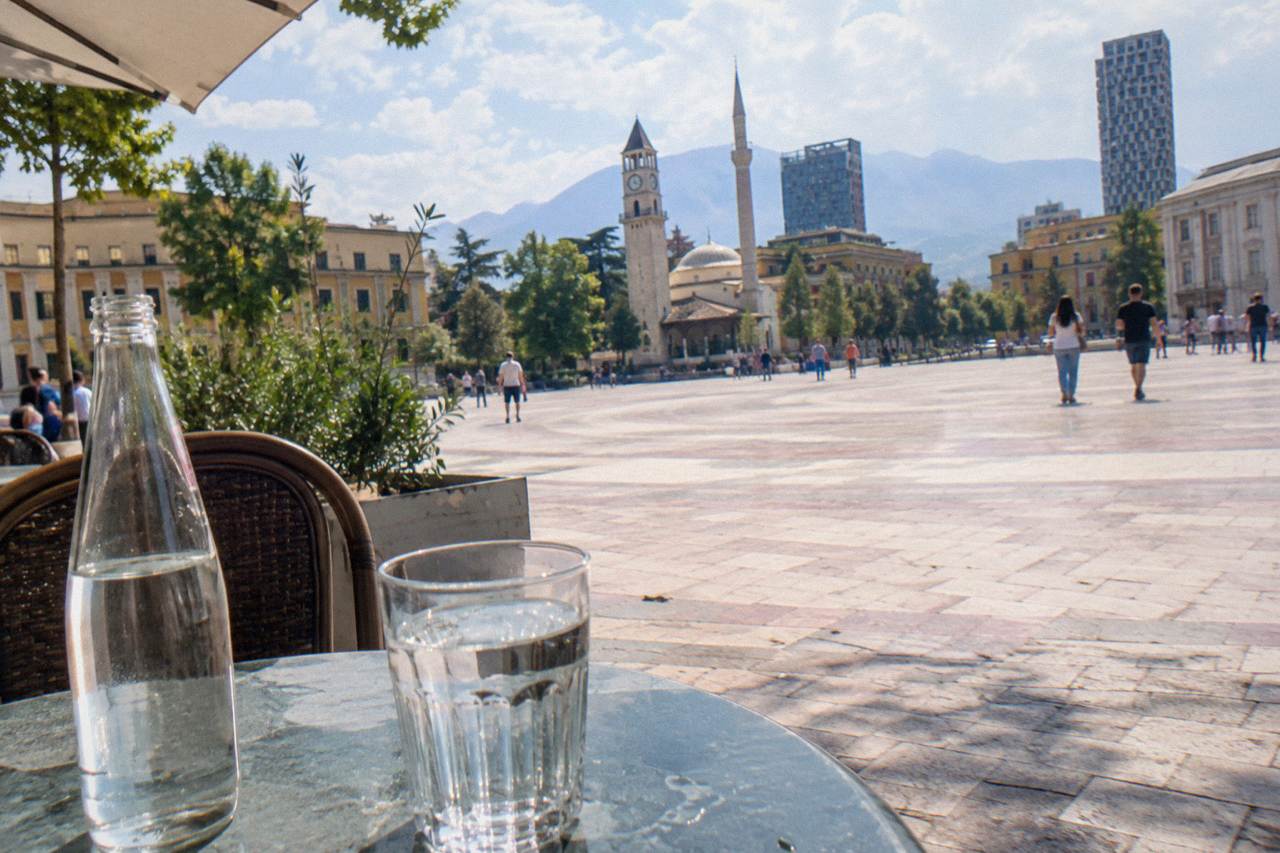
No, you should not drink tap water in Albania, including in Tirana. The UK FCDO health page for Albania says "Do not drink the tap water in Albania, as it may cause illness. Only drink bottled water." That is the clearest official guidance available, it applies across the country rather than to one city, and bottled water is cheap and available everywhere in the capital.
The FCDO line is the anchor because it is the only government-grade travel advice that addresses the question head on. It does not carve out exceptions for hotels, does not distinguish between neighbourhoods, and does not soften the wording for filtered systems. Travellers who ask whether Tirana's water is different from rural Albania's water are asking a question the guidance does not answer, and the safe reading of a blanket "do not drink" is to treat every tap in the country the same way. Some travellers treat locally bottled water as the default for their whole stay, and that habit covers hotel rooms, apartments, restaurants and street food alike, from the blocks around Skanderbeg Square out to the Grand Park and the Blloku cafe quarter.
It helps to frame this as normal travel routine rather than a warning about one country. Plenty of popular destinations across southern and eastern Europe carry the same advice for visitors, and nobody plans their day around it there either. You buy a bottle, you keep a spare in the room, and the question disappears. Tirana's shops, cafes and supermarkets stock bottled water as a matter of course, and no special preparation is needed before arrival. For the wider practical picture of costs in the capital, the companion page on whether Tirana is cheap or expensive covers the money side of daily purchases.
What Does The Official Advice Actually Say About Water In Tirana?
The UK FCDO health page for Albania carries one direct sentence on the subject: "Do not drink the tap water in Albania, as it may cause illness. Only drink bottled water." The page attributes this to health risks rather than to a specific contamination event, it gives no region-by-region breakdown, and it offers no filter or boiling exception, so bottled water is the whole recommendation.
Reading the advice carefully matters, because travellers often try to negotiate with it. The wording does not say the water is untreated, and it does not say locals avoid it. It says visitors should not drink it, because water a resident's stomach is accustomed to can still upset a short-term visitor's, and that distinction is exactly the one the FCDO draws with its plain instruction. The guidance sits on the health tab of the Albania travel advice pages, alongside food hygiene and medical care notes, which is where you would expect a general precaution rather than an alarm about a crisis.
For an article-free version of the same logic, consider how the rest of the region is handled. The FCDO keeps country-specific health pages and writes each one on its own evidence, so the fact that Albania's page carries a firm "only drink bottled water" line is the advice, not a boilerplate that appears everywhere. Travellers from the United States can check their own government's travel guidance for Albania alongside the FCDO text, and the practical conclusion on the ground is the same either way: keep a sealed bottle within reach. If you are weighing the trip itself, the page on whether Tirana is worth visiting for tourists covers what the city offers beyond logistics.
The one practical corollary worth stating: this is a planning item, not a reason to change plans. Albania received more than 12 million foreign arrivals in 2025, per national statistics reported in the press, and the country's cafes, hotels and shops are built around bottled water as the default serving. Nobody arrives to find the question unresolved.
Where Do You Buy Bottled Water In Tirana?
Bottled water is sold across Tirana in supermarkets, corner shops, cafes, restaurants and kiosks, from the blocks around Skanderbeg Square out to Blloku and the Grand Park. It is served by default at restaurant tables, no tap water arrives unrequested, and the only real decision for a visitor is bottle size, still or sparkling, and keeping a spare in the room.
The texture of daily buying is simple. Large supermarkets and malls in and around Tirana are reported open seven days a week, with hours that vary by store, so a weekly shop for large bottles fits around any itinerary. Corner shops and kiosks across the centre handle the top-ups, and every restaurant, from the places around the Pazari i Ri market area, about 0.6 km east of Skanderbeg Square, to the Blloku cafe quarter about 0.8 km south, serves sealed bottled water by default. Tap water does not arrive in a jug the way it does in some countries, so the decision is made for you in restaurants.
| Situation in Tirana | What to expect | Figure to plan around |
|---|---|---|
| Restaurant table | Sealed bottled water served by default, still or sparkling | 1 bottle per person per meal as a norm |
| Supermarket or mall | Large bottles in bulk, open seven days a week per store reporting | Weekly restock for a longer stay |
| Corner shop or kiosk | Individual bottles, widespread across the centre | Buy as you go |
| Hotel room | Bottled water is the standard guest supply; check the minibar or reception on arrival | Keep 1 spare bottle per person |
Payment follows the general pattern of the capital: cards are reported widely taken in hotels, larger restaurants and supermarkets in central Tirana, while cash in lek remains the practical currency for kiosks, markets and small cafes. The currency is the Albanian lek, roughly 90 lek to the euro, and the euro is not legal tender, so small cash purchases for water are simplest in lek. The page on whether Albania uses the euro explains the currency setup in full, and the overview of things to do in Tirana covers how the city's day-to-day rhythm works.
One habit worth adopting early: carry a bottle on day trips. Tirana sits in a basin and summer days are warm, with mean daily highs of 29.8 C in July and 30.4 C in August per the ERA5 reanalysis for 1991-2020, and the best walks in the centre, from the square to the Pyramid of Tirana and up through Blloku, are done on foot. A bottle in the daypack removes the only real friction the FCDO advice creates.
| Month | Mean high (C) | Mean low (C) | Rain (mm), ERA5 1991-2020 |
|---|---|---|---|
| June | 26.9 | 16.6 | 51 |
| July | 29.8 | 19.1 | 34 |
| August | 30.4 | 19.5 | 31 |
Guided experiences handle the water question the same way the rest of the city does. A walking tour around the centre's landmarks, a food tour through the market quarter or a full-day trip to Berat, the UNESCO-listed town about 122 minutes' drive away, all run on bottled water as standard, and guides plan stops where it can be bought. Checking availability ahead of a travel date is simple with any of them, and none requires a special arrangement on the water front.
Can You Brush Your Teeth With Tap Water In Tirana?
The official FCDO line addresses drinking, and it does not extend to brushing teeth, so no separate instruction exists either way. Travellers who want zero ambiguity use bottled water for brushing as well, which costs one small bottle per day, and that is the approach many guides to the region suggest as a precaution. Anyone comfortable with the narrower reading of the advice can treat tooth-brushing as a personal choice.
What travellers do with that gap falls into two camps. The cautious camp uses bottled water for teeth, rinsing and any drink that starts as tap, on the logic that the FCDO sentence gives a firm no to ingestion of any amount and it is easier to follow one rule than two. The relaxed camp brushes with tap water and simply never drinks it, which is the practice plenty of visitors to the region report without issue. Both are defensible readings of the same official text.
The practical details barely change either way. A one-litre bottle covers several brushings, hotel bathrooms across the city have bottle-friendly shelf space by simple design, and the only scenario that needs forethought is a long hiking day, for example on the trails around Mount Dajti, where every traveller regardless of camp carries bottled water. For those planning active days, the question of How Many Days In Tirana Is Enough shapes how much water logistics matter at all.
What About Ice, Salads And Coffee In Tirana?
Cafes, restaurants and bars in Tirana serve coffee, soft drinks and cocktails made to order, and the standard traveller approach is to treat sealed bottled water and canned or bottled drinks as safe, salads as a normal menu item in established venues, and ice as a personal comfort call. The FCDO advice says nothing about ice or restaurant preparation, so no official rule exists beyond the drinking-water line itself.
Coffee culture is central to Tirana's daily life, and espresso machines in the capital's cafes run on plumbed water that is boiled and pressurised in the process, which is why the question rarely comes up in practice for coffee drinkers. Raki, the fruit brandy, and the wine lists of the city's restaurants arrive sealed, and beer is bottled or kegged industry-wide. The drinks question in Tirana is mostly a non-question: order what you like and it arrives from a bottle, can, keg or a boiling espresso machine. For the wider drinking culture, including the fact that the sale of alcohol to anyone under 18 is prohibited under Albanian law, reported under Law No. 9518 of 2006, see whether you can drink alcohol in Albania.
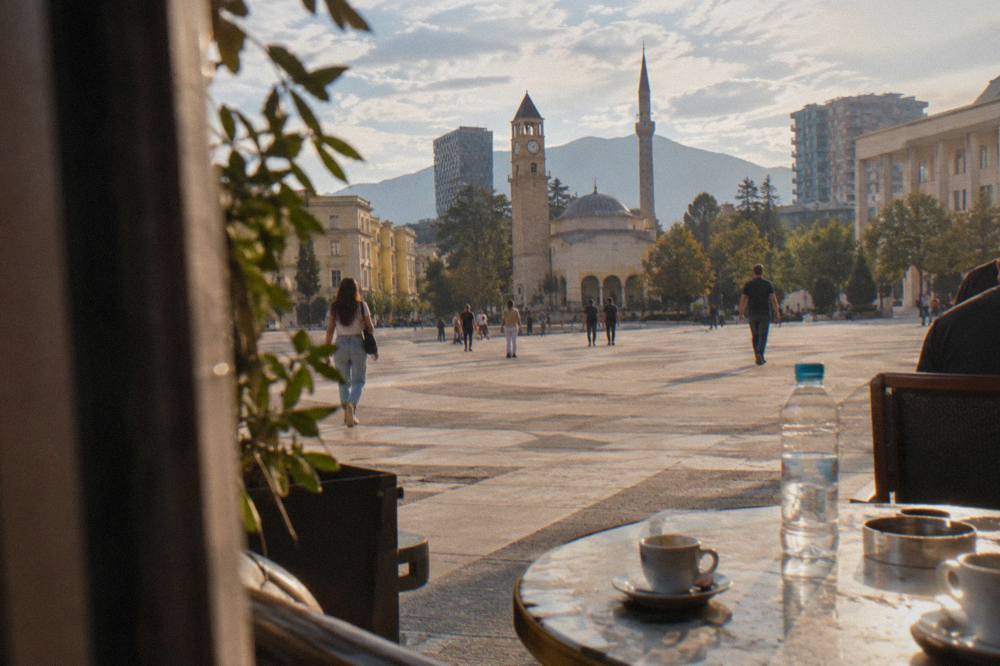
Ice is the one item where travellers differ. No official advice addresses it, established venues in the centre use standard commercial ice, and visitors who want the simplest rule simply say no ice, which every bar in the city understands. Salads and washed produce follow the same logic: established restaurants are the normal place to eat them, and no official guidance flags them. The one drink nobody needs to negotiate about is the one this page began with, sealed bottled water, and it is on every table in the city.
How Do You Keep Hydrated On Tirana Day Trips?
Day trips from Tirana run from the coast at Durres, about 39 minutes by road, to the mountains at Lake Bovilla, about 61 minutes, and bottled water is bought before departure or at stops along the way. Every form of transport, from the airport bus to tour coaches, passes shops where water is stocked, and carrying one bottle per person is the standard preparation for any of them.
The geography makes the point. Tirana is an inland city, so its day trips climb to Mount Dajti, whose summit stands 9.8 km from Skanderbeg Square as the crow flies, or head out to canyons, lakes and castle towns. Summer heat on those outings is real, with August mean highs of 30.4 C in the city per the ERA5 reanalysis, 1991-2020, and mountain trails add exertion. The rule travellers settle into is one bottle in the hand, bought the evening before at any supermarket, all of which are reported open seven days a week.
Organised tours cover this in their planning: a cooking class in the capital pours wine and raki from the bottle, a guided walk through the centre keeps to cafe-stocked routes, and a Berat day trip schedules stops on the drive. Water is the one supply every operator expects visitors to carry or buy, and none of these experiences needs a special request. The same applies to independent trips on public transport, where the intercity South and North Bus Terminal, 4.0 km north-west of the square, sits among shops that stock everything a day bag needs.
Common Questions About Drinking Water In Tirana
Can I drink Albania tap water?
No. The UK FCDO health page for Albania says "Do not drink the tap water in Albania, as it may cause illness. Only drink bottled water." The advice applies nationwide, including in Tirana.
Is the tap water in Tirana treated?
The official travel advice does not discuss treatment, and this page adds no claim either way. It simply advises bottled water for drinking, which is available everywhere in the capital.
Can I brush my teeth with tap water in Tirana?
The FCDO line covers drinking only, so brushing is a personal call. Many travellers use bottled water for brushing as a simple precaution, and a single small bottle covers a full day.
Is ice in Tirana drinks safe?
No official guidance addresses ice. Travellers who prefer a single rule ask for no ice, which every cafe and bar understands, while others treat ice in established central venues as normal.
Where can I buy bottled water in Tirana?
Supermarkets, corner shops, kiosks, cafes and restaurants across the city stock it, and restaurant tables are served sealed bottles by default. Large supermarkets are reported open seven days a week.
What about coffee and other drinks in Tirana?
Coffee comes from espresso machines, beer is bottled or kegged, wine and raki arrive sealed, and soft drinks come in cans and bottles. None of the standard drinks in the capital depends on tap water being drunk straight.
The short version of this whole page fits in one line: the FCDO says bottled water only, Tirana makes following that advice effortless, and the question should cost you no more planning than a spare bottle in the daypack.