Is Albania Safe Right Now For Tourists?
Is Albania safe right now for tourists? Current FCDO advice for Tirana, the October 2026 demonstrations, emergency numbers, earthquake risk and practical safety tips.
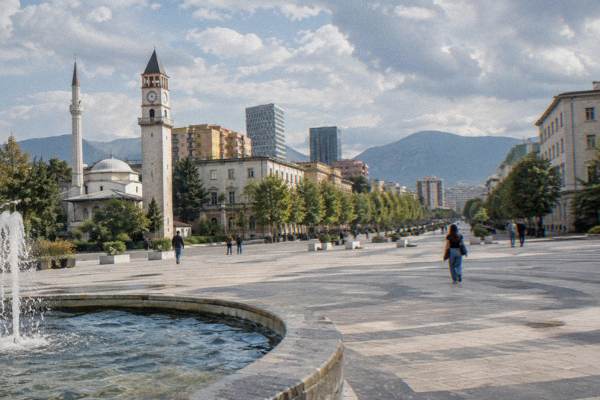
Tirana, the inland capital of Albania at the foot of Mount Dajti, is open to tourists and the advice from foreign governments does not tell anyone to stay away. What has changed is the fine print: the UK Foreign, Commonwealth and Development Office (FCDO) updated its travel advice on 15 October 2026, after demonstrations were held in central Tirana since 13 October 2026, some of them violent. The advice is to avoid demonstrations and check local media, not to cancel a trip. The official guidance is set out below, question by question, with no first-person travel claims.
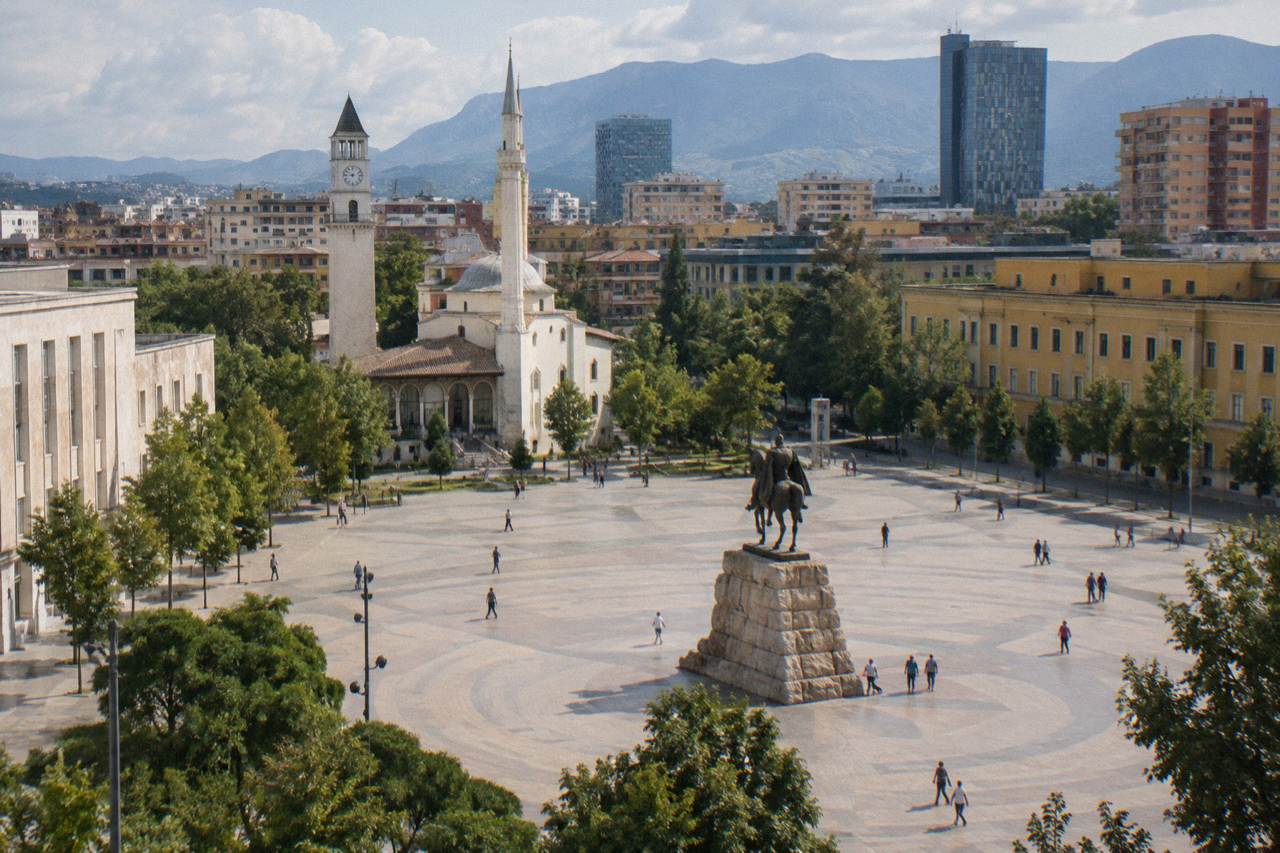
For the wider picture of what the city offers, the Tirana Albania Travel Guide covers the main sights, and the question of whether Tirana is worth visiting is answered separately. The US State Department, for its part, advises increased caution for Albania, a standing level rather than a new warning. None of this amounts to a do-not-travel notice.
Yes, in the sense that no major government advises against travel to Albania or to Tirana, and tourists continue to visit the city, but the FCDO updated its advice on 15 October 2026 to flag demonstrations in central Tirana held since 13 October 2026, some violent. The official guidance is to avoid demonstrations, check local media and follow the instructions of local authorities. Avoiding crowds and protests is the single most useful habit right now.
The demonstrations are the reason this question is being asked more often in late 2026. They are concentrated in central Tirana, around the boulevard and Skanderbeg Square area, and they have had real knock-on effects: the Tirana Marathon, originally set for 24 to 25 October 2026, was moved to 14 to 15 November 2026 because of them. If a trip falls on those November dates, expect road closures and a busy centre.
Beyond the protests, the FCDO's standing guidance for Albania is unremarkable for a European capital. Earthquake tremors are common and serious quakes are less frequent. Same-sex relationships are legal, and Tirana has gay-friendly bars and LGBT+ support groups. There is no region of the country under an advisory against travel. The practical posture is the same as for any busy capital: watch your belongings in crowds, and keep an eye on local news on days when gatherings are announced.
| Official source | What it says about Albania | What it means for Tirana |
|---|---|---|
| UK FCDO travel advice | Updated 15 October 2026; avoid demonstrations, check local media | Avoid protest gatherings around Skanderbeg Square and the boulevard |
| US State Department | Advisises increased caution (standing level) | Normal city caution, no avoid-travel notice |
| FCDO entry rules | Visa-free stays of up to 90 days in any 180 for UK nationals | Entry is unaffected by the protests |
What Are The Emergency Numbers And Health Basics In Tirana?
The emergency numbers in Albania are Police 112, Ambulance 127 and Fire 128, as listed by the UK FCDO. UK travellers can stay up to 90 days in any 180-day period visa-free, and Albania runs its own entry regime because it is outside the EU and Schengen. UK travel insurance with healthcare cover is a standard requirement under the FCDO's guidance.
Save the three numbers before arriving. Note that Albania's entry regime is separate from Schengen's 90-in-180 counter, a detail that catches out long-stay travellers crossing to Greece or North Macedonia. More of that is covered in the guide to Albania entry requirements, including the much longer visa-free allowance reported for US passport holders.
On health, the FCDO advises against drinking tap water in Albania and recommends bottled water only, a point expanded in Can I Drink Albania Tap Water. Pharmacies are plentiful in central Tirana, and the practical basics are stable: the currency is the Albanian lek, roughly 90 lek to the euro, and cards are widely taken in hotels and larger restaurants while cash rules the buses and markets.
| Situation | Number or rule | Note |
|---|---|---|
| Police | 112 | The FCDO-listed number |
| Ambulance | 127 | |
| Fire | 128 | |
| UK nationals, entry | 90 days in any 180 | Passport valid 3 months beyond departure |
| Tap water | Do not drink | FCDO health advice; bottled water only |
If a first visit feels easier with a local guide, a structured walk is one way to get oriented quickly. The Communist Past Small-Group Tour link for the communist past small-group walking tour covers the central landmarks in a group setting, which some travellers prefer in a new city.
Is Central Tirana Safe To Walk Around?
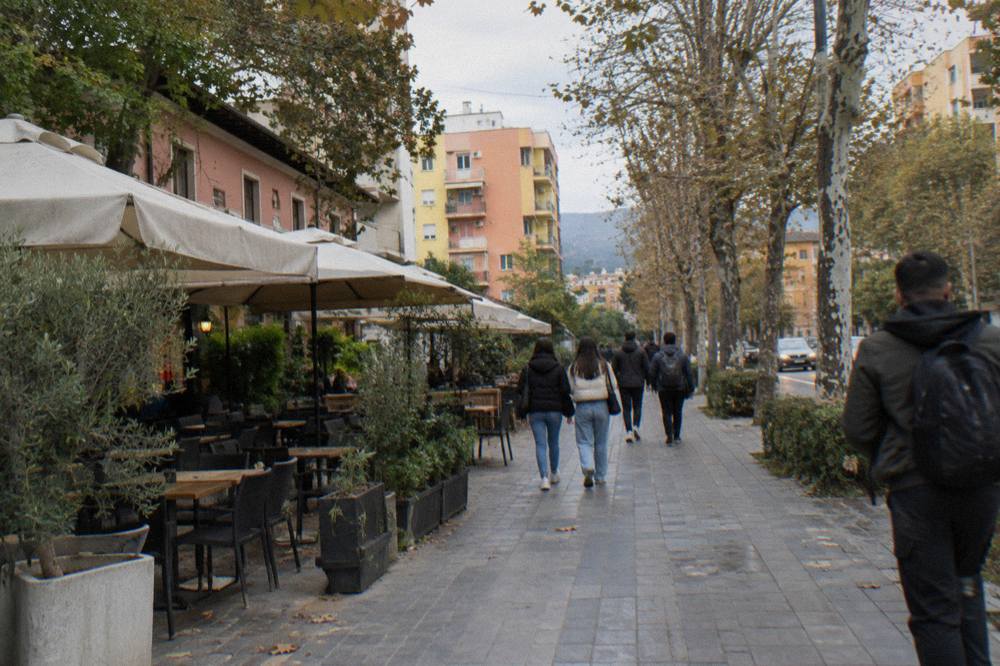
Central Tirana is a walkable capital where the main sights cluster within about a kilometre of Skanderbeg Square, and no government advice names any street as off limits. The current caution is about timing rather than geography: on days when demonstrations are called around the square and the boulevard, the FCDO advice is to avoid the gatherings and check local media before heading out.
The sensible routine is a light one. Et'hem Bey Mosque, the Clock Tower, the Pyramid of Tirana, Bunk'Art 2 and the House of Leaves all sit within roughly a kilometre of the square, so an itinerary flexes easily: if the centre is busy, the Grand Park of Tirana, about 2.1 km south-east of the square, is the obvious green alternative. The question of walking around Tirana at night deserves its own answer, but the same neutral rule applies: watch your belongings in crowds, as in any busy capital.
Getting around is straightforward. Uber and Bolt do not operate in Tirana, a detail covered in Is There An Uber In Tirana, so taxis are hailed, called by phone or booked through local apps. City buses run roughly 06:00 to 23:00 and a single ride costs about 40 lek, paid in cash on board, per local transport reporting, worth confirming on arrival.
Should you still take the trip? The protests are a live issue but a manageable one, and the city's core draw, from the Pyramid of Tirana to the Bunk'Art museums, remains fully open.
What About Earthquakes And Other Risks In Tirana?
Earthquake tremors are common in Albania and serious quakes are less frequent, according to the FCDO, which is the full extent of what official advice says on the subject. There are no crime statistics, safety ratings or named unsafe areas in the official guidance, and no advisory against travel to any part of the country. The residual risks are the ordinary ones of a capital city.
Albania sits in an active seismic zone, and the FCDO lists the earthquake risk plainly, without alarm. For a visitor the practical response is minimal: know where the exits are in your hotel, as anywhere in the Balkans or the Mediterranean. Weather is a comfort question more than a safety one. Averages from the ERA5 reanalysis, 1991-2020, put the Tirana January mean high at 10.8 C and the July mean high at 29.8 C, with monthly rainfall peaking in November at 139 mm, so the crowds and the heat overlap in summer and the highest-rainfall walks are in late autumn.
| Risk | What the official advice says | Practical takeaway |
|---|---|---|
| Demonstrations | Held in central Tirana since 13 October 2026, some violent | Avoid gatherings, check local media |
| Earthquakes | Tremors common, serious quakes less frequent | Standard earthquake awareness |
| Petty crime | No statistic or named area in the guidance | Watch belongings in crowds |
| Entry rules | Own visa regime, 90 days in 180 for UK nationals | Check passport validity, 3 months beyond stay |
On money safety, the lek is the currency and the euro is not legal tender, so change money properly rather than paying in euros at informal rates, as covered in does Albania use the euro. Cash is still needed for buses, markets and small cafes even though cards are widely taken in central hotels and restaurants.
Which Guided Tours Help A Nervous First-Timer In Tirana?
A small-group guided tour is the standard recommendation for a first day in an unfamiliar capital, and Tirana has several that stay in the central areas where the sights concentrate. Product details, prices and ratings render from the live listings rather than from this page, and the choice below covers a history walk, a food tour and a Bunk'Art visit with transport, three different ways to see the city with a local alongside.
The communist past small-group walking tour works well as a first-morning orientation: a guide, a group, and a route through the centre that puts the city's communist-era story in context. A food-led alternative such as the small-group city and food tour with local meals turns the same centre into a tasting route, useful when the headlines make a solo wander feel less appealing. The Bunk'Art guided tour with transport option bundles the bunker museum with the ride out to it, a consideration in a week when the centre is periodically busy.
Timing a visit around the current situation is easier with the context in what is the best month to visit Tirana, and the practical build of a short stay is laid out in how many days in Tirana is enough. Day trips to Kruja or Durres leave from the South and North Bus Terminal, about 3.9 km north-west of the square, which also puts some distance between an itinerary and any central gathering.
Common Questions About Safety In Tirana
Is Albania Safe Right Now For Tourists?
No government advises against travel to Albania. The FCDO updated its advice on 15 October 2026 to highlight demonstrations in central Tirana since 13 October 2026, some violent, and recommends avoiding demonstrations and checking local media. The US advises increased caution as a standing level.
Is it safe to walk around central Tirana during the demonstrations?
The advice is to avoid the gatherings themselves rather than the city. The main sights sit within about a kilometre of Skanderbeg Square, so itineraries flex easily, and the Grand Park of Tirana is a straightforward alternative on busy days.
What is the police number in Albania?
Police 112, Ambulance 127, Fire 128, as listed by the UK FCDO. Save all three before arrival.
Was anything in Tirana cancelled because of the protests?
The Tirana Marathon was moved from 24 to 25 October to 14 to 15 November 2026. Expect road closures in the centre around those dates and on days when gatherings are announced.
Is Albania affected by the EU's new entry systems?
No. Albania is outside the EU and Schengen, so EU entry systems do not apply at its border. It runs its own regime, 90 days in any 180 for UK nationals, counted separately.
The short version: the official advice for Albania is caution around crowds, not cancellation, and a Tirana trip planned with the November marathon dates and the daily news in mind can proceed on the city's own terms.