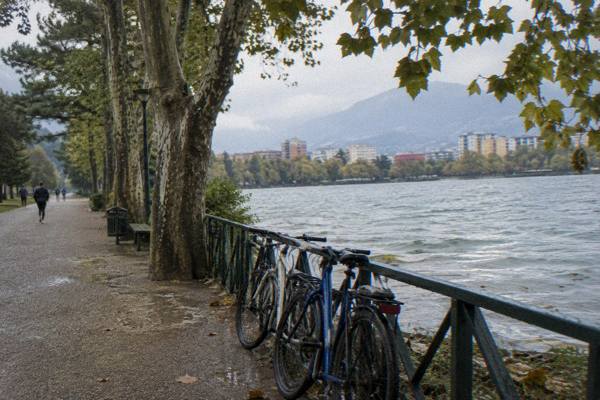
Grand Park And The Artificial Lake
The Grand Park of Tirana and its Artificial Lake form the largest green space in the Albanian capital, about 2.1 km south-east of Skanderbeg Square. This guide covers what the park holds, how to reach it, how the year shapes it and what sits around it.
Short answer
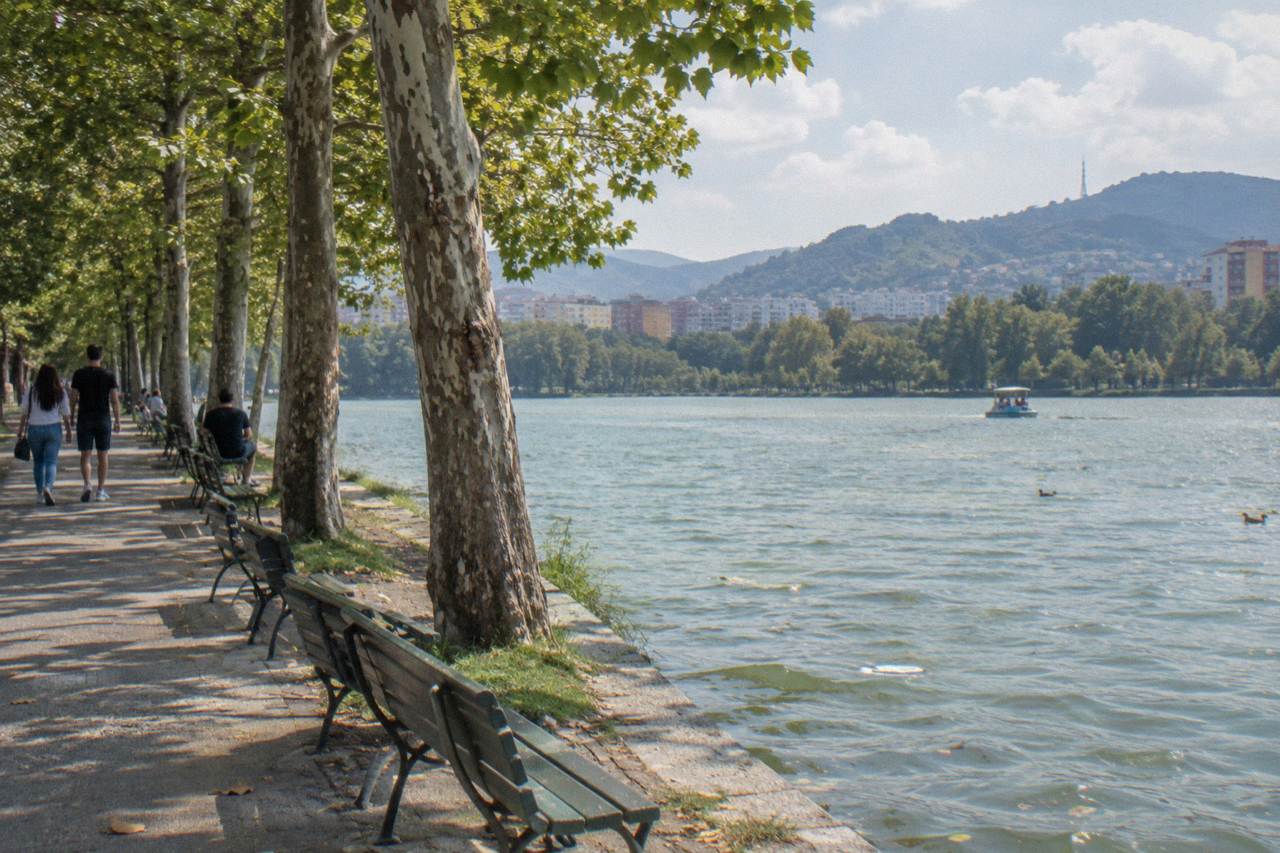
The Grand Park of Tirana is a free public park about 2.1 km south-east of Skanderbeg Square, wrapped around an Artificial Lake at the foot of the hills below Mount Dajti. It is open public space with no ticket, reached on foot in under half an hour from the centre or by city bus.
The Grand Park of Tirana is the largest green space in the Albanian capital, an open public park about 2.1 km south-east of Skanderbeg Square, wrapped around an Artificial Lake at the foot of the hills that rise toward Mount Dajti. No ticket is needed, no gate closes it off, and it functions as the city's shared back garden: walkers at dawn, families later, runners circling the lake at every hour of daylight. Tirana is an inland city in a basin, so the park and the water give it the open horizon the streets lack, and the coast at Durres stays a day trip about 37 km west rather than a nearby escape.
Where Is The Grand Park Of Tirana And What Is It?
The Grand Park of Tirana is a free public park about 2.1 km south-east of Skanderbeg Square, and the Artificial Lake sits beside it at about the same distance south of the square. The park lies at the southern end of the Deshmoret e Kombit boulevard axis, below Mother Teresa Square at about 1.2 km south, with the hills of Mount Dajti rising behind it to the east. It is open public space with no ticket and no gate.
That position matters more than it first appears. Tirana's centre is compact and dense, and the boulevard that starts at Skanderbeg Square runs almost straight south past the government buildings to Mother Teresa Square, where the city stops pretending to be dense and hands over to the trees. The walk from the square along that axis takes most people twenty-five to thirty-five minutes at an easy pace, and it passes the Pyramid of Tirana about 0.7 km south-east on the way, so the route itself doubles as a sightseeing line.
The park's role in the city is straightforward: it is where Tirana breathes. On a summer evening the paths around the Artificial Lake fill with runners, and in winter the same paths carry the walkers who prefer soft ground to pavement. The lake was built as a reservoir and became a recreational landmark; the park grew around it over decades of planting, and today the two are spoken about as one place. The park also hosts the amphitheatre, the memorial to the British servicemen of the wartime missions, the presidential palace compound at its edge and the botanical garden at its southern end, though check any facility individually before planning around it, as opening details for individual sites inside the park are not published centrally.
For visitors deciding how to split a day, the park pairs naturally with the Mount Dajti National Park area: the cable car's lower station lies about 4.4 km north-east of the square, so green morning in the hills and green evening by the lake is a realistic shape for one day, with the city's museums between them.
What Can You See And Do Inside The Grand Park Of Tirana?
The Grand Park of Tirana offers lake walking, a perimeter loop for runners and cyclists, tree-lined alleys, an amphitheatre, memorials, the botanical garden at its southern end and, in summer, swimming at the lake's small beaches. Everything outdoors is free, the lake path is the organising spine of a visit, and the park is at its liveliest from late afternoon into the evening. No single attraction inside it charges admission, though individual facilities set their own rules.
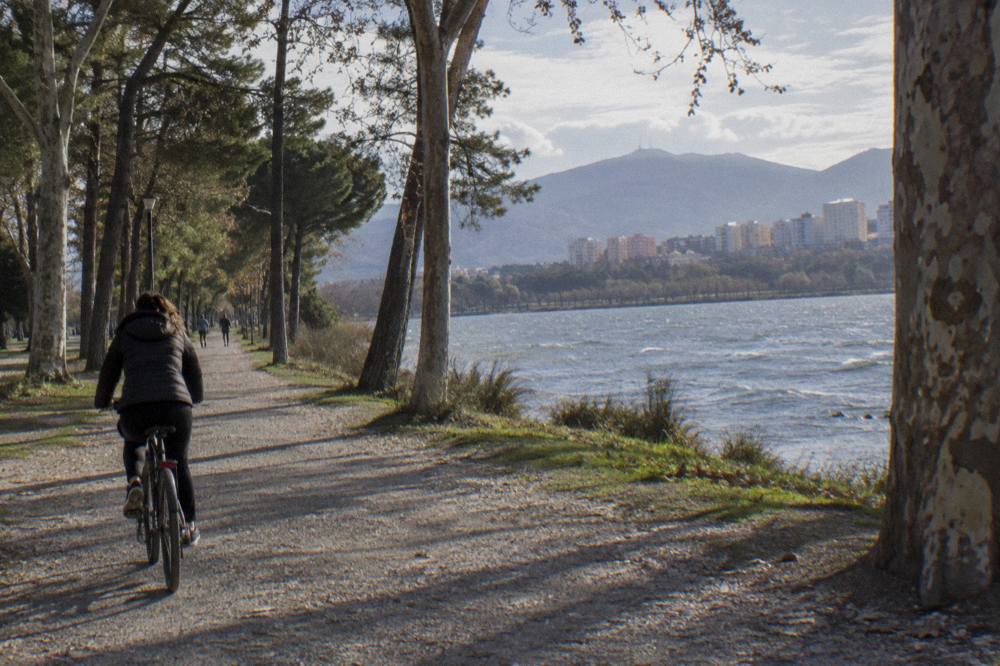
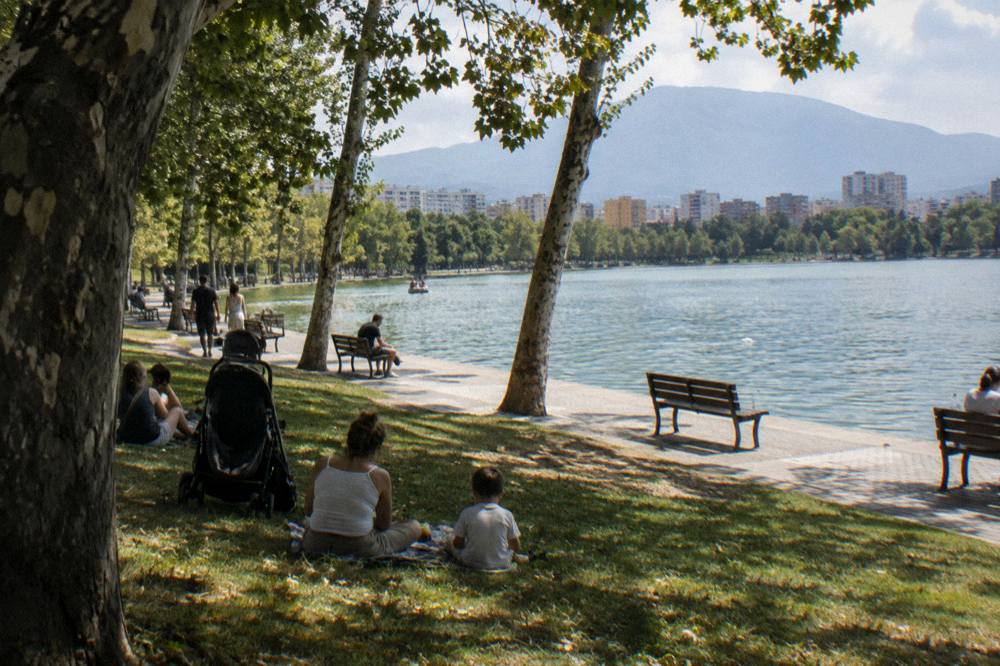
The lake path is the reason people come. It circles the Artificial Lake in a loop that walkers, runners and cyclists share, with the water on one side and heavy tree cover on the other. The hills behind give the loop a constant backdrop, and the light over the water changes through the day, which is why photographers turn up in the last hour before sunset. The park is public open space, and no hours or facilities list is published for it as a whole: treat sunrise to well past dark as the practical window, and confirm anything specific, such as boat hire or a seasonal kiosk, on the spot.
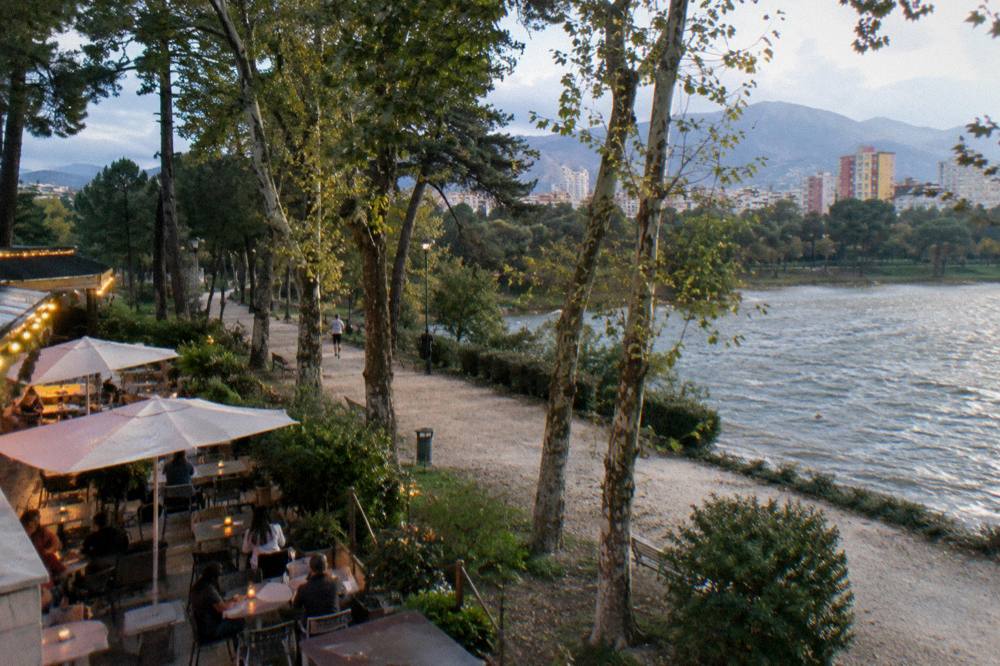
Around the loop sit the park's set pieces. The amphitheatre hosts occasional public events. The memorial to the British wartime servicemen stands among the trees. The botanical garden occupies the southern end, reached on foot from the lake path, and is worth the extra distance in spring. Families gravitate to the playgrounds and open lawns near the main entrances, and the restaurants at the park's northern edge and along the water serve through the day. Beyond eating, remember the four venues that may be named in Tirana copy are city restaurants; inside the park itself, treat every cafe and kiosk as confirm-on-arrival.
Cycling is one of the best ways to take the park in, because the loop connects to the boulevard and to the network of quieter streets in the Komuna e Parisit area about 1.8 km south-west. A guided ride saves the route-finding:
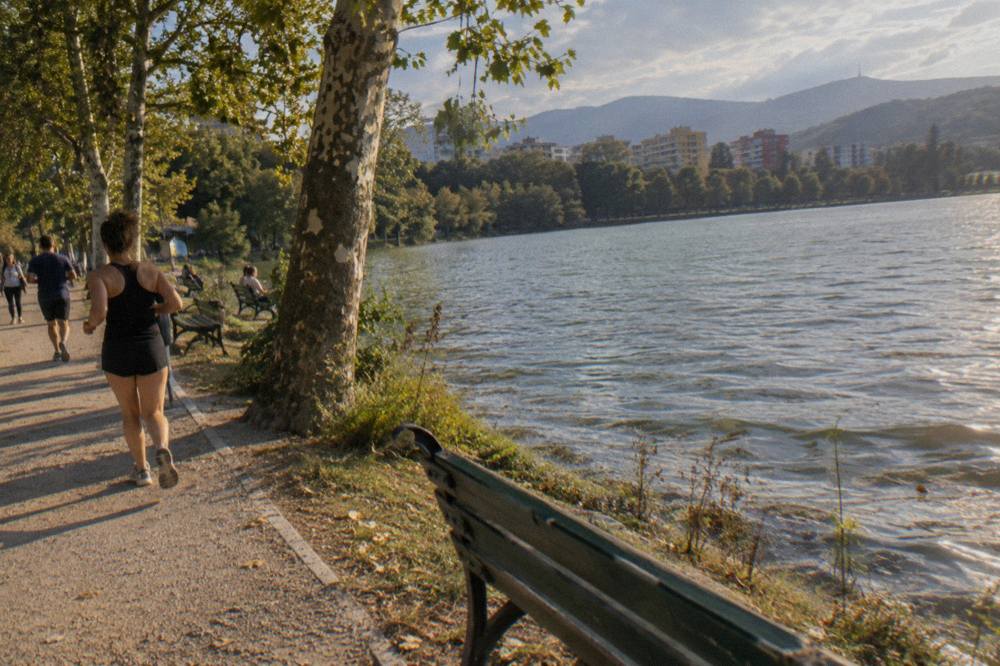
The seasons reshape the park sharply, and the climate data explains the rhythm. Averages from the ERA5 reanalysis, 1991-2020, put July's mean high at 29.8 C and August's at 30.4 C, with August also the month with the lowest rainfall total, 31 mm. That is when the lake beaches and the shade matter. November carries the heaviest rain, 139 mm, and December nearly as much at 138 mm, so from late October the loop turns soft and the trees drop their cover. January's mean low of 2.3 C means hard frosts are possible but snow is never a promise; no reliable snowfall record for Tirana exists, so plan for cold mud, not a white park.
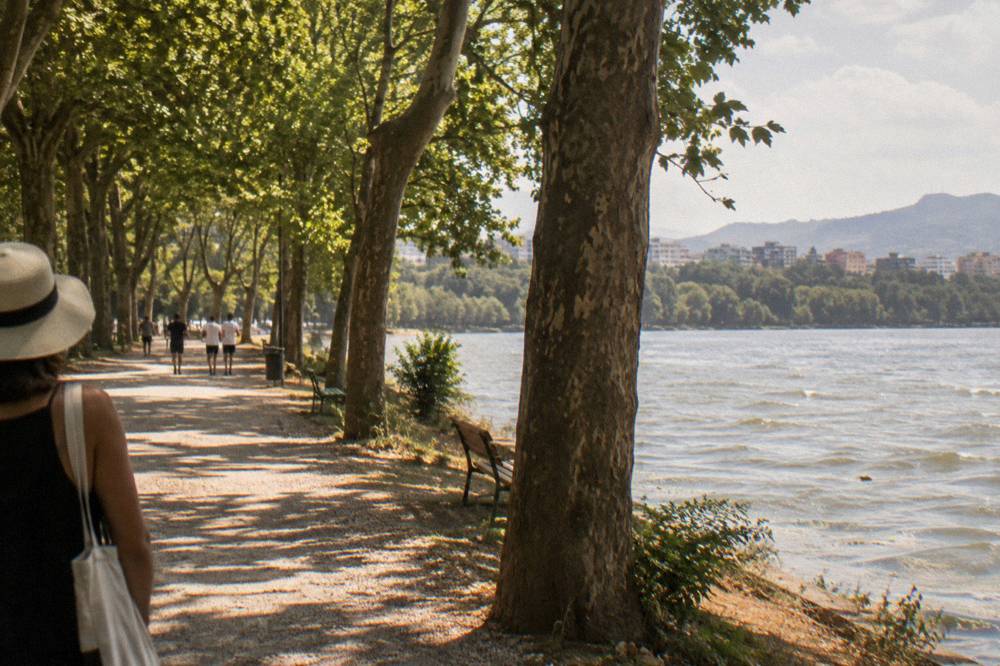
What a visit looks like at different times of day:
| Time | Who is on the paths | What stands out |
|---|---|---|
| Early morning | Runners, dog walkers | Cool air, empty alleys, flat light on the lake |
| Midday | Families, strollers, office workers on lunch | Deep shade, playgrounds busy in summer |
| Late afternoon | The full mix, cycling builds | Long shadows toward the hills, the busiest hours |
| Evening | Walkers after dinner, couples | Sunset over the water, restaurants filling |
And what the park holds, in short:
| Feature | What it is | Ticket needed |
|---|---|---|
| The lake loop | Shared path circling the Artificial Lake | No |
| Amphitheatre | Open-air venue for occasional public events | No, events vary |
| British servicemen memorial | Wartime mission memorial in the trees | No |
| Botanical garden | Garden area at the park's southern end | Confirm on arrival |
| Lake beaches | Small summer swimming spots on the water | No, seasonal |
| Playgrounds and lawns | Family areas near the main entrances | No |
How Do You Get To The Grand Park Of Tirana?
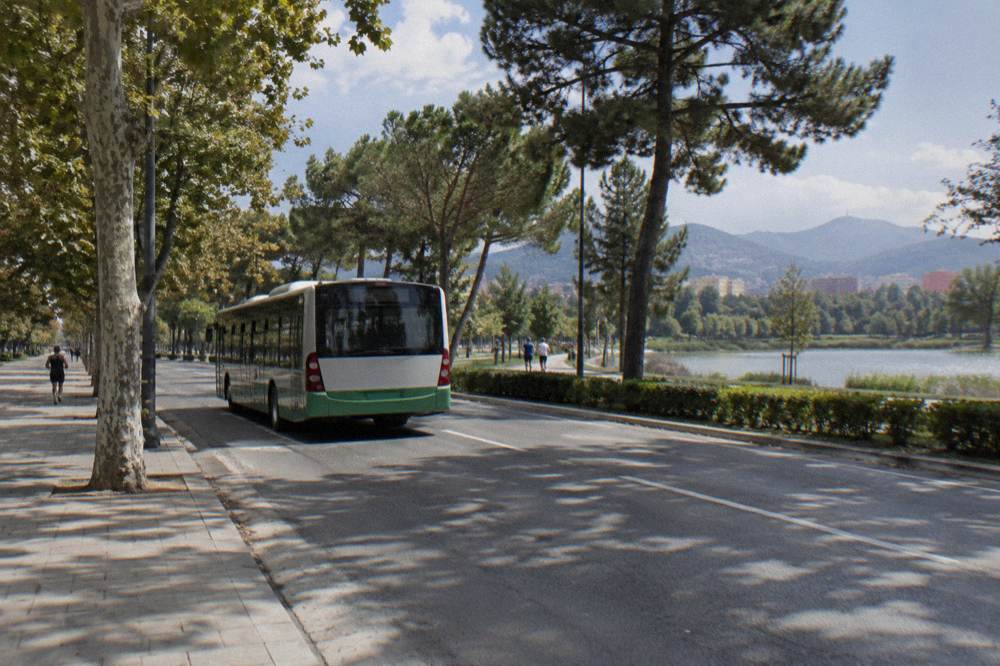
The Grand Park of Tirana is about 2.1 km south-east of Skanderbeg Square, a walk of roughly thirty minutes down the Deshmoret e Kombit boulevard past Mother Teresa Square, or a short hop on a city bus running south from the centre. A single city-bus ride costs about 40 lek, paid in cash on board, per local reporting. Taxis reach the park's northern edge in ten minutes or so, and cycling from the centre takes about the same.
The walk is the classic approach and needs no planning: leave Skanderbeg Square south past the Et'hem Bey Mosque and the Clock Tower, both about 0.2 km south-east of the square, continue past the Pyramid of Tirana about 0.7 km south-east, and follow the boulevard to Mother Teresa Square about 1.2 km south, where the park begins. The whole axis is flat, tree-lined and busy, which makes it safe and easy to follow, and it threads several of the city's main sights into one line: the National History Museum sits on the square itself but is closed for restoration until about March 2028, so see its mosaic facade and move on.
City buses run south along and beside this corridor, running roughly 06:00 to 23:00, and the fare is paid in cash to the conductor on board; local reporting puts a single ride at about 40 lek, so carry small notes. Uber and Bolt do not operate in Tirana; local taxi apps and street taxis do, and a ride from the centre to the park's edge is short and cheap, though no official tariff exists, so agree the fare or check the app price before setting off. No airport train exists either: the Tirana-Durres-Airport rail line is being rebuilt, with electrification expected to finish by the end of 2027, and until then the airport bus, 400 lek, runs 24/7 every full hour behind the Palace of Opera and Ballet near the square.
For riders, the park connects into a longer loop. Cyclists coming from the centre can join at the northern entrance, ride the lake loop, and exit south-west toward Komuna e Parisit or east toward the hills. A guided option covers the park and the city highlights in one ride, and the free-cancellation terms make it easy to book ahead and shift if the weather turns.
Getting there compared:
| Method | Time from Skanderbeg Square | Cost | Notes |
|---|---|---|---|
| On foot | About 30 minutes | Free | Flat, straight, past major sights |
| City bus | About 10 to 15 minutes | About 40 lek cash | Runs roughly 06:00 to 23:00 |
| Taxi | About 10 minutes | Agree fare first | No Uber or Bolt in Tirana |
| Bicycle | About 10 to 15 minutes | Rental varies | Connects to the lake loop |
One current-conditions note for autumn 2026: demonstrations have been held in central Tirana since 13 October 2026, some with violence, and the UK FCDO updated its travel advice on 15 October 2026. The boulevard has been a focal point, so check local media before walking down it on a given day, and the same advice shifted the Tirana Marathon from 24 to 25 October to 14 to 15 November 2026. Emergency numbers, for the record, are Police 112, Ambulance 127 and Fire 128.
What Is The Artificial Lake Like Through The Year?
The Artificial Lake is a flat-water reservoir ringed by the park's loop path, at its best for swimming and evening walks in the hot dry months of July and August, when mean highs reach 29.8 C and 30.4 C and rainfall falls to 34 mm and 31 mm respectively per the ERA5 reanalysis 1991-2020. From November the park turns wet, with 139 mm of rain that month, and the lake becomes a walking and running destination rather than a swimming one.
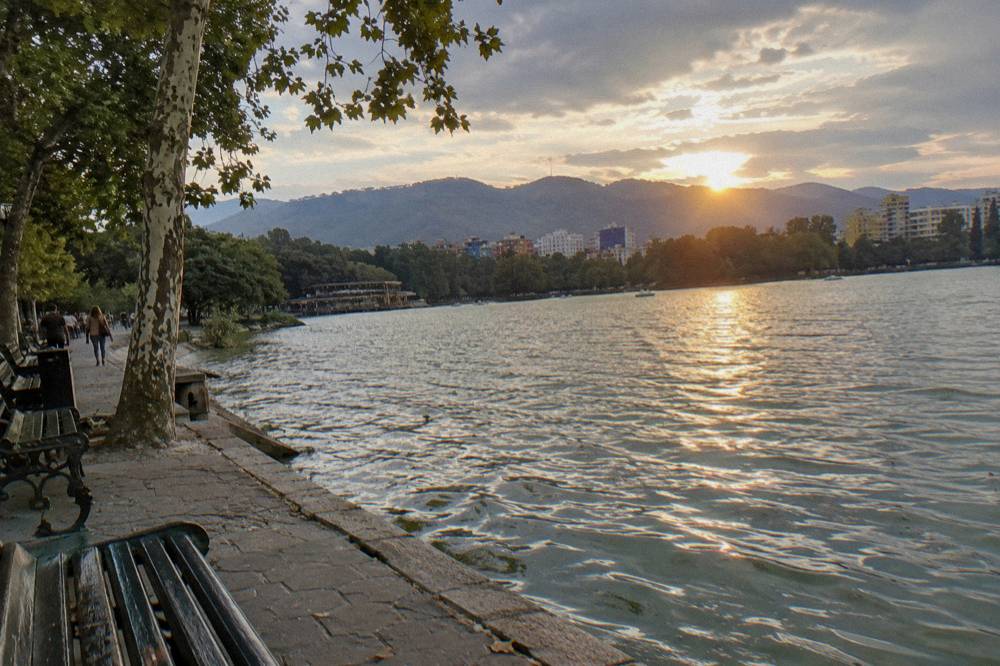
Summer concentrates everything the lake does well. The small beaches along the water fill from late morning, the tree cover keeps the loop usable through the heat, and the evenings stretch long over the surface. The lake is not the sea: Tirana sits inland in a basin, and the nearest coast is at Durres, about 37 km and 39 minutes west by road, a proper day trip rather than an after-lunch dash. Within the city, though, the lake is the water people gather around, and the hill backdrop gives it a scale the streets never manage.
Autumn is the quiet version of the same place. Rain rises through October, 119 mm on the 1991-2020 averages, and peaks in November before easing slightly into December. The trees turn, the beaches empty, and the loop belongs to runners and umbrella-less walkers timing the gaps between showers. Winter stays mild on paper, a January mean high of 10.8 C, but the basin holds damp cold, and the mean low of 2.3 C means frost on the grass some mornings. Spring pulls the balance back: by May the mean high is 22.7 C with rainfall down to 89 mm, and the botanical garden end of the park wakes first.
| Month | Mean high C | Mean low C | Rain mm | Park mood |
|---|---|---|---|---|
| January | 10.8 | 2.3 | 106 | Frosty mornings, quiet paths |
| March | 15.0 | 5.1 | 117 | Blossom, mud on the loop |
| May | 22.7 | 12.5 | 89 | Green, gardens waking |
| July | 29.8 | 19.1 | 34 | Beaches busy, long evenings |
| August | 30.4 | 19.5 | 31 | Peak swim season |
| October | 21.4 | 12.2 | 119 | Autumn colour, first real rain |
What Can You Do Around The Grand Park Of Tirana?
Around the Grand Park of Tirana sit Mother Teresa Square about 1.2 km south of Skanderbeg Square, the Blloku cafe quarter about 0.8 km south, the Air Albania Stadium about 1.3 km south-east, Komuna e Parisit about 1.8 km south-west and, further out, the Dajti Ekspres cable car station about 4.4 km north-east. The park is therefore a hub rather than a detour: it links the boulevard sights, the nightlife district and the hill country in one walkable frame.
Blloku is the natural next stop after a lake loop. Once the closed quarter of the communist leadership and now the city's cafe and bar district, it lies between the boulevard and the park, so an evening walk from the water to dinner is a matter of minutes. Local guides report it is Tirana's main nightlife area, and the pattern is late: cafes turn into bars as the evening builds. For a planned night out, an Albanian Night Cultural Dance and Music Experience packages dinner and traditional music in one sitting, with Albanian Night Dance and Music before committing an evening.
North from the park, the centre stacks up quickly. The Pyramid of Tirana, about 0.7 km south-east of the square, is a renovated building housing the TUMO tech centre, its outside steps free to climb, and never the ruin older guides describe. The House of Leaves, about 0.2 km south-west of the square, documents the surveillance apparatus of the communist period and is open daily 09:00 to 19:00. The two Bunk'Art museums carry the same story underground: Bunk'Art 1 behind the cable car lower station about 4.6 km north-east, and Bunk'Art 2 about 0.2 km south-east of the square, both open daily from 09:30; neither publishes a ticket price online, so buy at the door.
South and west, day trips fan out. Lake Bovilla, a mountain reservoir with hiking above it, is about 61 minutes by road from the square, and the question Is Lake Bovilla Worth Visiting gets a full answer elsewhere on this site. Shkoder and its Rozafa castle sit about 118 minutes away, Ohrid about 135 minutes plus a border crossing into North Macedonia, and Pogradec on the Albanian shore of Lake Ohrid about 141 minutes. The big-hill alternative is the Albanian Alps: a Theth and Blue Eye day tour reaches the northern mountains in one long organized day.
Distances and directions from Skanderbeg Square:
| Place | Straight-line position | Best paired with |
|---|---|---|
| Mother Teresa Square | About 1.2 km south | Park northern entrance |
| Blloku | About 0.8 km south | Evening after the lake |
| Air Albania Stadium | About 1.3 km south-east | Match or event days |
| Komuna e Parisit | About 1.8 km south-west | Quieter residential walking |
| Dajti Ekspres station | About 4.4 km north-east | Morning hills, park evening |
| Bunk'Art 1 | About 4.6 km north-east | Cable car combination |
Staying near the park has its own logic: the southern neighbourhoods put the loop at the doorstep and the centre within a half-hour walk. The full neighbourhood breakdown is in Where To Stay In Tirana: Centre, Blloku Or Near The Lake.
For travellers who prefer a guide to the lake loop and the city line together, the bike and e-bike highlights tour ties the boulevard, the park and the waterfront into one guided ride.
Common Questions About The Grand Park Of Tirana
Is the Grand Park of Tirana free?
Yes. The park and the Artificial Lake are public open space with no admission. Individual facilities inside the park, such as boat hire or seasonal kiosks, set their own terms, so confirm those on arrival.
How far is the Grand Park of Tirana from Skanderbeg Square?
About 2.1 km south-east of the square, with the Artificial Lake about 2.1 km south. On foot that is roughly thirty minutes down the boulevard past Mother Teresa Square.
Can you swim in the Artificial Lake in Tirana?
Swimming happens at the lake's small beaches in summer, and locals do use them. There is no lifeguard or water-quality statement published for the lake, so swim at your own judgement and prefer the July and August months when the water and weather are warmest.
What is the best time of day to visit the Grand Park of Tirana?
Early morning for quiet paths and cool air, late afternoon into sunset for atmosphere, when the loop fills with walkers and the light comes low across the water toward the hills. Midday in July and August is hot, with mean highs near 30 C, so use the shade.
Can you cycle around the Artificial Lake in Tirana?
Yes, the loop path is shared by walkers, runners and cyclists, and it connects north to the boulevard and south-west toward quieter residential streets. A guided bike or e-bike tour covering the park and the city highlights is listed above.
Is the Grand Park of Tirana safe?
The park is a busy public space and the standard city advice applies: watch your belongings in crowds, as anywhere. After dark the lit main paths stay populated; quiet corners of a large park are best avoided alone late at night. Emergency numbers are Police 112, Ambulance 127 and Fire 128.
The Grand Park and the Artificial Lake ask nothing of a visitor except showing up: no ticket, no schedule, no queue. Walk down the boulevard, take the loop once round the water, and finish the evening in Blloku, and the park will have done exactly what it does for the city that built it.