Mosques And Churches In Tirana: A Religious Landmarks Walk
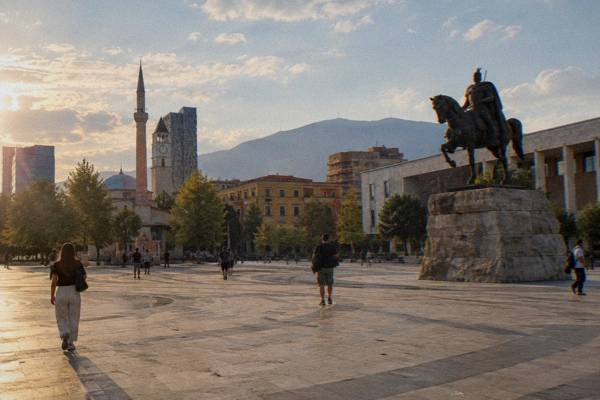
Tirana packs its mosques and churches into a walkable core around Skanderbeg Square: an Ottoman-era mosque, a new grand mosque, an Orthodox cathedral and a Catholic cathedral all sit within about a kilometre of each other, in a country with no state religion.
Short answer
The main religious landmarks in Tirana are the Et'hem Bey Mosque and the Clock Tower on Skanderbeg Square, the Great Mosque of Tirana (Namazgah) about 0.6 km south-east, the Resurrection Orthodox Cathedral about 0.2 km south, and St Paul's Catholic Cathedral about 0.5 km south-east. All of them can be walked in a single loop, and mosque entry is free outside prayer times with modest dress.
Tirana, the capital of Albania, holds its religious landmarks unusually close together. An Ottoman-era mosque, a grand mosque opened in 2024, an Orthodox cathedral and a Catholic cathedral all stand within about a kilometre of Skanderbeg Square, in a city where the 2023 census reported Muslim, Catholic and Orthodox communities living alongside a large share of residents who claim no denomination. Albania has no state religion, and that secular settlement shapes how these buildings work: they are active places of worship first and sightseeing stops second. This walk covers all of them, with the dress expectations, the history worth knowing and the practical details that are safe to state.
For a wider sweep of the city's sights, see the things to do in Tirana round-up, and for how the communist era reshaped this same streetscape, the communist history in Tirana guide picks up the story this walk begins.
Which Mosques And Churches Should You See In Tirana?
The five religious landmarks that anchor a Tirana walk are the Et'hem Bey Mosque and the Clock Tower on Skanderbeg Square, the Great Mosque of Tirana (Namazgah) about 0.6 km south-east of the square, the Resurrection Orthodox Cathedral about 0.2 km south, and St Paul's Catholic Cathedral about 0.5 km south-east. Each is an active place of worship, all five sit inside a comfortable walking loop, and none charges a stated admission.
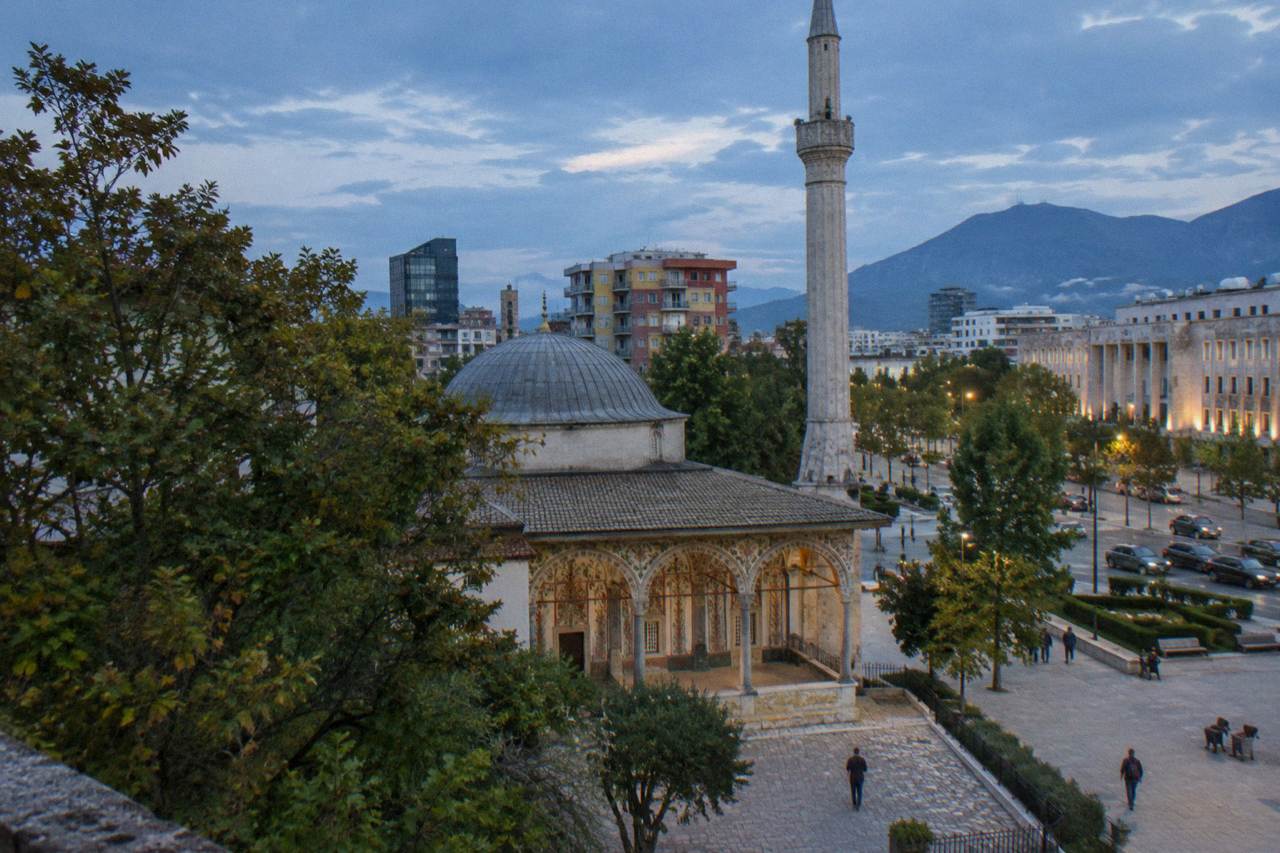
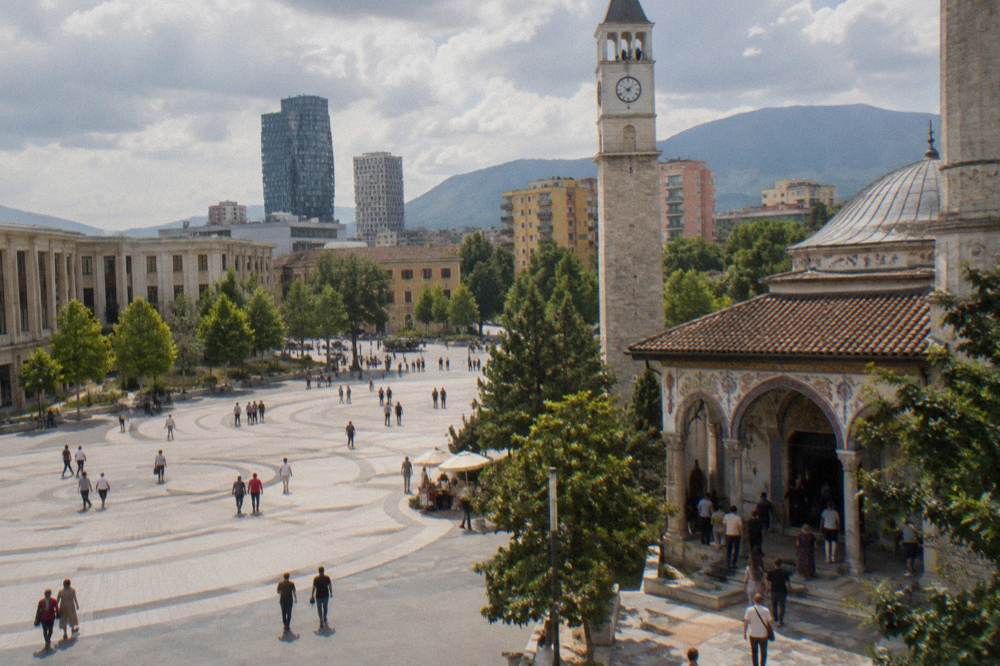
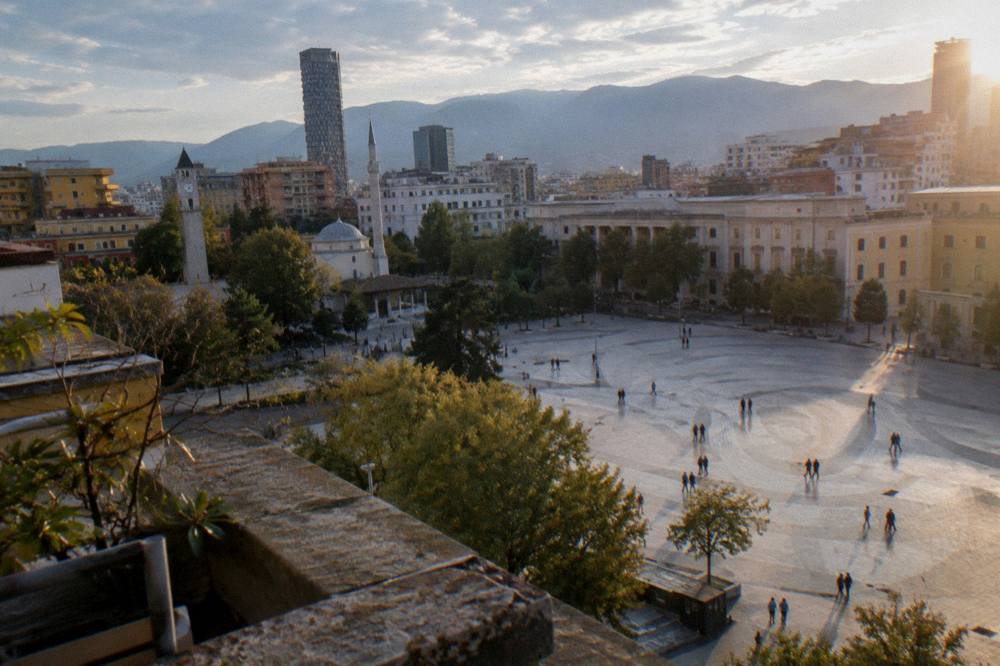
The Et'hem Bey Mosque is the oldest stop and the one with the hardest history. The visit-tirana.com listing reports it was founded at the end of the 18th century by Mulla Bey and finished by his son Haxhi Et'hem Bey, that it was spared in 1967 when religion was suppressed, and that on 18 January 1991 about 10,000 people entered it despite the authorities, an event remembered as a crack in the regime rather than only a religious one. Its frescoed portico faces the square directly, so even a passer-by sees the most decorated part.
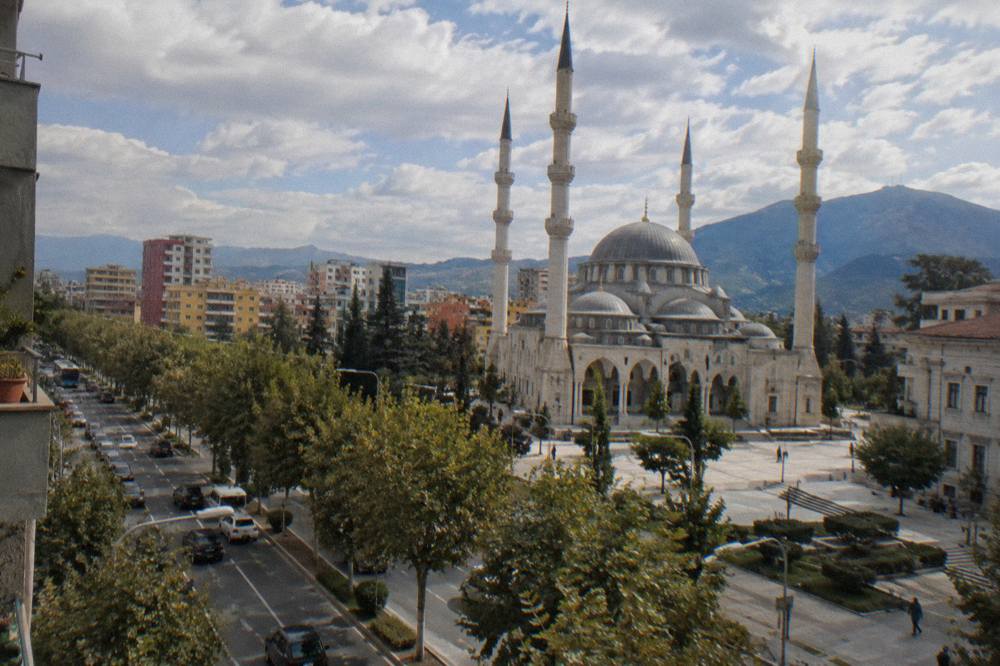
The Namazgah Mosque is the opposite story: a purpose-built grand mosque opened on 10 October 2024, per Wikipedia's account, on a site that long carried the name Namazgah, the prayer field. Its capacity and visiting hours are contested between sources, so confirm locally rather than trusting any single figure. The two cathedrals complete the set. The Resurrection Cathedral is the seat of the Orthodox Archdiocese of Tirana and stands about 0.2 km south of the square; St Paul's Catholic Cathedral sits about 0.5 km south-east. Neither has reliable opening hours or admission details, so treat both as drop-in visits and check the door notices.
Can You Walk Tirana's Religious Landmarks In One Loop?
Yes, the whole set is walkable in a single loop, because every major mosque and church stands within about 0.7 km of Skanderbeg Square: the Et'hem Bey Mosque is on the square itself, the Great Mosque about 0.6 km south-east, the Resurrection Cathedral about 0.2 km south, St Paul's Cathedral about 0.5 km south-east, and the Clock Tower beside the Et'hem Bey Mosque. No bus or taxi is needed between them, and the terrain is flat basin floor all the way.
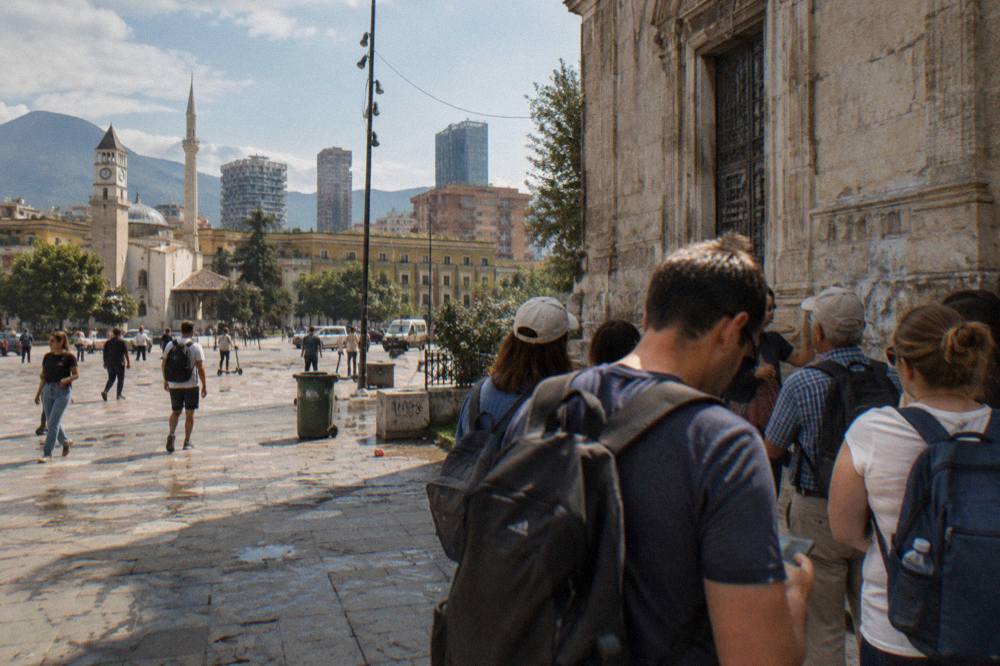
Start on the square, where the Et'hem Bey Mosque and the Clock Tower stand together at its eastern edge. The Clock Tower has about 90 steps to the top, per the visit-tirana.com listing, and its fee and hours are not published consistently, so check the door before counting on the climb. From the square, head south about 0.2 km to the Resurrection Cathedral, then swing south-east about 0.5 km to St Paul's Cathedral, then north-east to the Namazgah Mosque about 0.6 km south-east of the square, and finish back where you started. Add a short detour to the Tanners' Bridge, about 0.7 km east, an Ottoman stone bridge that belongs to the same era as the mosque's founding.
Two things stretch the loop. Prayer times pause mosque visits, and Friday midday prayers fill the Namazgah Mosque with worshippers rather than tourists. And the demonstrations held in central Tirana since 13 October 2026 have at times filled the square itself; the FCDO advises avoiding demonstrations and checking local media, so keep some flexibility in the route on any given day.
| Stop | Direction From Skanderbeg Square | Straight-Line Distance | Status To Confirm At The Door |
|---|---|---|---|
| Et'hem Bey Mosque | south-east | about 0.2 km | free outside prayer times; modest dress |
| Clock Tower | south-east | about 0.2 km | about 90 steps; fee and hours unconfirmed |
| Resurrection Cathedral | south | about 0.2 km | hours unconfirmed |
| St Paul's Cathedral | south-east | about 0.5 km | hours unconfirmed |
| Great Mosque of Tirana (Namazgah) | south-east | about 0.6 km | hours unconfirmed; visit between prayers |
| Tanners' Bridge | east | about 0.7 km | open public street, no entry needed |
A guided option exists for the square portion: the Tirana small-group walking tour of communist landmarks covers this quarter, and the related tour on this page.
What Is The Et'hem Bey Mosque And Why Does It Matter?
The Et'hem Bey Mosque is Tirana's Ottoman-era mosque on Skanderbeg Square, reported as founded at the end of the 18th century by Mulla Bey and completed by his son Haxhi Et'hem Bey, spared during the 1967 suppression of religion, and famously entered by about 10,000 people on 18 January 1991 despite the authorities. Entry is free outside prayer times, with modest dress expected. It is the single most historically weighted religious building in the city centre.
The mosque's survival is the point. When the communist regime closed places of worship in 1967, the mosque was one of the few spared demolition or conversion, and its frescoes survived with it. The portico paintings, unusual in their figurative detail for a mosque facade, are what draw cameras from the square. Then came 1991: the reported entry of about 10,000 worshippers on 18 January, defying the authorities, is treated as one of the opening acts of Albania's transition. A building that had been silenced for two decades became a stage for it.
Visiting is straightforward. Dress modestly: shoulders and knees covered, a headscarf for women, shoes off inside, which is standard courtesy guidance for mosque visits in Albania. Avoid prayer times, and especially the Friday midday prayer. No admission price is published, and the visiting slots quoted around the web are unreliable, so the door itself is the authority.
What Should You Know About The Great Mosque Of Tirana?
The Great Mosque of Tirana, also called the Namazgah Mosque, opened on 10 October 2024 and stands about 0.6 km south-east of Skanderbeg Square, on the site long known as the Namazgah prayer field. It is an active mosque built at national scale, but its capacity and opening hours are disputed between sources, so the practical advice is simple: visit between prayers, dress modestly, and confirm access arrangements locally rather than relying on published times.
The name carries the history. Namazgah was Tirana's open prayer ground under Ottoman rule, and the new mosque claims the site and the name together. Per Wikipedia it opened on 10 October 2024, which makes it one of the newest grand mosques in Europe. What it is not is a museum: it was built for a working congregation, and the etiquette of an active mosque applies in full.
The disputes matter for planning. Figures for its capacity circulate widely but disagree, and the hours quoted across guides conflict outright, so this walk prints none of them. What can be said is positional: the building sits about 0.6 km south-east of the square, a ten-minute walk from the Et'hem Bey Mosque, close enough that the two mosques bracket a single afternoon. Between the two stands the National History Museum, closed for restoration with the announced closure running to March 2028; its mosaic facade can still be seen from the square.
What Are Tirana's Cathedrals Like Inside And Out?
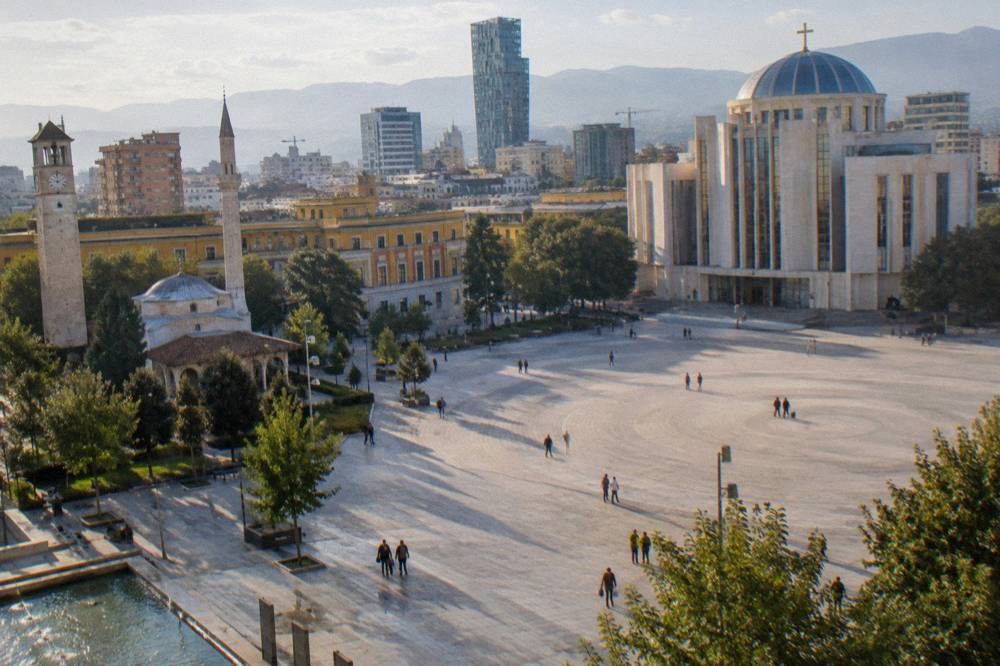
Tirana's two cathedrals are the Resurrection Cathedral, the Orthodox seat about 0.2 km south of Skanderbeg Square, and St Paul's Cathedral, the Catholic cathedral about 0.5 km south-east; both are modern buildings serving active congregations, neither publishes hours or admission terms, and both repay a quiet drop-in visit between services. The Orthodox cathedral is the closer and the more visually distinctive of the pair from the street.
The Resurrection Cathedral functions as the centre of the Orthodox Archdiocese of Tirana, and its scale reflects that role rather than a long construction history: this is a post-communist building, raised when Albania's churches were being rebuilt after decades of suppression. Interior visiting etiquette follows Orthodox custom: modest dress, quiet voices, and in Orthodox churches generally photography of the iconostasis is best kept discreet and flash-free. No hours or fee terms are published reliably, so a daytime drop-in with a fallback plan is the realistic approach.
St Paul's Cathedral serves the Catholic community, which the 2023 census reported at about 8.4 percent of the population. It stands about 0.5 km south-east of the square, which places it conveniently between the Resurrection Cathedral and the New Bazaar, about 0.6 km east of the square, where the walk can break for coffee. As with the Orthodox cathedral, no opening schedule is available; Sunday masses are the one certainty on any church calendar.
| Cathedral | Direction From Square | Community | Reported 2023 Census Share | Practical Note |
|---|---|---|---|---|
| Resurrection Cathedral | about 0.2 km south | Albanian Orthodox | Orthodox about 7.2% | active seat; hours unconfirmed |
| St Paul's Cathedral | about 0.5 km south-east | Catholic | Catholic about 8.4% | active parish; hours unconfirmed |
How Religious Is Tirana, And Does It Affect Visitors?
Tirana sits in one of Europe's most religiously mixed and secularised societies: the 2023 census reported about 45.9 percent Muslims, 8.4 percent Catholics and 7.2 percent Orthodox, alongside 13.8 percent believers without a denomination, 10.2 percent who preferred not to answer and a further non-religious block, and Albania has no state religion. For visitors the effect is small and practical: the mosques and churches are active but not strict, and modest dress at religious buildings is the main expectation.
The census picture, as reported by ATA, is worth reading carefully, because the headline Muslim share sits beside very large non-declaration and non-religious blocks. Albania's constitutional settlement is neutral: no state religion, and the communist era's forced secularisation from 1967 still shapes how relaxed practice is today. Tirana's skyline tells the same story: a new grand mosque, two cathedrals and, within a kilometre of them, some of the loudest bar terraces in the Balkans in Blloku, about 0.8 km south of the square. Nobody expects visitors to observe anything beyond building-level courtesy.
That courtesy is concrete. At mosques: shoulders and knees covered, headscarf for women, shoes off, no visits during prayer. At Orthodox and Catholic churches: modest dress, hats off indoors, silence during services. Outside those buildings, normal city clothing is the norm; the separate question of what to wear around Albania generally is covered in the site's broader travel tips for Albania.
| Response Category, 2023 Census | Reported Share |
|---|---|
| Muslim | about 45.9% |
| Believers without a denomination | about 13.8% |
| Catholic | about 8.4% |
| Orthodox | about 7.2% |
| Preferred not to answer | about 10.2% |
| Non-religious or atheist | share not published here |
When Is The Best Time Of Day For This Walk?
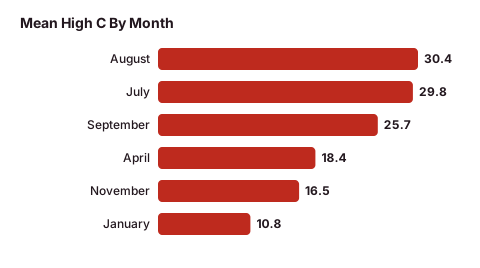
The best window is mid-morning, roughly 09:30 to 11:30, when mosques sit between the dawn and midday prayers, churches are open for daytime visits, and summer heat has not yet built, since the ERA5 reanalysis 1991-2020 puts July mean highs at 29.8 C and August at 30.4 C. Friday midday is the one slot to avoid at the mosques, and winter afternoons shorten the loop under November rainfall of about 139 mm per month.
Prayer timing drives the mosque stops. Between prayers, entry is free and calm; at prayer times, and above all at the Friday midday prayer, the buildings belong to worshippers and visits pause. Mid-morning threads that needle and pairs well with the Clock Tower, whose roughly 90 steps are easier before the day warms. Afternoons work too, but in summer the walk between the Namazgah Mosque and St Paul's Cathedral is exposed to sun, and in late autumn the rain builds: the ERA5 reanalysis 1991-2020 shows October at about 119 mm of rain and November at about 139 mm, against August's roughly 31 mm.
Season matters as much as hour. The best time to visit Tirana guide works through the full calendar; the short version for this walk is that spring and early autumn give the pleasant middle ground, with May mean highs about 22.7 C and September about 25.7 C, while the period since 13 October 2026 has added a caveat about central gatherings: demonstrations in central Tirana have at times occupied the square, and the FCDO advises avoiding them, so check local media on the morning of your walk.
| Month | Mean High C | Mean Low C | Rain Mm | Walk Notes |
|---|---|---|---|---|
| January | 10.8 | 2.3 | 106 | cool and wet; short daylight |
| April | 18.4 | 8.3 | 105 | mild; carry a layer |
| July | 29.8 | 19.1 | 34 | go early; shade between stops |
| August | 30.4 | 19.5 | 31 | dry but hot; water essential |
| September | 25.7 | 16.0 | 99 | warm and quieter |
| November | 16.5 | 8.0 | 139 | the highest-rainfall month; waterproof |
How Does The Communist Era Explain What You See?
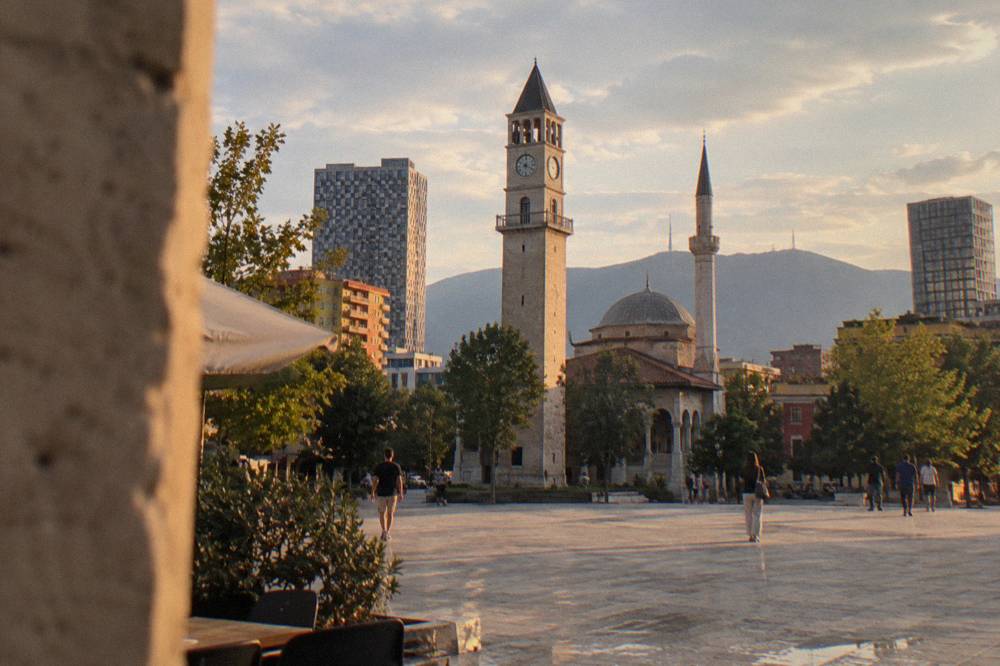
The communist era explains the gaps in this walk more than the buildings themselves: the regime that ruled from 1944 to 1991 suppressed religion from 1967, the Et'hem Bey Mosque was one of the few places of worship spared, and nearly every other church and mosque standing in Tirana today, including both cathedrals and the Namazgah Mosque, was built after that period ended. The 18 January 1991 entry of about 10,000 people into the Et'hem Bey Mosque is remembered as a landmark in the regime's collapse.
Walk the loop with that timeline in mind and the city reads differently. The Et'hem Bey Mosque survived the 1967 suppression, per the visit-tirana.com account, but it stood closed and silent for two decades. The Resurrection Cathedral and St Paul's Cathedral are post-1991 constructions, built for communities rebuilding from zero. The Namazgah Mosque opened on 10 October 2024, three decades later still. In between, the skyline filled with secular markers: the Pyramid of Tirana, about 0.7 km south-east, opened in 1988 as a museum to the regime's own leader and now houses the TUMO tech centre after its 2023 renovation, and the House of Leaves, about 0.2 km south-west of the square, documents the surveillance apparatus that watched religious life as closely as everything else.
For travellers who want this layer explained rather than inferred, a guided walk earns its keep. The Tirana museums guide covers the indoor stops, and the small-group communist landmarks walk covers the outdoor ones, including the square's religious buildings and the stories attached to them.
What Else Sits On The Same Walk?
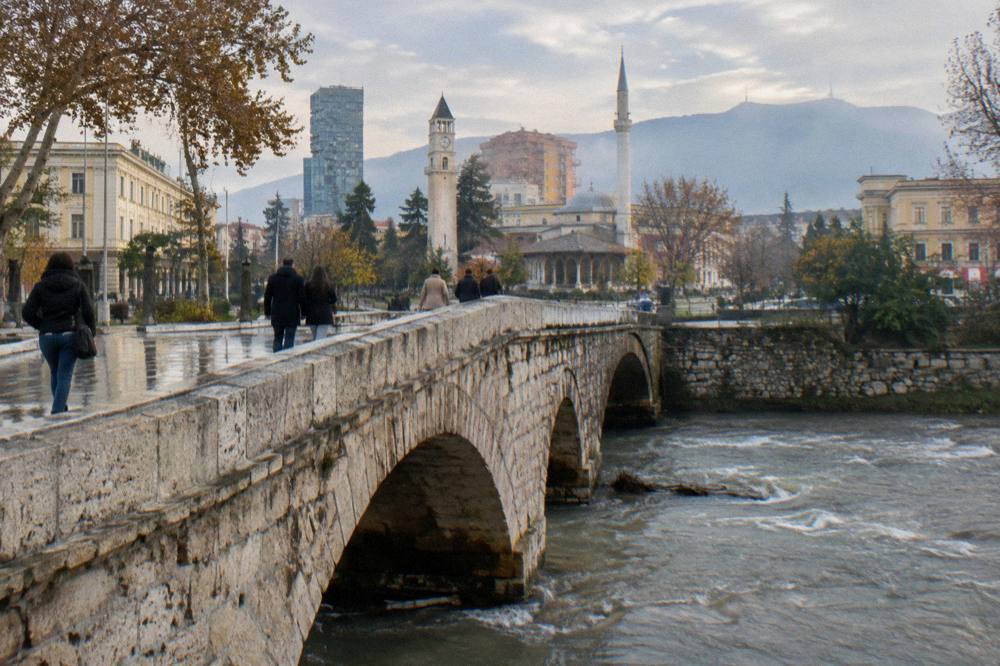
The same loop passes the Clock Tower beside the Et'hem Bey Mosque, the closed National History Museum with its mosaic facade still visible on Skanderbeg Square, the Tanners' Bridge about 0.7 km east, the New Bazaar about 0.6 km east, the House of Leaves about 0.2 km south-west, and the Pyramid of Tirana about 0.7 km south-east, all free to see from the street except the ticketed House of Leaves. That makes the religious walk a natural full circuit of central Tirana.
The Clock Tower is the mosque's vertical partner and, at about 90 steps, a short climb with a view over the square, though its fee and hours are not reliably published, so treat the ascent as a bonus rather than the plan. The National History Museum on the square has been closed since 15 March 2024 for restoration, with the closure announced to run to March 2028; the mosaic facade on its frontage remains one of the square's most photographed surfaces. The Tanners' Bridge is a low Ottoman stone bridge now sitting at street level, an everyday fragment of the era that built the Et'hem Bey Mosque.
For refuelling, the New Bazaar clusters produce stalls and cafes, and the site's restaurant guide for Tirana lists the options. Walking safety is a common question for evening extensions into Blloku, and the Is It Safe To Walk Around Tirana At Night answer covers it directly. The one 2026-specific caution repeats: central gatherings have been affected by demonstrations since 13 October 2026, and the FCDO advises steering clear of them and checking local media, a point the site's safety guide for Tirana treats in full.
| Nearby Landmark | Direction From Square | Added To The Walk |
|---|---|---|
| Clock Tower | about 0.2 km south-east | view climb, about 90 steps |
| National History Museum | on the square | mosaic facade from outside |
| Tanners' Bridge | about 0.7 km east | Ottoman street fragment |
| New Bazaar | about 0.6 km east | market and coffee stop |
| House of Leaves | about 0.2 km south-west | surveillance museum, ticketed |
| Pyramid of Tirana | about 0.7 km south-east | steps climbable, free |
Should You Take A Guided Tour Or Walk It Yourself?
Walking the mosques and churches independently is entirely practical because every stop sits within a kilometre of Skanderbeg Square, but a guided walk adds the layer the buildings cannot explain themselves: the 1967 suppression, the 1991 reopening of the Et'hem Bey Mosque by about 10,000 people, and the post-communist rebuilding that produced both cathedrals and the Namazgah Mosque. Choose independent for flexibility on prayer-time pauses, and choose a guide for the history.
The independent case is strong on logistics. The loop is flat, signposted by landmarks rather than requiring navigation, and every stop is free to approach from the street. The cost of going alone is interpretive: the buildings display little of their own story in English, and the events that made them significant, from the sparing of the mosque in 1967 to the crowds of January 1991, arrive only with a guide or prior reading. That is exactly the ground the small-group communist landmarks walk covers, and the pair of day trips below suit travellers using Tirana as a base who want a longer stride out of the city afterwards.
The Ohrid option deserves its slot here for one religious reason: the lake's UNESCO-listed heritage was extended to the Albanian side in 2019, and the day tour reaches churches and monasteries far older than anything standing in Tirana. North of the capital, the Komani Lake and Shala River trip below trades heritage for scenery on one of the most dramatic boat journeys in the Balkans, departing from Shkoder, about 118 minutes by road from Tirana.
Common Questions About Tirana's Mosques And Churches
Is there a dress code for visiting mosques in Tirana?
Yes, modest dress: shoulders and knees covered, a headscarf for women inside mosques, and shoes off at the entrance. This is standard courtesy across Albania's places of worship, and no site publishes stricter local rules.
Can you go inside the Et'hem Bey Mosque?
Yes, outside prayer times, and entry is free. The mosque is small, so a visit of a few minutes covers the interior; avoid the Friday midday prayer and any ongoing service.
Which is the main mosque in Tirana?
The Great Mosque of Tirana, also called the Namazgah Mosque, opened on 10 October 2024 and is the city's grand purpose-built mosque, about 0.6 km south-east of Skanderbeg Square. The Et'hem Bey Mosque on the square is the historic one.
Are Tirana's cathedrals open to visitors?
Both the Resurrection Cathedral and St Paul's Cathedral serve active congregations and admit quiet visitors outside services, but neither publishes fixed hours, so check the door notices or attend a scheduled service time.
Is religion important in everyday Tirana?
Albania has no state religion, and the 2023 census reported about 45.9 percent Muslims, 8.4 percent Catholics and 7.2 percent Orthodox alongside large shares declaring no denomination or no religion. Practice is generally relaxed and rarely affects visitors beyond dress at religious buildings.
Do you need to pay to enter churches or mosques in Tirana?
Mosque entry is free. Neither cathedral nor the mosque sites publish admission charges; if a donation box is present, contributing is optional courtesy. Confirm at the door, since published details are inconsistent.
Tirana's religious landmarks reward a slow loop: one square, two mosques, two cathedrals, and a century of suppression and rebuilding written across five buildings that all stand within a kilometre of each other. Walk it mid-morning, dress modestly at the doors, and let the rest of the Tirana Albania Travel Guide fill in the museums, the food and the day trips beyond the basin.