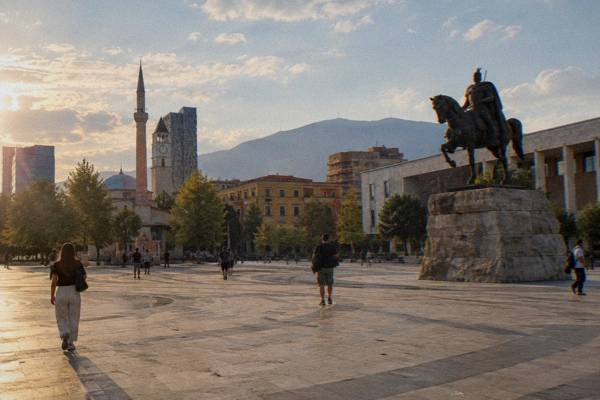
Tanners' Bridge: The Ottoman Stone Bridge
Tanners' Bridge is a small Ottoman-era stone arch about 0.7 km east of Skanderbeg Square in Tirana, one of the few surviving structures from before the city centre was rebuilt around it.
Short answer
Tanners' Bridge is a free, always-open Ottoman stone bridge in central Tirana, about a ten-minute walk east of Skanderbeg Square and close to Tirana Castle and the New Bazaar. There is no ticket, no gate and no closing time; it is a short stop on a walking route rather than a destination in itself.
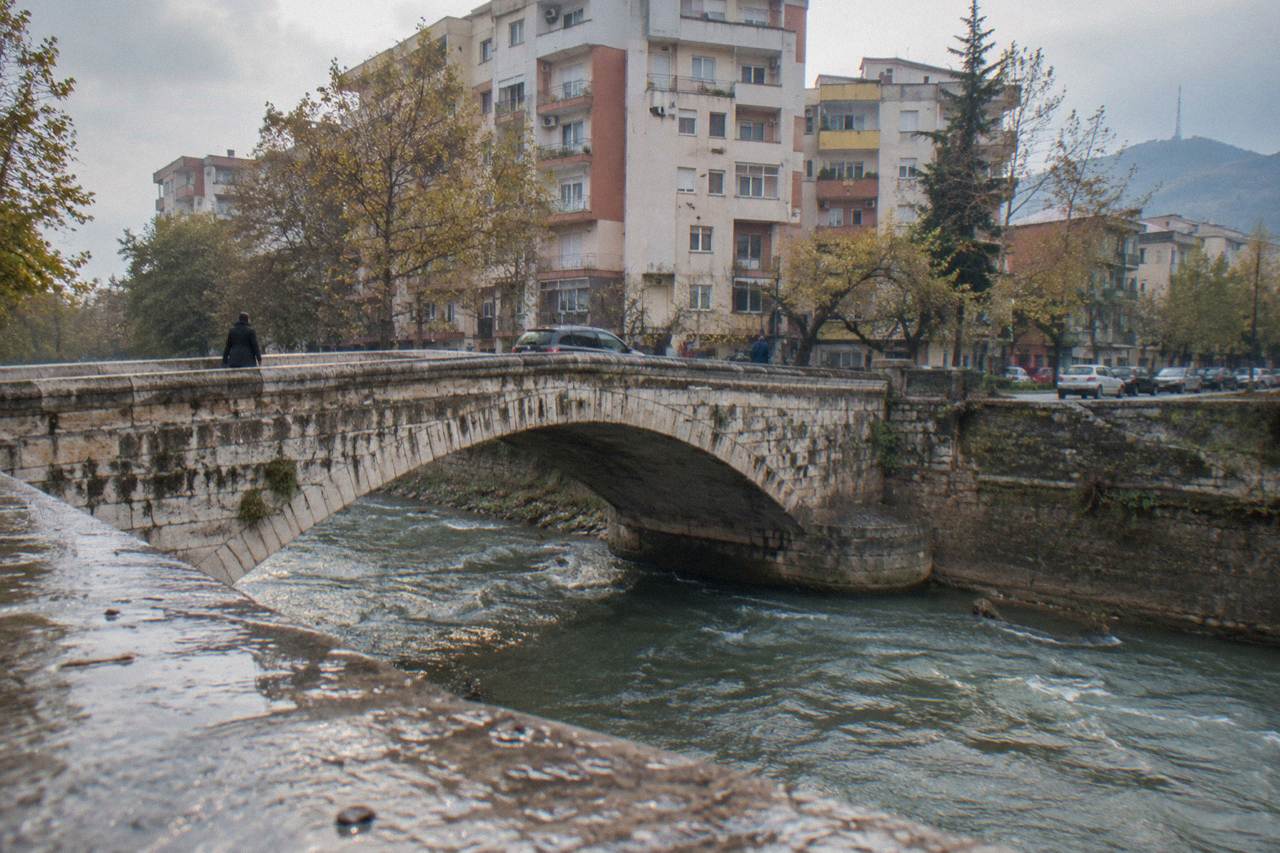
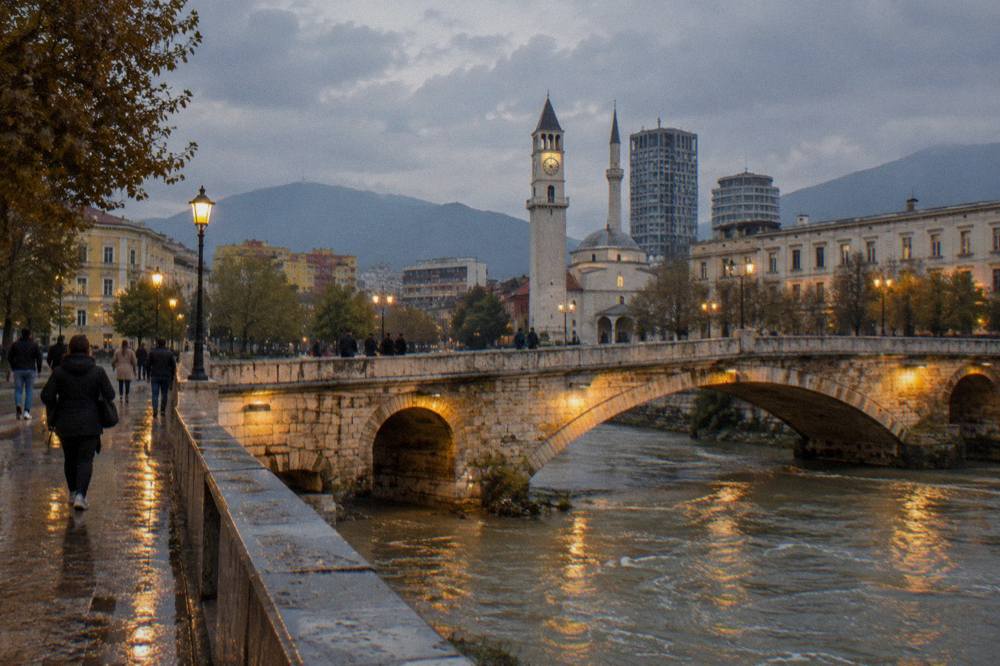
Tanners' Bridge is a small Ottoman-era stone arch bridge standing about 0.7 km east of Skanderbeg Square in Tirana, the capital of Albania. It is a modest structure, a single low arch of cut stone that once carried tanners and their carts across a stream at the edge of the old town, and today it sits on a quiet street surrounded by apartment blocks, shops and parked cars. Tirana tore down and rebuilt huge portions of itself over the last century, so a surviving stone bridge from the Ottoman period stands out, and the bridge has become a regular stop on city walking routes. It costs nothing to see, it never closes, and it sits within an easy walk of several of the city's other landmarks, which is exactly how it deserves to be visited: as one piece of a larger walk through the old eastern edge of the centre.
The bridge sums up something central to how Tirana works as a sightseeing city. The Albanian capital is not a museum piece; it is a working city where an Ottoman arch, a communist-era bunker museum and a glass office tower can sit within a few hundred metres of each other.
What Is Tanners' Bridge In Tirana?
Tanners' Bridge is a single-arch Ottoman stone bridge on the eastern edge of central Tirana, about 0.7 km east of Skanderbeg Square, built to carry a road over a stream at what was then the edge of the town. It is free to see, open at all hours, and it takes only a few minutes to view, which makes it a walking-route stop rather than a standalone attraction with a ticket and a queue.
The bridge is a pedestrian-scale structure of dressed stone, low enough that you could almost miss it walking past at speed. Its Albanian setting explains the name: the tanneries that gave the bridge its purpose once stood in this quarter, at the point where the work of the old town met the water. Tirana was founded in 1614 by Sulejman Pasha Bargjini in the Ottoman era, who built a mosque, a bath, a bakery and an inn as the core of the settlement, according to the city's own history page.
What surprises many first-time visitors is how the bridge sits in its modern surroundings. There is no roped-off plaza, no interpretation centre and no ticket booth. The arch carries a street used by pedestrians, the stone is darkened by centuries of weather, and the neighbourhood around it is ordinary and lived-in. That ordinariness is part of the appeal. In a city where the headline sights, Bunk'Art, the Pyramid, the cable car up Mount Dajti, all come with a story attached, the bridge asks nothing of you and gives a quiet, free moment of the old town in return.
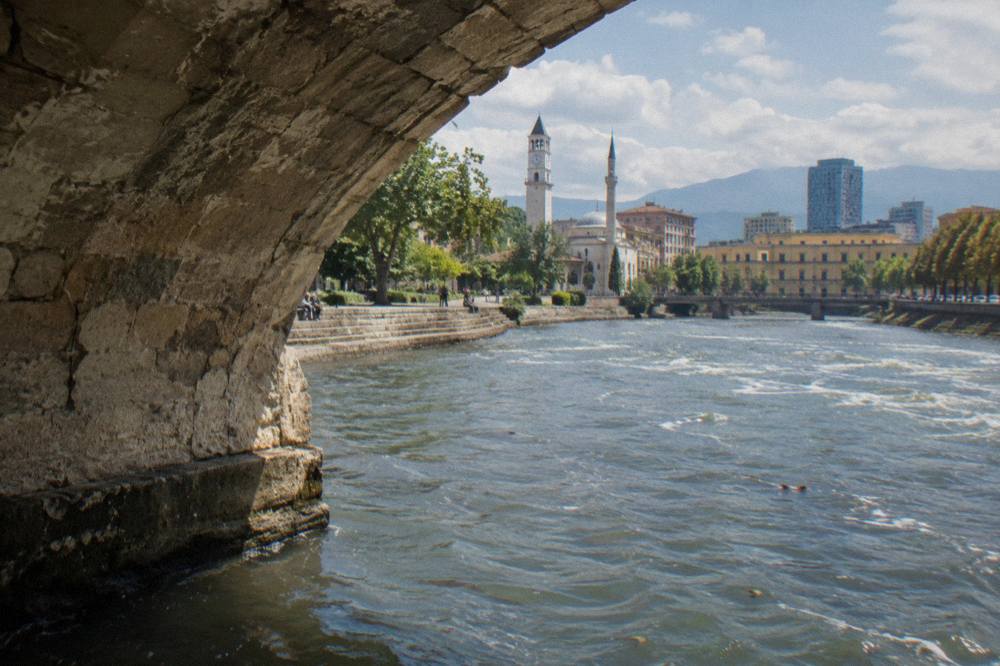
A few practical facts frame any visit:
| Detail | What applies at Tanners' Bridge |
|---|---|
| Location | About 0.7 km east of Skanderbeg Square, central Tirana |
| Type | Ottoman-era single-arch stone bridge |
| Admission | Free, no ticket or gate |
| Opening hours | None; it is a public street, accessible around the clock |
| Time needed | A few minutes to view, longer as part of a walk |
| Nearest landmark clusters | Tirana Castle, New Bazaar, Skanderbeg Square |
Because it is a street rather than a museum, the bridge fits any schedule. It works as an early-morning stop before the city fills up, as a midday pause between the square and the bazaar, or as an evening detail on the way to dinner. There is no wrong time of day in operational terms; the only variables are light for photographs and how busy the surrounding street is.
Where Is Tanners' Bridge And How Do You Get There?
Tanners' Bridge stands about 0.7 km east of Skanderbeg Square, roughly a ten-minute walk from the square along the boulevard and the streets behind it, inside the ring of central Tirana where almost everything is reachable on foot. No ticket, bus or taxi is needed to reach it from the centre; from the airport, the airport bus or an official taxi brings you into the city first.
Walking is the natural way to arrive. Tirana's compact core means the bridge slots into a route that can also take in the Clock Tower, the Et'hem Bey Mosque and Tirana Castle in under an hour of strolling. The Et'hem Bey Mosque sits about 0.2 km south-east of the square, Tirana Castle about 0.5 km south-east, the New Bazaar about 0.6 km east, and the bridge about 0.7 km east, so the four sit in a rough arc across the eastern half of the centre. A visitor staying anywhere inside that ring reaches the bridge on foot without planning.
From further out, the practical options are the city bus network, which runs roughly 06:00 to 23:00 with a flat fare of about 40 lek paid in cash on board, or a local taxi, since Uber and Bolt do not operate in Tirana. Intercity arrivals come into the South and North Bus Terminal about 3.9 km north-west of the square, from which a city bus or taxi covers the last stretch. From Tirana International Airport at Rinas, the official airport bus runs 24/7, every full hour, costs 400 lek, and stops behind the Palace of Opera and Ballet by Skanderbeg Square, which puts the bridge about a ten-minute walk from the drop-off.
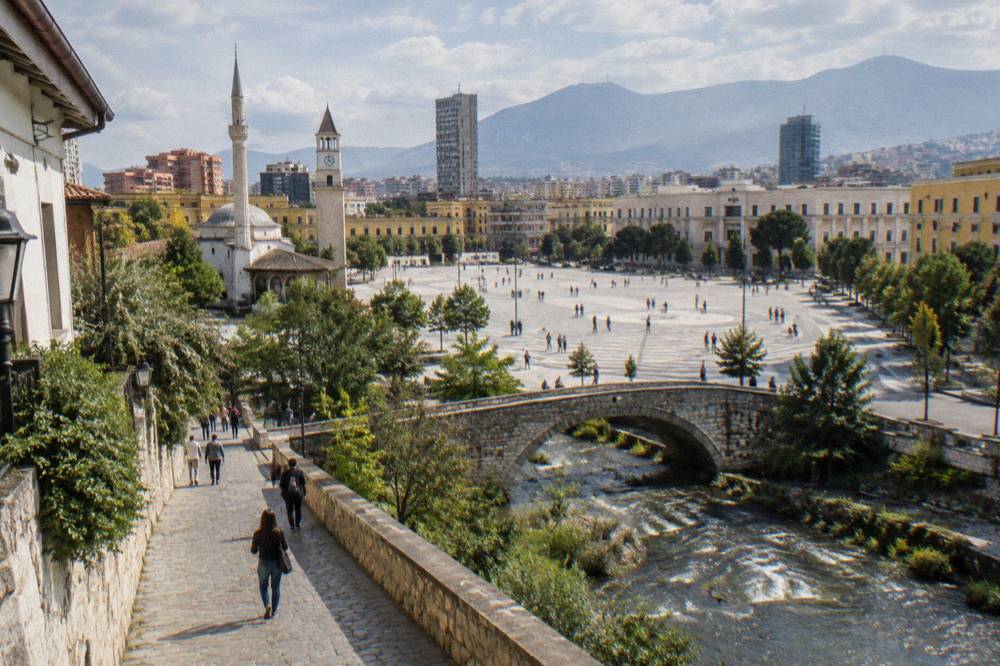
The landmarks that pair naturally with the bridge, with straight-line distances from Skanderbeg Square:
| Sight | Direction and distance from Skanderbeg Square | Pairing with the bridge |
|---|---|---|
| Et'hem Bey Mosque | About 0.2 km south-east | Start of the eastern walk |
| Clock Tower of Tirana | About 0.2 km south-east | Same stop as the mosque |
| House of Leaves | About 0.2 km south-west | Detour before or after |
| Bunk'Art 2 | About 0.2 km south-east | Add if the bunker museums interest you |
| Tirana Castle | About 0.5 km south-east | Natural companion stop |
| New Bazaar (Pazari i Ri) | About 0.6 km east | Food and coffee break |
| Tanners' Bridge | About 0.7 km east | This page's subject |
| Pyramid of Tirana | About 0.7 km south-east | Extend the walk south |
A guided option removes even the small effort of route-planning. The Ottoman to Communist highlights walk from this site's roster covers the central landmarks in the company of a local guide, and the bridge is exactly the kind of small, easy-to-miss detail that a guided walk puts into context.
What Can You See Around Tanners' Bridge?
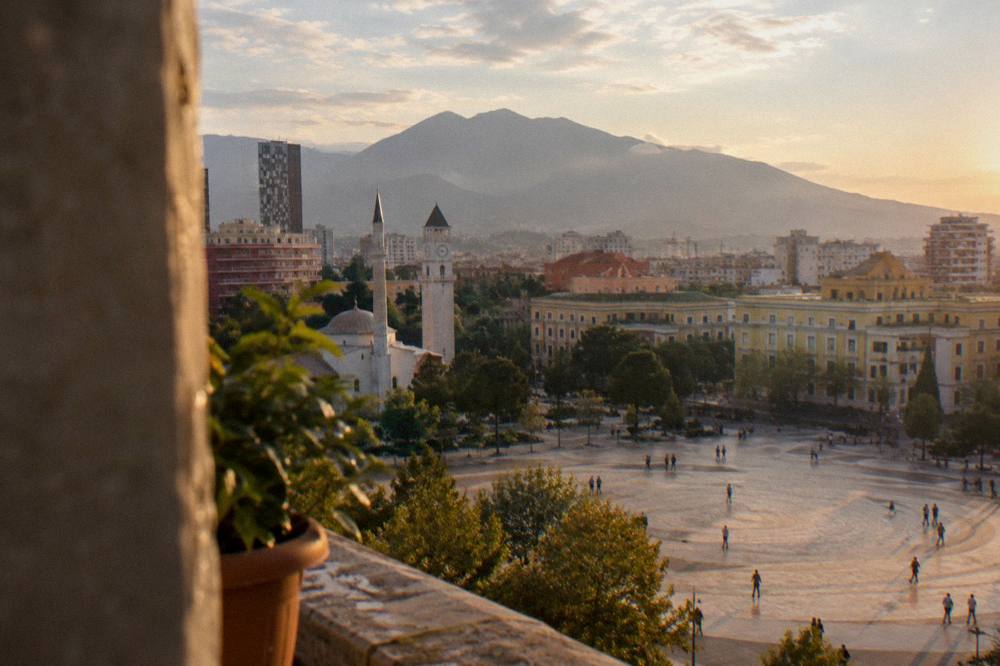
The bridge sits inside the densest cluster of old Tirana: Tirana Castle and its restaurants lie about 0.5 km south-east of the square, the New Bazaar about 0.6 km east, and the Ottoman-era Et'hem Bey Mosque with the Clock Tower about 0.2 km south-east, so a single one-hour loop from Skanderbeg Square can take in the bridge plus four or five further sights, all free to view from the street.
Tirana Castle, the low surviving walls and courtyard quarter rather than a fairy-tale fortress, is the anchor of this eastern walk. Inside and around it, the Tirana Castle area has become a dining and evening quarter, and it sits between the bridge and the square in practical walking terms. The New Bazaar a short distance east is the city's market-and-eating street, rebuilt in bright colours and useful for a coffee or a lunch stop mid-walk. Traditional Albanian dishes to look for there include tave kosi, lamb baked with a yogurt and egg topping, and fergese, baked peppers and tomatoes with cheese.
Back at the square, the Et'hem Bey Mosque is free to visit outside prayer times, with modest dress expected: shoulders and knees covered, a headscarf for women, and shoes off at the entrance, standard courtesy practice at working mosques. The Clock Tower beside it rises about 90 steps to the top, though its fee and hours vary and should be confirmed on the spot. On the square itself, the National History Museum remains closed for restoration, with the announced closure running to about March 2028, so the famous mosaic facade is viewable from outside while the galleries are not.
This is a genuine decision moment on the itinerary: how much of the cluster to commit to. A quick pass covers the mosque, tower, castle walls and bridge in about an hour. A fuller morning adds the House of Leaves, the Museum of Secret Surveillance about 0.2 km south-west of the square, open 09:00 to 19:00 with an adult ticket of 700 lek per the museum's own site, plus Bunk'Art 2, open daily from 09:30, where tickets are bought at the door because no price is published online. The Skanderbeg Square guide on this site lays out the square's own landmarks in detail.
What is free and what is ticketed in this cluster:
| Sight | Street view | Entry | Notes |
|---|---|---|---|
| Tanners' Bridge | Free | No entry needed | Public street, always open |
| Et'hem Bey Mosque | Free | Free outside prayer times | Modest dress required |
| Skanderbeg Square | Free | Open public space | Redesigned in 2017 |
| Tirana Castle walls | Free | Courtyards are commercial | Dining quarter inside |
| New Bazaar | Free | Open street | Market and food stalls |
| Clock Tower | Free exterior | Ticketed, confirm on site | About 90 steps |
| House of Leaves | Facade free | 700 lek adult | Open 09:00-19:00 |
| Bunk'Art 2 | Facade free | Ticket at the door | Open daily from 09:30 |
Guided coverage of this cluster sells out on peak days, and a walking tour with free cancellation is the low-commitment way to book it. A question worth asking before you pay for anything: do you want the communist-era museums too, or just the Ottoman layer? The answer changes the day.
What Is The History Of Tanners' Bridge In Tirana?
The bridge belongs to Tirana's Ottoman centuries, the period between the town's founding in 1614 by Sulejman Pasha Bargjini and the year 1920, when the Congress of Lushnja made Tirana the capital, during which it carried traffic over a stream at the eastern edge of the settlement where the tanners worked. No construction date or architect for the bridge is on record, so any precise age claim should be treated with caution; what is certain is its function and its survival through every rebuild the city has undergone since.
The sourced history of Tirana gives the bridge its frame. According to the city's history page, Sulejman Pasha Bargjini founded the town in 1614 with a mosque, a bath, a bakery and an inn at its core. Tirana became the capital of Albania on 11 February 1920 by decision of the Congress of Lushnja, as ATA records, and the decades after brought repeated remaking: an Italian-era planning imprint, then communist rule from 1944 to 1991, then the post-1991 construction boom that filled the basin with apartment towers. A stone arch bridge from the Ottoman centuries survived all of it on what is now a side street.
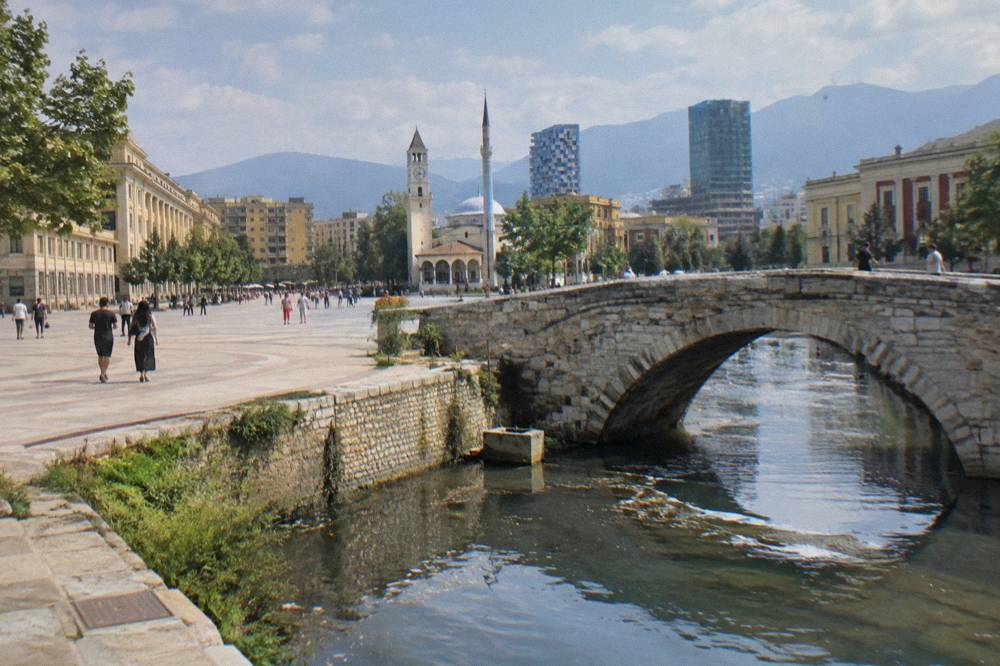
The tanning trade explains both the name and the location. Tanneries needed running water and sat at the edge of towns, away from dwellings, and the bridge took its name from the craftsmen who crossed it daily with hides and leather goods. That commercial street life is long gone; what remains is the arch itself, now protected as a heritage structure and valued precisely because so little else of pre-modern Tirana survived. The fuller story of the city's layers, from the Ottoman founding through the communist decades, is traced in the Tirana history guide on this site, and the bridge is a good physical anchor for that longer narrative.
Honesty about the limits matters here. Guides and plaques sometimes attach confident dates to old bridges, and the responsible position is that the bridge is Ottoman in period and function while its exact year of construction is not established in any source this site trusts. Visitors who want the storytelling should take a guided walk, where local guides retell the quarter's history, and treat specific years heard anywhere else as folklore unless a document stands behind them.
How Does Tanners' Bridge Fit Into A Day In Tirana?
The bridge works best as a mid-morning or late-afternoon stop on a walking loop that starts at Skanderbeg Square, passes the Et'hem Bey Mosque and Clock Tower, continues to Tirana Castle and the bridge, and finishes with food at the New Bazaar, a circuit of roughly one to two hours on foot with everything inside a kilometre of the square. One full day in Tirana comfortably adds Bunk'Art 2, the Pyramid and the cable car up Mount Dajti.
A sample sequencing for a first day:
| Stop | What you do there | Rough position |
|---|---|---|
| Skanderbeg Square | Orientation, mosque and tower views | The centre point |
| Et'hem Bey Mosque | Interior visit outside prayer times | About 0.2 km south-east |
| House of Leaves | Museum of Secret Surveillance | About 0.2 km south-west |
| Bunk'Art 2 | Atomic bunker museum, ticket at the door | About 0.2 km south-east |
| Tirana Castle | Walls, courtyards, early lunch | About 0.5 km south-east |
| Tanners' Bridge | The stone arch, photographs | About 0.7 km east |
| New Bazaar | Coffee, market, Albanian dishes | About 0.6 km east |
| Pyramid of Tirana | Climb the steps, free | About 0.7 km south-east |
For visitors with a second half-day, the Dajti Ekspres cable car lifts you from the eastern edge of the city to Mount Dajti National Park; tickets are sold only at the lower station because the operator publishes no fares online, and it is usually closed on Tuesdays for maintenance, so plan around that. The Dajti half-day trip with cable car ticket from this site's roster bundles the ride with a guide.
Food anchors the afternoon well. After the bridge and bazaar loop, a cooking class turns the market's ingredients into a meal: the traditional Albanian cooking class with raki tasting covers dishes such as byrek, the layered filo pie, and finishes with raki, the fruit brandy that anchors Albanian hospitality. .
Beyond the city, Tanners' Bridge belongs to the "morning in town, afternoon beyond" pattern. Kruja and its castle lie about 45 minutes away by road, Durres and its Roman amphitheatre about 39 minutes west toward the Adriatic, and Berat, the UNESCO-listed museum town, about two hours. The things to do in Tirana page maps those options, and day trips to Gjirokaster stretch the same logic to the far south. Remember that Tirana itself is inland: the beach is a day trip to Durres, not a city amenity.
When Is The Best Time To Visit Tanners' Bridge?
Late spring and early autumn suit Tirana best: May averages a high of 22.7 C with 89 mm of rain, and September a high of 25.7 C with 99 mm, per the ERA5 reanalysis for 1991-2020, while July and August are hotter and drier with highs near 30 C and only about 31 to 34 mm of rain, and November is the highest-rainfall month at 139 mm. The bridge itself, being a street, is visitable in every season.
Because the bridge is outdoors and unpaid, weather shapes comfort rather than access. Summer visits are best made early or late in the day, since the stone and pavement hold heat through the afternoon. Winter is mild rather than harsh, with a January mean high of 10.8 C and mean low of 2.3 C, but it is the wet half of the year, so a rain layer matters more than a heavy coat. These figures are modelled normals, ERA5 reanalysis for 1991-2020, and the basin around Tirana can run a degree or two either side of them.
| Month | Mean high C | Mean low C | Rain mm |
|---|---|---|---|
| Jan | 10.8 | 2.3 | 106 |
| Mar | 15.0 | 5.1 | 117 |
| May | 22.7 | 12.5 | 89 |
| Jul | 29.8 | 19.1 | 34 |
| Aug | 30.4 | 19.5 | 31 |
| Sep | 25.7 | 16.0 | 99 |
| Nov | 16.5 | 8.0 | 139 |
Daylight and events colour the choice too. Late September brings the Tirana International Film Festival, whose 2026 edition ran 21 to 27 September, and the Tirana Jazz Festival, reported at 23 to 25 September 2026 with free entry. The Tirana Marathon moved to 14 and 15 November 2026, which fills the centre on those days. Visitors in December will find the Christmas market usually running through December on and around Skanderbeg Square. None of these change the bridge itself, but they change the streets around it.
What Else Should You Know Before You Go?
Tanners' Bridge needs no booking, no ticket and no planning beyond a pair of comfortable shoes, but the surrounding city has 2026 conditions worth knowing: demonstrations have been held in central Tirana since 13 October 2026, some violent, and the FCDO advises avoiding them and checking local media; the National History Museum is closed for restoration; and no running train serves the airport, so the bus or a taxi is the arrival route.
The current-conditions note deserves its own paragraph. The FCDO updated its Albania travel advice on 15 October 2026 to reflect demonstrations in central Tirana that began on 13 October, some of them violent, and the same unrest pushed the Tirana Marathon from late October to mid-November. The bridge sits a street back from the main boulevard, but any walk across the centre should keep an eye on local news. The emergency numbers are Police 112, Ambulance 127, Fire 128, and the standard city-centre habit of watching your belongings in crowds applies.
Practical items that affect this specific walk:
| Topic | What applies |
|---|---|
| Currency | Albanian lek (ALL), roughly 90 lek to the euro; the euro is not legal tender |
| Cards and cash | Cards widely taken in central hotels and restaurants; cash for buses, markets, small cafes |
| City bus | About 40 lek per ride, paid in cash on board |
| Airport to centre | Bus 400 lek, 24/7 hourly; official taxi about 2,200 lek |
| Entry rules | Visa-free nationals: 90 days in any 180; Albania is outside the EU and Schengen |
| Language | Albanian; English works across tourist services in the capital |
| Plugs | Type C and F, 230 V |
Photographers should bring a wide lens rather than a long one: the bridge is small, and its charm comes from the arch framed against its everyday street. Morning light falls across the eastern quarter pleasantly, and the angle from the stream side shows the vault best. The Tirana photography spots page extends that list across the city, and the street art guide pairs well, since murals dot the same eastern neighbourhoods.
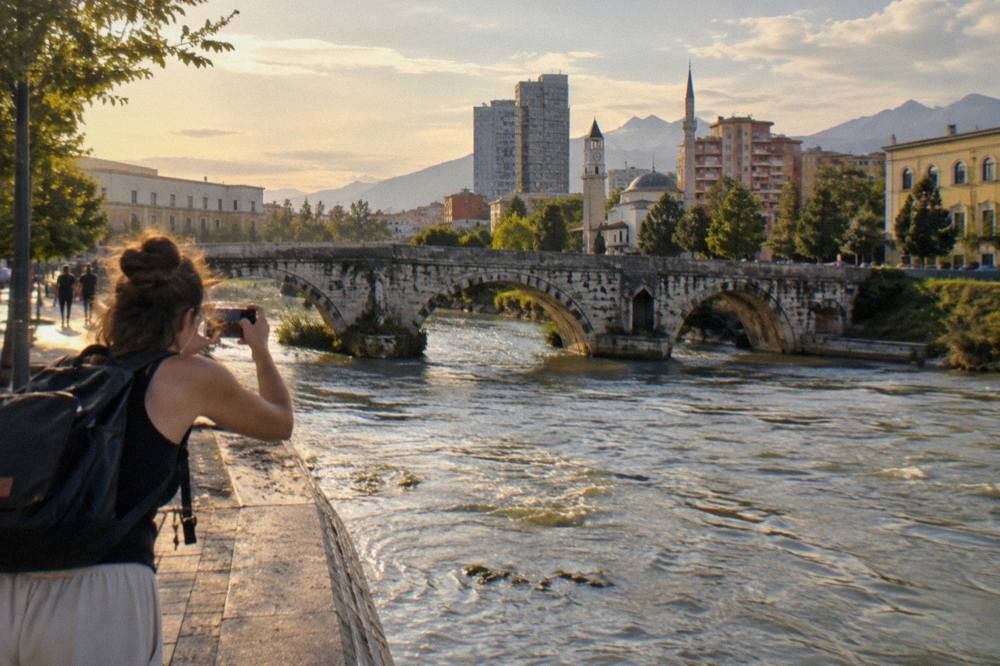
One last framing thought. The bridge rewards visitors who slow down, and it punishes anyone who arrives expecting a monument scaled to its reputation. It is a fragment: one arch, one street, one small window onto the Ottoman town that existed before the capital, the communism and the towers. Ten unhurried minutes, a photograph from the stream side, and a walk onward to the castle or the bazaar is the whole ritual, and it is a good one.
Common Questions About Tanners' Bridge In Tirana
Is Tanners' Bridge free to visit?
Yes. The bridge is a public street with no gate, ticket or opening hours, so it can be seen at any time of day without paying anything. The sights around it vary: the Et'hem Bey Mosque is free outside prayer times, while the House of Leaves charges 700 lek for adults and Bunk'Art 2 sells tickets at the door.
How far is Tanners' Bridge from Skanderbeg Square?
About 0.7 km east of the square, roughly a ten-minute walk through the streets behind the Tirana Castle quarter. Tirana Castle lies about 0.5 km south-east of the square and the New Bazaar about 0.6 km east, so the three combine naturally into one loop.
How old is Tanners' Bridge?
The bridge is Ottoman in period and design, belonging to the centuries between Tirana's founding in 1614 and the year 1920, when Tirana became the capital, during which it served the tanners' quarter at the eastern edge of town. No construction date or architect is known, so treat any exact year quoted elsewhere with caution.
Can you walk across Tanners' Bridge?
Yes. The bridge carries a public street and pedestrians cross it freely at any hour. It is a working piece of the neighbourhood rather than a roped-off monument, which is precisely why it is best visited as a short stop on a longer walking route.
What else is near Tanners' Bridge?
Tirana Castle and its dining quarter, the New Bazaar with its market and food stalls, the Et'hem Bey Mosque and Clock Tower by Skanderbeg Square, the House of Leaves museum and Bunk'Art 2 all sit within about a kilometre of the bridge, making the eastern half of the centre the densest sightseeing walk in the city.
Do you need a guided tour to see Tanners' Bridge?
No, the bridge needs no guide. A guided walking tour adds context to the Ottoman and communist layers around it, and this site's city highlights walk covers the cluster, but independent visitors reach and enjoy the bridge easily on foot.