Albania ESIM And SIM Cards For Tirana
An eSIM is usually the simplest way to get mobile data in Tirana, Albania's inland capital, because it is installed before you land and skips the airport kiosk queue entirely. This guide explains what an eSIM actually does in Albania, how it compares with a local physical SIM, and how connectivity fits with the city's cash habits, plug sockets and day-trip distances.
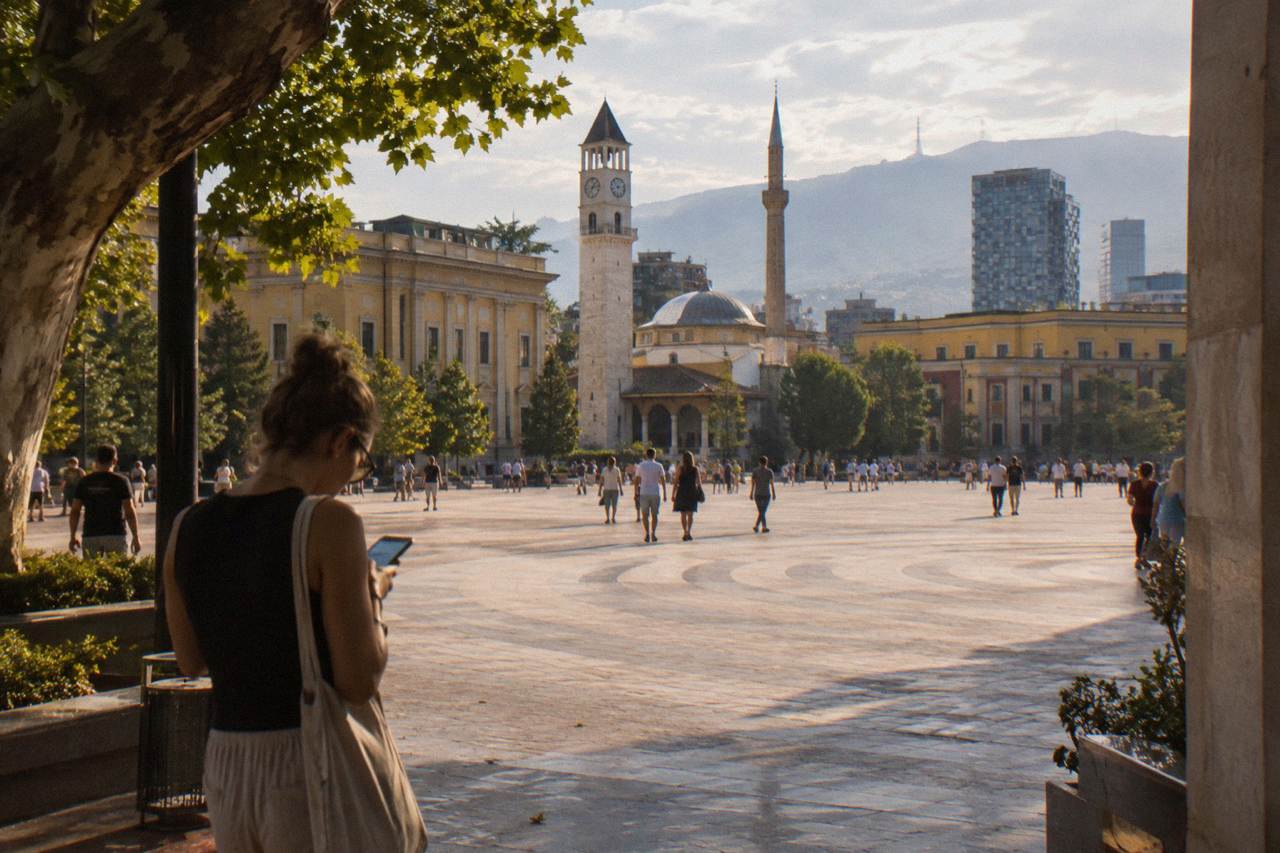
Short answer
Yes, eSIMs work in Tirana: Albania has modern mobile networks and eSIM-compatible phones connect to them like anywhere else in Europe. Buy and install the eSIM before you fly, keep your home SIM active for SMS, and remember that Albania is outside the EU, so EU roaming rules do not apply here.
Tirana sits in a basin at the foot of Mount Dajti, about 37 km and 39 minutes by road from the Adriatic coast at Durres, and it is the capital of a country that is not in the EU and not in Schengen. That last point matters more for your phone than you might expect: Albania runs its own visa regime, its own currency and its own mobile market, and none of the EU roaming arrangements travellers rely on elsewhere in Europe apply at its border. The good news is that the networks themselves are modern, the airport is 15.9 km and about 29 minutes from Skanderbeg Square, and an eSIM installed at home removes almost every connectivity decision from your arrival day.
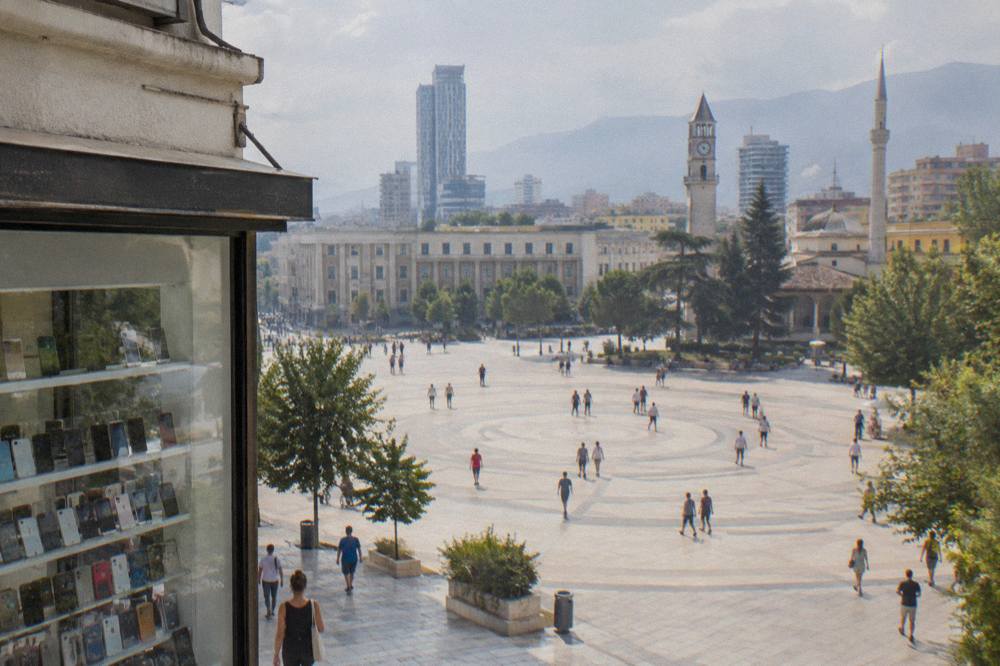
This page walks through the whole picture: what an eSIM does in Albania, how it compares with a physical SIM card bought in Tirana, how much data a typical city itinerary burns, and how your phone fits with the lek, the type C and F plug sockets and the cash-only corners of the city. It also covers what happens on day trips to Kruja, Berat or the coast, where the scenery changes faster than the signal does.
What Is An Albania ESIM And Does It Work In Tirana?
An eSIM is a SIM card built into your phone rather than slid into it, and yes, it works in Tirana: an eSIM-compatible handset bought in the last several years will find Albania's mobile networks the moment it enters range, exactly as it would in any other European capital. You buy a data plan for Albania from an eSIM provider, install it as a QR code before you travel, and it activates when the phone registers on a local network after landing.
The practical difference from a physical SIM is timing. A physical SIM for Albania is usually bought after arrival, at the airport or at a shop in the city, which means a queue, a passport registration and a conversation about which bundle to take, all after a flight. An eSIM is bought and installed from your sofa days earlier. When you land at Tirana International Airport Nene Tereza at Rinas, the plan simply switches on.
Two things to check before you rely on one. First, your handset must support eSIMs: this is a property of the phone model, and the manufacturer's specifications page is the place to confirm it. Second, your phone must be unlocked from your home carrier, otherwise no foreign profile, eSIM or otherwise, will activate.
What an eSIM does not change is anything else about Albania. The currency is still the lek, the airport bus still costs 400 lek or 4.50 euro for the run to the centre, and the country is still outside the EU, so any "free EU roaming" your home plan advertises stops at the border unless your carrier explicitly includes Albania. Check your home carrier's Albania rates before assuming anything: a day of accidental roaming at home-plan rates can cost more than an entire prepaid data bundle.
ESIM Or Physical SIM Card For Tirana: Which Should You Buy?
For a short city trip to Tirana an eSIM is usually the better choice: it is installed before departure, it avoids the airport-kiosk queue and passport paperwork, and it can sit alongside your home number so you keep receiving bank SMS. A physical local SIM makes more sense for longer stays or if your phone does not support eSIMs, because you can top it up in person at shops around the city for the rest of your visit.
Neither option changes where you can go. Tirana is compact and walkable, and the two approaches mainly differ in logistics. With an eSIM you handle everything in your own currency before you fly. With a physical SIM you pay in lek after arrival, which means finding a shop, showing your passport and choosing a bundle on the spot, with a sales conversation in a mix of Albanian and English.
Treat any price you see quoted for an "Albania SIM" on a third-party site as unconfirmed, and check the operator's own shop or your eSIM provider's app for the current plan and its data allowance before paying. What can be said is structural: plans exist, they are sold both ways, and nothing about Tirana is unusual for Europe.
If you are the kind of traveller who books a guided walk for the first morning and then explores alone, the eSIM-plus-guided-walk combination works well. The Communist History and Modern City tour with a local guide covers the regime-era landmarks and today's city in one loop, and having data from touchdown means maps, translation and the operator's live listing are all at hand from the first hour.
Where Do You Buy A SIM Card In Tirana?
The realistic options are the arrivals area of Tirana International Airport, where shops and kiosks cluster beside the transport desks, and phone shops in central Tirana itself, especially along the busy commercial streets within a kilometre of Skanderbeg Square, and any of them will need your passport to register the card, as registration is standard practice in Albania. Buy where you can compare plans calmly, not where you can compare them fastest.
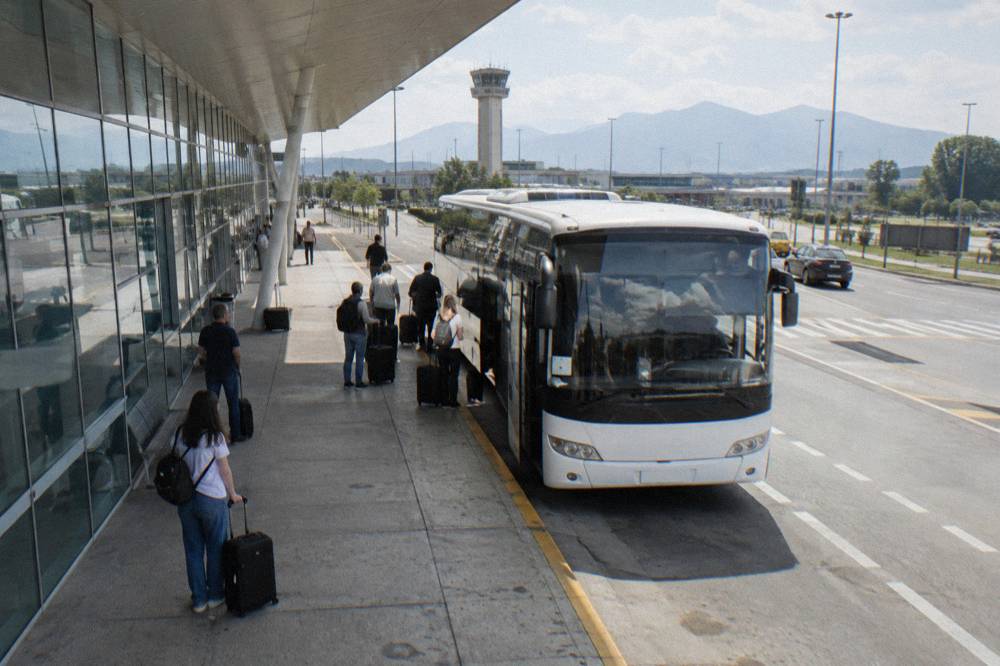
The airport is 15.9 km and about 29 minutes from the centre by road, and its arrivals hall handles everything a first-time visitor needs in one building: transport, cash machines, and phone connectivity. The trade-off is price and patience. Airport retail anywhere in the world tends to favour the seller, and a tired arrival is not a strong negotiator.
| Option | Where | When it works best | What to bring |
|---|---|---|---|
| Airport shop or kiosk | Arrivals hall, before the exit | Late arrivals, immediate need | Passport |
| City-centre phone shop | Commercial streets near Skanderbeg Square | Next-day setup, plan comparison | Passport |
| eSIM bought at home | Installed before departure | Short trips, eSIM-compatible phones | Unlocked phone |
Once you have the card or the profile, the practical layout of the city does the rest. The distance from the square to the usual landmarks is short: the Et'hem Bey Mosque and the Clock Tower about 0.2 km south-east, the Pyramid of Tirana about 0.7 km south-east, Blloku about 0.8 km south, and the Grand Park about 2.1 km south-east. Data is for navigation between these, not for surviving a wilderness.
Getting from the airport into town once you are connected is straightforward, and the fares are published ones.
| Airport transport | Fare | Notes |
|---|---|---|
| Airport bus to centre (LU-NA) | 400 lek / 4.50 euro | 24/7, every full hour, 30-40 min, stops behind the Palace of Opera and Ballet |
| Airport bus to South and North Bus Terminal | 300 lek / 3.50 euro | Every full hour, 20-30 min |
| Airport coach to Durres (Adis) | 600 lek | Departures from 08:30 to 23:00 |
| Airport shuttle to Shkodra (Hermes) | 1,000 lek | Fixed departures across the day |
| Official airport taxi (AHA) | about 2,200 lek | 24/7, 20-25 min to the centre, pre-book at tiataxi.al |
If you would rather sort the SIM on day two and go straight to sightseeing, that works too: the airport bus ticket is valid all day until 23:59, not tied to one departure, so a morning card can be combined with an afternoon of walking.
How Much Mobile Data Do You Need For A Tirana Trip?
For a typical city break in Tirana, a small daily bundle of a few gigabytes covers maps, messaging, translation and browsing for almost any itinerary, because none of the city's core sights involve data-heavy streaming: navigation around the centre moves between points 0.2 km and 2.1 km apart, and the heavy users are photo uploads and video calls, not the map app. Buy more only if you plan to hotspot a laptop or work remotely.
The honest arithmetic depends on behaviour, not on the city. Maps and messaging consume little. Video streaming consumes a lot. A week of heavy navigation plus social posting is a different animal from a week of calls home over video, and no bundle suits both equally.
What the city itself contributes is structure. Tirana's cluster of sights is tight, from the House of Leaves about 0.2 km south-west of the square to Bunk'Art 2 about 0.2 km south-east, so navigation requests are frequent but short. The big excursion days, Dajti or Durres or Kruja, involve longer stretches where you may want offline maps downloaded over hotel Wi-Fi the night before, which costs nothing against your bundle.
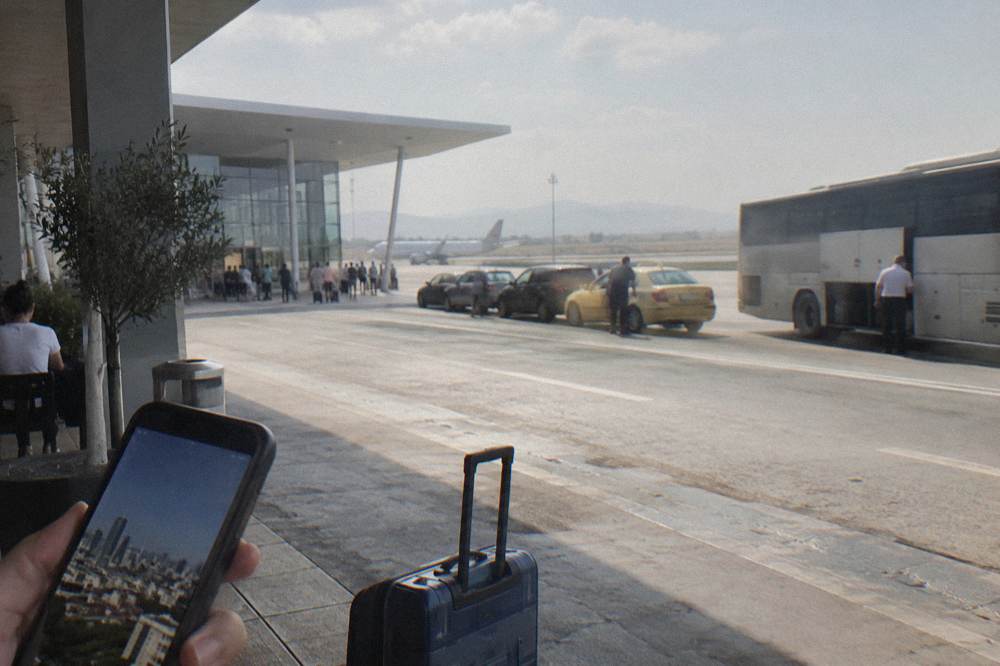
One practical note that belongs to Tirana specifically: Skanderbeg Square is the pedestrian reference point for the whole city, and the National History Museum on the square is closed for restoration, with the announced closure running to about March 2028. A museum day planned around it needs a rethink: Bunk'Art 1, about 4.6 km north-east, and the House of Leaves are the open alternatives, and both are covered in more depth on Tirana's museums.
Does Your Phone Work In Albania? Sockets, Charging And The Basics?
Yes, a modern phone bought in Europe or North America works in Albania: the country uses type C and F plugs at 230 V and 50 Hz, the same two-pin standard as most of continental Europe, so chargers from France, Germany or Italy fit the wall sockets without an adapter, while UK, US and other plug shapes need one, and the mobile networks use standard European frequency bands that mainstream handsets support.
Charging is the part travellers get wrong, not signal. A UK traveller needs a plug adapter. A US traveller needs one too, and should check that their charger accepts 230 V, which nearly all modern USB chargers do. The rest is standard. Other pages covering the same trip are gathered on Tirana Albania Travel Guide.
| Basic | Albania |
|---|---|
| Plug types | C and F |
| Voltage | 230 V, 50 Hz |
| Time zone | Europe/Tirane (CET/CEST) |
| Currency | Albanian lek (ALL), roughly 90 lek to the euro |
| Emergency numbers | Police 112, Ambulance 127, Fire 128 |
| EU membership | No, EU candidate country, outside Schengen |
The emergency numbers deserve their line. The police number in Albania is 112, the ambulance number is 127 and the fire number is 128; the FCDO lists exactly these three. Save them offline, because the moment you need them is the moment you do not want to be searching.
On language: Albania's English proficiency sits in the moderate band of the EF English Proficiency Index, so English works in tourist-facing businesses in the centre without anyone claiming it is universal. A handful of Albanian words travels well, and they cost nothing to load onto your phone.
| Albanian | English |
|---|---|
| Përshëndetje / Tungjatjeta | hello |
| Mirëmëngjes | good morning |
| Faleminderit | thank you |
| Ju lutem | please |
| Po | yes |
| Jo | no |
| Më falni | excuse me |
| Gëzuar | cheers |
| Mirupafshim | goodbye |
| Ujë | water |
| Faturën | the bill |
Cash, Cards And Mobile Payments In Tirana
Cards are widely accepted in Tirana's hotels, larger restaurants and supermarkets in the central districts, while cash in lek is still what you need for buses, markets and small cafes, so a phone linked to a card covers evenings but not mornings: the flat city-bus fare is about 40 lek, paid in cash to the conductor on board, and intercity buses are paid to the driver the same way. Your eSIM does not change any of this, it just makes checking a balance easier.
The currency is the Albanian lek. The euro is not legal tender, though some hotels, taxis and tourist businesses accept it informally at their own rate, with change usually given in lek. On 23 October 2026 the Bank of Albania's official rate was roughly 90 lek to the euro and about 81 lek to the US dollar; rates move, so round mentally and change properly at exchange offices.
| Currency pair | Official rate, 23 October 2026 | Rounded for mental maths |
|---|---|---|
| 1 EUR | 90.74 lek | about 90 lek |
| 1 USD | 81.03 lek | about 80 lek |
Where connectivity genuinely helps is the cash-plus-card split. With data, you can check a card's foreign-transaction terms, pull up the bus route to the North-South Bus Terminal, about 3.9 km north-west of the square, and compare a walking route to Blloku in seconds. Without data, all of that still works, just slower.
The money mechanics of the city, including how much things generally cost and what to expect from ATM withdrawals, are covered in detail on Tirana prices and the Albanian lek, and the arrival logistics, including every airport-to-centre option, on Tirana airport to city centre.
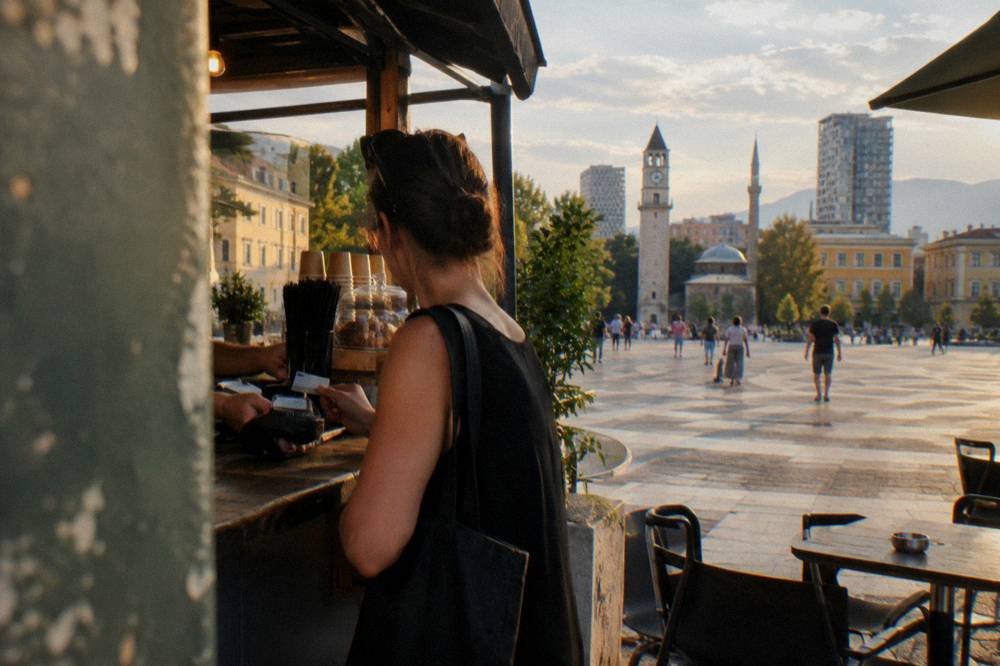
Does Mobile Data Hold Up On Day Trips From Tirana?
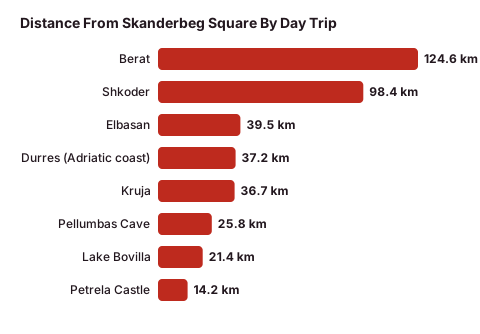
Yes, on the standard day trips the signal follows you: the popular routes run from Petrela Castle at 22 minutes out to Kruja at 45 minutes and Durres at 39 minutes, all of them on normal roads with continuous settlement along the way, and the longer tours to Berat, Shkodra or the Ohrid country cross terrain where a downloaded offline map is the wiser backup regardless of what the signal bars say.
The day-trip map of Tirana splits into rings, and the drive times below are the honest scale of each.
| Day trip | Distance from Skanderbeg Square | Drive time |
|---|---|---|
| Petrela Castle | 14.2 km | about 22 min |
| Durres (Adriatic coast) | 37.2 km | about 39 min |
| Elbasan | 39.5 km | about 42 min |
| Kruja | 36.7 km | about 45 min |
| Pellumbas Cave | 25.8 km | about 47 min |
| Lake Bovilla | 21.4 km | about 61 min |
| Shkoder | 98.4 km | about 118 min |
| Berat | 124.6 km | about 122 min |
| Ohrid (North Macedonia, plus border) | 129.8 km | about 135 min |
| Gjirokaster | 219.0 km | about 209 min |
Two connectivity notes attach to that table. First, Ohrid town is in North Macedonia, so a day trip there is a border crossing, and an eSIM sold as "Albania only" may not cover the far side of the border; a regional Europe plan or an offline map covers the gap. The Albanian shore of Lake Ohrid is Pogradec and Lin, both inside Albania. Second, the far south, Saranda, Ksamil and Butrint at 248 to 271 minutes out, is overnight territory rather than a day trip, and the same border-and-coverage thinking applies to any plan that chains several legs together.
For the mountain days, the practical move is offline maps downloaded the evening before over hotel Wi-Fi. That habit costs nothing from a bundle and works even in the deepest part of the Dajti national park, where the cable car lower station sits about 4.4 km north-east of the square.
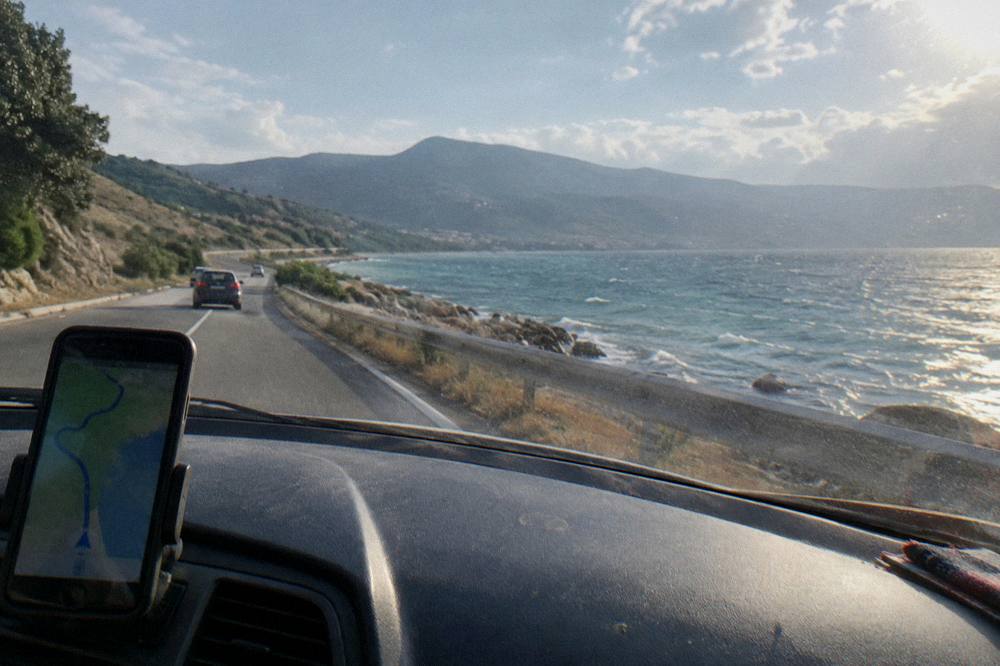
Wi-Fi, Hotspots And Offline Backup In Tirana
Tirana's cafes, hotels and many restaurants offer guest Wi-Fi as a matter of course in the central districts, and it is usually good enough for messaging and browsing, which means a light data user can treat mobile data as a gap-filler rather than the main connection; the dependable backup is a set of offline maps, downloaded tickets and a screenshot of your booking, all prepared over Wi-Fi before you leave the hotel each morning.
The city's rhythm supports this. Tirana's cafe culture is a real institution, the Blloku quarter about 0.8 km south of the square being its showcase, and a coffee stop doubles as a connectivity stop. Hotels are the other anchor point: guest networks are standard in the capital's accommodation, and the Where To Stay In Tirana: Centre, Blloku Or Near The Lake guide covers the neighbourhoods, from the centre to Komuna e Parisit about 1.8 km south-west.
What offline preparation looks like in practice: the day's walking route screenshotted, museum and tour confirmations saved as images or PDFs, the bus terminal's departure board photographed if a day trip is planned, and the three emergency numbers, 112, 127 and 128, written somewhere that does not need a battery. None of this replaces mobile data. It just means a dead battery or a coverage hole costs you convenience rather than a plan.
What To Do If Your ESIM Or SIM Fails In Tirana?
The fallback ladder is simple: first toggle airplane mode off and on and restart the phone, which cures most registration failures, then check that the eSIM profile is enabled and set to data while your home line stays on for calls, then manually select a network if automatic selection stalls, and if all of that fails, buy a physical SIM in a phone shop near Skanderbeg Square the same day, because physical SIMs are sold freely with a passport and work in any unlocked phone.
The failure that catches people is not technical but contractual: a phone still locked to a home carrier, or an eSIM bought for the wrong country group, shows signal from the wrong network and bills accordingly. Before departure, confirm the phone is unlocked and that the plan explicitly lists Albania. Albania's non-EU status is the trap: some "Europe" eSIM plans exclude non-EU countries, and a plan covering the euro zone does not automatically cover a candidate country outside Schengen.
If troubleshooting has to happen after arrival, do it in this order: airplane-mode toggle, manual network selection, profile reinstallation from the provider's QR or app, then the shop. And if the phone problem eats a morning, salvage the day with a tour that needs no navigation from you: the free things to do in Tirana guide covers the squares, parks and facades that cost nothing, and a guided walk removes the map entirely.
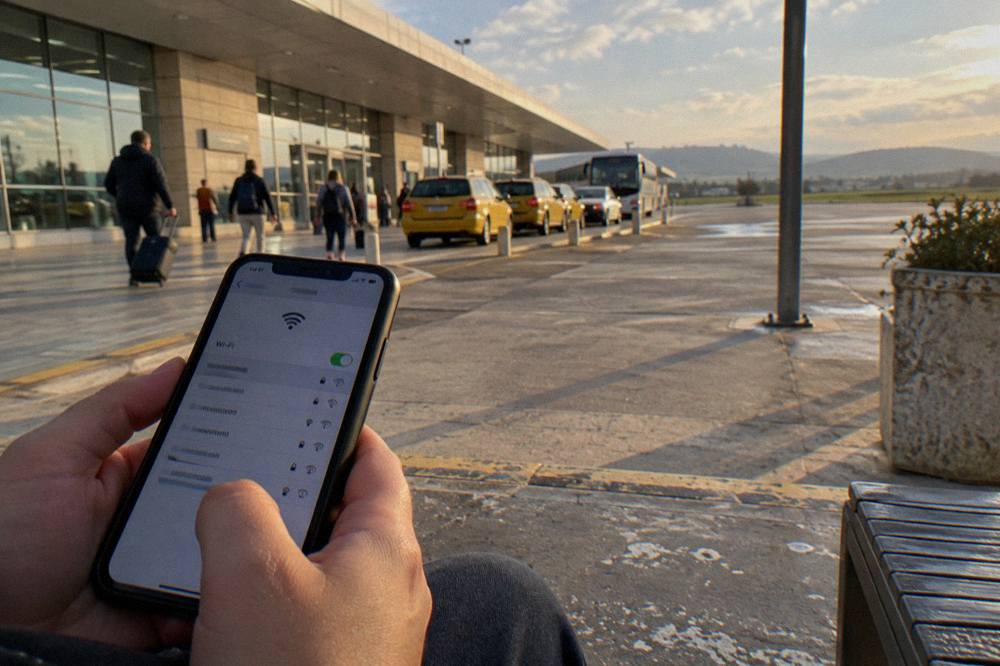
Safety, Weather And Connectivity In One Checklist
Tirana's connectivity story sits inside a small set of standing facts: the city is generally easygoing but the FCDO currently advises avoiding demonstrations, which have been held in central Tirana since 13 October 2026, some with violence; the emergency numbers are Police 112, Ambulance 127 and Fire 128; summers are hot and dry with August averaging a 30.4 C high against just 31 mm of rain, while November averages 139 mm, so a power bank matters more in the wet months.
The climate figures come from ERA5 reanalysis for 1991-2020: July's mean high is 29.8 C and August's 30.4 C, with August the lowest-rainfall month at 31 mm of rain, while November and December carry the year's heaviest rainfall at 139 mm and 138 mm. Cold is relative, January's mean low is 2.3 C, but wet phones and wet streets are the real winter issue, and a charged phone with offline maps is the same comfort in both seasons.
A compact pre-departure checklist closes it: confirm the phone is unlocked, install the eSIM and test the profile, download offline maps for Tirana and any day-trip towns, save confirmations offline, pack a type C or F adapter if your plugs differ, note the three emergency numbers, and keep a card plus some lek for the buses and markets. That is the whole task, and none of it takes an evening.
The wider practical picture, from bus stations to driving rules, continues in Albania travel tips, getting around Tirana and the Tirana bus stations guide.
Common Questions About ESIMs And SIM Cards In Tirana
Does an eSIM work in Tirana?
Yes. Albania's mobile networks support eSIM-compatible handsets the same as the rest of Europe. Install the profile before you fly and it registers on arrival; keep your home SIM line active for SMS if your bank sends codes there.
Can I buy a SIM card at Tirana airport?
Yes, shops and kiosks in the arrivals area sell physical SIM cards, and registration with a passport is standard. Compare plans with city-centre shops if you can: airport retail tends to favour the seller. Current operator names, prices and data allowances should be confirmed at the counter before you pay.
Does EU roaming apply in Albania?
No. Albania is not in the EU and not in Schengen, so EU roaming rules do not apply at its border. Check your home carrier's Albania rates before travelling, or use a local eSIM or SIM for data instead.
How much data do I need for Tirana?
A few gigabytes per day covers maps, messaging and translation for a normal city itinerary, since the core sights sit between 0.2 km and 2.1 km of Skanderbeg Square. Video streaming and hotspoting a laptop are what push usage up; offline maps downloaded over hotel Wi-Fi cost nothing.
Will my phone charger fit in Albania?
If your charger has a type C or F two-pin plug, yes, it fits Albania's 230 V, 50 Hz sockets directly. UK, US and other plug shapes need an adapter, and the charger should accept 230 V, which nearly all modern USB chargers do.
Does mobile data work on day trips from Tirana?
On the standard routes, yes: Petrela, Durres, Kruja and Elbasan are all 22 to 45 minutes away on settled roads. For Ohrid, remember the town itself is in North Macedonia, a border crossing, so a regional eSIM or an offline map covers the far side. Download offline maps for the mountain areas as a matter of habit.