Tirana Bus Stations: North And South Terminals Explained
Tirana's intercity buses leave from two terminals far from the centre, and international buses from a third. This guide explains where each terminal sits, which destinations it covers, what the published timetables say and how to get there.
Short answer
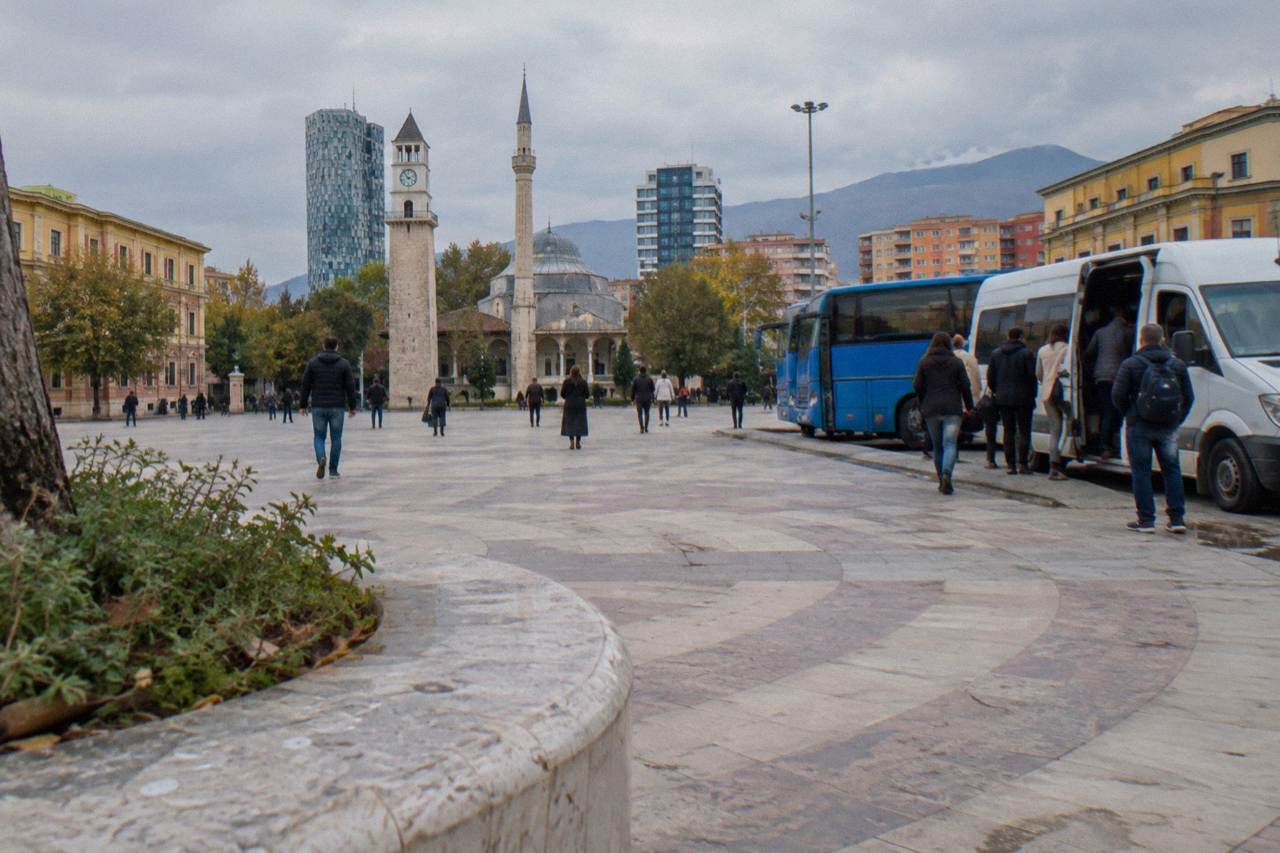
Tirana's domestic intercity buses use the South and North Bus Terminal about 4.0 km north-west of Skanderbeg Square, while international buses leave from a terminal on the Tirana-Elbasan motorway road about 5.9 km south-east of the square. Timetables are published by the municipality, fares are paid in cash to the driver and no passenger trains run anywhere in Albania at present.
Tirana, the capital of Albania, has no central train to fall back on and no grand single bus station either. Intercity buses leave from a large terminal on the north-western edge of the city, international buses from a separate terminal on the road towards Elbasan, and minibuses to nearby towns such as Kruja from yet another stop. The municipality publishes timetables for the domestic terminal on its own site, the airport runs a dedicated bus that connects to it, and the national eTransport platform lists official lines across the country. This guide from the Tirana Albania Travel Guide explains which terminal serves which destination, what the published timetables actually say, how to pay and how to reach each terminal from the centre.
Which Tirana Bus Station Do You Need For Your Destination?
Tirana has one domestic intercity terminal, the South and North Bus Terminal about 4.0 km from Skanderbeg Square, serving Durres, Berat, Shkoder, Vlore, Kruja and other Albanian towns, and one separate International Bus Terminal about 5.9 km from the square, serving Prishtine, Athens, Thessaloniki and other cross-border routes. If your destination is inside Albania, the north-western terminal is almost certainly yours.
The domestic terminal's official name is Terminali i Autobusave te Jugut dhe Veriut, which translates as the terminal of the buses of the south and the north. Despite that name it handles departures in every direction, and the municipality's own page lists Durres, Berat, Shkoder, Kavaja, Lac and Koplik among its routes. The name refers to the terminal serving both southern and northern lines, not to two separate buildings.
The international terminal sits far from the centre on Rruga Nacionale along the Tirana-Elbasan highway. Getting there from Skanderbeg Square means a taxi or a city bus heading in that direction, so allow extra time for a morning departure. A cheaper alternative for many international destinations is a tour or transfer that starts from your hotel, which removes the terminal journey entirely.
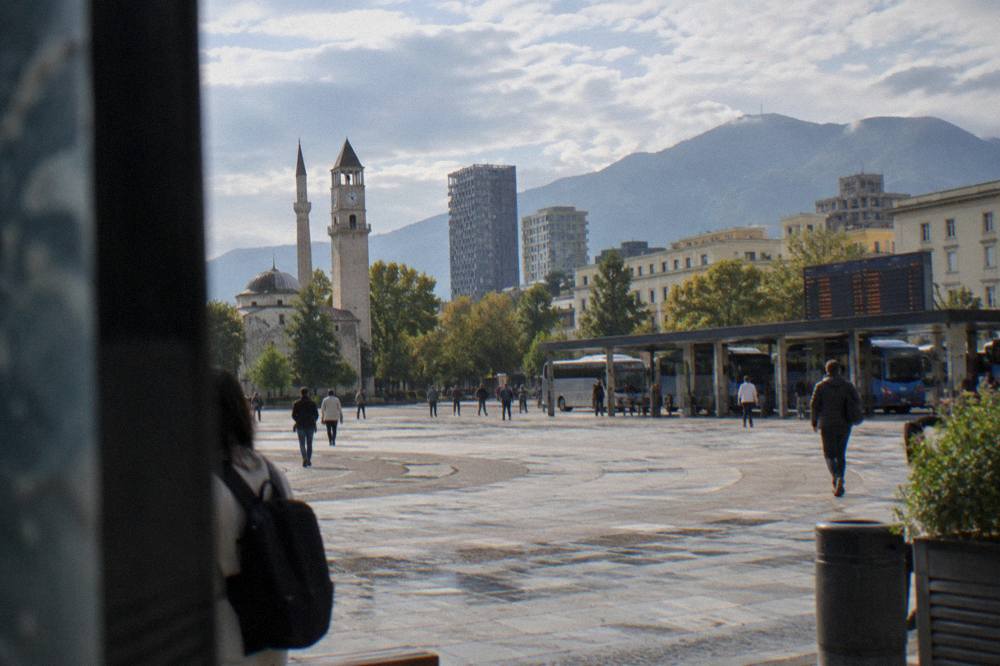
The airport connection matters here too. Tirana International Airport Nene Tereza at Rinas runs its own bus line to the South and North Bus Terminal, 300 lek or 3.50 euro per ride, running from the terminal to the airport between 07:00 and 18:00 and from the airport to the terminal between 08:00 and 18:00, taking 20 to 30 minutes. That makes the domestic terminal the natural transfer point between a flight and an onward intercity bus, and the full airport transfer guide covers the other options.
For travelers heading across the border to Lake Ohrid, note that Ohrid town is in North Macedonia, so that journey starts from the international side of the system and involves a border crossing. The Tirana to Ohrid guide covers that route in detail.
Where Exactly Is The South And North Bus Terminal In Tirana?
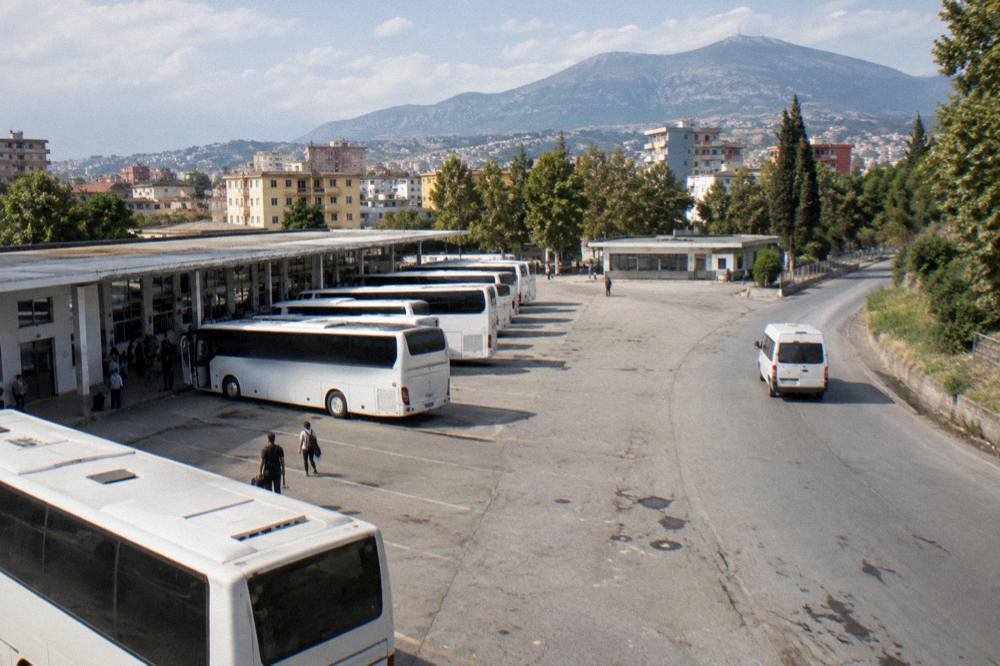
The South and North Bus Terminal stands about 4.0 km north-west of Skanderbeg Square, on the outskirts of Tirana near the Dritan Hoxha road area, and it is reached from the centre by city bus or taxi in a journey that needs to be planned around your departure time rather than walked. The terminal is the city's hub for every domestic intercity route, so almost any trip beyond the city limits starts there.
The site sits well outside the old centre, where every major landmark is within a couple of kilometres of the square. The distance to the terminal is of a different order, roughly the same as the trip to Bunk'Art 1 in the opposite direction. Arrive early, because departure times published for intercity lines are the times buses leave the terminal, not the times they leave the centre.
Inside, the terminal works on a bay system, with each destination or group of destinations assigned to a specific departure area. Destinations and bays can change, so confirm your bay when you buy or pay, and eTransport, the national platform at etransport.al, lists the official lines and timetables if you want to check a route before leaving your hotel.
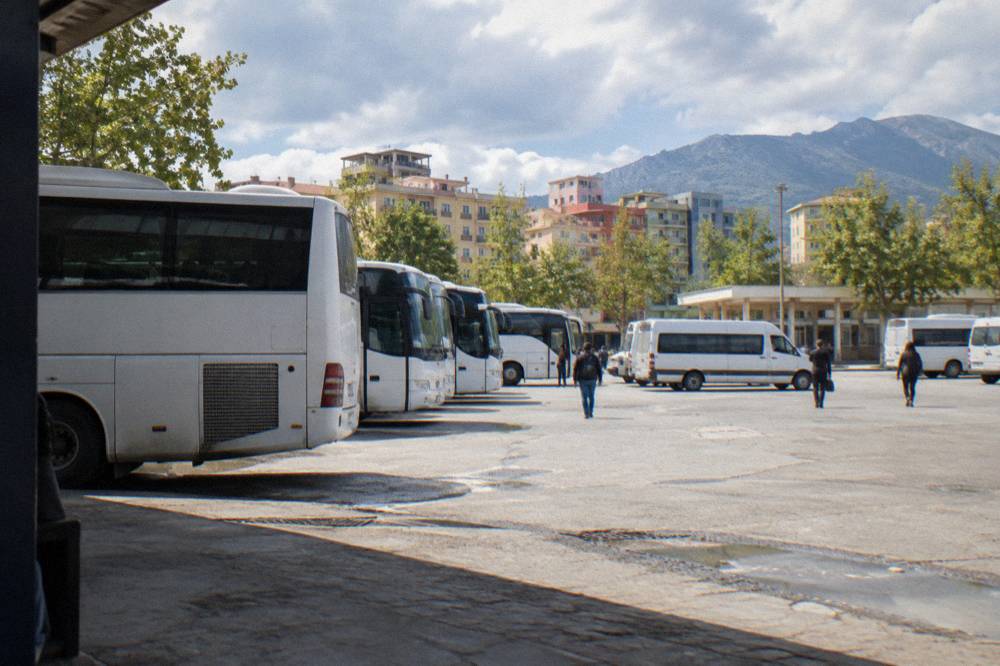
A city bus fare is about 40 lek, paid in cash on board, and city buses run roughly 06:00 to 23:00. A taxi avoids the timing risk if you are catching an early departure. The getting around Tirana guide compares the options in full.
| Terminal | Direction from Skanderbeg Square | Distance | Serves |
|---|---|---|---|
| South and North Bus Terminal | North-west | About 4.0 km | Domestic intercity buses, airport bus line |
| International Bus Terminal | South-east | About 5.9 km | Prishtine, Athens, Thessaloniki and other cross-border routes |
| Kruja minibus stop | North-west | Shared with domestic terminal area | Kruja minibuses |
For overnight planning, the Where To Stay In Tirana: Centre, Blloku Or Near The Lake notes which neighbourhoods put you closest to transport links, and the Is Tirana Safe? Scams, Traffic And Night Walks covers the current FCDO advice on demonstrations in the centre.
What Timetables Do Tirana Bus Stations Publish?
The municipality's published timetables for the South and North Bus Terminal list Durres buses from 06:00 at short intervals, Berat buses from 05:40 about every 30 to 45 minutes and Shkoder buses from 05:00 about every 30 minutes, plus departures to Kavaja, Lac, Koplik and other towns, while the International Bus Terminal lists a daily Tirana to Prishtine departure at 06:00 and several daily departures to Athens, with Thessaloniki also served. Those frequencies are the headline facts from the official pages.
Early starts dominate. Shkoder's first bus leaves before six in the morning and Berat's not long after, which suits day trips but punishes late risers. The intervals below are the published ones for the first departures of the day; later in the day frequency can drop, so treat the morning schedule as the reliable core and check eTransport for anything after mid-afternoon.
| Destination | First departure | Published frequency |
|---|---|---|
| Durres | 06:00 | Short intervals through the day |
| Berat | 05:40 | About every 30 to 45 minutes |
| Shkoder | 05:00 | About every 30 minutes |
| Kavaja, Lac, Koplik | Daily | Listed on the terminal page |
| Prishtine (international) | 06:00 daily | Daily service |
| Athens (international) | Several daily | Several departures daily |
| Thessaloniki (international) | Daily | Listed on the terminal page |
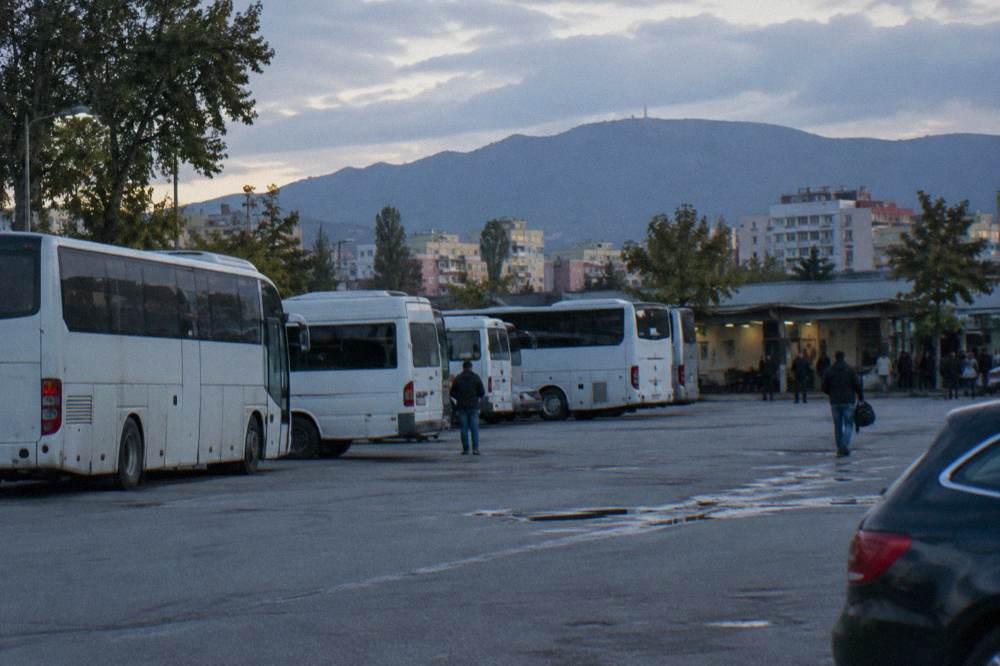
Timetables change with the seasons and demand, so confirm your exact departure on eTransport or at the terminal before committing to a fixed plan. The published times above are the municipality's own listing, and the terminal bays display current departures on site. One thing the timetables do not show is the situation on the roads themselves: the FCDO updated its travel advice on 15 October 2026 to note demonstrations in central Tirana since 13 October, some violent, so check local conditions before a travel day.
For coastal planning, the Tirana to Durres guide and the Tirana to Saranda guide explain what each route involves, including why the far south is a long ride rather than an easy day return.
How Much Do Buses From Tirana Cost And How Do You Pay?
Intercity fares are not printed on any official page, so plan to pay the driver in cash, a few hundred lek for nearby towns, with the single reported exception of the Kruja minibus at about 200 lek for a ride of about an hour, while city buses cost about 40 lek paid in cash to the conductor on board and the airport bus to the terminals costs 300 lek, or 3.50 euro. Cash is the system's common denominator.
Cards are widely taken in hotels, larger restaurants and supermarkets in central Tirana, but the bus system does not rely on them. Withdraw lek before travel day. The currency is the Albanian lek, roughly 90 lek to the euro per the Bank of Albania's official rate of 23 October 2026, and the euro is not legal tender in Albania. The Albanian lek guide explains exchange in practice.
Small denominations help. A driver taking a small morning fare may struggle to change a large banknote early in the day, and conductors on city buses prefer exact or near-exact change. The Tirana prices guide gives the wider cost picture.
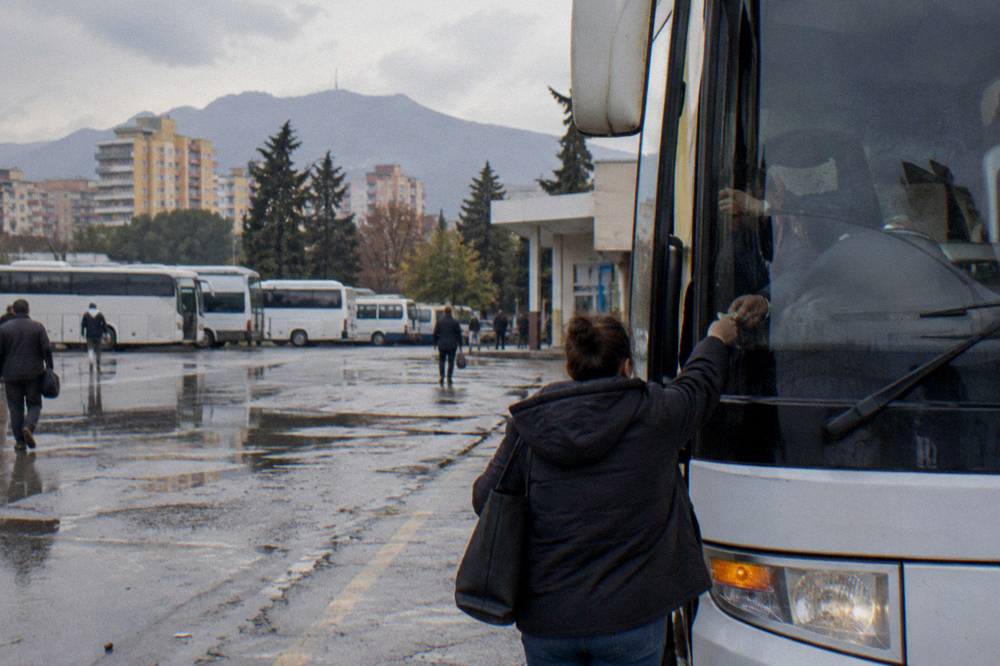
For international tickets, buy at the terminal or through the operator before departure day where a route allows it, and confirm the currency the driver or desk expects. For domestic rides there is rarely a ticket desk at all: you board, the conductor or driver collects, and you keep your seat.
| Ride | Fare | How to pay |
|---|---|---|
| City bus, single | About 40 lek | Cash to the conductor on board |
| Kruja minibus | About 200 lek, reported | Cash, confirm before you go |
| Airport bus to South and North Terminal | 300 lek / 3.50 euro | At the bus |
| Airport bus to Tirana centre | 400 lek / 4.50 euro | At the bus |
| Intercity bus to nearby towns | A few hundred lek, cash to the driver | Cash on board |
Is There A Train From Tirana Or The Airport?
No passenger trains run from Tirana to Durres or to the airport at present, because the Tirana-Durres-Airport line is being rebuilt with electrification expected to finish by the end of 2027, so every practical journey out of the city currently depends on a bus, a coach, a taxi or a tour vehicle. The bus terminal network is not one option among several, it is the system.
This is the single most useful fact for anyone used to rail-based European capitals. There is no station to find, no platform to check and no rail alternative if a bus is full. In practice that means booking a seat on heavily travelled summer routes in advance where an operator allows it, arriving early, and treating the departure times in the published timetables as firm.
The rebuild itself is real progress: state broadcaster RTSH reports the Tirana-Durres-Airport rail project advancing, with works on the line and stations nearing completion and electrification targeted for the end of 2027. Until then the trains in Albania question resolves to the same answer for every traveller: take the bus.
How Do You Reach Each Terminal From Central Tirana?
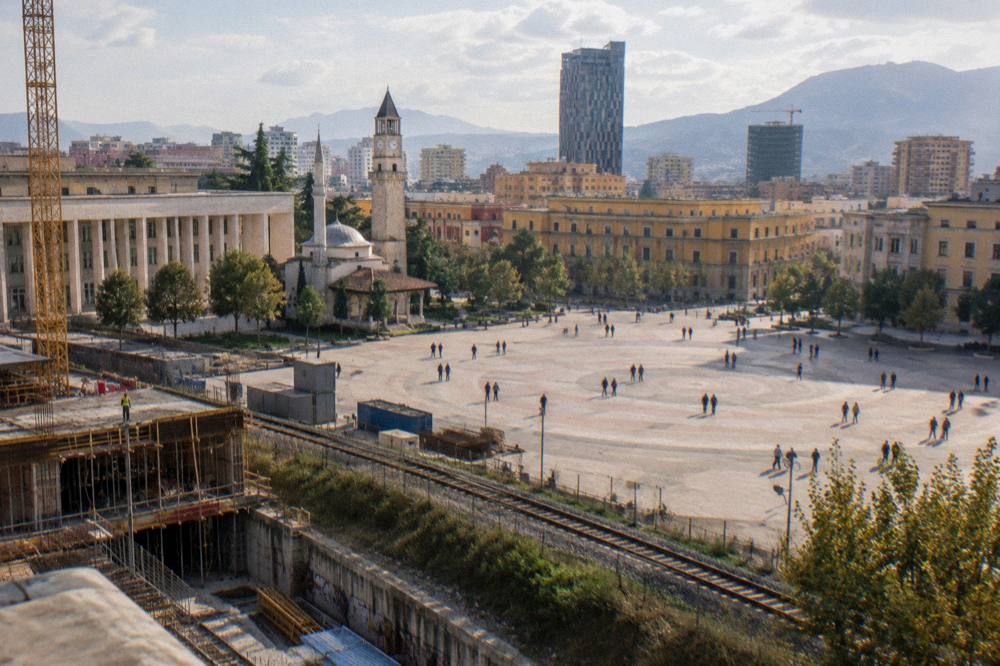
The South and North Bus Terminal, 4.0 km north-west of Skanderbeg Square, and the International Bus Terminal, 5.9 km south-east, are both reachable by city bus or taxi, with city buses running roughly 06:00 to 23:00 at a flat cash fare of about 40 lek, while Uber and Bolt do not operate in Tirana and local taxi apps do, so a taxi hailed on the street or booked through a local app is the timing-safe choice for an early departure. Neither terminal is walkable from the old centre.
Timing is the planning variable. Shkoder buses begin at 05:00 and Berat at 05:40, before some city bus routes are useful, which pushes early risers towards a taxi. For mid-morning departures the city bus works and costs pocket change. The airport bus line to the terminal, 300 lek, 20 to 30 minutes, from 08:00 airport-side and 07:00 terminal-side until 18:00, stitches the airport into the intercity network if you are connecting on arrival day.
Luggage is the other variable. Terminals involve walking between bays with bags, and the Tirana luggage storage guide covers leaving bags in the centre if you want to travel light between check-out and departure.
| From Skanderbeg Square to | Distance | Practical options |
|---|---|---|
| South and North Bus Terminal | About 4.0 km north-west | City bus, taxi, local taxi app |
| International Bus Terminal | About 5.9 km south-east | City bus in that direction, taxi |
| Tirana International Airport | 15.9 km by road, about 29 minutes | Airport bus 400 lek, official airport taxi about 2,200 lek, car hire |
The official airport taxi, branded TAXI Tirana Airport and run by Auto Holiday Albania, charges about 2,200 lek one way to the centre, 20 to 25 minutes, per the airport's own transport page, and can be pre-booked. If you would rather not drive yourself, the car rental in Tirana guide and the driving in Albania guide cover the self-drive alternative, including the zero-tolerance drink-driving rule reported in the August 2026 road-law tightening.
Can You Take A Day Trip From Tirana By Bus?
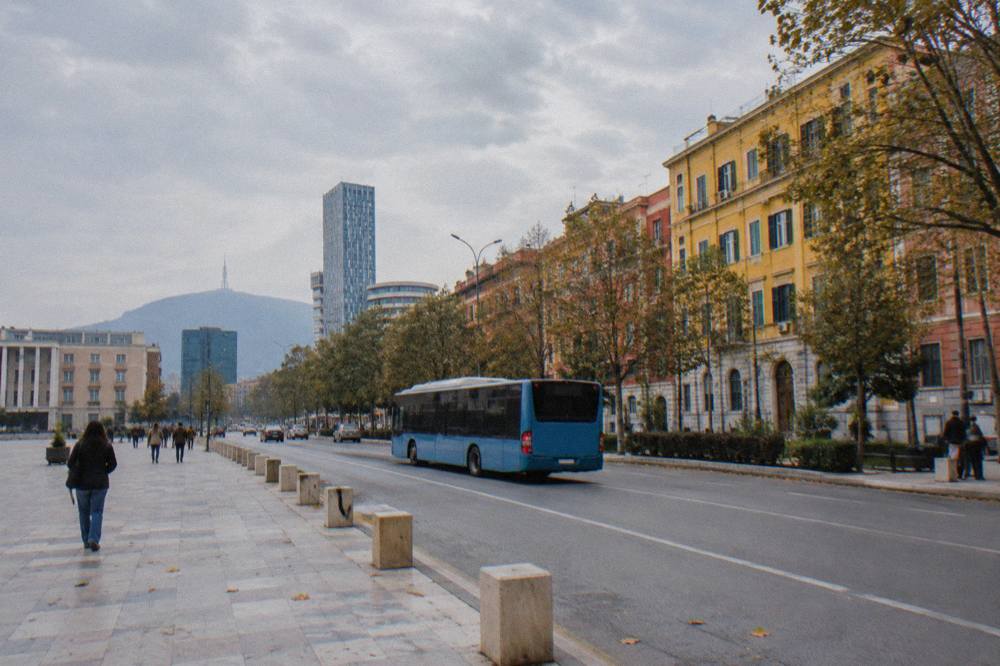
Yes, Kruja, Durres and Berat are the classic bus day trips, with Kruja about 45 minutes away by minibus at a reported fare of about 200 lek, Durres about 39 minutes by road and Berat about two hours by road, while anything in the far south such as Saranda or Butrint is about four to four and a half hours each way and belongs to an overnight stay or a long organized tour day rather than a bus day trip. Distance decides the plan.
Kruja is the easiest: a minibus ride of about an hour, reported at about 200 lek, reaching the town whose castle and bazaar sit beneath Mount Kruja, and the Kruja guide neighbour pages cover the shorter castle trips around Tirana such as Petrela Castle, 22 minutes by road. Durres, 39 minutes away, pairs a Roman amphitheatre with the Adriatic beach, and Berat, a UNESCO World Heritage town inscribed in 2005 with Gjirokastra following in 2008, rewards the longer ride with its Ottoman houses climbing the hillside.
Guided tours trade the terminal commute for hotel pickup and a fixed itinerary. The Ohrid and St Naum day tour crosses into North Macedonia and handles the border logistics, and it can be checked at Ohrid and St Naum Day Trip. The Berat and Kruja options below do the same for the two classic domestic rides.
For the far south, the honest arithmetic is the guide: Saranda 248 minutes, Butrint 271 minutes, Ksamil 266 minutes, each way. A tour bus makes that bearable in a single very long day, a public bus schedule makes it an overnight, and the Tirana to Saranda guide lays out both.
What Should You Know Before Travel Day In Tirana?
Bring lek in cash, arrive at the terminal before the published departure time, confirm your bay and your route on eTransport or at the terminal, keep the emergency numbers Police 112, Ambulance 127 and Fire 128 to hand, and check the FCDO's current advice about demonstrations in central Tirana that have been held since 13 October 2026 before you set out. Those five habits cover nearly every failure mode of a bus day in Tirana.
The seasonal angle matters too. July and August bring mean daily highs of 29.8 and 30.4 C, so a terminal wait at midday is hot work, carry water. November is the rainiest month in the normals and December close behind, with 138.6 and 137.5 mm respectively, so pack for standing around in the wet. The Tirana weather guide and the best time to visit Tirana guide put the whole year in context.
Beyond the terminals, the practical pages that pair well with travel day are the Albania entry requirements guide, since Albania sits outside the EU and Schengen with its own 90-in-180 visa regime, and the Albania travel tips guide for the wider practical picture.
Common Questions About Tirana Bus Stations
Which bus station in Tirana goes to Durres?
Durres buses leave from the South and North Bus Terminal, Terminali i Autobusave te Jugut dhe Veriut, about 4.0 km north-west of Skanderbeg Square, with departures from 06:00 at short intervals. Pay the driver in cash. The Tirana to Durres guide covers the route in full.
Where do international buses leave from in Tirana?
The International Bus Terminal on Rruga Nacionale along the Tirana-Elbasan motorway, about 5.9 km south-east of Skanderbeg Square. The published schedule includes a daily Tirana to Prishtine departure at 06:00, several daily Athens departures and Thessaloniki service.
Is there a train from Tirana bus stations to the airport?
No. No passenger trains run anywhere from Tirana at present. The Tirana-Durres-Airport line is being rebuilt, with electrification expected to finish by the end of 2027. Until then, the airport bus, 400 lek to the centre or 300 lek to the bus terminal, is the scheduled link.
How much is the bus in Tirana?
A single city bus ride costs about 40 lek, paid in cash to the conductor on board. Intercity fares are not printed on official pages: expect a few hundred lek in cash to the driver for nearby towns, with the Kruja minibus reported at about 200 lek.
Can you get a bus from Tirana to Ohrid?
Ohrid is in North Macedonia, so the route is an international one involving a border crossing, and the published fares and journey times on that route are not confirmed, so check eTransport or the operator before travelling.
Do buses in Tirana take cards?
Plan on cash. Cards are widely accepted in hotels, larger restaurants and supermarkets in central Tirana, but city buses take cash on board and intercity fares are paid to the driver in cash, so withdraw lek before travel day.