Tirana Prices: A Realistic Daily Budget
Tirana is one of Europe's more confusing cities to budget for, because many of its headline sights cost nothing at all while a few of the big ones sell tickets. Here is how the spending actually breaks down.
Short answer
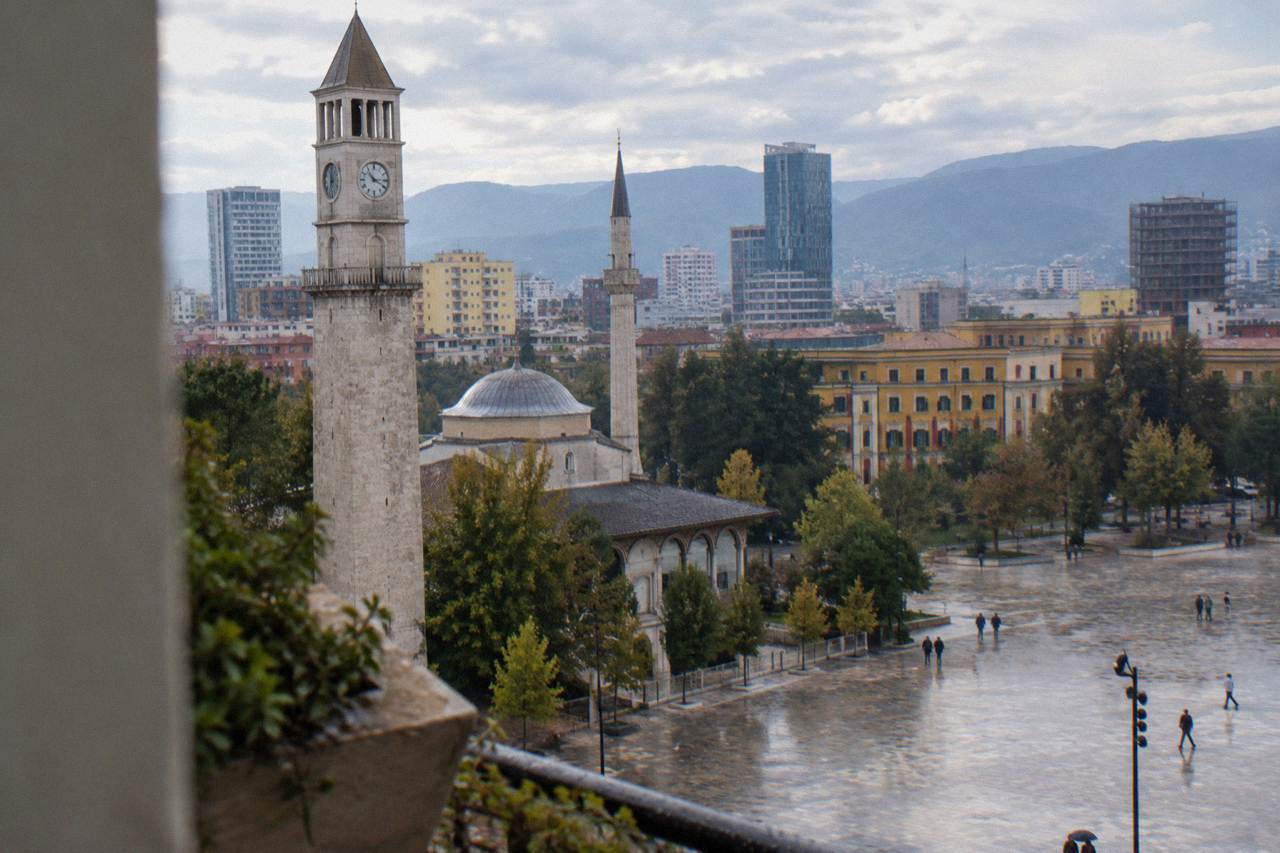
A day in Tirana can be almost free if you stick to Skanderbeg Square, the Pyramid steps, Et'hem Bey Mosque and the Grand Park, all of which need no ticket. Paid items are the museums, the Dajti cable car and any tours or day trips, whose live prices appear in the listings on this page. City transport costs about 40 lek a ride and the airport bus is 400 lek.
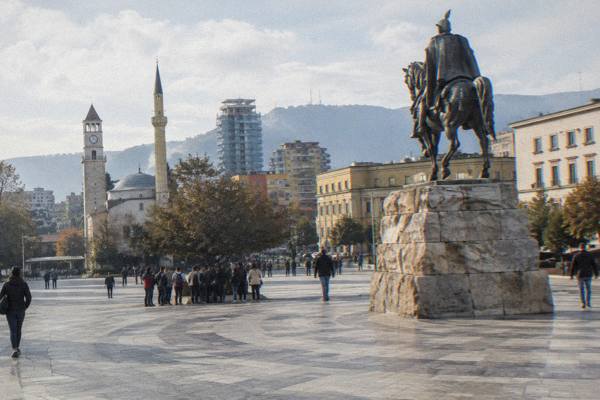
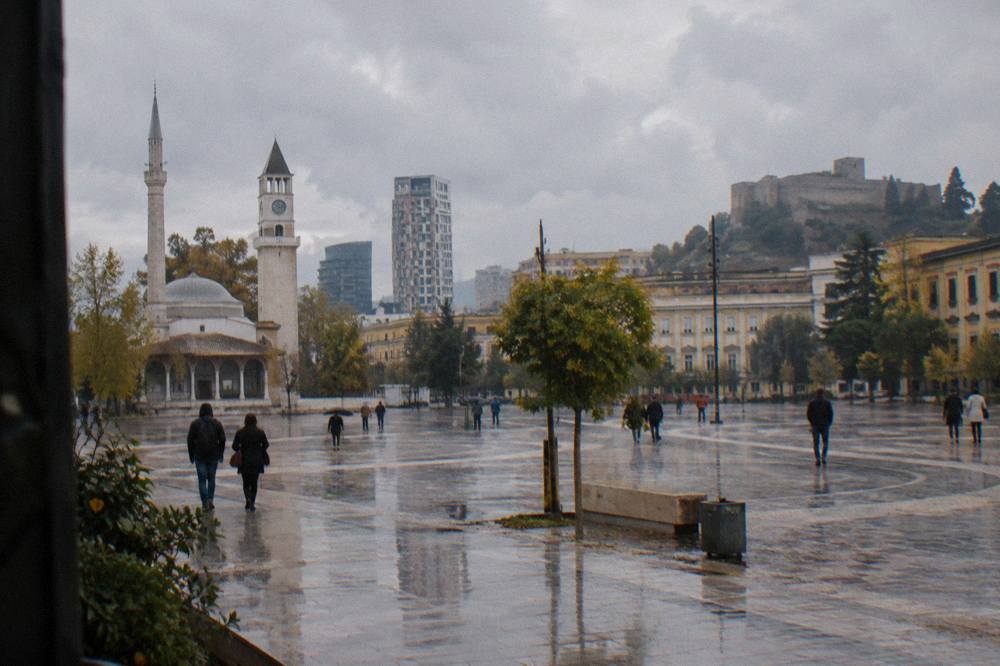
Tirana, the capital of Albania, sits inland in a basin at the foot of Mount Dajti, and its price structure is unusually lopsided: the city's most photographed spaces, Skanderbeg Square, the Pyramid of Tirana, Et'hem Bey Mosque and the Grand Park, are public and free, while the two Bunk'Art museums, the House of Leaves and the Dajti Ekspres cable car are ticketed. The currency throughout is the Albanian lek, roughly 90 lek to the euro, and the euro is not legal tender, so a budget plan for Tirana starts with the money itself.
How Much Does A Day In Tirana Actually Cost?
A day in Tirana splits into three spending layers rather than one number: the free layer, which covers Skanderbeg Square, the Pyramid steps, Et'hem Bey Mosque and the Grand Park; the coins layer, which covers city buses at about 40 lek a ride; and the ticket layer, which covers Bunk'Art, the House of Leaves and the Dajti Ekspres, none of which publishes a price in advance. No trustworthy total exists for meals, beds or taxis.
The honest way to plan is by layer. If a day is built around walking the centre, using the square, the mosque, the Pyramid steps, Tanners' Bridge about 0.7 km east and the New Bazaar about 0.6 km east, the spend can be close to zero apart from food. Add two bus rides and a coffee and it is still a handful of coins. The moment the day includes a bunker museum or the cable car up Mount Dajti, real tickets enter the equation, and those are the numbers to confirm on the spot. Any single daily figure you might see quoted elsewhere would be invented, so build the day from the layers instead.
What a competing guide usually does at this point is print a table of typical prices for coffee, byrek, beer and beds. Every such figure for Tirana is an aggregator estimate that changes monthly, so this page leaves them out and points instead to the pages that describe the structure: Where To Stay In Tirana: Centre, Blloku Or Near The Lake for the neighbourhoods and hostel scene, and Tirana restaurants for the places with an actual menu. The pattern worth knowing is simpler than any number: casual food near the square and in Pazari i Ri is modestly priced by European standards, sit-down restaurants in Blloku about 0.8 km south are the premium tier, and hotel rates swing with the season, highest in the hot, dry July and August stretch when the ERA5 reanalysis for Tirana, 1991-2020, puts mean highs at 29.8 and 30.4 C.
A walking tour is the one spending category where a reliable figure exists before you leave home, because the listing carries it. The classic Tirana walking tours loop covers the Ottoman-to-communist centre with a local guide, and the operator's live listing shows the current from-price and rating. For everything else in this section, the rule is the same: check the price at the counter, the bakery shelf or the hotel's own booking page, and treat anything printed in a blog, including a plausible-sounding daily total, as noise.
What Is Free In Tirana?
Skanderbeg Square, the climbable Pyramid of Tirana, Et'hem Bey Mosque outside prayer times, Tanners' Bridge, the Postbllok memorial, the New Bazaar's lanes and both the Grand Park of Tirana and the Artificial Lake are public space with no ticket, and together they fill an entire free day of walking. The Clock Tower, Bunk'Art 1 and 2, the House of Leaves and the Dajti cable car are the paid counterweight, so a "free day" in Tirana is entirely realistic if you skip those five.
The free list is long enough to plan around. The square itself, one of the city's most important public spaces per the national tourism agency, costs nothing to cross and photograph, with the closed National History Museum's mosaic facade as a backdrop. The Pyramid, opened in 1988 and renovated into the TUMO tech centre by 2023, has exterior steps that are free to climb for the view. The mosque is free to enter outside prayer times, with modest dress, shoulders and knees covered and a headscarf for women, as courtesy guidance. The free things to do in Tirana page carries the fuller list.
| Sight | Position from Skanderbeg Square | Free or ticketed |
|---|---|---|
| Skanderbeg Square | On the square | Free, public space |
| Et'hem Bey Mosque | About 0.2 km south-east | Free, outside prayer times |
| Clock Tower | About 0.2 km south-east | Ticketed, about 90 steps |
| Bunk'Art 2 | About 0.2 km south-east | Ticketed, buy at the door |
| House of Leaves | About 0.2 km south-west | Ticketed |
| Pyramid of Tirana | About 0.7 km south-east | Free exterior steps |
| Tanners' Bridge | About 0.7 km east | Free, public street |
| New Bazaar (Pazari i Ri) | About 0.6 km east | Free to browse, pay as you eat |
| Grand Park and Artificial Lake | About 2.1 km south | Free, public park |
| Bunk'Art 1 | About 4.6 km north-east | Ticketed, buy at the door |
| Dajti Ekspres lower station | About 4.4 km north-east | Ticketed, sold at the station |
The catch with the free list is that several sights sit at the far edge of walking range. The Grand Park and lake are about 2.1 km south, Bunk'Art 1 about 4.6 km north-east behind the cable car lower station, and reaching either without a car means a city bus or a taxi, which converts a free sight into a coins-layer outing. That is the trade the table above makes visible: the dense cluster around the square is genuinely free to walk, while the outer sights cost transport even when entry itself is free, as with the park.
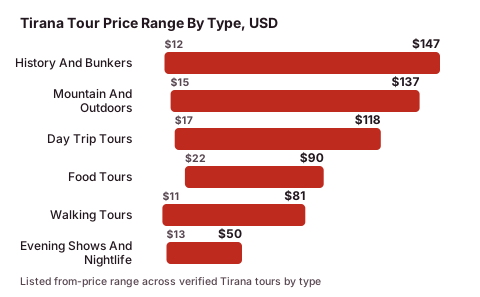
A guided walk is the way many visitors turn the free layer into something richer, and two of this page's featured products do exactly that over different terrain. The trio below covers the centre on foot, the Petrela castle ridge with zipline and quad bike, and Mount Dajti with the cable car ticket handled for you, three very different price points rendered from the live listings.
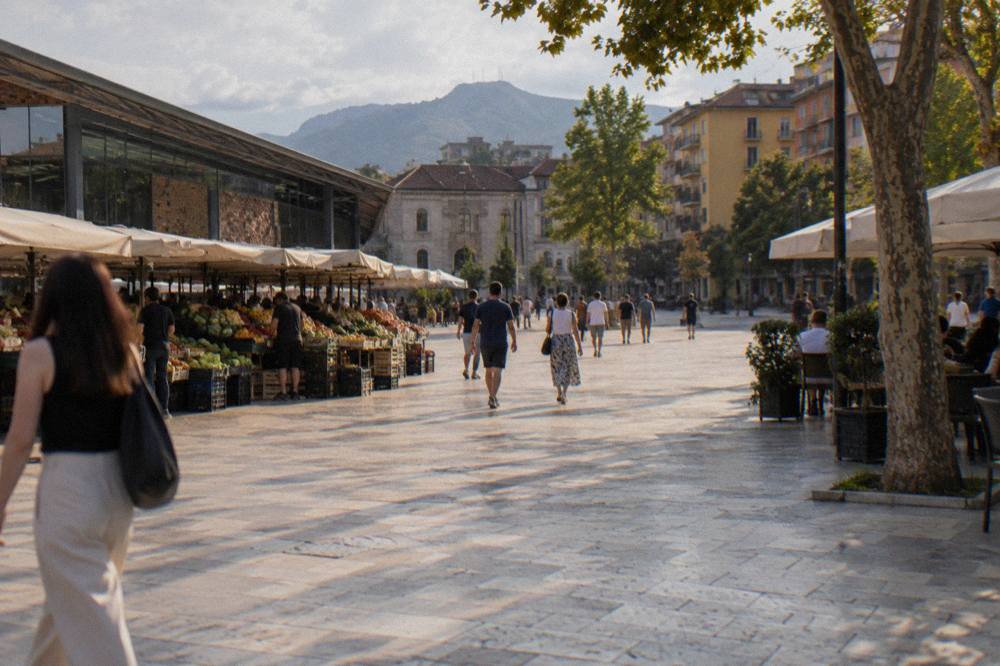
Between the free cluster and the paid outliers, a middle day is the common shape: morning walking the square, mosque and Pyramid, an afternoon bus ride to Bunk'Art 1 or the cable car, and an evening in Blloku. That shape spends money at exactly three points, entry, ride and dinner, and each of the three is checkable on the spot.
What Transport In Tirana Costs?
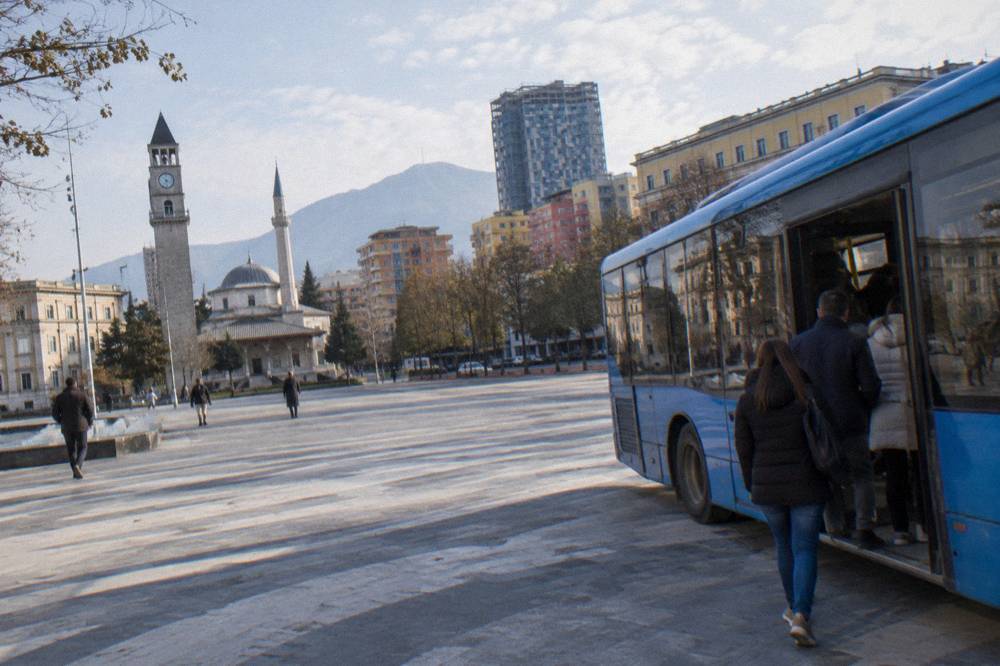
The transport prices in Tirana are few and precise: the airport bus to the centre is 400 lek (4.50 euro) and runs 24/7 every full hour, the airport bus to the South and North Bus Terminal is 300 lek, the official airport taxi is about 2,200 lek, a city-bus ride is about 40 lek paid in cash, and paid street parking runs 100, 40 or 20 lek per hour by zone. Every other fare is paid to the driver with no published price.
The airport leg is the one part of a Tirana budget that is fully documented. The bus stops behind the Palace of Opera and Ballet on Skanderbeg Square, takes 30 to 40 minutes, and the ticket is valid all day until 23:59 rather than tied to one departure. The Durres coach from the airport is 600 lek. The airport to city centre guide covers the full decision, and getting around Tirana does the same for the city network.
| Journey | Fare | Notes |
|---|---|---|
| Airport bus to city centre | 400 lek (4.50 EUR) | 24/7, every full hour, 30 to 40 min |
| Airport bus to South/North Terminal | 300 lek (3.50 EUR) | Hourly, 20 to 30 min |
| Airport coach to Durres | 600 lek | Departures 08:30 to 23:00 |
| Official airport taxi to centre | About 2,200 lek | 20 to 25 min, 24/7 |
| City bus, single | About 40 lek | Cash on board |
| Kruja minibus | About 200 lek | About 1 hour, local guides report |
| Paid street parking, zone A | 100 lek per hour | Pay by SMS to 50500 or the Tirana Ime app |
| Paid street parking, zone B | 40 lek per hour | Same payment |
| Paid street parking, zone C | 20 lek per hour | Same payment |
Two warnings attach to that table. First, Uber and Bolt do not operate in Tirana; local taxi apps do, per local reporting, but no meter tariff or app price survived verification, so agree the fare before the door closes. Second, there is no train option at all: no passenger service runs on the Tirana-Durres line or to the airport while it is rebuilt, with electrification expected to finish by the end of 2027. Anyone quoting a train fare for Tirana is quoting a service that does not exist yet.
Intercity buses leave from the South and North Bus Terminal about 3.9 km north-west of the square, and the timetables are published on the city's own pages, Durres from 06:00 at short intervals, Berat from 05:40 roughly every 30 to 45 minutes, Shkoder from 05:00 about every 30 minutes, but the fares are not printed anywhere official. Pay the driver in cash and expect a few hundred lek for nearby towns. The Tirana bus stations page maps both terminals.
Sightseeing Prices In Tirana: What Is Ticketed?
The ticketed sights in Tirana are Bunk'Art 1, open daily 09:30 to 17:30 since 1 June 2026 per its own website, Bunk'Art 2, open daily from 09:30, the House of Leaves, open daily 09:00 to 19:00, the Clock Tower and the Dajti Ekspres cable car, and none of their prices is published in advance. The working rule: buy Bunk'Art tickets at the door and buy cable car tickets only at the lower station, where the operator says they are sold.
The Bunk'Art situation trips up a lot of planning. What is solid: Bunk'Art 1 sits about 4.6 km north-east behind the cable car lower station, Bunk'Art 2 about 0.2 km south-east opposite the municipality, and both open from 09:30 daily. A guided option with transport exists, and its listing carries the live price, which is often the cleanest way to budget the visit because the ticket logistics are handled.
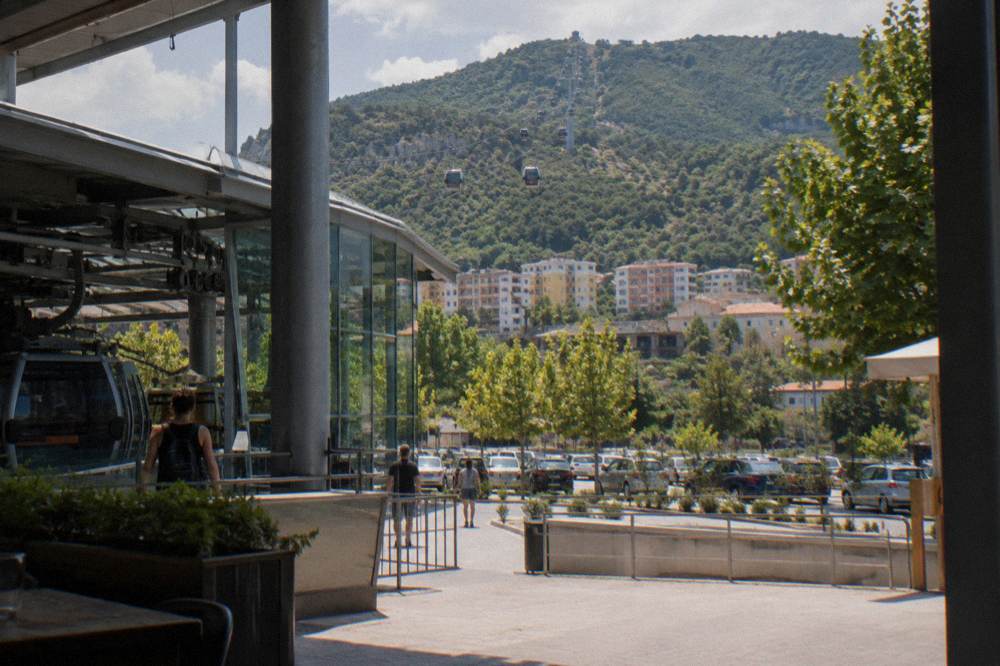
The cable car has the same shape of problem from the opposite direction. The Dajti Ekspres operator, which bills the line as the longest cableway in the Balkans, publishes no fares online and says current ticket prices are given at the lower station, where one-way, return and combination tickets are sold. Local guides report a Tuesday maintenance closure, so confirm the day before committing a morning, and the operator itself suggests arriving between 09:00 and 11:00 on national holidays.
| Ticketed sight | Position from the square | Published hours | Price published in advance? |
|---|---|---|---|
| Bunk'Art 1 | About 4.6 km north-east | Daily 09:30 to 17:30 (summer 2026) | No, buy at the door |
| Bunk'Art 2 | About 0.2 km south-east | Daily from 09:30 | No, buy at the door |
| House of Leaves | About 0.2 km south-west | Daily 09:00 to 19:00 | On site, not online |
| Clock Tower | About 0.2 km south-east | Varies, about 90 steps | No, confirm locally |
| Dajti Ekspres | Lower station about 4.4 km north-east | Roughly 09:00 to 18:30 or later, Tuesdays closed per local guides | No, sold only at the station |
| National Gallery of Arts | About 0.4 km south-east | Under renovation, check before going | Not applicable |
One sight deserves a special note because budgeting for it produces nothing: the National History Museum, inaugurated in 1981, is closed for restoration until about March 2028. Its mosaic facade is the free consolation prize. The National Gallery of Arts is likewise in a renovation phase, so check its status before planning around it, and the Tirana museums page tracks the open ones.
The communist layer of the city, which is the reason many people come, is also the cheapest to see on foot: the House of Leaves, Bunk'Art 2, the Postbllok memorial with its bunker and Berlin Wall fragment, and the Blloku quarter that was once closed to ordinary residents are all within about a kilometre of the square, and the communist history in Tirana trail strings them together. Only the two museum entries cost money; the streets are free.
Where Accommodation Fits In A Tirana Budget?
Season matters too: July and August mean highs of 29.8 and 30.4 C bring peak demand, while November's 139 mm of rain marks the quiet, cheap end.
The way to use that structure is to match a neighbourhood to a budget posture rather than to a number. The centre, everything within a kilometre of Skanderbeg Square, minimises transport spend to zero because the free layer of sights is walkable. Blloku about 0.8 km south is the nightlife quarter, convenient for evenings and priced accordingly. The outer neighbourhoods add bus rides at about 40 lek each way, which is the trade: a cheaper bed against a handful of coins per day of riding.
There is a demographic reason the centre carries the premium: Tirana's county is the only one in Albania that grew in 2025 and holds about 32.8 percent of the country's population of 2,335,930, so the pull toward the capital, and toward its central quarters, keeps pressure on the beds there. The full index of guides sits on Tirana Albania Travel Guide.
Timing is the other lever. The ERA5 reanalysis for Tirana, 1991-2020, shows the shape of the year plainly: August at 30.4 C mean high with just 31 mm of rain, January at 10.8 C mean high and 2.3 C mean low with about 106 mm, and a wet shoulder from October through December peaking in November at 139 mm. Accommodation demand follows that curve, so the best time to visit Tirana decision and the price decision are the same decision made twice. Spring and autumn deliver the middle ground on both counts.
That single habit, confirming at the counter, is the whole philosophy of this page applied to lodging.
Food And Drink Spending In Tirana?
No individual coffee, byrek, beer or meal price in Tirana is verifiable in a source that stands behind it, so the honest food budget is structural: bakeries and the New Bazaar are the low tier, casual grill houses and byrek counters the middle, and the named sit-down restaurants, Padam, Artigiano, Era Blloku and the Sophie Caffe chain, are the top tier, each with a menu on its own site. Pay in lek, and check the bill, because service is rarely added to it.
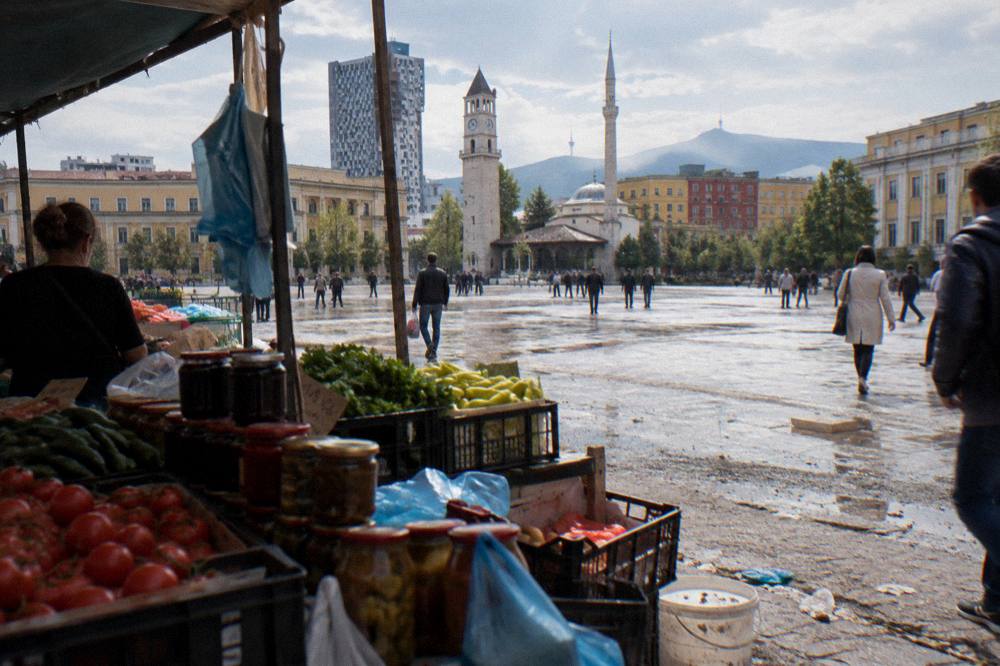
Albanian food deserves its budget line less for cost than for understanding what you are paying for. The dishes that define the cuisine, tave kosi, baked lamb under a yogurt and egg topping, byrek, the layered filo pie sold by the slice, fergese, baked peppers and tomatoes with cheese, qofte, seasoned grilled meatballs, and raki, the fruit brandy that arrives at the end of meals, are described in detail on the Albanian food page, and the first two are the classic low-cost staples of a Tirana day. The tasting version of the same food, several stops with a guide explaining each dish, is one of the few food spends with a price you can see in advance.
Drink carries two rules worth more than any price list. The legal purchase age is 18, reported under Albanian law on protecting minors from alcohol, and drink-driving is zero tolerance under the road rules tightened in August 2026, per ATA reporting, which matters if a wine-tasting or raki-heavy evening is on the plan and a car is booked for the next morning. Beyond that, bottled water is the FCDO's advice, as the UK foreign office states travellers should not drink Albanian tap water, so budget for bottles.
| Food tier in Tirana | What it is | How to budget it |
|---|---|---|
| Bakeries and byrek counters | Byrek slices, savoury pies, morning pastries | Pay at the counter, coins |
| Pazari i Ri stalls | Produce, olives, cheese, honey by weight | Ask the price per kilo before weighing |
| Casual grill houses | Qofte, tave kosi, fergese plates | Menu prices, confirm the bill at the end |
| Named sit-down restaurants | Padam, Artigiano, Era Blloku, Sophie Caffe | Check each venue's own site for the menu |
| Guided food experience | Multi-stop tasting with a local guide | Live price on the operator's listing |
The coffee culture deserves its own sentence, because it is the most frequent small spend of a Tirana day and the one visitors underestimate in volume rather than price: the Tirana coffee culture page explains how the city drinks, slowly and repeatedly, and a realistic budget assumes several seated coffees a day, each priced at the table rather than guessed here.
Day Trips From Tirana And Their Costs?
Day trips from Tirana cost in three currencies, money, time and distance, and the distances are the reliable part: Durres is about 39 minutes away by road, Kruja about 45 minutes, Petrela Castle about 22 minutes and Lake Bovilla about 61 minutes, all close enough for a half or full day, while Berat at about 122 minutes, Shkoder at about 118 and Gjirokaster at about 209 are full days, and Butrint at about 271 minutes each way is an overnight proposition, not a day trip, however it is marketed.
The near ring is where a Tirana budget stretches best. Petrela Castle 14.2 km out, Lake Bovilla and Pellumbas Cave at about 47 minutes can each be reached by tour or by car, and the paid activity at Petrela, the zipline and quad bike combination below, is the clearest example of an excursion whose price you can read before committing, straight off the live listing. Kruja, with its castle and bazaar, is also the one near trip with a known public-transport fare, about 200 lek each way on the minibus, local guides report, so confirm at the terminal before relying on it.
| Day trip from Skanderbeg Square | Road time | Budget character |
|---|---|---|
| Petrela Castle | About 22 minutes | Small gate fee possible, confirm on site |
| Durres | About 39 minutes | Amphitheatre and museum a few hundred lek, local guides report |
| Elbasan | About 42 minutes | Old walls walkable free |
| Kruja | About 45 minutes | Castle and bazaar, minibus about 200 lek |
| Pellumbas Cave | About 47 minutes | Guided visit, cave entry local |
| Lake Bovilla | About 61 minutes | Outdoor day, tour or car |
| Shkoder | About 118 minutes | Full day by bus or tour |
| Berat | About 122 minutes | Museums 400 and 300 lek per the Berat Museum Center |
| Ohrid (North Macedonia) | About 135 minutes plus the border | Border crossing, passport needed |
| Gjirokaster | About 209 minutes | Long day, castle a few hundred lek, local guides report |
| Saranda / Butrint | About 248 to 271 minutes | Overnight, not a day trip |
The Berat figure is a rare treat in Albanian sightseeing: the Berat Museum Center publishes its own prices, 400 lek for the Onufri museum and 300 lek for the ethnographic museum, and the castle grounds may carry a small gate fee. Durres is close enough, 37 km, for a combined beach and amphitheatre day, covered on the Tirana to Durres page, with the amphitheatre at a few hundred lek per local reporting. The trap to avoid is the far south: Butrint and Ksamil are 263 to 271 km away, four and a half hours each way, and any product selling them as an easy day trip from Tirana is selling a very long day indeed.
The trio below is the same near-to-far logic in bookable form: the city walk, the Petrela adventure and the Dajti half-day with the cable car ticket included, each priced live by its operator rather than estimated here.
Money Basics For Tirana: Lek, Cards And Cash?
Albania's currency is the lek, the Bank of Albania's official rate on 23 October 2026 was 1 euro to 90.74 lek, and the euro is not legal tender, so everything in Tirana is ultimately priced in lek. Cards work in hotels, larger restaurants and supermarkets in the centre, but buses, market stalls, small cafes and intercity coaches run on cash, so carry lek notes in small denominations and treat cards as the backup.
The visa and entry side has no cost for most short visitors: Albania is outside the EU and Schengen and runs its own regime, 90 days in any 180 for visa-free nationals, with US passport holders able to stay up to a year without a visa, per the Albanian foreign ministry's own visa page. The EU's new EES and ETIAS systems do not apply at Albania's border. Full detail is on the Albania entry requirements page.
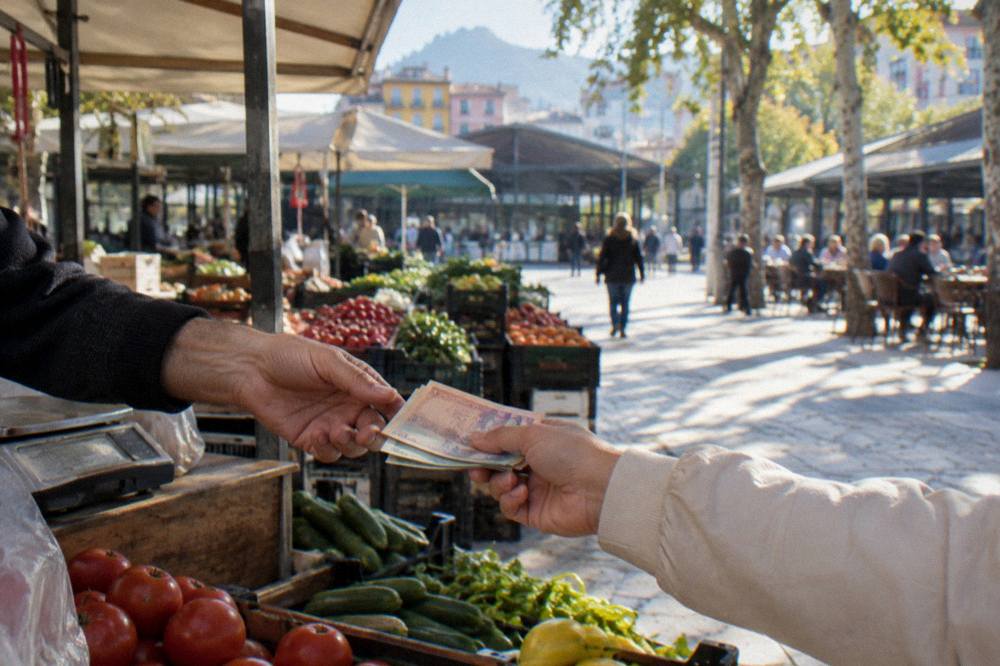
ATMs are easy to find in the centre, and foreign cards do incur withdrawal fees at Albanian banks, so the practical move, if any, is in taking fewer, larger withdrawals rather than hunting for a specific bank brand on a blog's say-so. Exchange offices quote against the Bank of Albania rate, which is published daily, and the Albanian lek page explains the notes and the arithmetic. Plugs are type C and F at 230 V, the same as most of Europe, so no adapter spend for EU visitors.
The security side of money is ordinary city sense: watch your belongings in crowds, and know that the emergency numbers are Police 112, Ambulance 127 and Fire 128.
For a full-week structure that spreads this spending across the country, the things to do in and around Tirana roundup is the companion page, and the Tirana Albania Travel Guide's approach throughout is the same as this page's: the only price worth trusting is the one a venue or operator stands behind, on its own site or at its own door.
Common Questions About Tirana Prices
Is Tirana cheap or expensive?
Tirana is generally affordable by European standards: the main sights are free or cost a few hundred lek, buses cost about 40 lek, and the biggest spends are tours and day trips whose prices show on their live listings.
How much is the bus from Tirana airport to the centre?
The airport bus to the centre costs 400 lek, about 4.50 euro, runs 24/7 every full hour, takes 30 to 40 minutes and stops behind the Palace of Opera and Ballet. The ticket stays valid until 23:59 on the day of issue.
How much is a taxi from Tirana airport?
The official airport taxi, branded TAXI Tirana Airport, charges about 2,200 lek one way to the centre, a 20 to 25 minute ride, and can be pre-booked. No meter tariff applies inside the city, so agree the fare before setting off.
How much does Bunk'Art cost?
No Bunk'Art ticket price is published on the museums' own site, so buy at the door and budget on arrival. Bunk'Art 1 is open daily 09:30 to 17:30 since 1 June 2026 and Bunk'Art 2 opens daily from 09:30, per the museums' website.
How much is the Dajti cable car?
The Dajti Ekspres does not publish fares online; tickets are sold only at the lower station, in one-way, return and combination forms. Local guides report a Tuesday maintenance closure, so check the operating day before planning the ride.
Can I pay with euros in Tirana?
The euro is not legal tender in Albania. Some hotels, taxis and tourist businesses accept it informally at their own rate, but change is usually given in lek, and the working currency is the Albanian lek at roughly 90 to the euro.