Tirana To Saranda: Bus Times, Drive And Flights
Saranda sits about 253 km by road from Tirana, roughly four hours by car and longer by bus.
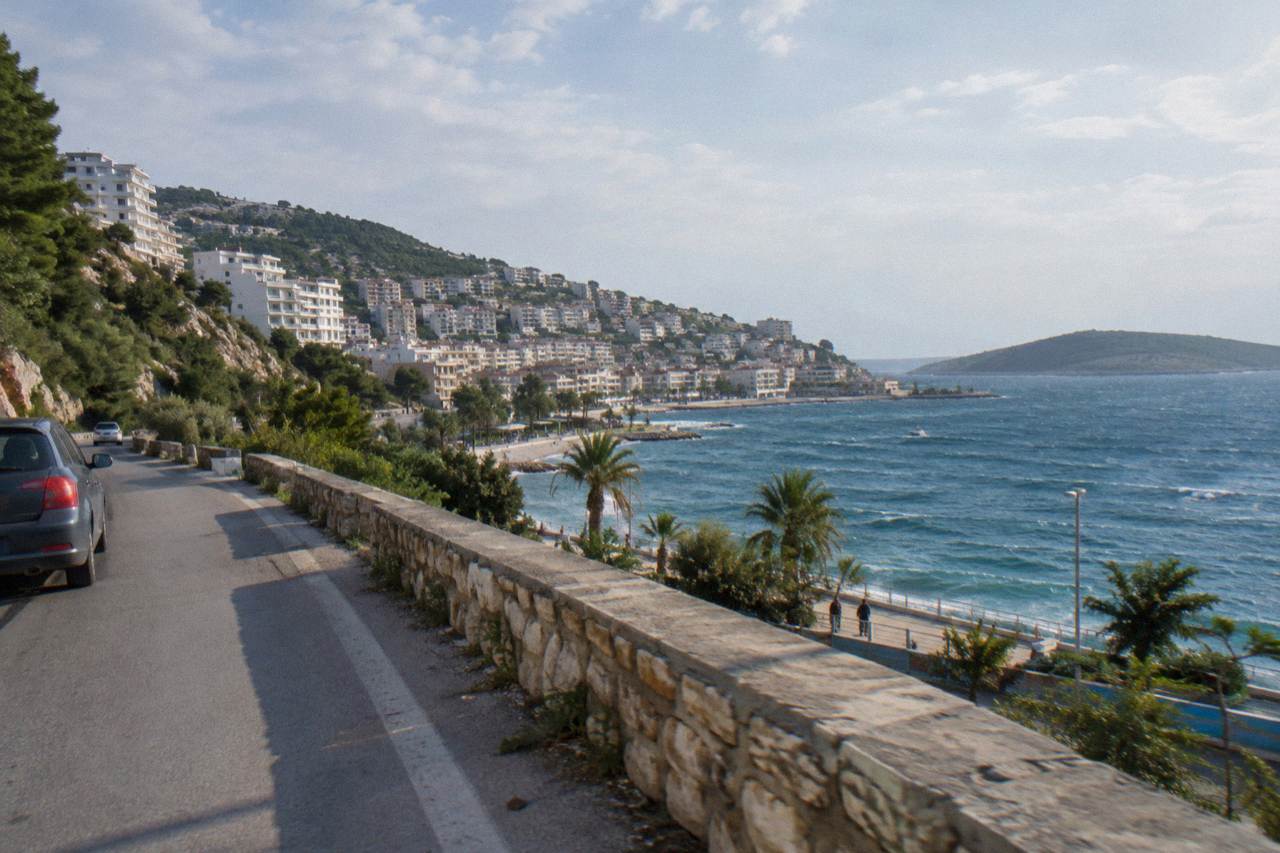
Short answer
There is no train and no direct flight from Tirana to Saranda: the journey is by bus from the South and North Bus Terminal, by car over the Llogara pass or via Gjirokaster, or by flying to Corfu and taking the ferry, which is a separate border crossing.
Saranda is the main resort town on Albania's Ionian coast, and getting there from Tirana, the inland capital at the foot of Mount Dajti, means crossing the whole country.
How Far Is Tirana From Saranda And How Long Does The Journey Take?
Saranda is about 253 km by road from Skanderbeg Square in Tirana, a drive of roughly 248 minutes, just over four hours, without stops, measured from the square to the town. Ksamil beyond it is about 263 km and 266 minutes, and Butrint at the far southern tip is about 267 km and 271 minutes. By bus the journey runs longer than the drive time because of pickup stops, so plan on most of a day either way.
Those figures are road measurements rather than timetables, and the summer season changes them. Traffic to the coast in July and August adds time, and the mountain section of the coastal route is slow road whatever the season. The practical consequence is simple: a same-day return to Tirana is not realistic, and anyone booking accommodation should treat the journey south as a travel day in itself. For comparison, Durres on the Adriatic is about 37 km and 39 minutes from the capital, which is why the coast day trip from Tirana usually means Durres rather than Saranda.
Is There A Bus From Tirana To Saranda?
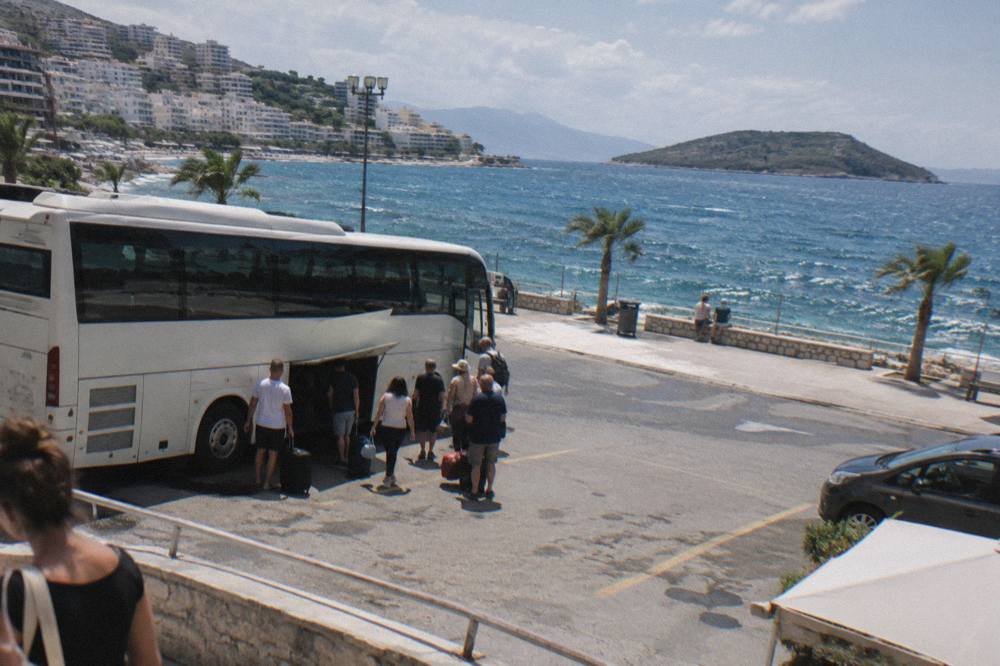
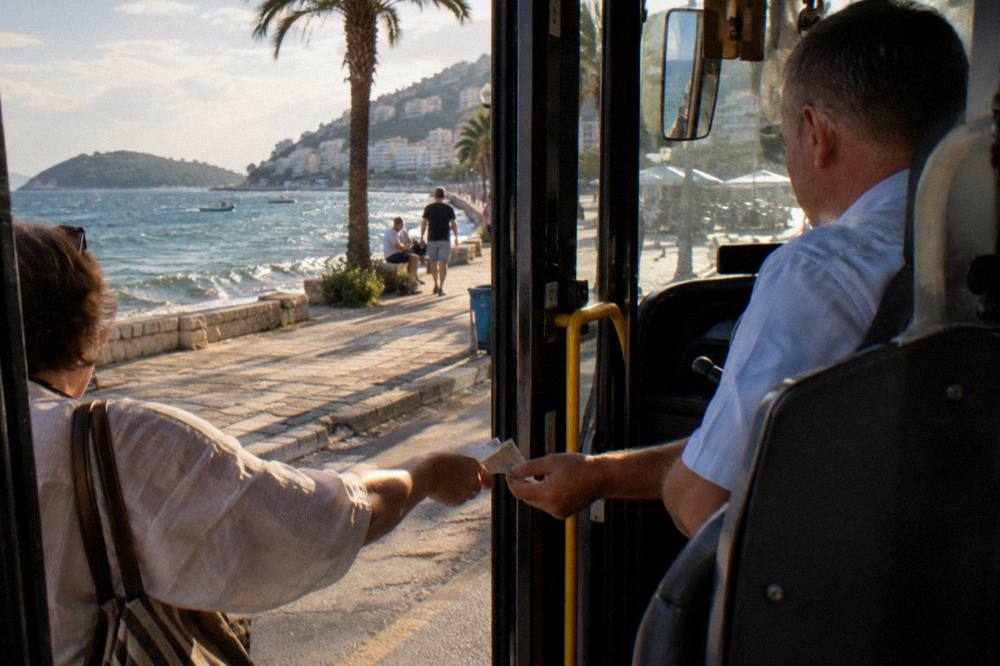
Yes, intercity buses to Saranda leave from the South and North Bus Terminal (Terminali i Autobusave te Jugut dhe Veriut), which sits 4.0 km north-west of Skanderbeg Square, and tickets are paid to the driver in cash. Expect to pay the driver directly for the Tirana to Saranda fare, and the terminal and the eTransport platform list the lines and timetables that run.
The terminal publishes timetables on Tirana.al, and eTransport (etransport.al) is the national platform listing official bus lines, so those two places are where to check current departure times before travelling. What the official pages do not print is the fare for this route; for intercity buses generally, the fare structure is cash to the driver, a few hundred lek for nearby towns and more for the long southbound runs. Getting to the terminal itself is easy: a taxi from the centre, or a city bus, and a single city ride costs about 40 lek, paid in cash on board, per local reporting you should treat as a guide rather than a rule.
A few practical notes from the terminal's own listings: departures cluster in the morning, Durres buses run from 06:00 at short intervals, Berat from 05:40 about every 30 to 45 minutes and Shkoder from 05:00 about every 30 minutes, with southbound long-distance lines listed alongside them. Arrive early, buy at the window or on the bus, and keep lek in cash. Luggage usually goes in the hold, and the driver handles loading. If you are returning the same way, check the last departure back from Saranda when you arrive, because the return timetable is posted at the Saranda terminal rather than online.
For anyone with hours to fill in the capital before a southbound bus, the Tirana bus stations guide covers both terminals in detail, and what to do in Tirana lists the sights within walking distance of the square.
Is It Better To Drive From Tirana To Saranda?
Driving gives you the two route choices: the inland road via Gjirokaster, about 219 km and 209 minutes to that city before the final leg south, or the coastal road over the Llogara pass after Fier and Vlore, which is the slower, scenic option in summer. Both are roughly four to five hours without stops, and drivers should confirm road conditions and fuel stops before setting out.
The inland route is the one the road measurements describe: Fier, then the climb to the Gjirokaster plateau, then the drop to Saranda. It is the more direct line and the one buses usually take. The coastal alternative swings west at Fier to Vlore, about 133 minutes from Tirana, then follows the Albanian Riviera through the Llogara pass, where the road climbs and the hairpins slow everything down. Local reporting puts the Dhermi and Himara stretch of the Riviera at roughly four to five hours by road from Tirana without stops, on top of which the pass adds its own time; treat that as a planning figure and confirm conditions locally. Llogara itself is a national park with an official page on the national tourism site.
Driving in Albania runs on the right, and paid street parking in Tirana is zoned at 100 lek per hour in zone A, 40 lek in zone B and 20 lek in zone C, paid by SMS to 50500 or in the Tirana Ime app. Per ATA reporting of the August 2026 rule tightening, drink-driving is zero tolerance and phone-use rules were strengthened, so plan a sober driver for the whole day. Toll prices, fuel costs, road-quality claims for any named section, and speed-limit figures should be checked separately before a rental trip. Car-hire desks, including Sixt, Avis and local firms, are listed at Tirana International Airport.
A middle path is to split the journey. Gjirokaster, a UNESCO-listed historic centre inscribed in 2005 with Berat added in 2008, is about 209 minutes from the capital and makes a natural overnight stop, leaving a shorter final leg to the coast the next morning. The Gjirokaster guide neighbours cover that in detail, and the driving in Albania guide is the place for the broader rules of the road.
Can You Fly From Tirana To Saranda?
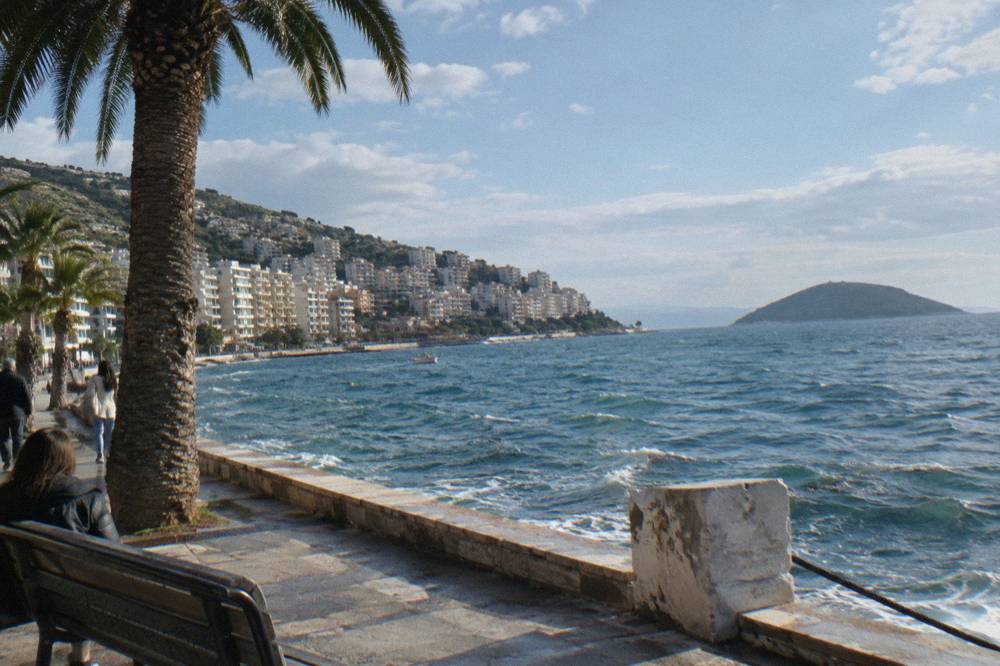
No direct flight connects Tirana and Saranda, and no Albanian airport serves Saranda at all. Vlora International Airport has no scheduled passenger flights, and Kukes airport likewise has no regular passenger service, so domestic flying within Albania is simply not an option for this route.
The realistic air route is indirect: fly to Corfu, the Greek island directly opposite Saranda, and cross by ferry. That combination has its own caveats. The Corfu to Saranda ferry crossing exists, but operator names, timetables and fares for it are not on any operator page this site's facts support, and the crossing is short and seasonal; confirm the current schedule with the operator before booking flights around it. It is also a separate international border crossing into Greece and back, with passport checks on both sides, which matters for visa planning: Albania is outside the EU and Schengen and runs its own 90-in-180-day regime for visa-free nationals, and Greece applies Schengen rules, so travellers needing visas for the Schengen area should check both sets of requirements.
For flights into Albania generally, the flights to Tirana guide covers the airport and its routes, and the Albania entry requirements guide covers the visa regime.
| Option | Direct? | Rough time | Details |
|---|---|---|---|
| Intercity bus | Yes, from South and North Bus Terminal | Longer than the 4-hour drive | Timetables on Tirana.al and eTransport; fare paid to driver in cash, not printed on any official page |
| Own or rental car | Yes | About 4 hours 11 minutes free-flow | 253 km; inland route via Gjirokaster or coastal route via Vlore and the Llogara pass |
| Train | No | Not possible | No passenger trains run on the line; electrification is expected to finish by the end of 2027 |
| Tirana to Saranda flight | No | Not possible | No domestic flights; Saranda has no airport |
| Fly to Corfu, ferry across | Indirect | Flight plus a short ferry crossing | Ferry operators and schedules must be confirmed at booking; a Greek border crossing applies |
Is There A Train From Tirana To Saranda?
No. No passenger trains run anywhere on this route, and the one line under reconstruction, Tirana to Durres with an airport branch, is not in service either, with electrification expected to finish by the end of 2027. Rail is not part of any realistic Tirana to Saranda plan, and the bus or the car are the only surface options.
The railway situation is worth knowing because older guides still describe Albanian train travel as if it functioned normally. The Tirana to Durres line is being rebuilt, and when it reopens it will serve the airport at Rinas and the coast at Durres, not the south of the country. Nothing supports any rail project touching Saranda, Vlore or Gjirokaster. Anyone tempted by the romantic version of Albanian railways should plan around buses instead, and the trains in Albania coverage on the getting around guide explains the current state of play.
Which Route Should You Take: Inland Via Gjirokaster Or Coastal Via Llogara?
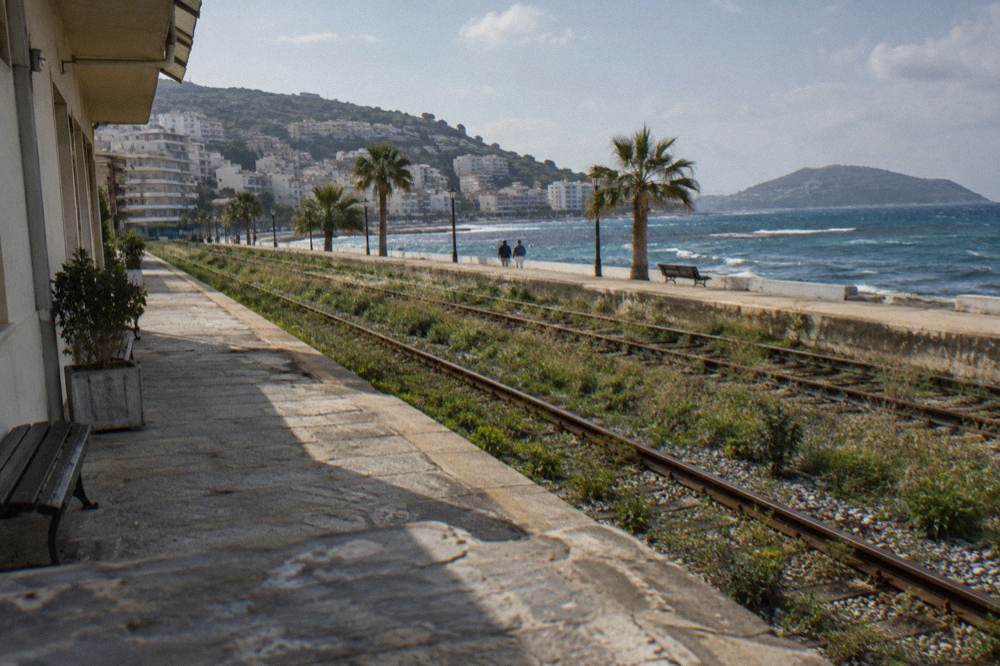
The inland route via Gjirokaster is the faster and more reliable line, at about 219 km and 209 minutes to Gjirokaster before the last stretch to the coast, while the coastal route through Vlore and over the Llogara pass trades speed for the Riviera views. Buses generally take the inland road; cars and tours can choose.
The case for the coast is the scenery: Vlore, the Llogara national park, and the Dhermi and Himara stretch of the Albanian Riviera, which local reporting puts at roughly four to five hours by road from Tirana without stops. The case against it is that the pass is slow, summer traffic on the Riviera is heavy, and adding it to an already four-hour journey makes for a very long day. The case for the inland route is the stop itself: Gjirokaster is one half of Albania's combined UNESCO World Heritage listing of historic centres, and the castle there charges a reported admission of a few hundred lek, about 400 lek per local guides, which you should confirm on arrival. The rest of the planning pages sit on Tirana Albania Travel Guide.
A third structure is the split journey with a night in Gjirokaster or Berat. The Berat day trip guide neighbours and the Ohrid route guide cover the other long-haul corridors out of the capital if you are comparing options.
| Route | Distance from Skanderbeg Square | Drive time | Character |
|---|---|---|---|
| Inland via Fier and Gjirokaster | 253 km to Saranda | About 248 minutes | The standard bus line; most direct |
| Coastal via Vlore and Llogara pass | About 156 km to Vlore, then the Riviera road | Vlore about 133 minutes, Riviera stretch roughly four to five hours total per local reports | Scenic, slow, busy in summer |
| Split journey, night in Gjirokaster | 219 km to Gjirokaster | About 209 minutes, then a short final leg | Two relaxed days instead of one long one |
| Split journey, night in Berat | 125 km to Berat | About 122 minutes | UNESCO town on a different road, then south via Fier |
Is Saranda A Day Trip From Tirana?
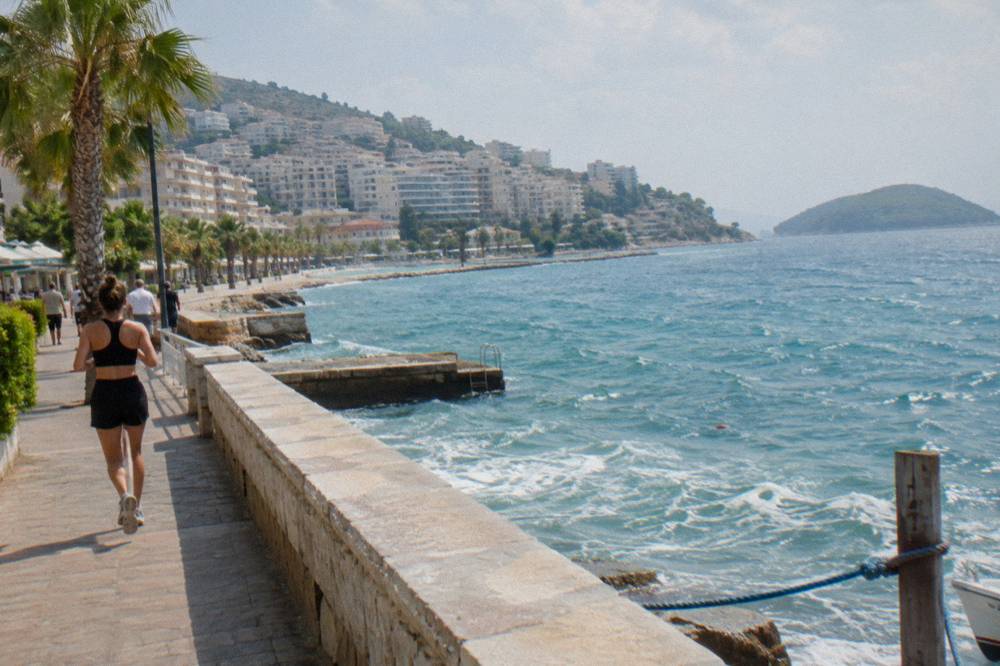
A same-day return would put eight or more hours of driving on top of any time actually spent on the coast.
The honest framing for anyone determined to see the far south on a tight schedule is the long organised tour day, not the independent day trip. Multi-stop tours to Butrint, Ksamil or the Blue Eye run from Tirana with early starts, and they are the only realistic way to touch the region and sleep in the capital.
If the four-hour commitment is the problem, the nearer options solve it. Durres and the Adriatic are about 39 minutes away, Kruja about 45, and Elbasan about 42. The Durres guide covers the nearest coast, and a Kruja Castle and old bazaar tour covers the castle, the bazaar and a viewpoint over the coastal plain at a fraction of the distance south.
What Does The Journey Cost, And What Money Should You Carry?
The Tirana to Saranda bus fare is paid in cash in lek to the driver, with the fare confirmed at the terminal, and the currency is the Albanian lek at roughly 90 lek to the euro, per the Bank of Albania's official rate. The euro is not legal tender in Albania, though some tourist businesses take it informally at their own rate.
Everything else on the money side of this route, hotel rates, taxi fares, fuel and tolls, falls outside what any source here supports, so budget those separately and check at booking. Cards are widely taken in central Tirana's hotels, larger restaurants and supermarkets, per local reporting, but cash is what the bus driver, the market stall and the small cafe will want, especially once you leave the capital.
The Albanian lek guide and the Tirana prices guide cover the currency and cost structure in detail.
| Payment situation | Details |
|---|---|
| Bus fare, Tirana to Saranda | Paid in cash to the driver; no fare printed on any official page, confirm at the terminal |
| City bus in Tirana | About 40 lek, cash on board, per local reporting |
| Currency | Albanian lek (ALL), roughly 90 lek to the euro; the euro is not legal tender |
| Cards | Widely taken in central Tirana hotels, larger restaurants and supermarkets, per local reporting; cash needed for buses and small venues |
When Is The Best Time Of Year To Make The Trip?
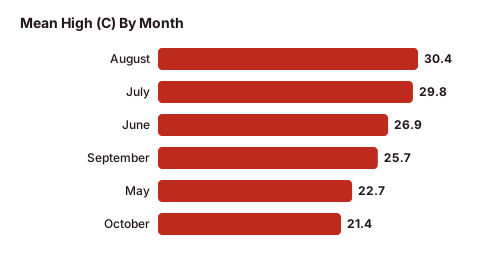
The ERA5 reanalysis for Tirana, 1991 to 2020, shows the lowest-rainfall, warmest travel window in July and August, with mean highs of 29.8 C and 30.4 C and monthly rainfall of just 34 and 31 mm, while November and December are the wet months, at 139 and 138 mm of rain. May, June and September offer middle ground: highs of 22.7, 26.9 and 25.7 C with 89, 51 and 99 mm of rain.
That pattern argues for late spring or September for the journey itself, since the four-hour drive and the Llogara pass are more pleasant outside the August rush, and Saranda's season is built around those same months. Winter travel is possible, the coast stays mild by northern European standards, but the rain totals climb steeply from October onward and many coastal businesses close outside the season. The Tirana weather guide and the best time to visit guide carry the full monthly table.
| Month | Mean high (C) | Mean low (C) | Rain (mm) |
|---|---|---|---|
| May | 22.7 | 12.5 | 89 |
| June | 26.9 | 16.6 | 51 |
| July | 29.8 | 19.1 | 34 |
| August | 30.4 | 19.5 | 31 |
| September | 25.7 | 16.0 | 99 |
| October | 21.4 | 12.2 | 119 |
Where Should You Stop On The Way To Saranda?
The two stops the road measurements support are Gjirokaster, at about 219 km and 209 minutes from the capital, and Berat, at about 125 km and 122 minutes, both UNESCO-listed historic centres and both natural overnight breaks. Nearer the coast, the Llogara pass and the Riviera towns are stops on the scenic route rather than detours, and the Blue Eye spring sits 18 to 22 km from Saranda itself.
Gjirokaster rewards the longer stop: the castle, the old town and the steep slate-roofed streets, with a reported castle admission of about 400 lek to confirm on arrival. If you take the coastal road instead, Vlore is the last big city before the mountains, and after the Llogara pass the road threads Dhermi, Himara and the rest of the Riviera towards Saranda. Plan fuel and food stops in the cities, because the pass section has long stretches with few services.
For travellers who would rather let someone else handle the mountain roads, tours that bundle the south's highlights run from Tirana; the picks below are bookable options with hotel pickup or central meeting points.
Should You Stay In Tirana Or Saranda, Or Split The Trip?
Splitting the trip is the structure the geography rewards: two or three nights in Tirana for the capital's museums, Blloku cafes and the Dajti cable car, then an overnight stop in Berat or Gjirokaster on the way south, then Saranda as a base for Butrint, Ksamil and the Blue Eye. Trying to day-trip the far south from Tirana wastes the journey.
Tirana itself has plenty to hold you. The Bunk'Art museums are open daily from 09:30, the Pyramid is free to climb on its outside steps, and the House of Leaves is open 09:00 to 19:00 with an adult ticket of 700 lek, per the museum's own listings; buy Bunk'Art tickets at the door, since no price is published.
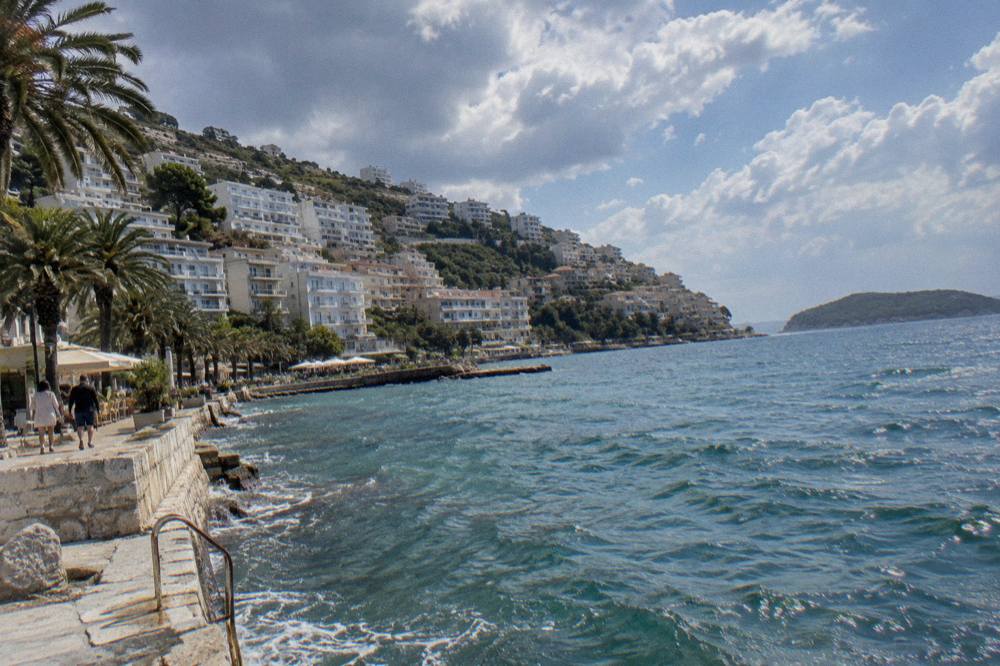
In Saranda, the practical base logic is simple: the town faces Corfu, the ferries leave from its waterfront, Butrint is under an hour south by road, and Ksamil's beaches sit just beyond. That makes it the southern hub the way Tirana is the northern one, with the four-hour corridor between them the price of seeing both.
Common Questions About Travelling From Tirana To Saranda
How long is the bus from Tirana to Saranda?
The drive itself is about 253 km and roughly four hours without stops, and the bus runs longer because of pickup stops and the terminal departure. Check the current timetable on Tirana.al or eTransport before travelling, and expect most of a day door to door.
How much is the bus from Tirana to Saranda?
The fare is not printed anywhere official. Pay the driver in cash in lek, and confirm the price at the South and North Bus Terminal before boarding. For intercity buses generally, fares are a few hundred lek for nearby towns and more for long southbound runs.
Where does the Tirana to Saranda bus leave from?
From the South and North Bus Terminal (Terminali i Autobusave te Jugut dhe Veriut), 4.0 km north-west of Skanderbeg Square, reachable by taxi or city bus. The terminal publishes its departure timetables on Tirana.al.
Can you fly from Tirana to Saranda?
No. There is no domestic flying in Albania, and neither Vlora nor Kukes airport has scheduled passenger flights. The indirect air option is to fly to Corfu and take the ferry across, a short seasonal crossing that must be confirmed with the operator, and a separate Greek border crossing.
Is Saranda a day trip from Tirana?
No. At about 253 km and four hours by road each way, it is an overnight or long-tour destination, and the same applies to Ksamil and Butrint. Multi-stop organised tours are the only realistic way to visit the far south and return the same day.
What is the best route to drive from Tirana to Saranda?
The inland route via Fier and Gjirokaster is the most direct at about 219 km and 209 minutes to Gjirokaster before the final leg. The coastal route via Vlore and the Llogara pass is slower but scenic, with the Riviera stretch at roughly four to five hours from Tirana per local reports. Confirm road conditions before setting out.
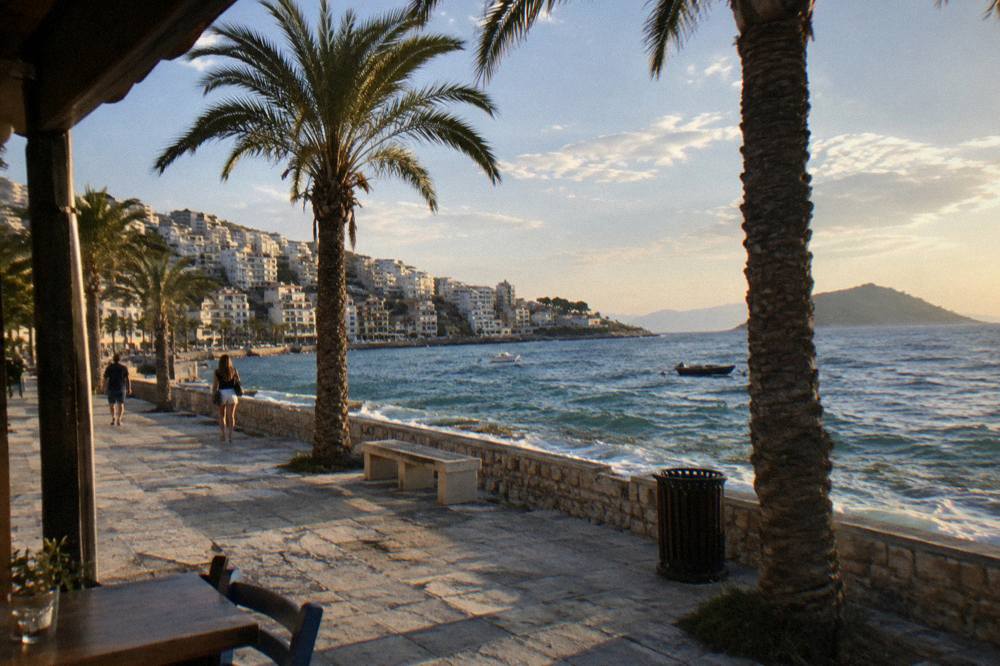
The corridor between the capital and the coast is the spine of any Albanian itinerary, and the four hours it takes are the trade for UNESCO towns, a mountain pass and the Ionian at the end of it. Book the bus at the terminal in cash, split the drive with a night in Gjirokaster or Berat if the schedule allows, and leave the far south the time its distances deserve.