Tirana History: From Ottoman Town To Capital
Tirana, the capital of Albania, packs five centuries into a walkable basin at the foot of Mount Dajti: an Ottoman market town of a mosque, a bath and an inn, a 1920 capital, a closed communist state, and a modern city of about 598,000 residents that is still renovating its own past.
Short answer
Tirana was founded in 1614 by Sulejman Pasha Bargjini as an Ottoman settlement, became Albania's capital on 11 February 1920, lived under communist rule from 1944 to 1991, and has spent the decades since transforming itself into a modern European capital. Its historic sights, from Et'hem Bey Mosque to Bunk'Art, tell that whole story on foot.
Tirana, the capital of Albania, is an inland city in a basin at the foot of Mount Dajti, and its history is unusually compressed: a settlement founded in 1614 around a mosque, a bath, a bakery and an inn became a national capital in 1920, then spent nearly half a century behind one of Europe's most isolated regimes before reinventing itself at speed. According to the city's own history page, Sulejman Pasha Bargjini established the town in 1614 in the Ottoman era, and the Congress of Lushnja made it the capital on 11 February 1920. The 2023 census counted about 598,000 residents in the municipality, and Albania's statistics office reports that Tirana county was the only county in the country that grew in 2025. This guide walks through each layer of that story, Ottoman to communist to the present, and points to the buildings where you can still read it today.
Where Does Tirana History Begin?
Tirana's documented history begins in 1614, when Sulejman Pasha Bargjini established the settlement in the Ottoman era with a mosque, a hamam, a bakery and an inn as its core, according to the city's own history page. Before that date the basin at the foot of Mount Dajti held villages and roads, but no town of this name governed from a central square.
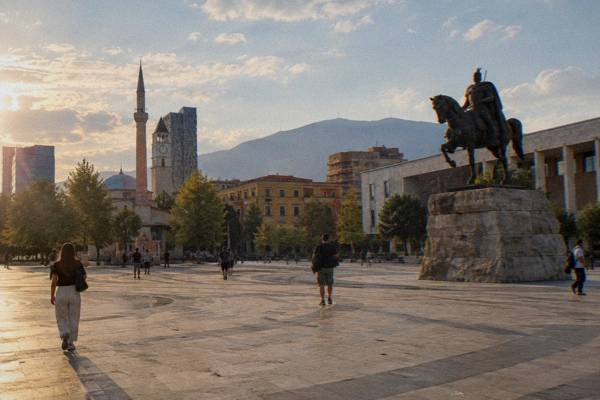
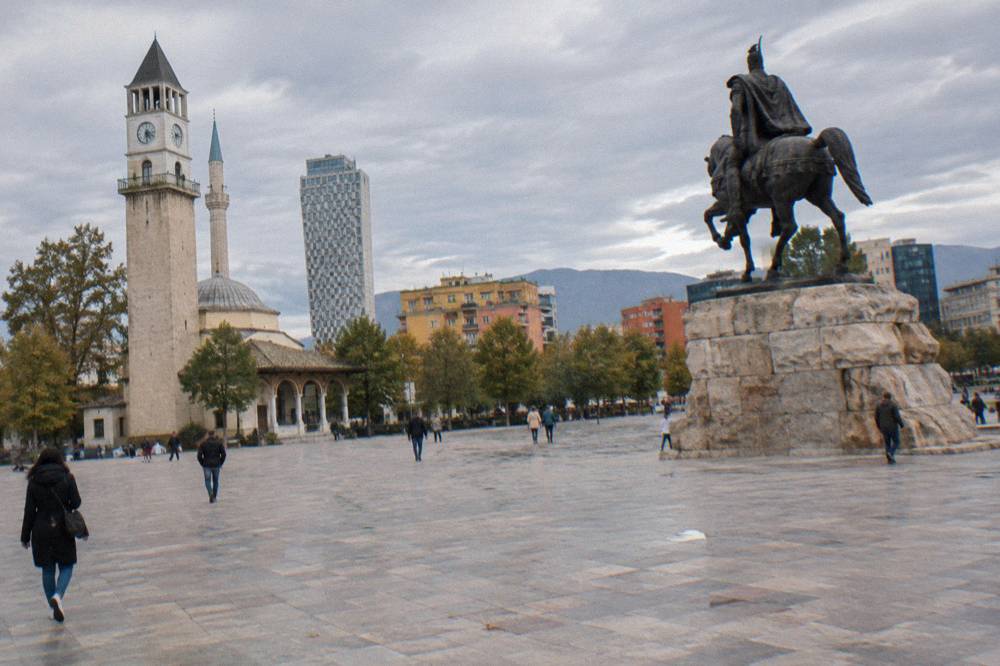
That founding cluster stood near the spot where the Et'hem Bey Mosque area and the Lana watercourses still meet the old town. The mosque was founded at the end of the 18th century by Mulla Bey and finished by his son Haxhi Et'hem Bey, and it stands about 0.2 km south-east of the centre of Skanderbeg Square, next to the Clock Tower with its roughly 90 steps. Both survived the communist decades; the mosque is notable as the place where, on 18 January 1991, about 10,000 people entered despite the authorities, an event widely described as a turning point in the fall of the regime.
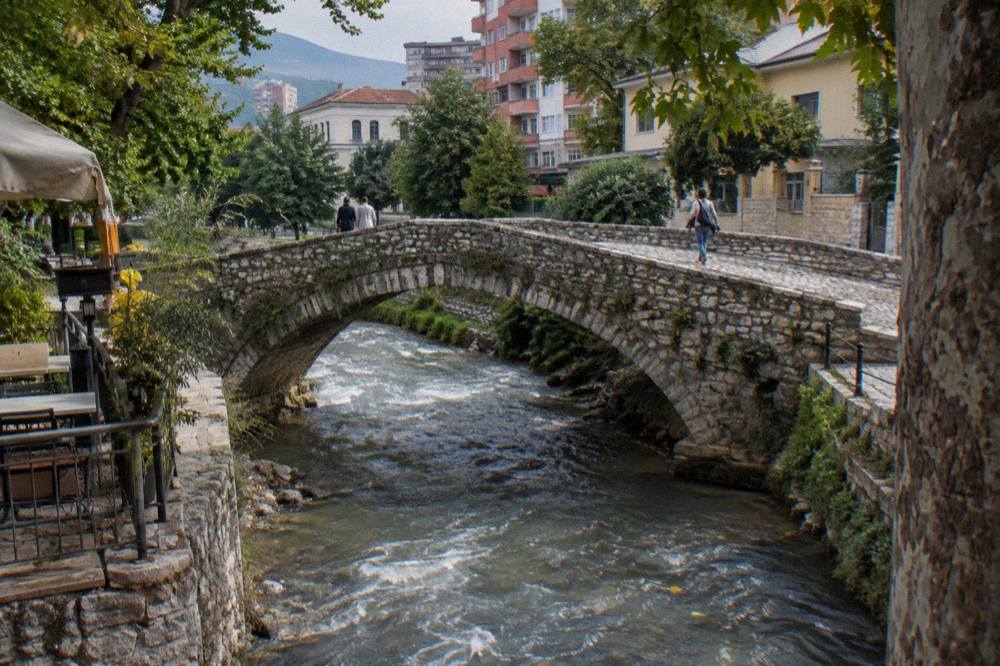
Ottoman Tirana survives in fragments rather than in a preserved old quarter. Tanners' Bridge, a stone footbridge about 0.7 km east of the square, is the clearest piece, and Tirana Castle, about 0.5 km south-east, holds a mixed-use courtyard rather than a museum piece. The city's layered past is easiest to place with a simple chronology.
| Year | Event | Source basis |
|---|---|---|
| 1614 | Sulejman Pasha Bargjini founds Tirana with a mosque, bath, bakery and inn | City history page (reported) |
| 11 February 1920 | The Congress of Lushnja makes Tirana the capital | ATA (reported) |
| 28 October 1981 | National History Museum inaugurated on the square | Official museum page |
| 14 October 1988 | The Pyramid opens as a museum pavilion | Wikipedia (reported) |
| 18 January 1991 | About 10,000 people enter Et'hem Bey Mosque despite the authorities | Visit Tirana portal |
| 19 November 2016 | Bunk'Art 2 opens as a museum | Press reports |
| 2017 | Skanderbeg Square redesigned by 51N4E as a pedestrian plateau | Architectural press |
| May 2023 | The renovated Pyramid reopens, housing the TUMO tech centre | Wikipedia (reported) |
How Did Tirana Become The Capital Of Albania?
Tirana became the capital of Albania on 11 February 1920, when the Congress of Lushnja chose it by decision, according to ATA, the national news agency. The decision made permanent a role the young Albanian state had been shopping between cities after independence, and it set off the institutional construction that still defines the centre: ministries, the Palace of Culture on the square, and the boulevards that radiate from it.
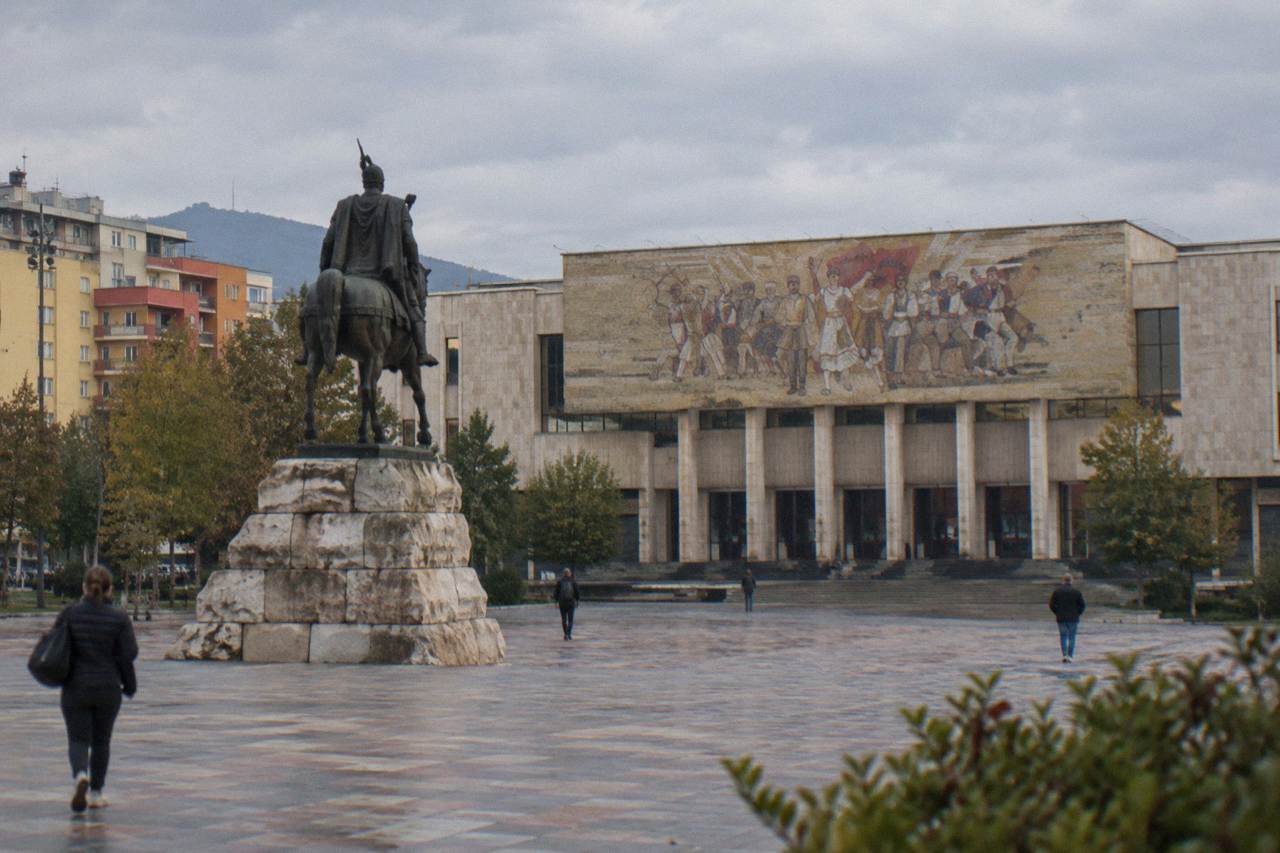
The promotion from market town to capital is the hinge of the whole story. A town founded in 1614 as an Ottoman core suddenly had to house a government, and the decades after 1920 filled the basin with state architecture of successive styles: monarchist, Italian-era, communist and contemporary. The National History Museum, inaugurated on 28 October 1981, closed for restoration on 15 March 2024, and the announced closure runs to about March 2028; its mosaic facade remains one of the square's visual anchors while the interior is shut. For what you can and cannot see inside today, see the National History Museum page.
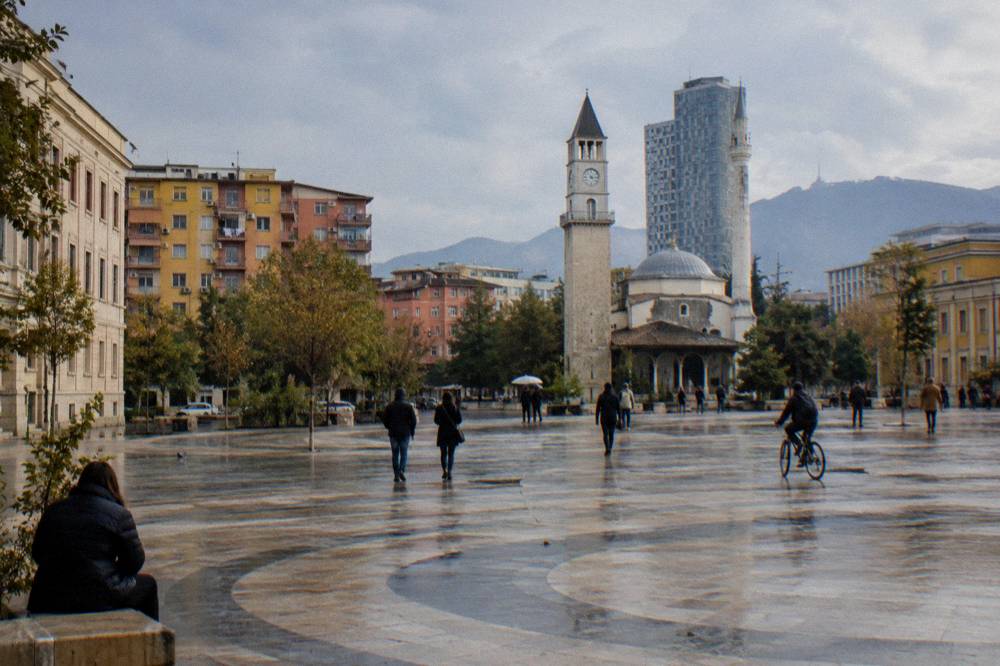
The square itself tells the political history in one frame. Skanderbeg Square carries the equestrian statue of Gjergj Kastrioti, the national hero known as Skanderbeg, whose life belongs to an earlier Albania than the city itself: the timeline reports he took Kruja on 28 November 1443, formed the League of Lezha on 2 March 1444, and died on 17 January 1468. A 2017 redesign by the studio 51N4E turned the square into a pedestrian pyramid of stone, and the state tourism agency describes it as one of Tirana's most important public spaces. Around it sit Et'hem Bey Mosque, the Clock Tower, the closed museum, the Palace of Culture and, about 0.6 km south-east, the Great Mosque of Tirana at Namazgah, which opened on 10 October 2024 as the newest landmark in the sequence.
What Did The Communist Era Leave Behind In Tirana?
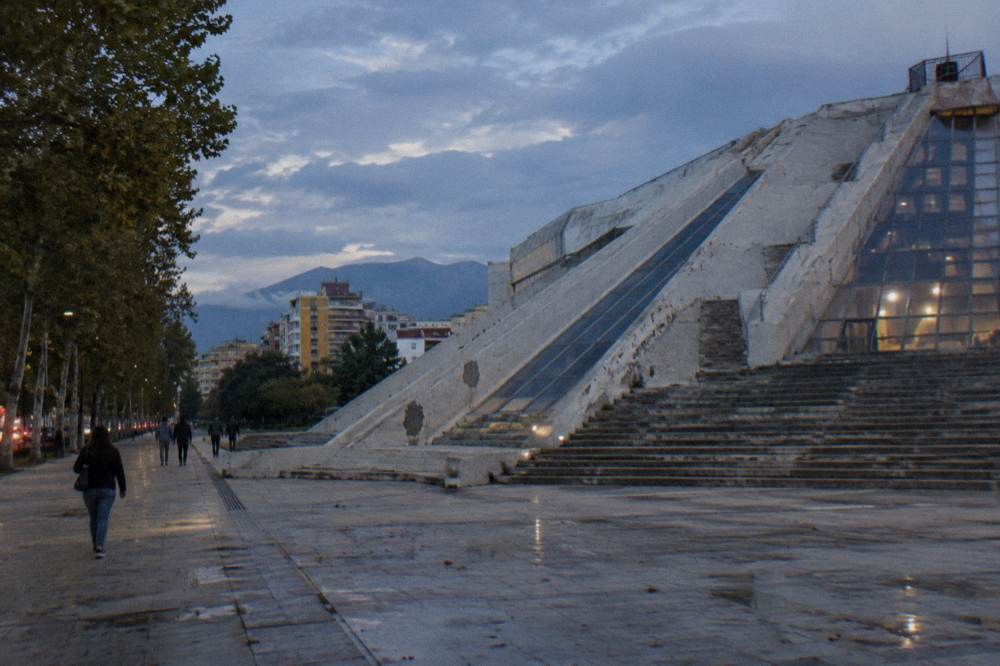
Communist rule ran in Albania from 1944 to 1991, according to standard histories, and its mark on Tirana is physical and everywhere: the leadership's Villa behind the Bloc, the House of Leaves surveillance museum, the nuclear bunker at the edge of the city that became Bunk'Art 1, and the Pyramid of Tirana, opened on 14 October 1988 and renovated in 2023 into a technology centre whose steps you can still climb.
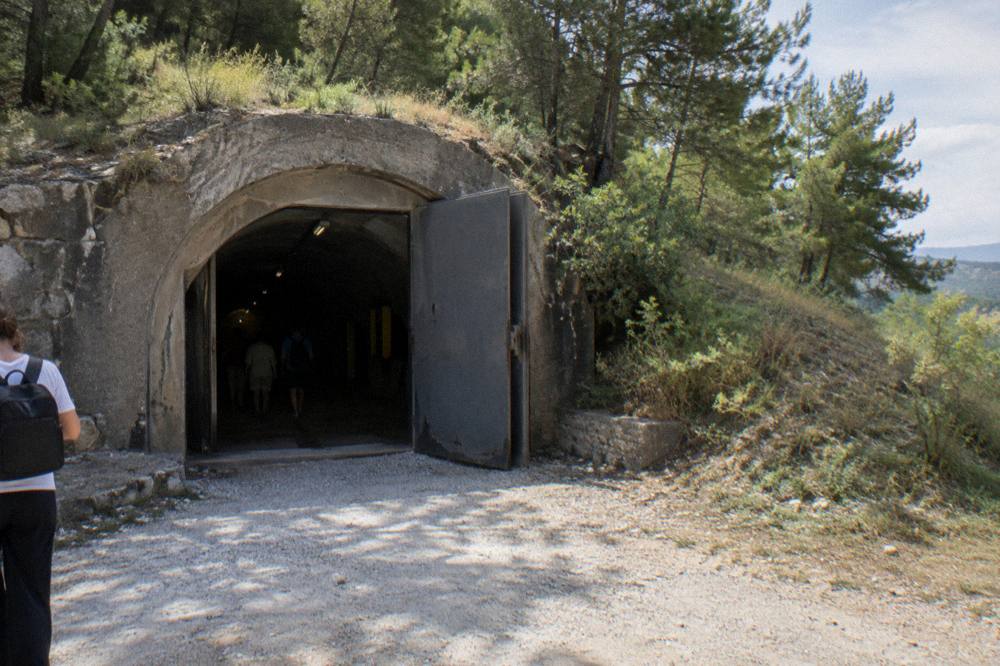
The regime built for permanence. The most-cited estimate of the country's bunker programme is about 173,000 small domes, and the number has itself become a tourist framing for Albania. In Tirana the era survives most vividly in three sites. Bunk'Art 1, about 4.6 km north-east of the square behind the Dajti cable car lower station, is the anti-nuclear shelter built for the leadership and opened as a museum in November 2014; its own website lists opening from 09:30 daily, and tickets are bought at the door. Bunk'Art 2, about 0.2 km south-east of the square on the pedestrian street, opened on 19 November 2016 and covers the interior ministry and the Sigurimi secret police. The House of Leaves, about 0.2 km south-west of the square and open daily 09:00 to 19:00, was the surveillance headquarters; it opened as a museum on 23 May 2017.
The Bloc, the once-closed leadership quarter about 0.8 km south of the square, is now the city's cafe and nightlife district, and its past is marked by the Postbllok memorial about 0.9 km south on the boulevard: a small bunker, pillars from Spac prison and a fragment of the Berlin Wall set into the pavement. For a full route across these places, the communist history trail strings them into a walking day.
| Communist-era site | Position from Skanderbeg Square | What it is now |
|---|---|---|
| Bunk'Art 1 | About 4.6 km north-east | Museum in the leadership's nuclear shelter |
| Bunk'Art 2 | About 0.2 km south-east | Museum on the Sigurimi and interior ministry |
| House of Leaves | About 0.2 km south-west | Museum of Secret Surveillance |
| Postbllok memorial | About 0.9 km south | Memorial with bunker, Spac pillars, Berlin Wall fragment |
| The Bloc (Blloku) | About 0.8 km south | Cafe and bar quarter |
| Pyramid of Tirana | About 0.7 km south-east | TUMO tech centre, steps free to climb |
What Happened To Tirana After 1991?
After communism ended in 1991, Tirana grew fast into the busy, colourful capital it is now: the Pyramid was renovated and reopened in May 2023 as a technology centre, the city painted its apartment blocks in bright patterns, and the 2023 census counted about 598,000 residents in a municipality whose county is the only one in Albania still growing. The transformation, not the isolation, is now the city's defining story.
The physical evidence of the turnaround sits in plain sight. The Pyramid, opened in 1988 and long derelict, was renovated and reopened in May 2023 to house the TUMO tech centre, and its stepped exterior is free to climb at any hour. The National Gallery of Arts, about 0.4 km south-east of the square, has been in renovation with conflicting reports on its status, so check before going. The new National Theatre on the old site is under construction, with local reporting suggesting the works could need about another year from October 2026. The city that emerges from all this scaffolding is the one described across getting around Tirana and Where To Stay In Tirana: Centre, Blloku Or Near The Lake: compact, walkable and under constant renovation.
Population figures put the change in numbers. Albania counted 2,335,930 residents on 1 January 2026, down 1.16 per cent on a year earlier, while Tirana county grew 0.7 per cent in 2025 and holds about 32.8 per cent of the country's population, per the national statistics office. Reported foreign arrivals in Albania passed 12 million in 2025, and Tirana is where a large share of them land, at an airport 15.9 km and about 29 minutes by road from the square, connected by a 24/7 airport bus.
Which Historic Sights Can You See In Tirana Today?
You can see Et'hem Bey Mosque, the Clock Tower, the Pyramid, Bunk'Art 1 and 2, the House of Leaves, Postbllok, Tanners' Bridge and Tirana Castle today, while the National History Museum is closed for restoration to about March 2028 and the National Gallery of Arts is under renovation, so check before going. Everything else on the historic list is outdoors and free to walk past at any time.
Et'hem Bey Mosque is free to visit outside prayer times, with modest dress, shoulders and knees covered and shoes off, as courtesy guidance. Bunk'Art 1 is open 09:30 to 17:30 daily, per the museum's own site, and Bunk'Art 2 opens daily from 09:30; neither museum publishes a ticket price online, so buy at the door. The House of Leaves is open 09:00 to 19:00 daily. The Pyramid's steps are free. The 2017 square redesign means the whole centre is now a pedestrian plateau you can cross on foot in minutes.
| Sight | Distance from Skanderbeg Square | Status and access |
|---|---|---|
| Et'hem Bey Mosque | About 0.2 km south-east | Free, outside prayer times, modest dress |
| Clock Tower | About 0.2 km south-east | Exterior viewable; about 90 steps |
| Bunk'Art 2 | About 0.2 km south-east | Open daily from 09:30, tickets at the door |
| House of Leaves | About 0.2 km south-west | Open daily 09:00 to 19:00 |
| Pyramid of Tirana | About 0.7 km south-east | Steps free to climb |
| Bunk'Art 1 | About 4.6 km north-east | Open 09:30 to 17:30 daily, tickets at the door |
| National History Museum | On the square | Closed for restoration to about March 2028 |
| National Gallery of Arts | About 0.4 km south-east | Under renovation, check before going |
For a guided version of the same ground, the Communist History and Stories Walking Tour with a Local covers the regime's landmarks with a guide who grew up around them. You can also read across the free things to do in Tirana, since the square, the Pyramid's steps, Postbllok and the mosque's exterior all cost nothing.
What Historic Day Trips Surround Tirana?
The most history-heavy day trips from Tirana are Kruja, about 36.7 km and 45 minutes by road, with its castle and bazaar tied to Skanderbeg's 1443 takeover, and Durres, about 37 km and 39 minutes, the Roman port city with an amphitheatre; Berat, about 122 minutes by road, adds a UNESCO-listed Ottoman old town, and Gjirokaster, about 209 minutes, is an overnight rather than a day trip.
Kruja is the Skanderbeg chapter of the story. The timeline reports he took Kruja on 28 November 1443 after deserting the Ottoman army, and the castle and old bazaar sit about 45 minutes by road from the square; the state tourism agency's page for the castle prints no fee or hours, so check locally. The Kruja Castle, Old Bazaar and Sari Salltik View tour from Tirana covers the castle and bazaar in a single day.
Durres, west toward the Adriatic, was a Roman port long before Tirana existed, and its amphitheatre and archaeological museum carry that layer; entry to each is a few hundred lek, local guides report, so confirm before going. Berat, a historic centre inscribed by UNESCO in 2005 with Gjirokaster added in 2008, is about two hours by road, and its Onufri Museum charges 400 lek per the Berat Museum Center. Gjirokaster, about three and a half hours, rewards an overnight.
| Destination | Road distance and time from Skanderbeg Square | Historic draw |
|---|---|---|
| Kruja | About 36.7 km, 45 minutes | Skanderbeg castle and old bazaar |
| Durres | About 37 km, 39 minutes | Roman amphitheatre and museum |
| Berat | About 124.6 km, 122 minutes | UNESCO Ottoman old town, Onufri Museum |
| Apollonia | About 121.1 km, 112 minutes | Ancient Greek and Roman ruins |
| Shkoder | About 98.4 km, 118 minutes | Rozafa Castle and old town |
| Gjirokaster | About 219 km, 209 minutes | UNESCO stone old town and castle |
How Can You Explore Tirana History On Foot?
Tirana's historic core fits comfortably in a walking day, because almost every era of the story sits within 1 km of Skanderbeg Square: the Ottoman mosque and bridge, the 1981 museum facade, the communist surveillance house and bunker museum, and the 2023 Pyramid, with only Bunk'Art 1 and the cable car, about 4.4 km north-east, needing a bus or taxi ride. A loop of the square, Blloku and the boulevard covers four centuries without leaving the centre.
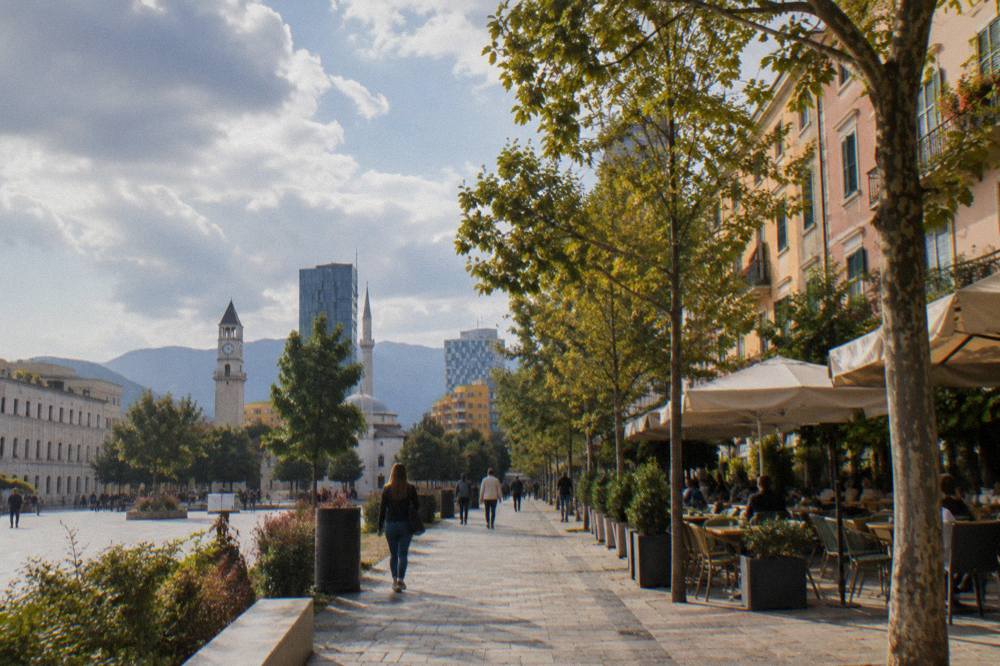
Start on the square at the statue and the museum's mosaic facade, then the mosque and Clock Tower, both about 0.2 km south-east. Walk south past the Palace of Culture to the New Bazaar about 0.6 km east and Tirana Castle about 0.5 km south-east, then cut to the House of Leaves and Bunk'Art 2, which sit almost on top of each other about 0.2 km from the square. Continue south into Blloku to see the former leadership quarter and the Postbllok memorial, and finish at the Pyramid about 0.7 km south-east of the square. That circuit is the spine of the communist history trail and works as a one day in Tirana plan too.
Two tours fit neatly into this walking geography. The Tirana Stroll Tour, Walk and Taste Qofte and Raki pairs the historic centre with the street food that grew up around it.
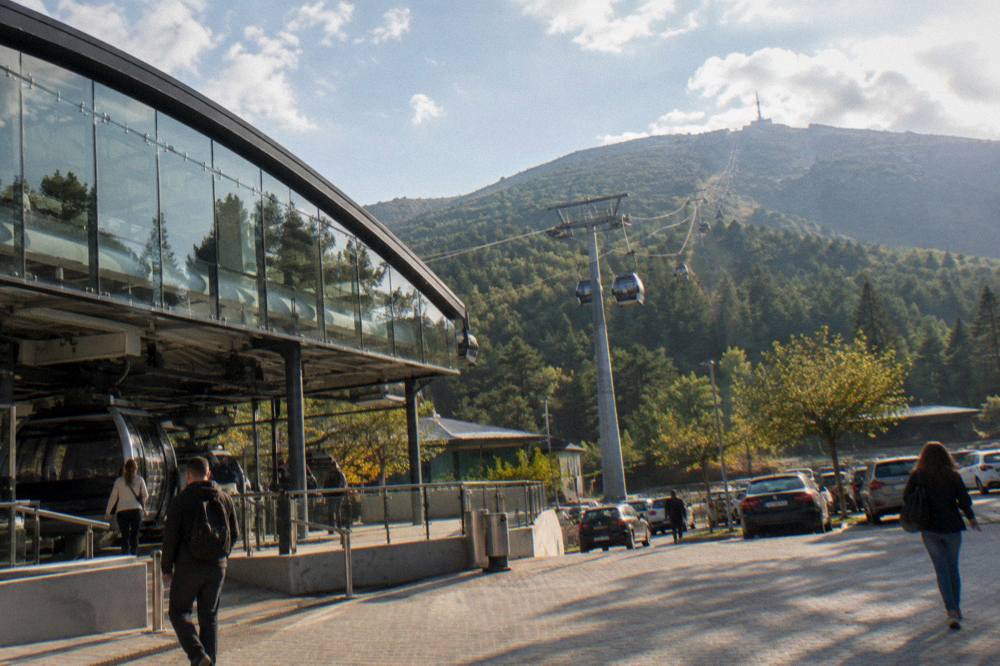
For the chapter of the story that sits outside the centre, the Dajti Mountain half-day trip with a cable car ticket takes you up the slope that frames the whole basin, past Bunk'Art 1 at the lower station.
For everything beyond history, the Tirana Albania Travel Guide covers the full range of things to do in Tirana, from food tours to day trips along the coast at Durres and into the Albanian Alps.
Common Questions About Tirana History
How old is Tirana?
According to the city's own history page, Tirana was founded in 1614 by Sulejman Pasha Bargjini, who built a mosque, a bath, a bakery and an inn as its core, so the town is just over four centuries old.
When did Tirana become the capital of Albania?
Tirana became the capital on 11 February 1920 by decision of the Congress of Lushnja, according to ATA, the national news agency.
What are the must-see communist-era sights in Tirana?
Bunk'Art 1, about 4.6 km north-east of the square, and Bunk'Art 2, about 0.2 km south-east, are the two bunker museums; the House of Leaves covers the Sigurimi surveillance apparatus; the Postbllok memorial holds a bunker, Spac prison pillars and a Berlin Wall fragment; and the renovated Pyramid reopened in May 2023.
Is the National History Museum in Tirana open?
No. It has been closed for restoration since 15 March 2024, and the announced closure runs to about March 2028. The mosaic facade can still be seen from Skanderbeg Square.
Can you go inside the Bunk'Art museums?
Yes. Bunk'Art 1 is open daily 09:30 to 17:30 per its own website, and Bunk'Art 2 opens daily from 09:30. Neither museum publishes a ticket price online, so buy tickets at the door.
Who was Skanderbeg and why is the square named after him?
Skanderbeg, or Gjergj Kastrioti, was Albania's national hero. The timeline reports he took Kruja on 28 November 1443, formed the League of Lezha on 2 March 1444 and died on 17 January 1468, and his equestrian statue anchors the square that carries his name.