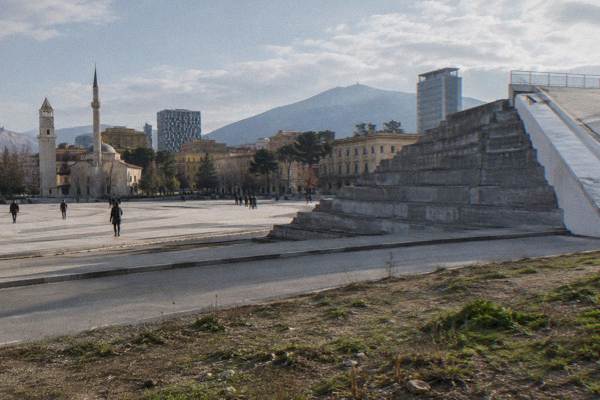
National Gallery Of Arts: Socialist Realism And Its Statue Garden
The National Gallery of Arts in Tirana holds Albania's main national art collection, including its well-known socialist realist paintings and statues. The building on the boulevard south of Skanderbeg Square has been in a long renovation, so this guide covers what that means for a visit, what the collection contains, and what stands within a short walk.
Short answer
The National Gallery of Arts in Tirana is Albania's national art museum, about a four-minute walk south-east of Skanderbeg Square, holding 4,626 artworks with a strong core of socialist realist painting and sculpture. The building has been undergoing a major renovation and expansion, its status has been reported inconsistently, so check before going; no current hours or ticket price can be relied on.
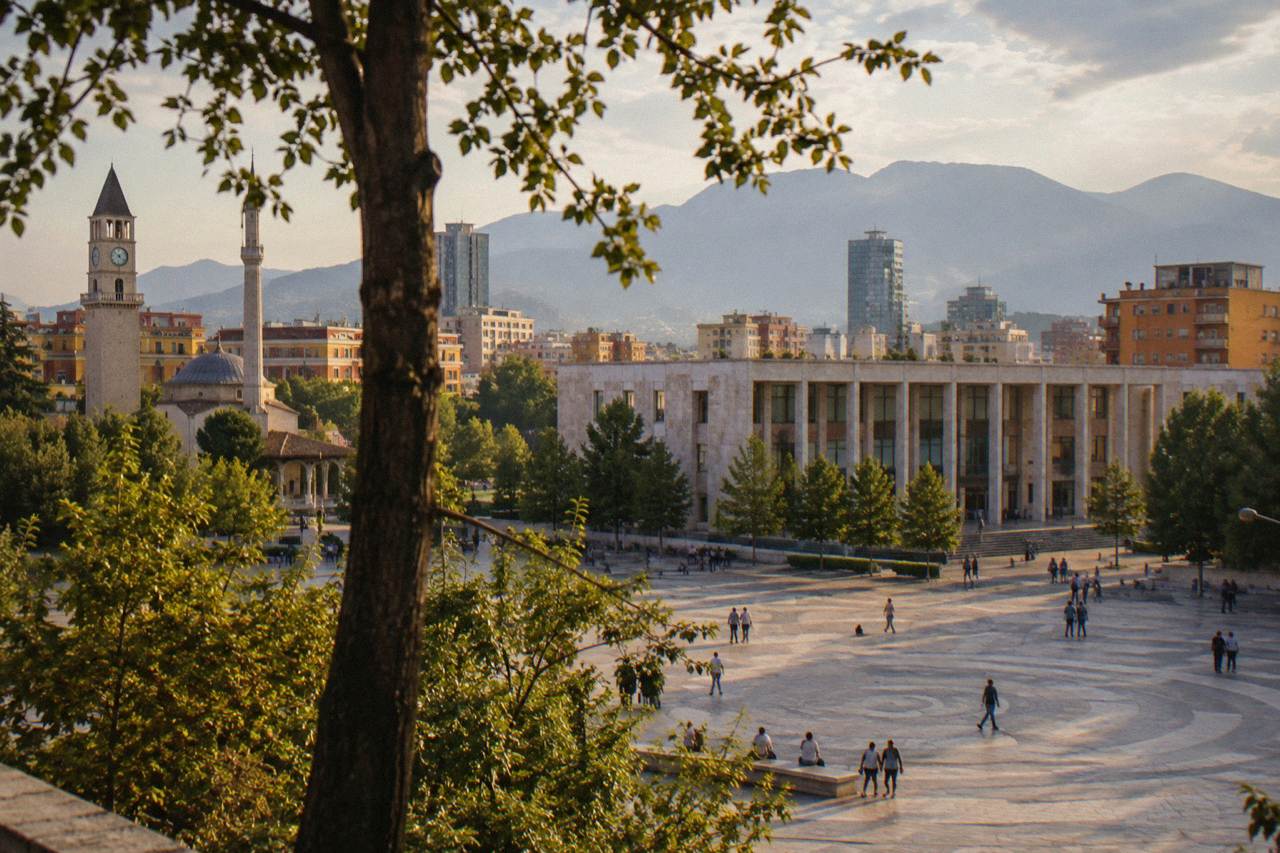
The National Gallery of Arts in Tirana sits on the main boulevard about 0.4 km south-east of Skanderbeg Square, in the stretch of the city where the Palace of Culture, the Dajti Ekspres cable car's lower end far to the north-east, and the museums of the communist period cluster together. It is Albania's national art museum, the home of a collection the gallery itself lists at 4,626 artworks, and the one place in the capital where the state art of the communist decades, the socialist realist paintings and the statues of workers and partisans, is gathered in force. That collection is why the gallery matters to travellers even in a season when the building itself is hard to pin down.
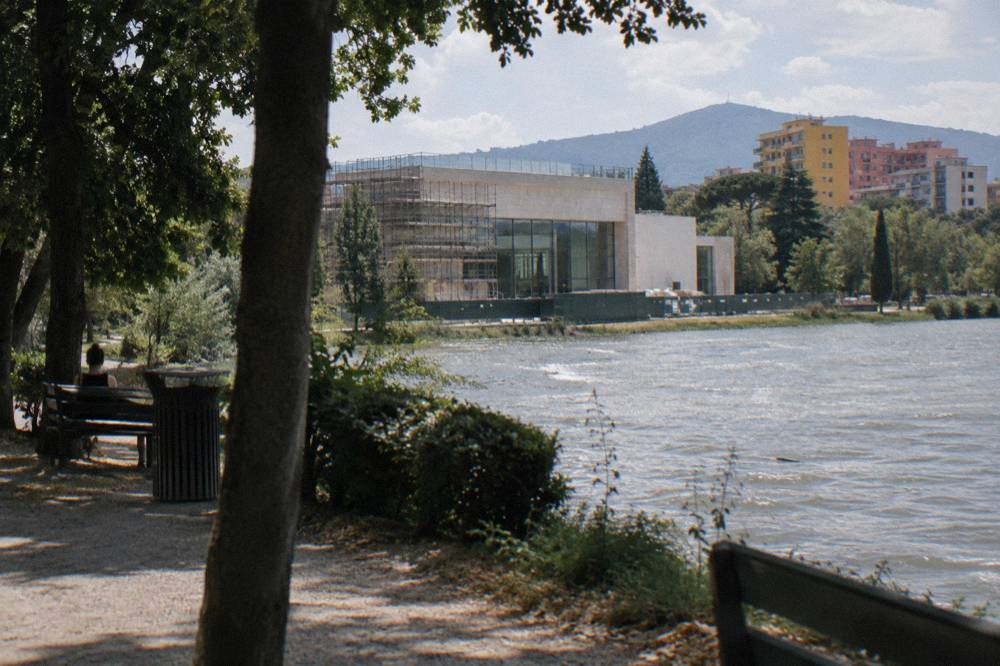
The renovation is the first thing any visitor needs to know. Reports through 2025 and 2026 have described the gallery's expansion as being in an advanced phase, with the building growing from roughly 4,600 square metres to about 10,100 square metres, but other references still describe a construction site. Because the accounts conflict, the only safe planning position is to treat the gallery as under renovation and to check before going, and to build a walk of the boulevard that rewards you whether or not the doors are open. That walk is a good one: the gallery stands between the closed National History Museum on the square and the open House of Leaves museum 0.2 km away, with the Pyramid of Tirana 0.7 km south-east.
This guide covers the renovation status, what the collection contains, the statue garden outside, how to reach the site, and what to pair with it. For the wider picture of the city, start with the site's things to do in Tirana overview.
What Is The National Gallery Of Arts In Tirana?
The National Gallery of Arts is Albania's national art museum, standing about 0.4 km south-east of Skanderbeg Square on the boulevard toward Mother Teresa Square. The gallery's current venue dates to 29 November 1974, and the institution lists a collection of 4,626 artworks spanning Albanian painting, sculpture and graphics, with the art of the communist decades as its most distinctive strand.
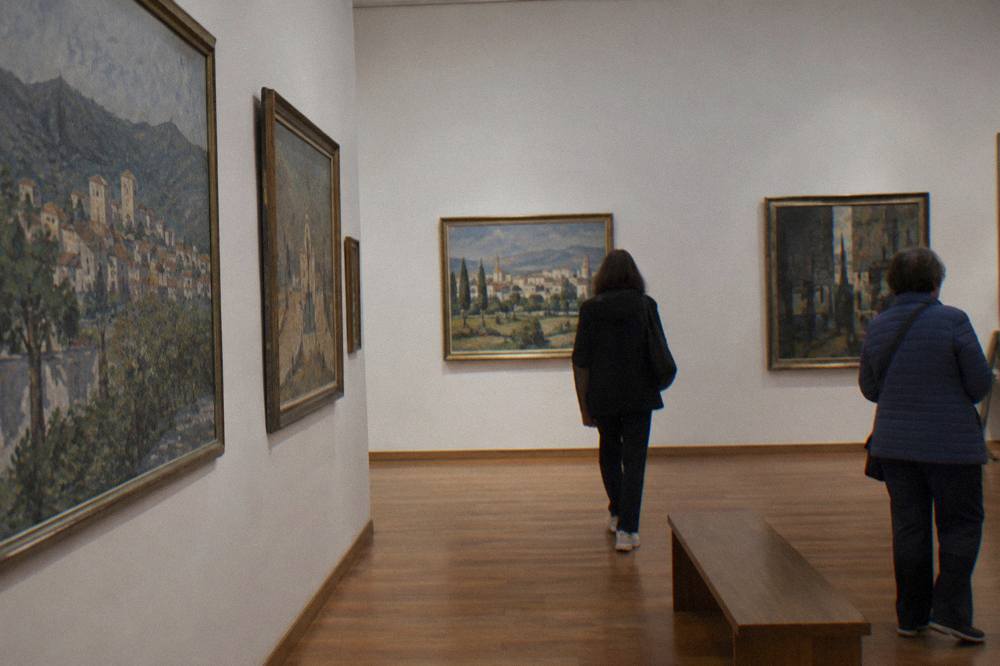
The gallery was founded as the state's showcase of visual art, and for years it functioned exactly as such museums did across the communist world: a permanent display of officially approved work, temporary exhibitions, and a sculpture park in the grounds. The 1974 opening date is given in the national records for the current venue, and the collection figure of 4,626 artworks is the gallery's own number. Albanian art before and after the communist period is represented too, but the reason foreign visitors seek the place out is the socialist realist core.
Socialist realism was the official art style of the communist regime that ruled Albania from 1944 to 1991. In practice that meant heroic depictions of workers, partisans and collective labour, portraits of political leaders, and monumental sculpture in the same register. After 1991 much of this art left the walls of official buildings, and national galleries across the former communist world faced the same question: what do you do with the art of a dictatorship? Tirana's answer was to keep it, catalogued and displayed as a historical record, which is what makes the collection interesting to people with no stake in Albanian art history otherwise.
The statue garden is part of the same story. In the grounds around the building stand monumental sculptures from the communist decades, statues of partisans, workers and pioneers that once stood in squares and parks across the country. It is an open-air counterpart to the indoor collection, and unlike the galleries themselves it can be seen from the street at any hour.
Is The National Gallery Of Arts Open In 2026?
Treat the National Gallery of Arts as under renovation and check before going. Reports through 2025 and 2026 conflict: some describe the expansion works, from roughly 4,600 to about 10,100 square metres, as being in an advanced phase, while mapping data still shows a construction site at the building. No opening hours or ticket price can be relied on, so plan the walk around it and confirm the doors on the day.
The renovation is real and long-running. Reports on the works describe a doubling-plus of the building's floor space, new galleries, and a modernisation of a venue that had changed little since the communist decades. The difficulty for a traveller is that the reporting does not agree on where the project stands right now: listings have appeared describing the gallery as open daily, while site-mapping data continues to tag the building as under construction. When sources disagree this plainly, the honest instruction to a reader is simple: check before going, and treat any hours or prices you see in a listing as unconfirmed.
The good news is that this is the least punishing closure in Tirana. The gallery sits on a boulevard where the open-air sights are free and always available: the statue garden, the facade of the Palace of Culture, Skanderbeg Square itself, and the Pyramid of Tirana, whose stepped exterior can be climbed at any time of day. A visit to the area loses little if the doors are shut.
The gallery is not the only museum in the city affected. The National History Museum on Skanderbeg Square has been closed to visitors since 15 March 2024 for a restoration that the announcements run to March 2028, though its mosaic facade remains one of the square's landmarks. The museums that are confirmed open sit a short walk away.
| Museum | Position from Skanderbeg Square | Status to plan around |
|---|---|---|
| National Gallery of Arts | about 0.4 km south-east | Under renovation; check before going |
| National History Museum | On the square | Closed for restoration; closure announced to March 2028 |
| House of Leaves | about 0.2 km south-west | Open daily 09:00 to 19:00 |
| Bunk'Art 2 | about 0.2 km south-east | Open daily from 09:30 |
| Bunk'Art 1 | about 4.6 km north-east | Open daily 09:30 to 17:30 from 1 June 2026 |
For travellers whose interest in the communist decades is the main draw, the city's bunker museums carry that story reliably while the gallery's interior is in question. The Bunk'Art 1 leadership shelter behind the Dajti cable car lower station and the Bunk'Art 2 Interior Ministry bunker in the centre are both open daily, per their own website, with tickets bought at the door. The site's dedicated pages on Bunk'Art 1 and Bunk'Art 2 cover each in detail, and a guided walk of communist landmarks stitches the sites together.
What Can You See At The National Gallery Of Arts Tirana Without Going Inside?
The statue garden around the gallery is visible from the street at any hour and holds monumental communist-era sculptures, including figures of partisans, workers and pioneers that once stood in public spaces across Albania. The building's exterior on the boulevard, the Palace of Culture complex it belongs to, and the surrounding stretch of Tirana's main axis are all free to see and need no ticket.
The sculptures are the headline. This is the open-air residue of a period when every Albanian town had its partisan monument, and the gallery grounds became one of the places where removed statues went. Walking the perimeter gives you a compressed tour of official communist sculpture without a single opening hour to worry about. Photographers tend to like the contrast: heroic granite and bronze figures framed by the boulevard's plane trees and the traffic of a post-communist capital.
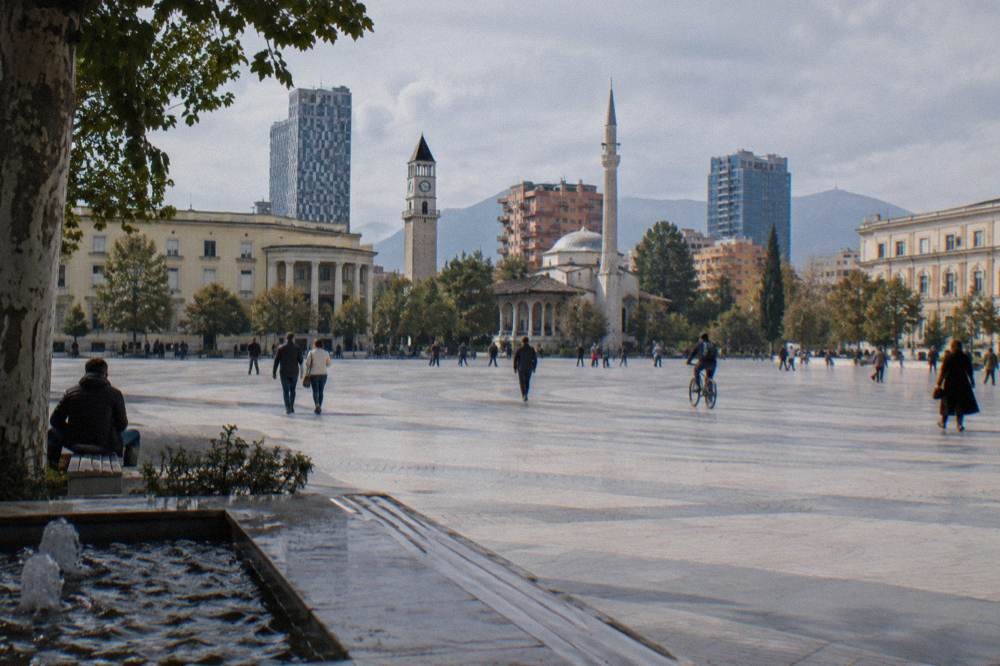
The setting matters too. The gallery stands on the axis that runs from Skanderbeg Square south toward Mother Teresa Square, about 1.2 km away, the processional spine laid out during the Italian-era planning of the capital, lined with the ministries, the Palace of Culture and the university buildings. A walk down this axis past the gallery, ending at Mother Teresa Square and the edge of the Grand Park of Tirana about 2.1 km south-east of the square, is one of the classic Tirana strolls, and it works whatever the gallery's doors are doing.
| Stop on the boulevard walk | Distance from the gallery | Notes |
|---|---|---|
| Skanderbeg Square | about 0.4 km north-west | The city's central space, free, always open |
| House of Leaves | about 0.4 km north-west, then south | Open daily 09:00 to 19:00, reported tickets from 210 lek concessions |
| Pyramid of Tirana | about 0.7 km south-east | Steps climbable free at any hour |
| Postbllok memorial | about 0.9 km south | Bunker, prison pillars and a Berlin Wall fragment, free |
| Mother Teresa Square | about 0.8 km south | Southern end of the axis |
| Grand Park of Tirana | about 2.1 km south-east of Skanderbeg Square | Park and Artificial Lake, free |
Read the site's guide to Skanderbeg Square for the northern end of the walk, and its page on the Pyramid of Tirana for the building that anchors the stretch past the gallery.
How Do You Get To The National Gallery Of Arts?
The National Gallery of Arts is about 0.4 km south-east of Skanderbeg Square, a walk of roughly five minutes down the main boulevard, so anyone staying in or near the centre reaches it on foot. From the airport, the official Rinas bus runs 24/7 every full hour to behind the Palace of Opera and Ballet near the square for 400 lek, and a single city-bus ride costs about 40 lek paid in cash on board.
From Skanderbeg Square, the route needs no map: walk south along the boulevard with the Palace of Culture on your left, and the gallery appears within a few hundred metres on the left-hand side. The whole central cluster of sights, the Et'hem Bey Mosque, the Clock Tower of Tirana, the House of Leaves and the gallery itself, fits inside a rectangle barely 700 metres long, which is why Tirana rewards walkers.
From further out, the city bus system is the cheap option: a flat fare of about 40 lek paid in cash to the conductor, with buses running roughly 06:00 to 23:00. Taxis are plentiful, and ride apps of the local kind exist, though Uber and Bolt do not operate in Tirana. There is no train to use anywhere in this planning: the Tirana-Durres-airport rail line is being rebuilt, with electrification expected to finish by the end of 2027, so buses and taxis are the reality.
| From | To the gallery area | What the fare is |
|---|---|---|
| Tirana airport (Rinas) | Official bus, every full hour, 24/7 | 400 lek, ticket valid all day until 23:59 |
| Skanderbeg Square | On foot | Free, about five minutes |
| Elsewhere in the city | City bus, cash on board | About 40 lek per ride |
| South and North Bus Terminal | Terminal bus from the airport stops there; from the centre take a city bus or taxi | 300 lek from the airport on that line |
If you are driving, note that Skanderbeg Square itself is pedestrianised and paid street parking runs in zones: 100 lek per hour in zone A, 40 in zone B and 20 in zone C, payable by SMS to 50500 or via the Tirana Ime app.
What Does Socialist Realism Tell You About Albania?
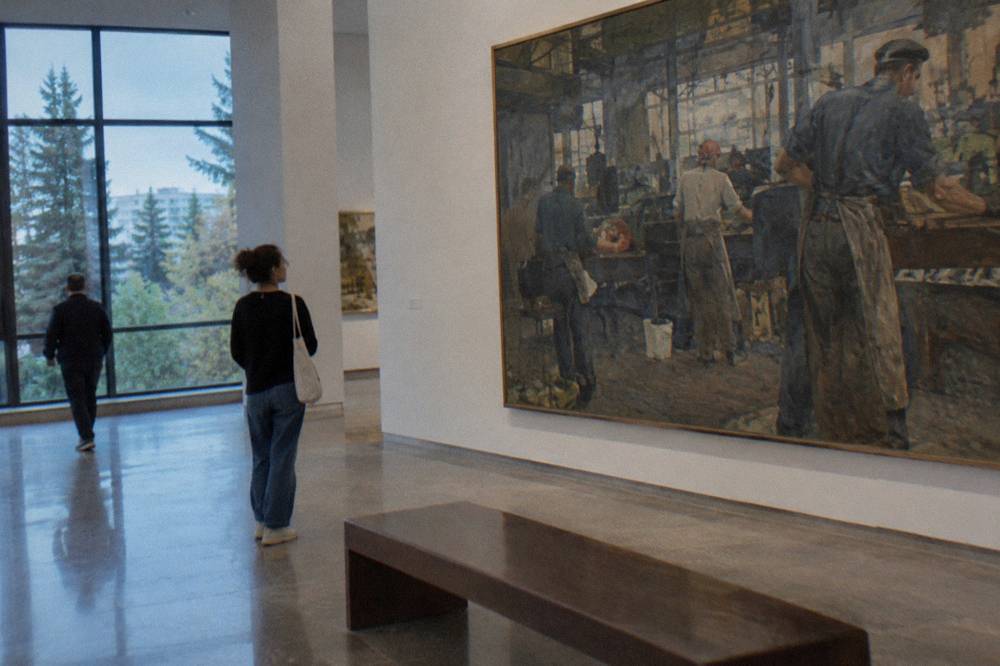
Socialist realism was the compulsory official style of Albania's communist regime from 1944 to 1991, and the gallery's collection of that period, heroic workers, partisans and leaders rendered in paint and bronze, is a direct record of what the state wanted its citizens to see. Reading it as propaganda rather than as pure art is what turns the collection into one of the most instructive sights in the capital.
Every painting of a smiling collective-farm worker, every bronze partisan with a raised rifle, was produced under a system in which art had a state job to do. Albania's version was stricter than most: the regime broke with first the Soviet and then the Chinese patrons and turned inward, and the imagery of self-reliant struggle intensified accordingly. The gallery's holdings let you see the style at full strength, in canvases of industrial and rural labour, in portraits, and in the monumental sculpture that survives outdoors in the statue garden.
The communist-period context is what visitors come to Tirana to understand, and the city tells that story in several registers at once. The gallery holds the official art; the House of Leaves, 0.2 km south-west of the square, holds the story of the secret police in a villa you walk through room by room; the Bunk'Art pair hold it underground. The site's House of Leaves guide and the wider communist history trail pages connect them.
For a guided layer on top, a walking tour of communist landmarks with a local guide is the natural pairing with a gallery visit, since the guide supplies the biographies behind the paintings.
Which Nearby Sights Pair Well With The Gallery?
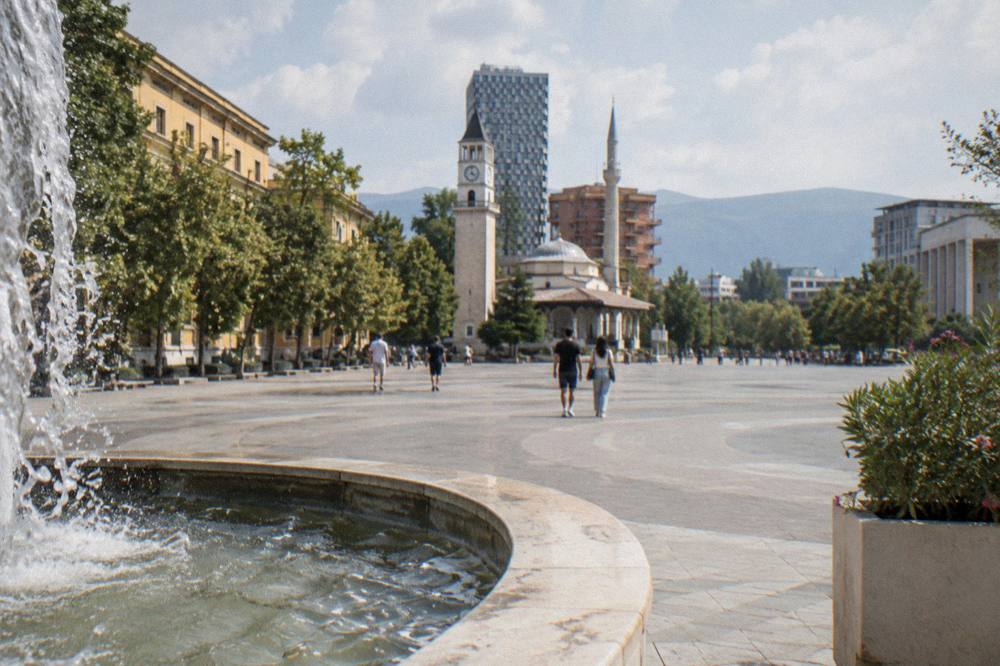
The strongest half-day pairing is the National Gallery area with the House of Leaves 0.4 km away and the Pyramid of Tirana 0.7 km south-east, both walkable in under ten minutes, followed by the Postbllok memorial at 0.9 km south on the boulevard. Add the Et'hem Bey Mosque and the Clock Tower back on Skanderbeg Square and you have a full circuit of central Tirana under two kilometres end to end.
This density is Tirana's great travel asset. The distances between the central sights are so short that closure of any single venue barely dents a day. The table below lays out the central cluster with straight-line positions from Skanderbeg Square, so you can sequence a walk in any order the mood suggests.
| Sight | Position from Skanderbeg Square | Standing |
|---|---|---|
| Et'hem Bey Mosque | about 0.2 km south-east | Free to visit outside prayer times, modest dress |
| Clock Tower of Tirana | about 0.2 km south-east | About 90 steps; confirm access locally |
| House of Leaves | about 0.2 km south-west | Open daily 09:00 to 19:00 |
| Bunk'Art 2 | about 0.2 km south-east | Open daily from 09:30 |
| Tirana Castle | about 0.5 km south-east | Historic quarter with dining |
| New Bazaar (Pazari i Ri) | about 0.6 km east | Market and cafe quarter |
| Pyramid of Tirana | about 0.7 km south-east | Free, steps climbable at any hour |
| Postbllok memorial | about 0.9 km south | Free, always visible |
| Mother Teresa Square | about 1.2 km south | Open public space |
Two directions extend the day well. North-east of the centre, behind the cable car lower station 4.4 km out, Bunk'Art 1 and the Dajti Ekspres carry you from the bunker museum to the mountain in one move; the site's pages on the Dajti Ekspres and Mount Dajti National Park cover it. South of the boulevard axis, the Blloku quarter, 0.8 km from the square, is the cafe and nightlife district built inside what was once the closed leadership enclave, a piece of the same history told in urban form.
A combined tour exists for exactly this pairing: a guided visit to Bunk'Art 1 followed by Mount Dajti, with lunch included, is the closest thing the city has to a one-booking version of the whole communist-era-plus-mountain day.
What Hours And Ticket Prices Apply At The National Gallery Of Arts?
Confirm the current position locally before setting out. For the neighbouring museums, hours are firm: House of Leaves is open daily 09:00 to 19:00, and both Bunk'Art sites are open daily from 09:30, with tickets bought at the door.
Museums under renovation change their arrangements, open partially, or stay shut, and the only version of events worth acting on is the one you confirm on the day. Treat everything else as provisional.
What is firm is the framework around it. Tirana's confirmed-open museums keep long summer-season hours, and the city's paid sights generally cost a few hundred lek rather than the double-digit euro tickets of western Europe, though the only figures that should anchor planning are the ones with a named owner: the House of Leaves prices above, the airport and city bus fares, and the parking zones. The currency is the Albanian lek, roughly 90 to the euro, and the euro is not legal tender, so expect to pay for tickets in lek cash.
One more 2026 note belongs on any central-Tirana planning page: demonstrations have been held in the centre since 13 October 2026, some violent, and the UK FCDO updated its travel advice on 15 October 2026, advising visitors to avoid demonstrations and check local media. The Tirana Marathon was moved from late October to 14 and 15 November 2026 as a result. None of this closes the gallery, but it belongs in the picture for a city-centre visit this season.
What If The Gallery Is Closed: A Full Day Around It
A gallery-closed day converts easily into a full central circuit: Skanderbeg Square and the mosque, the House of Leaves museum, the Pyramid's steps, the Postbllok memorial and the Blloku quarter on foot, then the cable car or a bus to Bunk'Art 1 and Mount Dajti in the afternoon. Every element of that day is either free, open daily, or bookable as a single guided tour.
The logic of the city does the work. Everything within a kilometre of the square is walkable in a morning; the two big communist-era sites further out, Bunk'Art 1 and the Dajti Ekspres lower station, sit side by side 4.4 to 4.6 km north-east, so one taxi or bus ride covers both. The site's Tirana walking tour options and its neighbourhood guides lay out the same geography with routes.
For travellers with more days, the same machinery extends outward. Berat and Gjirokaster, the two UNESCO-listed historic centres, are 124.6 km and 219 km from the square respectively, Kruja is 36.7 km and about 45 minutes by road, and the Adriatic coast at Durres is 37 km and about 39 minutes west, the nearest sea to this inland city. The northern Alps are a different order of trip: Theth is 171.9 km and about 250 minutes by road, an overnight proposition rather than a day trip.
| Day-trip direction | Distance from Skanderbeg Square | Road time (about) | Character |
|---|---|---|---|
| Petrela Castle | 14.2 km | 22 min | Castle and zipline, short outing |
| Kruja | 36.7 km | 45 min | Castle, bazaar, Skanderbeg history |
| Durres | 37.2 km | 39 min | Roman amphitheatre and the Adriatic coast |
| Berat | 124.6 km | 122 min | UNESCO town of windows, full day |
| Gjirokaster | 219.0 km | 209 min | UNESCO stone city, overnight or long day |
The northern Alps option deserves its own mention because it is the most-asked-about long trip from the capital. A guided day tour to Theth village and the Blue Eye covers mountain roads, a boat leg and alpine hiking in one booking.
Common Questions About The National Gallery Of Arts Tirana
Is the National Gallery of Arts in Tirana open?
Treat it as under renovation and check before going. Reports through 2025 and 2026 conflict on the building's status, so confirm locally on the day and plan a boulevard walk that rewards you either way.
How far is the National Gallery of Arts from Skanderbeg Square?
About 0.4 km south-east of the square, roughly a five-minute walk down the main boulevard past the Palace of Culture.
What is the ticket price for the National Gallery of Arts?
Check the current position at the venue before going. Tickets for Tirana's open museums are bought at the door in lek.
Can you see the gallery's statues without a ticket?
Yes. The statue garden around the gallery holds monumental communist-era sculptures and is visible from the street at any hour, free of charge.
What museum should you visit instead if the gallery is closed?
The House of Leaves, open daily 09:00 to 19:00 about 0.4 km away, and the Bunk'Art bunker museums, both open daily from 09:30, carry the communist-era story the gallery's collection documents.
Is the National History Museum open as an alternative?
No. The National History Museum on Skanderbeg Square has been closed for restoration since 15 March 2024, with the announced closure running to March 2028. Its mosaic facade remains visible from the square.
The gallery's moment will come again: a doubled building on the capital's main axis, with a collection no other city holds. Until the doors settle, the statue garden, the boulevard and the city's open museums keep the same story on show, and the Tirana Albania Travel Guide covers each of them in depth.