A Communist History Day In Tirana
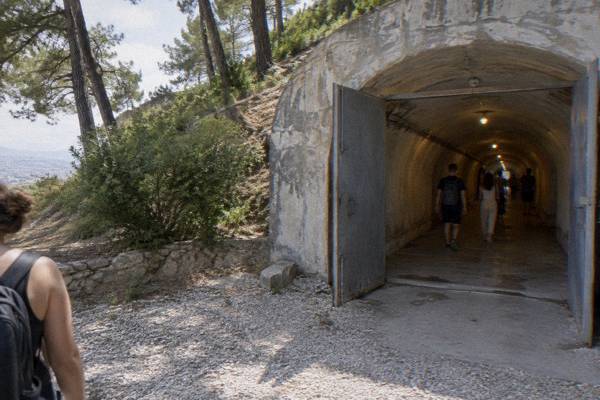
Tirana, the capital of Albania, carries its communist years in concrete: two bunker museums, a museum of secret surveillance, a pyramid and a leaders' villa quarter, all linkable in one focused day of walking and one short cable car ride.
Short answer
Spend the morning at Bunk'Art 1 behind the Dajti cable car lower station, take the cable car or bus back for Bunk'Art 2 and the House of Leaves in the centre, then walk the Pyramid of Tirana, Skanderbeg Square, Postbllok and Blloku in the late afternoon. Bunk'Art 1 is open daily 09:30 to 17:30 from 1 June 2026, and Bunk'Art 2 opens daily from 09:30.
Tirana, the capital of Albania, is one of the few European capitals where the communist period of 1944 to 1991 is still physically legible across the whole city centre. The regime's concrete bunkers, its secret police headquarters, its leaders' villa quarter and its pyramid-shaped museum all survive within a few kilometres of Skanderbeg Square, and a day is enough to link them. This trail puts the two Bunk'Art museums, the House of Leaves, the Pyramid of Tirana, Postbllok and Blloku into one ordered route, with opening hours, what each site covers, and where a guided walk fits in. Albania is not in the EU and not in Schengen; the currency is the lek, roughly 90 to the euro. The city sits inland in a basin at the foot of Mount Dajti, with the Adriatic coast at Durres a day trip about 39 minutes west by road, not a beach city itself.
Why Does Tirana Have So Much Communist History To See?
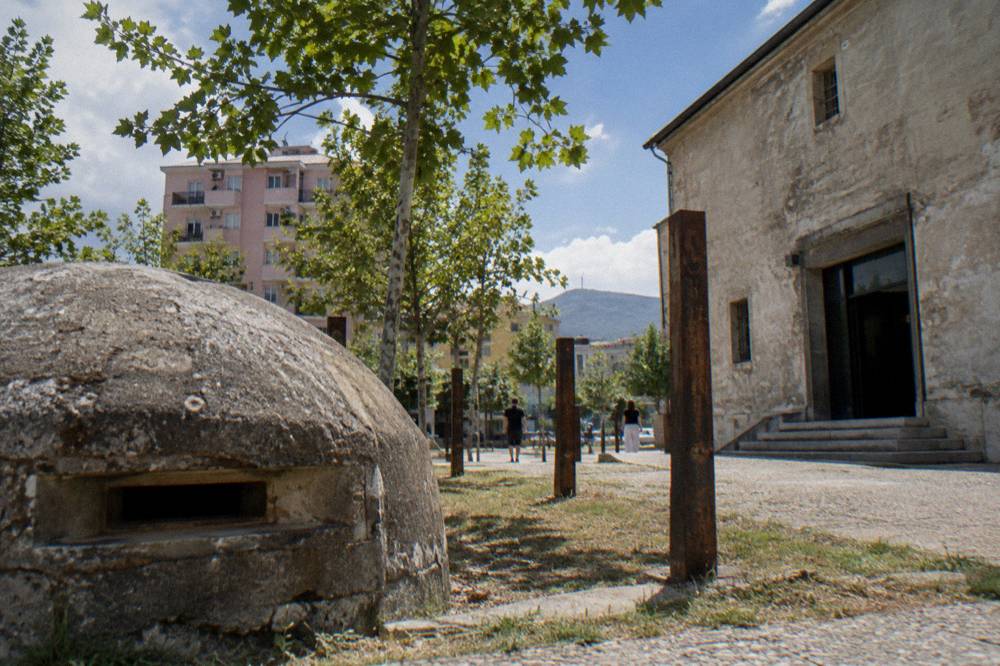
Tirana was the command centre of one of Europe's most isolated communist states from 1944 to 1991, and the regime built its apparatus of power, surveillance and defence directly into the city, from the Interior Ministry bunker now called Bunk'Art 2 to the leaders' villa quarter at Blloku. Because Albania shut itself off for decades, the buildings were neither demolished nor renovated away, so the layer survives unusually intact. The communist years ran from 1944 to 1991, per standard histories. The country's defence doctrine produced the concrete bunkers scattered across the whole landscape; the commonly cited estimate of their number is about 173,000, a reported figure whose estimates differ, never a settled count. Two of the largest of those structures are now museums in Tirana itself, and the surveillance machine that ran alongside them has its own museum a two-minute walk from Skanderbeg Square. For deeper background on the period across the city, the communist history in Tirana guide and the broader Tirana history guide cover what this one-day trail compresses.
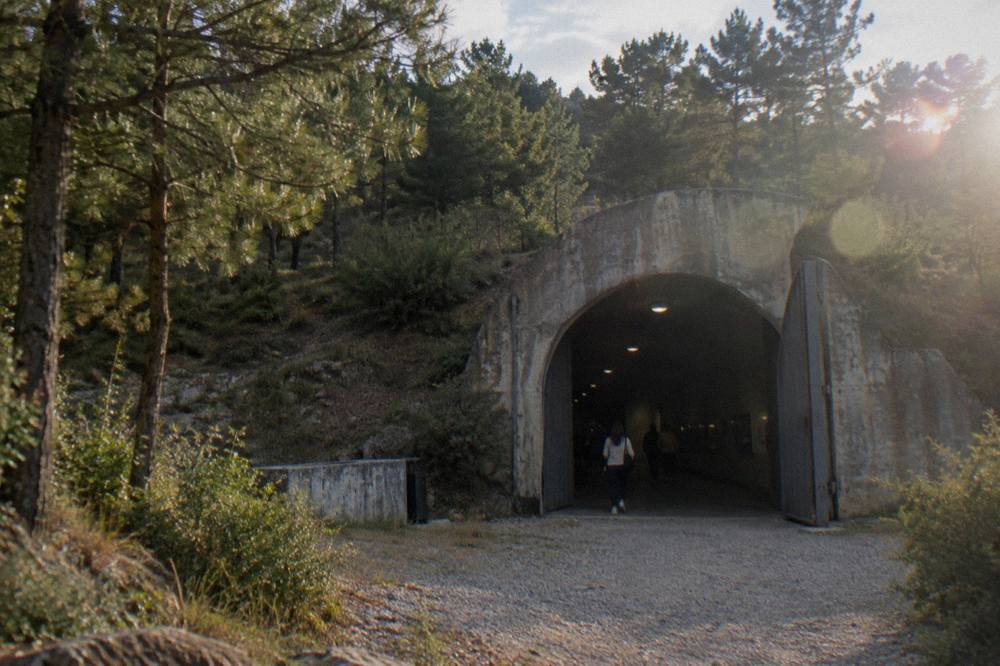
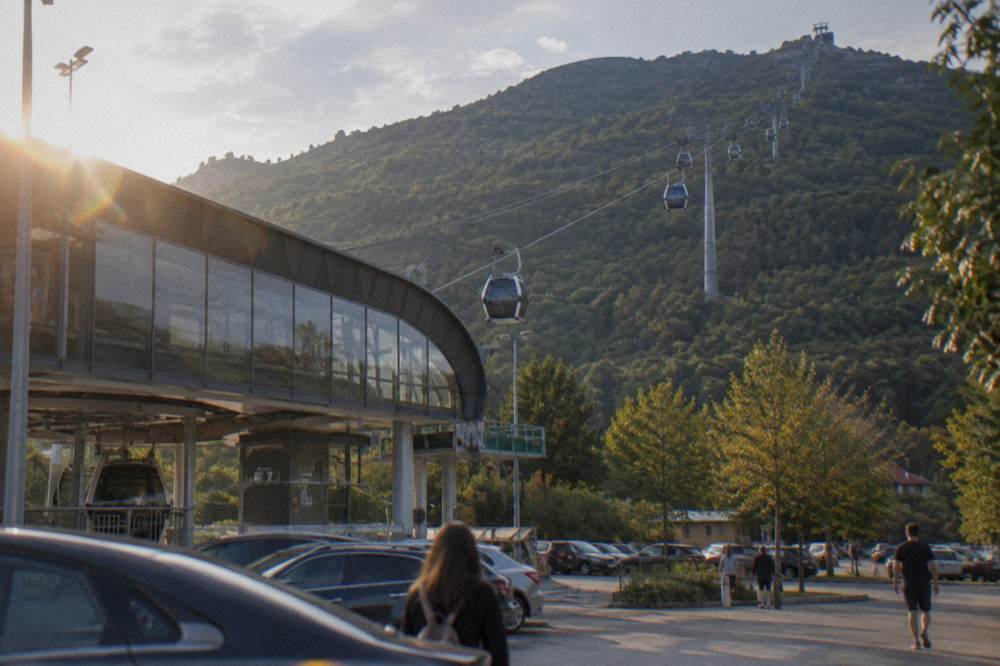
The geography helps. Bunk'Art 2 sits about 0.2 km south-east of the square, the House of Leaves about 0.2 km south-west, the Pyramid about 0.7 km south-east, and Postbllok about 0.9 km south, all inside an easy walking radius. Only Bunk'Art 1 breaks the pattern, sitting about 4.6 km north-east, behind the lower station of the Dajti Ekspres cable car. That single outlier is why the trail starts there: knock it out in the morning, then spend the rest of the day on foot.
A note on what this day is not. The National History Museum on Skanderbeg Square has been closed for restoration since 15 March 2024, and the announced closure runs to March 2028; the mosaic facade can still be seen from the square. The National Gallery of Arts, about 0.4 km south-east of the square, is under renovation too; check before going.
What Are The Essential Communist History Sites In Tirana?
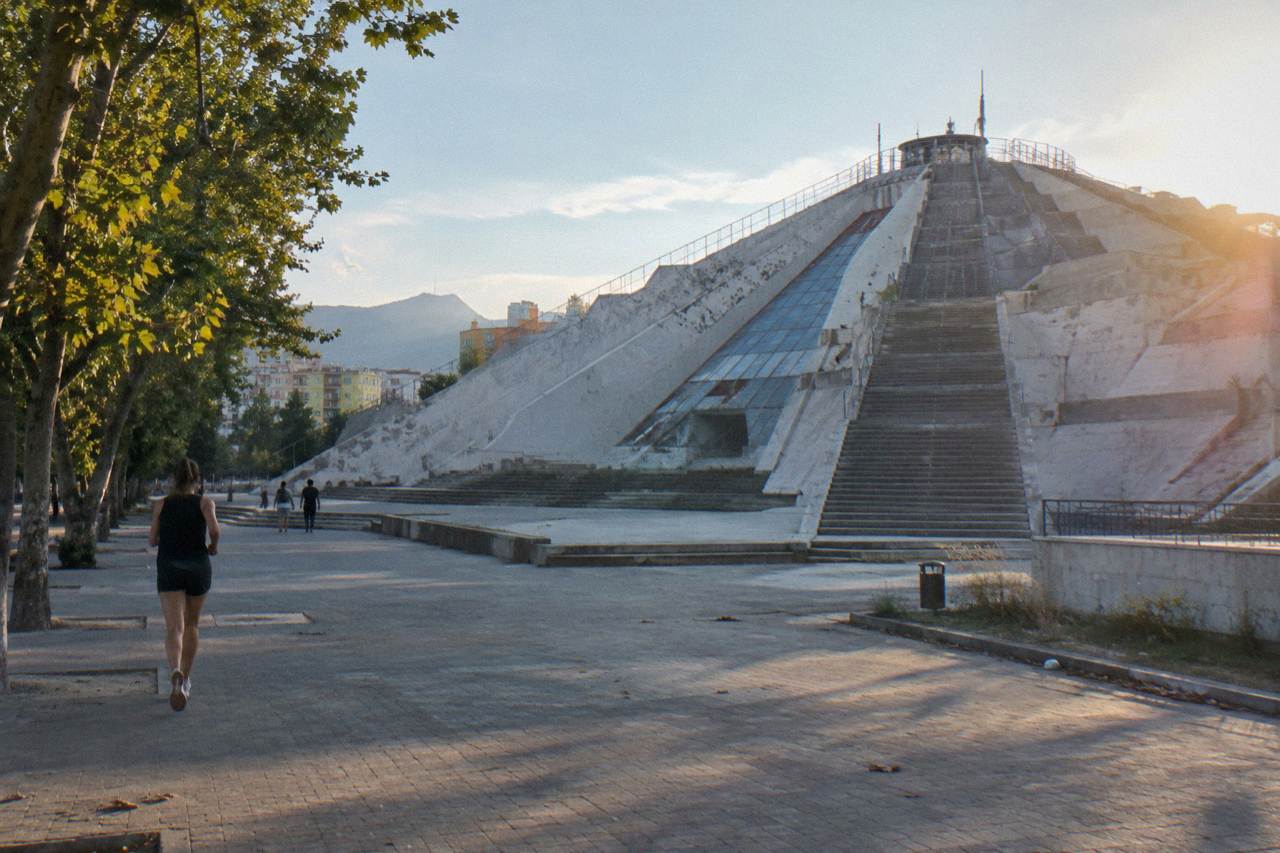
The five essentials are Bunk'Art 1, the leadership nuclear shelter turned museum behind the Dajti cable car lower station; Bunk'Art 2, the Interior Ministry bunker on Rruga Abdi Toptani; the House of Leaves, the National Museum of Secret Surveillance; the Pyramid of Tirana, opened in 1988 and now a tech centre you can climb; and the Postbllok memorial at the edge of Blloku, the former leaders' quarter. Reported details give Bunk'Art 1 an opening in November 2014 and Bunk'Art 2 on 19 November 2016. Bunk'Art 1 covers the communist era from inside the shelter built for the political leadership; Bunk'Art 2, the smaller downtown bunker opposite the Municipality, covers the secret police years. The House of Leaves opened on 23 May 2017 in the building where surveillance operations were run, and its collections sit inside the wiretapping apparatus itself rather than a purpose-built gallery.
A guided structure suits this material. The small-group walking tour of communist landmarks covers the centre's sites with a guide who can put names to buildings that otherwise look like ordinary blocks. For Bunk'Art 1, a tour with transport included saves the out-and-back, since the museum sits at the edge of the city.
Each site is documented in its own depth on this site: Bunk'Art 1, Bunk'Art 2, the Pyramid of Tirana and the House of Leaves pages carry the full detail. The table below is the route in one view.
| Stop | Site | Theme | Position from Skanderbeg Square |
|---|---|---|---|
| 1 | Bunk'Art 1 | Leadership nuclear shelter, communist era | about 4.6 km north-east |
| 2 | Dajti Ekspres lower station | Cable car link, billed as the longest cableway in the Balkans | about 4.4 km north-east |
| 3 | Bunk'Art 2 | Interior Ministry bunker, secret police years | about 0.2 km south-east |
| 4 | House of Leaves | National Museum of Secret Surveillance | about 0.2 km south-west |
| 5 | Pyramid of Tirana | 1988 museum building, now TUMO, climbable steps | about 0.7 km south-east |
| 6 | Postbllok and Blloku | Memorial and former leaders' quarter | about 0.9 km south |
How Do You Plan A Communist History Day In Tirana?
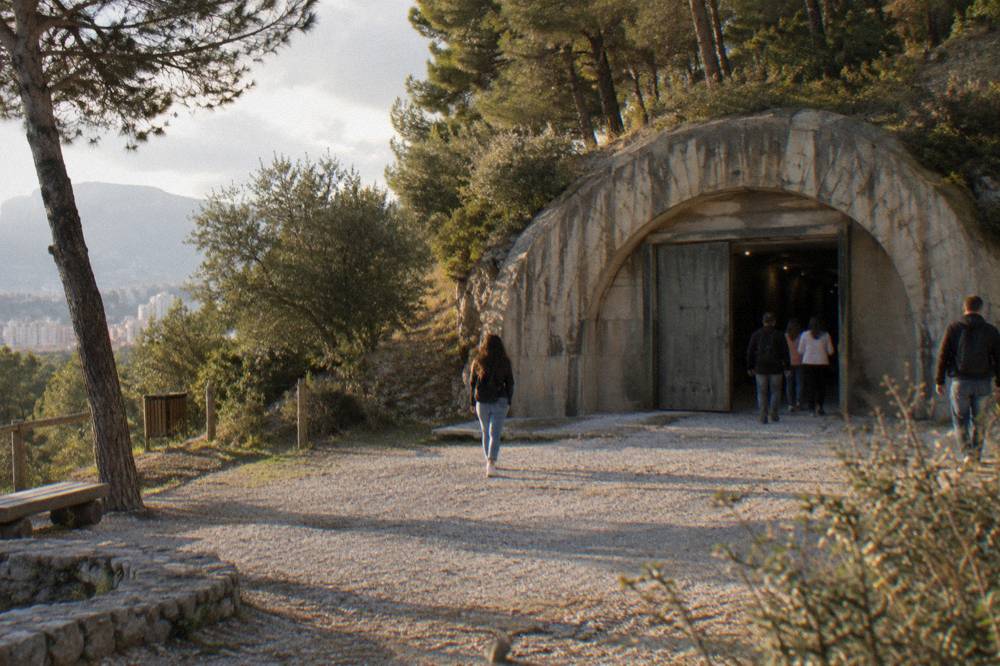
Start at Bunk'Art 1 when it opens at 09:30, allow the morning there, then return to the centre for Bunk'Art 2 and the House of Leaves after lunch, and finish with the Pyramid, Skanderbeg Square and the walk down the boulevard to Postbllok and Blloku before dinner.
Bunk'Art 1 opens daily 09:30 to 17:30 from 1 June 2026, Bunk'Art 2 opens daily from 09:30, and the House of Leaves is open daily 09:00 to 19:00, so every stop except the first can absorb schedule slip. The logic is distance: the one site outside the centre comes first while energy is high, and everything after 13:00 is a short walk from the last one. A single city bus ride costs about 40 lek, paid in cash on board, and taxis are metered by local operators; Uber and Bolt do not operate in Tirana.
| Time | Where | What you do |
|---|---|---|
| 09:15 | Dajti Ekspres lower station | Arrive before the Bunk'Art 1 opening at 09:30 |
| 09:30 to 12:00 | Bunk'Art 1 | The shelter museum, buy tickets at the door |
| 12:00 to 13:30 | Back to the centre | Lunch; byrek is a layered filo pie, qofte seasoned meatballs |
| 13:30 to 14:30 | Bunk'Art 2 | The secret police years, tickets at the door |
| 14:45 to 15:45 | House of Leaves | Surveillance museum, open to 19:00 |
| 16:00 to 17:00 | Pyramid and square | Climb the Pyramid steps, see the closed History Museum facade |
| 17:00 to 18:30 | Postbllok and Blloku | Walk south past the memorial into the cafe quarter |
If the weather turns, this itinerary folds neatly indoors; the Tirana on a rainy day itinerary builds on the same museums. If you have more time, the two days in Tirana itinerary splits this trail across a more relaxed pace.
What Are The Opening Hours And Tickets For Bunk'Art And The House Of Leaves?
Bunk'Art 1 is open daily 09:30 to 17:30 from 1 June 2026, per the museum's own website; Bunk'Art 2 is open daily from 09:30, with a closing time that varies by season; and the House of Leaves is open daily 09:00 to 19:00.
Neither Bunk'Art site publishes a ticket price online, so buy tickets at the door; the House of Leaves charges a reported 700 lek for adults, 210 lek for seniors and students, 500 lek for groups of 12 or more, and admits under-12s free, per a local portal. Confirm the reported House of Leaves prices before you go. No Bunk'Art price figure belongs in any itinerary: the number sometimes quoted online does not appear on the official site.
| Site | Hours | Ticket |
|---|---|---|
| Bunk'Art 1 | Daily 09:30 to 17:30 (from 1 June 2026) | At the door |
| Bunk'Art 2 | Daily from 09:30, closing varies by season | At the door |
| House of Leaves | Daily 09:00 to 19:00 | Reported 700 lek adult, confirm on arrival |
| National History Museum | Closed for restoration, to about March 2028 | Closed |
| National Gallery of Arts | Under renovation, check before going | Not published |
The House of Leaves building has its own place in the story: it served as the surveillance hub, and the reported opening date of the museum is 23 May 2017. Its permanent displays sit in the original rooms, which is why the visit is short but dense; an hour is realistic, and the museum stays open to 19:00, so it can absorb a late afternoon. Everything else covered here is indexed on Tirana Albania Travel Guide.
What Should You See On Skanderbeg Square And Around It?
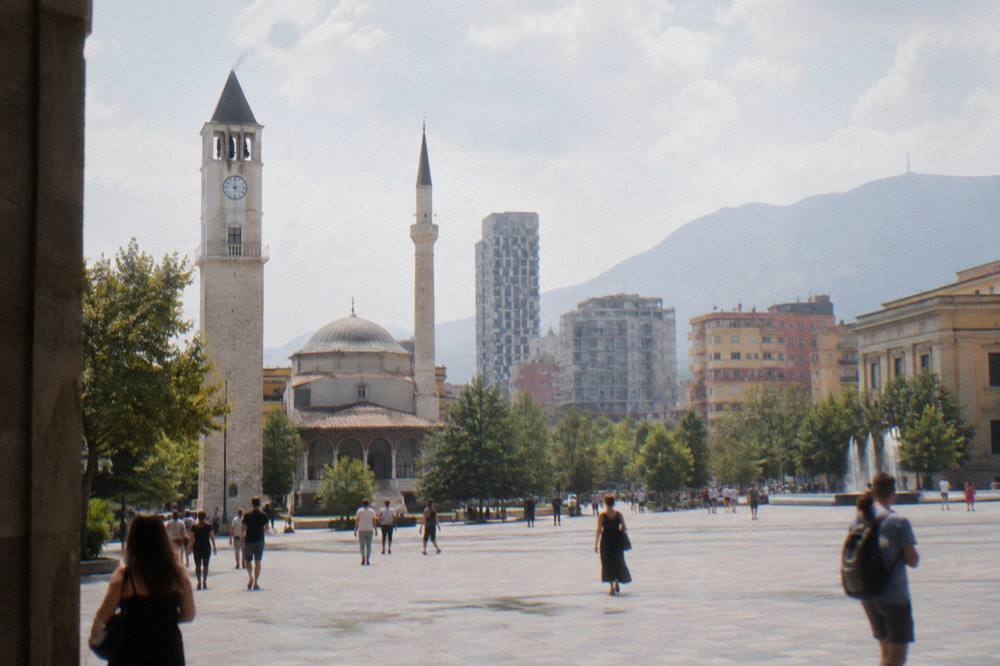
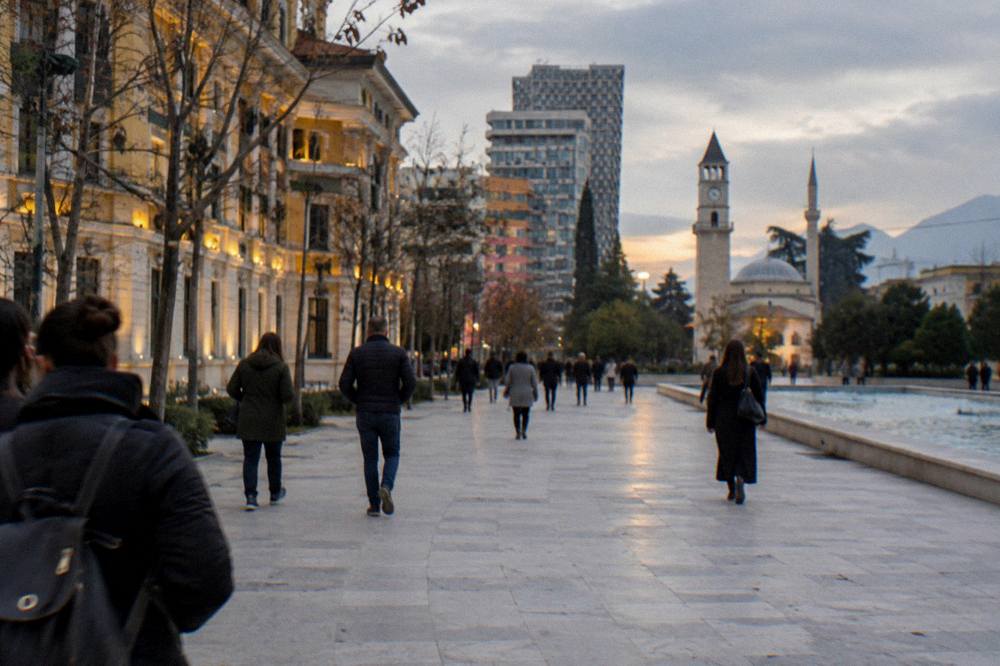
Skanderbeg Square itself is the hinge of the trail: the Et'hem Bey Mosque about 0.2 km south-east, the Clock Tower beside it, the closed National History Museum's mosaic facade on the square, the Palace of Culture on the square, and the Pyramid about 0.7 km south-east, all sit within a ten-minute walk of one another. The square was redesigned in 2017 by 51N4E, reported in architecture coverage, into the pedestrian expanse you see today. The mosque predates the communist period and was spared in 1967; on 18 January 1991 about 10,000 people entered it despite the authorities, a moment local histories treat as a crack in the regime's final year. Visits are free outside prayer times, and modest dress, shoulders and knees covered and a headscarf for women, is the courtesy expected.
The square's communist layer is easy to read once you know what to look for. The Palace of Culture sits directly on the square; the National History Museum, closed since 15 March 2024, still shows its monumental mosaic facade; and the Clock Tower, about 90 steps to the top, rises beside the mosque. The Skanderbeg Square guide and the Et'hem Bey Mosque guide go deeper on each.
From the square, the walk to the Pyramid takes you past the National Gallery of Arts building, under renovation, and on to the stepped concrete form of the Pyramid of Tirana itself. It opened on 14 October 1988 as a museum building in the communist era, was renovated and reopened in May 2023, and now houses the TUMO tech centre; the outside steps are free to climb, and the view from the top frames the whole trail you have just walked. The Pyramid of Tirana guide covers its layers in full.
Where Does Blloku Fit Into A Communist History Trail?
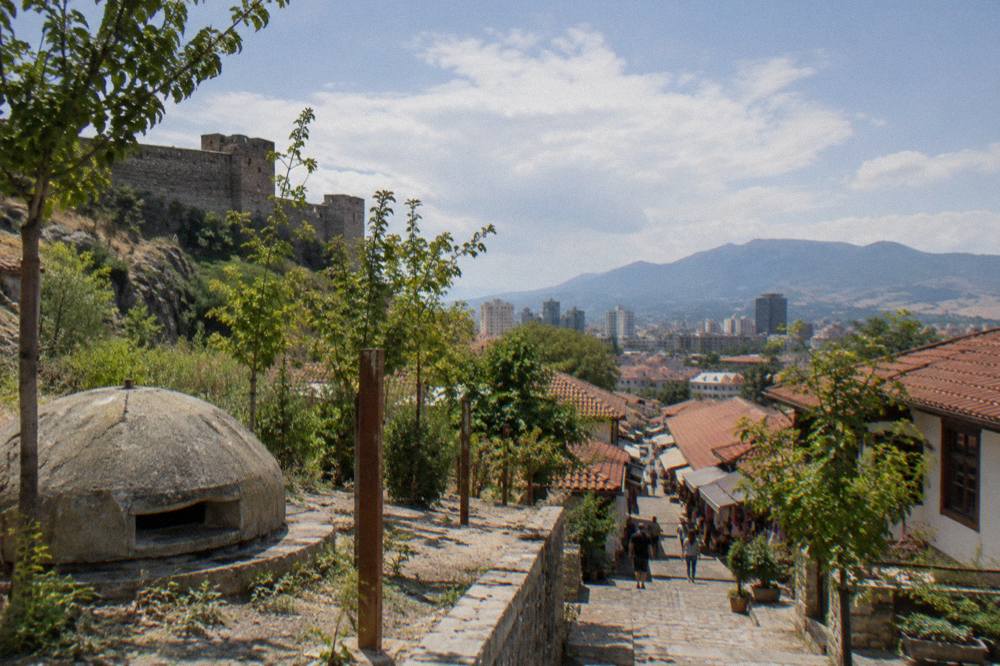
Blloku, about 0.8 km south of Skanderbeg Square, was the residential quarter closed off for the communist leadership, and today it is Tirana's cafe and bar quarter, which makes the walk from the boulevard into it the single clearest before-and-after in the city. The Postbllok memorial, about 0.9 km south of the square, marks the edge of the former enclave and gathers a bunker, prison pillars and a fragment of the Berlin Wall into one installation, reported in secondary histories. Walking from Mother Teresa Square, about 1.2 km south, up through Blloku toward Postbllok reverses the geography of privilege: the villas the leadership kept for themselves are now hemmed in by the bars and cafes that took the quarter over.
What stands is the physical contrast, and the memorial. From Postbllok it is a short walk back to the centre, or a longer evening in the quarter itself; the Tirana Albania Travel Guide covers the nightlife side separately.
| Site on the southern leg | Position from the square | Role on the trail |
|---|---|---|
| Mother Teresa Square | about 1.2 km south | Walk start or end, grand axis |
| Rinia Park | about 0.4 km south | Green break between stops |
| Postbllok memorial | about 0.9 km south | Bunker, prison pillars, Berlin Wall fragment |
| Blloku quarter | about 0.8 km south | Former leaders' enclave, now cafes |
| Air Albania Stadium | about 1.3 km south-east | Optional extension past the quarter |
Can You Combine Mount Dajti And Bunk'Art 1 In One Day?
Yes, and the trail is built around it: Bunk'Art 1 sits directly behind the Dajti Ekspres lower station, about 4.4 km north-east of Skanderbeg Square, so you visit the museum first and then, if you want the mountain, take the cable car up; the summit area of Mount Dajti is about 53 minutes and 28 km by road from the square, but the cable car covers the climb in one leg.
Tickets for the cable car are sold only at the lower station, in one-way, return and combination versions, and the operator advises arriving between 09:00 and 11:00 on busy national holidays. The operator bills the Dajti Ekspres as the longest cableway in the Balkans, Austrian-built. It is usually closed on Tuesdays for maintenance, per local guides; confirm before you go. No fare is published online, so the current price is a lower-station question.
The combination works in either order, but museum-then-mountain is the safer plan: Bunk'Art 1 closes at 17:30 in the current timetable, while the mountain views survive any hour. If a full day on the trail plus the mountain sounds like too much, the one day in Tirana itinerary trims the list, and the three days in Tirana itinerary gives the mountain a day of its own.
Which Day Trips From Tirana Add Communist-Era Context?
The strongest day trips for this theme are Kruja, about 45 minutes and 37 km by road, where the castle and bazaar predate the regime but the Skanderbeg story frames the national identity the communists claimed; Durres, about 39 minutes and 37 km, whose Roman amphitheatre and Archaeological Museum pair with the coast; and, for a longer day, the drive east toward Elbasan, about 42 minutes and 40 km, whose fortress walls belong to the older Ottoman layer. Kruja Castle's official tourism page prints no fee or hours, so confirm locally. In Durres the Archaeological Museum charges a reported 800 lek and the amphitheatre a reported 300 lek, a few hundred lek in either case, and both should be confirmed before you go. These are drive times in normal traffic, not timetables.
| Day trip | Road time from the square | Distance | Link to the theme |
|---|---|---|---|
| Kruja | about 45 minutes | about 37 km | Skanderbeg heritage the regime invoked |
| Durres | about 39 minutes | about 37 km | Roman layer plus the Adriatic coast |
| Elbasan | about 42 minutes | about 40 km | Ottoman fortress town |
| Petrela Castle | about 22 minutes | about 14 km | Castle viewpoint close to the city |
| Berat | about 122 minutes | about 125 km | UNESCO old town, overnight pace |
For a second city with a different regime story, Ohrid in North Macedonia is about 135 minutes and 130 km by road plus a border crossing, and the Ohrid day trip guide covers the crossing. Farther afield, Theth in the Albanian Alps is about 250 minutes and 172 km by road, and the question can you take a day trip from Tirana to Theth answers it honestly: it is a long day or an overnight. The Durres day trip guide handles the coast option, and the one week in Albania from Tirana itinerary stitches the far sites together.
What Should You Know Before You Go?
Albania is outside the EU and Schengen and runs its own 90-in-180-day visa regime for visa-free nationals; the currency is the lek, and cards are widely taken in central hotels and larger restaurants while cash is still the default for buses, markets and small cafes. The emergency numbers are Police 112, Ambulance 127 and Fire 128.
Since 13 October 2026 demonstrations have been held in central Tirana, some violent, and UK travel advice was updated on 15 October 2026; avoid gatherings and check local media during your stay. The Tirana Marathon, moved from late October, runs on 14 to 15 November 2026, which can reshape a central visit that weekend.
Practicalities in one table:
| Need | Answer |
|---|---|
| Airport to centre | Official bus, 400 lek, 24/7, hourly, 30 to 40 minutes |
| City bus | About 40 lek per ride, cash on board |
| Emergency | Police 112, Ambulance 127, Fire 128 |
| Language | Albanian; English works in central tourism settings |
| Money | Lek; the euro is not legal tender |
| Climate note | July mean high 29.8 C, January mean high 10.8 C, ERA5 reanalysis 1991-2020 |
Common Questions About Communist History In Tirana
Can you see Tirana's communist sites in one day?
Yes. Bunk'Art 1 in the morning, Bunk'Art 2 and the House of Leaves after lunch, then the Pyramid, Skanderbeg Square, Postbllok and Blloku on foot fills a full day without rushing, since every stop after the first sits within walking distance.
Which is better, Bunk'Art 1 or Bunk'Art 2?
They cover different subjects. Bunk'Art 1 is the leadership nuclear shelter behind the cable car lower station and covers the communist era broadly; Bunk'Art 2 is the Interior Ministry bunker downtown and covers the secret police years. With one day you can do both.
How much do Bunk'Art tickets cost?
No ticket price is published on the museum's own website, so buy tickets at the door and check the current price there before going.
What is the Pyramid of Tirana now?
After renovation it reopened in May 2023 and now houses the TUMO tech centre. The outside steps can be climbed free of charge, and the view from the top takes in the city basin and Mount Dajti.
Can you visit Blloku?
Yes, freely. What was once the closed leadership quarter is now the city's cafe and bar quarter, about 0.8 km south of Skanderbeg Square, with the Postbllok memorial at its edge.
Is the Dajti cable car running every day?
It is usually closed on Tuesdays for maintenance, per local guides, and open from about 09:00 otherwise; tickets are sold only at the lower station, so confirm the day's operation and price there.
One final tip ties the day together: finish on the Pyramid steps at golden hour, looking north-east toward the cable car line you rode in the morning, and the whole geography of the trail, centre, mountain and bunker, lands in a single view.