Three Days In Tirana: Adding Kruja Or Berat
Three days give Tirana the room it deserves: two days across the capital's squares, bunkers and the Blloku cafe quarter, then a third day on the road to Kruja or Berat. This itinerary lays out the hours, distances and transport facts for each day.
Short answer
Spend Day One on Skanderbeg Square, the Et'hem Bey Mosque, the Pyramid of Tirana and Bunk'Art 2. Give Day Two to the Dajti Ekspres cable car and Mount Dajti in the morning, then Bunk'Art 1 and Blloku. Use Day Three for Kruja, about 45 minutes by road, or Berat, about two hours. Neither Bunk'Art nor the Dajti Ekspres publishes a ticket price, so budget cash for the door.
Three days is the comfortable shape for Tirana, the capital of Albania: an inland city in a basin at the foot of Mount Dajti, roughly 37 km and 39 minutes by road from the Adriatic coast at Durres. Two days cover the centre on foot, from Skanderbeg Square to the Pyramid of Tirana and the bunker museums, and a third day reaches either Kruja or the UNESCO-listed old town of Berat. This page from the Tirana Albania Travel Guide sets out each day with the published hours, the road distances and the transport facts that hold a plan together.
What Can You See In Tirana In Three Days?
In three days you can cover Skanderbeg Square, the Et'hem Bey Mosque and the Clock Tower, the Pyramid of Tirana, Bunk'Art 2 and the House of Leaves in the centre, ride the Dajti Ekspres cable car to Mount Dajti and visit Bunk'Art 1 near its lower station, walk Blloku and the Grand Park, and still spend a full third day in Kruja or Berat. Everything central sits within about two kilometres of the square, so the first two days need no car at all.
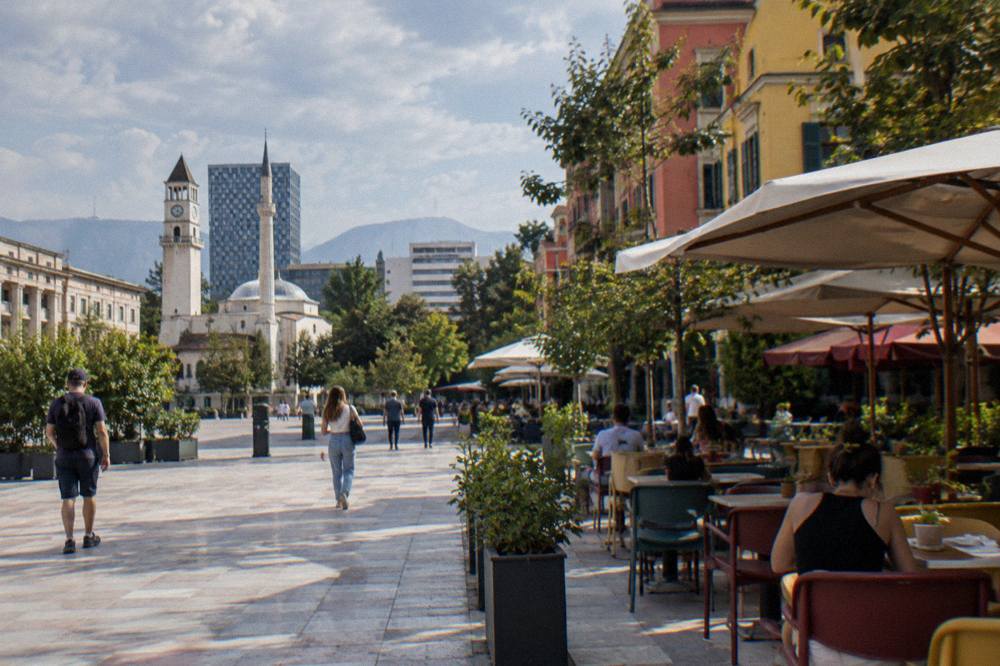
The geography works in your favour. The Et'hem Bey Mosque and the Clock Tower stand about 0.2 km south-east of the square; the Pyramid of Tirana about 0.7 km south-east; Blloku about 0.8 km south; the Grand Park of Tirana about 2.1 km south-east. Bunk'Art 1 and the Dajti Ekspres lower station sit out at about 4.4 to 4.6 km north-east, which pairs them naturally on one morning. Bunk'Art 2 is back in the centre, roughly 0.2 km south-east of the square, opposite the Municipality.
Two 2026 facts shape any plan. The National History Museum on Skanderbeg Square has been closed for restoration since 15 March 2024, with the announced closure running to March 2028; the mosaic facade is still visible from the square. And demonstrations have been held in central Tirana since 13 October 2026, some violent, which pushed the Tirana Marathon from late October to 14 and 15 November 2026; check local media during your stay and avoid gatherings.
Here is the shape of the three days at a glance:
| Day | Morning | Afternoon | Evening |
|---|---|---|---|
| One | Skanderbeg Square, Et'hem Bey Mosque, Clock Tower exterior | Pyramid of Tirana, Bunk'Art 2, Pazari i Ri | Dinner near the New Bazaar |
| Two | Dajti Ekspres and Mount Dajti | Bunk'Art 1, then a walk to Blloku | Bars and cafes in Blloku |
| Three | Kruja Castle and bazaar, or the road to Berat | Sari Salltik viewpoint or Berat castle and museums | Return to Tirana |
If three days feels tight, the two days in Tirana plan compresses the city, while one week in Albania from Tirana extends the same route to the coast and the mountains. The question of how much time the city itself needs is covered at How Many Days In Tirana Is Enough.
Day One In Tirana: The Square, The Pyramid And Bunk'Art 2
Day One stays entirely on foot around Skanderbeg Square: the Et'hem Bey Mosque (free, outside prayer times, modest dress), the Clock Tower with about 90 steps, the National History Museum's mosaic facade from outside, the Pyramid of Tirana (free to climb outside), then Bunk'Art 2, open daily from 09:30, and the House of Leaves, open daily 09:00 to 19:00. Buy museum tickets at the door; no Tirana sight publishes its price in advance reliably.
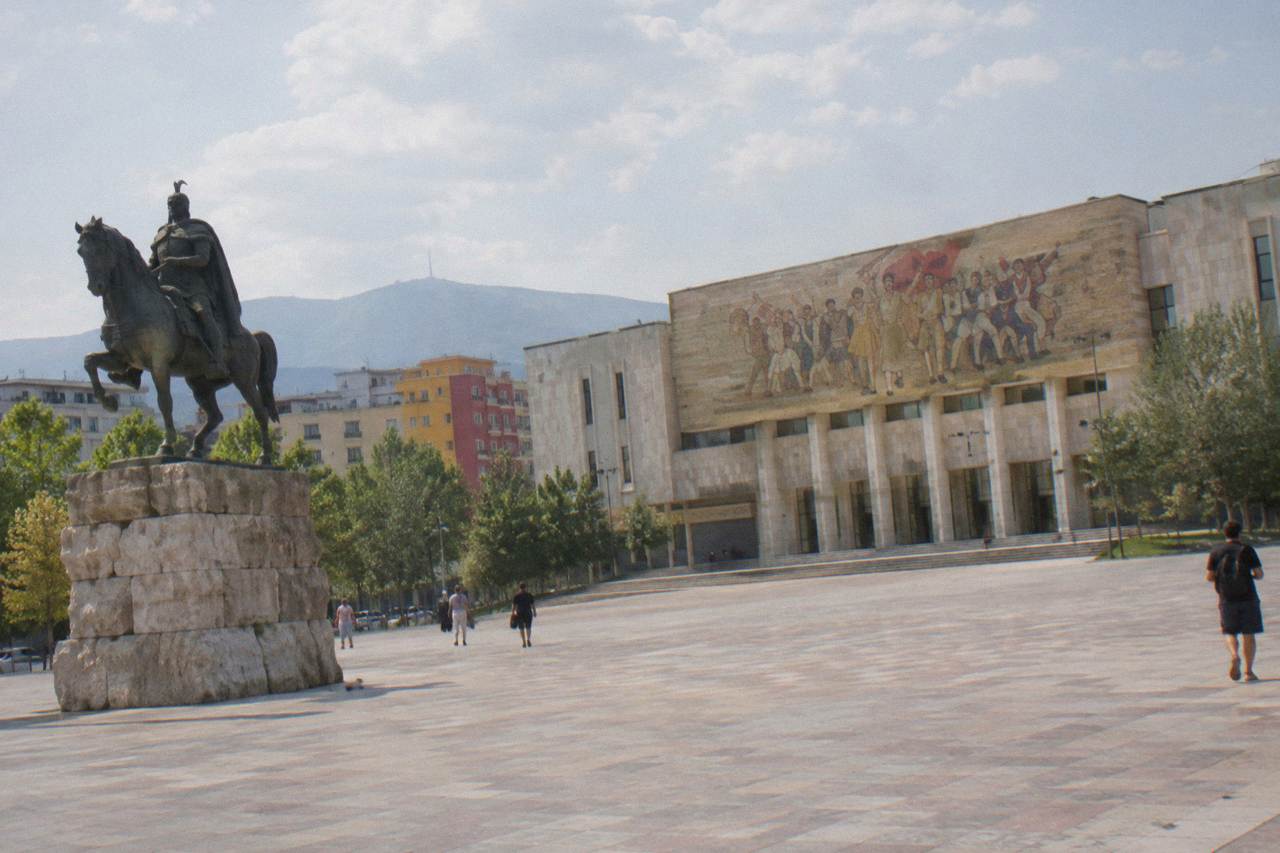
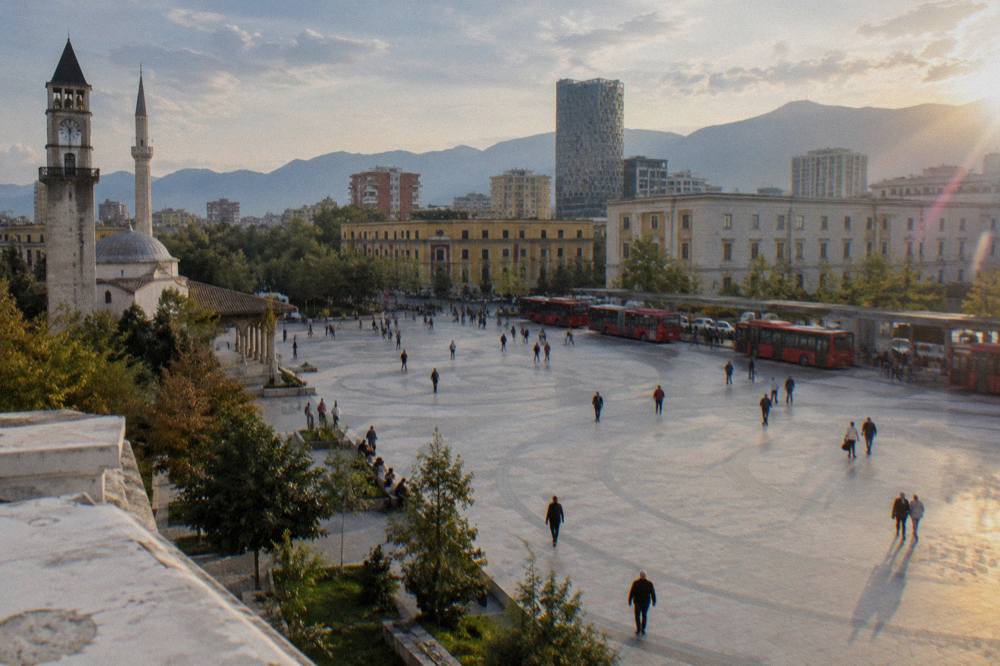
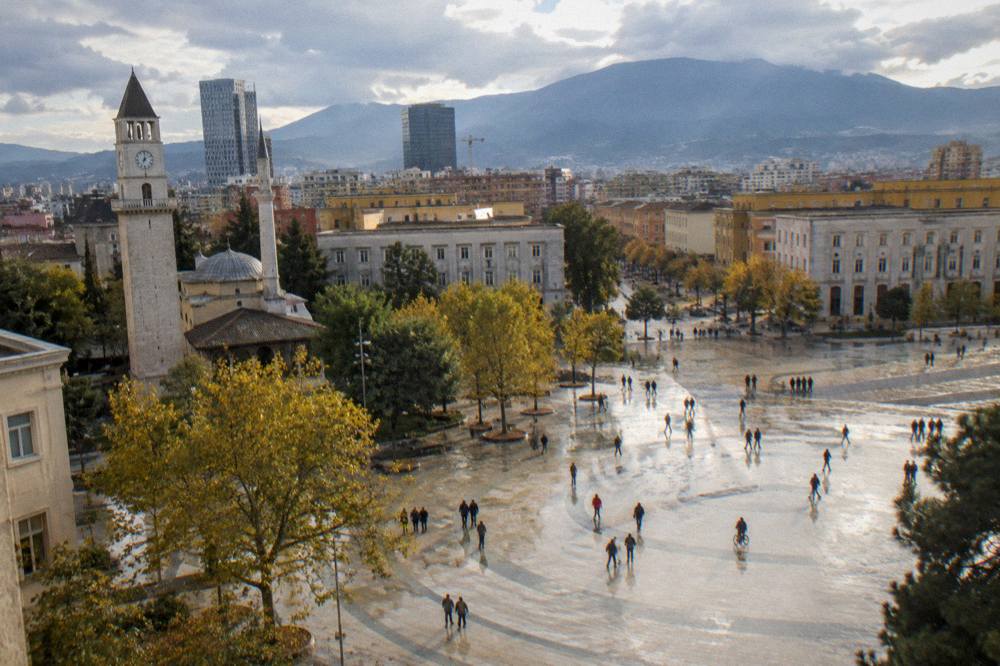
Start on Skanderbeg Square, the city's central public space and the anchor for every distance in this itinerary. The Et'hem Bey Mosque sits at its edge about 0.2 km south-east; visits are free outside prayer times, and the courtesy is modest dress with shoulders and knees covered. The Clock Tower beside it rises about 90 steps; its fee and hours are not published consistently, so check at the door. On the square's north side, the closed National History Museum still shows its monumental mosaic facade.
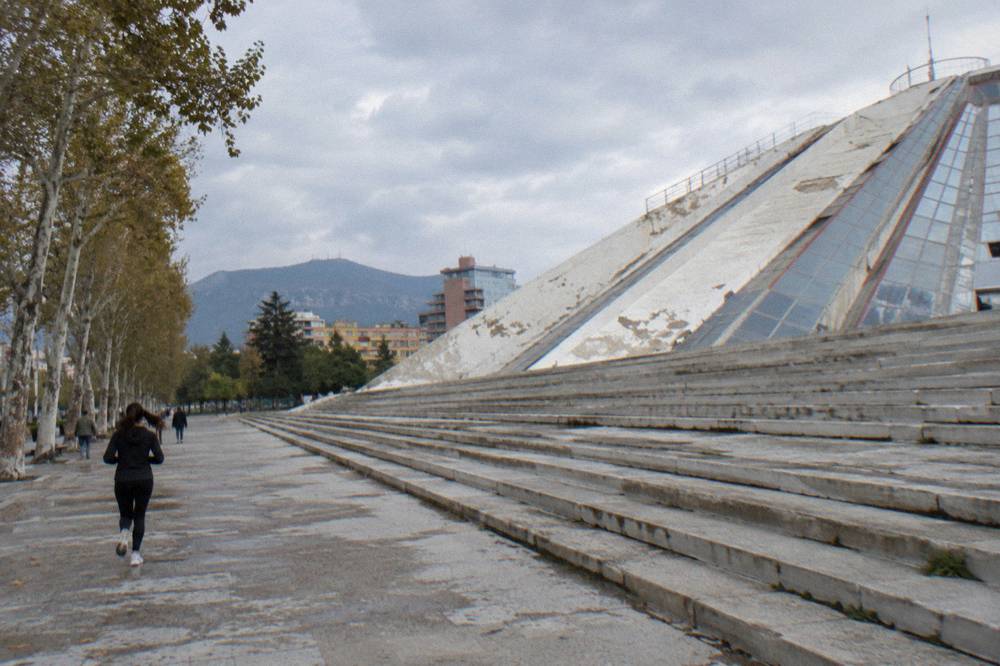
From the square, walk about 0.7 km south-east to the Pyramid of Tirana. Opened in 1988 and renovated into the TUMO technology centre, reopened in 2023, its stepped exterior can be climbed free of charge at any time. The Great Mosque of Tirana, the Namazgah Mosque, opened 10 October 2024, stands about 0.6 km south-east; visit between prayers with the same dress courtesy.
The afternoon belongs to Bunk'Art 2, the atomic bunker turned museum on the communist-era Ministry of Interior, about 0.2 km south-east of the square. Its official page lists daily opening from 09:30; the museum publishes no ticket price online, so buy at the door and carry cash. If time allows, the House of Leaves, the Museum of Secret Surveillance about 0.2 km south-west of the square, is open Monday to Sunday 09:00 to 19:00, with an adult ticket of 700 lek per its own site.
Close the day at the New Bazaar, Pazari i Ri, about 0.6 km east of the square, a market and restaurant quarter that stays lively into the evening. For a guided introduction to all of this, the Tirana walking tour covers the Ottoman, Italian and communist layers of the centre in one loop.
Day Two In Tirana: Dajti Ekspres, Bunk'Art 1 And Blloku
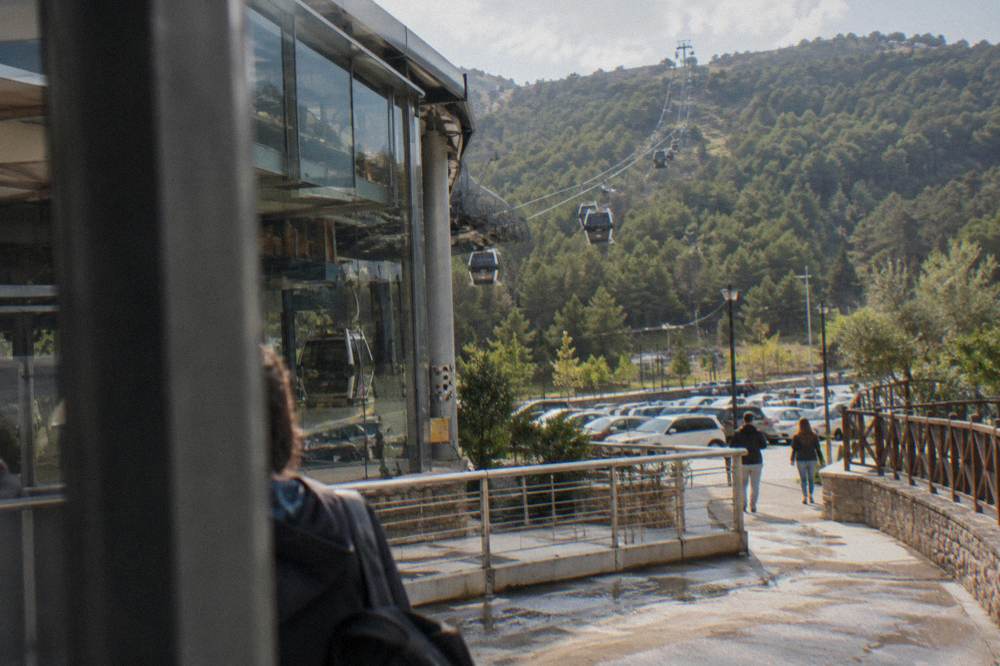
Day Two heads for the hills: the Dajti Ekspres cable car, described by its operator as the longest cableway in the Balkans, runs from the north-eastern edge of the city up Mount Dajti, with tickets sold only at the lower station and a usual Tuesday maintenance closure. Come down for Bunk'Art 1, behind the lower station, open daily 09:30 to 17:30, then finish with a walk from Postbllok into Blloku, the former leadership quarter turned cafe and bar district.
The cable car's lower station lies about 4.4 km north-east of Skanderbeg Square, and Bunk'Art 1 sits just behind it, about 4.6 km out. The operator publishes no fares online; tickets of one-way, return and combination types are sold only at the lower station, and it reports busiest queues on national holidays, recommending arrival between 09:00 and 11:00. Local guides report a maintenance closure on Tuesdays, so confirm before planning a Tuesday ride. The Mount Dajti summit itself is 9.8 km from the square as the crow flies, and the national park above the station has walking trails and viewpoints over the basin.
Bunk'Art 1, opened in November 2014 inside the leadership's Cold War shelter, has listed daily hours of 09:30 to 17:30 since 1 June 2026. As with its sibling, no ticket price is published; pay at the door. Budget a full afternoon for the two bunker museums across the two days, because each is a long walkthrough.
Back in the centre, the walk south passes the Postbllok memorial about 0.9 km from the square, with its bunker segment, Spac prison pillars and Berlin Wall fragment, and continues into Blloku and the Grand Park beyond, about 2.1 km south-east. Blloku, the villa quarter of the communist leadership, is now the city's cafe and bar quarter, busy from early evening. If the second day falls short, the Dajti half-day trip with cable car ticket bundles the ride, or see the one day in Tirana plan for a tighter version of the centre.
Day Three From Tirana: Kruja Or Berat?
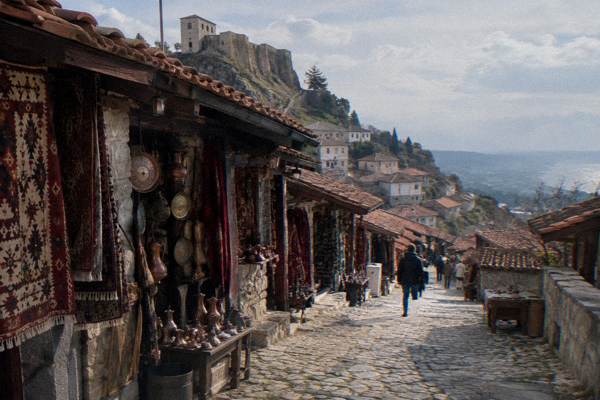
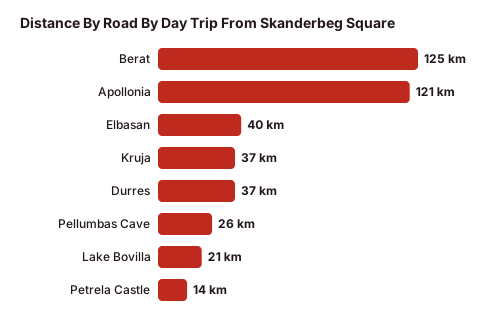
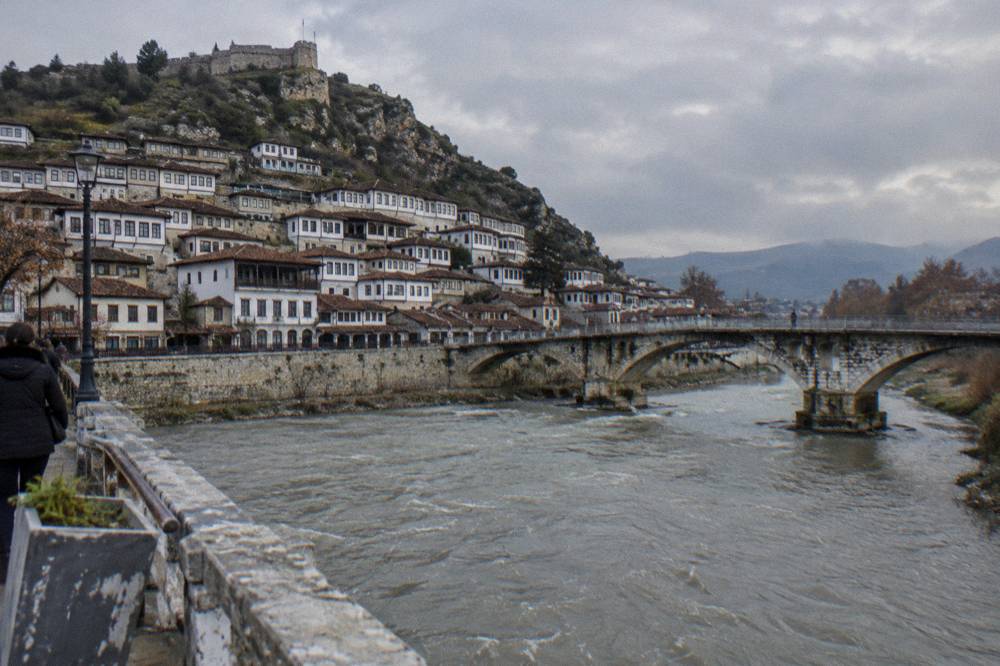
Kruja is the easy third day: about 37 km and 45 minutes by road from Skanderbeg Square, with a castle, the Skanderbeg Museum and an old bazaar, reachable by minibus in about an hour for roughly 200 lek, per local guides. Berat is the bigger prize but the longer day: about 125 km and roughly two hours each way, rewarded by a UNESCO World Heritage old town inscribed in 2005 and extended in 2008. Choose Kruja for a short day, Berat for a full one.
Neither castle site publishes its entry fees or hours on an official page, so plan to pay a small amount at each gate and confirm locally. What is solid is the road: Kruja at 45 minutes suits a late start and an early return, while Berat at about 122 minutes of driving each way justifies either a very early start or an overnight. A middle path exists: Petrela Castle, about 22 minutes and 14 km from the square, can be added to a Kruja afternoon.
| Day trip from Skanderbeg Square | Distance by road | Drive time | Character |
|---|---|---|---|
| Petrela Castle | 14 km | about 22 min | Small castle, close valley |
| Kruja | 37 km | about 45 min | Castle, bazaar, Skanderbeg history |
| Durres | 37 km | about 39 min | Roman amphitheatre, Adriatic beach |
| Elbasan | 40 km | about 42 min | Ottoman fortress town |
| Pellumbas Cave | 26 km | about 47 min | Walk-in cave, countryside |
| Lake Bovilla | 21 km | about 61 min | Reservoir and Gamti hike |
| Berat | 125 km | about 122 min | UNESCO old town, museums |
| Apollonia | 121 km | about 112 min | Greco-Roman ruins |
In Berat itself, the Onufri Iconographic Museum charges 400 lek and the Ethnographic Museum 300 lek per the Berat Museum Center's own site; the castle grounds have no published fee, though there may be a small gate charge. Durres makes a different third day altogether: the amphitheatre at about 300 lek and the Archaeological Museum at about 800 lek, both reported, a few hundred lek in local terms, plus the nearest beach to the capital.
The full Kruja guide and Berat guide carry the sight-by-sight detail. For a third day with a driver and a guide included, a Berat tour covers the castle town and Belshi Lake in one loop: Berat UNESCO and Belshi Lake.
Where Should You Stay And Eat For Three Days In Tirana?
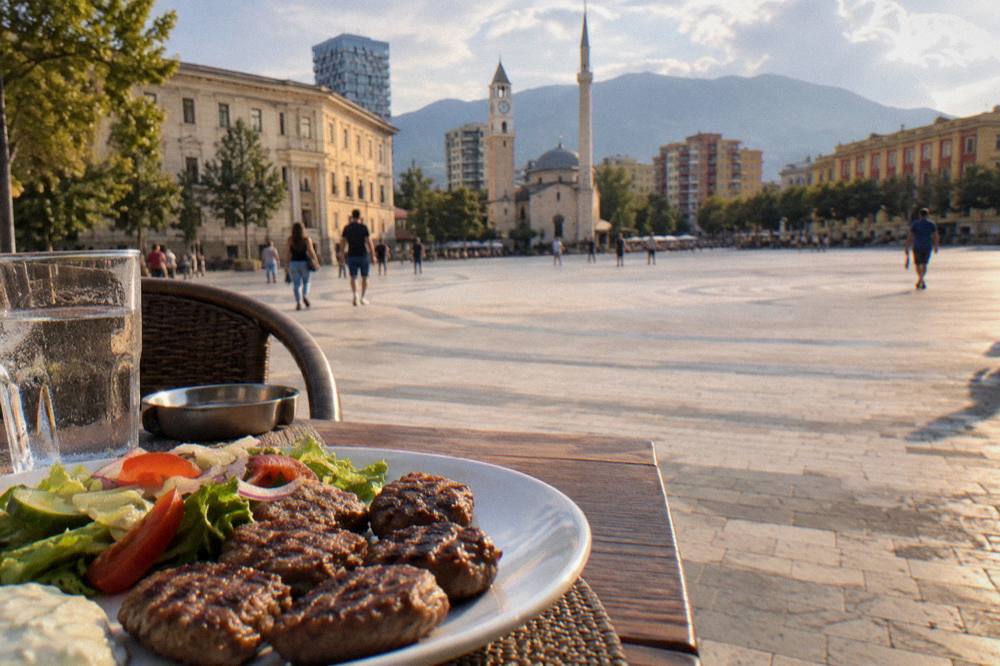
Stay within about one kilometre of Skanderbeg Square for a car-free visit, or in Blloku about 0.8 km south if cafes and nightlife matter more than museum doorsteps; both put every Day One and Day Two sight inside a 25-minute walk. For food, byrek (layered filo pie), qofte (seasoned meatballs), tave kosi (baked lamb under a yogurt and egg topping) and fergese (baked peppers, tomatoes and cheese) are the dishes to look for, and raki is the fruit brandy that ends an Albanian table.
Accommodation here is best treated as a matter of area rather than price. The centre east of the square, the New Bazaar quarter about 0.6 km east, and Blloku about 0.8 km south are the three practical bases. Komuna e Parisit, about 1.8 km south-west, is quieter and still on city bus lines. The wider neighbourhood picture is in the sibling guide to where to stay, and the rainy day itinerary doubles as a museum-focused fallback.
Four named restaurants have confirmed their own websites: Era Blloku in Blloku, serving Albanian and Mediterranean dishes; Artigiano, an Italian and Mediterranean restaurant with Blloku and centre locations; Padam, a boutique hotel and restaurant on Rruga Papa Gjon Pali II; and the Sophie Caffe chain for coffee and light bites. Supermarkets and malls are reported to open seven days a week, with hours that vary by store, so a Sunday arrival is workable for supplies.
Money is simple but specific: the currency is the Albanian lek, the euro is not legal tender, and the official Bank of Albania rate on 23 October 2026 was roughly 90 lek to the euro, so think in lek. Cards are widely taken in hotels, larger restaurants and supermarkets in the centre, but buses, markets and small cafes run on cash.
How Do You Get Around During Three Days In Tirana?
You do not need a car for the first two days: a single city-bus ride costs about 40 lek paid in cash on board, buses run roughly 06:00 to 23:00, and everything central is walkable. For the airport, the official bus runs 24/7 every full hour for 400 lek and takes 30 to 40 minutes, stopping behind the Palace of Opera and Ballet near the square. Uber and Bolt do not operate in Tirana; the official airport taxi is about 2,200 lek.
There is no airport train and no running Tirana-Durres passenger train while the line is rebuilt; electrification is expected to finish by the end of 2027, so buses and taxis are the real options. For Day Three, the South and North Bus Terminal sits about 4.0 km north-west of the square, with departures for Durres from 06:00 at short intervals and Berat from about 05:40 every 30 to 45 minutes per the terminal's published timetables. Intercity fares are not printed officially; pay the driver in cash.
| Journey | Option | Fare | Notes |
|---|---|---|---|
| Airport to centre | Official bus (LU-NA) | 400 lek / 4.50 euro | 24/7, hourly, 30-40 min, ticket valid all day |
| Airport to centre | Official taxi (AHA) | about 2,200 lek | 20-25 min, book at tiataxi.al |
| Airport to Durres | Adis coach | 600 lek | Departures 08:30 to 23:00 |
| Centre to bus terminal | Airport bus line | 300 lek | Hourly, 20-30 min |
| City rides | Urban bus | about 40 lek | Cash on board, roughly 06:00-23:00 |
| Tirana to Kruja | Minibus | roughly 200 lek | About 1 hour, pay the driver |
If you drive in, paid street parking zones are set by the municipality: zone A at 100 lek per hour, B at 40 and C at 20, paid by SMS to 50500 or the Tirana Ime app. Renting a car opens the Kruja-Berat axis on your own clock; the driving side is the right.
When Is The Best Time Of Year For Three Days In Tirana?
May, June and September fit three days in Tirana best: the ERA5 reanalysis for 1991 to 2020 puts May mean highs at 22.7 C, June at 26.9 C and September at 25.7 C, with rainfall of 89, 51 and 99 mm respectively, comfortably below November's 138.6 mm. Any month works on this itinerary, because two of its anchors, the bunker museums, are indoors.
| Month | Mean high (C) | Mean low (C) | Rain (mm) | Fits a 3-day plan? |
|---|---|---|---|---|
| March | 15.0 | 5.1 | 116.6 | Yes, pack a coat |
| May | 22.7 | 12.5 | 89.0 | Very well |
| June | 26.9 | 16.6 | 51.2 | Very well |
| July | 29.8 | 19.1 | 33.5 | Hot afternoons; museums help |
| August | 30.4 | 19.5 | 31.0 | Hot; Dajti offers cooler air |
| September | 25.7 | 16.0 | 98.9 | Very well |
| November | 16.5 | 8.0 | 138.6 | Wet; indoor-heavy plan |
Figures are ERA5 reanalysis climate normals for 1991 to 2020, a modelled grid over the Tirana basin, so treat them as a guide within a degree or two rather than a station record. July and August are the dry months, with rainfall of 33.5 and 31 mm, so a summer visit trades heat for reliable afternoons on Mount Dajti. Winter visits still work: the Tirana in winter companion pages and the Christmas market, which usually runs through December on Skanderbeg Square, give the cold months their own shape. The Tirana International Film Festival ran 21 to 27 September in 2026, and Festivali i Kenges holds its 65th edition from 17 to 20 December 2026, if you want a festival date to aim at.
Common Questions About Three Days In Tirana
Is three days in Tirana enough?
Three days is a comfortable fit: two days cover the centre, the bunker museums and Mount Dajti on foot and one cable car ride, and the third day reaches Kruja in about 45 minutes or Berat in about two hours by road. Add a fourth day only for a second day trip, such as Durres or Lake Bovilla.
Can you do Kruja and Berat in one day from Tirana?
It is possible on paper but rushed: Kruja is about 45 minutes and Berat about 122 minutes of driving from Skanderbeg Square, in opposite directions, so a combined day is mostly road. Pick one. Kruja suits a shorter day, Berat a full one.
Do you need a car for three days in Tirana?
No. The first two days are walkable, the city bus costs about 40 lek in cash per ride, and minibuses run to Kruja and buses to Berat from the South and North Bus Terminal, about 4.0 km north-west of the square. A car or a guided tour simply makes the third day easier.
What is closed in Tirana right now?
The National History Museum on Skanderbeg Square is closed for restoration, an announced closure running to about March 2028. The National Gallery of Arts is under renovation, so check before going. The Dajti Ekspres is usually closed on Tuesdays for maintenance, per local guides, and confirm before a Tuesday visit.
Is Tirana safe for a three-day visit?
Albania runs its own visa regime outside the EU and Schengen, emergency numbers are Police 112, Ambulance 127 and Fire 128, and the FCDO currently notes demonstrations in central Tirana since 13 October 2026, advising visitors to avoid gatherings and check local media. Otherwise the same city precautions apply: watch your belongings in crowds.
Should Day Three be Berat or Durres?
Berat is a UNESCO World Heritage old town about two hours away and the stronger sightseeing day; Durres is about 39 minutes by road and pairs a Roman amphitheatre, a few hundred lek to enter, with the nearest beach to the capital. Choose Berat for history and photos, Durres for an easy half day by the sea.
A final practical note for the whole stay: carry lek in cash for museum doors, buses and the cable car station, since neither Bunk'Art nor the Dajti Ekspres publishes prices online, and check the current price at the venue before going. With that, the three days hold together on foot, one cable car and one road out of the basin, and the communist history trail or the things to do in Tirana round-up can absorb any spare hours the city hands you.