Is Albania An Islamic Country?
Albania has no state religion: the 2023 census, reported by ATA, counted about 45.9% Muslim, 8.4% Catholic and 7.2% Orthodox. What that means for a visit to Tirana.
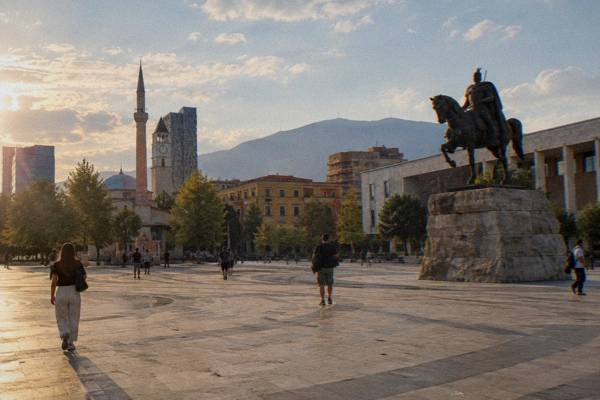
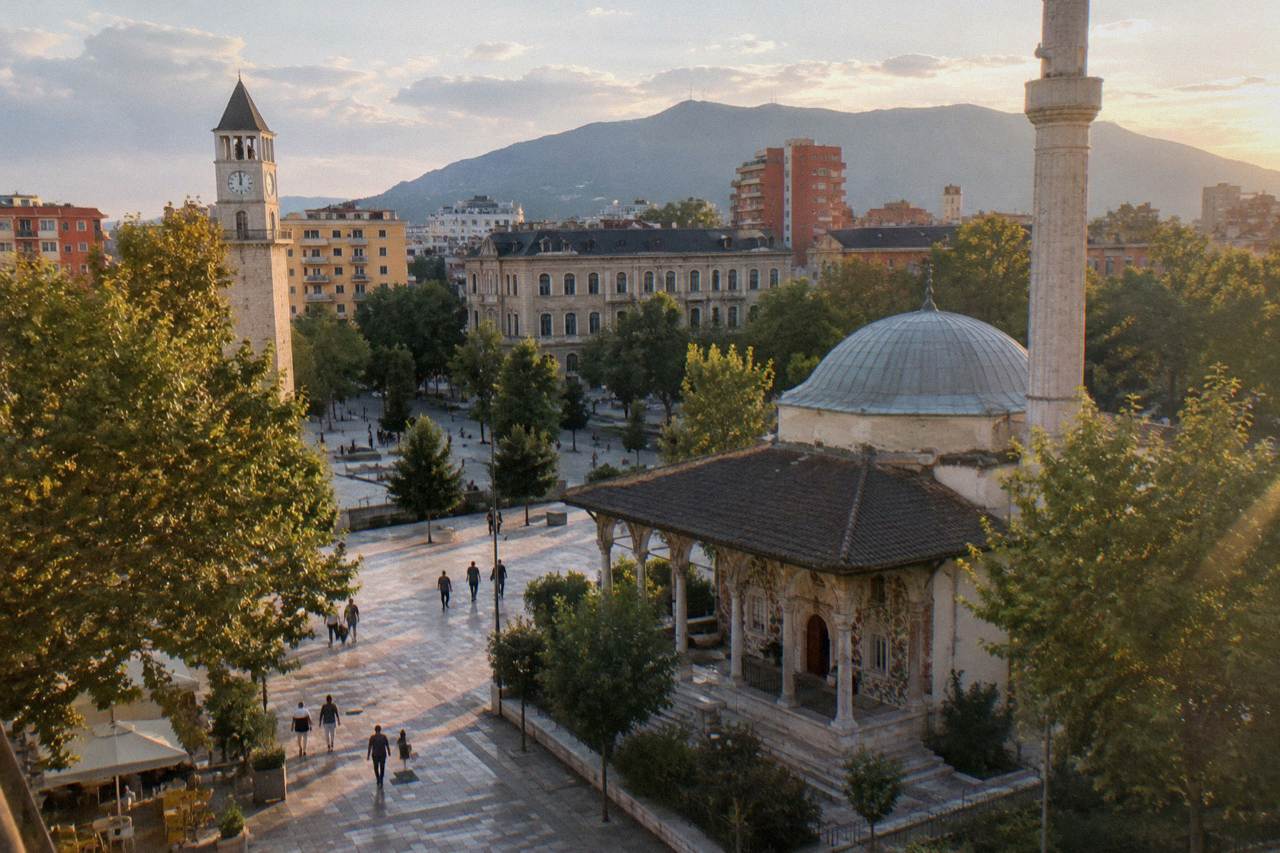
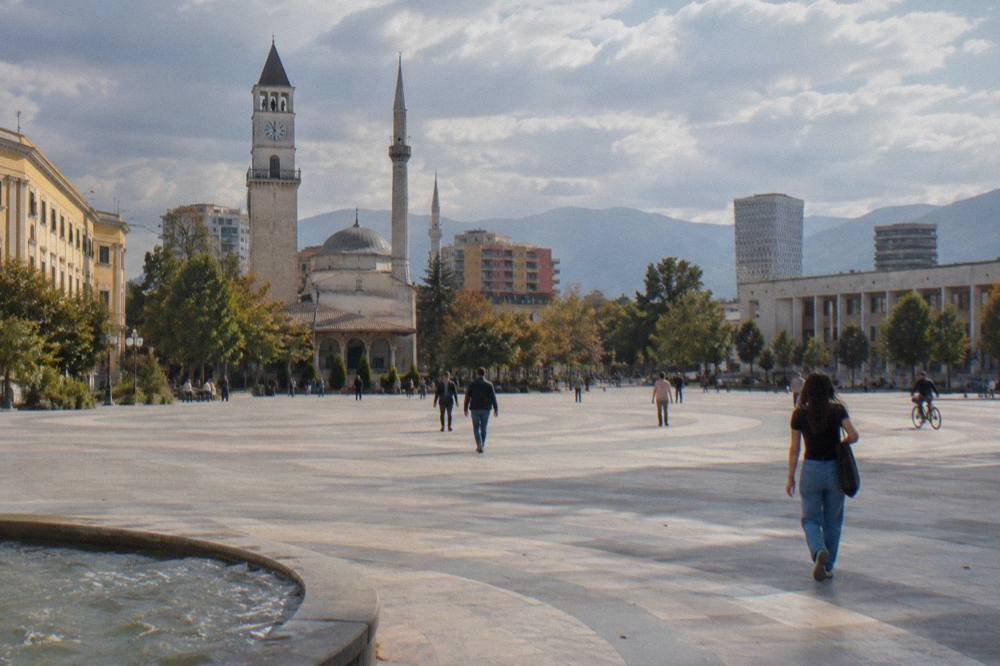
Tirana, the capital of Albania, is an inland city in a basin at the foot of Mount Dajti, and its religious geography surprises many first-time visitors: the Et'hem Bey Mosque and the Clock Tower share Skanderbeg Square, the Resurrection Cathedral stands about 0.2 km south of it, and the new Namazgah Mosque sits about 0.6 km south-east. Albania is a secular republic with no state religion, and its population is a mix of Muslim, Catholic, Orthodox, other and undeclared communities, per the 2023 census as reported by ATA.
No. Albania is a secular country with no state religion, and Islam is the largest but not the official faith. The 2023 census, as reported by ATA, counted about 45.9% of the population as Muslim, about 8.4% as Catholic and about 7.2% as Orthodox, with large shares of residents not declaring a denomination or any religion at all. Albania is not an Islamic republic and its laws are not based on religious law.
That census picture matters more than any label. Alongside the Muslim, Catholic and Orthodox shares, the same count recorded large blocks outside the three historic communities: believers without a denomination, people who preferred not to answer, and non-religious or atheist residents together amount to well over a quarter of the population, and even within the historic communities, practice varies widely from family to family.
The constitutional position is plain: Albania has no state religion. Public institutions are secular, schools do not teach religion as a confessional subject, and the country's holidays include Muslim, Catholic and Orthodox feast days alongside national days such as Independence Day on 28 November and Summer Day on 14 March. For context on Tirana itself, the Tirana Albania Travel Guide covers the city's mosques, churches and secular landmarks neighbourhood by neighbourhood.
A useful comparison point within the Balkans: Albania's neighbours have their own dominant faiths, but Albania is the one where no single community passes half the population. That is a direct result of history, including the communist period from 1944 to 1991, when all religious practice was suppressed. The Et'hem Bey Mosque, spared in 1967, carries that history visibly: on 18 January 1991 about 10,000 people entered it despite the authorities, an event local historians treat as a marker of the regime's end.
What Did The 2023 Census Count In Albania?
The 2023 census, as reported by ATA, counted about 1,101,718 Muslims (45.9%), 201,530 Catholics (8.4%), 173,645 Orthodox (7.2%), 332,155 believers without a denomination, 244,331 people who preferred not to answer, and 85,311 non-religious or atheist residents, out of a national total of 2,402,113 counted in the census. No category reaches a majority.
| Census category | People counted | Share of population |
|---|---|---|
| Muslim | 1,101,718 | about 45.9% |
| Believers without a denomination | 332,155 | about 13.8% |
| Preferred not to answer | 244,331 | about 10.2% |
| Catholic | 201,530 | about 8.4% |
| Orthodox | 173,645 | about 7.2% |
| Non-religious or atheist | 85,311 | about 3.55% |
Two caveats belong with those figures. First, they are self-declared affiliations, not measures of practice: a person counted as Muslim may pray daily or may never enter a mosque. Second, the shares are national, and Tirana, as the capital and by far the largest county, is generally more mixed than the countrywide average, holding about 32.8% of Albania's population of 2,335,930 as of 1 January 2026 per INSTAT.
The census total itself is smaller than the current population estimate because of emigration between the count and 2026, and Albania's population fell 1.16% in the year to January 2026 while Tirana county grew 0.7%, again per INSTAT. Religion in Albania is best understood as one identity among several, and in the capital it sits beside strong secular habits: cafe culture, Blloku's nightlife and a busy events calendar from the Tirana International Film Festival, whose 24th edition ran 21 to 27 September 2026, to Festivali i Kenges, set for 17 to 20 December 2026.
What Can You See Of Religion In Tirana?
Tirana's religious landmarks sit within a short walk of Skanderbeg Square: the Et'hem Bey Mosque about 0.2 km south-east, the Resurrection Cathedral about 0.2 km south, the Namazgah Mosque about 0.6 km south-east, St Paul's Cathedral about 0.5 km south-east, and the Bunk'Art 2 museum about 0.2 km south-east, a distance table a visitor can cover in an afternoon on foot.
| Landmark | Direction from Skanderbeg Square | Faith or theme |
|---|---|---|
| Et'hem Bey Mosque | about 0.2 km south-east | Ottoman-era mosque |
| Resurrection Cathedral | about 0.2 km south | Orthodox |
| Namazgah Mosque | about 0.6 km south-east | Mosque, opened 10 October 2024 |
| St Paul's Cathedral | about 0.5 km south-east | Catholic |
| House of Leaves | about 0.2 km south-west | Secular history museum |
The Et'hem Bey Mosque is the oldest of these. It was founded at the end of the 18th century by Mulla Bey and finished by his son Haxhi Et'hem Bey, per visit-tirana.com, and it survived the communist era when most religious institutions did not. Visits are free outside prayer times, and the courtesy guidance is modest dress: shoulders and knees covered, a headscarf for women, shoes off at the entrance. No published visiting hours exist, so time a call around the prayer schedule.
The Namazgah Mosque, also called the Great Mosque of Tirana, opened on 10 October 2024 and is an active place of worship; its capacity and hours are not published, so plan a visit between prayers and dress modestly, the same courtesy guidance applying. The Resurrection Cathedral and St Paul's Cathedral complete the picture, and both welcome visitors outside services; check opening times locally before going, as no published hours exist for either. The same square also holds secular history: the National History Museum, inaugurated on 28 October 1981, has been closed for restoration since 15 March 2024, with the closure announced to run to March 2028, so admire the mosaic facade from outside.
For travellers building a first-day itinerary around these sights, the answers on How Many Days In Tirana Is Enough and Is Tirana Walkable cover the pacing; everything in the table above is walkable from the square.
Do Religious Rules Affect Visitors In Tirana?
Almost never. Albania's secular frame means alcohol is sold in shops, bars and restaurants, there is no dress code on the street, and cafes and nightlife run as they would in any European capital, with Blloku about 0.8 km south of the square as the main bar quarter. The only religious courtesies apply inside places of worship: modest dress, quiet behaviour and, in mosques, shoes off and a headscarf for women.
A few specifics help set expectations. Albanian drinking culture is ordinary: raki is a traditional fruit brandy served at meals and celebrations, and the sale of alcohol to minors under 18 is prohibited under Albanian law. Pork appears freely on menus, including in restaurants run by Muslim families, and no visitor is expected to observe fasting customs, though avoiding a loud lunch outside a mosque during Ramadan is simple good manners. The answers on Do You Tip Waiters In Albania and Can I Drink Albania Tap Water cover the dining practicalities.
Dress is a frequent question in itself. Shorts and t-shirts are normal summer wear on Tirana's streets, where the ERA5 reanalysis for 1991-2020 puts the July mean high at 29.8 C and the August mean high at 30.4 C. Inside churches and mosques the guidance above applies, so carry a scarf or a layer if a place of worship is on the day's plan. The answer on What Is Tirana Famous For adds more on the city's public spaces and landmarks.
Holidays are the one place where religion touches the calendar. Muslim feast days of Bajram, Catholic and Orthodox Easter and Christmas all appear alongside the fixed national days, and moving feasts are dated year by year, so check the calendar for your travel dates. Otherwise a trip to Tirana runs on the city's own rhythm: markets at Pazari i Ri about 0.6 km east, the cable car to Mount Dajti from a lower station about 4.4 km north-east, and museums that tell the country's secular and religious stories side by side.
Why Is Albania So Religiously Mixed?
Because its borders were drawn around three historic faith communities and its communist period suppressed all of them equally. The regime ruled from 1944 to 1991 and banned organised religion, closing or demolishing places of worship and persecuting clergy of every faith. When practice returned after 1991, no single community was positioned to dominate, and the constitution adopted afterwards declares no state religion.
The result is a society where mixed families, interfaith marriage and indifference to organised religion are all common, and where religious identity is often cultural rather than devotional. The 2023 census's large undeclared shares reflect that: declaring a faith is optional, and hundreds of thousands declined. For a sense of how that history is presented today, the Bunk'Art museums and the House of Leaves, open 09:00 to 19:00 per its own site, document the surveillance state that enforced the ban, while the restored Et'hem Bey Mosque and the new Namazgah Mosque show the post-1991 revival. Tickets for the Bunk'Art museums are bought at the door, as no price is published online.
Travellers sometimes ask whether the mix causes tension. Albania treats its plurality as a national trait: the state funds no faith, schools are secular, and the census is taken without religious affiliation mattering for any civic right. Visitors are guests of that arrangement, and the courtesies that apply are the universal ones of dressing modestly in worship spaces and behaving respectfully at prayer times.
Common Questions About Religion In Albania
Is Albania An Islamic Country?
No. Albania is a secular republic with no state religion. The 2023 census, as reported by ATA, counted about 45.9% of the population as Muslim, with Catholic and Orthodox communities and large undeclared shares alongside it.
Is It Safe To Discuss Religion In Tirana?
Yes, in ordinary conversation people are generally open about the country's mix. The same general advice as anywhere applies: watch your belongings in crowds, and the FCDO's current advice for Albania, updated 15 October 2026, notes demonstrations in central Tirana since 13 October 2026, which are political rather than religious. See the fuller answer on safety walking around Tirana at night.
Can Visitors Enter The Mosques In Tirana?
Yes, outside prayer times, and entry is free. Dress modestly with shoulders and knees covered, a headscarf for women, and shoes off at the entrance. No published visiting hours exist for the Et'hem Bey Mosque or the Namazgah Mosque, so time a visit around prayers.
Do Bars And Restaurants Serve Alcohol In Albania?
Yes, widely. Albania is secular and alcohol is sold normally in shops, bars and restaurants; raki is a traditional drink at meals. The sale of alcohol to minors under 18 is prohibited.
Which Religious Sites Should A First-Time Visitor See In Tirana?
The Et'hem Bey Mosque and the Clock Tower on Skanderbeg Square, the Resurrection Cathedral about 0.2 km south, and the Namazgah Mosque about 0.6 km south-east cover all three historic communities in a single walk, with the closed National History Museum's facade on the square as secular context.
Does Albania Recognise Religious Holidays?
Yes, both Christian and Muslim feast days appear in the calendar alongside fixed national days such as Independence Day on 28 November. Moving feasts are dated year by year, so check the current calendar before travelling.
Albania's answer to its own religious question is a shrug followed by a coffee: the mosques, cathedrals and churches of Tirana stand minutes apart, the state funds none of them, and the census lets every resident decide what, if anything, to declare. For a visitor, that means a city where faith is visible on the skyline and entirely optional in the itinerary.