What Is The Best Month To Visit Tirana?
The best month to visit Tirana, month by month, using ERA5 climate averages for 1991-2020, event dates and honest notes on heat, rain and crowds in Albania's capital.
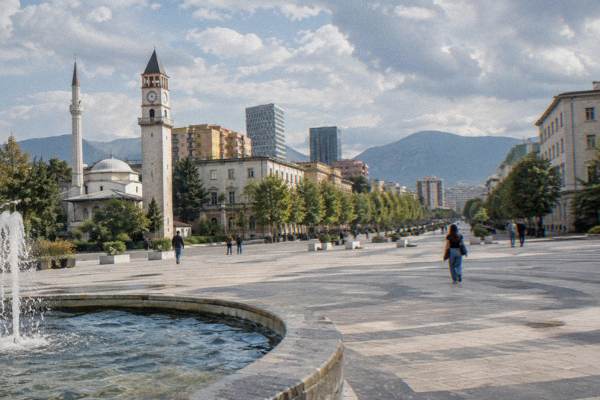
Tirana, the capital of Albania, is an inland city in a basin at the foot of Mount Dajti, and its climate reflects that position: hot, dry summers and mild, wet winters, with the Adriatic coast at Durres about 37 km and 39 minutes away by road for anyone combining the city with a beach day. Picking the right month matters more here than on the coast, because the two things that shape a visit, heat and rain, move in opposite directions through the year. The climate averages below come from the ERA5 reanalysis for 1991-2020, a modelled grid cell near the city rather than a weather station, and they carry roughly 1 to 2 C of smoothing.
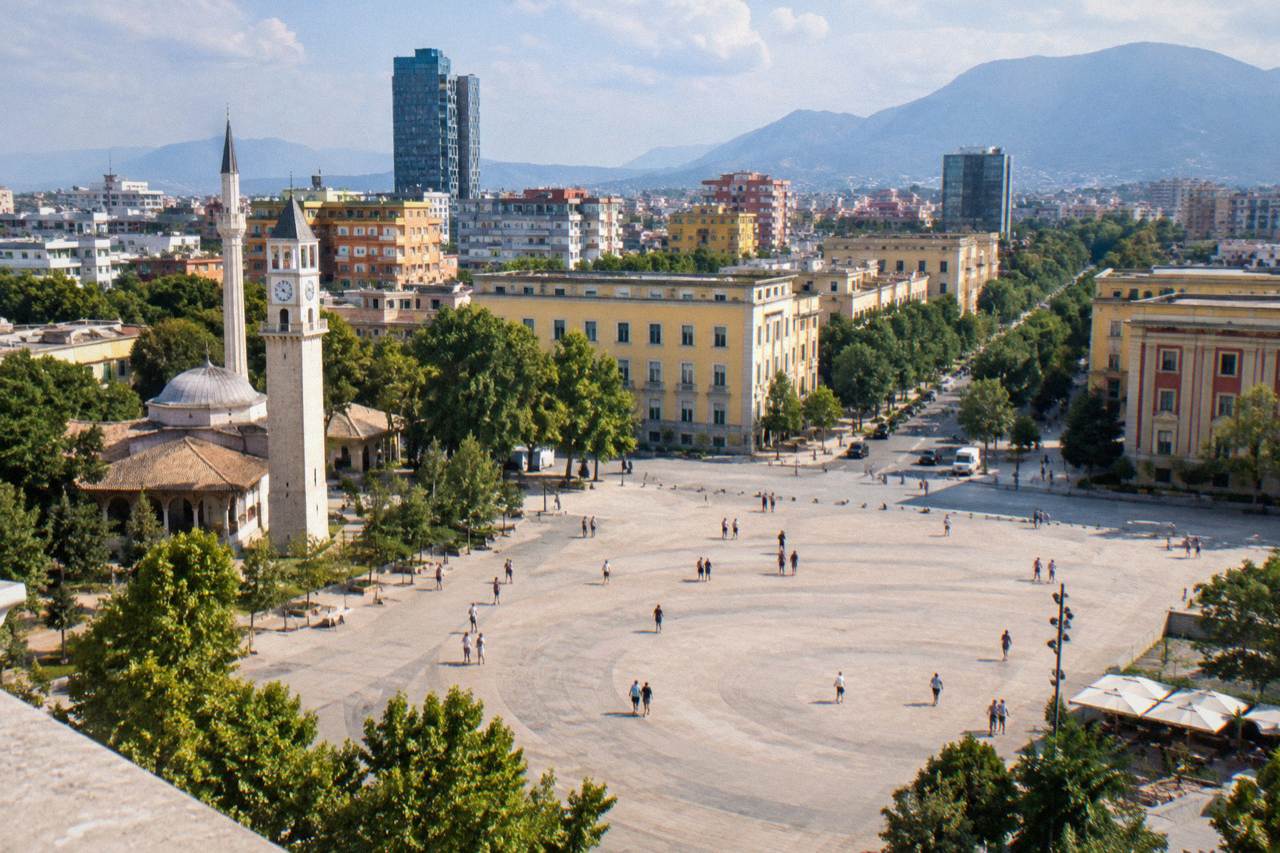
May is the best single month to visit Tirana, with September a close second, according to the ERA5 reanalysis for 1991-2020. May averages a mean high of 22.7 C, a mean low of 12.5 C and 89 mm of rain; September averages 25.7 C by day, 16.0 C by night and 98.9 mm. Both sit between the wet cold months and the hot dry peak of July and August, when daytime averages reach 29.8 C and 30.4 C.
That gap between the shoulders and the peak is the whole story of timing a Tirana trip. June, July and August are the dry months, with rainfall falling from 51.2 mm in June to 31.0 mm in August, but daytime heat climbs with it, and the basin the city sits in holds that heat through the evening. May and September trade a little more rain for days that stay comfortable for walking, which matters in a capital whose main attractions, Skanderbeg Square, the Pyramid of Tirana, Blloku and the streets of the centre, are experienced on foot.
There is a second layer to the answer: what is open. Bunk'Art 1, behind the Dajti cable car lower station in the north-east of the city, runs its summer timetable, daily 09:30 to 17:30, from 1 June, and Bunk'Art 2 near the centre opens daily from 09:30. Neither month of the shoulder season changes that. What does change is the Dajti Ekspres cable car, which is usually closed on Tuesdays for maintenance, so a mountain day needs a Tuesday-free plan. For a fuller breakdown of the climate data, see the companion page on Tirana weather averages.
How The Tirana Climate Averages Break Down Month By Month
The month-by-month averages for Tirana, from the ERA5 reanalysis for 1991-2020, run from a January mean high of 10.8 C and mean low of 2.3 C to an August mean high of 30.4 C, with monthly rainfall peaking in November at 138.6 mm and reaching its lowest total in August at 31.0 mm. Every figure below is a 30-year average, not a forecast, and individual years swing around them.
Two patterns stand out when the table is read as a whole. First, the rain does not fall steadily through the cold half of the year: October jumps to 119.1 mm from September's 98.9 mm, and November and December carry the highest totals of all. Second, the dry window is narrow. July and August together receive less rain than March alone, which is why those two months dominate summer travel to the region even with the heat.
| Month | Mean High C | Mean Low C | Rain mm |
|---|---|---|---|
| Jan | 10.8 | 2.3 | 105.8 |
| Feb | 12.0 | 2.9 | 106.6 |
| Mar | 15.0 | 5.1 | 116.6 |
| Apr | 18.4 | 8.3 | 104.5 |
| May | 22.7 | 12.5 | 89.0 |
| Jun | 26.9 | 16.6 | 51.2 |
| Jul | 29.8 | 19.1 | 33.5 |
| Aug | 30.4 | 19.5 | 31.0 |
| Sep | 25.7 | 16.0 | 98.9 |
| Oct | 21.4 | 12.2 | 119.1 |
| Nov | 16.5 | 8.0 | 138.6 |
| Dec | 11.8 | 4.0 | 137.5 |
Read against those numbers, the shoulder months do the work. April at a mean high of 18.4 C is pleasant but still carries spring rain, above 100 mm. May keeps the mild nights, 12.5 C on average, and sheds a third of that rain. On the autumn side, October looks warm on paper at 21.4 C by day but is the start of the wet stretch; September is the better pick of the two by a clear margin in the rainfall column.
Why May And September Work Best In Tirana
May and September work best in Tirana because they combine daytime temperatures in the low-to-mid 20s C with rainfall well below the November peak of 138.6 mm, and because the city's core experiences, walking the centre, riding the Dajti Ekspres cable car up Mount Dajti and sitting out in Blloku in the evening, all reward weather that is warm without being at the July and August averages of roughly 30 C.
May also lands before the summer timetable switch at the museums and before the peak-season demand for the cable car, which the operator notes is busy on national holidays and best visited between 09:00 and 11:00. The Grand Park of Tirana and the Artificial Lake, about 2.1 km south-east of Skanderbeg Square, are at their best in this kind of weather, and the walk out along the boulevard past Mother Teresa Square is a standard warm-day route through the city.
September brings its own advantages. The sea at Durres is still warm enough for a beach day trip in the first half of the month, and the Tirana International Film Festival, whose 24th edition ran 21 to 27 September 2026, and the Tirana Jazz Festival, which held its 15th edition 23 to 25 September 2026, give the early-autumn calendar a cultural anchor. Both are annual events, so treat those dates as the latest editions rather than a fixed pattern, and check the festival sites for the coming year.
A note on current conditions belongs here too. Demonstrations have been held in central Tirana since 13 October 2026, some violent, and the UK FCDO updated its travel advice on 15 October 2026; the Tirana Marathon was moved from late October to 14 and 15 November 2026 as a result. That does not change the climate picture, but anyone booking for the autumn and winter of 2026 should follow the FCDO page and local media before travelling, and avoid demonstrations. The safety picture after dark is covered separately in Is It Safe To Walk Around Tirana At Night.
Is Summer A Bad Time To Visit Tirana?
Summer is not a bad time to visit Tirana, but July and August are the hardest months for anything on foot, with mean highs of 29.8 C and 30.4 C and nights near 19 C. The compensation is the lowest-rainfall weather of the year, 33.5 mm of rain in July and 31.0 mm in August, and a city that runs late into the evening.
The practical summer pattern is to invert the day. Museums and indoor sights, Bunk'Art 2 about 0.2 km south-east of Skanderbeg Square, the House of Leaves about 0.2 km south-west, open from the morning; the outdoor core of the city, the square, the Pyramid of Tirana, whose outside steps can be climbed, and the New Bazaar about 0.6 km east, belongs to the early morning and the evening. The House of Leaves is open 09:00 to 19:00 daily per its own site. More of these guides are collected on Tirana Albania Travel Guide.
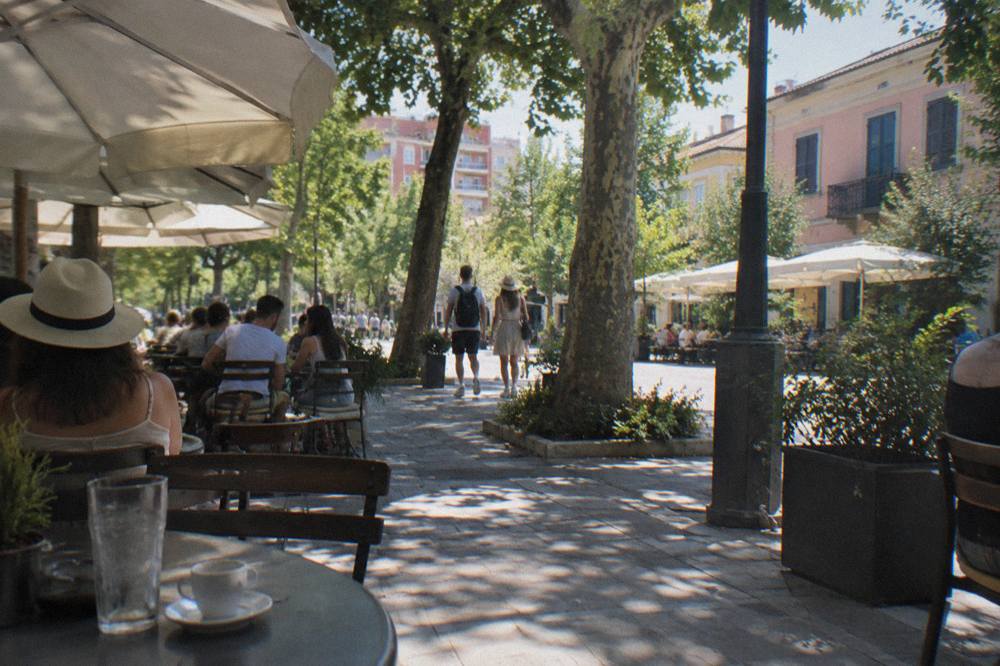
The evening slot is exactly where the related tour on this page fits. The Tirana Evening and Night Walking Tour covers the city's history and architecture after the heat has dropped, and the Evening and Night Walking Tour link shows the operator's live listing. Food tours follow the same logic, since dinner in Tirana runs late; a city walk with meals included is the summer-friendly version of sightseeing.
One summer limitation worth planning around: the Dajti Ekspres is usually closed on Tuesdays for maintenance, and the operator sells tickets only at the lower station, about 4.4 km north-east of the square, publishing no fares online. Anyone set on the cable car should build the trip around that closure and arrive early on the day they choose.
What About Winter: Is Tirana Worth It From November To February?
Winter in Tirana is mild rather than harsh, with a January mean high of 10.8 C and mean low of 2.3 C, but it is the wet half of the year: November averages 138.6 mm of rain and December 137.5 mm, the two highest monthly totals. Winter suits museum-heavy itineraries, long lunches and the Christmas market, which usually runs through December on and around Skanderbeg Square, and it is the quietest season on the streets.
The averages give no snowfall figure, so no promise about snow can be made either way; the January mean low of 2.3 C simply says frost is possible at night. What winter does promise is indoor depth. The National History Museum on Skanderbeg Square is closed for restoration and the announced closure runs to about March 2028, so its mosaic facade is a from-the-square sight only, but Bunk'Art 1 and Bunk'Art 2, the House of Leaves and the Pyramid's TUMO interior carry the cold months. The National Gallery of Arts is under renovation, so check its status before going.
Winter also carries the fixed national days that reshape the city: Independence Day on 28 November and Liberation Day on 29 November sit back to back, and Festivali i Kenges, the song festival that selects Albania's Eurovision entry, held its 65th edition from 17 to 20 December 2026 at the Palace of Congresses. For anyone weighing a December trip around the market and the festival, the pages on How Many Days In Tirana Is Enough and whether Tirana is worth visiting for tourists cover the planning side.
Which Month Should Different Travellers Pick For Tirana?
Travellers who want walking weather should pick May, and those tied to school holidays should take early June at a mean high of 26.9 C rather than August at 30.4 C; city-break travellers free to choose any month should take September, which pairs a 25.7 C mean high with the film and jazz festivals, and budget-led travellers should look at November through February, when the 138.6 mm November rain average is the price of the quietest streets.
| If You Want | Best Months | Why, From The Averages |
|---|---|---|
| Comfortable walking days | May, September | Mean highs of 22.7 C and 25.7 C, rain below the November peak |
| Beach and city combined | June, early September | Coast at Durres in season; city not yet at its 30.4 C August average |
| Festivals and culture | September, December | Film and jazz festivals in September; Festivali i Kenges 17 to 20 December 2026 |
| Lowest rain chance | July, August | 33.5 mm and 31.0 mm monthly totals, the year's lowest |
| Quiet streets and museums | November to February | Rain averages 105.8 to 138.6 mm, indoor itineraries carry the trip |
A final calibration point for anyone comparing Tirana with a coastal base: the city is inland, in a basin, so its summer heat does not get the sea breeze that Durres does, and its winter rain does not either. The month choice for Tirana is therefore about the city itself, not about a beach that is a day trip away. The full set of things to do in Tirana can be slotted into any of these windows, but the shoulder months give the most hours of the day in which to do them.
Common Questions About The Best Month To Visit Tirana
What Is The Best Month To Visit Tirana?
May is the best single month, with a mean high of 22.7 C, a mean low of 12.5 C and 89 mm of rain in the ERA5 1991-2020 averages. September is the close second, at 25.7 C by day and 98.9 mm of rain, with the film and jazz festivals in the calendar.
Is July Or August Too Hot For Tirana?
Both months average close to 30 C by day, 29.8 C in July and 30.4 C in August, with nights near 19 C. That is manageable with a morning-and-evening routine, but it is the hardest weather for all-day walking, and it is also the busiest period at the Dajti Ekspres cable car.
Does It Rain A Lot In Tirana?
The rain is concentrated in the cold half of the year in the ERA5 averages: November averages 138.6 mm and December 137.5 mm, while August averages just 31.0 mm. A winter trip should plan for wet days.
When Is The Cheapest Time To Visit Tirana?
Hotel rates are not given here, so readers should compare listings directly before booking. Broadly, demand follows the climate: the November-to-February window with the highest rainfall is the quietest on the streets, and prices, where quoted, generally reflect that. Compare listings directly before booking.
Is Tirana Good In December?
December averages a mean high of 11.8 C and 137.5 mm of rain, so it is a mild, wet month built around indoor sights, and the Christmas market usually runs through December on and around Skanderbeg Square. Festivali i Kenges ran 17 to 20 December 2026 at the Palace of Congresses.
Can You Visit Mount Dajti Year-Round?
The Dajti Ekspres cable car runs through the year but is usually closed on Tuesdays for maintenance, and the operator reports it is busy on national holidays, recommending arrival between 09:00 and 11:00. Tickets are sold only at the lower station, and no fare is published online, so confirm at the station.