Kruja From Tirana: Skanderbeg Castle And The Old Bazaar
Kruja sits about 37 km and roughly 45 minutes by road north of Tirana, the inland capital of Albania at the foot of Mount Dajti, and it is the city's most direct connection to Skanderbeg, the national hero who took the castle on 28 November 1443.
Short answer
Kruja is about 37 km and roughly 45 minutes by road from Skanderbeg Square in Tirana. A minibus runs there in about an hour for roughly 200 lek, or you can drive, take a taxi or join a guided day tour. The castle, the Skanderbeg Museum and the old bazaar are the reasons to go, and none of them publishes an entry fee online, so check prices at the door.
Kruja is the castle town that Albania attaches to the name of Skanderbeg, the national hero who took the fortress there on 28 November 1443, according to the standard timeline of his rebellion. It sits about 37 km and roughly 45 minutes by road north of Tirana, the capital, which is an inland city in a basin at the foot of Mount Dajti, nowhere near the sea: the Adriatic coast at Durres is a separate day trip of about 39 minutes to the west. Kruja is small, built along a ridge below the castle, and it concentrates a museum, a bazaar and a holy mountain into a walk of a few hundred metres. This guide covers the drive, the transport options, what the castle holds, the bazaar, the Sari Salltik mountain shrine above the town, and how Kruja compares with the other day trips ringing Tirana.
Why Is Kruja The Easiest Big-History Day Trip From Tirana?
Kruja is the closest day trip from Tirana that combines a castle, a national museum and an old bazaar in one walkable ridge: about 37 km and roughly 45 minutes by road, closer than Berat, Shkoder or Ohrid and with no border to cross. The minibus takes about an hour, so the town works as a half day or a full day without an early start. Only Petrela Castle and Durres are nearer, and neither carries the Skanderbeg story that Kruja tells.
The mathematics of the day trip matter. Tirana is hemmed in by mountains to the east and the coastal plain to the west, and Kruja sits on the first ridge north of that plain. The road out of the city crosses the basin and climbs gently, so the drive is short and simple by the standards of northern Albania. Compare that with Berat at about 122 minutes, Shkoder at about 118 minutes, or Ohrid at about 135 minutes plus a border crossing into North Macedonia, and Kruja's appeal is plain: it delivers castle, museum, bazaar and mountain views for the least travel time of any of the heavyweight destinations.
There is history density here too. According to the commonly reported timeline, Skanderbeg deserted the Ottoman army in early November 1443, took Kruja on 28 November 1443, and then helped form the League of Lezha on 2 March 1444 as the political base for his resistance. He died on 17 January 1468. The castle at Kruja is therefore not a generic fortress: it is the fixed point of the national narrative, and the museum inside it is built around him. For a reader planning a first trip out of Tirana, that combination of proximity and meaning is the argument for Kruja.
The town itself is small enough that orientation takes minutes. The castle and its museums sit at the top of the ridge, the old bazaar street runs down from the castle gate toward the town, and everything else, cafes, shops, the edge of the national park, spreads below. There is no transport needed inside Kruja once the minibus or car arrives.
The featured day tour covers exactly this cluster: Kruja Castle, the old bazaar and the Sari Salltik viewpoint, with pickup from Tirana. If you would rather move at your own pace, the sections below give the independent options, and the three days in Tirana itinerary shows where a Kruja day fits in a longer stay.
How Do You Get From Tirana To Kruja?
There are four realistic ways: the public minibus, a self-drive hire car, a taxi or ride app, or a guided day tour. The minibus leaves from the North-South Bus Terminal in Tirana, takes about an hour and costs roughly 200 lek one way, paid to the driver; the drive by car or taxi is about 37 km and roughly 45 minutes. No train exists on this route: the Tirana-Durres rail rebuild has no passenger service yet.
The minibus, the local furgon, is the budget standard. The South and North Bus Terminal sits about 4.0 km north-west of Skanderbeg Square, and its published timetables list departures from early morning onward at short intervals toward Kruja and other northern towns. Local guides report the Kruja minibus takes about an hour and costs about 200 lek, paid in cash to the driver; the last return from Kruja is reported to be around late afternoon, so confirm the timing when you board, and keep lek notes ready. City buses run roughly 06:00 to 23:00 and reach the terminal from the centre.
Driving yourself is straightforward: the route is about 37 km and roughly 45 minutes without heavy traffic. If you are touring more widely, the driving in Albania guide covers rules, and car hire desks operate at the airport and in the city, per the airport's own transport pages. Ride apps exist in Tirana, since Uber and Bolt do not operate there, but no fare to Kruja is published: agree the price with the driver or in the app before setting off, and expect a private transfer to cost considerably more than the minibus.
| Option | Time each way | Cost | Notes |
|---|---|---|---|
| Minibus (furgon) | About 1 hour | About 200 lek, cash | From the North-South Bus Terminal; confirm the last return time |
| Self-drive | About 45 minutes | Fuel plus hire | About 37 km by road; parking in Kruja is on-street |
| Taxi or ride app | About 45 minutes | Not published | Agree the fare before departure; return pickup must be arranged |
| Guided day tour | Set itinerary | Varies by date | Includes transport from Tirana and usually the Sari Salltik viewpoint |
One trap deserves a line of its own: there is no train. The Tirana-Durres-Airport line is being rebuilt, with electrification expected to finish by the end of 2027, but no passenger trains run anywhere in the country today, Kruja least of all. Anyone who reads about a rail option should treat it as a future project, not a plan.
What Should You See At Kruja Castle?
Kruja Castle holds the Skanderbeg Museum, an ethnographic museum and the ruins of the fortress itself, all on a rocky promontory above the town, and none of them publishes an entry fee or hours online: buy tickets at the door and check the current price at the venue before going. The castle's own official tourism page prints no fee and no opening schedule, so planning means arriving in daylight and carrying cash.
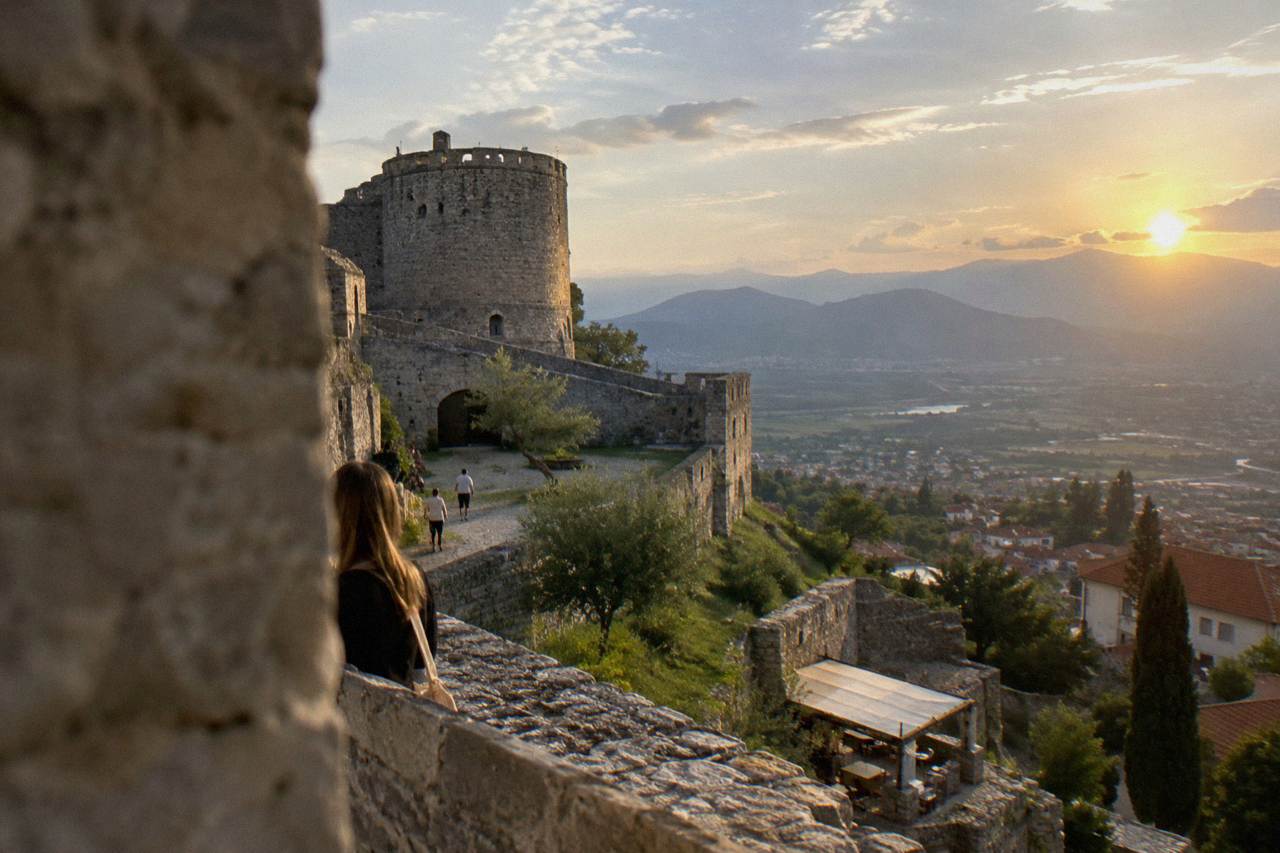
The fortress is the shell and the museums are the content. The national tourism authority's page for Kruja Castle describes the site and its history without listing any admission figures, which is the pattern across Albanian castle sites. Inside the walls, the Skanderbeg Museum is the flagship: a purpose-built museum inside the castle dedicated to the national hero. The Ethnographic Museum occupies a historic house and shows domestic interiors, costume and craft. A third element, the ruins and walls themselves, is free to walk around.
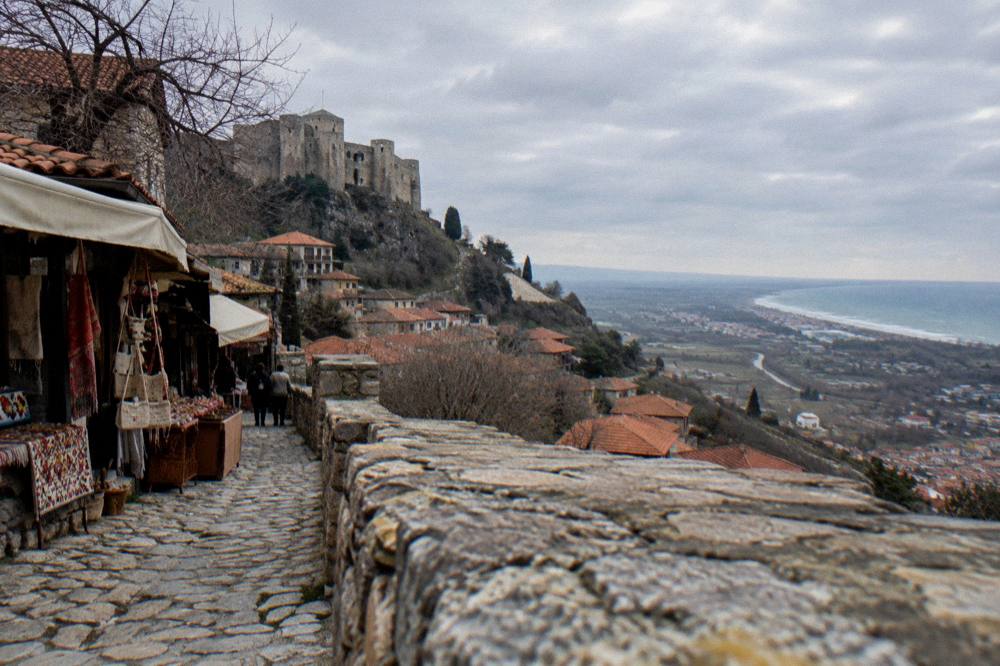
The setting does half the work. The promontory looks west over the coastal plain toward Durres and the Adriatic, and north along the ridge toward the Sari Salltik mountain. On a clear day the view alone justifies the climb up from the bazaar. Inside the walls the scale is compact: you can walk the whole castle area in under an hour, and the two museums together fill another hour or two depending on appetite.
| Sight inside the castle | What it covers | Entry |
|---|---|---|
| Skanderbeg Museum | Skanderbeg's rebellion, arms, documents and the national story | Not published online; pay at the door |
| Ethnographic Museum | Historic house interiors, costume and traditional craft | Not published online; pay at the door |
| Fortress walls and grounds | The promontory, towers and views over the plain | Open ground; watch footing on stone |
| Old Bazaar street | Traditional shopfronts below the castle gate | Free to walk |
For background reading before the visit, the communist history trail in Tirana covers a different, later layer of Albanian history, and Tirana history tells the city-side story, from the town's founding in 1614 by Sulejman Pasha Bargjini to its becoming capital on 11 February 1920. Kruja supplies the older, medieval chapter.
What Is The Skanderbeg Museum?
The Skanderbeg Museum inside Kruja Castle is a national museum dedicated to Gjergj Kastrioti Skanderbeg, who took Kruja from the Ottomans on 28 November 1443, led the League of Lezha from 2 March 1444 and died on 17 January 1468. Its galleries display arms, reproductions, documents and displays on his resistance. No entry fee is published; buy tickets on site.
The museum exists because Kruja is the place where the story begins in arms. According to the reported timeline, Skanderbeg deserted the Ottoman army in late 1443, captured Kruja by stratagem on 28 November 1443, and within months joined other Albanian lords at Lezha on 2 March 1444 to form the league that anchored his long resistance. He fought from this castle for a quarter century and died on 17 January 1468 at Lezhe. The museum presents that arc in a purpose-built hall inside the castle walls, and it is the single densest dose of Albanian national history anywhere within an hour of the capital.
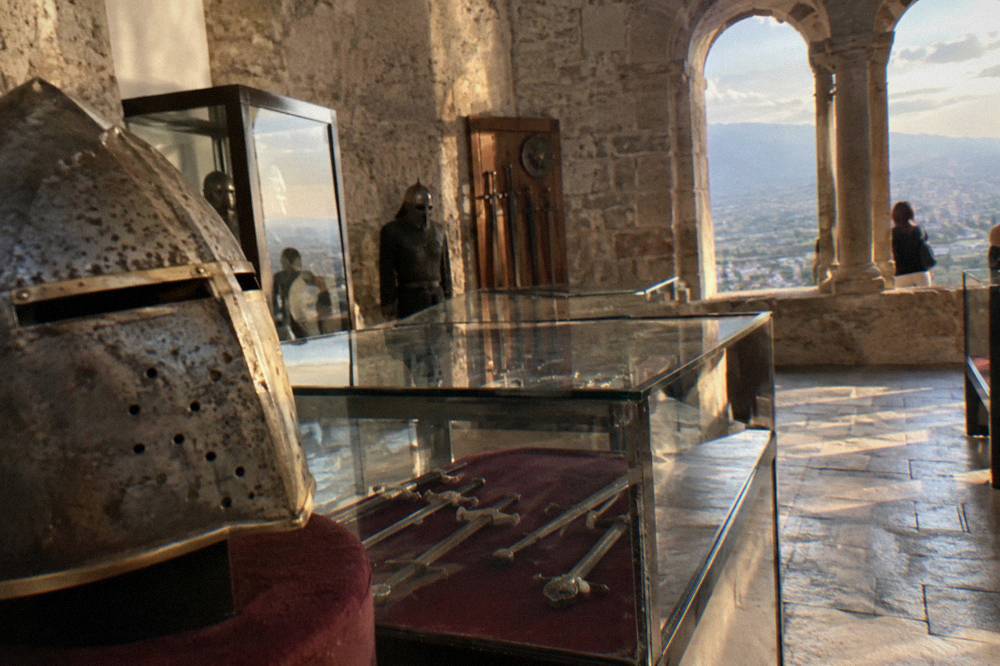
What you actually see is a sequence of halls with helmets, swords, maps and mural-scale painting, ordered around the campaigns. Descriptions in the galleries are largely in Albanian and English. Visitors with no prior knowledge of the period leave with the outline; visitors who already know the outline come for the setting, because reading about the 1443 capture of the castle while standing inside the same castle is the point of making the trip.
Two honest caveats. First, the museum publishes no hours or ticket price on any official page, so plan for a daytime visit and carry lek cash for the door. Second, the parts of the Skanderbeg story that a general audience might expect, his exact birth year, the siege dates of the castle later in the century, are disputed or thinly sourced, and the museum's own displays are the place to read them, rather than a guidebook legend. Pair the visit with the National History Museum page for the Tirana counterpart, currently closed for restoration to about March 2028, which makes Kruja's museum the accessible national-history stop in the region for now.
What Is The Old Bazaar Of Kruja Like?
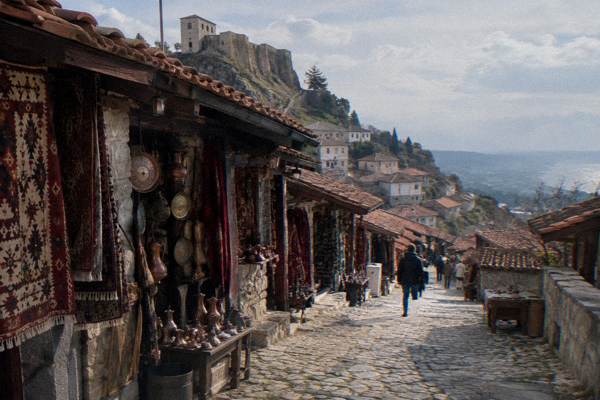
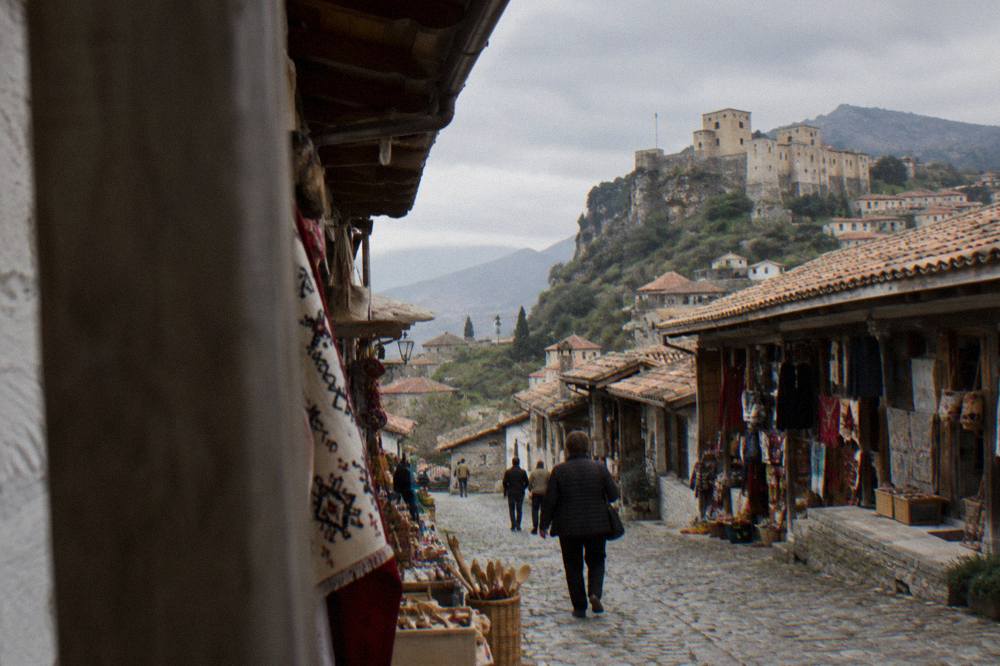
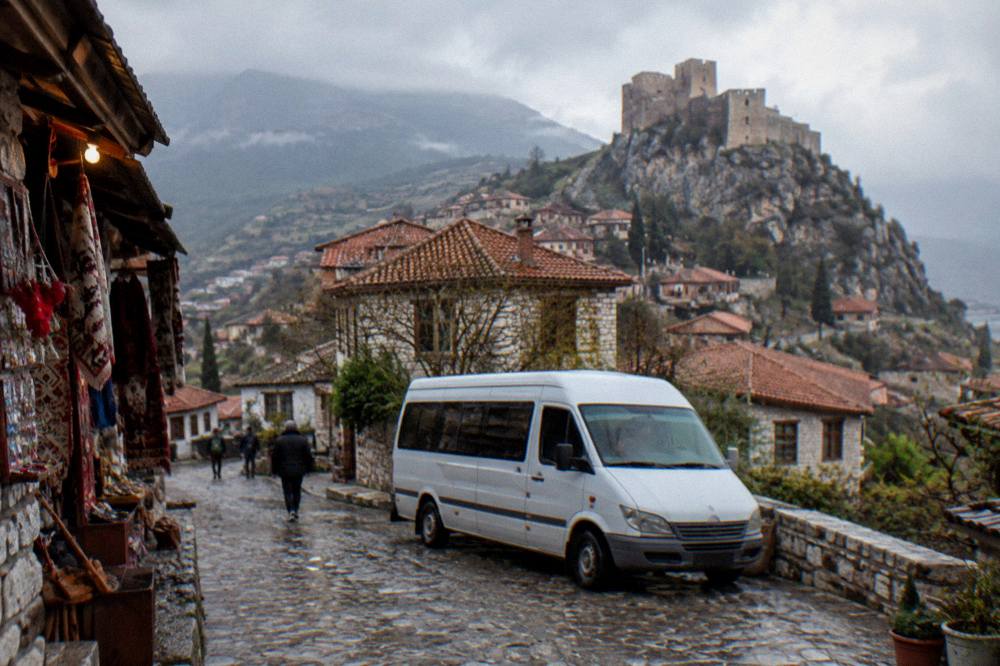
The old bazaar of Kruja is a short cobbled street of traditional shopfronts running from the castle gate down through the town, selling carpets, copper, antiques, embroidered cloth and souvenirs, and it is one of the best-preserved bazaar streets in Albania. It is free to walk, open through the day, and it doubles as the approach road to the castle, so every visitor passes through it.
The street is called the Old Bazaar, and its shopfronts keep a traditional form: wooden eaves, stone lower walls, goods hung at the door. The trade is carpets and kilims, worked copper, old bronzes and coins, musical instruments, embroidered textiles and the standard souvenir range. Haggling is normal in the antique and carpet shops, less so for small items. Unlike the covered markets of the capital, such as Pazari I Ri, Kruja's bazaar is a single lane with a clear direction: up to the castle, down to the town, and no chance of getting lost.
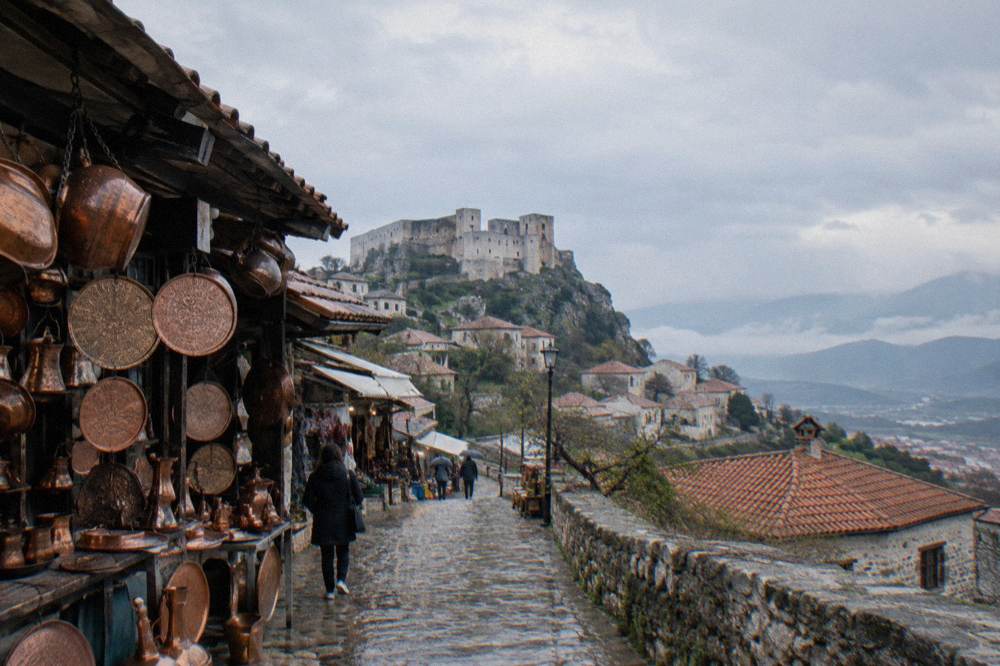
Timing shapes the experience. The shops open through the morning, and the street is quietest in the earliest and latest hours of the day. Tour groups from Tirana tend to arrive around midday, since the drive is under an hour, so an early minibus or an early start by car gives you the lane before the coaches. If your question is whether Tirana itself has anything comparable, the answer is on the Does Tirana Have An Old Town: the capital's Ottoman core is small, which is exactly why Kruja's bazaar carries the weight it does.
A few practical notes carry the whole street: carry cash in lek, since card acceptance in the small shops is not guaranteed; check anything sold as an antique before paying, since export rules can apply to old items; and note that the cobbles are worn and slick in rain. Otherwise the bazaar asks nothing of you but a slow walk and an eye for the copper work.
What Is Sari Salltik And Can You Visit It?
Sari Salltik is a Bektashi tekke, a holy shrine, in a cave partway up Mount Kruja behind the castle, reached by a rough stone stairway of well over a thousand steps from the edge of town, or by road on the guided tours that include a viewpoint stop. The shrine itself is an active religious site; the climb is the price of the view, and the payoff is a panorama over the whole coastal plain to the Adriatic.
The name belongs to Sari Salltik Baba, a figure revered in the Bektashi tradition, whose shrine sits in a natural cave on the mountainside above the town. The stairway up is a real undertaking: local accounts describe a long, stepped path, with the shrine and a small complex at the top. Bektashism has deep roots in Albania, a country with no state religion, where the 2023 census reported Muslim, Catholic and Orthodox communities alongside large shares who do not declare a denomination; the shrine at Kruja is one of the faith's landmark sites. Dress and behave as you would at any active place of worship. More of these guides are collected on Tirana Albania Travel Guide.
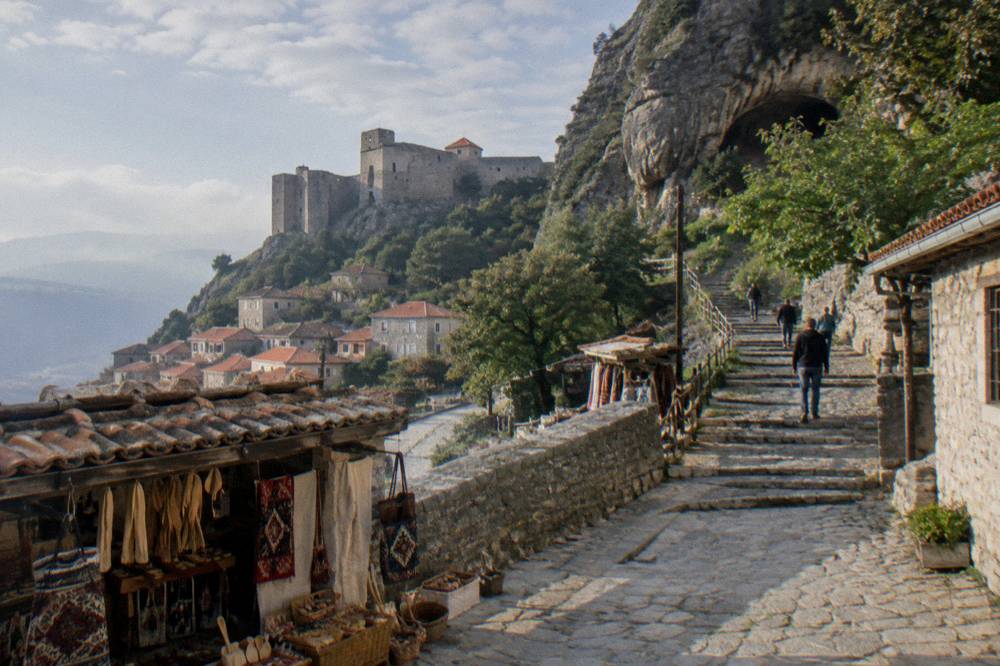
For visitors without the legs for the stairway, the practical alternative is the viewpoint below the peak, which several day tours from Tirana include by road. The featured Kruja tour lists the Sari Salltik view in its own name, which tells you the viewpoint, not the cave shrine, is the standard stop. Carry water either way: the climb has no shade to speak of in summer, when Tirana's August mean high runs to 30.4 C in the ERA5 reanalysis for the basin, and the ridge above town is hotter work than the numbers suggest.
How Much Time Do You Need In Kruja?
Half a day covers the castle, the Skanderbeg Museum and the bazaar at a steady pace; a full day adds the ethnographic museum, lunch and either the Sari Salltik stairway or a viewpoint stop. With a roughly 45-minute drive or about an hour by minibus each way, Kruja is the one heavyweight day trip from Tirana that works as a relaxed half day without shortchanging the main sights.
The arithmetic is generous. A 09:00 departure from Skanderbeg Square puts you at the castle before 10:00 by car. The bazaar street and the castle grounds take an hour; the Skanderbeg Museum takes another; lunch on the ridge another. That is a complete visit by early afternoon. Add the Ethnographic Museum and you are still back in Tirana for dinner. The only version of Kruja that needs a full day is the one that includes the Sari Salltik climb, because the stairway and the descent alone eat several hours.
| Plan | Time on site | What it includes |
|---|---|---|
| Quick half day | 3 hours | Castle grounds, Skanderbeg Museum, bazaar walk |
| Full half day | 4 to 5 hours | Above, plus the Ethnographic Museum and lunch |
| Full day | 6 to 8 hours | Above, plus the Sari Salltik stairway or viewpoint |
| Tour day | Set itinerary | Castle, bazaar and viewpoint with transport from Tirana |
One structural point in Kruja's favour: everything sits on one axis. The minibus drops you at the town end, the bazaar climbs to the castle gate, the museums sit inside the walls, and the Sari Salltik stairway starts at the edge of the same ridge. There is no second site across town, no bus transfer, no schedule juggling. Compare that with a two-town day or a border day, and the simplicity is the product.
When Is The Best Time Of Year To Visit Kruja?
Late spring and early autumn are the comfortable seasons, with Tirana-basin mean highs of 22.7 C in May and 25.7 C in September in the 1991-2020 ERA5 reanalysis, and Kruja's ridge runs a touch cooler than the basin. July and August are hot and dry, with mean highs of 29.8 C and 30.4 C, while November and December bring the highest-rainfall months, 139 mm and 138 mm of rain, which makes the bazaar cobbles and castle stone slick.
The climate numbers for the basin, from the ERA5 reanalysis 1991-2020, give the honest frame, and the ridge above Kruja reads slightly cooler and windier than the lowland figures. Winter is mild on paper, a January mean high of 10.8 C, but the castle promontory is exposed, and the wet months from October through December are the ones where the visit feels least rewarding. Summer is the busy season, dry and hot, and the Sari Salltik stairway in particular should be an early-morning errand in that season.
| Month | Mean high C | Mean low C | Rain mm | Verdict for Kruja |
|---|---|---|---|---|
| Jan | 10.8 | 2.3 | 106 | Quiet, exposed ridge, damp |
| Mar | 15.0 | 5.1 | 117 | Green, changeable |
| May | 22.7 | 12.5 | 89 | Comfortable, good light |
| Jul | 29.8 | 19.1 | 34 | Hot and dry; climb early |
| Sep | 25.7 | 16.0 | 99 | Warm, quieter after summer |
| Nov | 16.5 | 8.0 | 139 | Highest-rainfall; slippery cobbles |
Figures are ERA5 reanalysis 1991-2020 for the Tirana grid cell; the modelled grid smooths the basin, so treat highs and lows as plus or minus 1 to 2 C. The Tirana weather guide carries the full monthly table if you are planning a whole trip.
How Does Kruja Compare With The Other Day Trips From Tirana?
Kruja is the shortest full-history day trip at about 45 minutes by road, closer than Berat at about 122 minutes, Shkoder at about 118 minutes or Ohrid at about 135 minutes plus a border. Petrela Castle is nearer at about 22 minutes but is a single small castle; Durres is about 39 minutes but is a coastal city with Roman ruins and beach. For a first day out of Tirana, Kruja and Durres are the realistic pair, and Kruja wins on history, Durres on the sea.
The comparison table below uses the road times from Skanderbeg Square. The pattern to notice is the three rings around Tirana: the near ring under an hour, the mid ring around two to two and a half hours, and the far ring in the south and north, which is overnight or long-tour territory, not a day trip.
| Destination | Road time from Skanderbeg Square | Distance | Character |
|---|---|---|---|
| Petrela Castle | About 22 minutes | 14 km | Small castle, viewpoint, zipline |
| Durres | About 39 minutes | 37 km | Roman amphitheatre, museums, beach |
| Kruja | About 45 minutes | 37 km | Skanderbeg castle, museums, bazaar |
| Elbasan | About 42 minutes | 40 km | Ottoman walls, castle town |
| Shkoder | About 118 minutes | 98 km | Rozafa Castle, lake, cycling city |
| Berat | About 122 minutes | 125 km | UNESCO town of windows |
| Ohrid | About 135 minutes | 130 km | Lake town in North Macedonia, border crossing |
| Gjirokaster | About 209 minutes | 219 km | UNESCO stone city, overnight territory |
Each of these has its own page: Durres, Berat, Shkoder, Ohrid and Gjirokaster. The short version of the advice: if this is your only day out of Tirana, take Kruja for the national story; if you have two days, add Durres or Petrela; if you have three or more, the mid ring opens up. The things to do in Tirana page lays out the full decision.
A note on combining trips. Kruja and Durres lie in opposite directions, north and west, so a single car day can technically thread both, but the result is rushed. A cleaner pairing is Kruja in the morning and the capital in the afternoon: the classic city walk of Tirana or a wander from Tirana city centre through Skanderbeg Square closes the day without another hour of road.
What Should You Eat In Kruja?
Kruja's food is the standard Albanian mountain repertoire: slow-cooked lamb, tave kosi, the baked lamb and yogurt dish, byrek from the bazaar bakeries, qofte meatballs and raki, and the restaurants along the bazaar street and below the castle serve it all day to visitors and drivers. No venue prices are published; expect to pay in lek cash in the smaller places, and confirm at the counter.
The bazaar lane does the practical feeding. Bakeries sell byrek, the layered filo pie, through the morning, and small grills plate qofte, seasoned meatballs, at lunch. Sit-down restaurants along the ridge serve the older repertoire: tave kosi, baked lamb under a yogurt and egg topping, slow lamb dishes and seasonal vegetables. Fergese, baked peppers and tomatoes with cheese, is a Tirana-region dish that travels well and appears on the same menus. Raki, the fruit brandy, arrives at the end of meals unbidden in many places, part of the hospitality rather than an upsell.
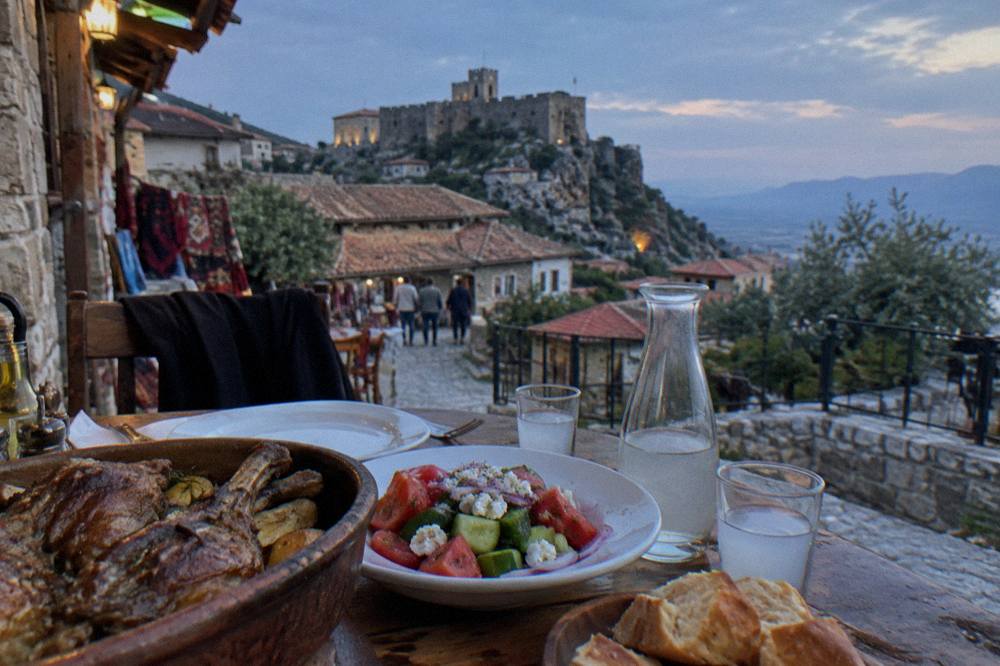
The honest framing is that Kruja feeds you competently rather than famously; the capital is where the ambitious Albanian cooking now happens, and the Albanian food guide maps the dishes, while the Tirana coffee culture page covers the other half of the day. If the food is the reason rather than the castle, a food walk in the capital does more for the appetite than the drive north.
Is Kruja Worth It Without A Car?
Yes: the minibus from the North-South Bus Terminal takes about an hour for roughly 200 lek, the whole town is walkable from the drop-off, and the castle, museums and bazaar need no vehicle once you arrive. The car-free plan loses only the Sari Salltik viewpoint, which is the one element that realistically needs a tour vehicle or a long stairway climb, so independent travellers simply trade the viewpoint for a slower bazaar.
The car-free day is simple. A city bus or short taxi ride to the terminal, the minibus north, and the drop-off at the town end of the bazaar street. From there the day is entirely on foot: the bazaar up, the castle and museums, lunch, the bazaar back down, and the return minibus when you are ready, confirming the last departure time when you arrive. Total walking inside Kruja is modest by any standard; the only steep ground is the castle approach and, for those who take it, the shrine stairway.
Two cautions keep the plan honest. The last minibus back is reported to leave in the late afternoon, so confirm locally on the day rather than trusting a remembered time. And taxis in Kruja itself are thin on the ground compared with Tirana, so a missed minibus means waiting for the next one, not hailing a ride off the street. Carry the return fare in lek and the day takes care of itself.
Common Questions About Kruja
How far is Kruja from Tirana?
Kruja is about 37 km and roughly 45 minutes by road from Skanderbeg Square in Tirana. The public minibus takes about an hour.
How do I get to Kruja without a car?
Take a minibus from the South and North Bus Terminal, about 4.0 km north-west of Skanderbeg Square. Local guides report it costs about 200 lek in cash and takes about an hour; confirm the last return time when you board.
What is there to see at Kruja Castle?
The Skanderbeg Museum, the Ethnographic Museum and the fortress walls and grounds, plus the old bazaar street below the castle gate. No entry fees or hours are published on official pages, so check the current price at the venue before going.
Who was Skanderbeg?
Gjergj Kastrioti Skanderbeg was Albania's national hero. According to the reported timeline he took Kruja on 28 November 1443, helped form the League of Lezha on 2 March 1444 and died on 17 January 1468.
Can you visit Sari Salltik?
Yes, either by a long stepped stairway from the edge of Kruja or by road to a viewpoint, which guided tours include. The cave shrine is an active Bektashi religious site, so dress modestly.
Is Kruja or Berat better for a day trip?
Kruja is closer, about 45 minutes by road against about 122 minutes for Berat, and it carries the Skanderbeg story; Berat is a UNESCO-listed Ottoman town with a longer drive. History in a short day points to Kruja, architecture in a full day to Berat.
Kruja remains the day trip that gives Tirana's visitors the medieval chapter of the Albanian story for the least road time of any heavyweight stop, and the bazaar, the castle museums and the ridge view over the plain ask for nothing but a morning, comfortable shoes and lek in cash.