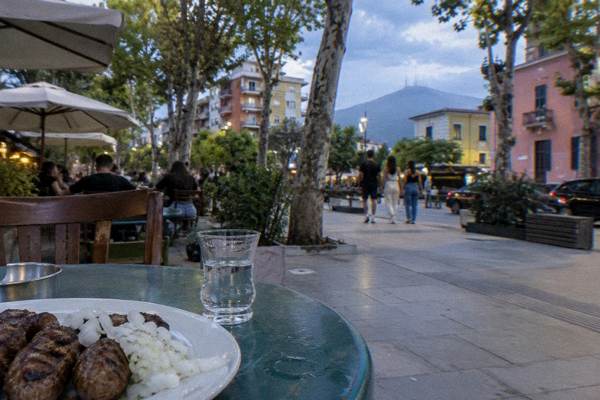
Albanian Raki, Wine And Beer: What To Order In Tirana
Raki is the drink that opens Albanian meals, seals toasts and appears at every family table, and Tirana is the place to learn how it fits alongside the country's wine, beer and thick coffee culture.
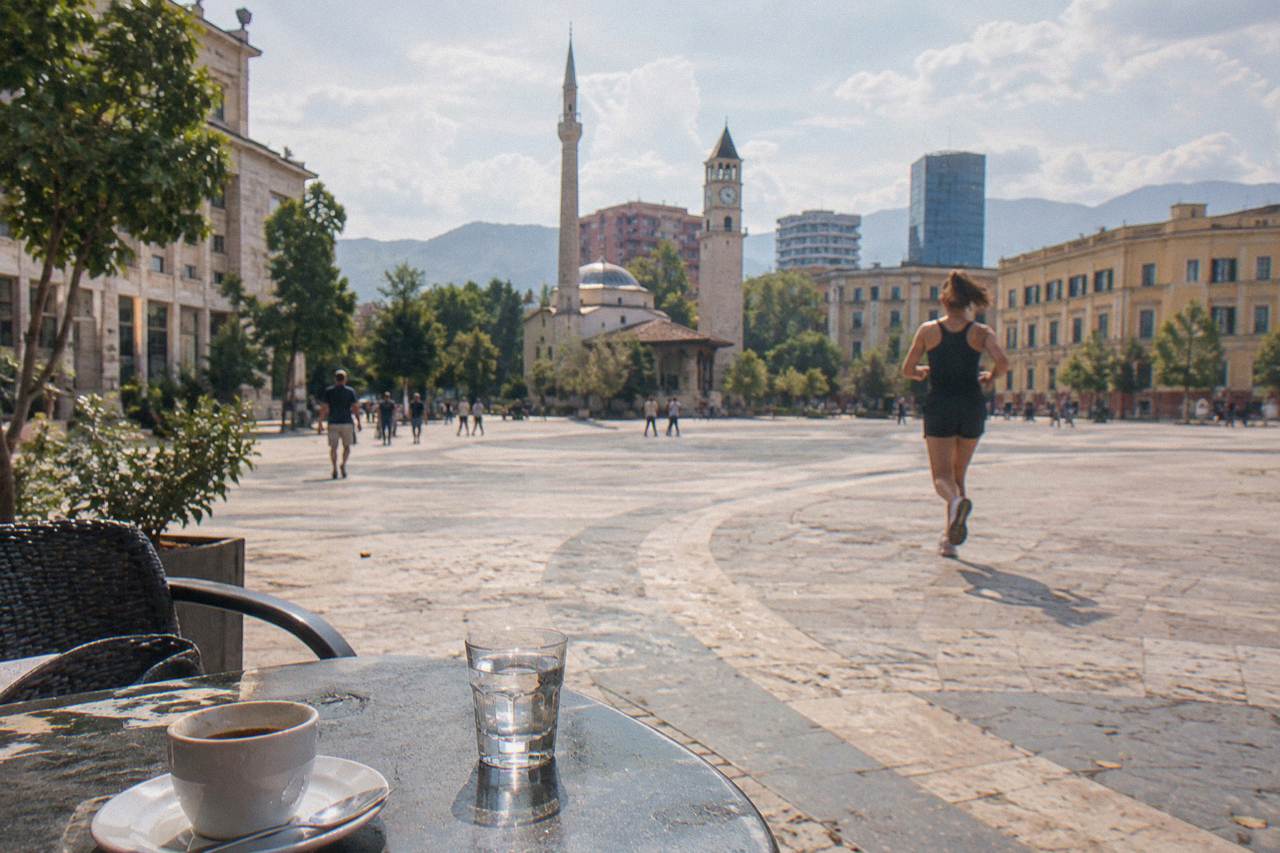
Short answer
Raki is a fruit brandy, usually grape or plum, served in small glasses and drunk in toasts rather than sipped alone. In Tirana you will find it in traditional restaurants and cooking classes, alongside local wine, Albanian beer and espresso. The sale of alcohol to anyone under 18 is prohibited, drink-driving is zero tolerance, and the FCDO advises bottled water over tap water.
Tirana, the capital of Albania at the foot of Mount Dajti, is a city where a single meal can move from thick Turkish-style coffee to a small glass of raki without anyone thinking it unusual. Raki is a fruit brandy, and it is the drink this guide is built around: what it is, how it is served, how to toast with it, and how it sits beside the country's wine, beer and cafe culture. The drinks themselves travel with you everywhere in Albania, from a Blloku cafe to a Kruja guesthouse, but the widest choice of places to try them is here in the capital.
What Is Albanian Raki And How Is It Served In Tirana?
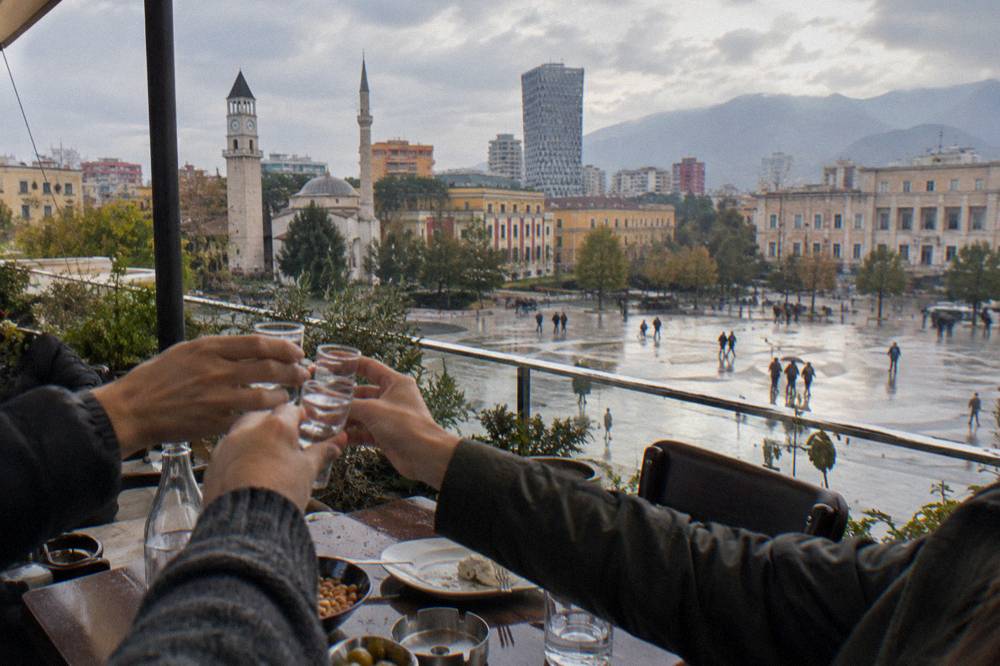
Raki is a fruit brandy, most often distilled from grapes or plums, poured in small glasses and drunk in company rather than alone. In Tirana it typically appears at the start or end of a meal, offered as a welcome pour or raised in a group toast. It is not measured out in cocktail portions or mixed: the glass is small, the pour is short, and the word that goes with it is Gezuar, the Albanian toast for cheers.
That is the whole ritual in one paragraph, but the drink rewards a little more attention. Raki is the general Albanian word for this family of brandies, and the fruit behind it varies by region and by household: grape is the common base, plum appears often, and mulberry, quince, fig or walnut versions circulate as regional specialities. Nobody writing a menu needs to explain it to an Albanian audience, which is why a traditional restaurant in Tirana may simply ask "raki?" after the plates are cleared and expect a yes or no.
Home distillation is part of the culture, especially in the mountains and villages around the Albanian Alps, and families take pride in their own batch. In the city you drink the restaurant's pour. The strength is not printed anywhere, the flavour runs from clean and fiery to softly sweet depending on the fruit, and the polite move is to sip rather than knock it back. If a host refills your glass before a toast, that is hospitality, not pressure.
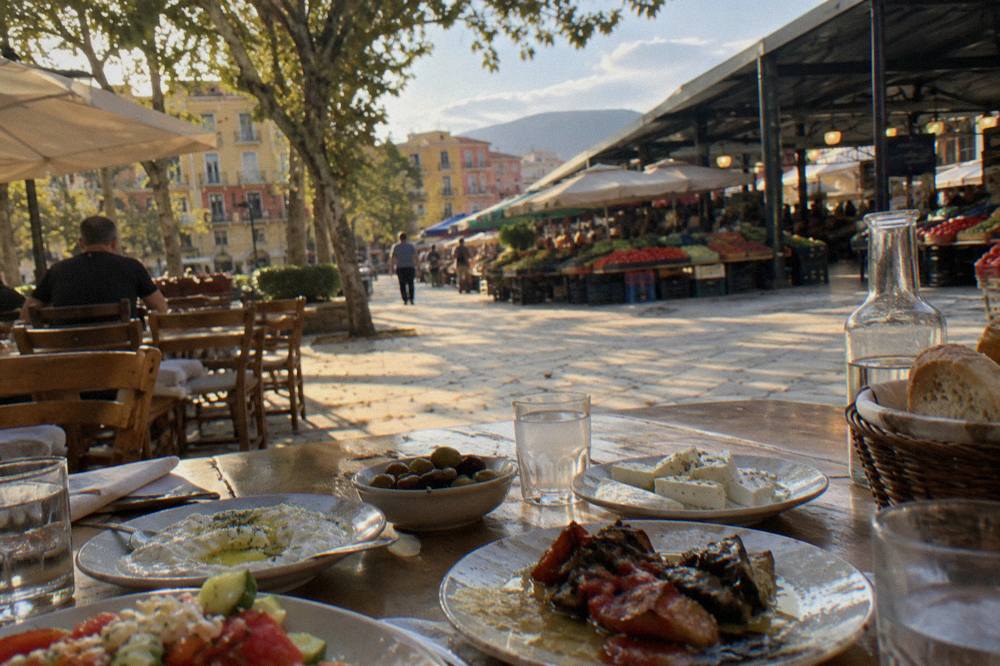
A natural way to meet raki in context is at a table rather than a bar. The Albanian cooking class with unlimited wine and raki, featured across this site, puts the drink beside the food it belongs with. For the wider food picture, from byrek to tave kosi, see the companion Albanian food guide.
Which Albanian Drinks Should You Order In Tirana?
The four drinks worth ordering in Tirana are raki, Albanian wine, local beer and espresso coffee, in roughly that order of cultural weight. Raki is the toast, wine is the meal companion and increasingly a point of national pride, beer is the everyday pour in cafes and bars, and coffee is the social engine of the whole city. Soft drinks and bottled water complete the table, and the FCDO advises bottled water over tap water in Albania.
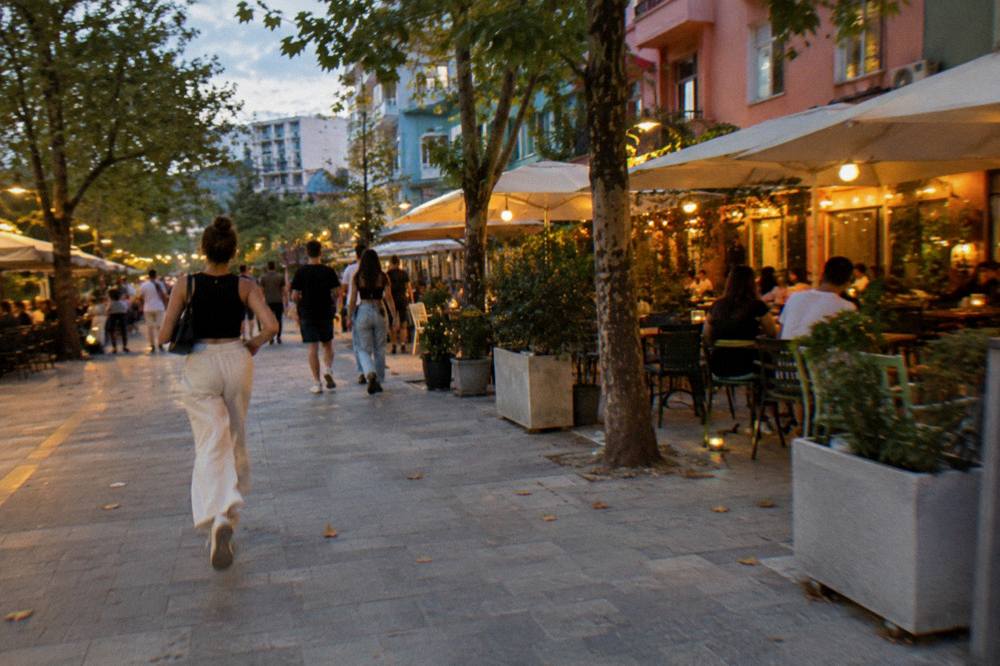
Each of these has its own place in a day. Coffee comes first: Tirana runs on long, slow cafe sessions, and ordering a coffee is an invitation to sit, not a transaction at a counter. Beer follows in the afternoon and evening, above all in Blloku, the former officials' quarter about 0.8 km south of Skanderbeg Square that is now the city's cafe and bar district. Wine belongs with dinner, and raki bookends the meal.
| Drink | What it is | When it is served |
|---|---|---|
| Raki | Fruit brandy, usually grape or plum | Welcome pour, end of meal, toasts |
| Albanian wine | Red and white from Albanian-grown grapes | With dinner |
| Beer | Local lagers, poured cold | Afternoons and evenings in cafes and bars |
| Espresso coffee | Strong coffee, cafe culture | All day, the default social meeting |
| Bottled water | Still or sparkling | Constantly, per FCDO advice |
Beyond those, choose by neighbourhood: Blloku for bars and cafes, Pazari i Ri, the New Bazaar about 0.6 km east of the square, for market atmosphere, and the blocks around Skanderbeg Square for traditional restaurants.
Where Can You Try Raki And Local Wine In Tirana?
The reliable places to meet raki and Albanian wine in Tirana are traditional restaurants, the New Bazaar area and cooking classes, while Blloku is the centre of the bar scene. Raki is poured in restaurants rather than ordered from a long spirits menu, wine lists are short but increasingly local, and a cooking class or food tour puts both drinks in front of you with the food they belong beside. No definitive bar ranking exists, so choose by district and format.
Restaurants are the place for raki. A traditional kitchen will pour it as a welcome, bring it with dessert or offer it after the bill, and refusing politely is fine. The four named venues above are safe starting points, with Era Blloku sitting right in the bar quarter if you want dinner and an evening out in one district. The New Bazaar adds market energy and small kitchens around its perimeter.
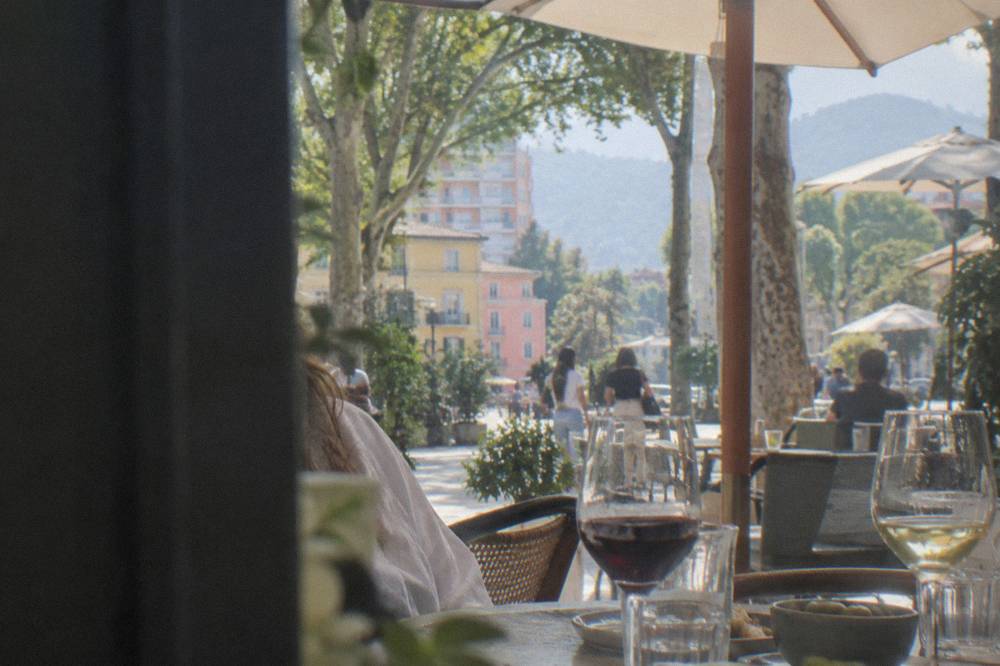
For structure, a short walking food tour is the fastest way to sample several drinks in one evening, and a qofte and raki tasting stroll does exactly what its name promises. . After dark, the Tirana nightlife guide covers the bar districts in more depth, and for sit-down meals the restaurant guide explains the formats by neighbourhood.
What Is Albanian Wine Like And Which Styles Pour In Tirana?
Albanian wine in Tirana means red and white table wines from Albanian-grown grapes, served by the glass and bottle in restaurants and, increasingly, taken seriously by younger venues. The country's vineyards sit mostly far from the capital, in hill zones inland and south, but the bottles arrive in the city's restaurants, and a wine-focused outing can pair them with food in the countryside near Durres. Local lists are short, so ordering Albanian is easy.
What can be said plainly: ordering the house Albanian red or white is normal, wine accompanies long dinners rather than standing drinking, and the pouring is generous by cafe standards. A vineyard experience in the Durres countryside, about 39 minutes by road from Tirana, pairs local wine with food away from the city, and the coast makes an easy combination with a Tirana to Durres day out.
| Wine moment | Where in Tirana | What to expect |
|---|---|---|
| Dinner pour | Traditional restaurants citywide | Short list, local reds and whites |
| Bar pouring | Blloku venues | Wine by the glass alongside cocktails |
| Market tasting | New Bazaar area | Informal, food-led |
| Countryside pairing | Vineyard visits near Durres | Wine and food pairing format |
Temperature and service are unremarkable, which is a compliment: reds come cool, whites chilled, and nobody performs a ceremony over the cork. If wine is your priority for one evening, book a restaurant rather than bar-hop, since the deepest lists sit with kitchens, not counters.
What About Beer And Coffee Culture In Tirana?
Beer is the default casual drink in Tirana, poured cold in cafes, bars and restaurants across the city, while coffee is the social institution that organises the day. Albanian breweries supply the local lagers, and the one dated beer fact worth carrying is the Korce beer festival, held each August in the town of Korce. Coffee, meanwhile, is ordered to be sat with, not carried away.
Cafe culture in Tirana is closer to Italy's than to a takeaway model. A coffee order buys a table for as long as you want it, meetings happen over espresso, and the cafe is the default answer to "where should we sit?". Sophie Caffe, a chain with branches including one on Rruga Papa Gjon Pali II, is one of the few named, verifiable operators; everywhere else you choose by street and terrace. The wider set of guides lives on Tirana Albania Travel Guide.
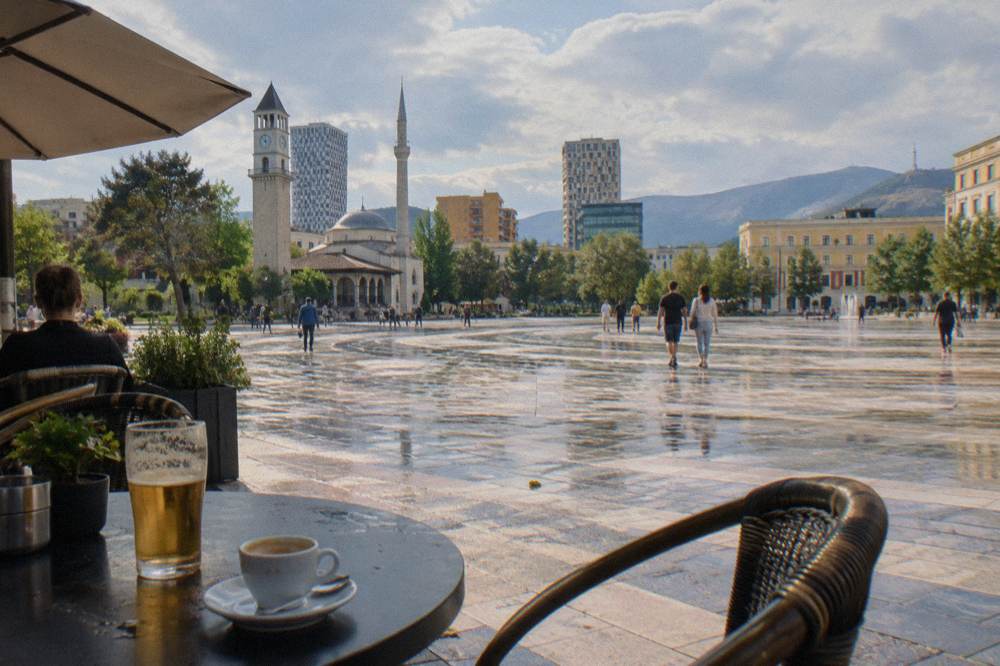
Beer deserves its own trip. Korce, in the south-east of Albania, hosts a beer festival each August, and its 2026 edition ran 12 to 16 August per ATA reporting. Korce itself is several hours from the capital by road, so it is an overnight plan rather than an evening one, covered in the site's Korce day-trip guide. In Tirana, beer belongs to the evening terrace and to the bar crawl format, and a guided crawl with welcome shots is one structured way into Blloku's nightlife.
| Time of day | Drink that fits | Where |
|---|---|---|
| Morning | Espresso | Any cafe, centre or Blloku |
| Afternoon | Coffee or beer | Terraces around Skanderbeg Square |
| Early evening | Beer or wine | Blloku, about 0.8 km south of the square |
| Dinner | Wine | Traditional restaurants |
| After dinner | Raki | Wherever you ate |
Season shapes all of this. The ERA5 reanalysis for Tirana, 1991-2020, puts the August mean high at 30.4 C and the January mean high at 10.8 C, so terraces rule from May to September and indoor tables take over in the wet months of November and December, when monthly rainfall reaches 139 and 138 mm. The site's Tirana weather guide covers the climate month by month, and the best time to visit guide helps place a trip around it.
How Do You Toast In Albania And What Should You Say?
The Albanian toast is Gezuar, said while raising a small glass of raki or wine and looking around the table, and the ritual matters more than the volume drunk. You toast at the start of a shared meal, when someone joins or leaves the table, and at celebrations, and the glass is raised, not clinked hard or drained in one. Other useful words are Faleminderit for thank you and Faturen for the bill.
Albanian is the language of the table, and a handful of words carry a long way. The phrasebook basics, per the Wikivoyage Albanian phrasebook, include Përshëndetje or Tungjatjeta for hello, Faleminderit for thank you, Ju lutem for please, Po for yes and Jo for no, Mirëmëngjes for good morning, Mirupafshim for goodbye, Gëzuar for cheers, Ujë for water and Faturën for the bill. Say them as they are written, with the Albanian letters intact.
| Albanian | Rough sound | Meaning |
|---|---|---|
| Gëzuar | guh-ZOO-ar | Cheers |
| Faleminderit | fah-leh-meen-DEH-reet | Thank you |
| Ju lutem | yoo LOO-tem | Please |
| Ujë | OO-yeh | Water |
| Faturën | fa-TOO-run | The bill |
| Mirëmëngjes | mee-ruh-muhn-JESS | Good morning |
One gesture trips up visitors: the head nod is often reversed in Albania. Visitors report that an upward chin tilt can mean no, while a side-to-side wobble can mean yes, the opposite of Western habit. It is not a test, and confusion is met with laughter, but knowing it saves you agreeing to a refill you did not want. Raki etiquette in one line: sip, toast with Gezuar, and never pour your own glass first at a hosted table.
What Are The Alcohol Rules In Albania That Visitors Should Know?
Two rules matter for visitors: drink-driving is zero tolerance in Albania, tightened by road-rule changes reported by ATA in August 2026, and the sale of alcohol to anyone under 18 is prohibited, reported under Albanian law No. 9518 of 2006. There is no clear guidance on public drinking, so follow venue rules, and never drive after drinking. Emergency numbers are Police 112, Ambulance 127 and Fire 128.
The zero-tolerance rule is the one with teeth. Any alcohol behind the wheel is penalised, and enforcement tightened in 2026 with increased penalties, per ATA reporting.
Water deserves its own sentence alongside the alcohol. The FCDO advice is unambiguous: drink bottled water in Albania, order Ujë by the bottle at the table, and do not refill from the tap. Mixing that habit with raki is sensible, since brandy dehydrates and the summer mean high runs to 30.4 C in August.
Can You Visit A Vineyard Or Brewery From Tirana?
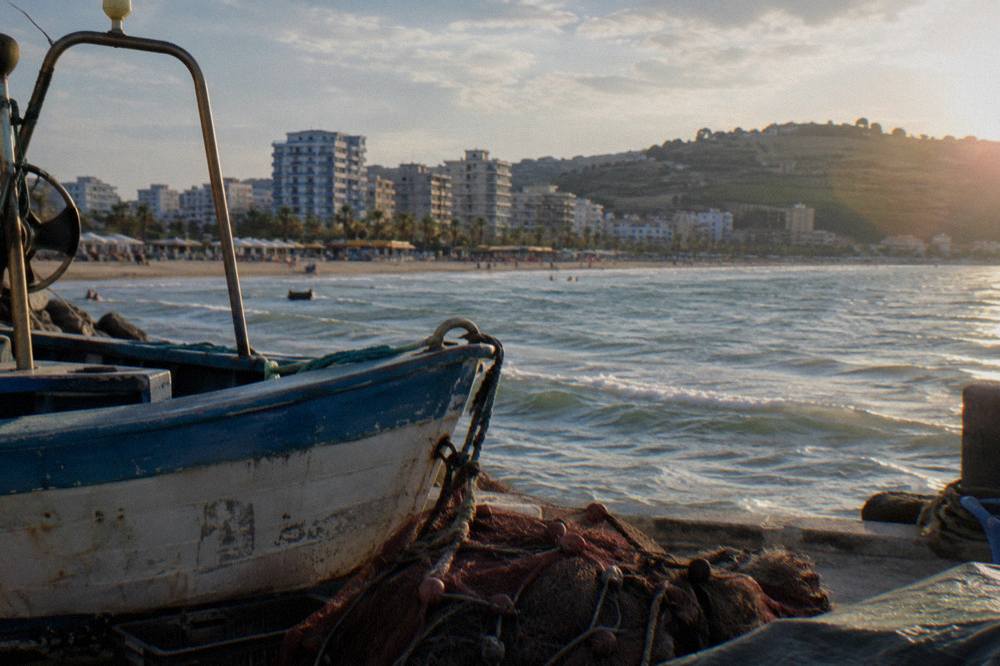
Yes, as organised trips: a vineyard experience in the Durres countryside pairs Albanian wine with food within an easy day's reach of the capital, and the Korce beer festival each August anchors the country's beer identity, though Korce itself is an overnight plan. No ferry, train or self-drive brewery circuit is needed, and the coast at Durres sits about 39 minutes by road from Skanderbeg Square for a combined day.
The vineyard format is the easiest fit for a Tirana base. You are collected, driven out through the countryside, and seated for a tasting with food, which removes every planning question. The Durres area is the near option; for a longer drinks-and-culture loop, Shkodra in the north combines a castle, the city and Skadar Lake in a single organised day from the capital.
Beer travellers should aim at Korce with realistic expectations: the festival each August is a genuine regional event, but the journey is about three to four hours by bus, reported by booking services, so treat it as an overnight stay. Driving yourself is covered in the driving in Albania guide, with the zero-tolerance rule repeating there for good reason.
| Trip | Format | Distance base |
|---|---|---|
| Durres vineyard | Wine and food pairing day | About 37.2 km and 39 minutes by road |
| Shkodra day tour | Castle, city, Skadar Lake | About 98.4 km and about 118 minutes |
| Korce beer festival | Overnight, held each August | About 155 to 160 km, three to four hours by bus |
| Kruja restaurant lunch | Old bazaar and castle day | About 36.7 km and 45 minutes by road |
How Do Albanian Drinks Fit Into A Day In Tirana?
A drink-centred day in Tirana runs coffee in the morning at a centre cafe, beer or wine on a Blloku terrace in the evening, and raki at dinner in a traditional restaurant, all walkable within a compact centre. The pattern fits the city's climate: terrace season peaks in the dry summer months of July and August, when rainfall drops to 34 and 31 mm, and indoor tables dominate November's 139 mm peak. Nothing in the day requires a car.
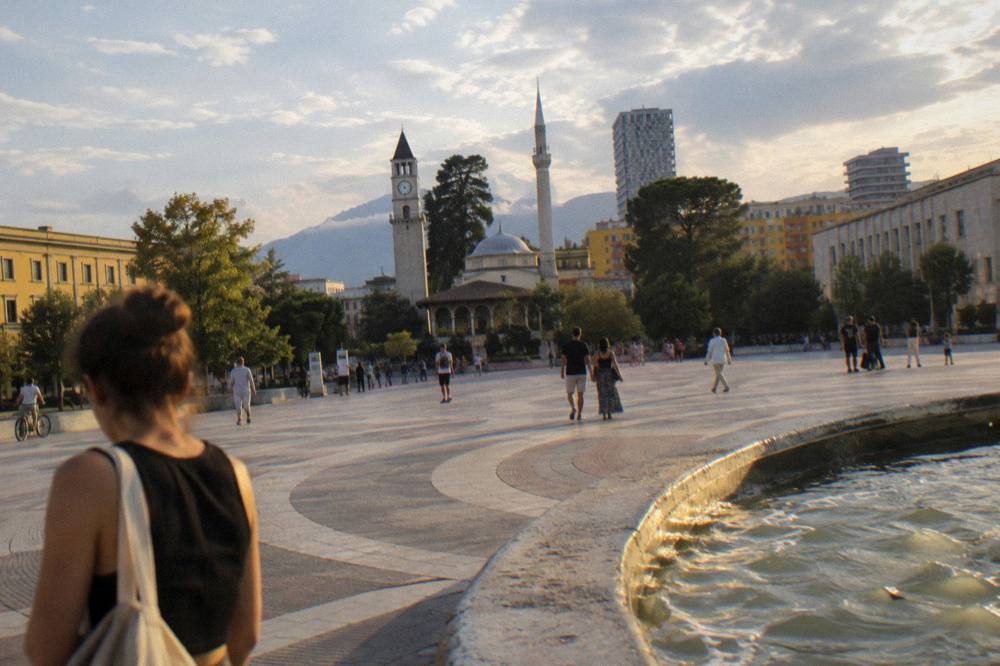
The walk between drinks is short. Skanderbeg Square, the Palace of Culture, the Et'hem Bey Mosque about 0.2 km south-east and the New Bazaar about 0.6 km east sit inside fifteen minutes on foot, and Blloku is another stretch south past Rinia Park. A morning coffee, a market lunch with byrek, an afternoon elsewhere and an evening in Blloku covers the whole map without transport.
Pairing drinks with the city's sights works the same way. A communism-themed walk through the centre ends naturally at a restaurant table, since so much of the story is told within a kilometre of the square, and the communist history in Tirana guide maps the route. However you build the day, the evening toast stays the same: raise the small glass, say Gezuar, and sip.
Common Questions About Albanian Drinks In Tirana
What is raki in Albania?
Raki is a fruit brandy, usually made from grapes or plums, served in small glasses and drunk in toasts. In Tirana it appears in traditional restaurants as a welcome pour or an after-dinner drink.
What do you say when toasting in Albania?
Gëzuar, meaning cheers. Raise the glass, look around the table and sip. Faleminderit means thank you and Faturën is the bill.
Can you drink the tap water in Tirana?
No. The UK FCDO advises: "Do not drink the tap water in Albania, as it may cause illness. Only drink bottled water." Order bottled water at the table.
What is the drinking age in Albania?
The sale of alcohol to anyone under 18 is prohibited, reported under Albanian law No. 9518 of 2006. Confirm the current rules locally before you travel.
Can you drive after drinking in Albania?
No. Drink-driving is zero tolerance in Albania, tightened by road-rule changes reported by ATA in August 2026. Take a taxi after an evening in Blloku.
Is Albanian wine worth ordering in Tirana?
Yes, as the local pour with dinner. Lists are short, local reds and whites are standard, and a vineyard experience near Durres pairs the wine with food if you want the full version.
From the first espresso of the morning to the last small glass of raki at night, Tirana's drinks are best understood as one continuous social ritual, and every part of it sits within walking distance of Skanderbeg Square.