Tirana Nightlife: Blloku Bars, Rooftops And Late Clubs
Tirana's after-dark scene centres on Blloku, the former party-elite quarter about 0.8 km south of Skanderbeg Square, now a dense grid of cafes, cocktail bars and late clubs. This guide covers where the city's nightlife actually happens, what to eat and drink in the evening, which rooftop views are open after dark, and how the seasons and current conditions shape a night out.
Short answer
No single venue has published hours or prices, so plan by neighbourhood rather than by name.
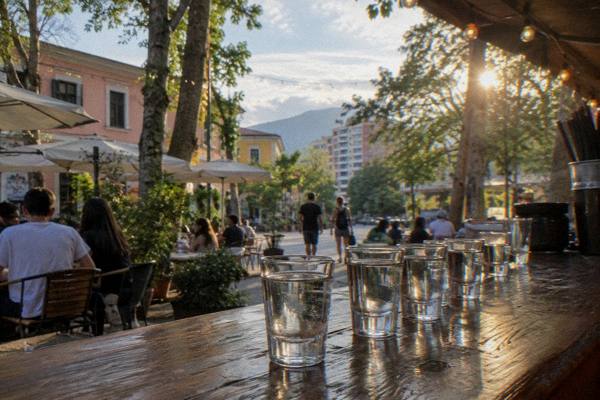
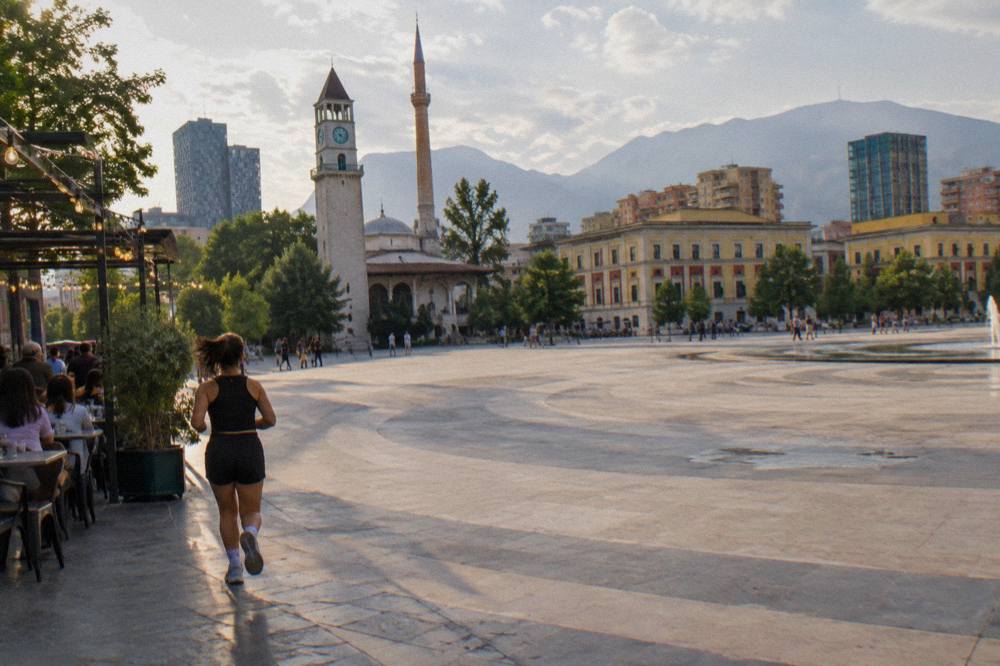
Tirana, the capital of Albania, is an inland city in a basin under Mount Dajti, and when the sun goes down its social life moves outdoors: onto cafe terraces, restaurant gardens and the bar-lined lanes of Blloku. The city's after-dark geography is compact. Almost everything worth planning for sits within a fifteen-minute walk of Skanderbeg Square, the great pedestrian space at the centre where the Et'hem Bey Mosque, the Clock Tower and the closed-for-restoration National History Museum face each other across the stone. From there the night spreads south into Blloku, east toward the New Bazaar, and up a handful of rooftops and towers with skyline views. This guide walks through each of those zones in turn, the food and drink that anchors an Albanian evening, the seasons that shape terrace culture, and the practical details, transport, money and safety, that decide how the night ends.
Plan by street, by quarter and by type of evening, and let the city's own rhythm do the rest. The Tirana Albania Travel Guide covers the daytime half of the city elsewhere, starting with the main things to do in Tirana.
Where Does Tirana Nightlife Actually Happen?
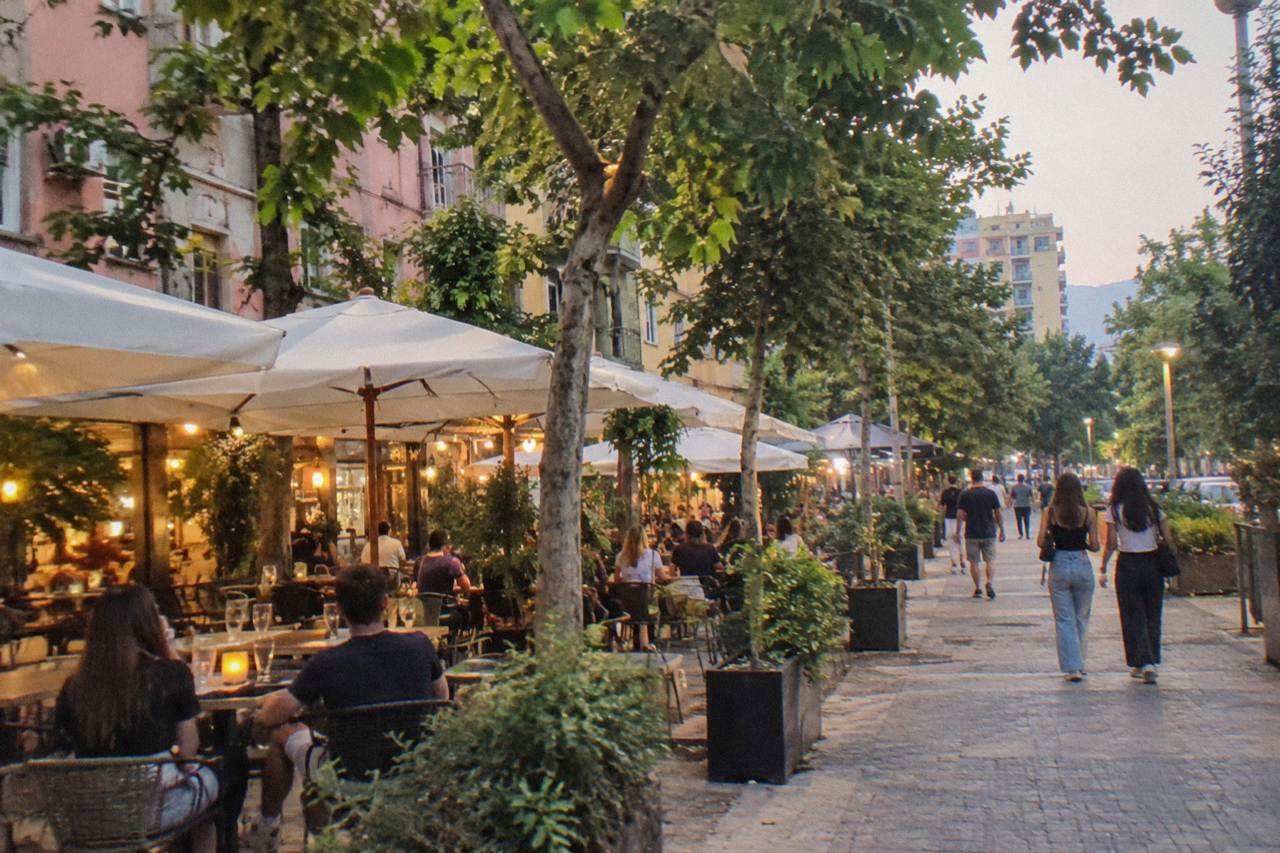
Tirana nightlife happens in three concentric zones: Blloku, the bar-and-cafe quarter about 0.8 km south of Skanderbeg Square, is the centre of gravity; the New Bazaar about 0.6 km east and the lanes immediately around the square hold the restaurants and wine bars; and a scattering of rooftops and a rotating tower near the centre supply the views. Everything is walkable from the square.
Blloku is the headline act. Several current guides describe it as Tirana's main nightlife district, a compact grid of former villa streets where cafes turn into cocktail bars as the evening wears on. It sits about 0.8 km south of Skanderbeg Square, roughly a ten-minute walk down the boulevard past the Pyramid of Tirana, which is itself worth seeing lit up at night from the outside, its renovated stepped facades free to climb in daylight hours.
The second zone hugs the square itself. Rruga Etnike Shqiptare and the streets running east toward the New Bazaar, about 0.6 km east of the square, carry the restaurant trade, and the pedestrian lanes around the Tirana Castle area, about 0.5 km south-east, hold terrace seating that fills from early evening. The New Bazaar, or Pazari i Ri, is covered in its own right in the food section below.
The third zone is vertical. The Sky Tower, about 0.7 km south of the square, is a rotating restaurant tower with the city's signature after-dark panorama, and a handful of hotel rooftops near the centre sell the same view without the rotation. The tower's observation deck is covered on the Sky Tower attraction page.
| Zone | Direction from Skanderbeg Square | Straight-line distance | What dominates after dark |
|---|---|---|---|
| Blloku | South | about 0.8 km | Bars, cocktail terraces, late cafes |
| New Bazaar (Pazari i Ri) | East | about 0.6 km | Restaurants, grill houses, market eateries |
| Tirana Castle lanes | South-east | about 0.5 km | Terrace dining, wine bars |
| Rinia Park | South | about 0.4 km | Evening strolls, ice cream, casual drinks |
| Sky Tower area | South | about 0.7 km | Rooftop and revolving views |
| Grand Park of Tirana | South-east | about 2.1 km | Evening walking and lake-side paths, quiet after dark |
Distances above are straight-line positions from the square. In practice the walk from the square to the middle of Blloku takes ten minutes or so, and the whole circuit, square, castle lanes, New Bazaar, Blloku, is a loop of well under an hour on foot. Readers who want the fuller neighbourhood picture can start with the Blloku area guide and the broader Where To Stay In Tirana: Centre, Blloku Or Near The Lake overview, since staying central puts every zone of this page within walking distance.
A guided introduction is a sensible first evening for travellers who arrive without bearings. The Tirana guided walking tour of history, culture and local life covers the daytime city, but its guides are the kind of locals who will happily point a first-timer toward the right lanes for the night that follows. More evening-oriented options sit further down this page.
What Is Blloku And Why Is It The Heart Of Tirana Nightlife?
Blloku is a central Tirana neighbourhood about 0.8 km south of Skanderbeg Square, laid out as a grid of quiet villa streets, that several current guides identify as the city's main cafe and bar quarter. Its bars and terraces cluster densely, and the district is compact enough that an evening is spent drifting between them on foot rather than travelling to any single venue.
The quarter's political past is the reason it exists as a distinct enclave: Blloku was the residential zone of the communist party elite, closed to ordinary citizens during the regime that ruled Albania from 1944 to 1991. After 1991 the streets opened and the villas gave way to cafes, and the district's nightlife grew in the decades that followed. The deeper history of that era, and the sites that document it, belong to the site's Tirana communism tour itinerary and the Communist history in Tirana trail, including the Postbllok memorial, about 0.9 km south of the square on the Blloku boundary, which marks the old checkpoint with a bunker, prison pillars and a fragment of the Berlin Wall.
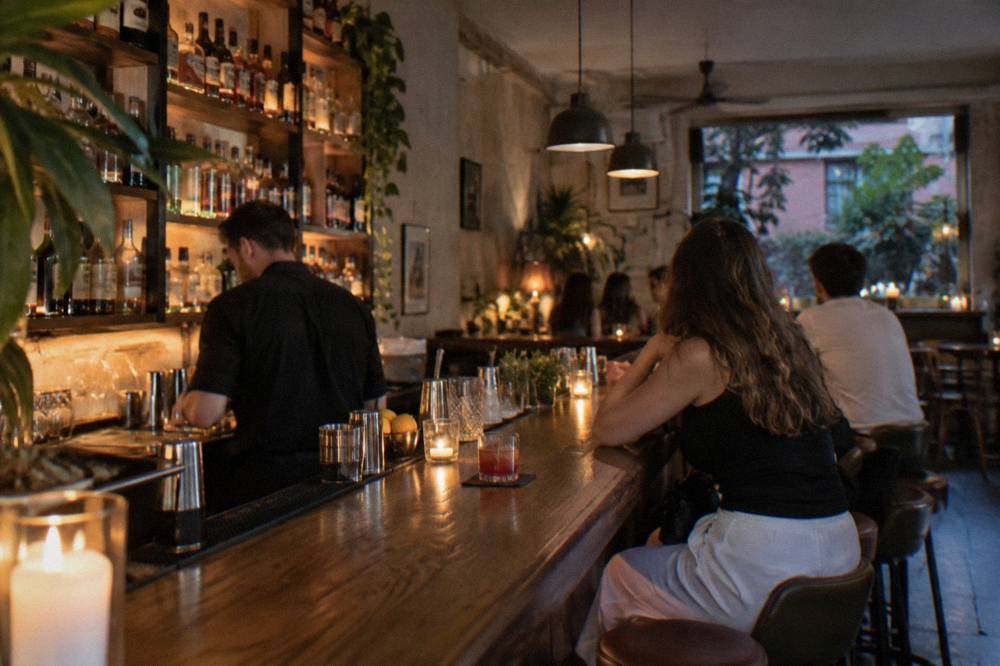
What Blloku offers in practical terms is density. Within a few intersecting streets a visitor passes dozens of terraces, cocktail counters and cafe-bars, plus the Era Blloku restaurant, which has an official website and serves Albanian and Mediterranean dishes in the quarter. Two other named, verifiable venues elsewhere in the city can anchor an evening meal: Padam, a boutique hotel restaurant on Rruga Papa Gjon Pali II near the centre, and Artigiano, an Italian and Mediterranean restaurant with its own site, along with the Sophie Caffe chain for a stop between bars.
The rhythm of the quarter runs late. Guides to the city report that cafes begin turning into bars around 20:00, that the streets fill from about 22:00, and that clubs further along the night run past midnight into the small hours at weekends. Confirm timings on arrival, since no venue publishes them.
A bar crawl with a local guide is one way to shortcut the no-names problem: the guide chooses the venues, and the visitor simply follows. For travellers who prefer a structured start to a free-roaming finish, that pattern works well, an organised opening stretch, then the rest of the evening spent returning to whichever terrace stood out.
Late Clubs, Live Music And Evening Shows In Tirana
The city's verifiable evening entertainment is instead its cultural programme: a traditional Albanian night of music and dance, seasonal festivals in September and December, and a film festival that turns cinemas into late venues each autumn.
The club half of this section must stay general, and honestly that costs little. Blloku's clubs operate on the same late clock as its bars, weekends are the peak, and no cover charge or door policy appears in any usable source, so the advice is to ask at your hotel or guesthouse which venues are running that week, a question any front desk answers in seconds.
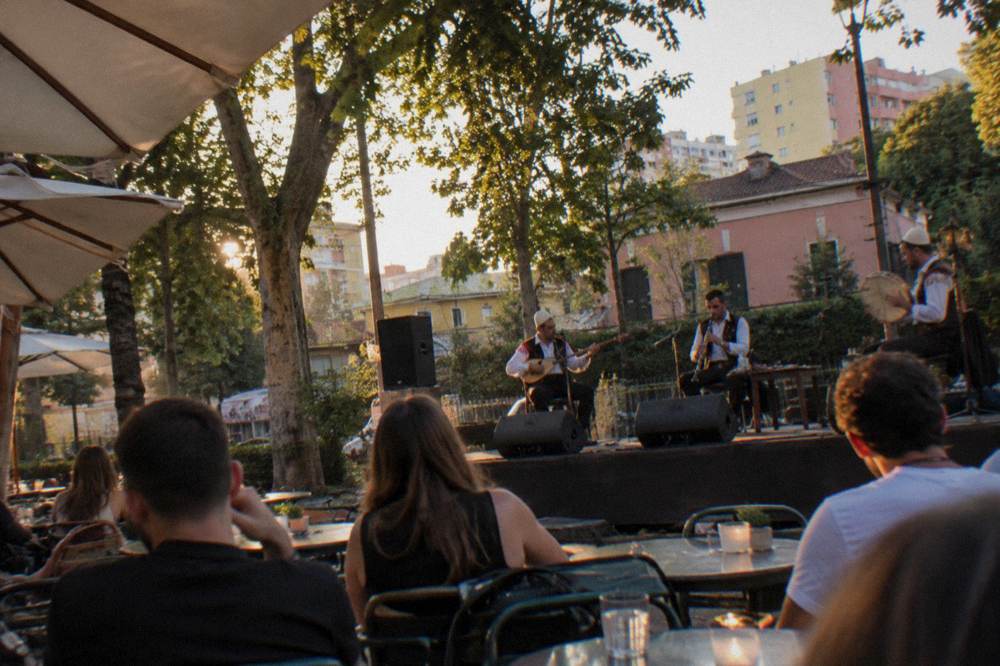
The cultural half is richer than many visitors expect. A traditional Albanian evening show, with live folk music, dance and dinner, runs as a bookable experience in the city and is the most reliable way to hear the country's iso-polyphonic singing traditions after dark without gambling on a club schedule. The same is true of a guided food-and-drink evening: the tokenised cards below carry the details.
The calendar contributes its own late evenings. The Tirana International Film Festival ran 21 to 27 September in 2026 for its 24th edition, with screenings at cinemas including the Millennium Cinema in the centre. The Tirana Jazz Festival held its 15th edition over 23 to 25 September 2026, with free entry reported. And in December the Festivali i Kenges, the long-running song contest that selects Albania's Eurovision entry, filled 17 to 20 December 2026 at the Palace of Congresses. None of these is a nightclub, but each turns a December or September evening in Tirana into something a bar street cannot.
| Event | 2026 dates | Nature of the evening |
|---|---|---|
| Tirana International Film Festival | 21 to 27 September | Screenings and closing ceremony at central cinemas |
| Tirana Jazz Festival | 23 to 25 September | Free-entry jazz concerts, reported |
| Tirana Marathon | 14 to 15 November | Moved from October; streets and transport affected |
| Festivali i Kenges (65th edition) | 17 to 20 December | Song contest at the Palace of Congresses, reported venue |
| Christmas market, Skanderbeg Square | Usually runs through December | Stalls and funfair, dates vary by year |
The marathon line matters even on a nightlife page: when a city-centre event moves or fills the streets, the night before and the night after move with it, so check local listings during your own dates. The site's events coverage carries the fuller calendar.
Evening Food And Raki: What A Night Out In Tirana Tastes Like
An evening in Tirana is built around a long dinner, not around drinks alone: grilled qofte meatballs, tave kosi baked lamb with a yogurt and egg topping, fergese of baked peppers, tomatoes and cheese, and byrek, the layered filo pie, anchor the menu, and raki, the fruit brandy, is the traditional toast that opens and closes the night.
None of these dishes needs a venue name to be found. Every traditional restaurant in the city serves some version of them, and the New Bazaar about 0.6 km east of Skanderbeg Square is the best hunting ground, a market-and-eatery quarter where grill smoke and byrek counters run into the evening. The site's Albanian food guide describes each dish in detail, and the best restaurants in Tirana page covers where to sit for a full meal.
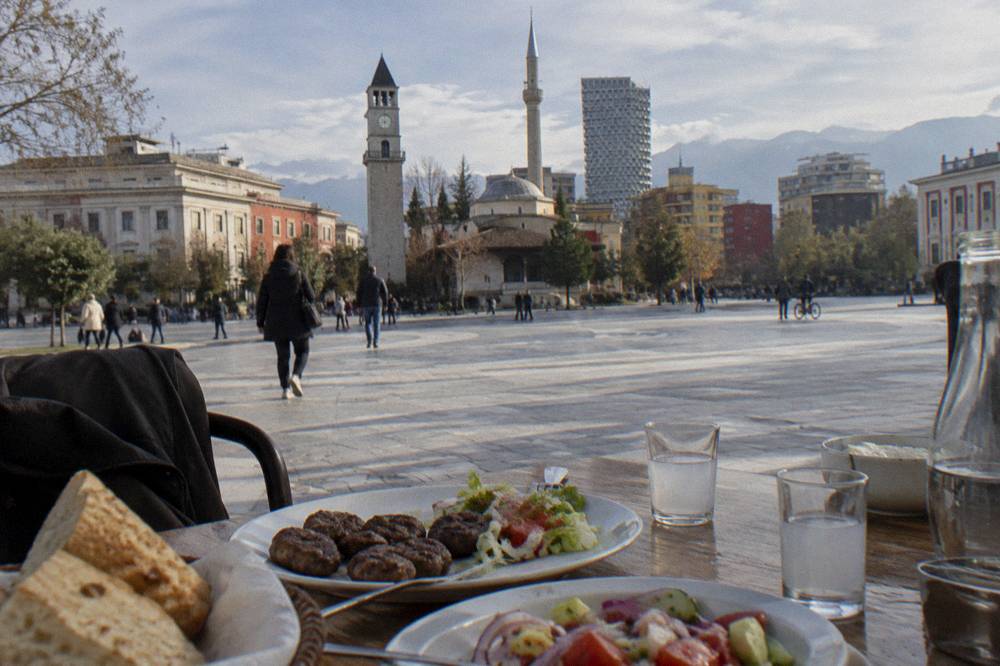
Raki deserves its own paragraph because it structures the evening socially. It arrives in small glasses, it is offered rather than ordered, and refusing it is unremarkable while accepting the first toast is a courtesy. Wine has its own route out of the city: the vineyard country around Durres, the Adriatic port about 39 minutes by road west of Tirana, produces the bottles most likely to appear on a Tirana wine list, and a vineyard visit with food pairing is bookable as an afternoon-to-evening excursion.
For a dinner-plus-walking evening inside the city, the food-tour format solves the no-names problem the same way a bar crawl does: the operator picks the kitchens, the visitor eats. The site's food tour guide compares the options. Two cautions on the practical side: service is rarely added to the bill in Albania, so the total on the menu is close to the total paid, and the currency is the Albanian lek, roughly 90 lek to the euro, with the euro not legal tender, a point the Albanian lek page explains fully. Cash is still welcome in smaller kitchens and bars even where cards work in central restaurants, so carry notes.
Rooftop Views And Night Walks In Tirana
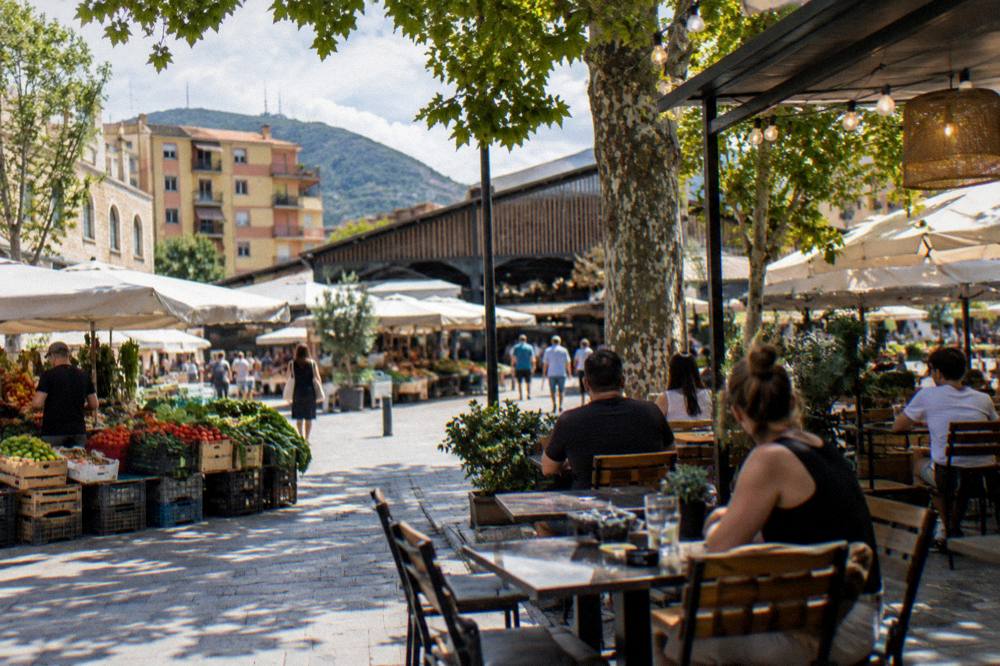
The Sky Tower, about 0.7 km south of Skanderbeg Square, is Tirana's signature after-dark viewpoint, a rotating restaurant and deck whose circuit of the city takes in the lit boulevard running south toward Mother Teresa Square and the dark mass of Mount Dajti to the east; the free alternative is the pedestrian square itself and the boulevard walk to the Grand Park, about 2.1 km south-east.
The tower is the paid option and the reliable one, and its attraction page covers the practical details. The free circuit is a route rather than a venue: start on Skanderbeg Square, where the Et'hem Bey Mosque and the Clock Tower are floodlit and the mosaic facade of the closed National History Museum glows across the stone, walk south past the Pyramid, through the Blloku edge and down to Mother Teresa Square about 1.2 km south, and the whole spine of the city is lit for the length of it.
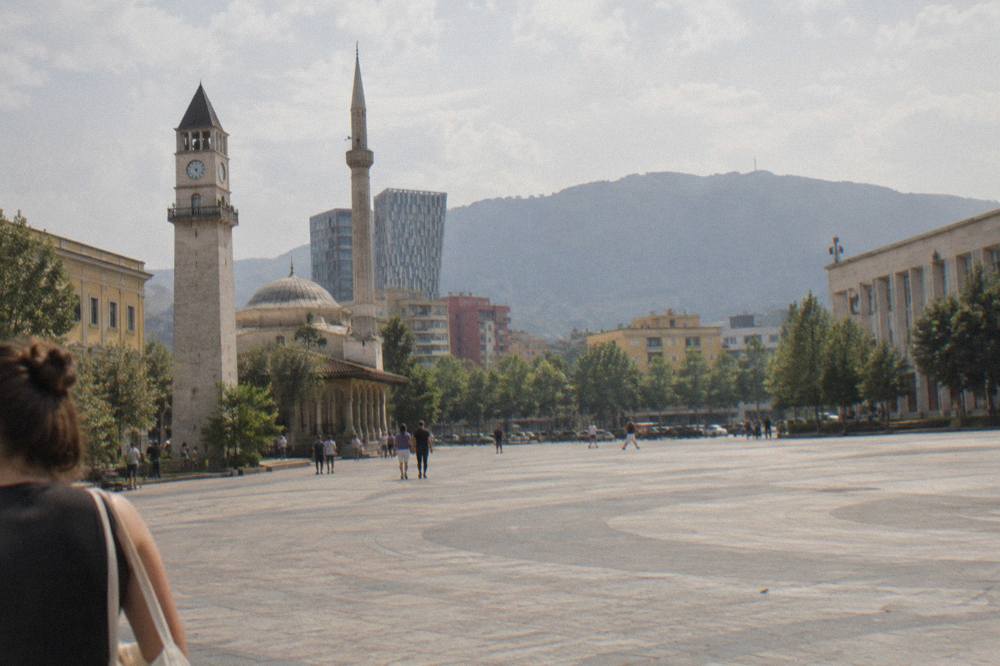
Two quieter night walks extend the same spine. The Grand Park and the Artificial Lake, both about 2.1 km from the square, are walking territory in the early evening, though the park is unlit farmland-adjacent in character at its outer edges, so the busy spine is the safer after-dark choice. And the walk up to the Pyramid steps, about 0.7 km south-east of the square, gives a low-rise view over the centre for no cost at all, though the steps are best done in daylight.
| After-dark viewpoint | Direction from Skanderbeg Square | Distance | Cost basis |
|---|---|---|---|
| Skanderbeg Square itself | On the square | 0 km | Free public space |
| Sky Tower deck | South | about 0.7 km | Ticketed, buy on site |
| Pyramid of Tirana steps | South-east | about 0.7 km | Free, best in daylight |
| Mother Teresa Square | South | about 1.2 km | Free public space |
| Grand Park lake paths | South-east | about 2.1 km | Free, early evening |
| Dajti Ekspres cable car | North-east | about 4.4 km | Evening rides seasonal, check the operator |
The cable car line in the table comes with a warning: the Dajti Ekspres is reported to close on Tuesdays for maintenance, and its evening operation is seasonal, so check with the operator before planning a sunset ride. The site's Dajti Ekspres guide carries the current hours and fare situation.
When Is The Best Season For Tirana Nightlife?
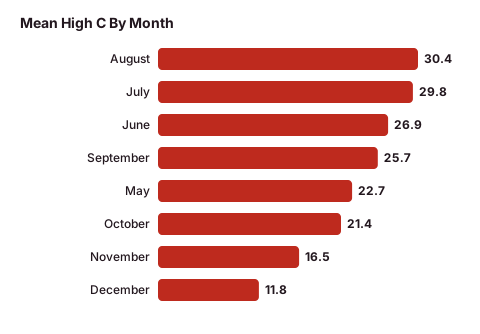
Tirana's terrace nightlife runs hardest from May through September, when the ERA5 reanalysis for 1991-2020 shows mean daily highs of 22.7 C in May rising to 30.4 C in August and rainfall falling to its annual low of 31 mm in August, while November and December, with 139 mm and 138 mm of rain respectively, push the scene indoors toward the December festivals, the Christmas market and the Festivali i Kenges.
Summer is the outdoor season. Blloku's terraces and the New Bazaar's grill tables are the whole point of a Tirana evening between late spring and early autumn, and the city's Tirana in summer guide covers the daytime half of that calendar. July and August bring mean highs of 29.8 C and 30.4 C with the year's lowest rainfall, 33.5 mm and 31.0 mm, and evening lows near 19 C, ideal terrace weather.
| Month | Mean high C | Mean low C | Rain mm | Terrace verdict (ERA5 reanalysis, 1991-2020) |
|---|---|---|---|---|
| May | 22.7 | 12.5 | 89.0 | Outdoor season begins |
| June | 26.9 | 16.6 | 51.2 | Prime terrace month |
| July | 29.8 | 19.1 | 33.5 | Hot, dry, late nights |
| August | 30.4 | 19.5 | 31.0 | Peak heat, lowest rain |
| September | 25.7 | 16.0 | 98.9 | Film and jazz festivals, still warm |
| October | 21.4 | 12.2 | 119.1 | Mixed, indoor backup needed |
| November | 16.5 | 8.0 | 138.6 | Wet, indoor evenings |
| December | 11.8 | 4.0 | 137.5 | Christmas market and song festival |
Autumn is the cultural season. September's film and jazz festivals land while mean highs still sit at 25.7 C, and December, whatever the 137.5 mm of rain, is the month the Christmas market usually fills Skanderbeg Square through the holiday weeks and Festivali i Kenges closes the year. Winter visitors should trade the terrace plan for a tickets plan. The site's best time to visit Tirana and Tirana weather pages extend the same data month by month.
Getting Home Safely After A Night Out In Tirana
Tirana is walkable at night in its central zone, with the square-to-Blloku spine well lit and busy until late, and the practical rules are: walk in the centre, take a taxi rather than a long dark route to outer districts, keep emergency numbers at hand (Police 112, Ambulance 127, Fire 128), and avoid demonstrations, which have been held in central Tirana since 13 October 2026, some of them violent.
The October 2026 demonstrations are the single most important current-conditions note on this page. The FCDO updated its Albania advice on 15 October 2026 and advises avoiding demonstrations and checking local media; gatherings in the centre have at times turned violent, and they move fast across the very squares and boulevards this guide describes. The Is Tirana Safe? Scams, Traffic And Night Walks page carries the fuller picture, including the standing advice to watch belongings in crowds.
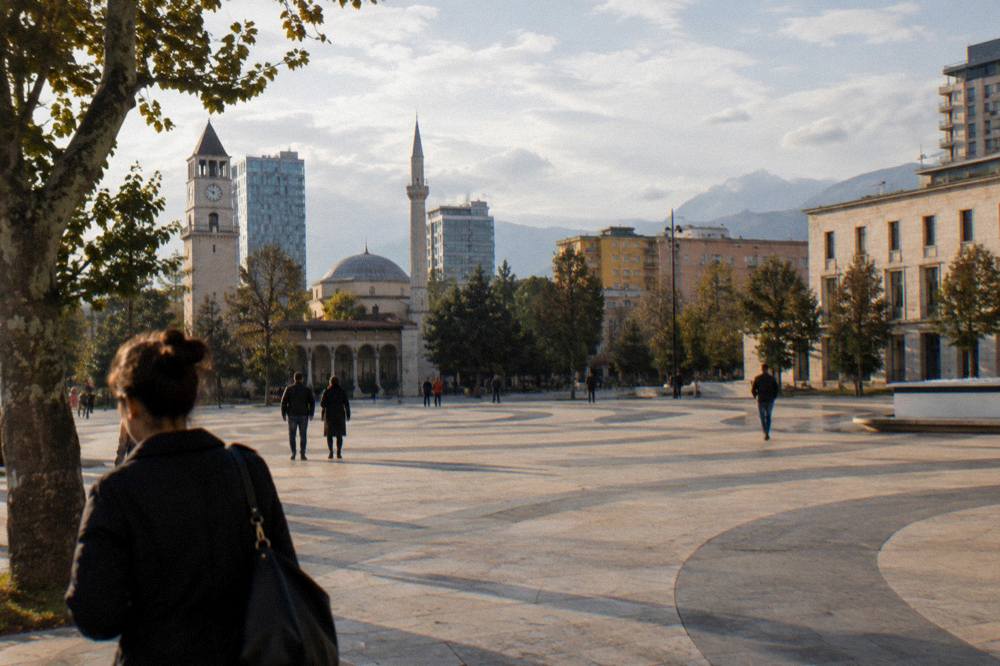
Transport after midnight is a taxi question. Uber and Bolt do not operate in Tirana; local taxi apps do, per medium-grade reporting, and hotel and restaurant staff will call a car regardless. Agree the fare or confirm the app price before setting off, and pay in lek, the currency, since the euro is not legal tender. City buses stop running around 23:00 per reported schedules, so they serve the start of an evening, not the end. The getting around Tirana guide covers daytime options and fares in detail.
| Situation | What To Do | Number or resource |
|---|---|---|
| Medical emergency | Call ambulance | 127 |
| Police | Call police | 112 |
| Fire | Call fire service | 128 |
| Demonstration encountered | Leave the area, avoid crowds | FCDO advice, local media |
| Late-night transport | Taxi app or hotel-called car | Local apps; Uber and Bolt do not operate |
| UK travel advice | Check before and during travel | FCDO Albania page |
Alcohol rules are simple and worth knowing: the sale of alcohol to anyone under 18 is prohibited under Albanian law, per reporting on the 2006 statute, and drink-driving is zero tolerance following the August 2026 tightening of road rules, per ATA reporting. Neither affects a moderate night out, but the second makes the taxi decision for anyone who has been drinking. The answers page on Tirana nightlife takes a longer look at the same judgement.
How Many Days Do You Need To Enjoy Tirana At Night?
Two nights is the practical minimum to see Tirana's evening side properly: one for the Blloku bar circuit after a long dinner, and one for a cultural evening, whether the traditional music-and-dance show, a festival date or a vineyard excursion toward Durres; three or more nights let you add the rooftop views, the New Bazaar food crawl and a late club without rushing.
The reason is structural: the city's two evening personalities, terrace-and-bar and cultural-programme, rarely happen on the same night, because dinner itself runs long. A first-time visitor who tries to do Blloku after a festival performance will simply arrive when the evening is already deep.
For a longer stay, the evening options fan out. A vineyard afternoon toward Durres doubles as an evening out. A communism-history walk ends naturally at a Blloku terrace, on ground the regime once closed. And the festivals in September and December reward whoever's dates coincide with them. Whatever the length of stay, the opening advice of this guide holds: plan by quarter and by type of evening, let the terraces and the grill smoke choose the venue, and keep the second half of the night loose enough to follow the crowd.
Common Questions About Tirana Nightlife
Is Tirana nightlife good?
Tirana's nightlife is genuinely lively and unusually cheap-feeling for a European capital, concentrated in the walkable Blloku quarter, though it rewards a late start: bars fill from around 22:00 and clubs after midnight at weekends. Travellers seeking big-name venues or published club listings will not find them; the scene is local, street-level and informal.
Where is the best area for bars in Tirana?
Blloku, about 0.8 km south of Skanderbeg Square, is the main bar and cafe quarter per several current guides. The New Bazaar about 0.6 km east leads for restaurants and grill houses, and the lanes around Tirana Castle hold terrace dining.
What time do bars and clubs close in Tirana?
No venue publishes its opening hours. Guides report that cafes turn into bars around 20:00, streets fill from 22:00, and weekend clubs run past midnight into the small hours. Confirm timings locally during your visit.
Can you drink alcohol in public in Tirana?
Drinking in bars, restaurants and on terraces is entirely normal. Sale to anyone under 18 is prohibited by law, and drink-driving is zero tolerance. Disorderly public intoxication can attract police attention, so keep drinking to the venues.
Is it safe to walk around Tirana at night?
The central spine from Skanderbeg Square to Blloku is lit and busy until late, and the standard advice is to watch belongings in crowds. The current-conditions note matters more: demonstrations have been held in central Tirana since 13 October 2026, some violent, and the FCDO advises avoiding them and checking local media.
How do you get home after a night out in Tirana?
Walk within the centre, take a taxi beyond it. Uber and Bolt do not operate; local taxi apps do, and hotels will call a car. City buses stop around 23:00, so they serve the start of the evening only. Emergency numbers: Police 112, Ambulance 127, Fire 128.