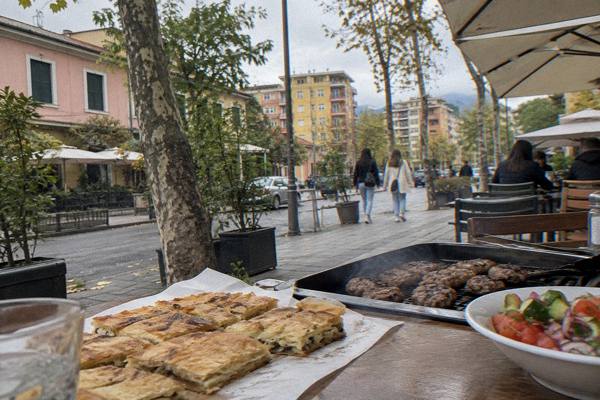
Byrek: The Albanian Pie And Where To Buy It In Tirana
Byrek is the everyday Albanian pie, a layered filo pastry baked in wide trays and sold by the slice, and in Tirana it is the default cheap eat between sights rather than a restaurant dish.
Short answer
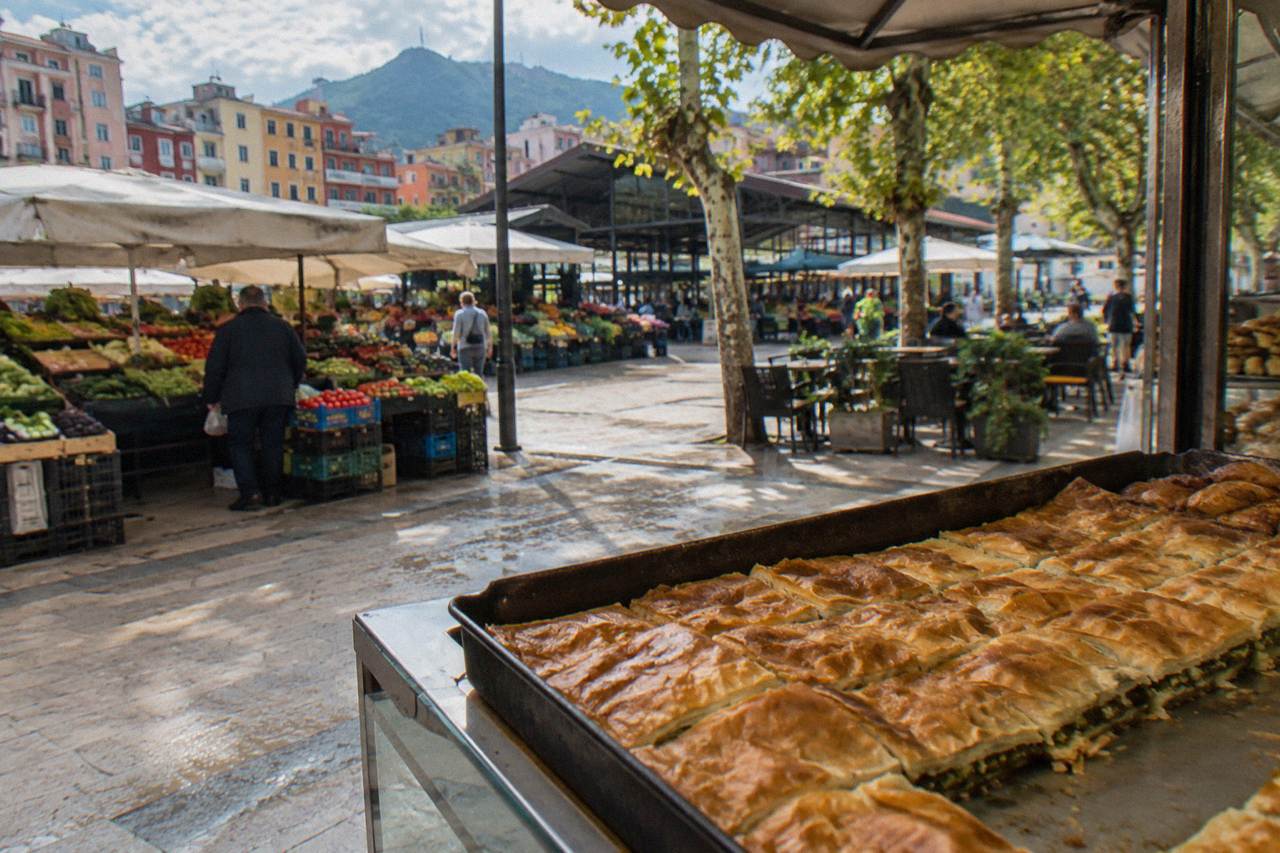
Byrek is a layered filo pie filled with cheese, spinach, meat or pumpkin, baked in large trays and sold by the slice at small bakeries called byrektore across Tirana; you buy it over the counter, eat it hot or at room temperature, and pay a few coins at the till.
Byrek is the everyday pie of Albania, and in Tirana, the inland capital at the foot of Mount Dajti, it is bought by the slice from small bakeries rather than ordered in restaurants. Layers of thin filo pastry are brushed with oil, folded around a simple filling, baked in wide rectangular trays and cut into squares or triangles at the counter.
The word works as both the name of the dish and a daily routine. A slice is a hand food, eaten standing, on a bench, or on the move between the square, the New Bazaar and the Blloku cafe quarter. Nothing about it needs a reservation, a dress code or a menu translation. It also needs no translation of intent: a visitor pointing at a tray and holding up one or two fingers completes the entire transaction, and the till takes care of the rest.
What Is Byrek?
Byrek is a savoury layered pie built from thin filo pastry sheets brushed with oil and stacked around a filling of cheese, spinach, minced meat, pumpkin or courgette, baked in a large shallow tray and cut into pieces to sell by weight or by the slice. In Tirana it functions as street food rather than restaurant food: you buy it at a bakery counter, eat it with your hands, and it is a staple of the whole country, not a speciality of any one restaurant.
The pastry is the constant. Fillings change with the season and the tray: white cheese, greens, onion and tomato, or pumpkin in the autumn months. A related smaller version, rolled rather than layered, appears under names such as qofte-free finger food at bakery counters, but the tray pie is the one the word "byrek" points to. Descriptions of the dish on Albanian food pages describe exactly this: layered filo with cheese, spinach or meat fillings.
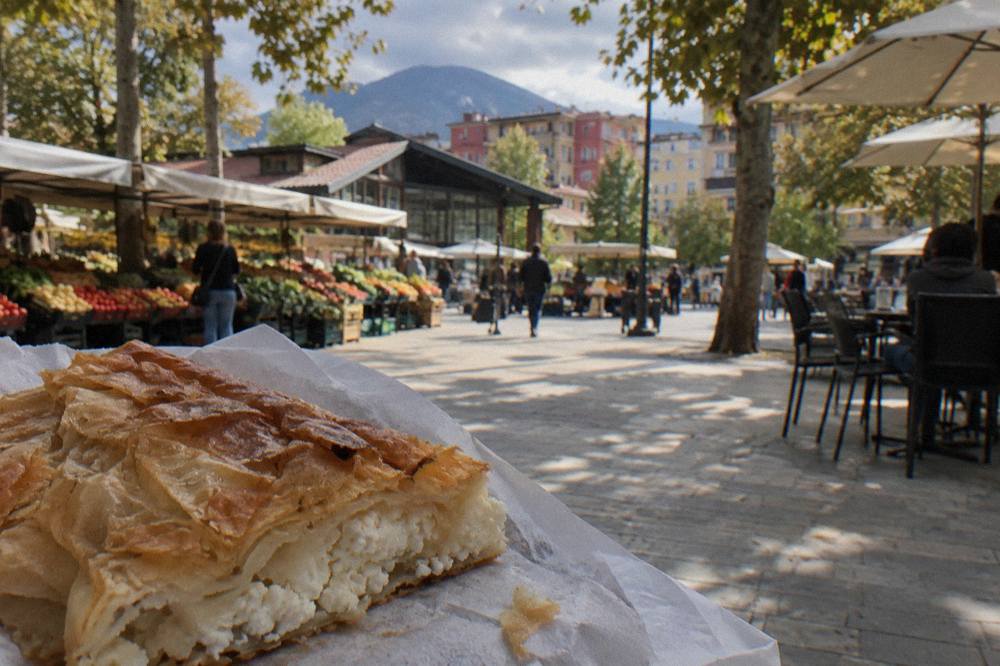
It is not a dessert. Sweet versions exist in the region, but in Tirana the pie sold as byrek is savoury, and it sits in the day alongside qofte, seasoned grilled meatballs, and tave kosi, baked lamb under a yogurt and egg topping, the dishes covered in the site's wider guide to Albanian food.
The tray itself is worth understanding, because it explains the rhythm of a byrektore. A bakery rarely bakes one pie at a time: it runs two or three trays through the morning and more in the afternoon, and the counter holds whatever came out last. A tray fresh from the oven has crisp top layers that shatter when cut; a tray that has sat an hour softens at the centre and crisps at the edges. Neither is wrong, and regulars have firm preferences between them, but the fresh-out window is the one worth timing a stop for.
The Common Fillings, At A Glance
| Filling | What it is | When it is common |
|---|---|---|
| Cheese (gjiz or white cheese) | Salty soft curd or brined cheese between the layers | Year round, the default tray |
| Spinach and greens | Wilted leafy greens with a little oil | Year round, most in spring |
| Meat | Minced meat with onion | Daily trays in most byrektore |
| Pumpkin | Sweet squash filling | Autumn and winter trays |
| Courgette or tomato | Summer vegetables | Summer months |
What the food references agree on is the format: filo, oil, a shallow tray, and a counter sale.
Where To Buy Byrek In Tirana?
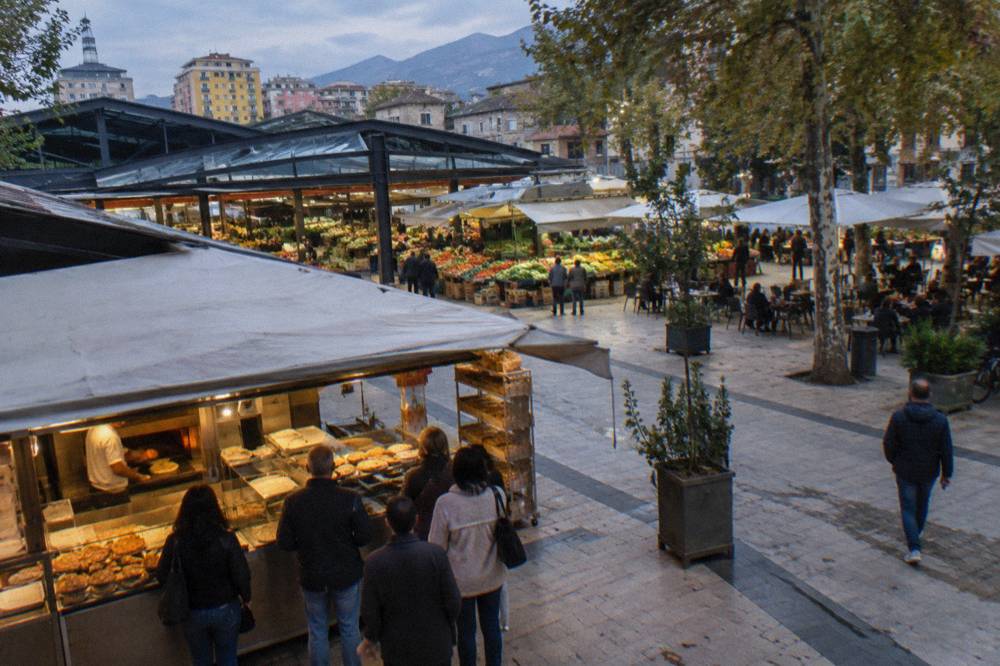
In Tirana byrek is sold at small dedicated bakeries, known as byrektore, at bakery counters throughout the centre, and at food stalls in the Pazari i Ri covered market, which sits about 0.6 km east of Skanderbeg Square. The centre of the trade is the streets around the square, the New Bazaar and the Rruga e Kavajes direction, about 0.5 km west, where bakery density is highest and trays come out of the oven through the day.
Look for a shop with a single counter, a wall oven behind it, and a stack of aluminium trays: one or two on display, one in the oven. Pieces are cut to order and priced at the till. The Pazari i Ri market, which the site's food guide covers in detail, adds butchers, vegetable stalls and dairy sellers around the bakery counters, which makes it the one-stop version of the same shopping trip.
Sophie Caffe, a cafe chain with branches around the centre, is a coffee-and-light-bites format. Era Blloku, in the Blloku quarter about 0.8 km south of the square, serves a full Albanian and Mediterranean menu. Padam, a boutique hotel and restaurant on Rruga Papa Gjon Pali II, and Artigiano, an Italian and Mediterranean kitchen, round out the named list; the site's restaurant guide places all four by neighbourhood.
A guided walk stitches the counters together. The Taste of Albania food tour is built around byrek and qofte tastings with a local guide who handles the ordering, and the shorter hidden-treasures walk passes the food quarters between sights.
Where The Formats Cluster
| Area | Direction from Skanderbeg Square | What you find |
|---|---|---|
| Streets around the square | Immediate centre | Byrektore counters, coffee bars |
| Pazari i Ri (New Bazaar) | About 0.6 km east | Market bakery stalls, produce, dairy |
| Rruga e Kavajes direction | About 0.5 km west | Dense strip of neighbourhood bakeries |
| Blloku | About 0.8 km south | Cafe quarter, sit-down restaurants |
| Tirana Castle quarter | About 0.5 km south-east | Market-adjacent counters and courtyards |
Distances above are straight-line positions from the square; each is a short walk, and the whole food belt between the square, the New Bazaar and Blloku fits a morning on foot, as covered in the site's overview of things to do in Tirana.
How Much Does Byrek Cost In Tirana?
A slice of byrek in Tirana is one of the cheapest things you can eat in the city, sold by the piece or by weight at the bakery counter and paid for at the till in Albanian lek. It costs a fraction of a restaurant main, and it is a cash-first purchase.
The currency is the lek (ALL), and the euro is not legal tender, though some tourist-facing businesses take it informally at their own rate. The Bank of Albania's official rate on 23 October 2026 was 1 EUR to 90.74 lek, so a euro is worth roughly 90 lek. Cards are widely taken in hotels, larger restaurants and supermarkets in central Tirana, but a byrektore counter is exactly the kind of small cash business where you want coins, a point the site's pages on Albanian lek and Tirana prices expand on.
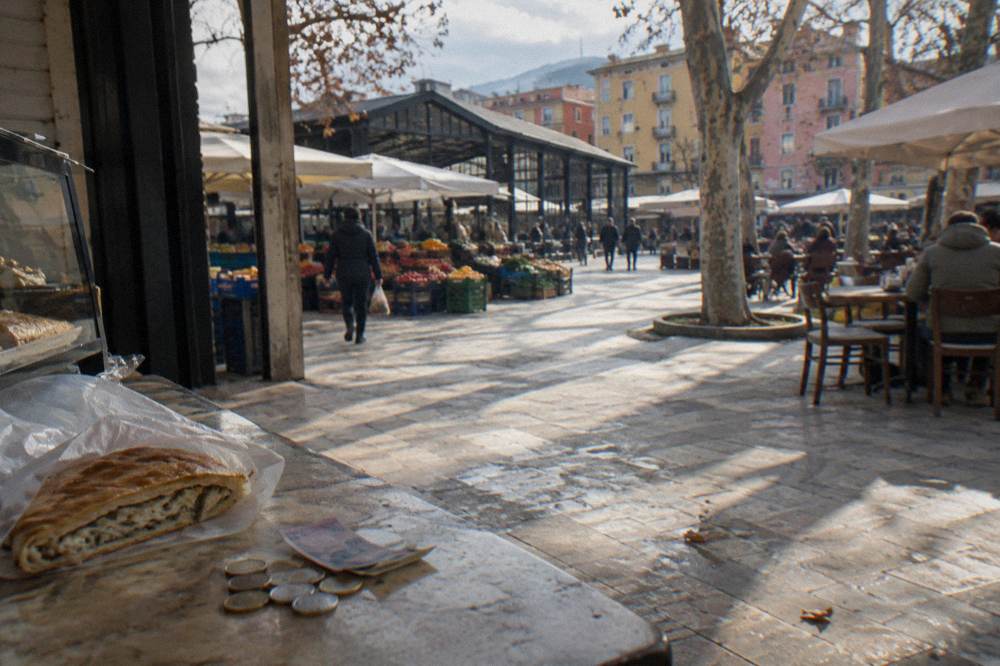
Two practical rules follow. First, carry small denominations: the single city bus ride costs about 40 lek paid in cash on board, reported and to be confirmed locally, and bakery counters work the same way. Second, do not plan to pay by card at a market stall. The toll of rejected cards at 8 a.m. in a queue of commuters is a self-inflicted problem.
ATMs exist across the centre and at the airport, and foreign-card withdrawal fees exist at Albanian banks, so withdrawing a modest amount once and spending it down in coins beats a string of small withdrawals with a fee each time. Change from a larger note is rarely a problem at a bakery with a queue behind it, but a market stall at opening time may not have floated its till yet.
What Do Tirana Locals Eat With Byrek?
Byrek in Tirana is most often paired with Albanian coffee, a small strong Turkish-style coffee served in tiny cups, or with a glass of buttermilk or ayran-style drink sold alongside it at the same counters; in the evening the same food belt shifts to qofte grills, raki, the fruit brandy poured in small measures, and the restaurants of the Blloku quarter about 0.8 km south of the square.
The morning pairing is the coffee. Tirana's cafe culture is dense and cheap by regional standards, and the site's coffee culture guide covers the formats; Sophie Caffe, the chain named above, is one of the city's coffee landmarks with branches around the centre. Byrek plus coffee is the standard working breakfast, taken standing at a counter or at a small cafe table within sight of the bakery. More of these guides are collected on Tirana Albania Travel Guide.
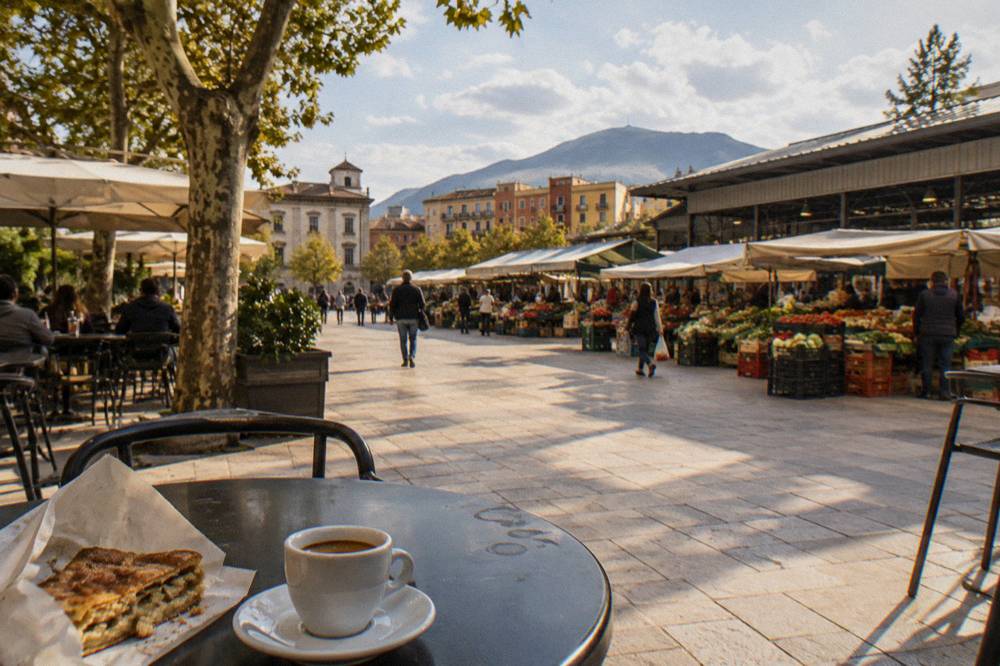
From midday the same streets shift. Qofte, seasoned grilled meatballs, come off charcoal grills; raki, the fruit brandy, appears in small glasses; and the sit-down formats in Blloku, including Era Blloku, serve the fuller Albanian and Mediterranean plates. The site's pages on Albanian drinks and Tirana nightlife carry the evening onward.
Pairings Table
| Time of day | What pairs with the pie | Where it happens |
|---|---|---|
| Morning | Small strong coffee, buttermilk | Counters near the square |
| Midday | Yogurt drink, a second slice | Byrektore, market stalls |
| Afternoon | Coffee again, or water | Cafes of the centre and Blloku |
| Evening | Qofte grills, raki, full plates | Blloku restaurants, New Bazaar |
One drink note that matters legally: Albania's drink-driving rules are zero tolerance, per ATA reporting of the August 2026 tightening, and the reported position is that the sale of alcohol to anyone under 18 is prohibited under Albanian law. Raki in a small glass with a meal is a social measure, not a session.
When Do The Ovens Run: Timing A Fresh Slice In Tirana?
The safest windows for a fresh-from-the-oven slice in Tirana are mid-morning, roughly 09:00 to 11:00, and late afternoon into early evening, when byrektore bake ahead of the commute and the after-work trade; a tray bought at midday has usually been out for a couple of hours, which some prefer for the set fillings and firmer pastry, so the "best" time depends on whether you want crisp layers or a settled slice.
The rhythm is driven by the working day rather than by tourism. The first trays come out before the office rush, a second round lands around mid-morning, and the ovens fire again in the late afternoon. Counters rarely advertise a schedule, so the honest method is the queue: a line of people holding coins is the most reliable sign that a tray has just landed, and following it costs nothing.
Season shifts the pattern slightly. In the hot months, when the July mean high runs 29.8 C and August 30.4 C per the ERA5 reanalysis for 1991 to 2020, the trade leans earlier in the day and the drinks beside the pie lean colder. In the wet months of November and December, which carry 139 and 138 mm of rain respectively in the same reanalysis, a hot slice becomes a shelter-and-thaw stop between museums, and the site's Tirana weather page puts the full monthly table against that decision.
Can You Learn To Make Byrek In Tirana?
Yes: Tirana has a small set of cooking classes and food walks built around Albanian home cooking, in which the filo work and the tray assembly of byrek are standard material, and they run alongside the tasting walks that visit the city's bakeries and grills with a guide.
The format suits travellers who want to carry the recipe home. A cooking class session covers dough or filo handling, the filling, the tray, and the oven timing, and usually ends with the meal. A guided tasting walk covers more ground: several counters, several dishes, and a guide who explains what each tray holds. Both are listed on the cards below.
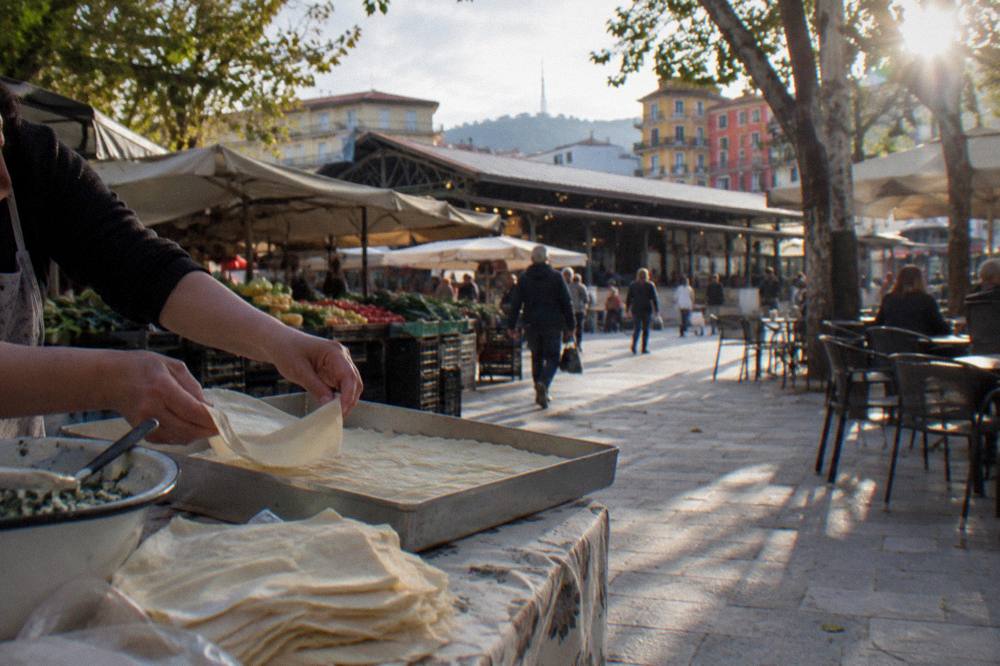
The filo is the hard part and the reason a class earns its keep. Sheets are stretched until they are nearly transparent, laid one over another with oil between, and only then does the filling go in. Getting the layer count and the oil measure right at home usually takes several trays, and a class compresses that trial into one session with someone watching your hands.
For travellers planning the wider food day, the site's travel tips guide covers the practical basics: the lek, the plugs, the tap water question, and the etiquette of a counter queue.
How Does Byrek Fit A Day Of Sightseeing In Tirana?
Byrek fits a Tirana sightseeing day as the between-sights meal: the bakery belt around Skanderbeg Square, the Pazari i Ri market about 0.6 km east and the Blloku quarter about 0.8 km south sit directly on the walking line between the city's main landmarks, from the Et'hem Bey Mosque and the Clock Tower at the square's edge to the House of Leaves museum about 0.2 km south-west and the Pyramid of Tirana about 0.7 km south-east.
The walking logic of the centre makes this easy. The square is the hinge: the Et'hem Bey Mosque, about 0.2 km south-east, the Clock Tower beside it, and the closed National History Museum, shut for restoration until about March 2028, with its mosaic facade still viewable from the square. South and east of that cluster sit the Pyramid, the House of Leaves, and Tirana Castle about 0.5 km south-east. Every one of those walks crosses bakery territory.
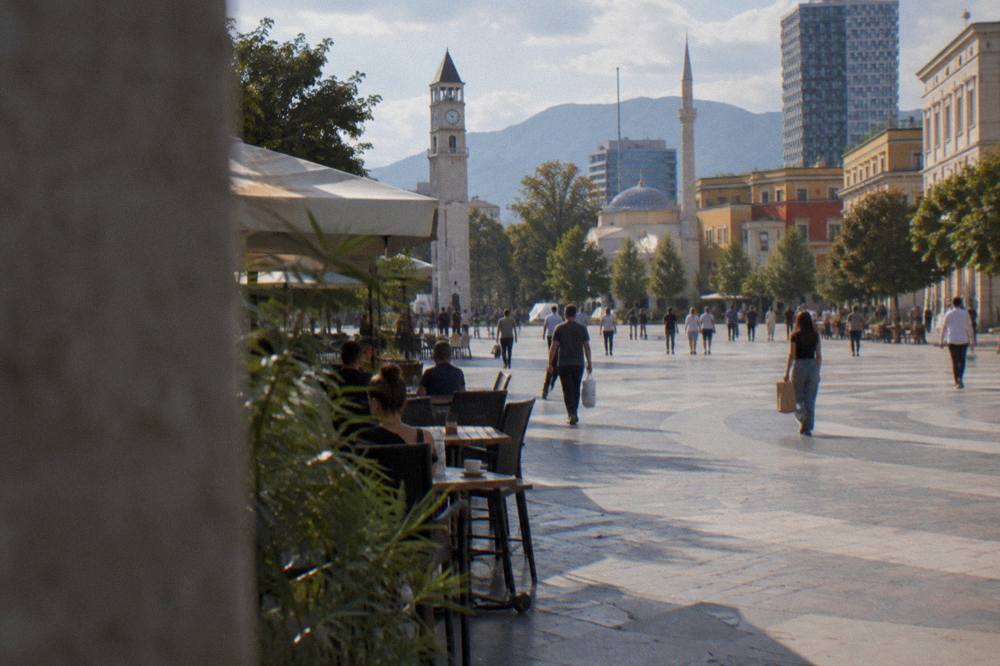
A sample shape for the day: coffee and byrek near the square, the mosque and the square's landmarks in the morning, the House of Leaves and the Pyramid before noon, the New Bazaar counters for a second slice, and Blloku for a sit-down dinner. Families get a version of the same line in the site's free-things-to-do planning page, which pairs the free sights with cheap counter food.
A Pie-Shaped Walking Day
| Stop | Direction from the square | Food stop nearby |
|---|---|---|
| Skanderbeg Square, Et'hem Bey Mosque, Clock Tower | At the square | Byrektore counters |
| House of Leaves | About 0.2 km south-west | Cafe strip |
| Pyramid of Tirana | About 0.7 km south-east | Kiosks toward the boulevard |
| Pazari i Ri | About 0.6 km east | Market bakery stalls |
| Blloku | About 0.8 km south | Restaurants, cafes |
One October 2026 note belongs on any walking plan: demonstrations have been held in central Tirana since 13 October 2026, some violent, and the UK FCDO updated its advice on 15 October; avoid gatherings and check local media. The marathon, moved to 14 to 15 November 2026, will close central streets on those dates.
Common Questions About Byrek In Tirana
Is byrek a breakfast food in Tirana?
It is eaten at any hour, but byrek plus a small strong coffee is the standard morning purchase at bakery counters, and the ovens run through the day rather than only at breakfast.
Can I eat byrek if I am vegetarian?
Yes. Cheese, spinach and greens, pumpkin and courgette fillings are standard trays, and the market stalls at Pazari i Ri label what is in each tray if you ask.
Is byrek safe to eat in Tirana?
The pie is baked at high heat and eaten fresh from the tray, which is the normal food-safety position for street baking anywhere. The UK FCDO advises against drinking tap water in Albania and recommends bottled water; that applies to the tap, not the pie.
Do I need to order byrek in Albanian?
Pointing works, but three words carry the transaction: "byrek" for the pie, "uju" (water, written ujë) and "faturën" for the bill. The site's Albanian phrases page has the full list.
Is byrek the same as the Turkish börek?
The formats are cousins: layered or rolled filo with savoury fillings across the region. The Albanian tray version is its own daily institution, and in Tirana the word points to the counter pie described on this page.
Can I buy byrek to take on a day trip?
Yes, and it travels well wrapped in paper. For the coastal day trip to Durres, about 37 km and 39 minutes by road west, or the castle town of Kruja, about 45 minutes north, a bakery stop before departure is the local habit.
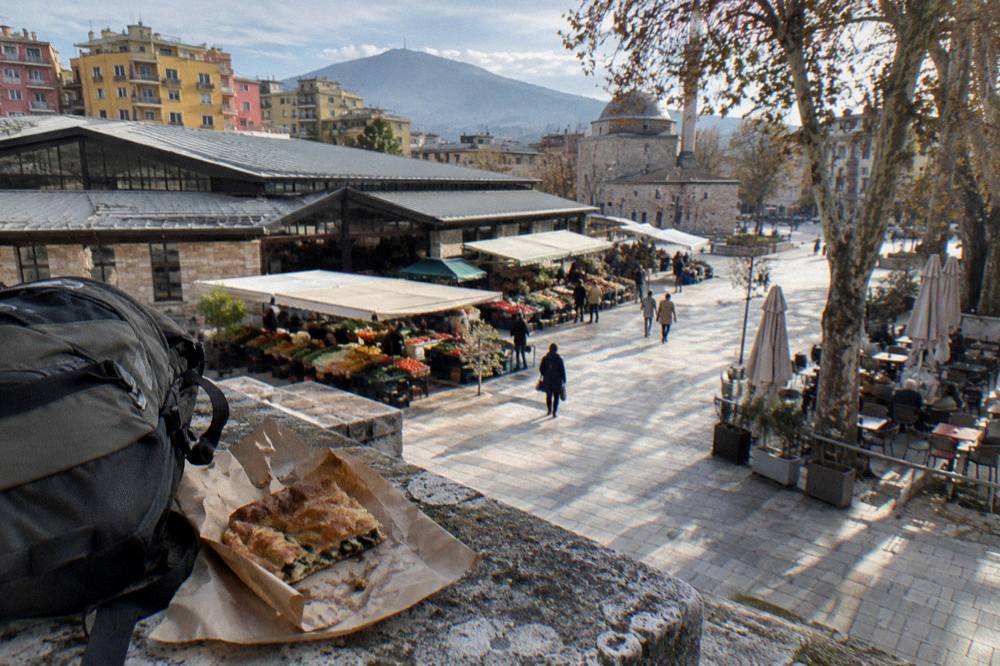
For the wider picture of eating in the capital, from the named restaurants to the market formats, read the site's Tirana restaurant guide, and for the country context start with the Albanian food guide. A slice from a hot tray on a Tirana morning is the shortest route into the city's food culture, and it costs less than the coffee drunk beside it.