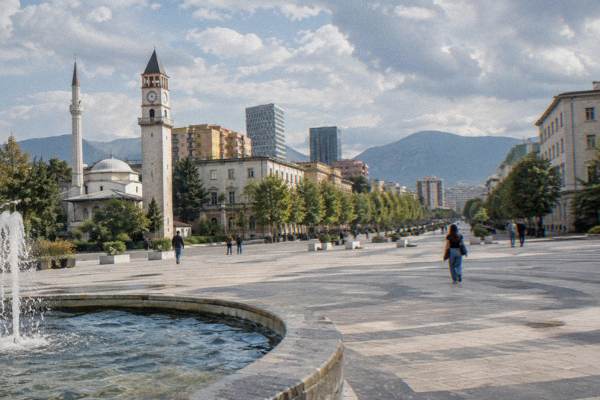
Does Tirana Get Snow?
Does Tirana get snow? The honest climate answer for Albania's capital: mild wet winters, January lows near 2 C, and what the data does and does not say about snowfall.
Tirana, the capital of Albania, is not a snow city. It sits in an inland basin at the foot of Mount Dajti, roughly 37 km and about 39 minutes by road from the Adriatic coast at Durres, and its winter climate runs mild and wet rather than cold and white. The ERA5 reanalysis for Tirana, 1991 to 2020, puts the January mean daily high at 10.8 C and the mean overnight low at just 2.3 C, which is a temperature band where snow is possible but far from guaranteed. The table measures temperature and rainfall only: it does not measure snowfall, and no reliable snow-day count for the city exists, so snow in Tirana happens occasionally, settles rarely, and should never be the reason you book a winter trip. This page walks through what the climate data does say, what winter actually feels like on the ground, and what to do with a cold or wet day in the Albanian capital. For the broader picture across the seasons, see Tirana's year-round weather.
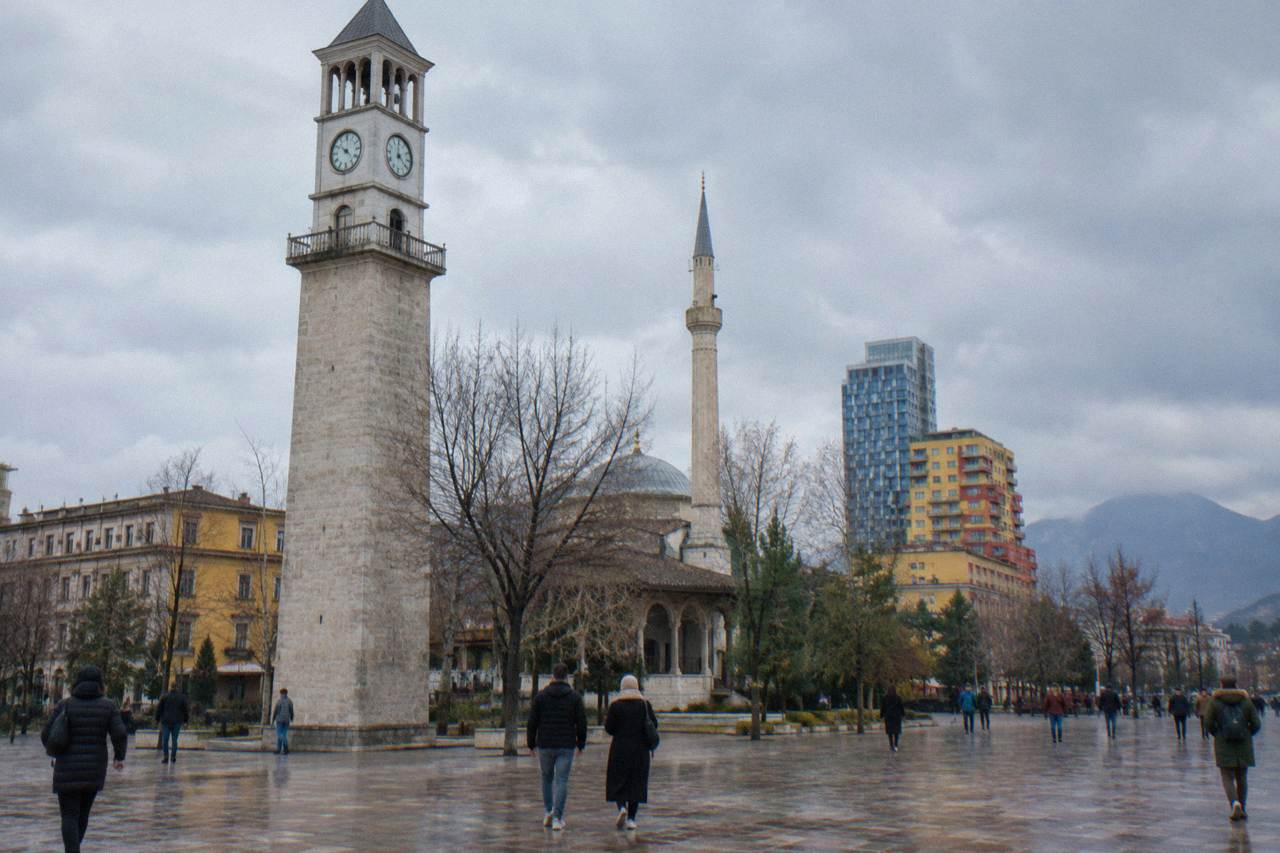
Snow falls in Tirana only occasionally, and it settles on the city's streets even less often. The ERA5 reanalysis for Tirana, 1991 to 2020, gives a January mean overnight low of 2.3 C, right on the edge between rain and snow, and a mean daytime high of 10.8 C, which melts anything that lands. The same dataset records temperature and rainfall only, not snowfall, so no honest snow-day figure for the capital exists to quote.
What that means in practice: Tirana's winter precipitation falls overwhelmingly as rain. November is the month with the highest rainfall total in the normals, 138.6 mm, followed closely by December at 137.5 mm, and January at 105.8 mm. For a snowfall you need cold air and moisture to arrive together, and the basin Tirana sits in, open toward the Adriatic to the west, tends to import mild, damp air off the sea in winter rain systems. When a genuine cold snap does coincide with precipitation, the city can see a short-lived dusting, and locals treat it as an event precisely because it is unusual. Anyone promising you a white Tirana is guessing.
It is worth separating Tirana from the rest of the country here. Albania has real mountains: the Albanian Alps in the north, around Theth and Valbona, hold snow through winter and draw hikers and ski-curious travellers, and Theth sits about 250 minutes by road from Skanderbeg Square. The capital's basin climate is a different animal. If snow matters to your trip, the north of the country, not the capital, is where to look, and even there you should confirm conditions locally before travelling, because road and trail access in the Alps varies through the season.
How Cold Does Tirana Actually Get In Winter?
Tirana's coolest month is January, with a mean daily high of 10.8 C and a mean overnight low of 2.3 C per the ERA5 reanalysis, 1991 to 2020, and December and February sit in almost the same band. That is a mild-winter profile: days often feel cool rather than bitter, nights drop to around freezing, and the figures carry about 1 to 2 C of smoothing because they come from a modelled grid cell, not a weather station.
The full winter half of the normals table shows the shape of the season:
| Month | Mean high C | Mean low C | Rain mm | Rain days (1 mm or more) |
|---|---|---|---|---|
| Oct | 21.4 | 12.2 | 119.1 | 9.5 |
| Nov | 16.5 | 8.0 | 138.6 | 11.2 |
| Dec | 11.8 | 4.0 | 137.5 | 12.0 |
| Jan | 10.8 | 2.3 | 105.8 | 10.3 |
| Feb | 12.0 | 2.9 | 106.6 | 11.0 |
| Mar | 15.0 | 5.1 | 116.6 | 11.1 |
Two things stand out. First, the rain does not stop: every winter month records ten or more days with at least 1 mm of rain, so a waterproof layer earns its place in your bag far more than snow boots do. Second, the transition is quick. October still averages a 21.4 C daytime high, and by December the mean high has dropped to 11.8 C, but the overnight lows hover just above freezing for the whole of December through February. Frost on parked cars and pavements in the early morning is a realistic expectation for midwinter; deep, lasting cold is not. Summer, for contrast, runs hot and dry, with a July mean high of 29.8 C and an August mean high of 30.4 C against August rainfall of just 31.0 mm, the lowest monthly total of the year. If you are weighing seasons, the timing question is covered in detail in the best month to visit Tirana.
What Does Tirana Winter Weather Feel Like On The Ground?
Tirana in winter feels like a cool, damp Mediterranean-basin city: overcast mornings around 2 to 5 C, afternoons climbing toward 10 to 12 C on the January and December means, and a persistent chance of rain on roughly one day in three. The 1991 to 2020 reanalysis shows no month from November to February with fewer than ten rain days, so the default winter day is grey and damp rather than icy.
The city's fabric shapes how that weather lands. Skanderbeg Square, the central public space at the heart of the capital, is largely open and paved, and the wind across it can make a 10 C afternoon feel sharper than the number suggests. The cafe quarter of Blloku, about 0.8 km south of the square, is built for exactly this climate: the cafe-and-bar district that local guides report as Tirana's main nightlife area is dense enough that you are never more than a door from somewhere warm. The Et'hem Bey Mosque, about 0.2 km south-east of the square, and the Clock Tower beside it can be seen from the square itself without much exposure, while the Pyramid of Tirana, about 0.7 km south-east, has exterior steps that are free to climb and are best saved for a dry window, since wet steps are wet steps. Layers are the whole strategy: a warm mid-layer for mornings, a waterproof shell for the rain that is more likely than snow, and shoes that can take puddles.
One planning note specific to winter 2026: the National History Museum on Skanderbeg Square is closed for restoration, with the announced closure running to about March 2028, so its mosaic facade is a square-side view rather than an indoor stop. The Bunk'Art museums are the city's heavyweight indoor history options: the Bunk'Art website lists Bunk'Art 1, about 4.6 km north-east of the square behind the Dajti Ekspres lower station, open daily 09:30 to 17:30 since 1 June 2026, and Bunk'Art 2, about 0.2 km south-east of the square, open daily from 09:30. Neither prints a ticket price online, so buy tickets at the door.
Does Mount Dajti Get Snow When The City Does Not?
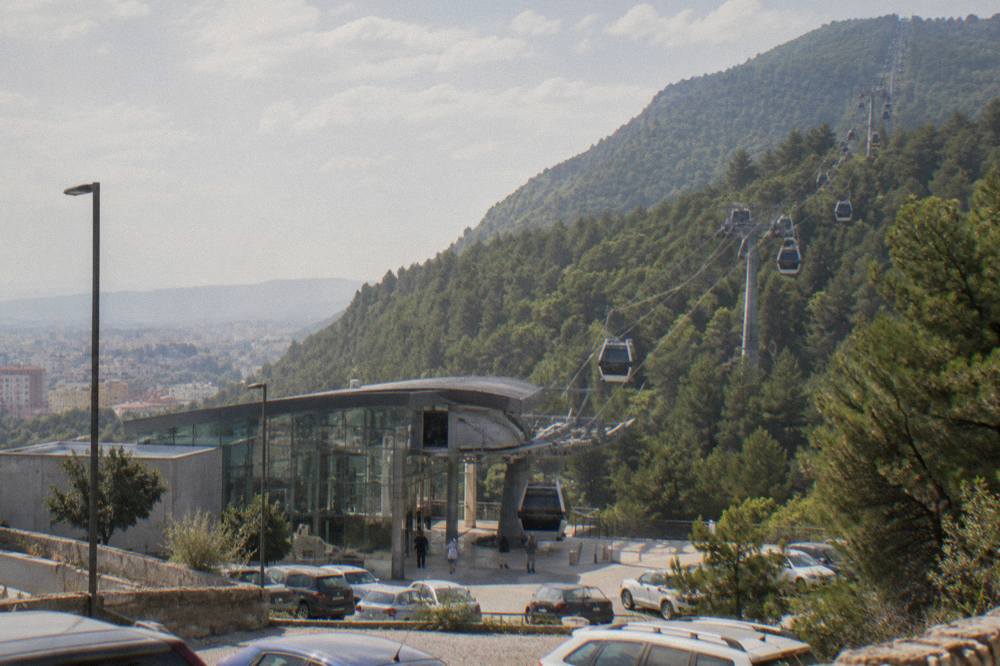
Mount Dajti rises directly above Tirana, with its summit about 9.8 km from Skanderbeg Square as the crow flies, and the Dajti Ekspres cable car links the city's eastern edge to the mountain. The claim that the mountain turns white while the city stays green is a natural one, but no snow-day record for Mount Dajti exists, so this page promises nothing and suggests you check conditions with the operator before planning a snowy ascent.
What is established: the Dajti Ekspres is described by its operator as the longest cableway in the Balkans, Austrian-built, and its tickets are sold only at the lower station, which sits about 4.4 km north-east of Skanderbeg Square. The operator's own page states that tickets come in one-way, return and combination forms, that the busiest times are national holidays, and that arriving between 09:00 and 11:00 helps avoid queues. The cable car is usually closed on Tuesdays for maintenance, per the operator's stated schedule, and no fare is published online: the operator's page says to ask at the lower station. Elevation does the rest of the argument. A city with January lows of 2.3 C will be colder on the slopes well above it, and the mountain is a regular winter escape for people of Tirana, but a "snow guarantee" is not something any honest source offers. If a mountaintop snow scene is the goal, treat it as a possibility, check the weather and the operator's status, and be ready for a clear, cold view instead.
The same honesty applies further afield. Lake Bovilla, a mountain reservoir about 61 minutes by road from the square, and Pellumbas Cave, about 47 minutes, are popular outdoor day trips that look entirely different in winter mud than in summer dust. None of these has a published winter-access guarantee, and the Bovilla day trip question covers the trade-offs in more detail.
What To Do In Tirana On A Cold Or Wet Winter Day?
Tirana answers winter weather with indoor history and evening culture rather than snow sports: the Bunk'Art museums, the House of Leaves, the cafes of Blloku and Pazari i Ri, and an events calendar that peaks in December with the Christmas market on Skanderbeg Square and Festivali i Kenges on 17 to 20 December 2026. The House of Leaves museum, about 0.2 km south-west of the square, lists daily opening 09:00 to 19:00.
A cold-day shortlist:
| Option | Where | Details |
|---|---|---|
| Bunk'Art 1 | About 4.6 km north-east of the square, behind the cable car lower station | The museum's site lists daily 09:30 to 17:30; buy tickets at the door |
| Bunk'Art 2 | About 0.2 km south-east of the square, opposite the Municipality | The museum's site lists daily opening from 09:30; buy tickets at the door |
| House of Leaves | About 0.2 km south-west of the square | The museum's own site lists Monday to Sunday 09:00 to 19:00 |
| Skanderbeg Square and the mosaic facade | On the square | Free public space; the National History Museum behind it is closed for restoration to about March 2028 |
| Pazari i Ri | About 0.6 km east of the square | The New Bazaar's covered market stalls, a short walk from the centre |
Guided walks also work well in winter, because the city's story is told street by street and the distances are short. The Tirana Walking Tours highlights walk covers the span from Ottoman-era landmarks to communist-era ones, and a classic walking tour of the capital is the standard way to read the layers quickly. Walking at night is its own question, addressed separately in Is It Safe To Walk Around Tirana At Night.
Does Tirana Get Snow At Christmas?
The climate normals argue against a white Christmas in Tirana: December's mean overnight low is 4.0 C and its mean daily high is 11.8 C, with 137.5 mm of rain across about twelve rain days, so the default late-December day is mild, damp and festive rather than snowy. The Christmas market on Skanderbeg Square usually runs through December, and Festivali i Kenges fills the Palace of Congresses from 17 to 20 December 2026.
Christmas in the capital is a lights-and-market affair. The market is the seasonal centrepiece on the square, and Independence Day on 28 November and Liberation Day on 29 November arrive just before it, giving late autumn a run of public holidays. Snow, if it shows up at all in a given December, tends to be brief: the mean high above 10 C works against anything lasting. Travellers chasing reliable snow should look north to the Albanian Alps around Theth, and even then confirm conditions and road access before committing, because winter access in the mountains is a local-knowledge question. For a fuller seasonal picture, the Christmas in Tirana guide collects what the calendar and the climate actually offer.
Common Questions About Snow And Winter In Tirana
Does Tirana Get Snow?
Occasionally, and it rarely settles. The January mean overnight low is 2.3 C per the 1991 to 2020 reanalysis, right at the rain-snow boundary, while the mean daytime high of 10.8 C melts whatever lands. No official snow-day count for the city exists, so plan for rain, not snow.
What is the coolest month in Tirana?
January, with a mean daily high of 10.8 C and a mean low of 2.3 C in the ERA5 reanalysis, 1991 to 2020. December and February sit in almost the same band, so the cold is steady rather than sharp.
Does it snow on Mount Dajti?
The mountain above the city is colder than the streets below, but no snow-day record for Mount Dajti exists and this page promises nothing. Check conditions with the Dajti Ekspres operator before planning a winter ride, and note the usual Tuesday maintenance closure and the 09:00 to 11:00 low-queue window the operator itself recommends.
Is Tirana rainy in winter?
Yes, that is the real winter story. November records 138.6 mm of rain and December 137.5 mm in the 1991 to 2020 normals, with ten to twelve rain days per month from November through March, so a waterproof layer matters more than winter boots.
Should I visit Tirana in winter if I want snow?
Not for the snow itself. Visit for the museums, the cafes of Blloku, the Christmas market in December and short queues at the sights, and treat snow as an occasional bonus. Reliable winter snow in Albania means the Alps in the north, around Theth and Valbona, with conditions confirmed locally.
The short version stands: Tirana is a mild, wet winter city in a basin below a mountain, and the data says rain jacket, layers and a museum list, with snow as a rumour you should never book around.