Tirana Street Art And The Painted Buildings
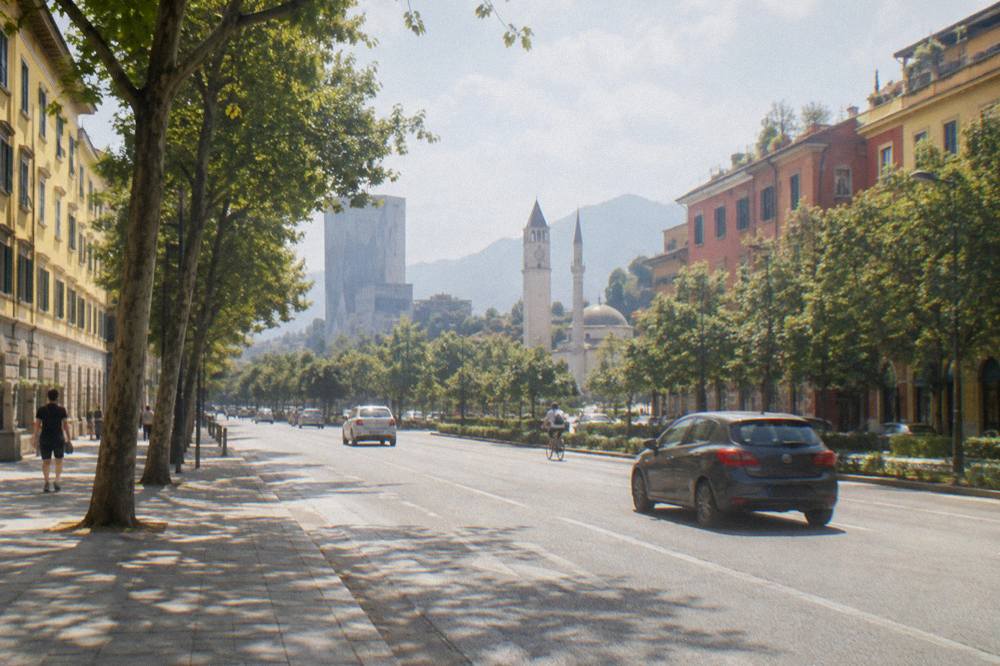
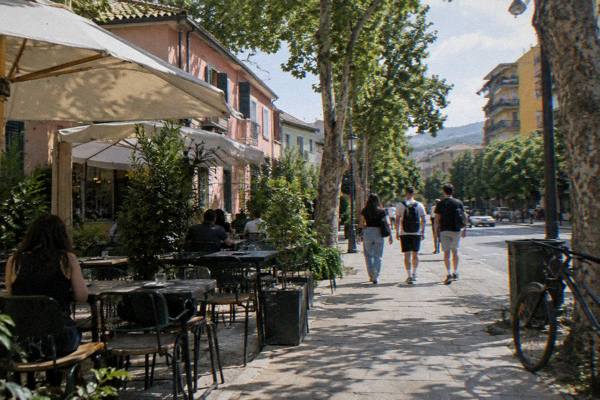
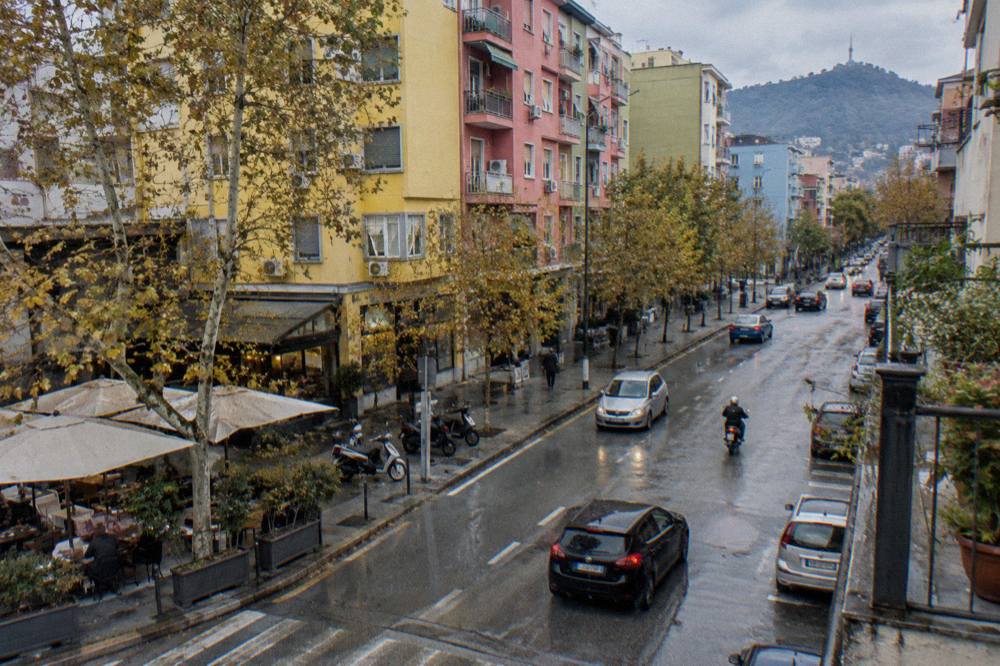
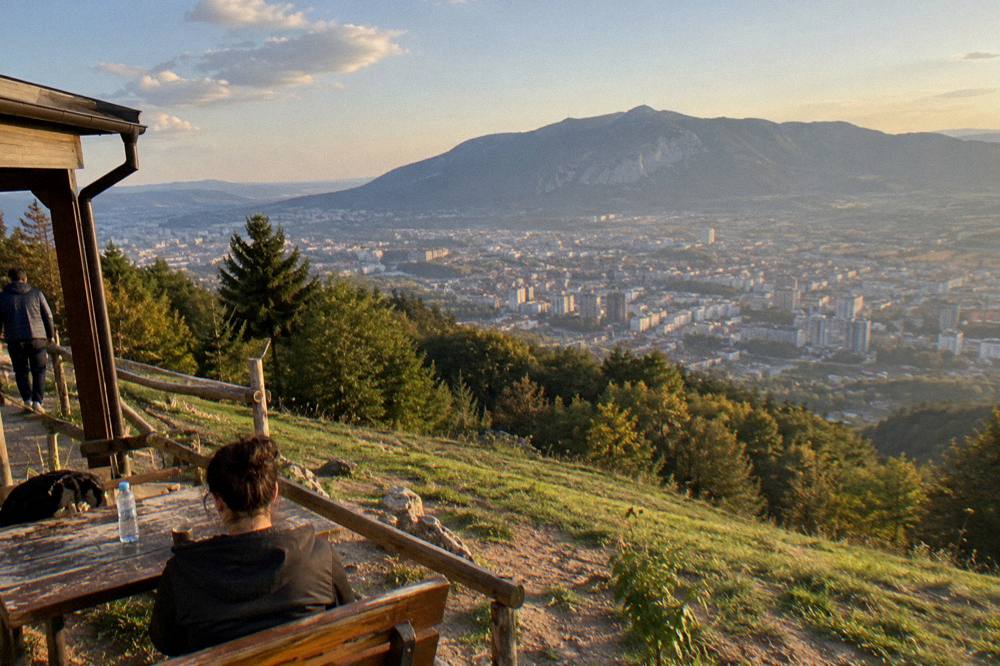
Tirana, the capital of Albania, is an inland city in a basin at the foot of Mount Dajti whose centre is famous for its colour: bright painted facades, murals on side streets, and a street art scene that grew out of the grey decades of the communist period.
Short answer
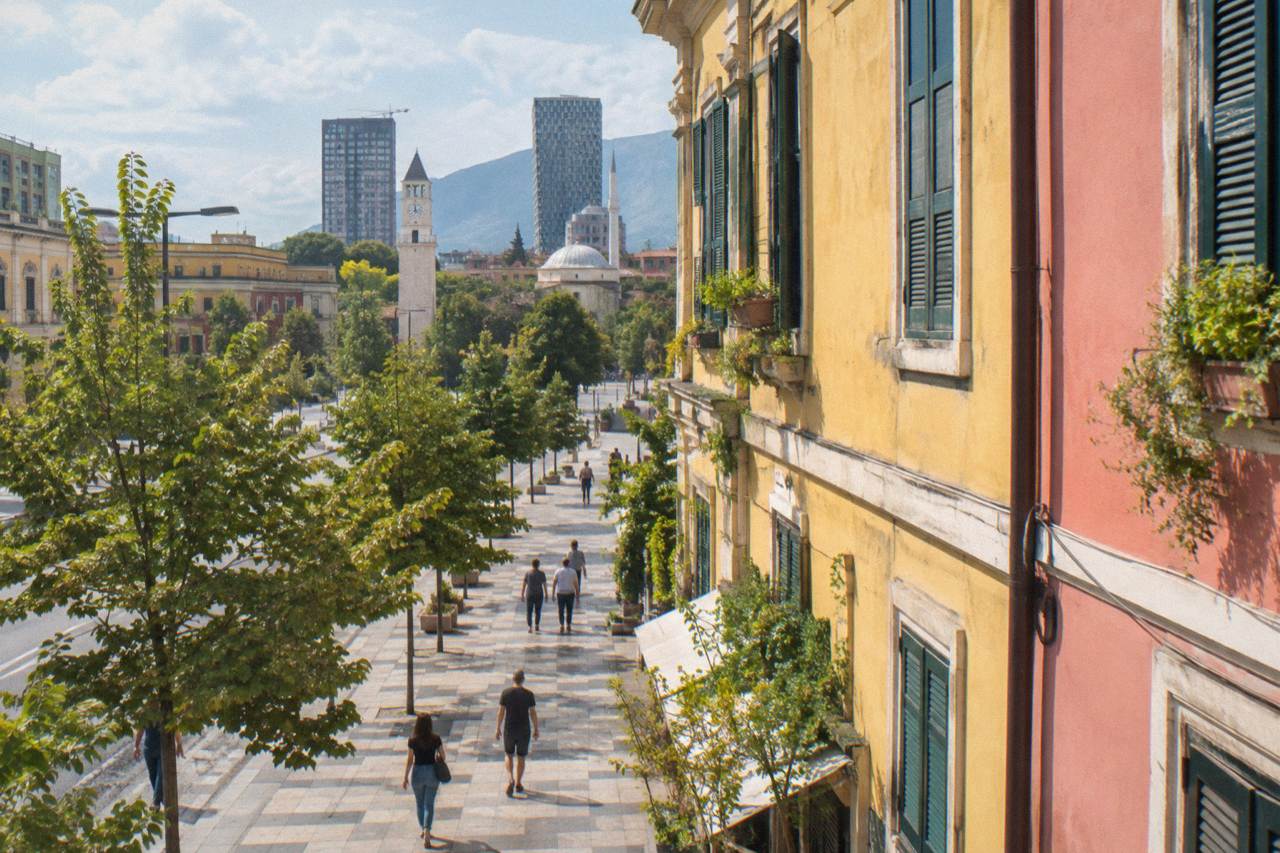
Tirana's street art and painted buildings are concentrated in the city centre around Skanderbeg Square, in the Blloku cafe quarter about 0.8 km south, and along streets such as Rruga e Kavajes and Myslym Shyri. All of it is outdoors and free to see on foot, and the city's compact centre makes a walking route easy.
Tirana, the capital of Albania, is an inland city in a basin at the foot of Mount Dajti, about 37 km and 39 minutes by road from the Adriatic coast at Durres, and it is one of the few European capitals whose centre is defined by colour. The painted facades and murals that cover its apartment blocks and side walls are the visual signature of a city that emerged from decades of drab communist-era construction into a period of deliberate, city-wide repainting. This guide walks through where that colour is, which neighbourhoods carry it, how it connects to the city's history, and how to plan a route on foot.
Why Is Tirana Known For Its Painted Buildings And Street Art?
Tirana is known for its painted buildings because the city's apartment blocks and public facades were repainted in bold colours and large patterns after the communist period ended in 1991, turning grey residential stock into an open-air gallery. No complete catalogue of individual murals or artists exists, so the appeal is the cityscape itself: colour as urban fabric rather than a single artwork you travel to see.
The city's built story is unusual. Communist rule ran from 1944 to 1991, and the housing stock from that era was functional and uniform. When the regime ended, the city began repainting those facades, and the result is a centre where ochre, violet, green and crimson walls sit beside Ottoman-era mosques and the renovated Pyramid of Tirana.
Almost everything worth seeing sits within a couple of kilometres of Skanderbeg Square, one of Tirana's most important public spaces per the national tourism agency. The Et'hem Bey Mosque stands about 0.2 km south-east of the square, the Pyramid about 0.7 km south-east, Blloku about 0.8 km south, and the Tirana Castle area about 0.5 km south-east. A single walking loop covers the painted facades, the murals on connecting streets, and the city's major landmarks without needing transport.
The colour also works as an orientation tool. Bright walls mark the regenerated streets; grey ones often mark the edges of the centre. For a broader first-visit plan, things to do in Tirana puts the street art in context with the museums, squares and cable car.
Where Are The Best Areas For Tirana Street Art?
The best areas for Tirana street art are the streets immediately around Skanderbeg Square, the corridor east past the New Bazaar toward Tanners' Bridge about 0.7 km east, and the Blloku quarter about 0.8 km south of the square. All three sit within a 30-minute walk of each other, and the painted facades continue along Rruga e Kavajes about 0.5 km west.
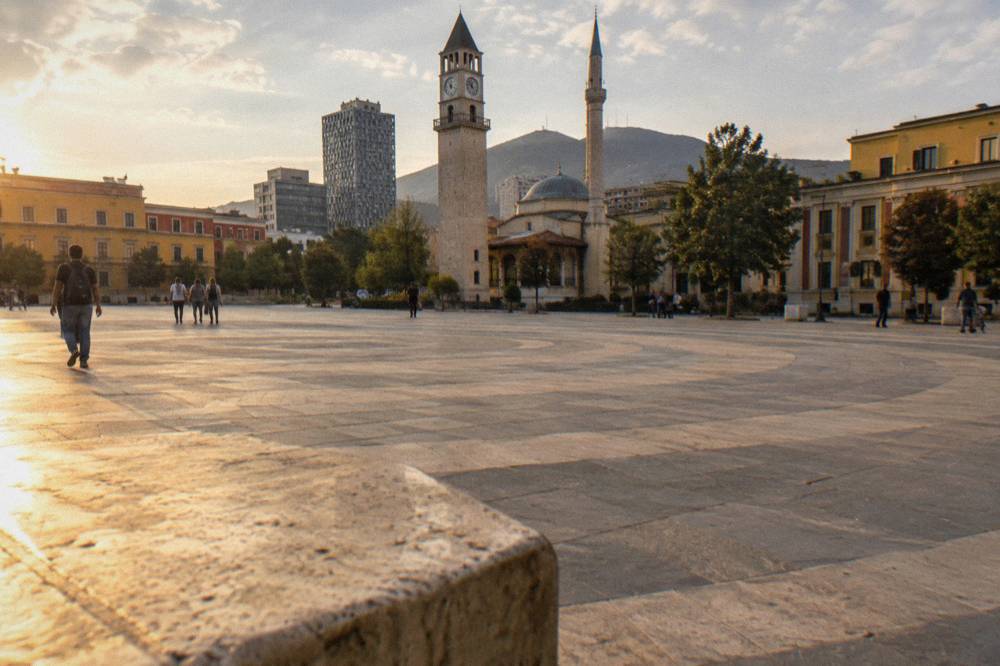
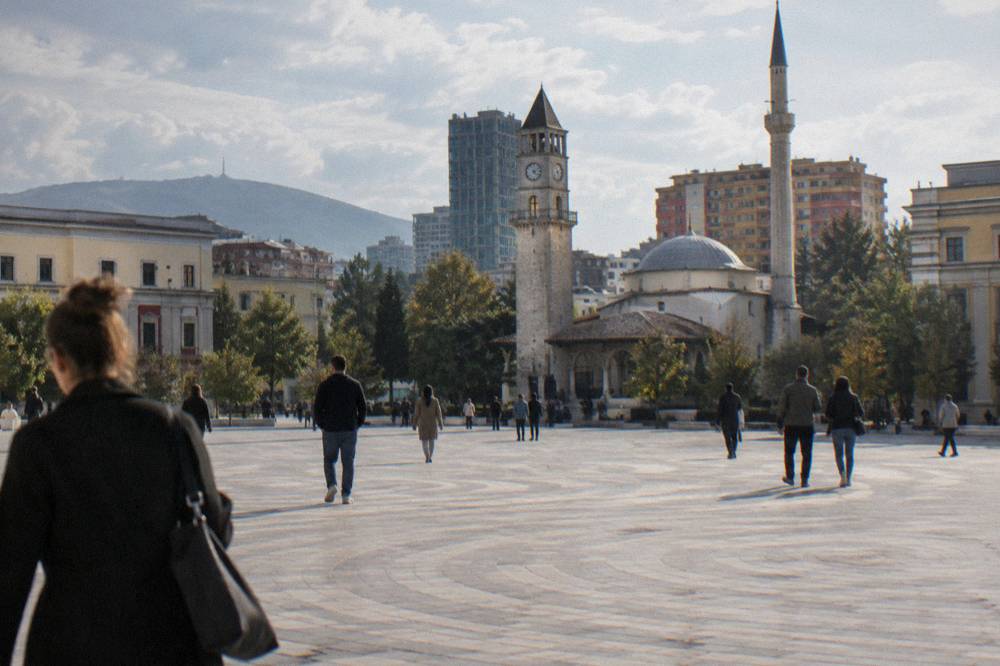
Start on the square itself. The Palace of Culture sits on the square, the Et'hem Bey Mosque and the Clock Tower about 0.2 km south-east, and the National History Museum, closed for restoration to about March 2028, still shows its mosaic facade from outside. From there, walk south-east past the Pyramid of Tirana, opened 14 October 1988, renovated and reopened in May 2023 as the home of the TUMO tech centre. Its stepped exterior is reported to be open and free to climb, which gives one of the best angled views over the rooftops toward Mount Dajti.
The middle stretch of a street art walk runs through the area around Tirana Castle, about 0.5 km south-east of the square, and the New Bazaar, Pazari i Ri, about 0.6 km east. The bazaar quarter is one of the more colourful regeneration projects in the city, with repainted shopfronts and market buildings, and it connects naturally to the restaurant streets that run toward the best restaurants in Tirana.
Blloku, about 0.8 km south of the square, finishes the loop. It is reported across guides as the city's cafe and bar quarter, a compact grid of painted villas and apartment blocks, and it carries the Postbllok memorial about 0.9 km south, which combines a bunker, prison pillars and a Berlin Wall fragment. Two sights anchor the walk's historical stretch: Bunk'Art 1, about 4.6 km north-east behind the Dajti cable car lower station, and Bunk'Art 2, about 0.2 km south-east of the square, both open daily from 09:30 per the museums' own website, with tickets bought at the door.
A guided walk compresses the geography. The Dajti Cable Car City Combo tour covers the city's highlights and a cable car stop in a single outing, useful if your time in the capital is short.
Which Tirana Neighbourhoods Have The Most Painted Walls?
Blloku, about 0.8 km south of Skanderbeg Square, has the densest concentration of painted walls and repainted villas; the Tirana Castle and New Bazaar area about 0.5 to 0.6 km south-east carries the market-quarter colour; and Komuna e Parisit about 1.8 km south-west and Myslym Shyri about 1.1 km south-west add quieter residential facades. Each lies off the same north-to-south axis from the square.
Blloku deserves its own hour. The quarter's grid is small enough to wander without a map, and its painted walls sit beside cafes and bars, which makes it the natural end point of a street art walk rather than the start. It is also, by every account, the city's nightlife district, and the Tirana nightlife guide covers the evening side of the same streets.
The distances are short. The table below lists the areas from the square, in the order a walker meets them on a loop south and back.
| Area | Direction from Skanderbeg Square | What you see there |
|---|---|---|
| Et'hem Bey Mosque and Clock Tower | about 0.2 km south-east | Ottoman-era landmark beside the square |
| New Bazaar (Pazari i Ri) | about 0.6 km east | repainted market quarter and food streets |
| Tirana Castle area | about 0.5 km south-east | castle walls, cafes, painted lanes |
| Rruga e Kavajes | about 0.5 km west | long commercial street with mixed facades |
| Blloku | about 0.8 km south | cafe quarter, villas, murals, Postbllok |
| Myslym Shyri | about 1.1 km south-west | residential painted blocks |
| Komuna e Parisit | about 1.8 km south-west | quieter painted apartment streets |
| Kombinat | about 4.9 km west | outlying district, a bus or taxi ride |
Note the units: these are straight-line positions from the square, and walking distances between them run longer. The getting around Tirana guide covers the city bus, a flat fare of about 40 lek paid in cash on board, reported by local transport guides, and the fact that Uber and Bolt do not operate in the city.
How Does Tirana Street Art Connect To The City's Communist History?
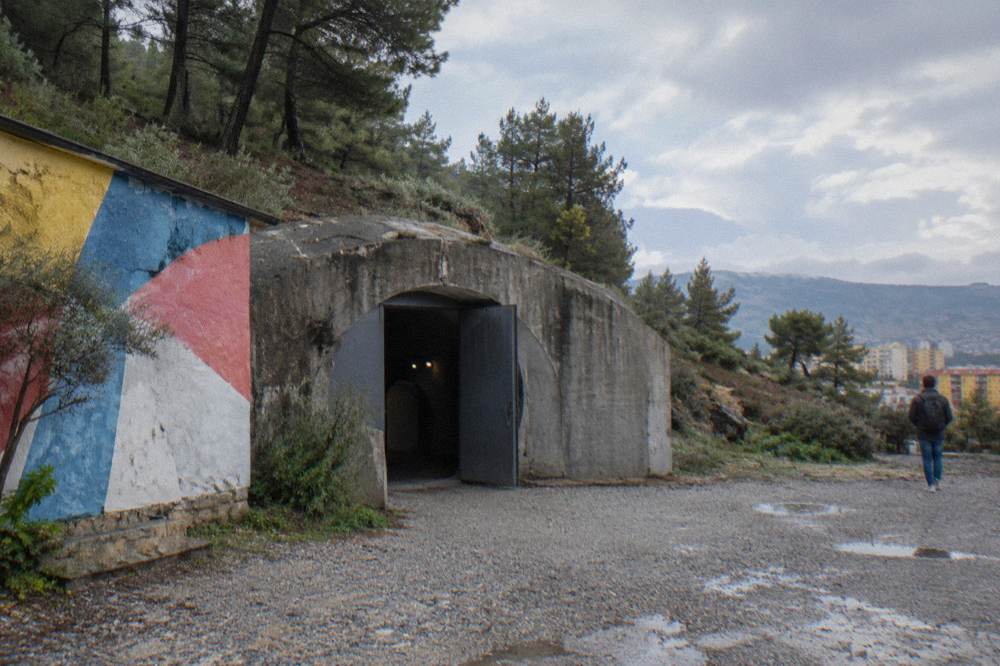
Tirana's street art and painted facades are inseparable from its communist history: the colour was applied to buildings constructed between 1944 and 1991 under the communist regime, and the era's relics, the Bunk'Art museums, the Postbllok memorial and the Pyramid, now sit inside the same painted streetscape. The commonly cited estimate of about 173,000 Hoxha-era bunkers, which differs between sources, is the physical backdrop to the murals.
The connection is literal, not metaphorical. Bunk'Art 1, a leadership nuclear shelter turned museum that opened in November 2014, stands about 4.6 km north-east of the square, behind the Dajti cable car lower station. Bunk'Art 2, which opened on 19 November 2016 and covers the Sigurimi secret police, stands about 0.2 km south-east, inside the painted centre itself. Both are open daily from 09:30, Bunk'Art 1 until 17:30 since 1 June 2026, per the museums' own website, and neither prints a ticket price online, so buy at the door and check the current price at the venue before going. If you are deciding between the two, the comparison in Bunk'Art 1 or Bunk'Art 2 sets out the difference.
The Pyramid is the third piece. Opened on 14 October 1988 in the late communist period and reopened in May 2023 after renovation as the TUMO tech centre, it is reported that its outside steps are free to climb. From the steps, the painted rooftops of the centre spread toward the mountains, which is as close as the city gets to a purpose-built viewing platform for its own colour.
A guided history walk ties the threads together.
The guided option above includes Bunk'Art 1 and transport.
Is Tirana Street Art Free To See?
Yes, essentially all of it is free. The murals and painted facades are on public streets, the Pyramid steps are reported to be free to climb, Skanderbeg Square, Blloku, the New Bazaar, Grand Park and the Postbllok memorial cost nothing. The only paid items on a street art walk are the indoor museums, Bunk'Art 1 and 2 and the House of Leaves, which lists a 700 lek adult ticket on its own site.
The free list is long enough to fill a full day. Beyond the streets themselves, the Grand Park of Tirana and the Artificial Lake sit about 2.1 km south-east and south, Rinia Park about 0.4 km south, Tanners' Bridge about 0.7 km east, and the Tirana Mosaic about 1.1 km west. The free things to do in Tirana guide expands the list, and the split below shows what a street art day costs at the paid sights.
| Sight | Position from Skanderbeg Square | Admission |
|---|---|---|
| Painted streets and murals, all areas | everywhere in the centre | free |
| Skanderbeg Square and Pyramid exterior | on the square; 0.7 km south-east | free |
| Postbllok memorial | about 0.9 km south | free |
| Grand Park and Artificial Lake | about 2.1 km south-east | free |
| Bunk'Art 2 | about 0.2 km south-east | ticketed, buy at the door, price not published online |
| Bunk'Art 1 | about 4.6 km north-east | ticketed, buy at the door, price not published online |
| House of Leaves | about 0.2 km south-west | 700 lek adult, per its own site |
| National History Museum | on the square | closed for restoration to about March 2028 |
House of Leaves, the National Museum of Secret Surveillance, lists Monday to Sunday 09:00 to 19:00 opening on its own site, with reduced tickets for seniors and students and free entry for under 12s. The Tirana museums guide covers the full set, including the National Gallery of Arts, which is under renovation and should be checked before going.
Money matters are simple. The currency is the Albanian lek, at roughly 90 lek to the euro, and cards are widely taken in hotels, larger restaurants and supermarkets while cash still rules buses, markets and small cafes. The Albanian lek and Tirana prices guides carry the detail.
Is It Safe To Walk Tirana's Street Art Areas?
Yes, walking Tirana's central street art areas is normal city behaviour, and the UK FCDO's current note concerns demonstrations rather than everyday street life: demonstrations have been held in central Tirana since 13 October 2026, some violent, and the advice updated on 15 October 2026 is to avoid them and check local media. The ordinary precautions are the usual ones: watch your belongings in crowds. Emergency numbers are Police 112, Ambulance 127, Fire 128.
The demonstration note deserves weight in your planning because the main walking route crosses Skanderbeg Square and the government quarter, exactly where gatherings happen. Dates to keep in mind are 14 to 15 November 2026, when the rescheduled Tirana Marathon closes central streets, and the fixed national days, Independence Day 28 November and Liberation Day 29 November, when the centre fills with celebrations rather than protests. The Is Tirana Safe? Scams, Traffic And Night Walks guide covers the fuller picture, and the Albania entry requirements guide handles the border side, including the 90-days-in-180 rule for visa-free nationals, since Albania is outside the EU and Schengen.
Beyond the current-conditions note, the practical safety items are unremarkable. The centre is walkable, daylight lasts into the evening in summer, and the bus network runs roughly 06:00 to 23:00. If a late finish in Blloku is on the cards, plan the ride back in advance because no Uber or Bolt operates; local taxi apps are reported to work, and hotel staff will call a car.
| Situation | What to do |
|---|---|
| Demonstration or large gathering in the centre | avoid it, check local media, reroute around Skanderbeg Square |
| Marathon weekend, 14 to 15 November 2026 | expect street closures in the centre |
| Lost or needing police | dial 112 |
| Medical emergency | dial 127 |
| Fire | dial 128 |
| Late evening in Blloku | arrange a taxi in advance; no Uber or Bolt operates |
When Is The Best Time Of Year To Photograph Tirana's Painted Buildings?
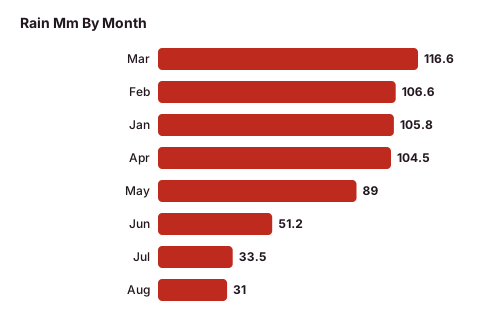
The best months to photograph Tirana's painted buildings are May, June and September, when the ERA5 reanalysis 1991-2020 shows mean highs of 22.7 C, 26.9 C and 25.7 C with rainfall of 89 mm, 51 mm and 99 mm respectively. July and August are hotter at 29.8 C and 30.4 C but drier at 33.5 mm and 31 mm, while November peaks at 138.6 mm of rain and January lows average 2.3 C.
Colour photography wants even light and dry walls, and the climate table shapes the choice. Winter is mild rather than brutal, with a January mean high of 10.8 C, but November and December carry the year's highest rainfall at 138.6 mm and 137.5 mm, which dulls painted surfaces and cuts walking days short. Summer is hot and dry; early mornings and late afternoons avoid both the heat and the harshest light on facades. The Tirana weather and best time to visit Tirana guides take the decision further.
| Month | Mean high C | Mean low C | Rain mm |
|---|---|---|---|
| Jan | 10.8 | 2.3 | 105.8 |
| Feb | 12.0 | 2.9 | 106.6 |
| Mar | 15.0 | 5.1 | 116.6 |
| Apr | 18.4 | 8.3 | 104.5 |
| May | 22.7 | 12.5 | 89.0 |
| Jun | 26.9 | 16.6 | 51.2 |
| Jul | 29.8 | 19.1 | 33.5 |
| Aug | 30.4 | 19.5 | 31.0 |
| Sep | 25.7 | 16.0 | 98.9 |
| Oct | 21.4 | 12.2 | 119.1 |
| Nov | 16.5 | 8.0 | 138.6 |
| Dec | 11.8 | 4.0 | 137.5 |
These are averages from the ERA5 reanalysis, 1991-2020, a modelled grid cell, not a weather-station record. For framing, the elevated options are limited but good: the Pyramid steps, reported free to climb, and the Dajti Ekspres cable car, described by its operator as the longest cableway in the Balkans, with tickets sold only at the lower station and no fare published online. The cable car is usually closed on Tuesdays for maintenance, per local guides, so confirm before going.
Can You See Tirana Street Art On A Day Trip From Durres?
Yes, Durres sits about 37 km and roughly 39 minutes by road from Skanderbeg Square, so the coast and the capital combine easily, and a structured city tour with a Dajti cable car stop exists for exactly that visitor. The Adriatic at Durres is the nearest sea to Tirana; the capital itself is inland, in a basin under Mount Dajti, and has no beach of its own.
The pairing works in both directions. Visitors staying on the Durres coast can reach the painted centre in under an hour by road, see the square, the Pyramid and Blloku, and return for the beach; visitors based in Tirana do the reverse. The Tirana to Durres guide covers the bus terminal detail, including the South and North Bus Terminal about 4.0 km north-west of the square, which publishes timetables for Durres departures from 06:00 at short intervals, with fares paid to the driver in cash.
| Day-trip destination | Distance from Skanderbeg Square | Drive time |
|---|---|---|
| Petrela Castle | 14.2 km | about 22 minutes |
| Durres, Adriatic coast | 37.2 km | about 39 minutes |
| Kruja Castle | 36.7 km | about 45 minutes |
| Elbasan | 39.5 km | about 42 minutes |
| Lake Bovilla | 21.4 km | about 61 minutes |
| Berat | 124.6 km | about 122 minutes |
| Shkoder | 98.4 km | about 118 minutes |
Drive times assume clear roads; add time for traffic and border formalities where relevant. Berat and Gjirokaster are both UNESCO-listed historic centres, inscribed 2005 and extended 2008, and make full-day tours rather than quick hops.
What Should A One-Day Tirana Street Art Route Look Like?
A one-day route should start at Skanderbeg Square in the morning, take in the Et'hem Bey Mosque and Clock Tower area, walk south-east to the Pyramid, cut east to Tirana Castle and the New Bazaar for lunch, spend the afternoon in Blloku and at Postbllok, and finish with Bunk'Art 2, about 0.2 km south-east of the square, before it closes, since it opens daily from 09:30.
The logic is simple: the paid indoor sight sits in the middle of the walk, the free colour fills the rest, and the day ends in the quarter where the evening happens. Et'hem Bey Mosque is free to visit outside prayer times, with modest dress, shoulders and knees covered and a headscarf for women, as courtesy guidance. The Clock Tower beside it has about 90 steps to the top; confirm access on site. Lunch in the New Bazaar area pairs naturally with the Albanian food guide, and the classic dishes to look for, byrek the layered filo pie, tave kosi baked lamb with a yogurt and egg topping, fergese baked peppers and tomatoes with cheese, and qofte seasoned meatballs, are described in neutral terms by the standard food references.
An alternative finishing move is a cooking class, which turns the food half of the day into the evening itself.
The class above ends with the meal you cook.
If two days are available, add the Dajti Ekspres cable car at about 4.4 km north-east on the second morning, with Bunk'Art 1 behind its lower station, then Grand Park and the Artificial Lake in the afternoon. The where to stay in Tirana guide helps position a hotel inside the walking radius.
Common Questions About Tirana Street Art
Is Tirana street art free to see?
Yes. The murals and painted facades are on public streets, the Pyramid steps are reported to be free to climb, and Skanderbeg Square, Blloku, the New Bazaar, Grand Park and Postbllok cost nothing. Only the indoor museums are ticketed, and Bunk'Art tickets are bought at the door.
Where is the best street art in Tirana?
The densest colour is in Blloku about 0.8 km south of Skanderbeg Square, around Tirana Castle and the New Bazaar about 0.5 to 0.6 km south-east and east, and on the streets radiating from the square itself, including Rruga e Kavajes to the west.
Can you climb the Pyramid of Tirana?
The outside steps are reported to be open and free to climb. The building, opened in 1988 and reopened in May 2023 as the TUMO tech centre, is not a ruin; interior access and hours should be checked before going.
Is Tirana street art connected to the communist period?
Yes. The painted facades were applied to blocks built between 1944 and 1991 under communist rule, and the era's relics, the Bunk'Art museums, Postbllok and the Pyramid, sit inside the same streetscape. The commonly cited estimate of about 173,000 Hoxha-era bunkers, which varies between sources, is part of that backdrop.
What is the best month to photograph Tirana's painted buildings?
May, June and September balance warm mean highs of 22.7 C, 26.9 C and 25.7 C with moderate rainfall in the ERA5 1991-2020 reanalysis. July and August are drier but hotter; November carries the year's highest rainfall at 138.6 mm.
Is it safe to walk around Tirana looking at street art?
Everyday walking in the centre is normal city behaviour. The current FCDO note concerns demonstrations held in central Tirana since 13 October 2026, which should be avoided; watch your belongings in crowds, and dial 112 for police, 127 for an ambulance and 128 for fire.
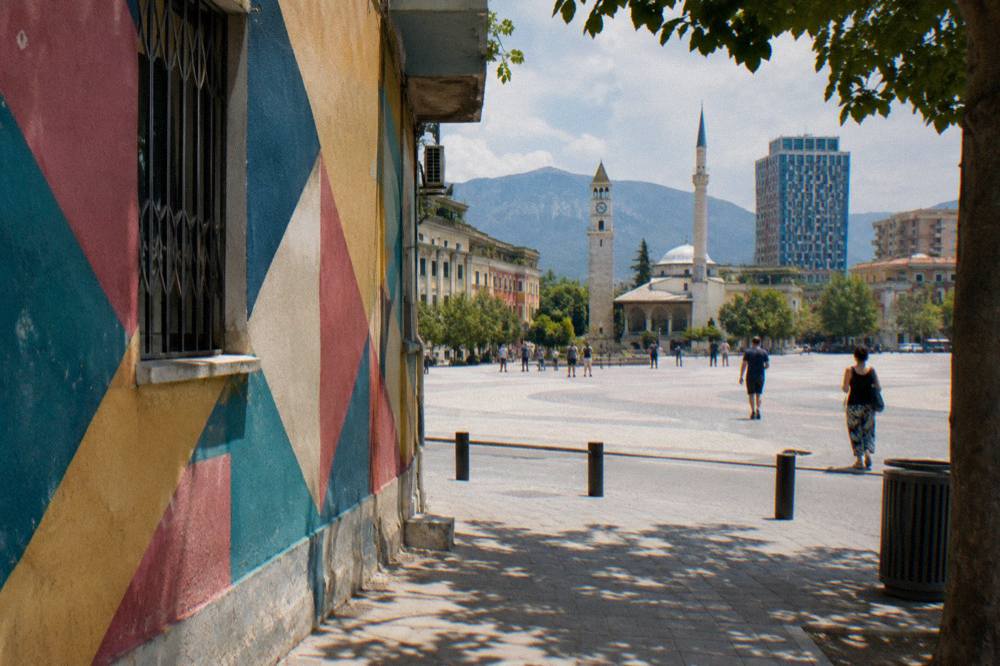
The painted city rewards slow walking more than any itinerary. Tirana's colour is not concentrated in a single gallery district; it spreads across ordinary streets, market quarters and cafe blocks from the square outward, and it changes as buildings are repainted and walls are claimed again. Bring comfortable shoes, keep the museum hours in mind, and let the loop from Skanderbeg Square to Blloku and back set its own pace.