Tirana On A Rainy Day: Museums, Bunkers And Cafes
Rain in Tirana tends to arrive in long autumn and winter stretches rather than sudden storms, and the city answers with two bunker museums, a secret-surveillance museum, a dense cafe culture and a cooking class culture that never depended on the weather.
Short answer
Spend a rainy day in Tirana at Bunk'Art 1 or Bunk'Art 2, the House of Leaves, the covered walkways of Pazari i Ri and the cafes of Blloku, with a traditional cooking class as the anchor of the afternoon.
Tirana sits in an inland basin at the foot of Mount Dajti, and its rainy season is a real season: the ERA5 reanalysis, 1991-2020, shows monthly rainfall climbing through October and November and staying high into December, with November carrying 139 mm across the month. That is not a reason to stay in the hotel. The Albanian capital has two large bunker museums, a secret-police museum open until early evening, a renovated pyramid you can walk through, a bazaar with covered lanes and a cafe culture that treats a grey afternoon as an invitation. This itinerary lays out a full wet day, hour by hour, with the opening times the official museum sites publish and honest notes on what is closed.
How Wet Does Tirana Actually Get?
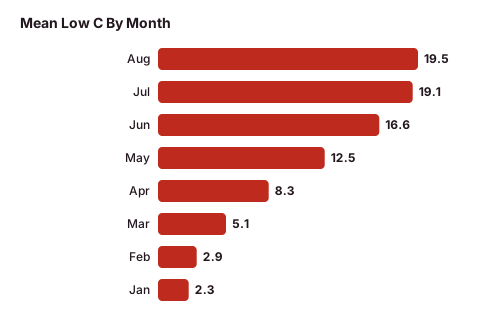
Tirana's wet months are October through December, with November averaging 139 mm of rain and December 138 mm, against just 31 mm in August, per the ERA5 reanalysis for 1991 to 2020. Mean highs stay mild, from 21.4 C in October to 16.5 C in November and 11.8 C in December, so rain, not cold, is the planning problem. Spring is showier: March averages 117 mm and April 105 mm. Summer days are dry by comparison.
Those figures come from a modelled grid cell over the city, not a weather station, and the reanalysis smooths the basin by a degree or two, but the pattern is reliable: if you visit between late October and December, or in March, pack for rain and plan around it. A wet day here rarely means a washout. Rain often falls in stretches, and the same morning that drenches Skanderbeg Square can leave the afternoon dry enough for the walk between the Pyramid of Tirana and Blloku.
| Month | Mean high C | Mean low C | Rain mm |
|---|---|---|---|
| Jan | 10.8 | 2.3 | 106 |
| Feb | 12.0 | 2.9 | 107 |
| Mar | 15.0 | 5.1 | 117 |
| Apr | 18.4 | 8.3 | 105 |
| May | 22.7 | 12.5 | 89 |
| Jun | 26.9 | 16.6 | 51 |
| Jul | 29.8 | 19.1 | 34 |
| Aug | 30.4 | 19.5 | 31 |
| Sep | 25.7 | 16.0 | 99 |
| Oct | 21.4 | 12.2 | 119 |
| Nov | 16.5 | 8.0 | 139 |
| Dec | 11.8 | 4.0 | 138 |
The table is the whole argument for this itinerary. November and December are the months when indoor plans matter, and Tirana happens to hold its best indoor sights within a two-kilometre band of the square. For a general first-day plan that mixes indoor and outdoor, see one day in Tirana, and for the city's full sight list start at things to do in Tirana.
Which Tirana Museums Are Open On A Wet Day?
Three headline indoor sights in Tirana are open daily: Bunk'Art 1 from 09:30 to 17:30 under its summer 2026 timetable, Bunk'Art 2 from 09:30 daily, and the House of Leaves from 09:00 to 19:00, according to the museums' own websites. The National History Museum is the exception: it has been closed for restoration since 15 March 2024, with the announced closure running to March 2028. The National Gallery of Arts is under renovation, so check before going.
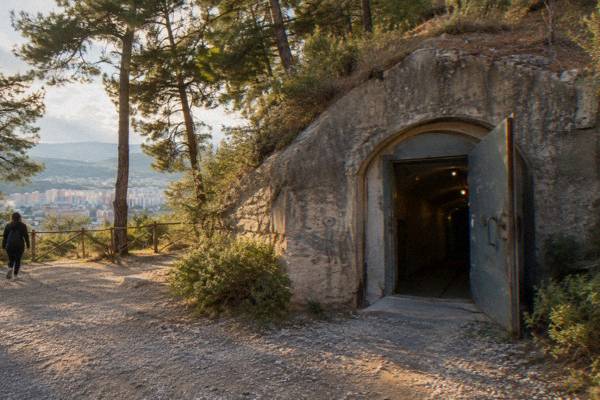
Bunk'Art 1 is the big one, and it is the most weatherproof sight in the country: the museum is literally underground, a leadership nuclear shelter reported to have opened to the public in November 2014. It sits on Rruga Fadil Deliu, behind the Dajti cable car lower station, about 4.6 km north-east of Skanderbeg Square, which means a short bus or taxi ride in the rain and then dry tunnels for as long as your legs last. The official site publishes no ticket price online, so buy tickets at the door.
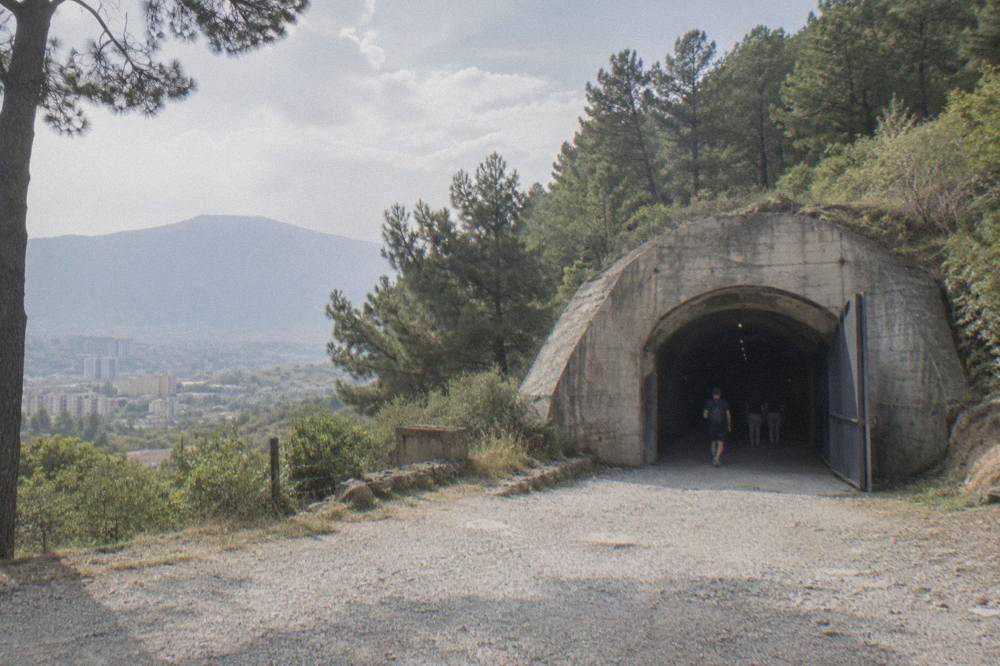
Bunk'Art 2 is the walkable alternative. It stands on Rruga Abdi Toptani, opposite the Municipality, about 0.2 km south-east of the square, reported to have opened on 19 November 2016 as the Interior Ministry's bunker, now a museum on the secret-police years. It is open daily from 09:30, with a closing time that varies by season, and again tickets are bought at the door. On a rainy day the choice between the two is mostly about distance: Bunk'Art 2 you can reach under an umbrella in five minutes from the square.
The House of Leaves, the National Museum of Secret Surveillance, is the third pillar of a wet-day plan. Its own site lists daily opening from 09:00 to 19:00, the longest day of the three. Reported admission prices, per a local visitor portal, are 700 lek for adults, 500 lek for groups of 12 or more, 210 lek for seniors and students, and free entry for under-12s; the museum is reported to have opened on 23 May 2017. It stands about 0.2 km south-west of the square, so the three museums chain together easily. A deeper rundown of all of them, including the closed ones, is in Tirana museums, and the communist-era context is traced in communist history in Tirana.
| Sight | Distance from Skanderbeg Square | Opening | Tickets |
|---|---|---|---|
| Bunk'Art 1 | About 4.6 km north-east | Daily 09:30 to 17:30 from 1 June 2026 | At the door |
| Bunk'Art 2 | About 0.2 km south-east | Daily from 09:30 | At the door |
| House of Leaves | About 0.2 km south-west | Daily 09:00 to 19:00 | Reported 700 lek adult |
| National History Museum | On the square | Closed for restoration to about March 2028 | Closed |
| National Gallery of Arts | About 0.4 km south-east | Under renovation; check before going | None published |
One honest note on the closed museum: the National History Museum's mosaic facade is still worth a look from the square itself, and the building's scale explains why its closure is felt. There is no timetable for reopening before March 2028.
If the bunker museums put you in the mood for the era rather than just the architecture, a guided communist-history walk strings the outdoor landmarks together quickly enough that showers matter less than you would think, since much of the story is told in short stops.
Where Do You Eat When It Rains In Tirana?
Pazari i Ri, the New Bazaar about 0.6 km east of Skanderbeg Square, is the rainy-day default for eating in Tirana: a compact market quarter with covered lanes, indoor food stalls and cafes a few minutes' walk from the centre. Blloku, about 0.8 km south, is the cafe and bar quarter, dense enough that the distance between one door and the next is short. Byrek, a layered filo pie, and qofte, seasoned grilled meatballs, are the quick standbys, and raki is the fruit brandy that accompanies them.
The bazaar works in rain because of its geometry: stalls cluster tightly, awnings overlap, and the covered sections let you browse cheese, olives, honey and jars of preserves without committing to a long open-air walk. Tave kosi, baked lamb under a yogurt and egg topping, is the dish to look for on a wet day, slow and warm, and the cooking-class culture around the city has built itself on exactly these dishes.
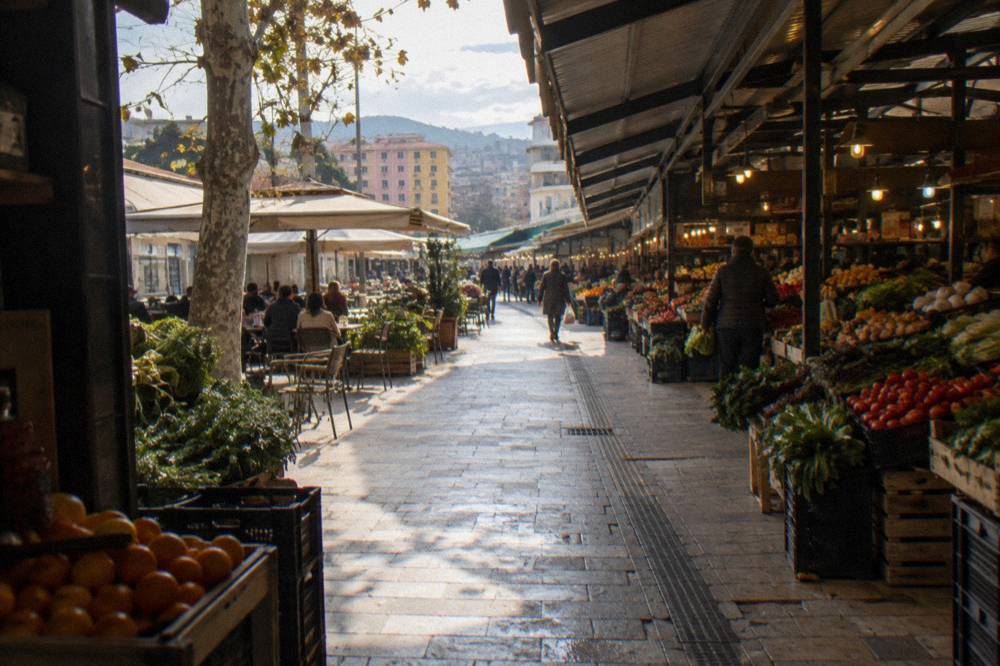
The indoor option that turns a wet afternoon into the best part of the day is a hands-on cooking class. The related pick on this page, a traditional Albanian cooking class with unlimited wine and raki, runs entirely indoors: you cook, you eat, and the rain outside becomes scenery. The class is the anchor plan for hours that would otherwise be lost to weather.
For restaurants with a roof and a reputation the city can support, four venues with their own official sites stand out: Padam, a boutique hotel and restaurant on Rruga Papa Gjon Pali II; Artigiano, an Italian and Mediterranean kitchen; Sophie Caffe, a cafe chain with central locations; and Era Blloku, in the Blloku quarter. Check opening details directly before going, as hours shift with the season.
Coffee is the other wet-weather institution. Tirana's cafe culture is examined properly in Tirana coffee culture, but the short version is that espresso bars in the centre stay full through rain, and a flat afternoon in Blloku or around the square is a local habit, not a tourist compromise.
Can You Still Enjoy Skanderbeg Square In The Rain?
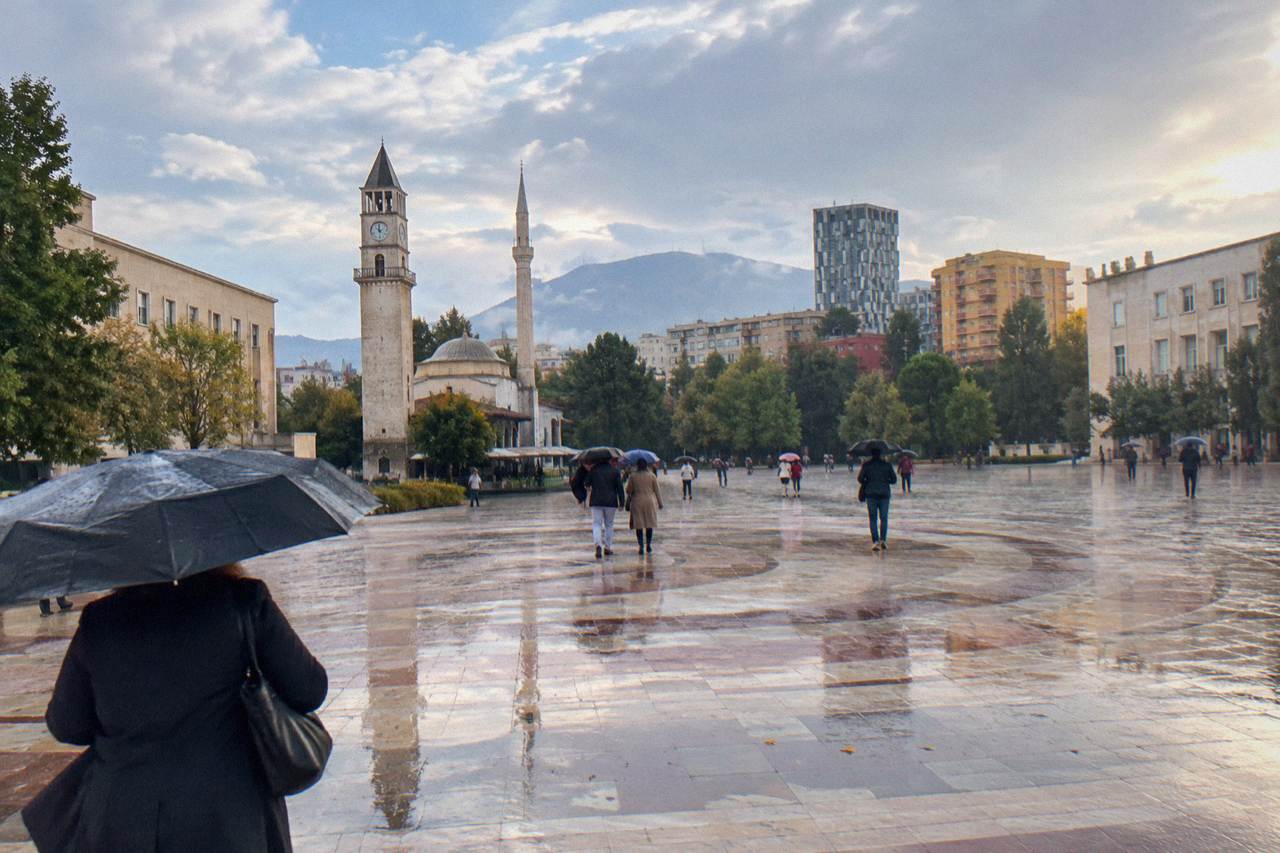
Yes, because Skanderbeg Square is a pedestrian space, and its cluster of covered or quick-stop sights, the Et'hem Bey Mosque, the Clock Tower, the Palace of Culture and the closed museum's facade, sits within a few hundred metres of each other, so a rain-proof loop takes under an hour with umbrellas. The Et'hem Bey Mosque is free to visit outside prayer times, with shoulders and knees covered as courtesy.
The mosque is about 0.2 km south-east of the square's centre, effectively on it. The Clock Tower stands beside it, with about 90 steps to the top, and its fee and hours are not settled across sources, so check at the door before climbing. The Palace of Culture holds the Opera and Ballet on the square itself, and the mother of all rainy-day landmarks, the airport bus stop behind it, is covered in the practical section below.
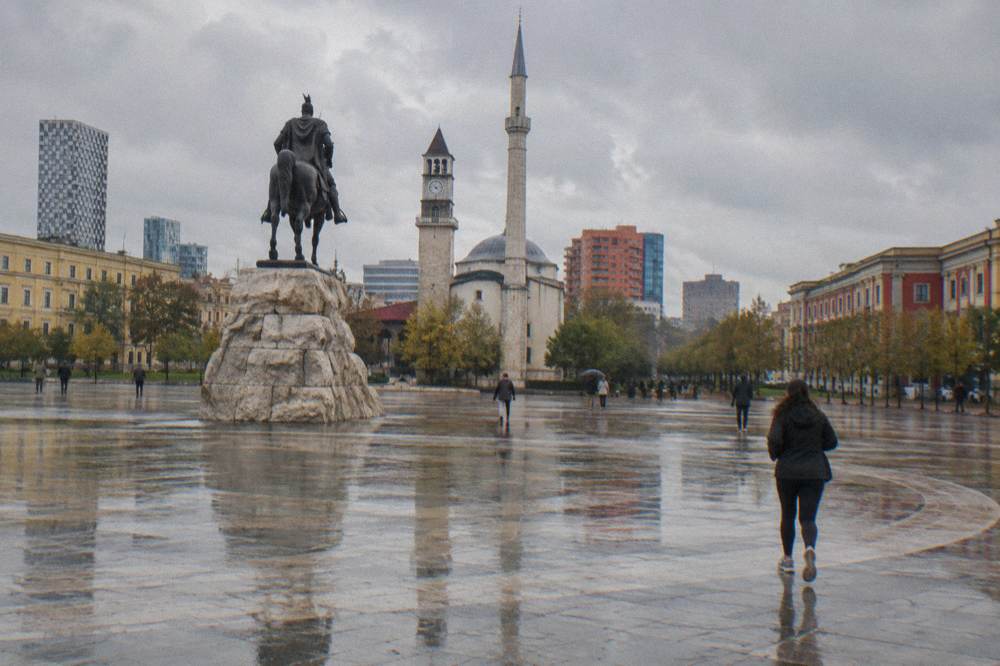
From the square, the Pyramid of Tirana is about 0.7 km south-east. Renovated and reopened in May 2023, it now houses the TUMO tech centre, and its stepped exterior is reported to be free to climb; on a wet day the steps are slick, so judge the surface before you go up. The Resurrection Cathedral, about 0.2 km south of the square, is another short covered stop. For the square's full story see Skanderbeg Square, and for the deeper planning context two days in Tirana spreads these stops across a slower visit.
A wet loop that works: Et'hem Bey Mosque, the cathedral, the Pyramid, then the New Bazaar for food, all inside 1.5 km of walking with buildings at each end.
Does The Dajti Cable Car Run In Bad Weather?
The Dajti Ekspres cable car generally runs in rain, but it is usually closed on Tuesdays for maintenance, per the operator's own site, and its hours run from about 09:00 into the early evening on other days. The operator publishes no fares online, so tickets are bought only at the lower station. In heavy rain or low cloud the summit loses its view, which is the whole point of going up, so check the sky before committing.
The lower station is about 4.4 km north-east of Skanderbeg Square, and Bunk'Art 1 sits behind it, which is why this pairing anchors the morning of many rainy-day plans: if the cloud base is high, ride up; if the mountain is invisible, spend those hours in the bunker instead. The operator bills the cableway as the longest in the Balkans, an Austrian-built line, and its site notes a busy stretch on national holidays with a recommendation to arrive between 09:00 and 11:00. The full index of guides sits on Tirana Albania Travel Guide.
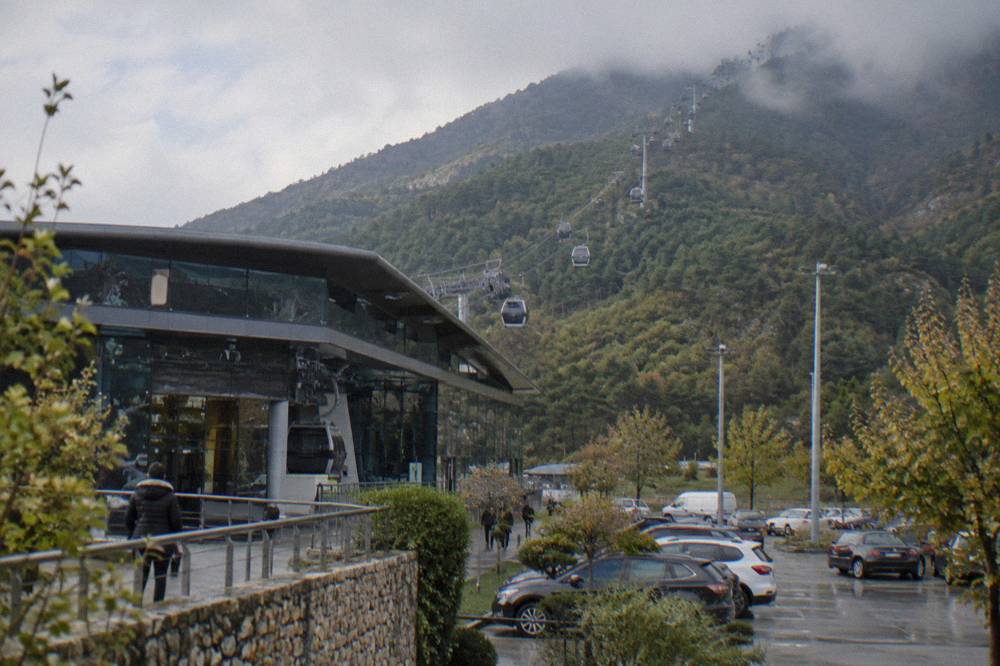
A guided half-day option with the cable car ticket included removes the guesswork at the lower station.
What Do You Do In Tirana When It Rains All Day?
When rain settles in for the whole day, Tirana's answer is layered: a morning in Bunk'Art 1 or the House of Leaves, lunch at Pazari i Ri, an afternoon cooking class, and an evening in Blloku, the cafe and bar quarter about 0.8 km south of the square, where venues sit door to door. A guided tour of communist landmarks compresses the outdoor stops into a single escorted stretch, and a food tour moves the whole day indoors.
The full-day shape looks like this, and it survives even a day of steady drizzle:
| Time | Plan | Cover |
|---|---|---|
| 09:30 | Bunk'Art 2 or House of Leaves opens | Indoor |
| 11:00 | Coffee stop between the square and Blloku | Indoor |
| 12:30 | Lunch at Pazari i Ri, covered lanes | Covered |
| 14:00 | Cooking class, traditional dishes, wine and raki | Indoor |
| 17:00 | Pyramid of Tirana if the rain eases, TUMO centre | Outdoor steps |
| 19:00 | Dinner and drinks in Blloku | Indoor |
The communist-history walk deserves its slot because so much of Tirana's story is told in a handful of central points. The Postbllok memorial, about 0.9 km south of the square, is reported to combine a bunker, pillars from the Spac prison and a fragment of the Berlin Wall, and it marks the edge of the former Blloku enclave, the quarter once closed to ordinary residents. A guided version keeps the stops moving and puts the era into words.
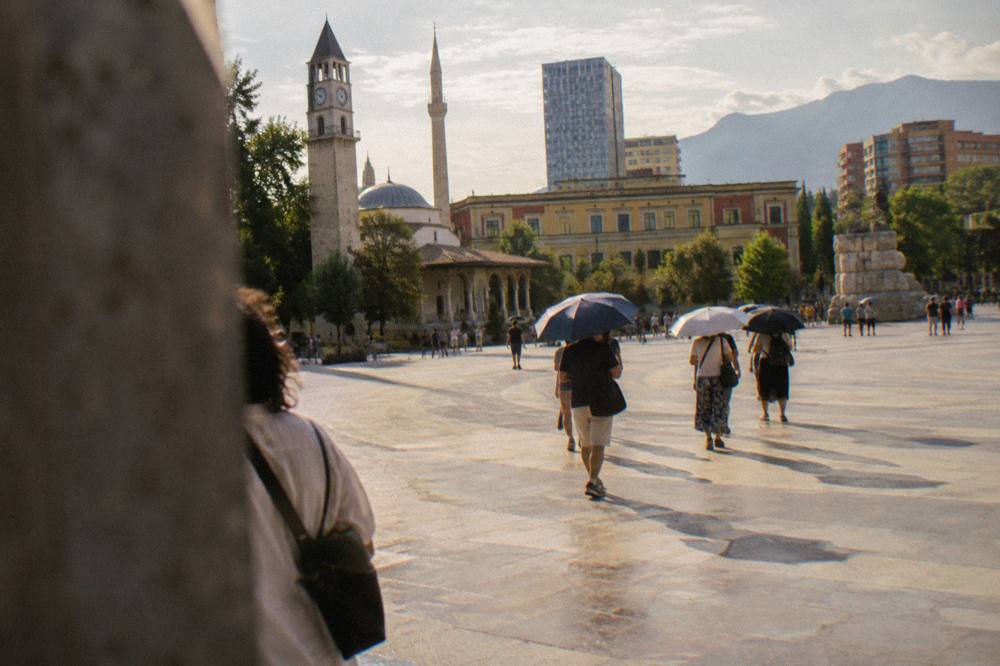
For travellers who want the food version of the same logic, a guided tasting walk keeps you moving between roofs.
Two practical notes carry the day. First, the FCDO health page for Albania is blunt about tap water: do not drink it, only drink bottled water, wherever you eat. Second, in the current October 2026 conditions, demonstrations have been held in central Tirana since 13 October, some violent, and the FCDO updated its advice on 15 October, so avoid gatherings and check local media on the day; the Tirana Marathon, for instance, was moved to 14 to 15 November 2026 because of them.
Is A Rainy Day Good For A Guided Tour In Tirana?
A rainy day is arguably the best day for a guided tour in Tirana, because the city's core sights sit within a kilometre of Skanderbeg Square, guides plan their routes around shelter, and indoor-heavy formats such as the communist-history walk or a food walk lose almost nothing to weather. The evening and night walking tour format also shifts the day's weight away from the afternoon downpour.
The maths of a wet day favour guiding. The distance from the square to the Pyramid is about 0.7 km, to Tirana Castle about 0.5 km, to Tanners' Bridge about 0.7 km, to the Great Mosque of Tirana about 0.6 km. A guide strings these into a route with indoor pauses, and the storytelling happens under awnings. On a bright day you might wander these alone; in rain, structure pays.
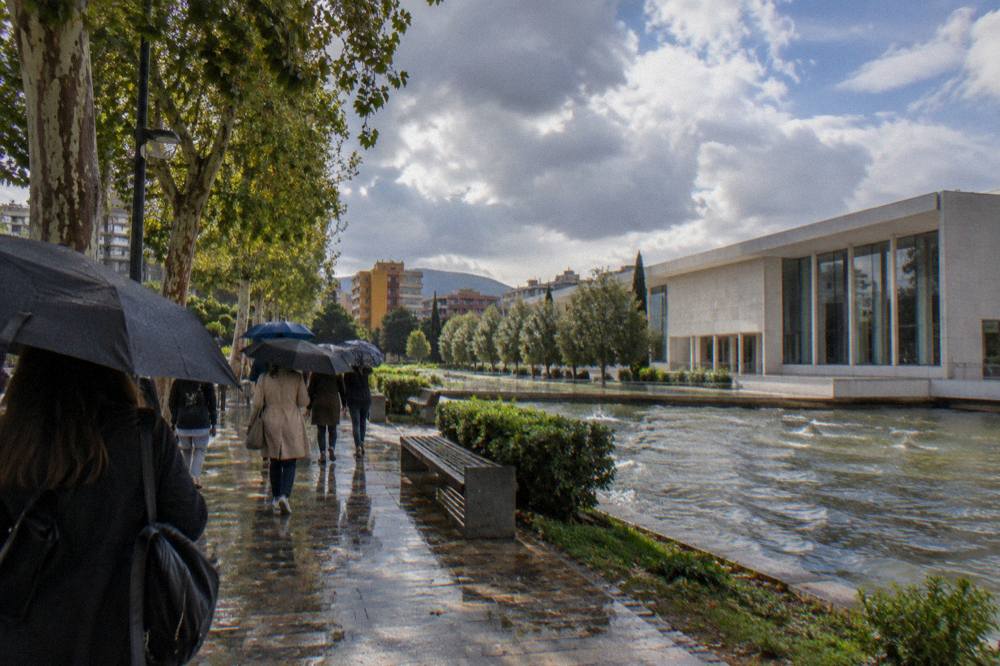
The classic paid option is a full city walk, whose page is at Tirana walking tour. For the era-specific version, Tirana communism tour is the dedicated page.
For families weighing the same question, the indoor-heavy plan in Tirana with kids follows the same logic, and the wider backdrop of the era is on the communist history trail page.
Should You Leave Tirana On A Rainy Day?
A rainy day in Tirana is a poor day for the far day trips: Butrint, Ksamil, Saranda and Gjirokaster are about four to four and a half hours of road each way and belong to overnight plans, while near trips such as Durres at about 39 minutes, Petrela Castle at about 22 minutes and Kruja at about 45 minutes are short enough that rain matters less, especially where the destination is a castle interior or a museum.
The distances decide this. Durres, about 37 km west, holds a Roman amphitheatre and an archaeological museum, with reported entry of about 800 lek for the museum and 300 lek for the amphitheatre, a few hundred lek either way, so confirm at the door; the coast itself loses its appeal in rain, which is the honest caveat, since Tirana is not a coastal city and the beach is the point of Durres on a fine day. Kruja, about 37 km north, is built around its castle, bazaar and museum, though no fee or hours for them are published on official pages, so check before going.
| Destination | Road distance from the square | Drive time | Rain verdict |
|---|---|---|---|
| Petrela Castle | About 14 km | About 22 minutes | Short hop, castle interior |
| Durres | About 37 km | About 39 minutes | Museum yes, beach no |
| Kruja | About 37 km | About 45 minutes | Bazaar lanes and castle |
| Elbasan | About 40 km | About 42 minutes | Walls, short visit |
| Berat | About 125 km | About 122 minutes | Long for a wet day |
| Ohrid | About 130 km | About 135 minutes plus the border | Border crossing adds risk |
Berat, about 122 minutes away, is the borderline case: its Onufri Iconographic Museum, at 400 lek per the Berat Museum Center, and its Ethnographic Museum at 300 lek are indoor anchors, but the drive is long for a grey day. Ohrid is in North Macedonia, so the day trip includes a border crossing, and on a rain-heavy day that crossing plus 135 minutes of road each way is a lot to spend for a town best seen across water. The Durres detail is in Tirana to Durres and the Ohrid border mechanics in the Ohrid day trip guide.
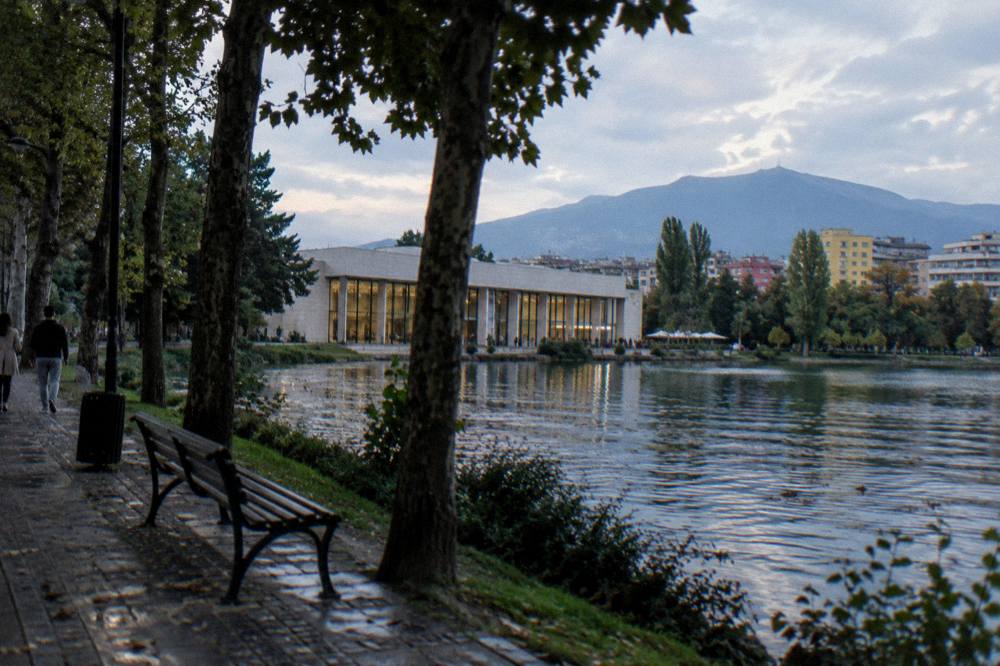
Common Questions About A Rainy Day In Tirana
Does it rain a lot in Tirana?
A visit in October to December should plan for rain.
What is there to do in Tirana when it rains?
Bunk'Art 1 and Bunk'Art 2, the House of Leaves, the covered lanes of Pazari i Ri, the cafes of Blloku, a traditional cooking class and the Pyramid of Tirana's TUMO centre are the core wet-day options, nearly all within two kilometres of Skanderbeg Square.
Is the National History Museum open in Tirana?
No. It has been closed for restoration since 15 March 2024, and the announced closure runs to March 2028. The mosaic facade can still be seen from Skanderbeg Square.
Does the Dajti cable car close in rain?
The Dajti Ekspres runs in ordinary rain but is usually closed on Tuesdays for maintenance, per the operator's own site. Fares are not published online; tickets are sold only at the lower station. In heavy cloud the summit view disappears, so judge the sky first.
Are Bunk'Art museums open every day?
Bunk'Art 1 lists daily opening 09:30 to 17:30 on its summer 2026 timetable, and Bunk'Art 2 opens daily from 09:30 with a seasonal closing time. Buy tickets at the door; no price is published on the official site.
Can you drink the tap water in Tirana?
The UK FCDO health page for Albania advises: do not drink the tap water, only drink bottled water. That applies across the country, including Tirana.
Rain in Tirana is a scheduling problem with a long list of solutions, and the highest-rainfall months are exactly when the city's bunker museums, its surveillance-era museum, its covered bazaar and its cooking classes earn their keep.