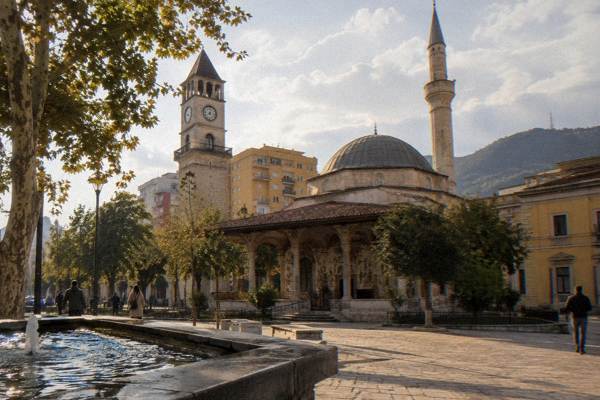
Albanian Phrases For Tirana: Greetings, Ordering And Thanks
A short, honest list of Albanian words for Tirana: what they mean, where each one fits, and what to expect from English in the capital.
Short answer
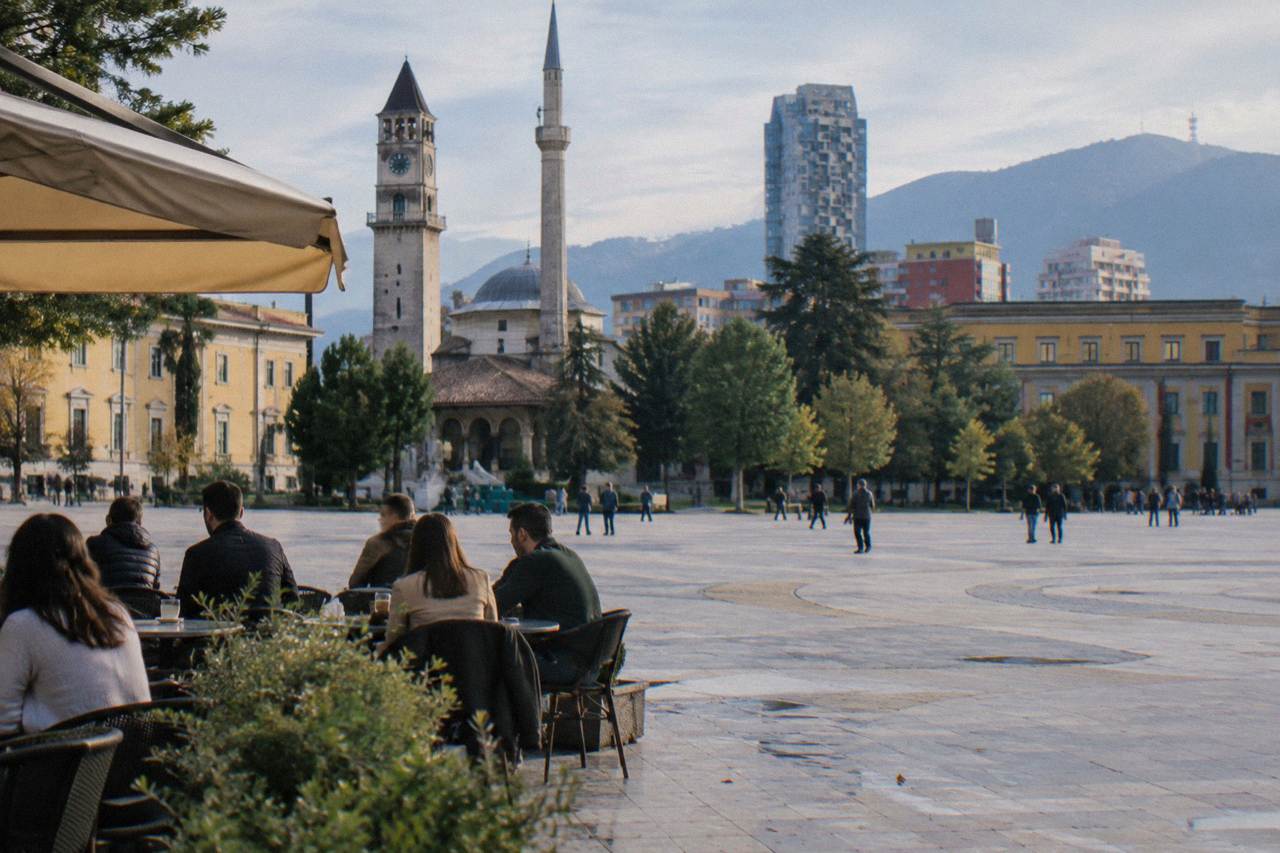
Learn eleven Albanian words for Tirana: Përshëndetje or Tungjatjeta for hello, Mirëmëngjes for good morning, Faleminderit for thank you, Ju lutem for please, Po for yes, Jo for no, Më falni for excuse me, Ujë for water, Faturën for the bill, Gëzuar for cheers and Mirupafshim for goodbye.
Tirana, the capital of Albania, is a city where a handful of Albanian words opens doors that English alone sometimes leaves half shut. The language is Albanian, it shares roots with no close neighbour, and its everyday greetings carry a formality that rewards even a small effort.
What Albanian Phrases Should You Learn Before Tirana?
Eleven Albanian words cover nearly every polite exchange a visitor to Tirana will have: two greetings, a morning greeting, a farewell, thank you, please, excuse me, yes, no, water, the bill and cheers. The list comes from the Wikivoyage Albanian phrasebook, and each word below appears in Albanian spelling with its plain English meaning. No pronunciation guide is offered here, because none was checked, and the words are best heard spoken on arrival.
That is a deliberately short list, and it is short for a reason. Tirana is a capital where a reported moderate band of English proficiency exists nationally, per the EF English Proficiency Index, and the centre of a city that holds about a third of Albania's population is where that English concentrates. Menus in the Blloku quarter, about 0.8 km south of Skanderbeg Square, and around the square itself often carry English. The words that matter most are the ones used at thresholds: entering a shop, sitting down at a cafe, catching a waiter's eye across a busy room at Pazari i Ri, the New Bazaar about 0.6 km east of the square.
The language itself is a branch of its own within the Indo-European family, unrelated to the Slavic, Greek and Italian languages that surround it. Visitors often report that an upward lift of the chin means no in Albania and a side tilt of the head means yes, the reverse of the convention in much of western Europe. That reported custom is worth knowing before a market negotiation goes sideways over a single nod.
There is no grammar on this page and no attempt to teach sentence building, because a short visit does not need it. The eleven words are standalone: each one is a complete utterance on its own, and Tirana's shopkeepers, waiters and taxi drivers are used to visitors who deploy them one at a time, usually with a smile and a pause. The effort is met where it is made, and the words below are ordered roughly as a day in the city would use them, from the first morning coffee to the last goodbye.
For everything practical around the words, accommodation and neighbourhoods are covered in Where To Stay In Tirana: Centre, Blloku Or Near The Lake, and the money the words will be spent alongside is covered in the Albanian lek explained.
How Do You Greet People In Tirana?
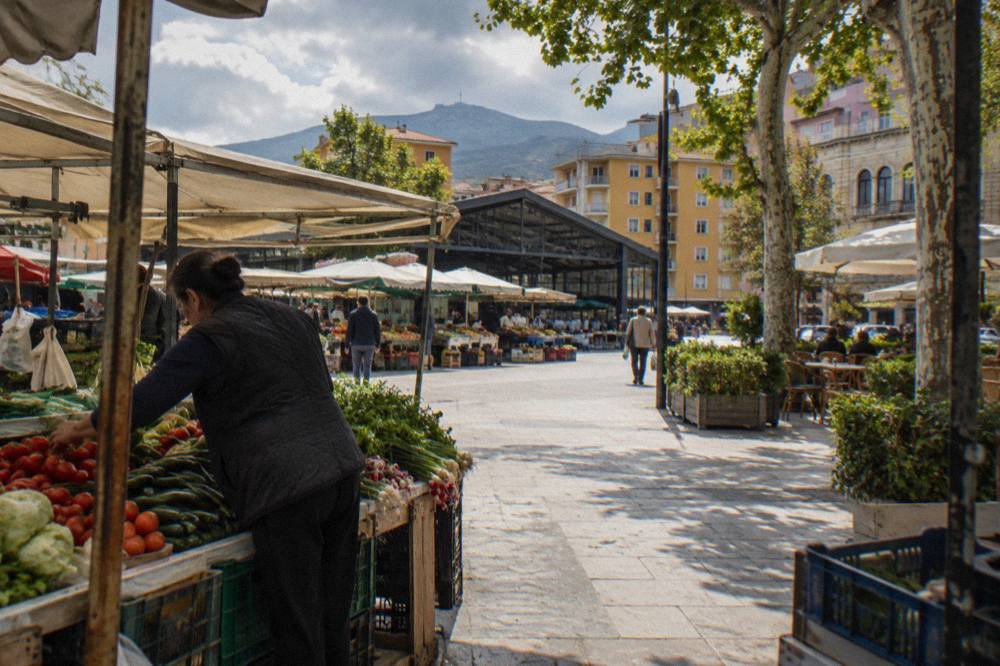
Say Përshëndetje for hello, Mirëmëngjes for good morning and Mirupafshim for goodbye; Tungjatjeta is a second, warmer word for hello that the phrasebook lists alongside the first. Greetings in Tirana are used on entering shops and cafes, not only when meeting someone known, and a greeting before a request is the normal order of an exchange. The five words below carry the full weight of that opening and closing ritual.
Albanian greetings are not optional politeness in the way a muttered hello can be in a large western city. Entering a small shop off Rruga e Kavajes, about 0.5 km west of Skanderbeg Square, without a greeting reads as abrupt. The pattern that works is greeting first, request second, thanks third. Faleminderit, thank you, closes almost every exchange, and Ju lutem, please, softens every request between them.
| Albanian word | English meaning | Where it fits in Tirana |
|---|---|---|
| Përshëndetje | Hello | Entering shops, greeting staff, formal openings |
| Tungjatjeta | Hello | A second, listed alternative greeting |
| Mirëmëngjes | Good morning | Cafes and bakeries before midday |
| Mirupafshim | Goodbye | Leaving any shop, cafe or counter |
The two words for yes and no, Po and Jo, are short enough to be learned in a single taxi ride, and they matter more than they look. A visitor who has read that the head gesture is reversed will want the words ready, because a firm Po or Jo removes all ambiguity when a vendor asks a direct question. Më falni, excuse me, is the word for getting attention politely in a crowd or slipping past someone at a market stall.
The courtesy set belongs together:
| Albanian word | English meaning | Where it fits in Tirana |
|---|---|---|
| Faleminderit | Thank you | Closing any purchase or exchange |
| Ju lutem | Please | Every request, from ordering to asking directions |
| Më falni | Excuse me | Getting attention or passing through a crowd |
| Po | Yes | Answering a direct question |
| Jo | No | Declining, or answering a direct question |
A guided walk is the easiest place to hear these words used at speed and in context. The classic Tirana walking tour covers the centre's Ottoman and communist landmarks with a local guide, and a walk is where a first Përshëndetje usually gets its first reply.
Which Words Help When Ordering Food And Drinks In Tirana?
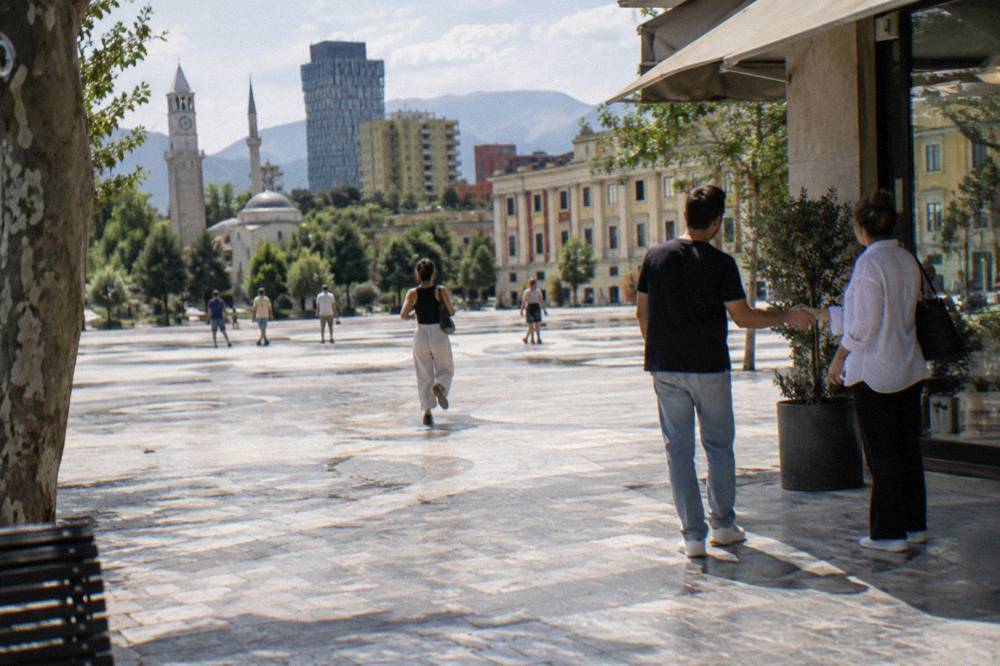
Three words carry an entire restaurant visit in Tirana: Ujë for water, Faturën for the bill and Gëzuar for cheers. Ordering itself can happen by pointing at a menu, but the water request, the toast and the bill request are the three moments where the Albanian word is the natural one, and the bill in particular is asked for by name rather than waited for.
Tirana's cafe culture is dense and late. Bars and cafes in Blloku, the former closed quarter about 0.8 km south of Skanderbeg Square, are the centre of it, and the rhythm of a table there runs greeting, order, toast, bill. Gëzuar is raised with the first drinks of an evening, and it works at a family lunch as well as at a bar. The word belongs to the table rather than to alcohol specifically, and no toasting etiquette beyond the word itself is claimed here, because none is supported.
| Albanian word | English meaning | Where it fits in Tirana |
|---|---|---|
| Ujë | Water | Ordering at any cafe or restaurant |
| Gëzuar | Cheers | The first drink of a table or evening |
| Faturën | The bill | Requesting the bill; it does not arrive unasked |
One practical note sits behind the ordering table. UK FCDO health advice for Albania states plainly: do not drink the tap water, only drink bottled water. That makes Ujë the single most used word of the eleven on a hot day, because bottled water is ordered by the bottle, repeatedly, through an Albanian summer. The ERA5 reanalysis for Tirana, 1991-2020, puts the August mean daily high at 30.4 C and July at 29.8 C, and the whole city runs on bottled water through those months.
Payment wraps into the same moment as Faturën. Cards are reported to be widely taken in hotels, larger restaurants and supermarkets in central Tirana, while cash is still the norm for buses, markets and small cafes, so the lek in the pocket matters as much as the word on the tongue. The Tirana prices page covers what is known about spending in the city, and no meal or coffee figure appears there either, for the same reason none appears here.
The food itself deserves more than pointing. The Albanian food guide covers the dishes worth recognising by name, tave kosi, byrek, fergese and qofte among them, and the best restaurants in Tirana page covers where to sit down for them.
A question worth answering before the bill arrives:
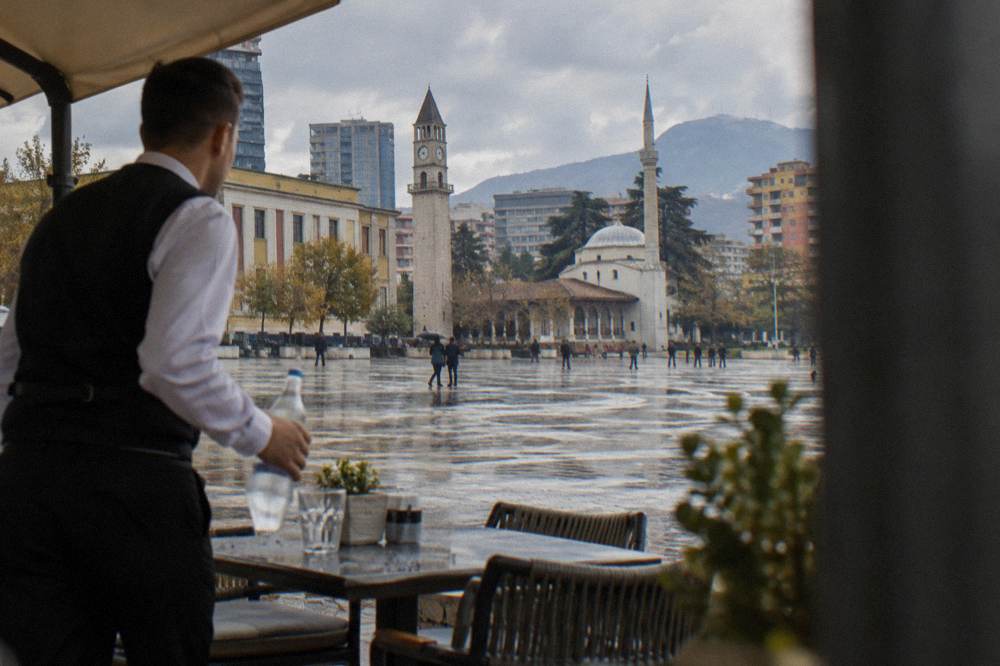
Do People Speak English In Tirana?
Albania sits in the moderate band of the EF English Proficiency Index, and English is the most useful foreign language in Tirana for visitors, concentrated in the centre, in tourism and among younger staff.
The capital is where the country's English concentrates for an obvious structural reason. Tirana county is the only county in Albania that grew in 2025, up 0.7 per cent, and it holds about 32.8 per cent of the country's population, per INSTAT's estimate for 1 January 2026. The city's cafes, hotels, museums and tour operations are staffed by people who work in tourism daily, and the vocabulary of that trade is largely shared. Off the centre's axes, in workshops, small neighbourhood shops and intercity minibuses, Albanian carries the day, and a greeting plus patience does the rest.
Italian is widely present as a second foreign language, a legacy of television and migration, and it is not unusual for a conversation to slide into Italian when English stalls. Nothing on this page needs that fact to work, but it explains why Tirana sometimes feels more multilingual than its size suggests. The three practical fallbacks, in order, are English, pointing at menus, and the eleven words above.
Age shifts the picture more than neighbourhood does. Staff in their twenties across the centre generally handle English fluently, while an older shopkeeper a few streets west may prefer Albanian, Italian or gestures, which is exactly where Përshëndetje and Faleminderit do their work. None of this needs managing in advance; it only needs the visitor to notice when the register changes and switch with it rather than repeat the same sentence louder, which is the one strategy that reliably fails.
For the basics around the language, the Albania travel tips page collects the entry rules and small practicalities, including that Albania is outside the EU and Schengen and runs its own 90-in-180-day visa regime for visa-free nationals, and the Albania entry requirements page covers the detail.
How Does The Albanian Head Nod Work?
Visitors often report that in Albania an upward lift of the chin means no and a side tilt of the head means yes, the reverse of the convention common in western Europe, and the reported fix is to rely on the words Po and Jo whenever the answer matters. The gesture custom is reported widely by guidebooks rather than checked against a single official page, so treat it as a pattern to expect rather than a rule to decode.
The practical consequences are small but real. At a market stall in Pazari i Ri, a vendor asking whether a visitor wants more of something may get a nod that reads as yes to the visitor and no to the vendor, or the other way round. At a bakery counter the same ambiguity can turn one byrek into two. The words settle it instantly, and Po and Jo are short enough to deploy before the gesture does its damage.
The same caution applies to numbers. Hand gestures for counting differ across the Balkans, and the local system is hard to pin down, so the advice is simpler: confirm quantities by holding up fingers, having the amount written down, or watching the till display. Albanian numbers are not on this page's eleven-word list, and they do not need to be, because every till in the centre shows a figure and the lek has its own guide at the Albanian lek explained.
Confusion cuts both ways, which is worth remembering on the visitor's side of the counter. A tourist's ordinary nod, meaning yes, can land as no to an Albanian listener, and a polite shake, meaning no, can be read as agreement. When money or quantity is involved, the cleanest habit is to state the thing in words or on paper: the dish pointed at on the menu, the number of bottles held up on fingers, the banknote handed over. The gesture layer of the language is best treated as colour rather than as a working channel.
Where Can You Practise Albanian Phrases In Tirana?
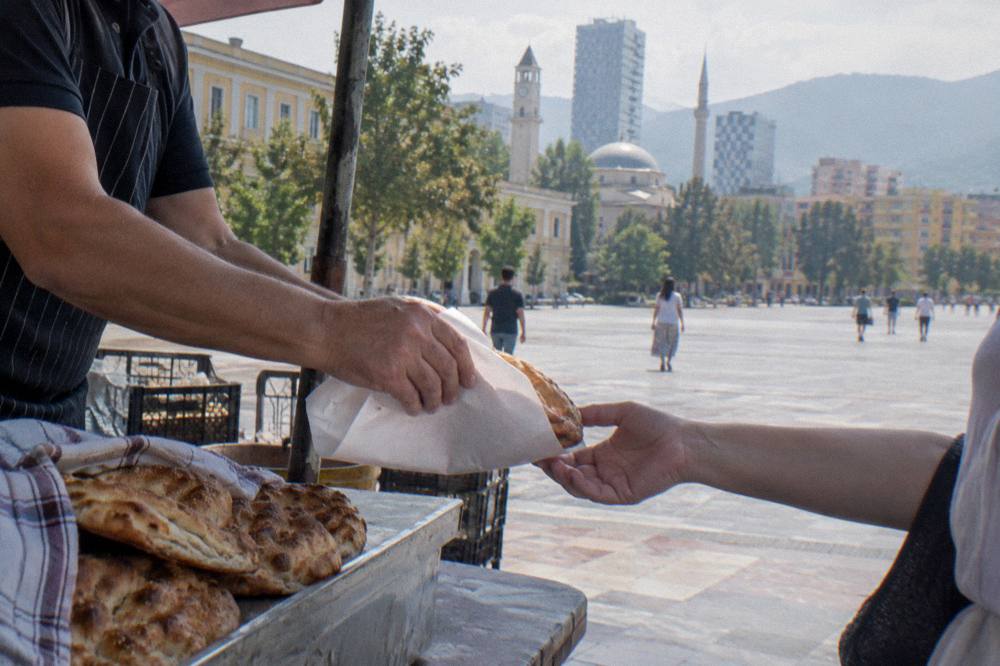
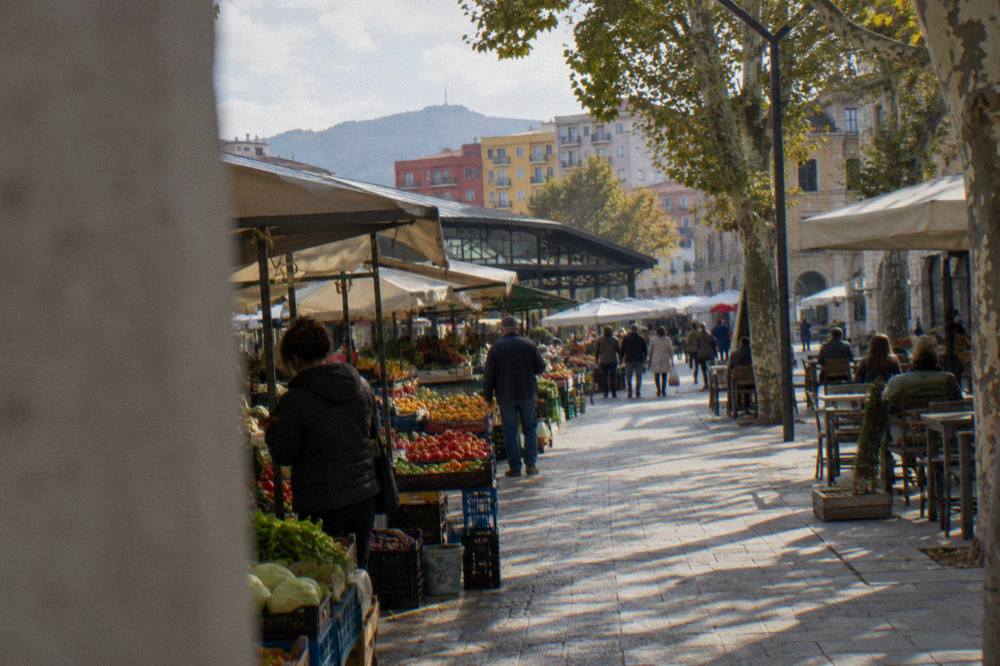
The best places to use the eleven words in Tirana are the places where exchanges are short and repeated: the New Bazaar stalls about 0.6 km east of Skanderbeg Square, bakery counters, cafe terraces and the ticket desks of sights like Bunk'Art 2, about 0.2 km south-east of the square. A guided walk with a local guide is the structured option, and the city's bus network is where the words meet everyday Albanian at closest range.
Pazari i Ri is the natural classroom. Stalls there run on short, repeated exchanges, greeting, request, thanks, exactly the shape the eleven words were cut for, and a vendor who hears Faleminderit before the change is counted out generally meets it with a smile and a slower repeat of the price. The city's buses, a flat fare of about 40 lek per ride, paid in cash on board, per local reporting, are the other rehearsal room: board, greet, pay, sit. No conversation required, and one word used.
The structured option is a guided tour, where the guide's Albanian is the point as much as the route. The Bunk'Art 1 and Mount Dajti tour pairs the language's heaviest historical site with the mountain that frames the city, and the half-day format leaves the afternoon for the market.
For the evening, Blloku's bars are where Gëzuar earns its keep, and the Tirana nightlife page covers the quarter in full. A guided crawl is a way into a strip that otherwise rewards local knowledge, and it is the setting where visitors' Albanian is most enthusiastically corrected rather than judged.
| Setting | Distance from Skanderbeg Square | Words that fit |
|---|---|---|
| Pazari i Ri market stalls | about 0.6 km east | Përshëndetje, Ju lutem, Faleminderit |
| Bakery and cafe counters | city-wide | Mirëmëngjes, Ujë, Faturën |
| Bunk'Art 2 ticket desk | about 0.2 km south-east | Përshëndetje, Faleminderit |
| Blloku bars | about 0.8 km south | Gëzuar, Faturën, Mirupafshim |
What Etiquette Comes With The Phrases In Tirana?
The one piece of etiquette firmly supported for Tirana is mosque courtesy: visits to the Et'hem Bey Mosque are free outside prayer times, with shoulders and knees covered, a headscarf for women and shoes off, offered here as general courtesy guidance rather than fixed hours.
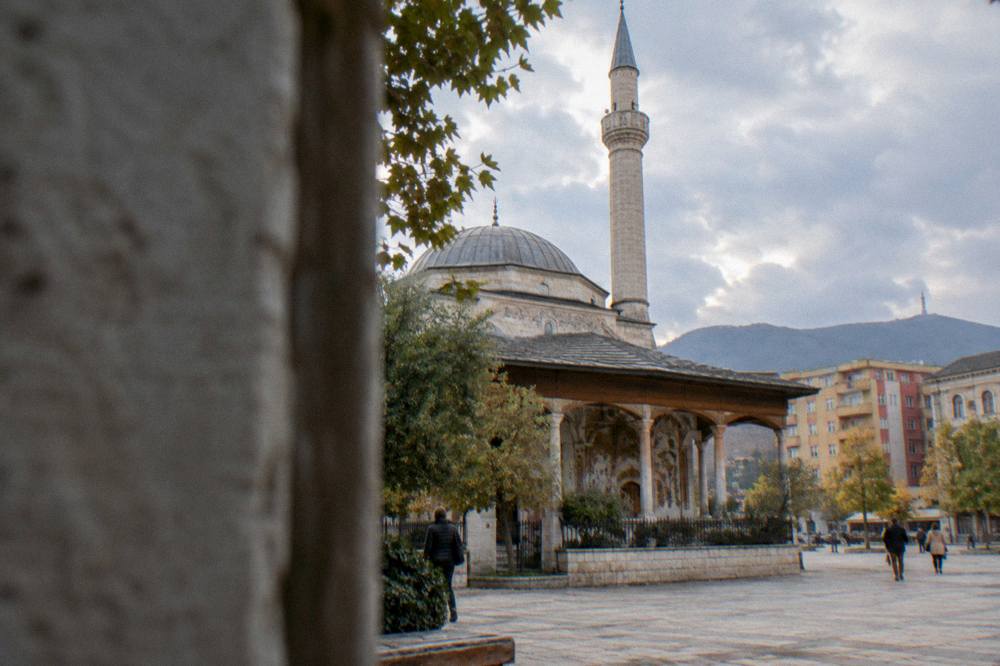
The Et'hem Bey Mosque, about 0.2 km south-east of Skanderbeg Square, is the place where the courtesy guidance matters most, because it sits on the city's main square and receives visitors all day. The Great Mosque of Tirana, the Namazgah Mosque about 0.6 km south-east of the square, opened on 10 October 2024 and is an active place of worship; the same modest-dress courtesy applies, and visits are best made between prayers. No capacity figure or visiting hours for it are stated here, because the sources disagree.
The emergency numbers belong with etiquette in the practical sense that every visitor should carry them: Police 112, Ambulance 127, Fire 128, per UK FCDO guidance. They are numbers, not words, but they answer faster than any phrase.
| Service | Number | Note |
|---|---|---|
| Police | 112 | Per UK FCDO guidance for Albania |
| Ambulance | 127 | Per UK FCDO guidance for Albania |
| Fire | 128 | Per UK FCDO guidance for Albania |
For current conditions, demonstrations have been held in central Tirana since 13 October 2026, some violent, and the FCDO updated its advice on 15 October 2026; the general guidance is to avoid demonstrations, watch belongings in crowds and check local media. The Is Tirana Safe? Scams, Traffic And Night Walks page carries the fuller picture.
Common Questions About Albanian Phrases In Tirana
What does Përshëndetje mean?
It means hello, and it is the standard Albanian greeting listed in the Wikivoyage phrasebook. Tungjatjeta is a second listed word for hello; both work on entering a shop or greeting someone in Tirana.
How do you say thank you in Albania?
Faleminderit. It closes almost every exchange in Tirana, from a market purchase to a hotel check-in, and it is the one word that can never be overused.
How do you ask for the bill in Tirana?
Faturën. The bill in Tirana is requested rather than delivered unasked, so the word is used at the end of nearly every cafe and restaurant visit.
Do people speak English in Tirana?
Albania sits in the moderate band of the EF English Proficiency Index, per that index, and English is the most useful foreign language in the capital, especially in tourism and among younger staff in the centre. No claim is made that everyone speaks it.
Is the head nod reversed in Albania?
Visitors often report that an upward chin lift means no and a side tilt means yes, the reverse of western European convention. The reliable fix is to answer with the words Po for yes and Jo for no whenever the answer matters.
What is the Albanian word for cheers?
Gëzuar. It is raised with the first drink of a table or an evening in Tirana, and it works at lunch as well as at a bar in Blloku.
The eleven words on this page are small, but they are the whole of what a short visit to Tirana needs: a greeting on the way in, please and thank you through the middle, water ordered, a toast raised, the bill asked for by name and a goodbye on the way out. The rest of the city's story, from the Tirana Albania Travel Guide homepage to its neighbourhood and day-trip pages, can be read in English.