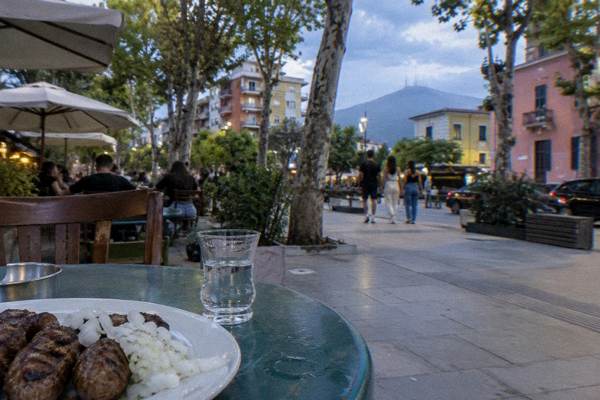
Tirana Coffee Culture: Espresso, Cafes And The Xhiro
Tirana runs on espresso. The Albanian capital, an inland city at the foot of Mount Dajti, has built a cafe culture that fills its pavements from morning to midnight, and this guide explains how it works, where it sits, and how to join it.
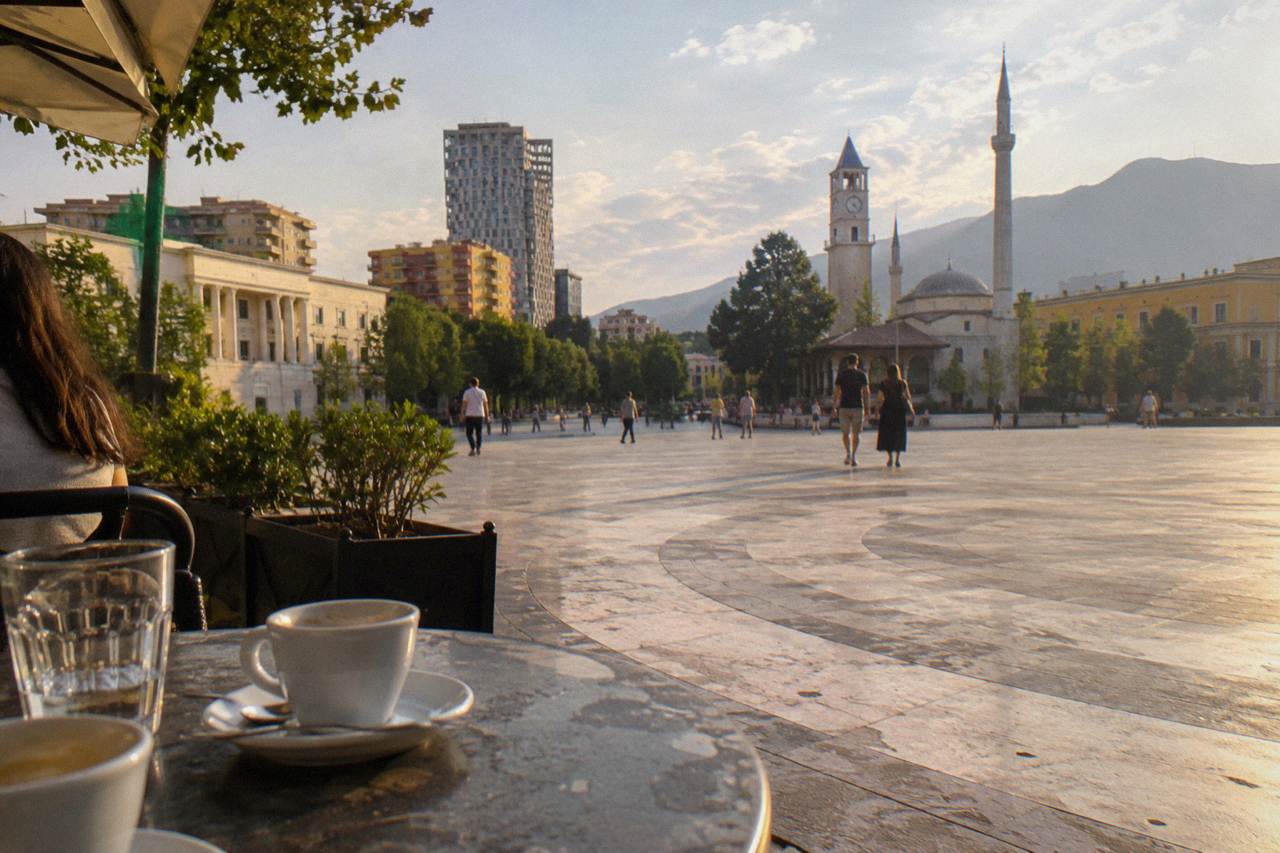
Short answer
Coffee in Tirana means espresso-based drinks served all day in cafes concentrated around Blloku, the New Bazaar, the streets around Skanderbeg Square and the Grand Park. The habit is social rather than takeaway, prices are not printed in any official source, and the evening xhiro, the stroll Tirana takes after work, is the daily peak of cafe life.
Tirana runs on espresso. The capital of Albania, an inland city in a basin at the foot of Mount Dajti roughly 37 km and 39 minutes by road from the Adriatic coast at Durres, has one of the most concentrated cafe cultures in Europe, and it shows no sign of thinning. Coffee here is not a takeaway transaction. It is the frame around work, gossip, politics and the long evening walk, the xhiro, that fills the boulevards after the heat breaks. This guide explains how the habit works, which neighbourhoods carry it, what to order, and how a first-time visitor slots into a rhythm that locals keep seven days a week.
The city's cafe scene sits on top of a deep historical layer. Tirana was founded, per the city's own history page, in 1614 by Sulejman Pasha Bargjini, and became the capital by decision of the Congress of Lushnja on 11 February 1920. Under the communist regime that ruled from 1944 to 1991, cafes as private businesses barely existed. What stands today, from the pavements of Blloku to the terraces of the Grand Park, is almost entirely a construction of the years since 1991, rebuilt at speed by a city that now holds about 32.8 percent of Albania's population in its county. The Tirana Albania Travel Guide covers the wider city; this page stays on the cup.
What Is Coffee Culture Like In Tirana?
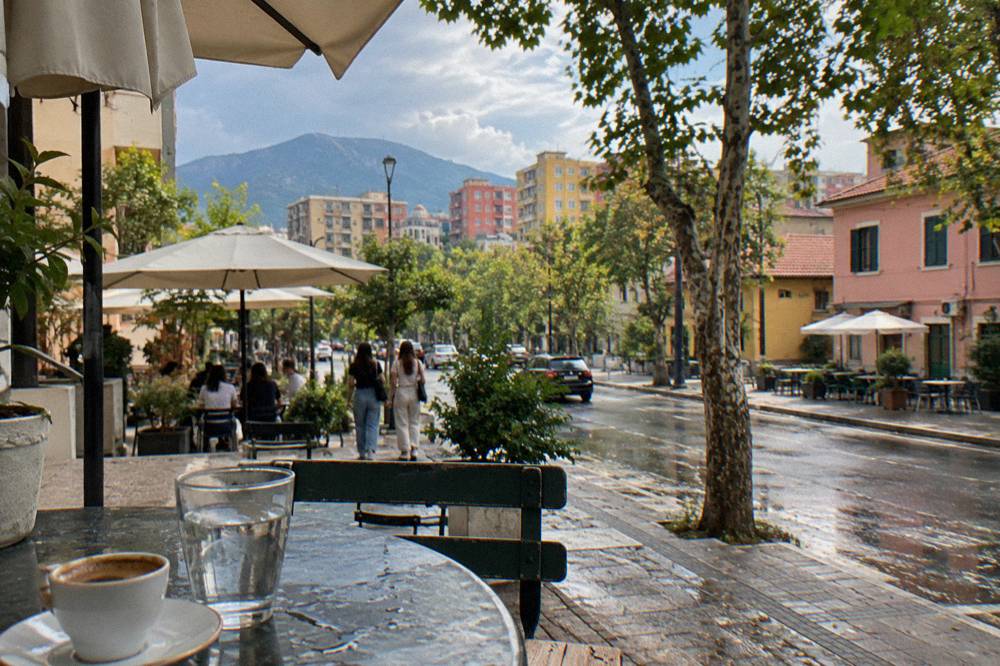
Coffee culture in Tirana is social, espresso-based and unhurried: people sit for their coffee rather than walking with it, sessions stretch for an hour or more, and the habit runs from early morning until late at night across every age group. The drink itself is almost always espresso, macchiato or cappuccino, made on a machine, and no official source publishes what a cup costs, so the price question is settled at the counter, not on this page.
The espresso machine is the backbone. Turkish-style coffee, sometimes called Albanian coffee, survives as a slower, smaller ritual, but the default order in a Tirana cafe is an espresso pulled short or cut with a spoonful of milk. Cappuccino is treated as a morning drink in the Italian manner, and ordering one after lunch marks you as a visitor faster than any accent. That is a convention, not a rule, and nobody will stop you.
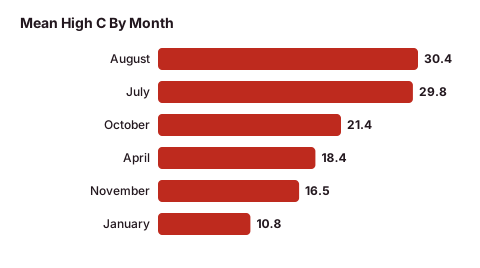
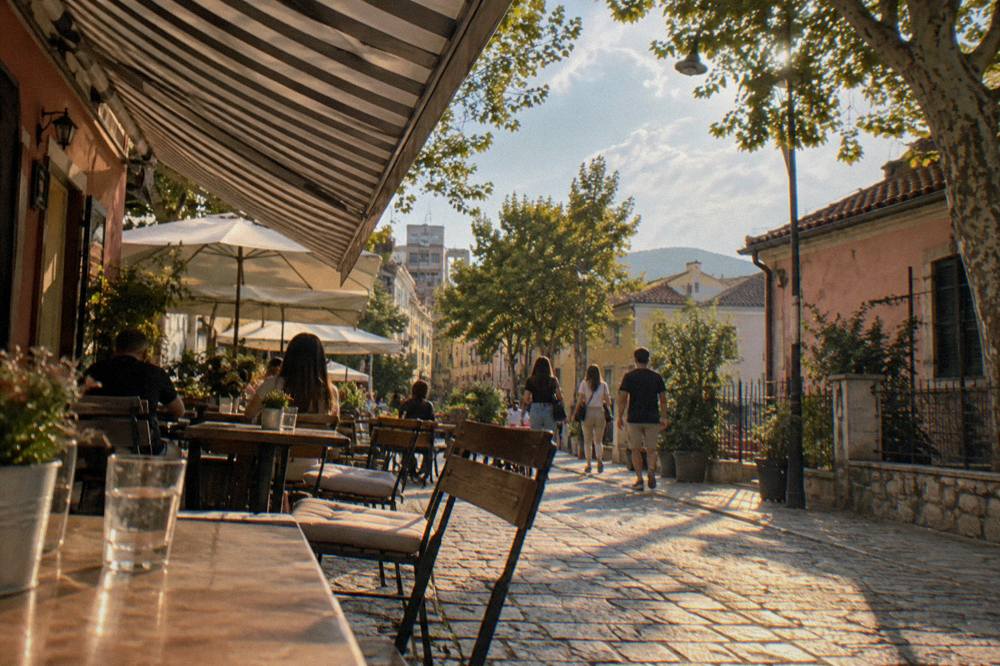
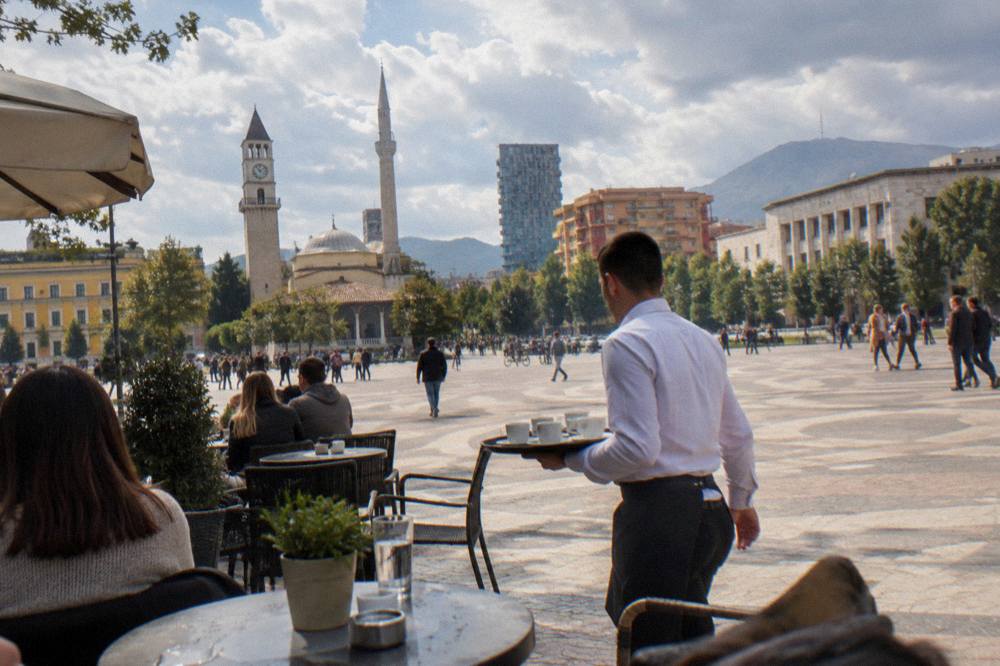
The tempo matters more than the drink. A cafe table in Tirana is rented social space. Friends meet and stay. Business happens over a second and third cup. On the main drags, cafes sit in rows, one terrace next to another, and the choice between them is often just shade, seating and habit. The city's climate shapes the calendar: ERA5 reanalysis 1991-2020 puts the July mean high at 29.8 C and the August high at 30.4 C, with August also the lowest-rainfall month at 31 mm of rain, so summer coffee moves to shade, evenings and the hills. In January the mean high is 10.8 C and terraces thin out but do not close, with heaters and blankets where they fit.
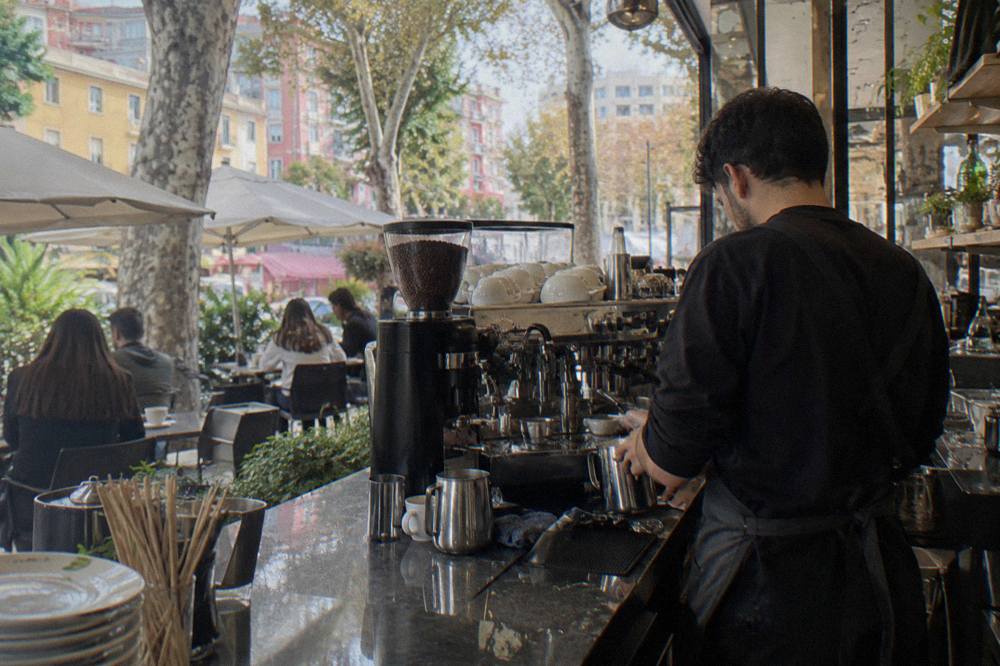
There is a strong home-grown chain presence alongside independents. Sophie Caffe, an Albanian cafe chain with an active official site, is one of the names that may be mentioned here as a chain format with multiple locations; other individual venues cannot be named, because no independent verification exists for them. For the formats by neighbourhood, read on.
Where Are The Best Cafe Neighbourhoods In Tirana?
The main cafe zones in Tirana are Blloku, the former officials' quarter about 0.8 km south of Skanderbeg Square; the New Bazaar (Pazari i Ri) about 0.6 km east; the pedestrian blocks immediately around Skanderbeg Square and Rruga Elixabeta; Komuna e Parisit about 1.8 km south-west; and the cafe terraces along the Grand Park about 2.1 km south-east. Each has a distinct tempo, from quick morning espresso to late-night see-and-be-seen.
Blloku is the headline district. Its grid of streets was, before 1991, a closed residential zone for the political elite, and its opening to the public after communism turned it into the city's cafe and bar quarter, a status local guides report it still holds. Today it carries the densest strip of terraces, the design-led interiors and the late hours, with cafes that turn into bars as the evening builds. For the full picture of the area, see the Blloku guide on this site.
The New Bazaar, Pazari i Ri, is the daytime counterpart: market stalls, food counters and simpler cafes, about a ten-minute walk from the square, and a natural stop before or after the Tirana food tour scene. Around Skanderbeg Square itself, the cafes cluster on the pedestrian side streets, where the Palace of Culture and the Clock Tower of Tirana, about 0.2 km south-east, give the espresso a backdrop. Komuna e Parisit, south-west of the centre, is a quieter residential coffee belt, and the Grand Park's lakefront terraces take over on weekend mornings when the city walks.
| Neighbourhood | Direction from Skanderbeg Square | Character | Peak hours |
|---|---|---|---|
| Blloku | about 0.8 km south | Dense terraces, design cafes, turns to bars | Evening to late |
| New Bazaar (Pazari i Ri) | about 0.6 km east | Market-side, quick espresso, food counters | Morning to mid-afternoon |
| Around Skanderbeg Square | on and beside the square | Tourist-facing, sightseeing breaks | All day |
| Komuna e Parisit | about 1.8 km south-west | Residential, quieter, local crowd | Morning, weekend |
| Grand Park and Artificial Lake | about 2.1 km south-east | Lakeside terraces, walk-up custom | Weekend mornings |
A walking tour is an efficient way to anchor these districts before you settle into a table. The guided history and culture walk covers the centre's layers, Ottoman to communist, and its route drops you exactly where the cafe belts begin.
What Should You Order In A Tirana Cafe?
The standard orders in Tirana are espresso, macchiato (a shot with a spoonful of steamed milk) and cappuccino, plus Nescafe-style instant coffee on older menus and Turkish-style Albanian coffee, boiled unfiltered in a small pot, as the traditional option. Cappuccino is conventionally a before-noon drink. Raki, a fruit brandy, is the after-coffee digestif rather than a cafe drink, and no official source lists a price for any of these.
The vocabulary is easy. "Kafe" alone gets you an espresso. A macchiato is the workhorse order of the country. If you want milk-heavy coffee, ask for cappuccino and expect it in the morning window. Albanian coffee, the Turkish-style pot brew, is the slow version: it arrives in a small cup with grounds settled at the bottom, and you wait for them to settle before the last sip. It is a plain noun for a plain drink, and this page claims nothing about its history.
Tea, usually mountain herb tea, and bottled water sit on every menu. On the water question the UK FCDO health page is direct: "Do not drink the tap water in Albania, as it may cause illness. Only drink bottled water." Order ujë, water, by the bottle and you match both the custom and the official advice. For the bill, the word is faturën.
| Order | What it is | When locals drink it |
|---|---|---|
| Kafe (espresso) | Short black, machine-pulled | Any time of day |
| Makiatos (macchiato) | Espresso marked with steamed milk | All day, the default order |
| Kapuçino (cappuccino) | Espresso with steamed and foamed milk | Before noon |
| Kafe turke / Albanian coffee | Unfiltered coffee boiled in a small pot | Slow mornings, at home |
| Çaj mali | Mountain herb tea | Winter, evenings |
| Ujë | Bottled water | Alongside every coffee |
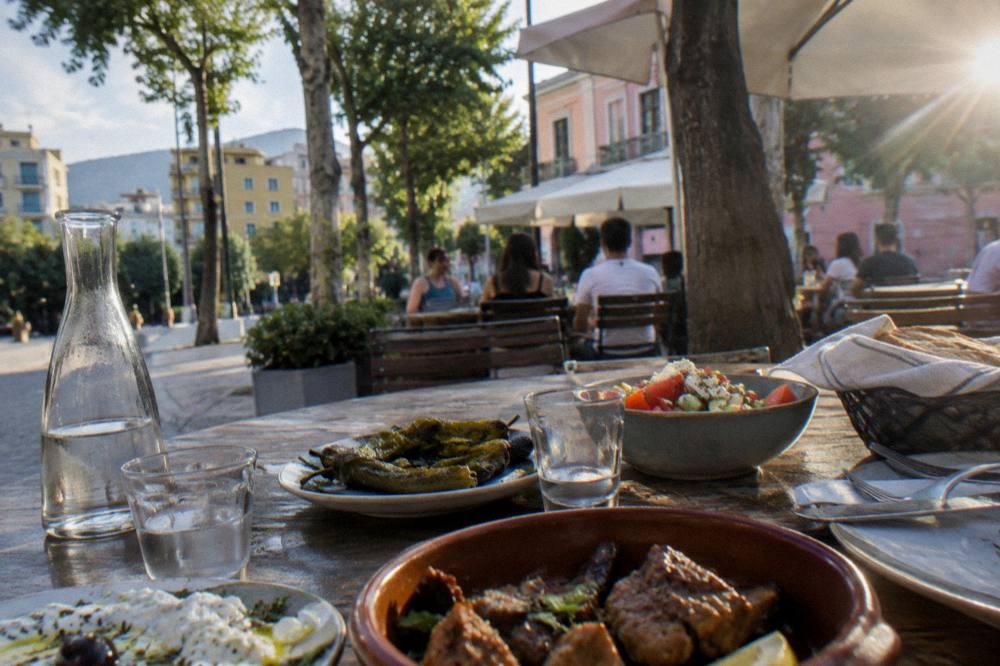
The food side of the same table is where a cooking class earns its place. The traditional Albanian cooking class pairs the dishes that follow coffee, byrek, the layered filo pie, and qofte, seasoned grilled meatballs, with wine and raki poured while you cook, and it sits in the food-tour family this site features.
What Is The Xhiro And Why Does It Matter To Tirana Evenings?
The xhiro is the traditional evening stroll that people of Tirana take along the main boulevards, especially the stretch from Skanderbeg Square south past Rinia Park and Mother Teresa Square toward the Grand Park, roughly 1.2 km from the square, and it is inseparable from cafe culture because the strollers stop for coffee, gelato or a cold drink along the way. It peaks in the cooler hours of summer evenings and in all seasons it is the city's daily social bell.
The word describes the walk itself, but the economy around it is drink-based. On a summer evening, when ERA5 reanalysis 1991-2020 puts the August mean high at 30.4 C, the boulevard only fills as the sun drops. Terraces along the route do their best trade after 19:00, and the crowd moves south in waves: past the Pyramid of Tirana about 0.7 km south-east, the Sky Tower about 0.7 km south, and into the park. In winter the same walk happens earlier and shorter, with November the highest-rainfall month in the reanalysis table at 139 mm of rain and December close behind at 138 mm.
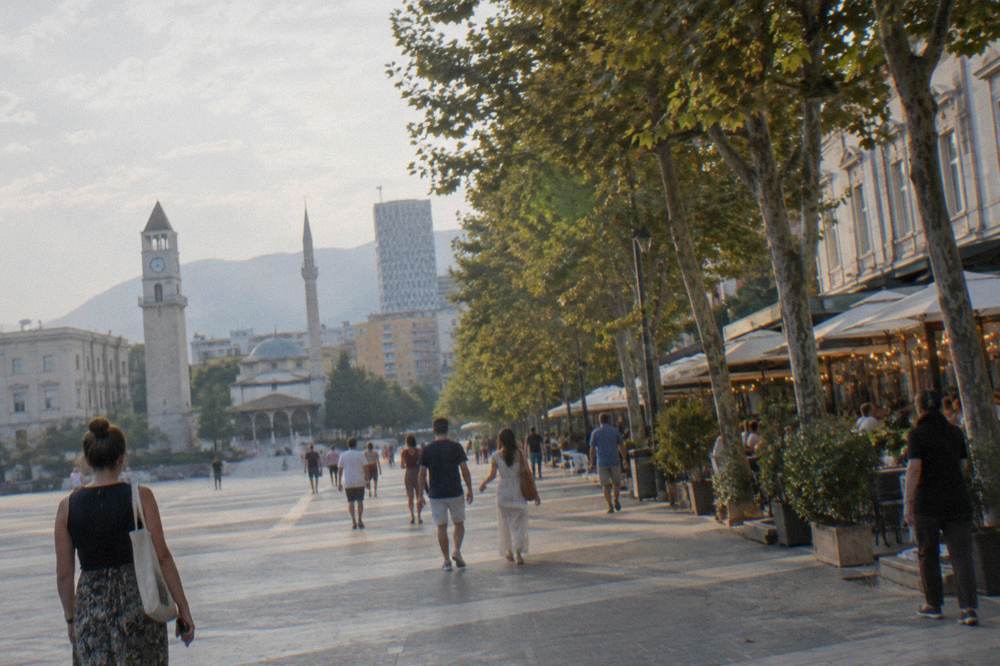
Joining the xhiro costs nothing, which makes it one of the reliable free things to do in Tirana. The etiquette is simple: walk at strolling pace, dress as the city dresses, and stop whenever a terrace looks right. The evening then rolls into Tirana's other night-time formats, covered in the guide to Tirana nightlife, where the same Blloku tables change character as the coffee cups go back to the counter.
For a structured evening instead of a self-guided one, an Albanian night show with traditional music and dance sits in the trio below.
How Does Coffee Fit The Rhythm Of A Tirana Day?
A Tirana day is bracketed by coffee: a morning espresso or cappuccino near home or work, a mid-morning macchiato that stretches into conversation, an afternoon round that shades into raki or a beer, and an evening xhiro stop after the walk. City buses run roughly 06:00 to 23:00, reported by local transport guides, and a single ride costs about 40 lek in cash on board, so the coffee circuit is cheap to move around even before the first cup is poured.
Morning coffee in Tirana is fast and standing-friendly at the counter, or seated on a terrace with a byrek, the layered filo pie, bought from a bakery next door. That combination, coffee plus byrek, is the standard breakfast format, and it appears across every neighbourhood in the table above. Mid-morning is the social slot: meetings happen, grandparents take grandchildren, students colonise tables near the university districts south of the centre.
The afternoon slows. In summer the terraces empty through the warmest hours, when the July mean high sits at 29.8 C in the reanalysis normals, and refill after 17:00. In the cooler months the rhythm is continuous, and rainy-day options are plentiful enough that this site keeps a whole rainy-day itinerary built around interior cafes, Bunk'Art 2, about 0.2 km south-east of the square and open daily from 09:30, and the House of Leaves, about 0.2 km south-west, open 09:00 to 19:00.
| Time of day | The coffee moment | Where it happens |
|---|---|---|
| 07:00 to 09:00 | Espresso or cappuccino plus byrek | Bazaars, bakery-side cafes, counters |
| 10:00 to 12:00 | Long macchiato sessions | Blloku, square side streets |
| 13:00 to 16:00 | Slower trade, coffee after lunch | New Bazaar, restaurant terraces |
| 17:00 to 20:00 | Xhiro stops, gelato and coffee | Boulevards, Grand Park edge |
| 20:00 onward | Coffee gives way to drinks | Blloku terraces turning to bars |
What Words Do You Need To Order Coffee In Albania?
The working cafe vocabulary in Albanian is short: kafe for an espresso, faturën for the bill, ujë for water, faleminderit for thank you and gëzuar as the cheers when something stronger arrives. Albania sits in the moderate band of the EF English Proficiency Index, so menus in central Tirana usually carry English, but the few words below open doors and cost nothing to learn.
Albanian spelling keeps its own letters, so the words appear here as they are written in the phrasebook tradition: Përshëndetje or Tungjatjeta for hello, Mirëmëngjes for good morning, Faleminderit for thank you, Ju lutem for please, Po for yes, Jo for no, Më falni for excuse me, Gëzuar for cheers, Mirupafshim for goodbye, Ujë for water and Faturën for the bill. No pronunciation guidance appears here, because none was checked. A fuller list lives on the Albanian phrases page, and the wider dos and don'ts sit in the guide to Albanian culture and etiquette.
| Albanian | English |
|---|---|
| Kafe | Coffee (an espresso) |
| Faturën | The bill |
| Ujë | Water |
| Faleminderit | Thank you |
| Ju lutem | Please |
| Gëzuar | Cheers |
One gesture is worth a hedge: visitors often report that an upward chin-lift can mean no and a side tilt of the head can mean yes, the reverse of Western convention. Treat it as a curiosity, not a rule, and watch the hands pouring before you decide what a nod meant.
How Does Tirana's Coffee Scene Change With The Seasons?
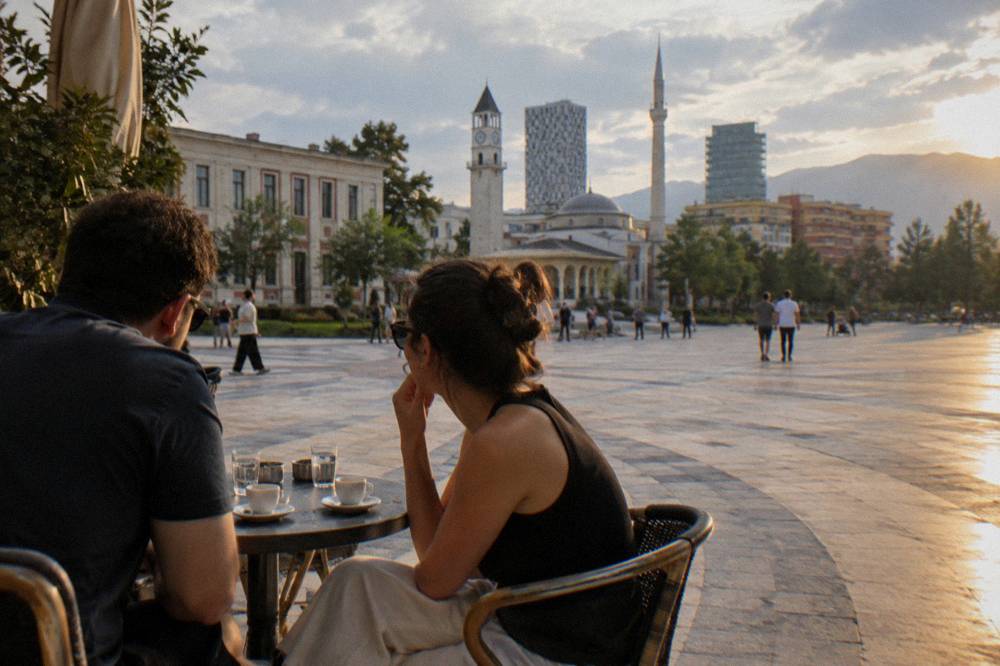
Tirana's coffee calendar follows the climate: terraces fill from spring, peak through the hot dry summer when August's mean high reaches 30.4 C and its rainfall bottoms out at 31 mm in the ERA5 1991-2020 normals, thin in the wet November-to-December window of 139 and 138 mm, and rebuild through winter around heaters, blankets and interior seating. The habit itself never stops; only the furniture moves.
Spring is the sweet spot. By May the mean high is 22.7 C and rainfall drops to 89 mm after the March peak of 117 mm, and every terrace in the table above reopens at once. Summer pushes the day's coffee into mornings, shade and evenings: the mountain is one escape, since the Dajti Ekspres cable car, billed by its operator as the longest cableway in the Balkans, runs from a lower station about 4.4 km north-east of the square, usually closed Tuesdays for maintenance, per local guides, and sells tickets only at the station because the operator publishes no online fares.
Autumn is the city's own favourite stretch, with October's mean high still 21.4 C and the light soft over the boulevard. Winter coffee is an interior sport: malls and larger supermarkets are reported open seven days, and the cafe circuit simply compresses into glass-walled rooms. The seasonal detail, month by month, sits in the Tirana weather guide, and the timing trade-offs for a whole trip are argued in the best time to visit Tirana.
| Month | Mean high C | Rain mm | Terrace season |
|---|---|---|---|
| January | 10.8 | 106 | Heaters and interiors |
| April | 18.4 | 105 | Terraces reopen |
| July | 29.8 | 34 | Morning and evening only |
| August | 30.4 | 31 | Morning and evening only |
| October | 21.4 | 119 | Full terraces, soft light |
| November | 16.5 | 139 | Interiors, covered seating |
Figures above are ERA5 reanalysis, 1991-2020, a modelled grid cell rather than a station record, and they smooth the basin by a degree or two either way.
Can You Combine Coffee With Food Tours And Cooking In Tirana?
Yes, and the pairing is natural: Tirana's food experiences sit in the same neighbourhoods as its cafes, and the city's tour roster leans heavily on food, with cooking classes, tasting walks and full meals-included formats available, all bookable with free cancellation through the operator's live listing. The cooking class this site features prepares byrek, qofte and other home dishes with unlimited wine and raki, and the card, not this page, carries the price and the timing.
The overlap is geographical before it is culinary. A food walk through the New Bazaar passes the market's coffee counters; a cooking class usually starts or ends with a coffee; and the evening shows, like the Albanian night with traditional dance and music, open with welcome drinks on the same streets where the xhiro flows. Food and drink in Albania come with two practical rules worth repeating: the sale of alcohol to anyone under 18 is prohibited, reported under Albanian law No. 9518 of 2006, and drink-driving is zero tolerance, per ATA reporting of the August 2026 road-rule tightening. Raki poured after coffee is a digestif, not a licence to drive.
Where Does Coffee Fit If You Have One, Two Or Three Days In Tirana?
With one day, coffee belongs to the square's side streets in the morning and Blloku in the evening; with two days, add the New Bazaar breakfast run and a Grand Park morning; with three days or a week, the coffee circuit can reach day-trip destinations, from Kruja 45 minutes away by road to Berat about two hours, where the espresso habit travels with you. The single-city itineraries on this site already fold cafe stops into their routes.
The half-day formats matter because Tirana's sights are walkably close. The Et'hem Bey Mosque sits about 0.2 km south-east of the square, the Pyramid about 0.7 km south-east, the Clock Tower beside the mosque with about 90 steps to the top, and Tanners' Bridge about 0.7 km east. Each pair of sights has a cafe between it. Bunk'Art 1, about 4.6 km north-east behind the Dajti Ekspres lower station and open 09:30 to 17:30 since 1 June 2026, is the one major sight that needs a bus or taxi leg, and it pairs naturally with a mountain coffee afterwards, tickets at the door since no price is published.
Out of town, the habit holds. Kruja is 36.7 km and about 45 minutes by road, reachable by minibus for about 200 lek per local guides, and its bazaar has its own coffee counters. Berat is 124.6 km and about two hours, Durres 37.2 km and about 39 minutes, and the coast makes a day trip that Tirana itself, inland, cannot offer. The full runs to Saranda, Ksamil and Butrint, at four to four and a half hours each way, are overnight propositions; take the coffee before you leave.
What Should You Know About Money, Tipping And Practicalities In Tirana Cafes?
Tirana runs on the Albanian lek, at roughly 90 lek to the euro per the Bank of Albania's official rate, cards are widely taken in central cafes and restaurants though cash still rules buses and small counters, and no official source lists a cafe price, meal price or tipping percentage, so check the menu, pay the bill as printed and tip as you judge the service. The euro is not legal tender, and some venues take it informally at their own rate.
The practical spine is short. Plugs are type C and F at 230 V if you need to charge over a long terrace session. A single city-bus ride costs about 40 lek, paid in cash on board, and buses run roughly 06:00 to 23:00. The emergency numbers are Police 112, Ambulance 127 and Fire 128. On the current-conditions note that applies to all central Tirana plans: demonstrations have been held in the centre since 13 October 2026, some violent, and the FCDO updated its advice on 15 October, so check local media, avoid gatherings, and let the terrace you pick sit clear of them. The National History Museum on the square is closed for restoration until about March 2028; the mosaic facade is still viewable from the square with a coffee in hand.
For the money mechanics in full, the Albanian lek and Tirana prices guides carry what can be said and how to read the rest, and the tipping in Albania page handles the bill question honestly. Arriving or leaving, the airport to city centre run, the 24/7 airport bus at 400 lek every full hour behind the Palace of Opera and Ballet, lands you a short walk from the first cafe of the trip.
Tirana's coffee culture is not a performance put on for visitors. It is the city's own daily architecture, a table, a machine and an hour, repeated from Blloku to the park from breakfast to the end of the xhiro. Learn two words, order a macchiato, sit down, and the rest of the ritual explains itself.
Common Questions About Tirana Coffee Culture
What coffee do people drink in Tirana?
Espresso-based drinks, above all the macchiato, a shot marked with steamed milk, with cappuccino conventionally a morning order and Turkish-style Albanian coffee the slower traditional option.
How much does a coffee cost in Tirana?
Cards are widely accepted in central cafes, and cash covers buses and small counters.
What is the xhiro in Tirana?
The evening stroll along the main boulevards from Skanderbeg Square south toward the Grand Park, peaking on summer evenings, with coffee and drinks stops along the route.
Which neighbourhood is best for cafes in Tirana?
Blloku, about 0.8 km south of Skanderbeg Square, is the densest cafe and bar quarter, with the New Bazaar, the square's side streets, Komuna e Parisit and the Grand Park each carrying their own tempo.
Can you sit long in a Tirana cafe?
Yes. Coffee in Tirana is a seated, social habit, and tables are held for an hour or more; the pace is part of the culture rather than a discourtesy.