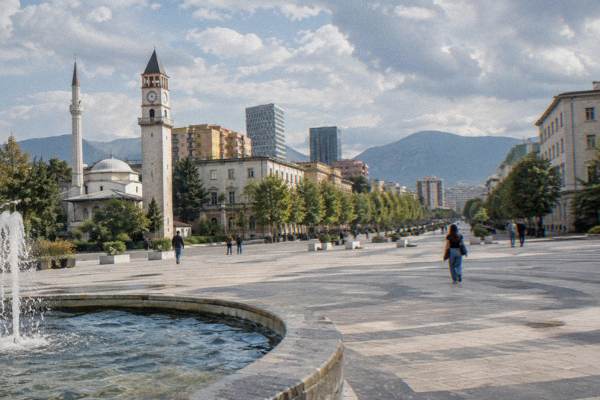
The City Centre: Skanderbeg Square To The Lana
Tirana's city centre packs Ottoman mosques, communist-era landmarks, museums and the cafe life of Blloku into a walkable basin at the foot of Mount Dajti. Here is what to see, what is closed and how to plan the walk.
Short answer
Tirana's city centre runs from Skanderbeg Square, the capital's main public space, east to the New Bazaar and the Pyramid of Tirana, and south to the edge of Blloku. Nearly everything sits within a 20 minute walk of the square, though the National History Museum is closed for restoration until about March 2028.
Tirana, the capital of Albania, keeps nearly everything a visitor needs inside one compact city centre: an inland basin at the foot of Mount Dajti, with Skanderbeg Square at its heart and the Adriatic coast at Durres a day trip about 39 minutes away by road rather than on the doorstep. The centre is small enough to cross on foot in under half an hour, yet it holds Ottoman mosques, a 1980s pyramid turned tech centre, two bunker museums within reach and the largest concentration of cafes, restaurants and museums anywhere in the country. This page walks the centre street by street: what stands where, what is open, what is closed for restoration, and how to fit the highlights into a day.
Where Is The Tirana City Centre And What Does It Cover?
The city centre of Tirana is the area around Skanderbeg Square, roughly bounded by the New Bazaar about 0.6 km east, Blloku about 0.8 km south, Rruga e Kavajes about 0.5 km west and the Grand Park of Tirana about 2.1 km south-east. Every distance is straight-line from the square, and the whole core fits inside a 20 to 25 minute walk in any direction. Mount Dajti rises behind it to the east.
Tirana was founded, according to the city's own history page, in 1614 by Sulejman Pasha Bargjini, who built a mosque, a bath, a bakery and an inn as the settlement's core. It became the capital on 11 February 1920 by decision of the Congress of Lushnja, as the national news agency ATA records, and the square at the centre took its present pedestrian form after a 2017 redesign by the studio 51N4E. Skanderbeg Square is described by the national tourism agency AKT as one of Tirana's most important and best-known public spaces.
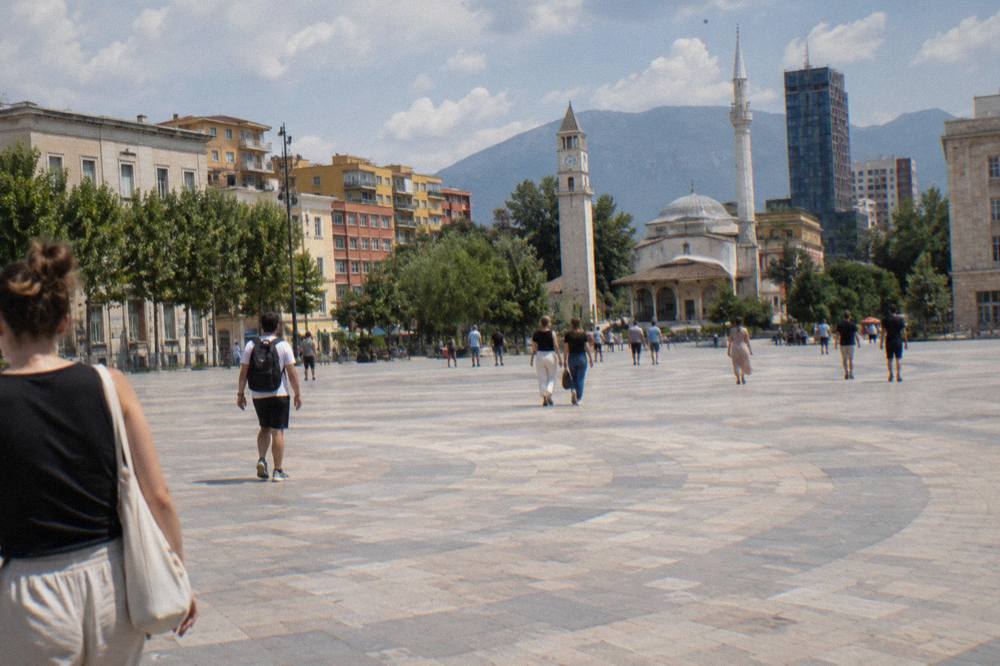
What surprises first-time visitors is how few of the sights need transport at all. The Et'hem Bey Mosque and the Clock Tower stand about 0.2 km south-east of the square's centre, effectively on it. The Resurrection Cathedral is about 0.2 km south, the House of Leaves about 0.2 km south-west, the Pyramid of Tirana about 0.7 km south-east and Tanners' Bridge about 0.7 km east. Only Bunk'Art 1, at about 4.6 km north-east behind the Dajti Ekspres lower station, and the North-South Bus Terminal, about 3.9 km north-west, sit outside the walking core.
For a first loop of the centre, the site's one day in Tirana itinerary strings the square, the mosque, the Pyramid and the cable car into a single day, and the wider things to do in Tirana page lists the full set of options across the city.
| Landmark | Direction from Skanderbeg Square | Straight-line distance |
|---|---|---|
| Et'hem Bey Mosque | south-east | about 0.2 km |
| Clock Tower | south-east | about 0.2 km |
| Resurrection Cathedral | south | about 0.2 km |
| House of Leaves | south-west | about 0.2 km |
| Tirana Castle | south-east | about 0.5 km |
| New Bazaar (Pazari i Ri) | east | about 0.6 km |
| Pyramid of Tirana | south-east | about 0.7 km |
| Blloku | south | about 0.8 km |
| Bunk'Art 2 | south-east | about 0.2 km |
What Can You See On Skanderbeg Square Itself?
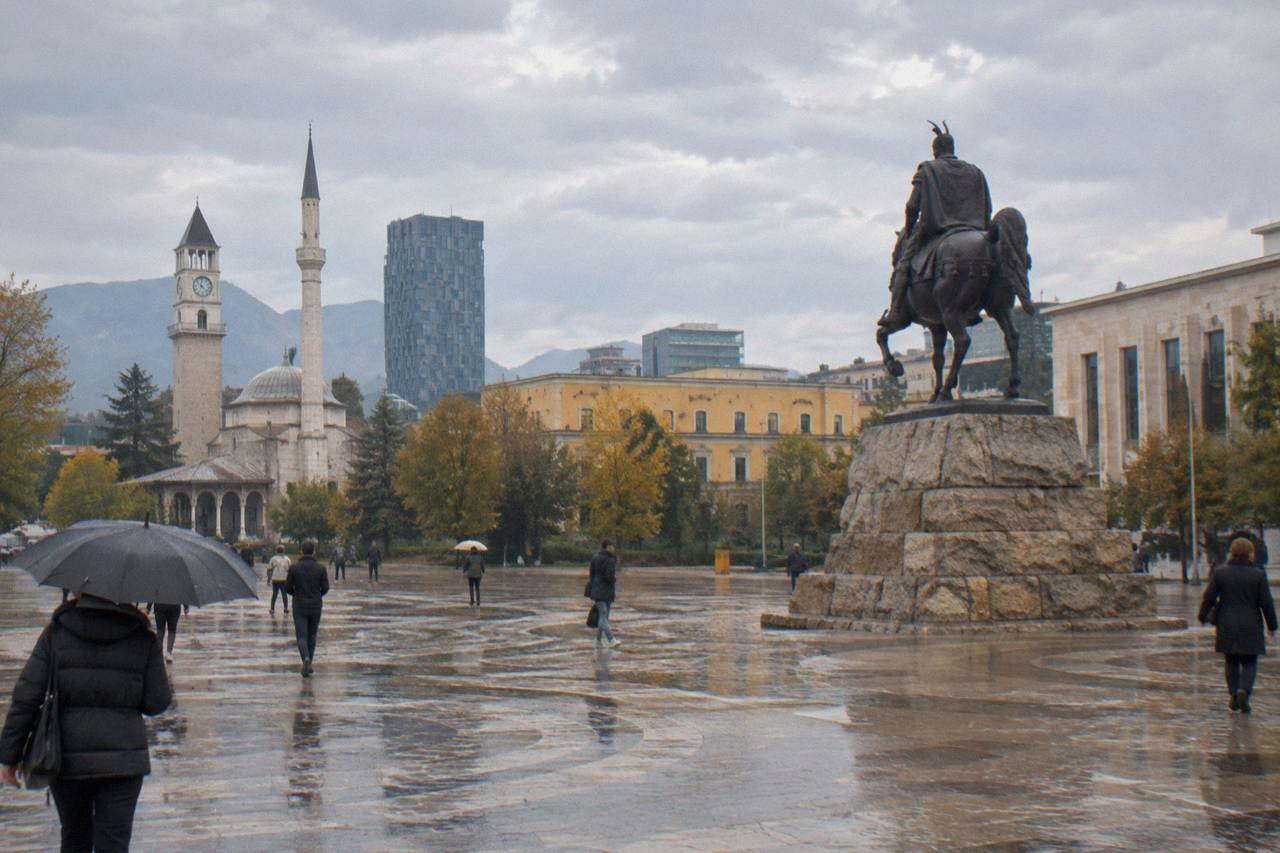
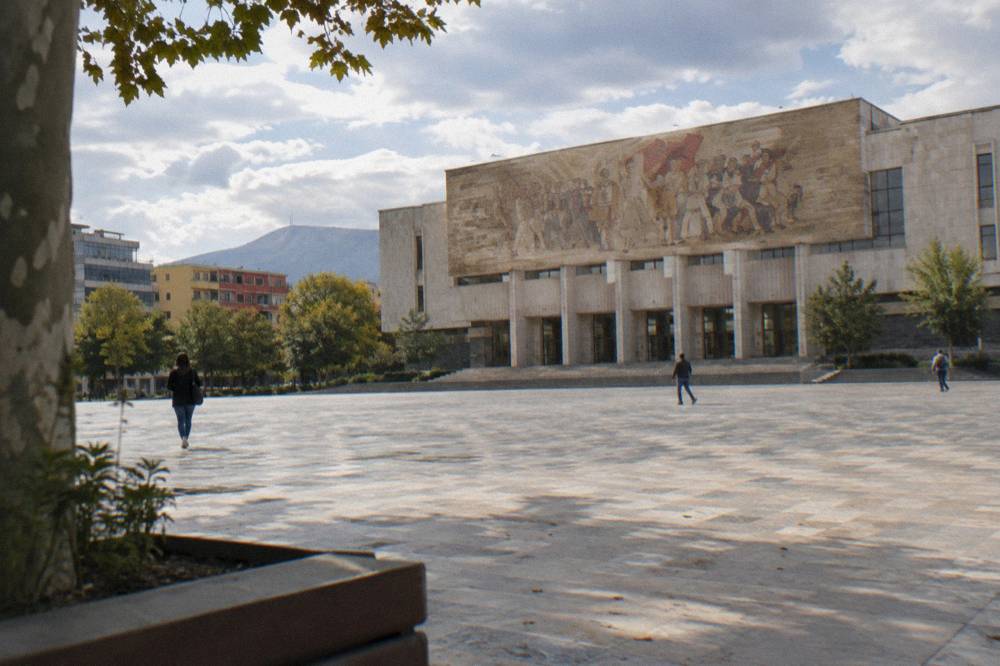
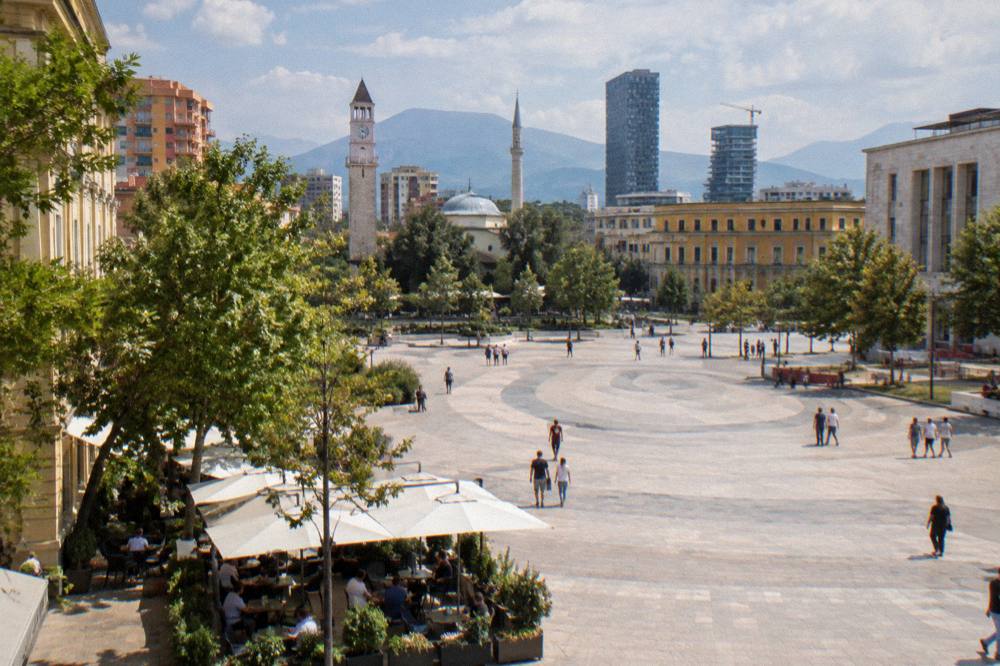
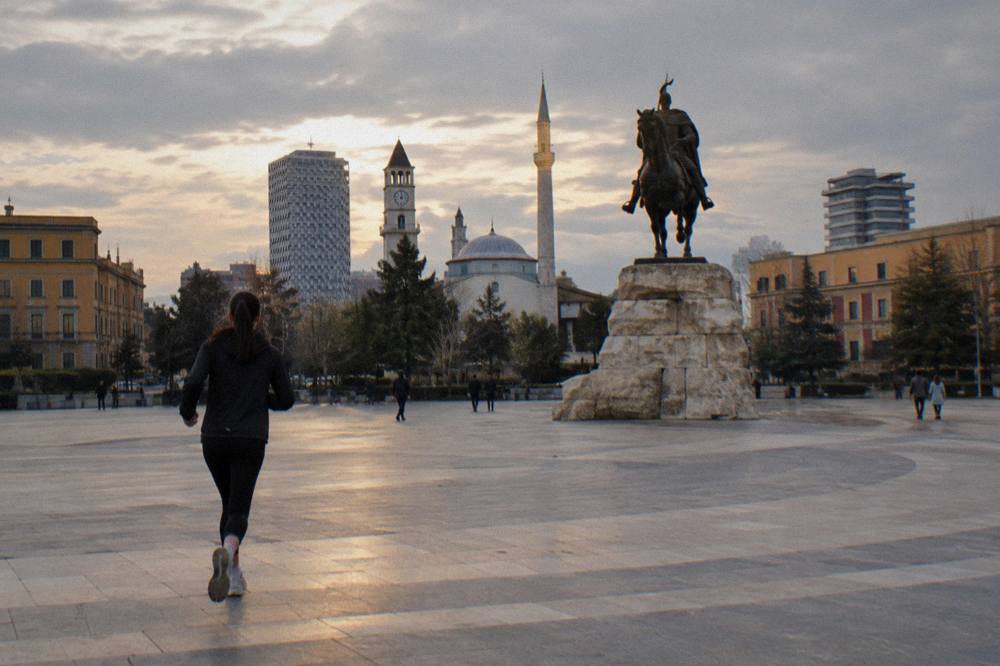
Skanderbeg Square holds the equestrian statue of Skanderbeg, the Et'hem Bey Mosque and Clock Tower at its eastern edge, the closed National History Museum on its north side and the Palace of Culture, home to the Opera and Ballet, on its east side. The square is pedestrian and free to walk at any time, and its stone surface doubles as a plaza, meeting point and event ground. The museum, however, is shut.
Skanderbeg, whose full name was Gjergj Kastrioti, died on 17 January 1468, and per the commonly repeated timeline he took Kruja on 28 November 1443 and formed the League of Lezha on 2 March 1444. His statue anchors the square that carries his name, and the space around it was reworked in 2017 into the pedestrian platform visitors see today.
The Skanderbeg Square guide on this site covers the square in detail, but three buildings on its edge need flagging here. The Et'hem Bey Mosque, reported by the visit-tirana.com portal, was founded at the end of the 18th century by Mulla Bey and finished by his son Haxhi Et'hem Bey, was spared in 1967, and on 18 January 1991 about 10,000 people entered it despite the authorities, an early crack in the communist regime that ran from 1944 to 1991. Entry is free outside prayer times, with modest dress, shoulders and knees covered, a headscarf for women and shoes off, as basic courtesy. The Et'hem Bey Mosque page has more.
The Clock Tower beside it, covered in its own Clock Tower guide, has about 90 steps to the top. Check the current price and opening arrangement at the venue before going. The Great Mosque of Tirana, the Namazgah, opened on 10 October 2024 and stands about 0.6 km south-east of the square; visit between prayers and dress modestly.
One closure matters for planning: the National History Museum, inaugurated on 28 October 1981, has been closed to visitors since 15 March 2024 for restoration, an closure announced to run to March 2028, with the first phase of restoration completed per an ATA report in May 2026. Say it plainly: closed for restoration, see the mosaic facade from the square. The museum's own page on this site tracks the status.
A guided walk is the efficient way to absorb the square's layers, since the stories behind the mosque, the museum facade and the Palace of Culture rarely announce themselves. The Local Life walking tour covers history, culture and everyday Tirana in one guided loop of the centre.
How Do You Walk From Skanderbeg Square To The Pyramid And Back?
The classic central walk runs from Skanderbeg Square south past the House of Leaves and Bunk'Art 2 to the Pyramid of Tirana about 0.7 km south-east, then west to Tirana Castle about 0.5 km south-east of the square and east to the New Bazaar, a loop of roughly 2 to 3 km on flat ground. Allow half a day with museum stops, less without.
Start on the square, take in the Et'hem Bey Mosque and the museum's mosaic facade, then walk one block south-west to the House of Leaves, the National Museum of Secret Surveillance, which its official site lists as open Monday to Sunday 09:00 to 19:00. It documents the surveillance apparatus of the communist period from 1944 to 1991. Buy tickets on site. A short walk east brings you to Bunk'Art 2, an anti-nuclear bunker museum about 0.2 km south-east of the square, whose official home page lists daily opening from 09:30. Buy tickets at the door, as the museum publishes no online price.
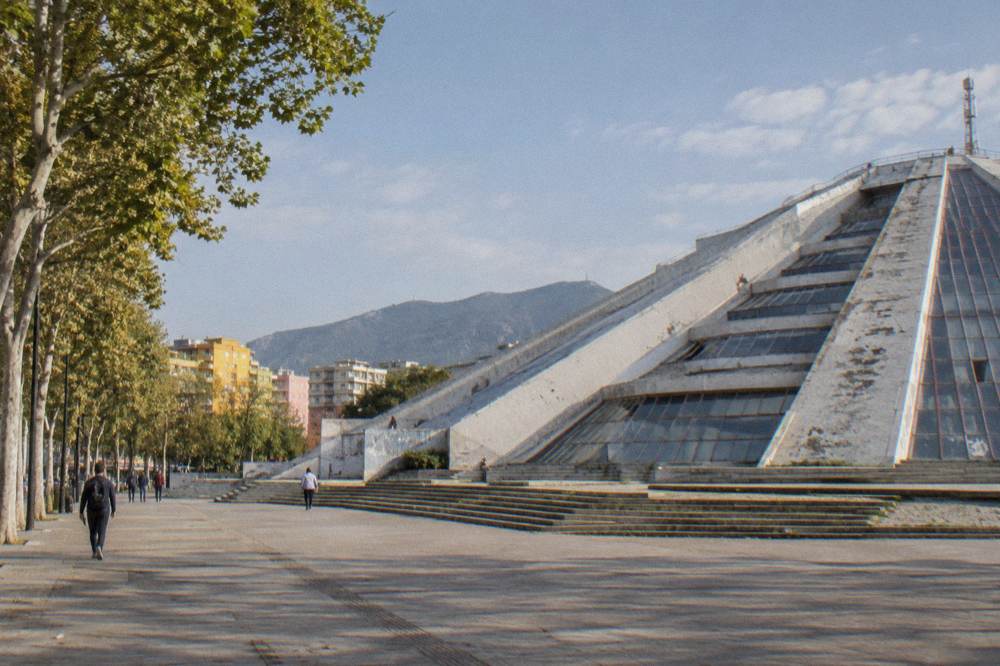
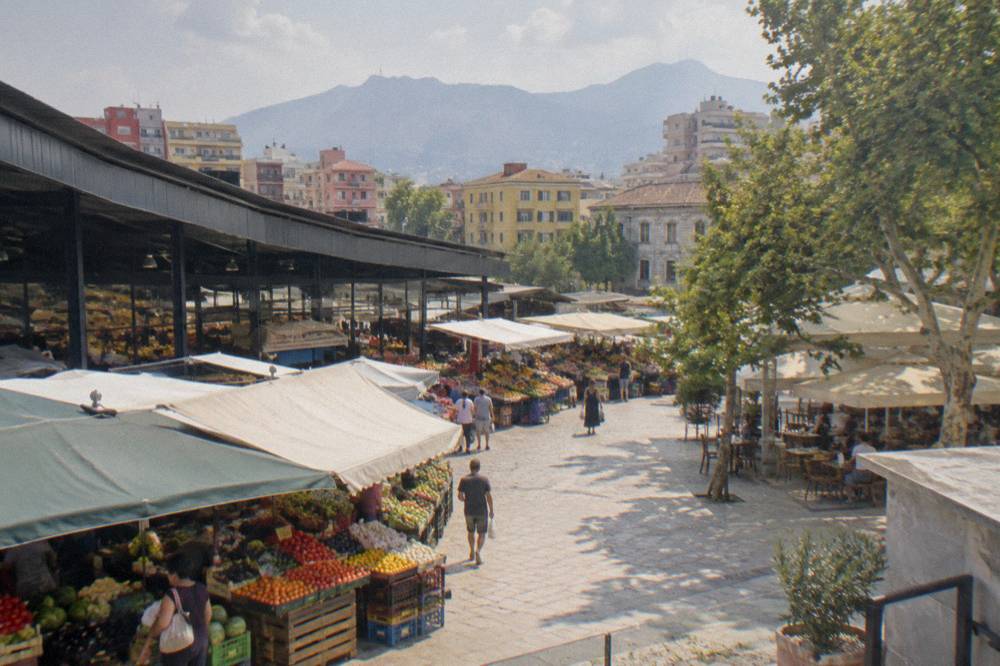
From there the road bends south-east to the Pyramid of Tirana. The building opened on 14 October 1988, was renovated and reopened in May 2023, and now houses the TUMO technology centre. It is not a ruin: the outside stepped surfaces are open and free to climb, giving a view over the centre. The full story is on the Pyramid of Tirana page. Continue east across the Lana-side streets to Tanners' Bridge, an Ottoman-era stone bridge about 0.7 km east of the square, then loop north to Tirana Castle and the New Bazaar, where produce stalls, butchers and small restaurants concentrate in restored low buildings about 0.6 km east of the square.
The Tirana Castle area beside the bazaar holds cafes and shops inside old walls. Finish the loop back at the square, or extend it south into Blloku, the former officials' quarter turned cafe district about 0.8 km south, covered in the Blloku area guide.
For travellers who want the bunker history explained rather than read off panels, the Bunk'Art museums are the core of the site's dedicated communism tours, and a combined Bunk'Art 1 and Mount Dajti outing pairs the museum with the cable car in one day.
Which Central Tirana Museums Are Open And Which Are Closed?
Open in the centre: the House of Leaves daily 09:00 to 19:00, Bunk'Art 1 daily 09:30 to 17:30 in its summer timetable and Bunk'Art 2 daily from 09:30. Closed: the National History Museum since 15 March 2024, announced to March 2028, and the National Gallery of Arts, whose building is under renovation, so check before going. No Tirana museum prints its ticket price online for all of these; buy at the door.
The contrast is stark. Two of the city's most visited museums are bunker conversions, opened in November 2014 and on 19 November 2016 per secondary accounts, while the grand national museum on the main square sits behind hoardings. Bunk'Art 1, the leadership nuclear shelter behind the Dajti Ekspres lower station about 4.6 km north-east of the square, and its website lists the summer 2026 hours as daily 09:30 to 17:30 from 1 June 2026. Bunk'Art 2, in the city centre, and its home page lists daily opening from 09:30. The Bunk'Art 1 and Bunk'Art 2 pages on this site carry the detail.
The National Gallery of Arts, about 0.4 km south-east of the square, is in a building under renovation, and its open-or-closed status is inconsistent across listings, so check before going and expect the possibility of a construction site. The gallery page keeps the status current.
| Museum | Position from the square | Source | Reported hours |
|---|---|---|---|
| House of Leaves | about 0.2 km south-west | open | daily 09:00-19:00 |
| Bunk'Art 2 | about 0.2 km south-east | open | daily from 09:30 |
| Bunk'Art 1 | about 4.6 km north-east | open | daily 09:30-17:30, summer timetable from 1 June 2026 |
| National History Museum | on the square | closed since 15 March 2024, announced to March 2028 | closed |
| National Gallery of Arts | about 0.4 km south-east | under renovation, check before going | none published |
Where Do You Eat And Drink Around The City Centre?
Eating in central Tirana clusters in four zones: the New Bazaar about 0.6 km east of Skanderbeg Square for produce and grills, Blloku about 0.8 km south for cafes and restaurants, the streets immediately west of the square for bakeries and quick lunches, and the Tirana Castle courtyard for terrace dining. Dishes to look for include byrek, a layered filo pie, tave kosi, baked lamb with a yogurt and egg topping, fergese, baked peppers and tomatoes with cheese, qofte meatballs and raki, a fruit brandy.
The currency is the Albanian lek, with the Bank of Albania official rate on 23 October 2026 at 1 euro to 90.74 lek, roughly 90 lek to the euro, and the euro is not legal tender. Cards are taken in hotels, larger restaurants and supermarkets in the centre, but markets and small cafes want cash. More of these guides are collected on Tirana Albania Travel Guide.
Padam is a boutique hotel and restaurant on Rruga Papa Gjon Pali II, Artigiano serves Italian and Mediterranean food, Sophie Caffe is a cafe chain with branches across the centre, and Era Blloku is an Albanian and Mediterranean restaurant in Blloku. Beyond those, the food pages on this site do the work: the site's dedicated one day in Tirana itinerary weaves meal stops into a walking day, and the New Bazaar page covers the market itself.
A food-focused guided option covers tasting stops through the centre. The Qofte and Raki tasting stroll walks and tastes its way through central venues.
| Eating zone | Direction from the square | What it is known for |
|---|---|---|
| New Bazaar (Pazari i Ri) | about 0.6 km east | produce market, butchers, grill restaurants |
| Tirana Castle courtyard | about 0.5 km south-east | terraces and cafes inside old walls |
| Blloku | about 0.8 km south | cafe quarter, restaurants, nightlife |
| Streets west of the square | about 0.5 km west along Rruga e Kavajes | bakeries, byrek counters, quick lunches |
How Do You Get Around Central Tirana Without A Car?
Central Tirana does not need a car: the core sights sit within a 25 minute walk of Skanderbeg Square, a single city-bus ride costs about 40 lek paid in cash on board per local reporting, and no passenger train serves the city or the airport. Uber and Bolt do not operate; licensed taxis and local taxi apps do, per local reporting. Paid street parking runs in zones at 100, 40 and 20 lek per hour, payable by SMS to 50500 or the Tirana Ime app.
The railway point catches people out. The Tirana to Durres line, including an airport branch, is being rebuilt, and electrification is expected to finish by the end of 2027, so no passenger trains run today. From Tirana International Airport Nene Tereza at Rinas, about 15.9 km and 29 minutes from the square by road, the airport bus is the standard route: 24 hours a day, every full hour, 30 to 40 minutes, 400 lek or 4.50 euro, stopping behind the Palace of Opera and Ballet on the square's eastern side. The official airport taxi costs about 2,200 lek one way. The full breakdown is in the airport to city centre guide.
Inside the centre, walking wins. Buses run roughly 06:00 to 23:00 on the main lines, including the Unaza ring line, and the South and North Bus Terminal for intercity departures, including Durres, Berat, Shkoder and Kruja minibuses, sits about 3.9 to 4.0 km north-west of the square, with timetables published by the municipality. The site's neighbourhoods overview and the bus-station details on the Kruja day trip page help with onward travel.
If you arrive with luggage and hours to spare before check-in, central left-luggage options exist: one operator's own site states 3 euro per bag per day near the centre, and lockers.al lists Bablock automated lockers steps from the square; confirm both before relying on them, and see the luggage storage guide for the full picture.
| Option | Cost | Notes |
|---|---|---|
| Airport bus to centre | 400 lek / 4.50 euro | 24/7, every full hour, 30-40 min, stops behind the Palace of Opera and Ballet |
| Official airport taxi | about 2,200 lek | 20-25 minutes to the centre, pre-bookable |
| City bus | about 40 lek per ride, cash on board | reported, confirm on board; main lines roughly 06:00-23:00 |
| Paid street parking zone A | 100 lek per hour | pay by SMS to 50500 or the Tirana Ime app |
| Paid street parking zone B | 40 lek per hour | same payment methods |
| Paid street parking zone C | 20 lek per hour | same payment methods |
What Is The Weather Like In The Tirana City Centre?
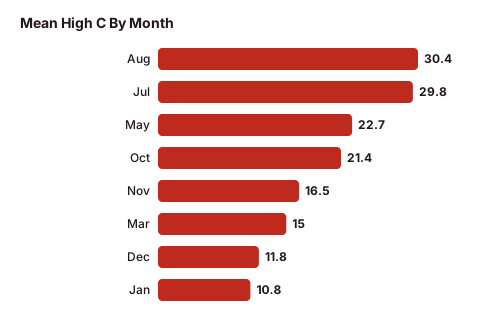
Tirana has hot, dry summers and mild, wet winters: the ERA5 reanalysis for 1991 to 2020 puts the January mean high at 10.8 C with a mean low of 2.3 C, the July mean high at 29.8 C and the August mean high at 30.4 C, with monthly rainfall peaking in November at 139 mm and bottoming out in August at 31 mm. Spring and autumn sit between those poles and are pleasant walking months.
For a city built around walking, the calendar matters. July and August combine the highest mean highs, 29.8 and 30.4 C, with the lowest rainfall, 34 and 31 mm, so the centre feels hot at midday and the sensible walking hours shift early and late. November and December bring 139 and 138 mm of rain respectively, when the museums, the House of Leaves and the two Bunk'Art sites earn their keep as indoor anchors. The Tirana neighbourhoods overview places the centre among the city's districts, and the best-time-to-visit coverage on this site is the place to check before fixing dates.
| Month | Mean high C | Mean low C | Rain mm |
|---|---|---|---|
| Jan | 10.8 | 2.3 | 106 |
| Mar | 15.0 | 5.1 | 117 |
| May | 22.7 | 12.5 | 89 |
| Jul | 29.8 | 19.1 | 34 |
| Aug | 30.4 | 19.5 | 31 |
| Oct | 21.4 | 12.2 | 119 |
| Nov | 16.5 | 8.0 | 139 |
| Dec | 11.8 | 4.0 | 138 |
Values are ERA5 reanalysis averages, 1991 to 2020.
Is Central Tirana Safe To Walk In?
Central Tirana is walkable and generally calm outside demonstrations, but demonstrations have been held in the centre since 13 October 2026, some violent, and the UK FCDO updated its Albania travel advice on 15 October 2026 accordingly; avoid demonstrations, keep an eye on local media and plan around Skanderbeg Square on protest days. Emergency numbers are Police 112, Ambulance 127 and Fire 128. Watch your belongings in crowds, as in any capital.
The FCDO advice, which this site follows closely, is specific: avoid political demonstrations, they can turn violent, and events in the centre have already displaced one major event, with the Tirana Marathon moved from 24 to 25 October to 14 to 15 November 2026. That is a current-conditions note, not a verdict on the city, and it sits alongside ordinary city cautions rather than replacing them.
Beyond that, ordinary planning applies. Tirana is the capital of a country outside the EU and Schengen, with its own 90-in-180-day visa regime for visa-free nationals, so entry formalities and the currency, the lek, differ from neighbour-to-neighbour trips elsewhere in the Balkans. The site's neighbourhoods overview places the centre among the residential districts if you want a quieter base, and the where to stay in Tirana guide maps the trade-offs.
How Do You Fit The City Centre Into A Half Day Or A Full Day?
A half day covers Skanderbeg Square, the Et'hem Bey Mosque, the House of Leaves, the Pyramid of Tirana and the New Bazaar on foot, about 2 to 3 km of flat walking. A full day adds Bunk'Art 2 in the centre and either Bunk'Art 1 with the Dajti Ekspres cable car to the east or a longer loop south through Blloku and the Grand Park of Tirana, about 2.1 km south-east of the square.
The half-day core is a loop: square, mosque and Clock Tower, House of Leaves, Bunk'Art 2, Pyramid, Tanners' Bridge, Tirana Castle and the New Bazaar, with a byrek stop somewhere in the middle. Book nothing in advance except, if you want a guide, a walking tour: the classic city walk is the standard option.
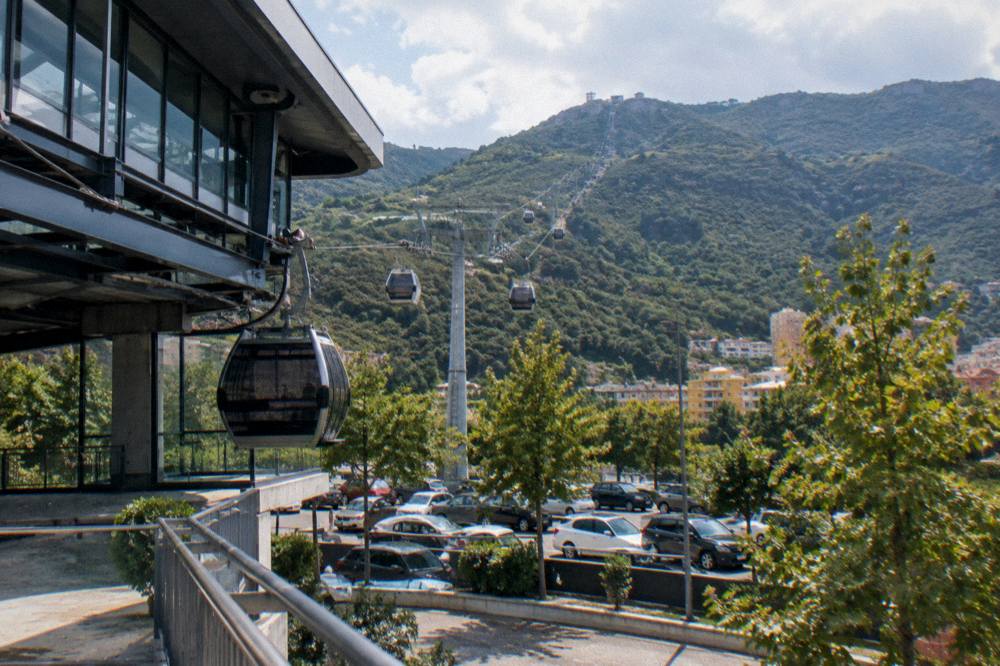
The full-day extension runs east. The Dajti Ekspres lower station sits about 4.4 km north-east of the square, next to Bunk'Art 1, and the operator describes the cableway as the longest in the Balkans, a claim to attribute rather than repeat as fact. Tickets are sold only at the lower station, the operator publishes no fare online, and Tuesdays are usually closed for maintenance, per local reporting: confirm before you go. The Dajti Ekspres page and the Grand Park of Tirana page cover both ends of that day.
For the bunker-plus-mountain combination without the logistics, a Bunk'Art 1 and Mount Dajti outing with lunch included exists as a single bookable day.
Common Questions About The Tirana City Centre
Is The Tirana City Centre Walkable?
Yes. The core sights sit within about 25 minutes' walk of Skanderbeg Square: the mosque and Clock Tower about 0.2 km away, the Pyramid about 0.7 km, the New Bazaar about 0.6 km and Blloku about 0.8 km. Only Bunk'Art 1 and the Dajti Ekspres, both about 4.4 to 4.6 km north-east, need transport.
Is The National History Museum Open?
No. It has been closed to visitors since 15 March 2024 for restoration, with the closure announced to run to March 2028. The mosaic facade remains visible from Skanderbeg Square.
What Currency Do You Need In Central Tirana?
The Albanian lek. The Bank of Albania official rate on 23 October 2026 was 1 euro to 90.74 lek, and the euro is not legal tender. Cards work in hotels, larger restaurants and supermarkets; carry cash for buses, markets and small cafes.
How Far Is The City Centre From The Airport?
Tirana International Airport Nene Tereza is about 15.9 km by road, roughly a 29 minute drive. The airport bus runs 24 hours a day, every full hour, takes 30 to 40 minutes and costs 400 lek or 4.50 euro, stopping behind the Palace of Opera and Ballet on the square's eastern side.
Can You Visit The Et'hem Bey Mosque?
Yes, free of charge and outside prayer times, with modest dress: shoulders and knees covered, a headscarf for women, and shoes off at the entrance.
Is There A Train From The Airport To The Centre?
No. The Tirana to Durres line with its airport branch is being rebuilt, and electrification is expected to finish by the end of 2027. Until then the airport bus and taxis are the options.
The centre of Tirana rewards slow walking more than fast ticking: the square, the mosque, the Pyramid and the bazaar tell the city's whole story across a couple of kilometres, and the guides linked through these pages, from the Skanderbeg Square guide to the one day itinerary, cover each stop in the depth it deserves.