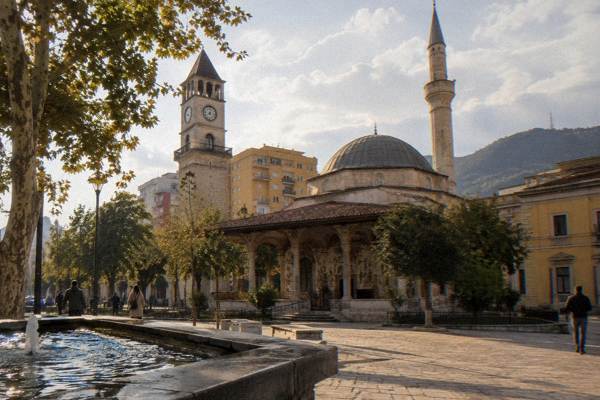
Tipping In Albania: Cafes, Restaurants And Taxis
Tipping in Albania is appreciated rather than expected, and no fixed percentage is prescribed anywhere in official or guidebook-level guidance.
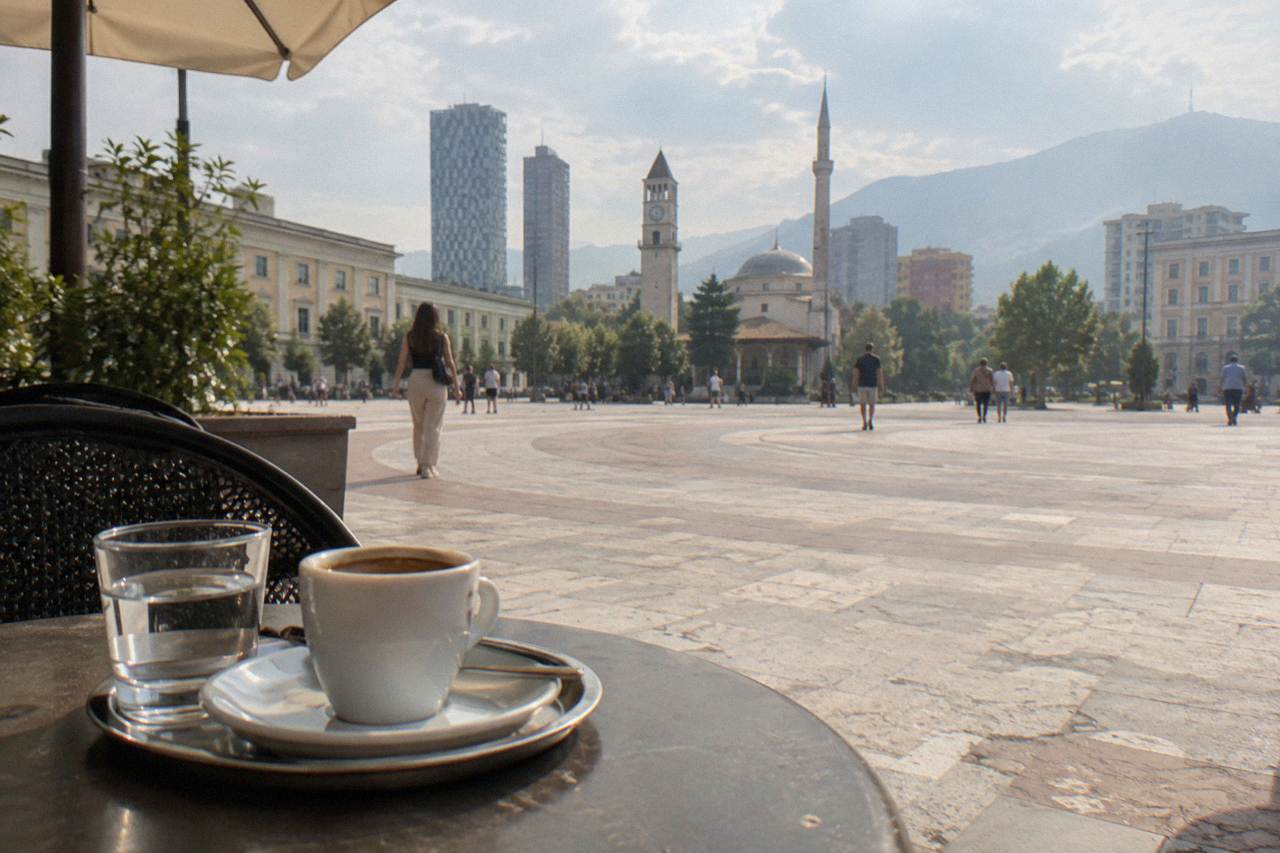
Short answer
There is no set tipping percentage for Albania. Service is rarely added to the bill, so anything extra goes directly to the staff: rounding up the total and leaving small change is the safe default in Tirana cafes, restaurants and taxis.
Tipping in Albania is a low-stakes question with a surprisingly clear answer: nothing is prescribed, and nothing is demanded. In Tirana, the capital, service is rarely added to the bill, and no official source, tourism body or established guide publisher sets a percentage for cafes, restaurants or taxis. What that leaves is a practical question of cash, small denominations and local habit, which this page covers in full, alongside the money facts that actually matter when a bill arrives: the lek, the euro's non-status, where cards work and where only cash will do.
Do You Tip In Albania?
No fixed tipping percentage exists for Albania, and service is rarely added to the bill, so anything you leave goes straight to the staff. Rounding up the total and leaving small change is the safe default in Tirana cafes, restaurants and taxis, and leaving nothing will not cause offence in a cafe where you only ordered a coffee. For a full restaurant meal, an amount rounded up to a round figure in lek is a normal, uncomplicated gesture.
Local guides and travel write-ups describe rounding up and small change as the custom, and that description is worth following, but it is not a rule with a number attached. Treat tipping here as an optional courtesy rather than an obligation with a tariff.
That has a practical consequence: you do not need to budget a percentage of your restaurant spending for tips the way you might in the United States. What you do need is cash in small lek notes and coins, because the situations where you would round up, a taxi, a market stall, a small cafe, are exactly the situations where cards are least useful. The Tirana Albania Travel Guide money pages cover the currency itself in detail, starting with Albanian Lek: Cash, Cards And ATMs In Tirana.
The rounded-up amount should be in lek. Some hotels, taxis and tourist businesses will take euros informally, at their own rate and with change in lek, but the euro is not legal tender in Albania, and nobody expects a tip in euros. A rough mental anchor, per the Bank of Albania's official rate in late October 2026, is about 90 lek to the euro, though rates move daily.
Tipping In Tirana Cafes And Restaurants: What Is Customary?
In a Tirana cafe, leaving the small change from the tray is the whole custom; in a restaurant, rounding the bill up to a round figure in lek is the normal gesture, and there is no percentage to calculate because no service charge appears on the bill. Bills arrive as printed totals with service rarely added, so what you round up is the entire question. Confirm the custom on the spot if a bill looks like it already includes something extra.
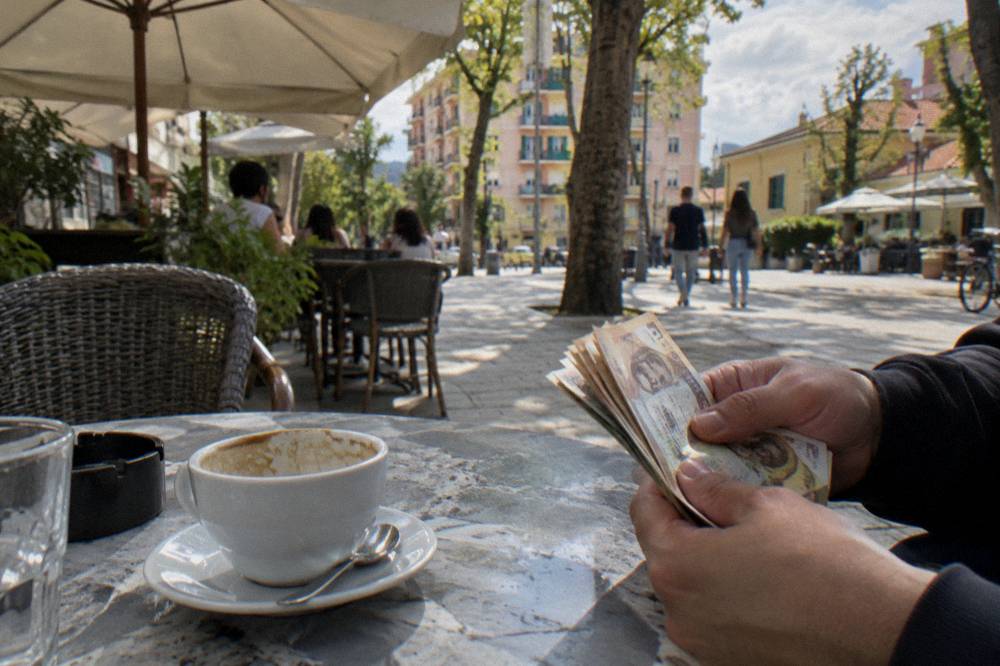
Albania's cafe culture is central to daily life in the capital, and it runs on small, unhurried transactions. You order at the table, pay when you leave, and the change comes back on a small tray. Leaving the coins from that tray, or rounding the total up to the nearest convenient figure, is what local guides describe as the habit. Nobody will chase you for it and nobody will note its absence.
Restaurants work the same way but on a larger scale. The bill is a printed total; if anything labelled as an extra charge appears on it, ask before paying rather than assuming. Where a meal has been good and the service attentive, rounding the total up, or leaving a few coins on the tray, is the standard gesture. Where it was ordinary, paying the printed total is entirely normal. There is no typical price for a meal in Tirana, so do not try to anchor a tip to a supposed average: round up from whatever your own bill says.
The city's eating and drinking scenes are covered in depth elsewhere on this site: the guide to Tirana's restaurants and formats by neighbourhood, the coffee culture guide and the overview of Albanian food and dishes all explain what you are likely to be ordering when the bill arrives. For an evening out in Blloku, the cafe and bar quarter about 0.8 km south of Skanderbeg Square, the same rounding-up habit applies, and the nightlife guide has the detail.
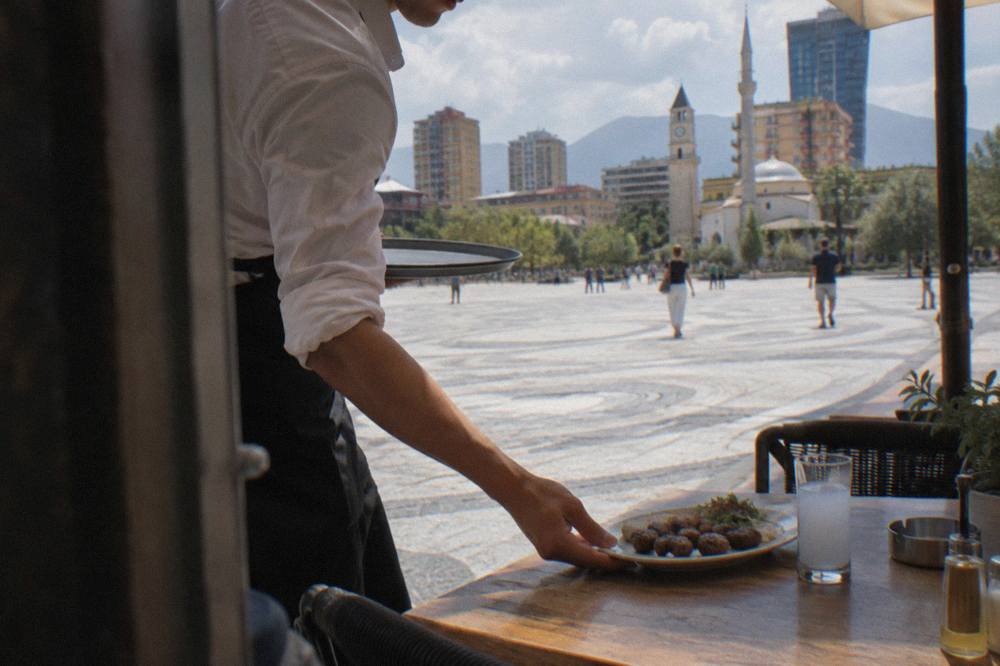
The one eating-out decision where tipping stops being a question is a pre-booked food experience. The site's food tour round-up explains the formats. A vineyard visit near Durres, the Durrës Countryside Vineyard Experience with Wine & Food Pairing, is one such pre-paid day out: wine and food are paired for you in the countryside outside the port city, and everything except any cash you choose to hand the host is settled at booking.
Tipping Tirana Taxi Drivers: How Does It Work?
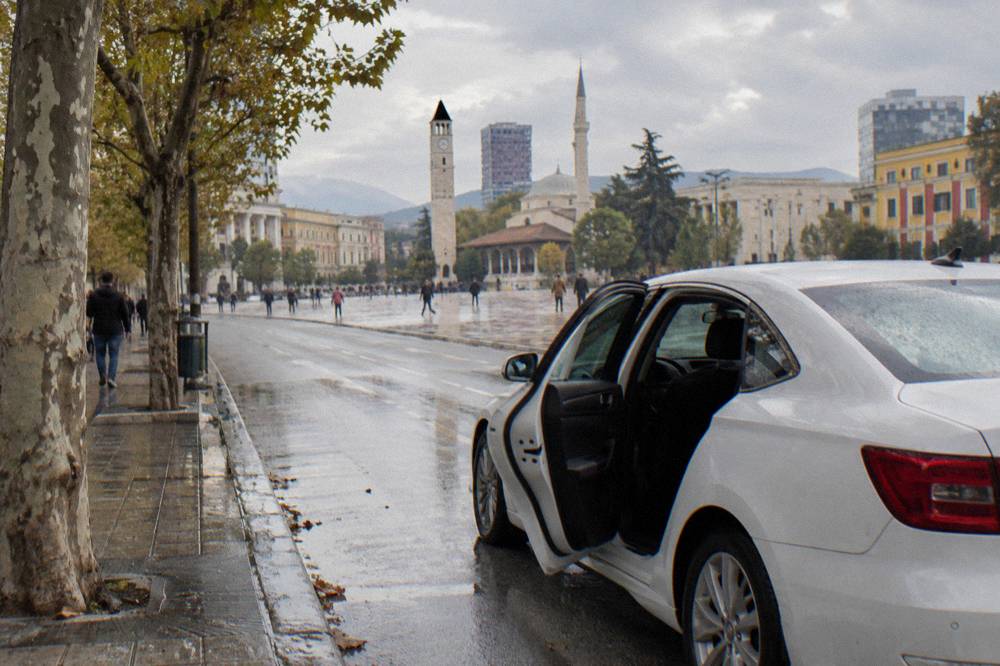
Taxis in Tirana are paid at the end of the ride, and the customary gesture is simply rounding the fare up to a round figure in lek; no percentage applies and no taxi tip is expected. Agree or check the fare before you set off, since meter tariffs are not published in any verifiable source, and pay cash unless the driver offers a card machine. A rounded-up fare and a thank-you is the whole exchange.
Two things make the taxi question simpler than it looks. First, Uber and Bolt do not operate in Tirana; the market runs on local operators and local taxi apps, and you should agree the fare, or confirm the meter, before the ride starts. Second, because the fare is agreed, rounding it up at the end is an easy, unambiguous gesture: a ride that comes to a figure partway between round numbers can simply be paid at the next one up.
For the fixed-price airport run, the numbers are actually published. The official airport taxi, branded "TAXI Tirana Airport" and operated by Auto Holiday Albania, charges a fixed about 2,200 lek one way from Tirana International Airport Nene Tereza to the centre, a 20 to 25 minute trip, per the airport's own transport page. Rounding up from there, or telling the driver to keep the change from whatever note you hand over, is the normal move. The airport-to-centre guide covers every option in detail.
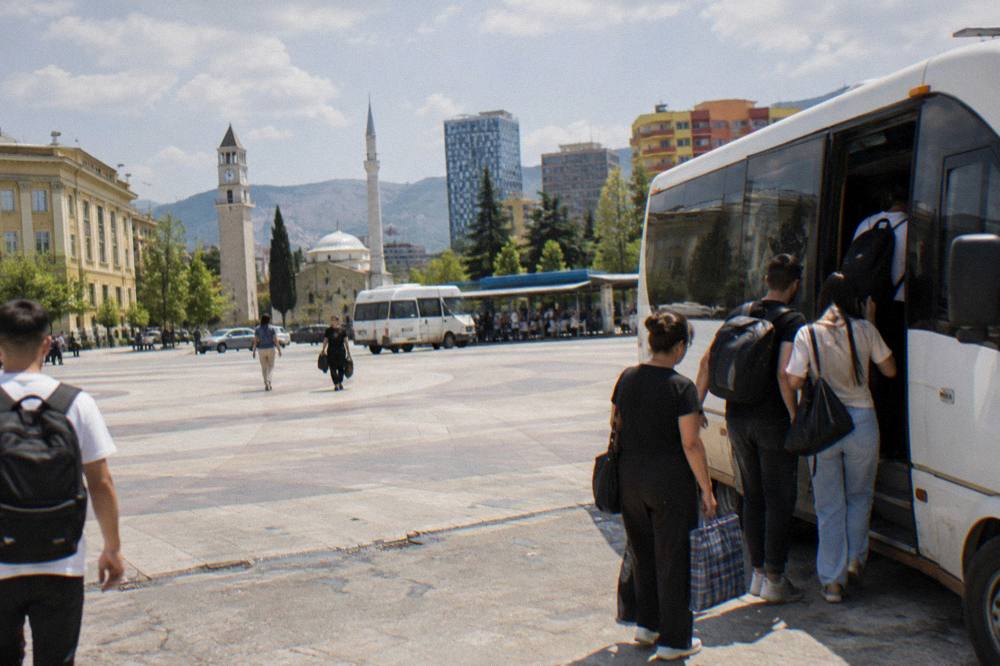
The bus alternative needs no tip at all, which is worth remembering. The official airport bus to the centre runs 24/7, every full hour, takes 30 to 40 minutes and costs 400 lek, or 4.50 euro at the operator's own counter price, stopping behind the Palace of Opera and Ballet on Skanderbeg Square. Inside the city, buses charge about 40 lek a ride, paid in cash to the conductor on board, and there is no tipping culture whatsoever on public transport. The getting around Tirana guide and the bus stations guide have the full network picture.
| Airport-to-city option | Fare | Timing | Notes |
|---|---|---|---|
| Official airport taxi (AHA) to centre | About 2,200 lek fixed | 20-25 min | Bookable at tiataxi.al, runs 24/7 |
| Airport bus to centre (LU-NA) | 400 lek / 4.50 EUR | 30-40 min, hourly, 24/7 | Stops behind the Palace of Opera and Ballet |
| Airport bus to South and North Terminal | 300 lek / 3.50 EUR | 20-30 min | Airport to terminal 08:00-18:00 |
| Airport coach to Durres (Adis) | 600 lek | Departures 08:30-23:00 | Good for coastal connections |
| Airport shuttle to Shkodra (Hermes) | 1,000 lek | Fixed daily departures | Times on the airport transport page |
Tipping Hotel Staff, Guides And Tour Drivers In Albania
Hotel tipping in Albania runs on small cash gestures rather than a percentage: a few coins or a small note in lek for porterage, and something left for room staff at the end of a stay if you choose, with no published norm to follow. For tour guides and drivers, cash in lek at the end of the tour is the accepted way, since prepaid tours settle everything else at booking. No figure is prescribed for any of these, so give what feels proportionate and keep it in local currency.
Guided tours are where visitors ask about tipping most, and the mechanics are straightforward. Group sizes tend to be small on the city walks, which makes a direct, personal gesture natural. Nothing about the tour's published price obliges you to add anything.
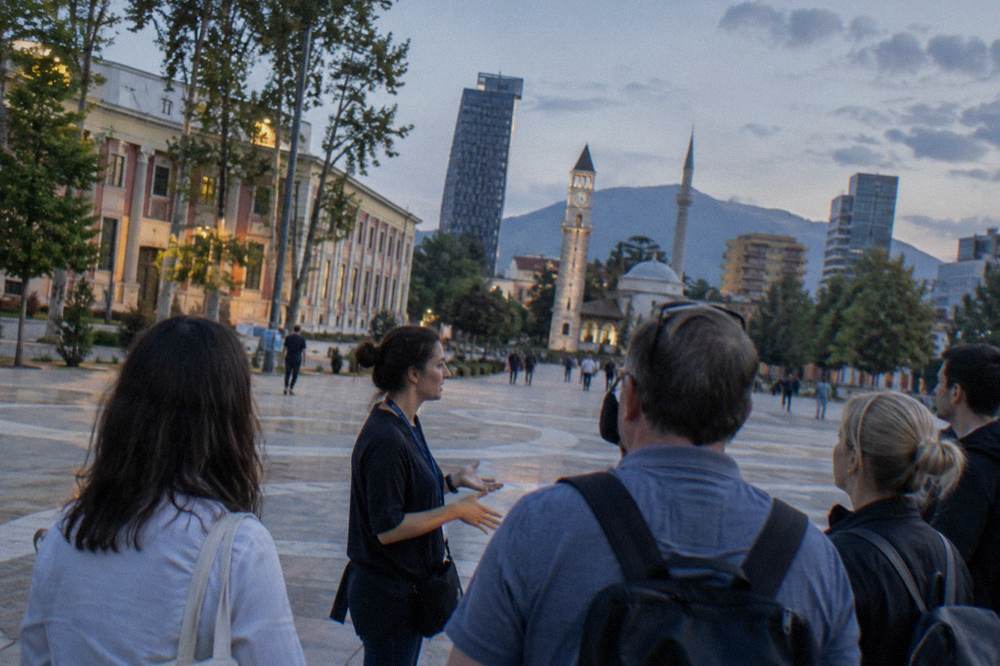
Day-trip drivers, especially on mountain routes such as the road to Theth in the Albanian Alps, are typically tipped the same way, in cash at the end. The Theth and Valbona guide and the Albanian Alps overview explain what those long days involve. For hotels, the same logic applies: a small amount in lek for whoever carries bags or cleans the room, handed directly or left in the room, with no obligation attached.
Cash Or Card In Tirana: What To Know When The Bill Arrives
The lek is Albania's only legal currency, and while cards are widely accepted in Tirana's hotels, larger restaurants and supermarkets, cash is still how you pay on buses, in markets and in small cafes, which are precisely the places where you round up a bill. Withdraw lek rather than planning to pay in euros, since the euro is not legal tender and any informal acceptance comes at the business's own rate with change in lek. Small notes and coins are what tipping here actually runs on.
Reported practice across central Tirana, including the Skanderbeg Square area and Blloku, is that card terminals are common in larger venues and rare at the counter of a bakery or a market stall. The bus system is cash-only, about 40 lek a ride paid to the conductor. So a workable pattern for a day in the city is: card where it is offered, cash everywhere else, and a pocket of small denominations so that rounding up never depends on getting change first.
| Situation | Payment that works | Tipping relevance |
|---|---|---|
| Hotel restaurant, Blloku venues, supermarkets | Cards widely reported accepted | Add cash if you round up the bill |
| Small cafes and bakeries | Cash | Leave the tray coins |
| City buses (about 40 lek, cash on board) | Cash only | No tipping applies |
| Markets, stalls, Pazari i Ri produce stands | Cash | Round up if you like |
| Official airport taxi (about 2,200 lek fixed) | Cash or as the driver offers | Round up to a round figure |
| Pre-booked tours and experiences | Paid in advance at booking | Optional cash for the guide on the day |
One caution worth flagging: the UK FCDO health page advises against drinking tap water in Albania and recommends bottled water only, and bottled water is another small cash purchase where change and rounding come into play. Beyond that, the practical money questions, exchange, ATMs and budgeting structure without invented numbers, are handled in the Tirana prices guide and the lek guide.
How Much Should You Tip On A Day Trip From Tirana?
On a paid day trip from Tirana, the tour itself is settled at booking, so the only tipping decision is cash for the guide and driver at the end of the day, with no percentage and no published norm to follow. Think in terms of a flat, round amount in lek that feels proportionate to the length of the day, handed directly. A short city walk and a full-day mountain excursion are obviously different efforts, and a flat gesture rather than a calculation matches both.
The surrounding day trips are what make this question real, because Tirana sits within an hour or two of an unusual range of country. Durres and its Roman amphitheatre are about 39 minutes by road; Kruja and its castle bazaar about 45; Petrela Castle about 22; Lake Bovilla about 61. Farther out, Berat is about two hours, Shkoder about two, Ohrid about two and a quarter plus the North Macedonia border, and the long southern runs to Gjirokaster, Saranda and Butrint are four hours or more each way, which is why they are overnight or long-tour days rather than afternoon excursions. The Kruja, Berat and Durres guides have each route in detail.
| Day trip from Skanderbeg Square | Approximate road time | Kind of day |
|---|---|---|
| Petrela Castle | About 22 min | Half day |
| Durres, amphitheatre and coast | About 39 min | Easy day trip |
| Kruja Castle and bazaar | About 45 min | Easy day trip |
| Lake Bovilla | About 61 min | Half-day outdoors |
| Berat, UNESCO old town | About 122 min | Full day |
| Shkoder and Skadar Lake | About 118 min | Full day |
| Ohrid (North Macedonia) | About 135 min plus the border | Full day, passport needed |
| Theth, Albanian Alps | About 250 min | Long day or overnight |
Because intercity buses print no fares on official pages, the guidance there is simple: pay the driver in cash, a few hundred lek for nearby towns, and skip any thought of tipping the driver. The South and North Bus Terminal, 4.0 km north-west of the square, publishes timetables on the city's own site: Durres from 06:00 at short intervals, Berat from 05:40 about every 30 to 45 minutes, Shkoder from 05:00 about every 30 minutes. The Kruja minibus is reported at about an hour and 200 lek. If you drive yourself instead, the driving in Albania guide covers the rules, including the reported zero-tolerance drink-driving policy tightened in August 2026, which pairs naturally with an evening of raki: whatever you tip, do not tip and drive.
For structure rather than numbers, it helps to see which parts of a Tirana day are free, which are ticketed and which are prepaid, because that is what determines where a tip could even arise. The pattern below is the shape of a day's spending, not a budget.
| Element of a day | Free, ticketed or prepaid | Tipping angle |
|---|---|---|
| Skanderbeg Square, Pyramid steps, Grand Park | Free public space | None |
| Bunk'Art 1 or 2, House of Leaves (700 lek adult, its site lists) | Ticketed, bought at the door | None expected |
| City buses and intercity minibuses | Cash fare on board | None |
| Cafes and restaurants | Paid at the table | Round up, leave coins |
| Taxis | Fare agreed or metered | Round up |
| Guided tours and food experiences | Prepaid at booking | Optional cash for the guide |
Is Tipping Different Anywhere Else In Albania?
No local variation in tipping custom exists for any part of Albania, and the same rounding-up habit described for Tirana is what travel write-ups report from the coast at Durres and Saranda to the mountain towns of the north. What genuinely differs between regions is how much cash you need, since card acceptance thins out well before the tipping habits change. Wherever you are, the gesture is small, optional and in lek.
The practical difference is infrastructure, not etiquette. In Tirana the terminals are everywhere in the centre; on the Albanian Riviera, in Theth and around Lake Komani, cash is the working assumption for everything from guesthouse dinners to boat rides. The Komani Lake ferry and the Valbona valley are covered in the Komani Lake and Valbona guides, and both are trips where small lek notes do real work. Border-hopping days to Ohrid in North Macedonia or Prizren in Kosovo add a second currency question, since the lek stays home: the Ohrid guide covers the crossing.
Season barely changes the picture. Summers in Tirana are hot and dry, with an August mean high of 30.4 C in the 1991-2020 ERA5 reanalysis, and winters mild and wet, with November the rainiest month at 139 mm; the weather guide and best time to visit guide have the tables. None of that alters what you leave on a cafe tray. What the seasons do change is crowding at the ticketed sights and the length of queues at the Dajti Ekspres lower station on national holidays, where the operator itself suggests arriving between 09:00 and 11:00.
Common Questions About Tipping In Albania
Do you tip in Albania?
There is no set percentage and no obligation. Service is rarely added to the bill, so rounding up the total or leaving small change in lek is the customary, entirely optional gesture in cafes, restaurants and taxis.
How much do you tip in a restaurant in Tirana?
No figure is prescribed by any official or guidebook-level source, so do not calculate a percentage. Rounding the printed bill up to a round figure in lek is the normal approach for a good meal, and paying exactly the printed total is unremarkable for an ordinary one.
Do you tip taxi drivers in Albania?
Rounding the fare up to a round figure in lek is the whole custom. Agree or confirm the fare before the ride, since meter tariffs are not published in any verifiable source, and pay cash where possible.
Can you tip in euros in Albania?
The euro is not legal tender in Albania and the currency is the lek. Some hotels, taxis and tourist businesses take euros informally at their own rate, with change in lek, but tips are best given in lek, roughly 90 lek to the euro at the Bank of Albania's late-October 2026 official rate.
Is service included on restaurant bills in Albania?
Service is rarely added to the bill. If a line on a printed bill looks like an extra charge, ask about it before paying rather than assuming, and then round up or not as you choose.
Do you tip tour guides in Albania?
Tour prices are prepaid at booking through the operator's live listing, so a guide tip is a separate, optional cash gesture in lek at the end of the tour. A flat round amount proportionate to the length of the day is the practical approach, and nothing about the tour's price obliges you.
Where Tipping Fits Into A Wider Tirana Budget
Tipping should be the smallest line in any Tirana budget: no percentage is prescribed, service is rarely on the bill, and the only real requirement is having small lek notes when a tray of change comes back. The decisions that actually shape a day's spending are which sights are free, which are ticketed at the door and which experiences are prepaid, and those are covered in structure, not invented numbers, across this site's practical guides.
The free layer of the city is large: Skanderbeg Square, the climbable steps of the Pyramid, the Grand Park and the Artificial Lake, Tanners' Bridge and the lanes of Blloku cost nothing. The free things to do guide, the museums guide and the one week in Albania itinerary assemble those layers day by day.
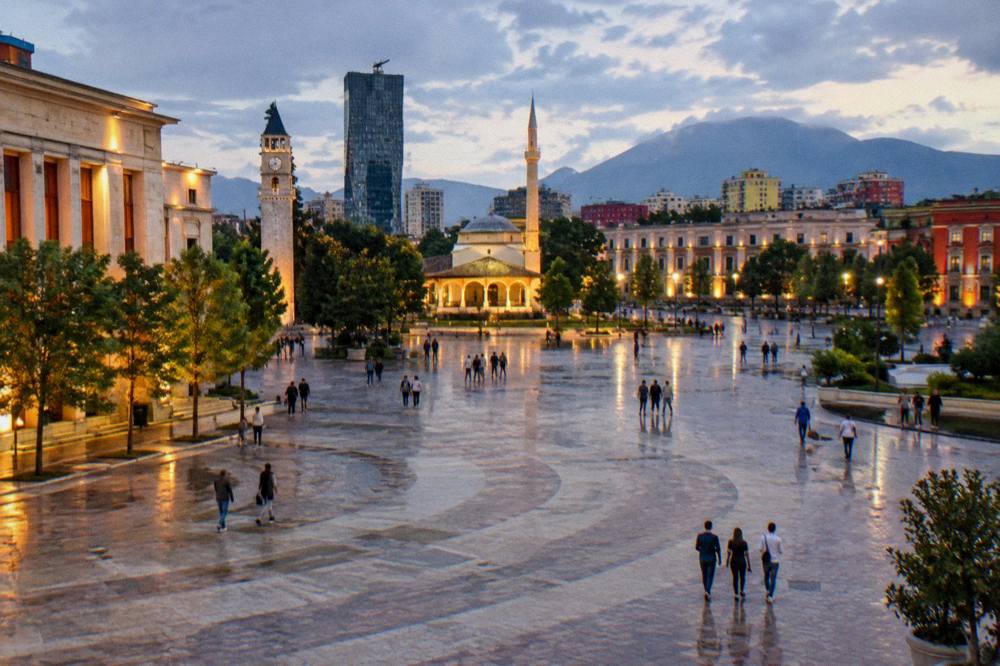
Between those layers sits the rounding-up habit this page is about: coins on a cafe tray, a taxi fare bumped to the next round figure, a folded note passed to a guide at the end of a mountain day. It is a courtesy Albania's hospitality workers will recognise and appreciate, never a tariff you can get wrong. Carry small lek, round up where the service earned it, and spend your attention on the parts of the city that are actually worth the bill.