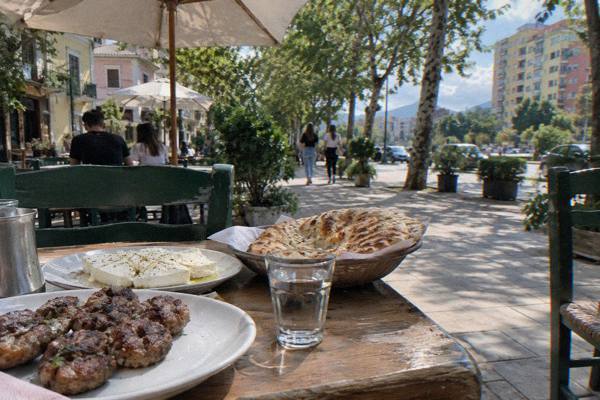
Tirana Shopping: Markets, Malls And Souvenirs
Tirana, the capital of Albania, is an inland city of markets, malls and bazaar streets where the lek is the currency and the Adriatic coast at Durres is a day trip away. This guide covers where to shop, what to buy, how to pay and what is open on a Sunday.
Short answer
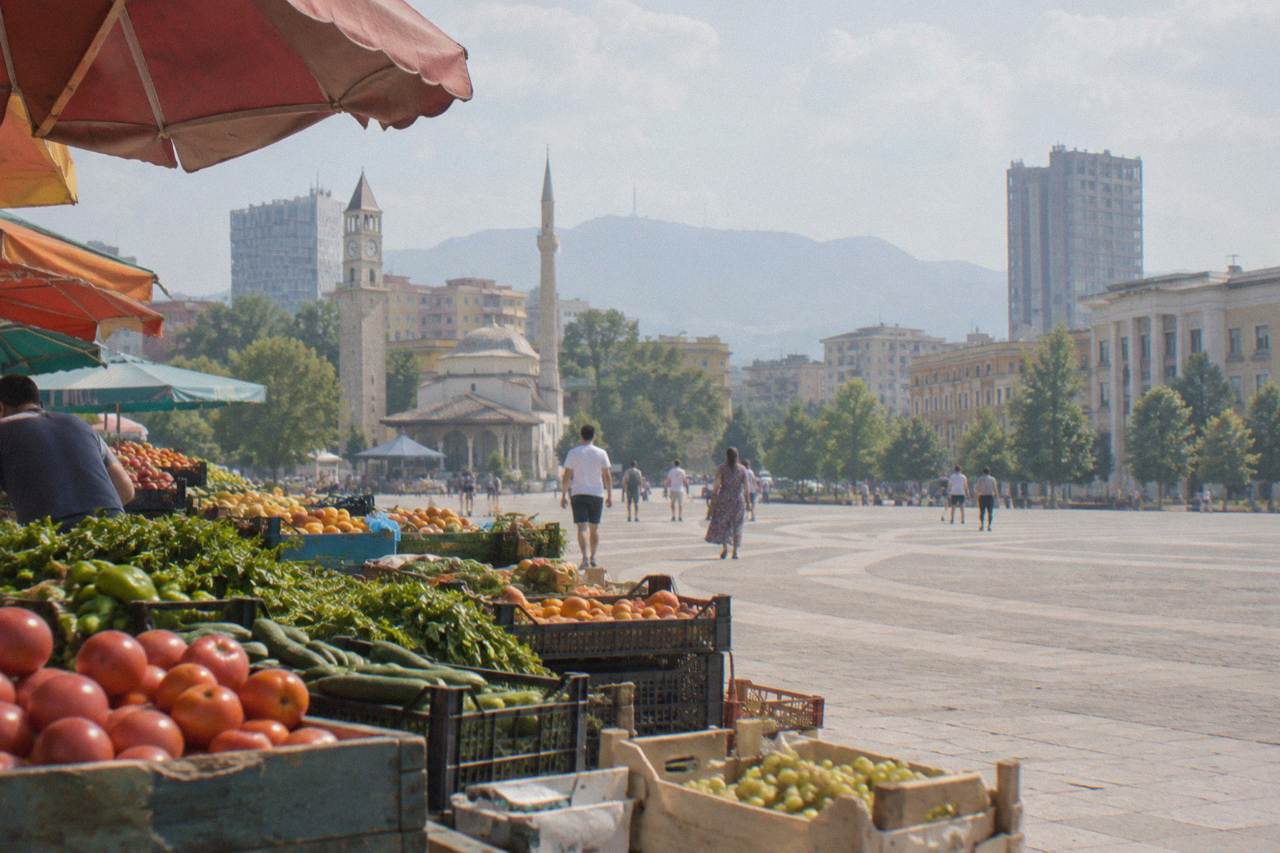
Shopping in Tirana centres on the New Bazaar (Pazari i Ri) about 0.6 km east of Skanderbeg Square, malls and supermarkets reported open seven days a week, and souvenir streets around the city centre. Albania is not in the EU, the currency is the lek, and cards are taken in larger shops while markets run on cash.
Tirana, the capital of Albania, packs its shopping into a compact centre: the New Bazaar (Pazari i Ri) about 0.6 km east of Skanderbeg Square, mall and supermarket chains reported to trade seven days a week, and souvenir stands clustered around the square and the streets behind it. The city sits inland in a basin at the foot of Mount Dajti, so shopping here is a city activity, with the Adriatic coast at Durres about 37 km and 39 minutes away by road if a beach day follows a buying spree.
Where Do You Shop In Tirana: Markets, Malls And Souvenir Streets?
The three main strands of Tirana shopping are the New Bazaar (Pazari i Ri) about 0.6 km east of Skanderbeg Square for food and local produce, the mall and supermarket chains reported to open seven days a week, and the souvenir stands of the city centre around the square itself, with the Blloku quarter about 0.8 km south for cafes and boutiques after the shops. Everything sits within roughly a kilometre of the square, so a shopping circuit in Tirana is a walking day, not a transport day. For orientation and transport basics, see the companion guide to getting around Tirana.
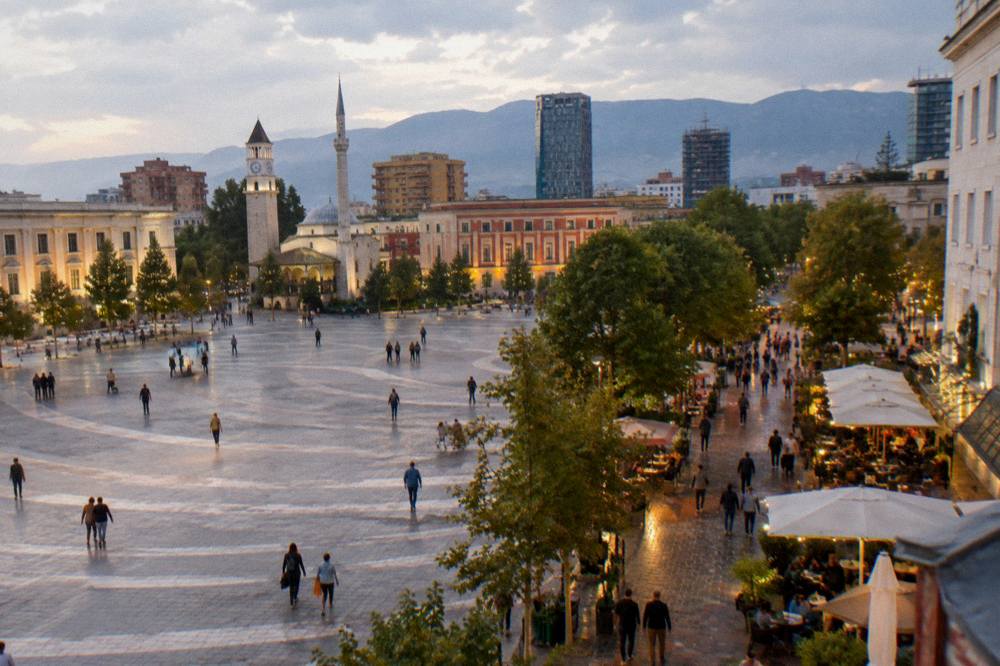
The geography is simple. Skanderbeg Square is the reference point for the whole city, and the New Bazaar, the Clock Tower, the Et'hem Bey Mosque and Tirana Castle all sit within a short walk of it. The bazaar is east, Tirana Castle about 0.5 km south-east, Blloku about 0.8 km south, and the Rruga e Kavajes commercial strip about 0.5 km west. A shopper can cover the bazaar, the castle area and Blloku in one afternoon without a bus.
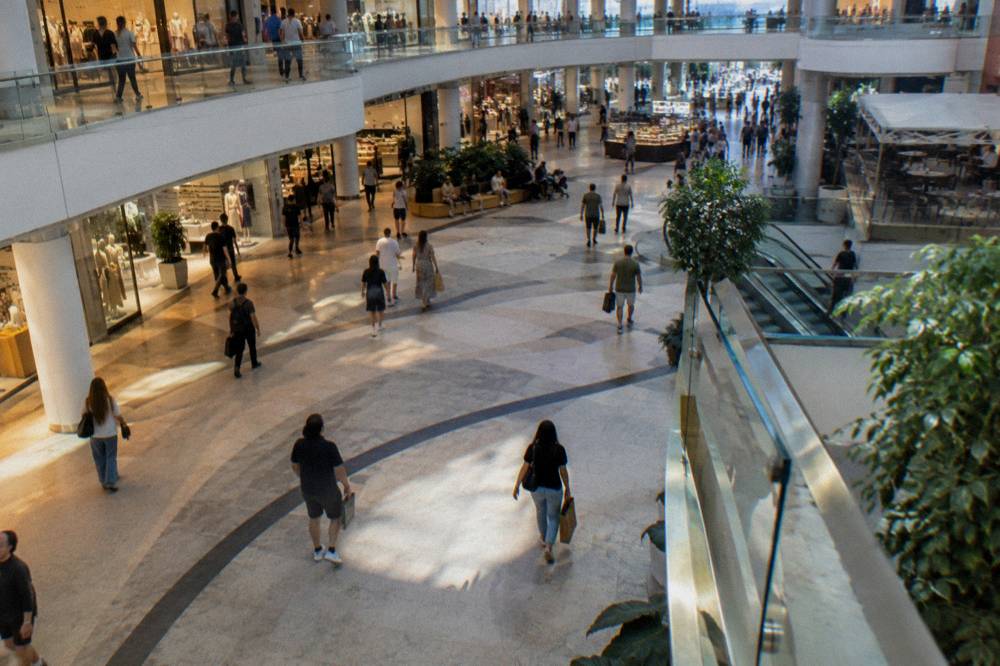
Malls sit further out along the main road corridors, which makes them a taxi or bus trip rather than a stroll. The intercity and international bus terminals are also out at the edges, the North-South terminal about 3.9 km north-west of the square and the international terminal about 5.9 km south-east, which matters if a shopping day ends with a bus ticket onwards. The Tirana neighbourhoods guide explains which areas put you closest to which shops.
| Shopping area | Direction from Skanderbeg Square | Straight-line distance | What it is known for |
|---|---|---|---|
| New Bazaar (Pazari i Ri) | East | About 0.6 km | Produce, food stalls, market atmosphere |
| Tirana Castle area | South-east | About 0.5 km | Craft and restaurant quarter inside old walls |
| Blloku | South | About 0.8 km | Cafes, bars, boutiques |
| Rruga e Kavajes strip | West | About 0.5 km | Local shopping street |
| Myslym Shyri area | South-west | About 1.1 km | Local retail street |
| Komuna e Parisit | South-west | About 1.8 km | Residential shopping streets |
| Kombinat | West | About 4.9 km | Outer district with local shops |
What the bazaar sells, and when its stalls trade, changes with the season and the day, so check locally once you arrive. No stall list or set of market hours exists in any official source this desk could rely on, and souvenir prices vary stall to stall, so treat the bazaar as a browse-and-ask market rather than a fixed-price catalogue.
What Can You Find At The New Bazaar In Tirana?
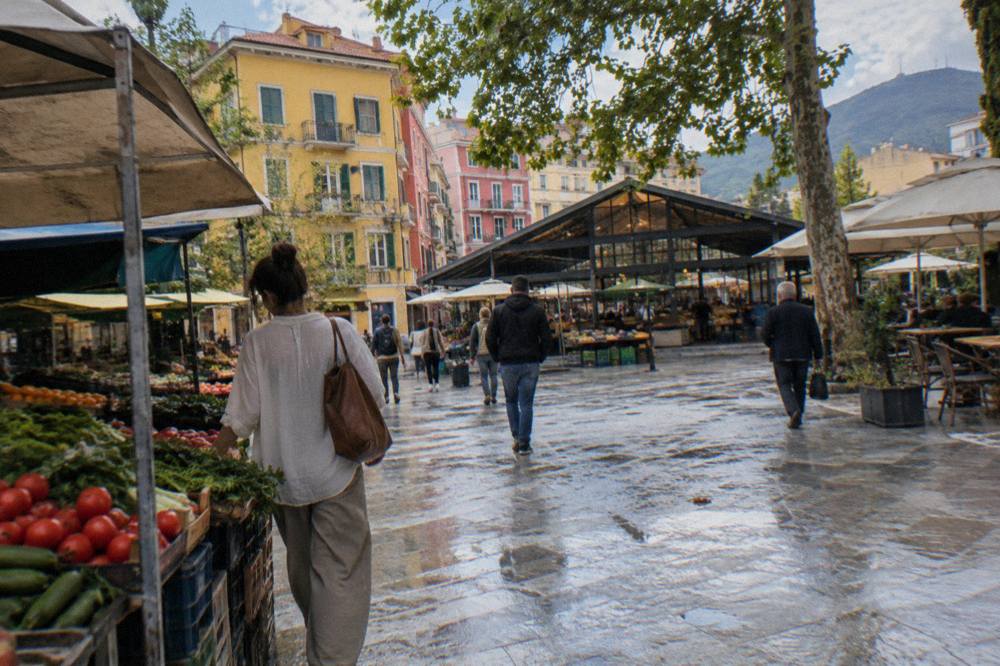
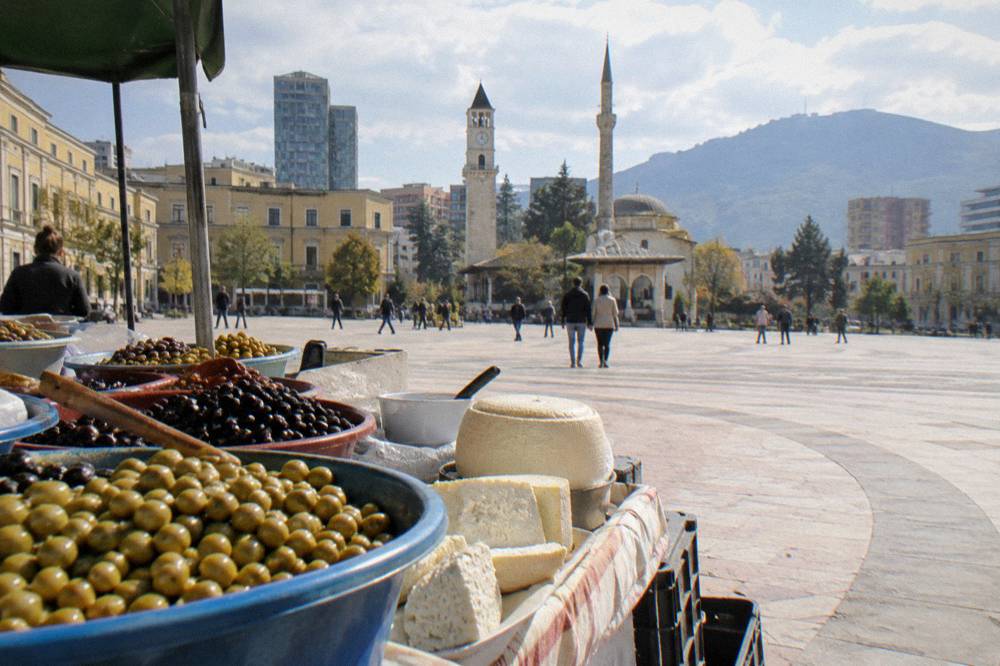
The New Bazaar (Pazari i Ri), about 0.6 km east of Skanderbeg Square, is Tirana's market street for fresh produce, cheese, olives, meat, raki and other local food, lined with colourful facades and close to the Tirana Castle restaurant quarter about 0.5 km south-east of the square. It is the place most guides send visitors first, and it earns that place on geography alone: it links the square, the castle area and the eastern centre in one walk. For a deeper look at the market itself, see the companion Tirana markets guide.
Produce is the point of the bazaar. Seasonal fruit and vegetables, cheese, olives, honey, dried herbs and raki are the staples of the Albanian shopping basket, and the stalls turn over with the seasons. Nothing about specific stall names, opening hours or prices is published in an official form, so arrive, look, and ask. Cash in lek is the working assumption at any market stall in Albania; cards belong to the malls and bigger shops.
A guided walk is a natural companion to a bazaar visit, because the market street sits on the standard city route. The Tirana walking tour with history, culture and hidden local gems covers the centre on foot, and the classic city walk route passes nearby. If a guided evening appeals instead, the bar crawl below pairs a shopping afternoon with a night out in Blloku.
What Souvenirs Should You Bring Home From Tirana?
Classic Tirana souvenirs are raki and local wine, olive oil and honey from the New Bazaar, byrek and other foodstuffs that travel well, communist-era memorabilia from the stalls around Skanderbeg Square, and crafts such as carpets and copperware associated with the bazaar tradition in Kruja, about 36.7 km and 45 minutes away by road. Albania has no fixed souvenir price list anywhere official, so every price is a conversation. Check the current price at the stall before buying.
Raki deserves a note. It is a fruit brandy, usually grape, and it is both a souvenir and a social ritual in Albania. Buy it at the bazaar from a producer who pours it from a labelled bottle. Wine from local grapes is also widely sold. Both fit in checked luggage, and duty-free allowances depend on your destination country, so check those before you buy quantities.
Communist-era souvenirs, pins, busts, old banknotes and bunker trinkets, sell around the centre and make the obvious tie-in to the city's history. The communist history in Tirana guide gives the real story behind the memorabilia, and the Bunk'Art 1 and Bunk'Art 2 pages explain the two bunker museums that put the era in context. Neither museum publishes its ticket price online, so buy tickets at the door.
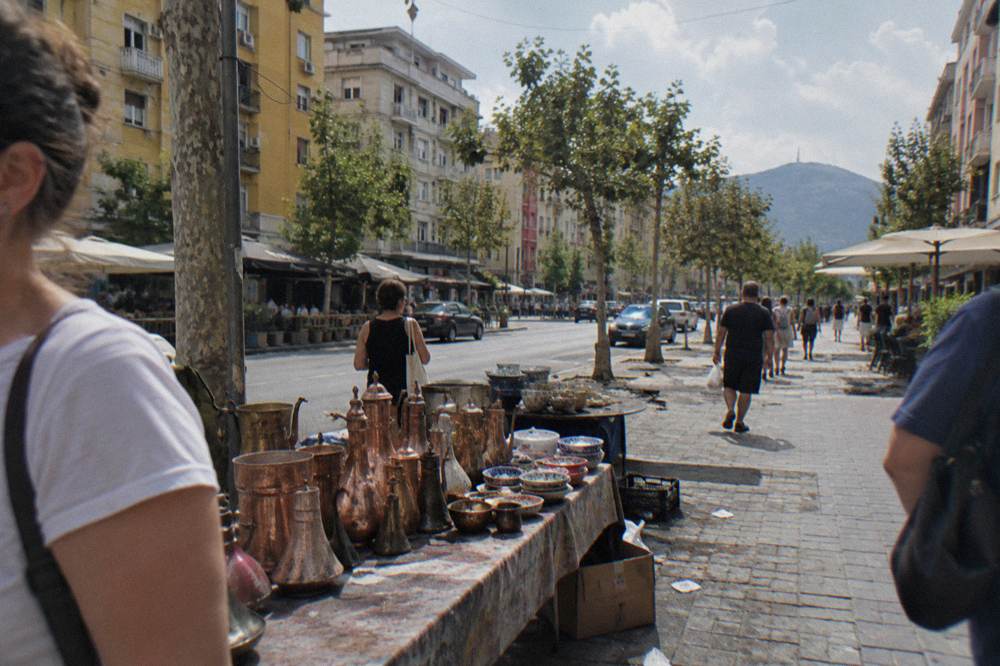
Textiles and copperwork are the craft alternative, though the strongest craft tradition sits not in Tirana but in Kruja, whose old bazaar has been the craft market of the region for centuries. The Kruja guide covers the trip; a minibus from Tirana takes about an hour and costs about 200 lek, a reported figure, so confirm before you go. The one day in Tirana itinerary shows how a shopping morning and a museum afternoon fit together.
Are Shops And Malls In Tirana Open On Sundays?
Large supermarkets and malls in Tirana are reported to trade seven days a week, with hours that vary by store, while market trading varies by stall and by day, so a Sunday in Tirana is a mall day or a bazaar stroll rather than a guaranteed full shopping day everywhere. That reporting comes from the stores' own published listings, and holiday closures are not published in any list, so around national holidays it pays to check with the specific store.
National holidays matter more here than in much of Europe, because several fall outside the familiar calendar. Fixed national days are Summer Day on 14 March, Nevruz on 22 March, Mother Teresa Day on 19 October, Independence Day on 28 November, Liberation Day on 29 November and Christmas on 25 December. Moving feasts such as Bajram and Easter shift with their own calendars. On those days, expect reduced hours rather than a shutdown, and confirm locally.
The pattern for a Sunday visitor is straightforward. Malls and supermarkets are the reliable option, the bazaar is worth the walk regardless because the surrounding cafes and restaurants trade on their own schedules, and the city-centre sights that make a shopping day double as sightseeing, Skanderbeg Square, the Pyramid of Tirana and the streets around them, are public space open at any hour. The free things to do in Tirana guide lists what costs nothing.
How Do You Pay For Shopping In Tirana?
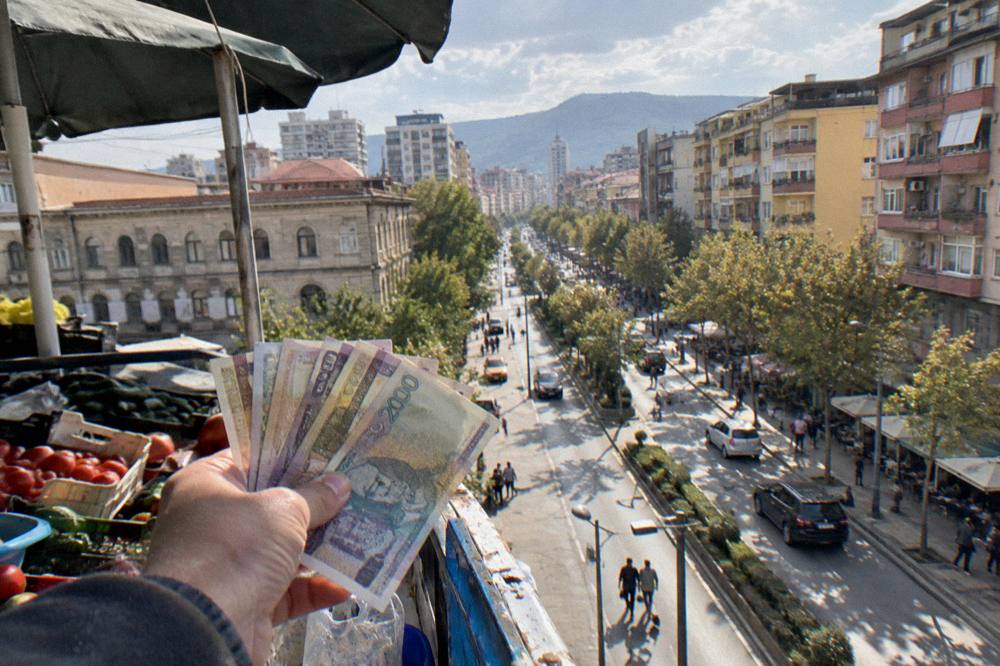
The currency in Tirana is the Albanian lek (ALL), the euro is not legal tender, cards are reported to be widely accepted in hotels, larger restaurants and supermarkets while markets and small cafes run on cash, and the official Bank of Albania rate on 23 October 2026 was 1 euro = 90.74 lek and 1 US dollar = 81.03 lek. In plain prose, think roughly 90 lek to the euro and let the rate of the day do the rest. The Albanian lek guide explains notes, coins and changing money.
Albania is not in the EU and not in Schengen, which has two shopping-relevant consequences. First, the EU's border entry systems do not apply on arrival, but your own customs allowance when you leave does, and Albania's duty-free rules for exporting goods are separate from the EU's. Second, the euro circulates informally, some hotels and tourist businesses take it at their own rate, but change normally comes back in lek and the exchange rate offered is the seller's, not the official one.
Cash is still king at the bottom end of the market. City buses charge about 40 lek a ride, paid in cash on board, a reported figure. Foreign-card ATM withdrawal fees exist at Albanian banks, so withdraw sensible amounts rather than many small ones. For budgeting structure, the Tirana prices guide explains what is free, what is ticketed and what to confirm on the spot.
| Payment situation | What works | What to expect |
|---|---|---|
| Market stalls | Cash in lek | Small notes; no cards |
| Small cafes and kiosks | Cash in lek | Keep coins for buses and small buys |
| Supermarkets and malls | Cards widely reported accepted | Cash also fine |
| Hotels and larger restaurants | Cards reported widely accepted | Euros sometimes informally taken at the seller's own rate |
| Taxis and ride apps | Cash, and apps where they operate | Agree or meter before the ride |
How Much Should You Budget For A Shopping Day In Tirana?
Budget for a Tirana shopping day in three layers: entry costs are low because the market and city centre are free to wander, transport is cheap with a city bus at about 40 lek a ride in cash (a reported figure, confirm on board) and the airport bus at 400 lek, and spending itself depends on what you buy. What can be said firmly is the structure: the walking part costs nothing, the museum part is ticketed at the door, and the shopping part is negotiable.
That last point is worth dwelling on. Guides that quote a coffee price or a souvenir price for Tirana are quoting estimates that change stall to stall and month to month. The honest version: allocate what a food-and-craft day is worth to you, carry it in lek, and ask prices before choosing. The museum add-ons, Bunk'Art 1 and Bunk'Art 2, sell tickets at the door because neither publishes prices online; the House of Leaves, the museum of secret surveillance about 0.2 km south-west of the square, lists an adult ticket of 700 lek on its own site.
Layer the day around the walking geography. The bazaar, the castle quarter, the square and Blloku form a loop of about two kilometres total, flat and walkable, so a shopping day in Tirana needs no transport budget at all until the malls or a day trip enter the plan. Comfortable shoes and a small bag matter more than a bus pass.
| Cost layer | Typical planning figure | Basis |
|---|---|---|
| City centre and bazaar wandering | Free | Public space |
| City bus ride | About 40 lek, cash | Reported, confirm on board |
| Airport bus to centre | 400 lek (4.50 euro), hourly, 24/7 | Airport operator's own page |
| House of Leaves museum | 700 lek adult | Museum's own listing |
| Bunk'Art 1 and 2 tickets | Bought at the door | Museums publish no online price |
How Do You Get To Tirana's Shopping Areas From The Airport Or A Day Trip?
From Tirana International Airport Nene Tereza at Rinas, the airport bus runs 24 hours a day, every full hour, takes 30 to 40 minutes and costs 400 lek (4.50 euro), stopping behind the Palace of Opera and Ballet on Skanderbeg Square, which puts a newly landed shopper about 0.6 km from the New Bazaar on foot; the official airport taxi costs about 2,200 lek and takes 20 to 25 minutes. There is no airport train, and the Tirana-Durres rail line is being rebuilt, with electrification expected to finish by the end of 2027.
The airport bus ticket, per the operator's own page, is valid all day until 23:59 and is not tied to one departure, which makes it usable as a same-day return leg for a quick city shopping stop between flights. The airport to city centre guide covers every option in detail, including the terminal bus at 300 lek for the South and North Bus Terminal, useful if a Kruja or Durres shopping trip starts from the intercity terminal about 3.9 km north-west of the square.
For day trips with a shopping purpose, two stand out. Kruja, with its old bazaar and castle, is 36.7 km and about 45 minutes by road, and the minibus costs about 200 lek, reported. Durres, with its market town fabric and the Adriatic beside it, is 37.2 km and about 39 minutes. Both are genuine day trips from a compact capital, and the Tirana to Durres guide and Tirana bus stations guide cover the practicalities.
When Is The Best Season For Shopping In Tirana?
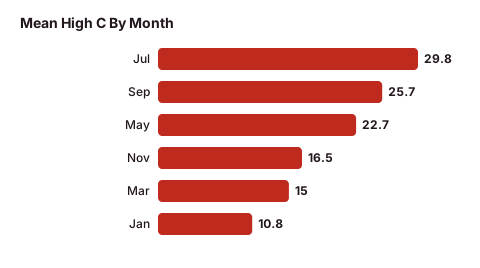
The comfortable shopping months in Tirana are May, June, September and October, when ERA5 reanalysis 1991-2020 climate normals put mean highs between 22.7 C and 26.9 C in the late spring and 21.4 C to 25.7 C in early autumn, while July and August average 29.8 C and 30.4 C highs with the year's lowest rainfall, 34 mm and 31 mm, and November is the highest-rainfall month at 139 mm. A shopping day in Tirana is a walking day, so the temperature and rain columns decide it more than any sale calendar.
Winter shopping has its own draw. The Christmas market usually runs through December on Skanderbeg Square, a reported pattern rather than a dated promise, so treat it as a seasonal fixture to confirm on arrival. December averages a mean high of 11.8 C and 138 mm of rain, and January 10.8 C and 106 mm, so a winter shopping day is an indoor-mall-and-covered-bazaar day with the square as a quick dash between them. The Tirana in winter guide and Tirana weather guide cover the seasonal detail.
| Month | Mean high C | Mean low C | Rain mm |
|---|---|---|---|
| Jan | 10.8 | 2.3 | 105.8 |
| Mar | 15.0 | 5.1 | 116.6 |
| May | 22.7 | 12.5 | 89.0 |
| Jul | 29.8 | 19.1 | 33.5 |
| Sep | 25.7 | 16.0 | 98.9 |
| Nov | 16.5 | 8.0 | 138.6 |
How Does Shopping In Tirana Compare With A Bazaar Day Trip To Kruja?
Kruja, about 36.7 km and 45 minutes by road from Skanderbeg Square, offers a historic bazaar-and-castle shopping day that Tirana's New Bazaar cannot match for craft tradition, while Tirana wins on malls, food variety and everything being walkable, and a combined plan works well: a Kruja morning by minibus (about 200 lek, reported) and a Tirana bazaar and Blloku afternoon. Kruja Castle was Skanderbeg's base, he took the town on 28 November 1443, and the old bazaar below the castle sells the carpets, copperware and antiques that Tirana's stalls echo at smaller scale.
The trade-off is time and texture. Kruja is a small town built around one bazaar street and a castle hill; a half day covers it. Tirana is a capital with a castle quarter of its own about 0.5 km south-east of the square, a market 0.6 km east, a nightlife quarter 0.8 km south and malls on the ring, so it rewards a full day or two. The Kruja guide and the three days in Tirana itinerary show both plans hour by hour.
For Kruja Castle and the Skanderbeg Museum, plan to pay entry fees at the gate and confirm opening hours locally. On the Tirana side, the Dajti Ekspres cable car, with its lower station about 4.4 km north-east of the square and Bunk'Art 1 behind it, sells tickets only at the station and publishes no fares online, and is usually closed on Tuesdays for maintenance.
What Should You Know Before A Shopping Trip To Tirana?
Before a shopping trip to Tirana, know five things: Albania is outside the EU and Schengen with its own 90-in-180-day visa regime for visa-free nationals, the lek is the only legal currency at roughly 90 to the euro, cards work in larger shops but not markets, the emergency numbers are Police 112, Ambulance 127 and Fire 128, and central Tirana has seen demonstrations since 13 October 2026, so check the current FCDO advice before travelling. The Albania entry requirements guide covers visas in full.
A few practical habits round it out. Carry lek in small notes for buses, stalls and cafes. Confirm any reported figure, the 40 lek bus fare, the 200 lek Kruja minibus, at the point of purchase. Treat souvenir prices as negotiable and museum tickets as door-only purchases. And when a shopping day ends, the Blloku quarter, the cafe and bar district of the capital, is where the evening begins; the Tirana nightlife guide takes over from there.
For the food side of any market trip, raki, byrek, tave kosi, fergese and qofte are the staples worth knowing by name before you shop or order, and the Albanian food guide and best restaurants in Tirana guide carry the detail.
Common Questions About Shopping In Tirana
Is shopping in Tirana cheap?
The structure is clear: wandering the bazaar and centre is free, city transport costs about 40 lek a ride in cash, and everything else is priced stall to stall. Ask before buying and see the Tirana prices guide for what is known.
Are shops open on Sunday in Tirana?
Large supermarkets and malls are reported to trade seven days a week with hours that vary by store. Market trading varies by stall and day. Around national holidays expect reduced hours and confirm with the specific store.
Can you pay by card in Tirana shops?
Cards are reported to be widely accepted in hotels, larger restaurants and supermarkets in central Tirana. Markets, small cafes and buses run on cash in lek. The euro is not legal tender, though some tourist businesses take it informally at their own rate.
What is the best market in Tirana?
The New Bazaar (Pazari i Ri), about 0.6 km east of Skanderbeg Square, is the city's market street for produce, cheese, olives and raki. No official stall list or hours are published, so browse and ask. The Kruja bazaar, about 45 minutes away by road, is the stronger craft market.
What souvenirs is Tirana known for?
Raki, local wine, olive oil, honey, byrek-style foodstuffs, communist-era memorabilia around Skanderbeg Square, and crafts such as carpets and copperwork. Prices are set stall to stall, so check the current price before buying.
Is there a Christmas market in Tirana?
A Christmas market usually runs through December on Skanderbeg Square, a reported seasonal pattern. No 2026 or 2027 dates have been announced, so confirm locally closer to the time. December averages a mean high of 11.8 C with 138 mm of rain.
A shopping day in Tirana ends where it started, on Skanderbeg Square, with bags of raki and honey from the bazaar, a route that took in the castle quarter and Blloku, and, with the minibus timetable checked the night before, a craft bazaar waiting in Kruja the next morning.