Tirana Markets: Produce, Flea And Craft Stalls
Tirana's markets sell everything from tomatoes and byrek to second-hand books and copper coffee pots. This guide covers where the stalls sit, when to browse and how to shop them without a euro in your pocket.
Short answer
The main market areas of Tirana cluster east and west of Skanderbeg Square: the New Bazaar about 0.6 km east is the best known, with produce, flowers and food shops, while the neighbourhood trading streets of Rruga e Kavajes, 21 Dhjetori and Kombinat host everyday stalls. Shopping is in Albanian lek, markets are walkable from the centre, and mid-morning is the busiest browsing window.
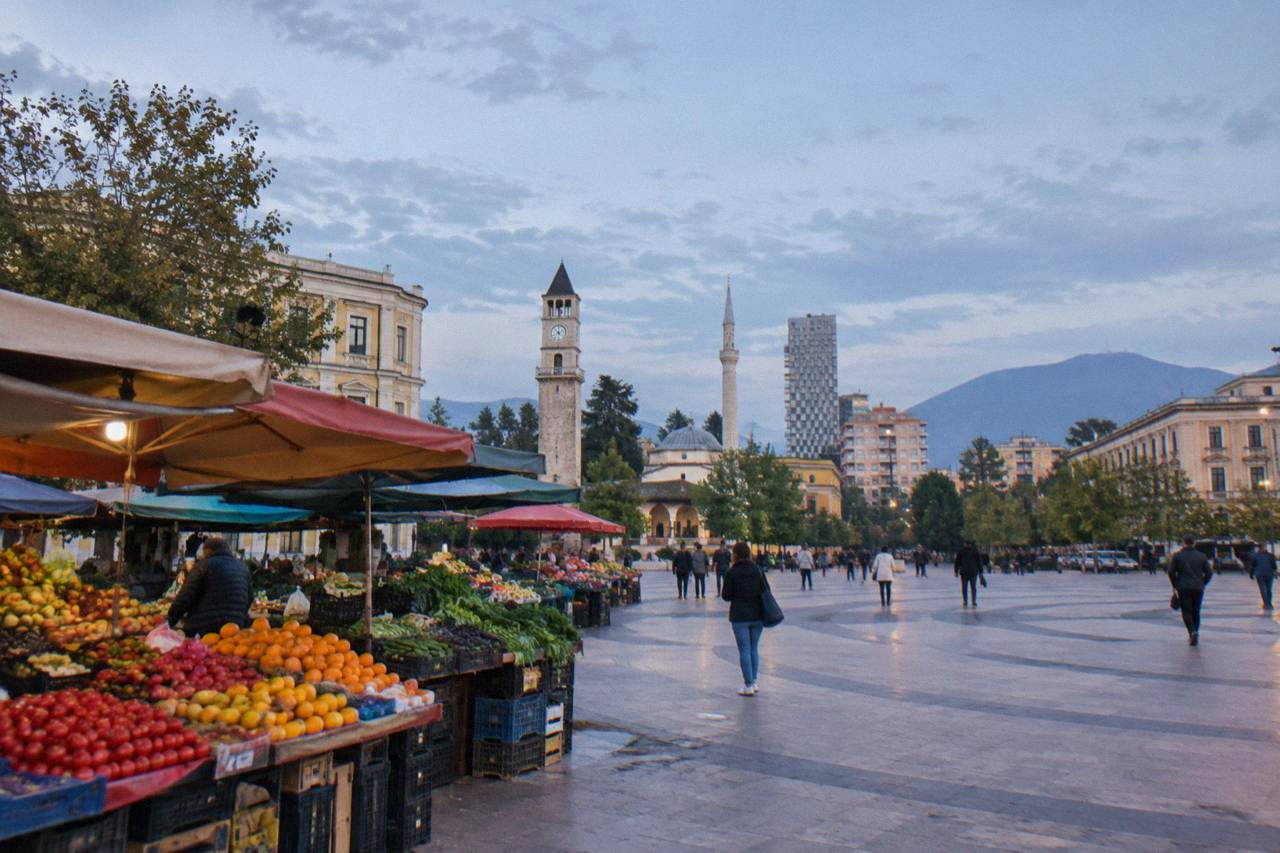
Tirana, the capital of Albania, shops loudly. In a basin at the foot of Mount Dajti, well inland from the Adriatic coast at Durres, the city runs its daily trade through a web of markets: a renovated bazaar quarter beside the old town, produce streets where the neighbourhood shops, and pavements given over to flowers, books and second-hand goods. Almost everything is priced in the Albanian lek, bargaining is low-key, and the whole circuit sits within walking distance of Skanderbeg Square.
What Are The Main Market Areas Of Tirana?
Tirana's market trading splits into three rings around Skanderbeg Square: the New Bazaar about 0.6 km east for produce, food shops and flowers, the neighbourhood trading streets of Rruga e Kavajes 0.5 km west and 21 Dhjetori 1.3 km west for everyday stalls, and the outlying Kombinat area 4.9 km west, which grew around the former industrial quarter. Blloku, 0.8 km south, is the cafe and bar quarter rather than a market district. All are reachable on foot or by a single city bus ride.
The New Bazaar, Pazari i Ri, is the one market quarter every visitor crosses. It sits east of the square, close to the Tirana Castle area and its restaurant row, and it concentrates greengrocers, butchers, cheese counters, flower sellers and small eateries in a grid of two-storey buildings. The quarter is covered in detail on the New Bazaar attraction page, which is the place to go for the area itself.
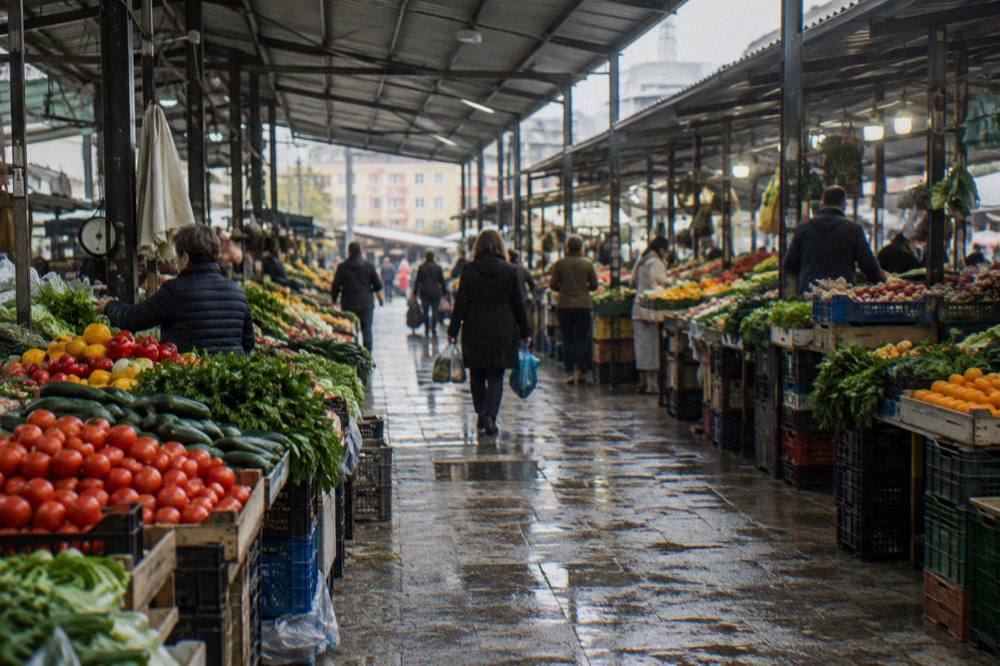
Beyond the bazaar, the working markets of the city spread along its older commercial streets. Rruga e Kavajes runs west from the centre and has always traded: textiles, household goods, phone accessories and cheap clothes spill along it for much of its length. 21 Dhjetori continues that role further out. These are not polished districts, and that is the point: this is where people of Tirana buy a lightbulb, a school uniform and a kilo of peppers in one trip.
For craft and souvenir shopping, the city's centre holds more than its markets do. Craft stalls, book vendors and gift shops cluster around the tourist core near the square, and the Tirana shopping guide maps them shop by shop. What the centre sells is the sort of thing that survives a suitcase: ceramics, embroidered textiles, copper coffee pots, carved wood and bottles of raki or honey with a hand-labelled lid. The second-hand and flea end of the spectrum, old books, records, bric-a-brac and vintage clothing, surfaces on pavements and in small shops rather than in one defined field, so treat it as something you find along the way rather than a destination you walk to. No official stall list or trading calendar covers any of it, so browse and confirm locally what is running on your day.
| Market or trading area | Direction from Skanderbeg Square | What it sells |
|---|---|---|
| New Bazaar (Pazari i Ri) | about 0.6 km east | produce, cheese, meat, flowers, small eateries |
| Tirana Castle area | about 0.5 km south-east | restaurants and craft-adjacent shops in the old walls |
| Rruga e Kavajes | about 0.5 km west | textiles, household goods, clothes |
| 21 Dhjetori | about 1.3 km west | everyday neighbourhood stalls |
| Myslym Shyri | about 1.1 km south-west | local shopping street |
| Blloku | about 0.8 km south | cafes, bars, boutiques, not a market |
| Kombinat | about 4.9 km west | outlying district trading |
What Can You Buy At The Stalls Of Pazari I Ri?
The stalls of the New Bazaar concentrate on food and flowers: seasonal vegetables and fruit, cheese, olives, honey, herbs, dried beans, fresh meat and fish, plus bunches of cut flowers and a row of small restaurants and grill counters around the edge. Non-food craft shopping is thinner here than in the souvenir shops of the centre, and prices are not posted in euros anywhere, they are in lek. Bring small notes and shop in the morning for the fullest display.
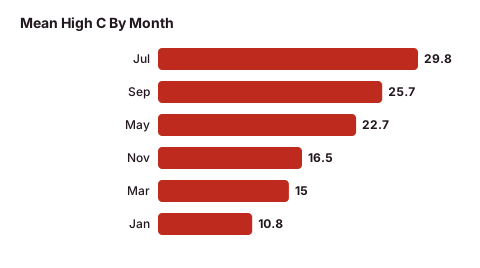
What a market sells depends on the season, and Tirana's seasons are pronounced. Averages from 1991-2020 reanalysis data put the July mean high at 29.8 C and August at 30.4 C, with rainfall down to about 31 mm in August; November brings the year's highest monthly total at about 139 mm. Summer stalls run heavy with tomatoes, peppers, melons and grapes; by late autumn the display shifts to citrus, walnuts, chestnuts and winter greens.
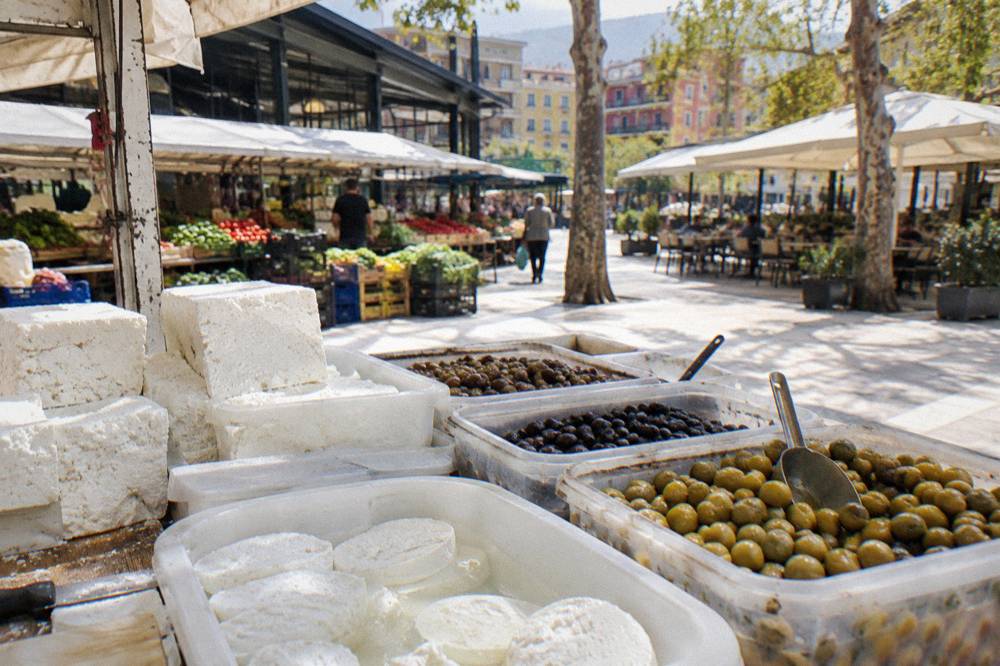
Cheese is the stall to slow down at. Albanian cooking leans on white salted cheese, and a market counter will usually cut you a wedge to approve before weighing. Honey is sold by the jar, often with the producer's name handwritten on the lid, and dried herbs, mountain tea and raki bottles line the shelves behind the produce. For what to do with any of it once you have carried it home, the Albanian food guide takes over where the market ends.
If shopping the stalls sounds like the start of dinner rather than the whole plan, the cooking-class route does exactly that:
There is real pleasure in browsing a market with no list. A handful of the city's restaurant kitchens sit within a few hundred metres of the bazaar, and the best restaurants in Tirana guide names the established ones, including Era Blloku and Artigiano, both with long-running operations in the city. A market morning followed by a proper lunch is a solid Tirana day.
When Is The Best Day And Month To Shop Tirana Markets?
Mid-morning is the busiest market window in Tirana, and weekday mornings show the stalls at their fullest, with the display thinning toward early afternoon. Reported trading patterns put large supermarkets and malls open seven days a week with hours that vary by store, while street market trading varies by area. For the month, May, June and September combine pleasant walking weather with less rain than the wet November stretch.
Rain matters more here than in a mall city, because much of the browsing happens under awnings and canvas. The monthly picture from ERA5 reanalysis, 1991-2020, tells the story plainly:
| Month | Mean high C | Mean low C | Rain mm |
|---|---|---|---|
| Jan | 10.8 | 2.3 | 106 |
| Mar | 15.0 | 5.1 | 117 |
| May | 22.7 | 12.5 | 89 |
| Jul | 29.8 | 19.1 | 34 |
| Sep | 25.7 | 16.0 | 99 |
| Nov | 16.5 | 8.0 | 139 |
National holidays change the rhythm of a market week more than the weather does. The fixed dates below are public days across Albania; moving feasts such as Bajram and Easter shift each year, so check locally around your dates.
| Fixed national day | Date |
|---|---|
| Summer Day | 14 March |
| Nevruz | 22 March |
| Mother Teresa Day | 19 October |
| Independence Day | 28 November |
| Liberation Day | 29 November |
| Christmas | 25 December |
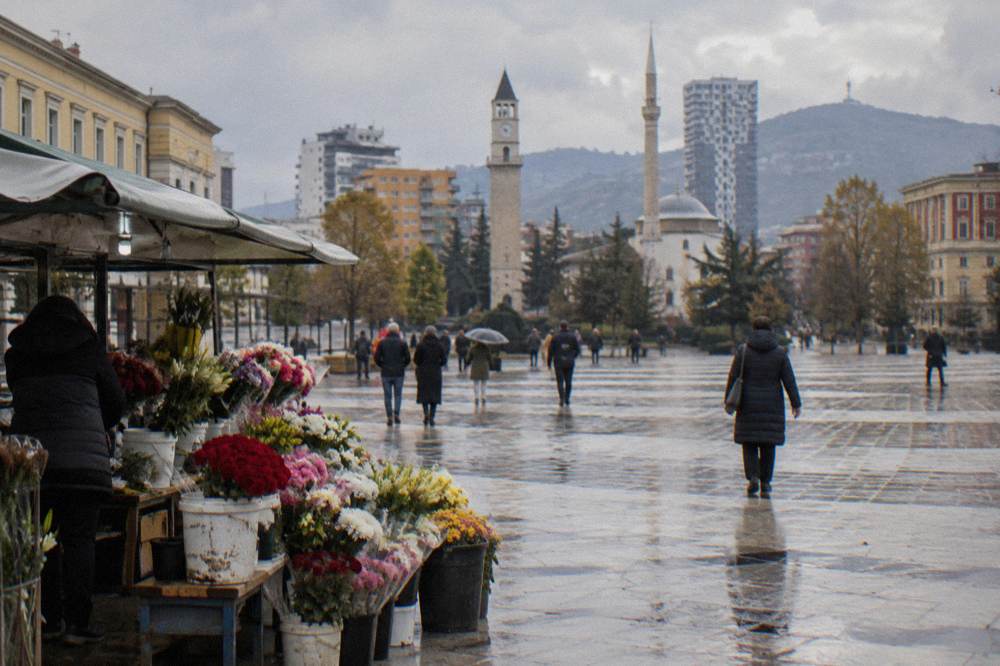
One 2026 note belongs here rather than anywhere else: demonstrations have been held in central Tirana since 13 October 2026, some of them violent, and the UK FCDO updated its travel advice on 15 October 2026. They have touched the centre of the city, including around Skanderbeg Square, so it is worth checking local media on the day for any gathering planned near your route. The Tirana weather guide and the best time to visit Tirana guide carry the planning detail for each season.
How Do You Pay At A Tirana Market: Lek, Card Or Euro?
You pay in Albanian lek, in cash, at essentially every market stall in Tirana. Albania is not in the euro zone and the euro is not legal tender; the currency is the lek, at roughly 90 lek to the euro per the Bank of Albania. Cards are widely taken in hotels, larger restaurants and supermarkets in the centre, per reporting on the city's payment habits, but buses, markets and small cafes run on cash, so withdraw lek before you shop.
The practical version is simple. Draw lek from a bank ATM in the centre, keep small denominations, and hand over cash at the stall. Some hotels, taxis and tourist businesses will accept a euro informally at their own rate, but you get change in lek and the rate is theirs, so there is no reason to try. The Albanian lek guide and the Tirana prices guide cover money planning in depth.
A word on plastic versus cash across the day. The pattern reported for the city is a split economy: the bigger the business, the more likely a card terminal appears, and the smaller the counter, the more certainly it does not. A market morning therefore needs a pocket of small lek notes, while lunch in an established restaurant and the supermarket run afterward can both go on a card. Foreign cards carry withdrawal fees at Albanian ATMs, so one larger withdrawal beats five small ones. Keep the receipt if you plan to claim anything back, and count your change before leaving the counter, which is ordinary practice rather than a warning.
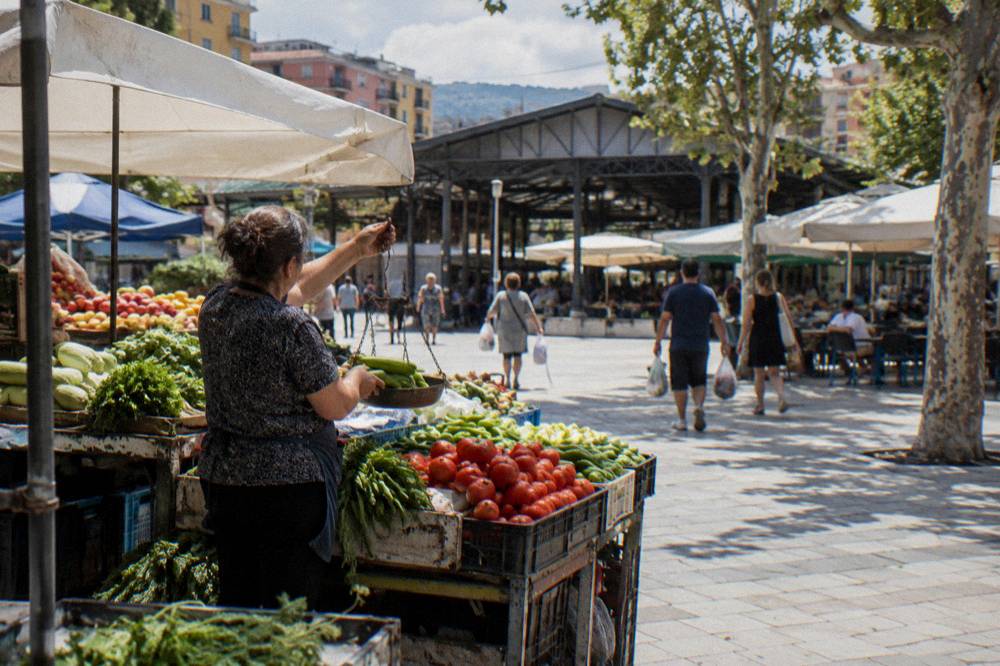
Bargaining exists but is gentle. At a produce stall nobody haggles over a kilo of tomatoes; at souvenir and second-hand stalls a polite counter-offer is normal, and a few words of Albanian warm the exchange. The ones worth carrying are in the table below.
| Albanian | Meaning |
|---|---|
| Faleminderit | thank you |
| Ju lutem | please |
| Po | yes |
| Jo | no |
| Me falni | excuse me |
| Faturen | the bill |
| Gezuar | cheers |
One cultural detail that catches visitors out: the head nod is reversed from Western habit. An upward chin lift tends to mean no, and a side-to-side wobble tends to mean yes, as guidebook writers have long reported. Watch the stallholder's hands rather than their head and you will be fine.
What Foods Should You Look For At The Stalls?
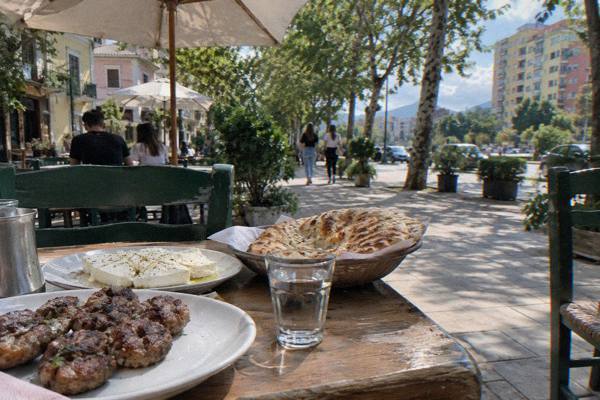
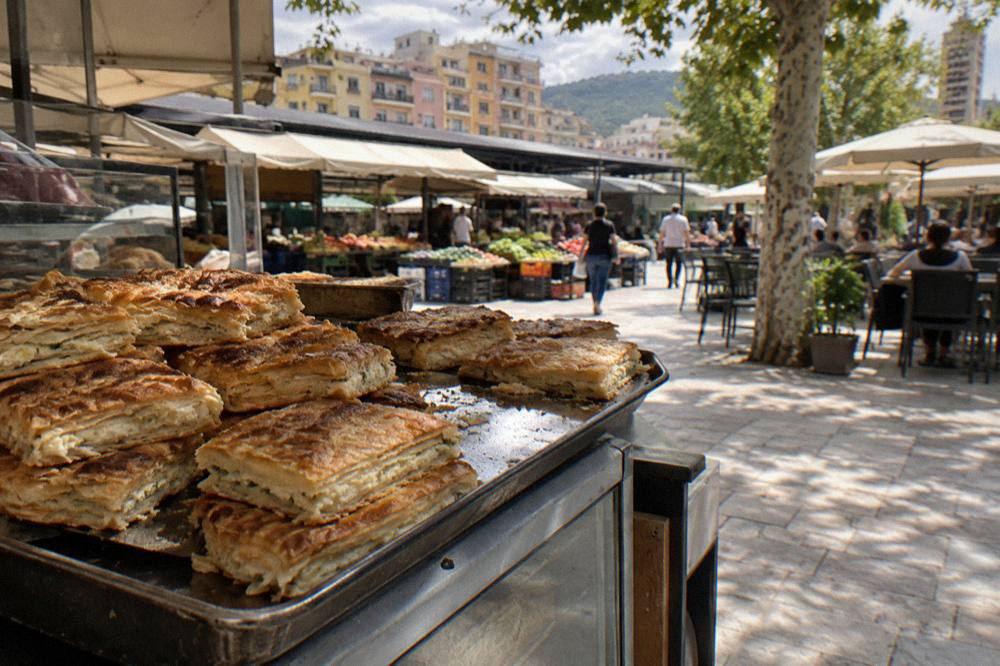
Look for byrek, the layered filo pie sold by the slice; qofte, seasoned grilled meatballs; tave kosi, baked lamb under a yogurt and egg topping; fergese, baked peppers and tomatoes with cheese; and raki, the fruit brandy poured after deals are done. The market version of these foods is the raw material: white cheese, peppers, herbs and mountain honey on the stall, byrek and qofte hot at the counters around the bazaar's edge.
Each of these is one dish with one job, and the market is where several of them begin.
| Food | What it is | Where you meet it |
|---|---|---|
| Byrek | layered filo pie with cheese, spinach or meat | bakery counters by the slice |
| Qofte | seasoned meatballs, grilled or fried | grill counters and street carts |
| Tave kosi | baked lamb with a yogurt and egg topping | home kitchens and traditional restaurants |
| Fergese | baked peppers and tomatoes with curd cheese | restaurant menus and market ingredients |
| Raki | fruit brandy, grape or plum | bottles on market shelves, poured after meals |
If you want the gap between stall and plate closed for you, a food-focused tour or class does it in one move:
The same circuit works as a walk. A guided food walk strings the bazaar counters and the old-town grills together with a local leading the ordering, which is worth it if the idea of pointing hopefully at a tray feels like hard work:
A shorter tasting stroll covers the same streets in a lighter format, built around qofte and a raki toast:
Between tastings, coffee is the city's other civic ritual, and the cafe terraces between the market and the square fill through the morning. The coffee culture page has that half of the day covered.
How Do You Get To The Markets From Skanderbeg Square?
The New Bazaar is a flat ten-minute walk east of Skanderbeg Square, Rruga e Kavajes starts 0.5 km west of it, and 21 Dhjetori sits 1.3 km west, all walkable from the centre. For the outlying streets, a single city-bus ride costs about 40 lek, paid in cash on board, and buses run roughly 06:00 to 23:00. Taxis are metered by local operators; Uber and Bolt do not operate in Tirana, though local taxi apps do.
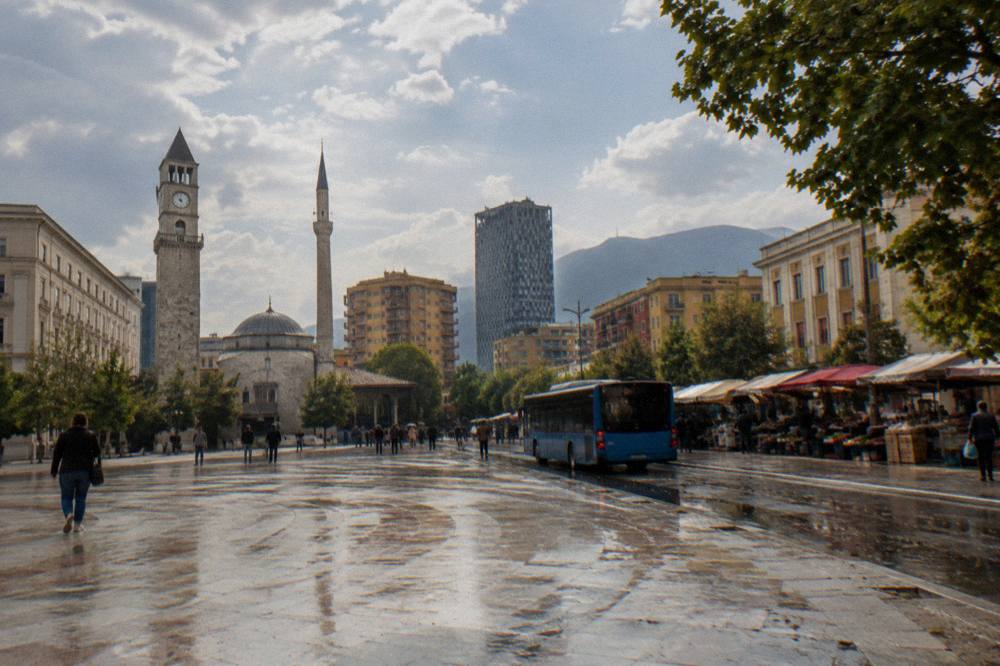
The walking circuit for a market morning is compact: start on the square, walk east to the New Bazaar and the Tirana Castle restaurant row, loop back through the centre, and finish on Rruga e Kavajes if household-goods browsing appeals. Nothing on that route climbs; the city core sits flat in the basin. The getting around Tirana guide details the bus lines and taxi picture, and the Tirana bus stations guide covers the South and North Bus Terminal 3.9 km north-west, which matters if a market trip is part of a wider itinerary out of the city.
Arriving from the airport, the airport bus runs 24/7, every full hour, for 400 lek and stops behind the Palace of Opera and Ballet on the square, which drops you a short walk from the bazaar. The airport to city centre guide has the full picture. Staying near the centre puts every market in this guide on foot, and the Where To Stay In Tirana: Centre, Blloku Or Near The Lake sorts the neighbourhoods.
Are Tirana Markets Safe And Comfortable To Browse?
Yes, with ordinary city precautions: watch your belongings in crowds, keep cash split between pockets, and avoid any demonstration you encounter, since gatherings in central Tirana since 13 October 2026 have turned violent and the FCDO updated its advice on 15 October 2026. Emergency numbers are Police 112, Ambulance 127 and Fire 128. There is no information on step-free access or ramp provision at any market, so confirm locally if access matters to your visit.
The market experience itself is calm. Crowds are dense around the bazaar on a weekend morning, which is exactly when pickpocket-style opportunism matters anywhere, so a zipped bag solves it. English works in the tourist core of the city, and the EF English Proficiency Index places Albania in its moderate band, so at produce stalls a smile, a pointed finger and "faleminderit" carry a transaction.
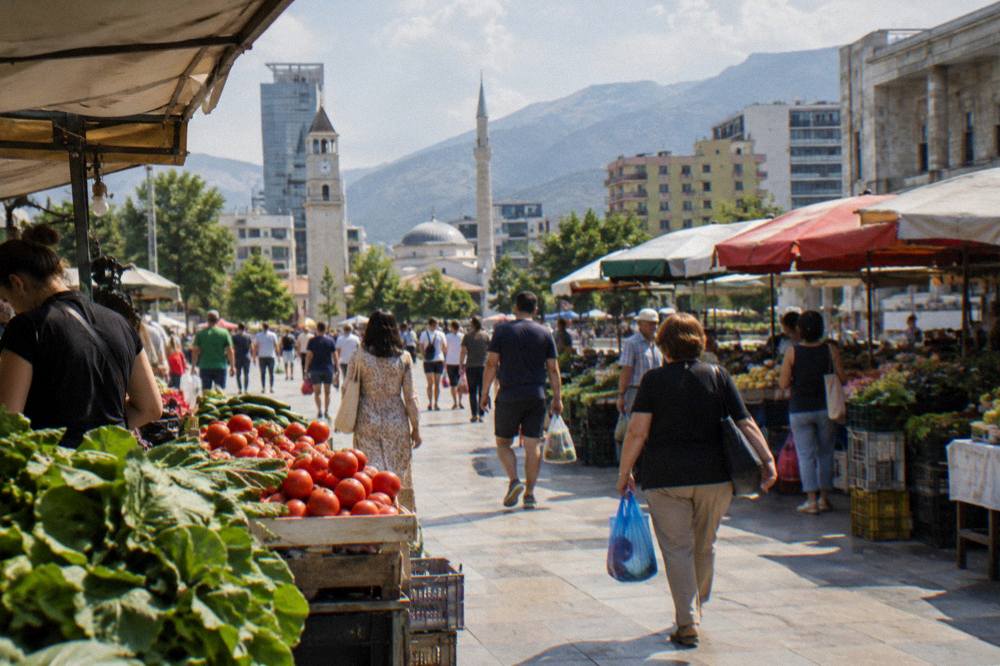
Two small comforts complete the picture. Bring your own bag, since stallholders offer thin plastic ones and a cloth tote handles a morning of cheese, honey jars and peppers far better. And build in a sit-down: the small eateries around the bazaar's edge exist precisely for shoppers, and a plate off the grill plus a glass of raki is how a market morning in this city traditionally ends.
For tying a market morning into a full plan, the things to do in Tirana page is the site's master list, and a guided walk is a good companion piece to a self-guided browse:
However you assemble the day, the working rule is the same: lek in small notes, a bag you can carry one-handed, and a mid-morning start while the stalls are at their fullest.
Common Questions About Tirana Markets
What is the main market in Tirana?
The New Bazaar, Pazari i Ri, about 0.6 km east of Skanderbeg Square, is the city's best-known market quarter, concentrating produce, cheese, flowers and small eateries. The neighbourhood trading streets of Rruga e Kavajes and 21 Dhjetori to the west hold the everyday stalls.
Do I need cash at Tirana markets?
Yes. Stalls, buses, markets and small cafes run on cash in Albanian lek. Cards are widely taken in hotels, larger restaurants and supermarkets in the centre, per reporting on the city's payment habits, so draw lek before a market morning.
Can I pay with euros in Tirana?
The euro is not legal tender in Albania. Some hotels, taxis and tourist businesses accept it informally at their own rate and give change in lek, roughly 90 lek to the euro per the Bank of Albania, so paying in lek is always the better deal.
When is the best time to visit the markets?
Mid-morning on a weekday shows the stalls at their fullest, with the display thinning after early afternoon. May, June and September offer pleasant walking weather, with mean highs of 22.7 C, 26.9 C and 25.7 C per ERA5 reanalysis 1991-2020, and less rain than November or December.
Is bargaining expected at Tirana market stalls?
Not on produce. A kilo of tomatoes has a price and everyone pays it. At souvenir and second-hand stalls a polite counter-offer is normal. No tipping percentage is set by any authority, and service is rarely added to the bill.
Are Tirana markets open on Sundays?
Large supermarkets and malls are reported to trade seven days a week with hours that vary by store, while street market trading varies by area. Treat Sunday as a lighter day for stalls and confirm locally for any specific market you want to see.