Albanian Culture And Etiquette For Visitors
Tirana is the capital of Albania, an inland city at the foot of Mount Dajti, and its everyday culture mixes Ottoman, communist-era and Mediterranean habits. This guide sets out what is actually documented about greetings, language, dress, food and mosque etiquette for visitors.
Short answer
Albanian culture in Tirana is informal and hospitable: English is widely used in the centre, mosque visits need modest dress and shoes off, greetings are a simple Përshëndetje, and the currency is the lek. This page collects the sourced etiquette basics for the capital.
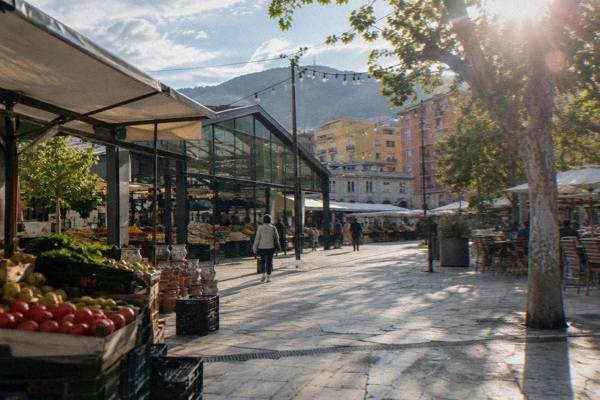
Tirana is the capital of Albania, an inland city in a basin at the foot of Mount Dajti, about 37 km and 39 minutes by road from the Adriatic coast at Durres. Its culture reflects that position: an Ottoman-founded city, shaped by nearly five decades of communist rule from 1944 to 1991, and now a busy Balkan capital where cafes spill onto pavements and the cafe-and-bar quarter of Blloku sits about 0.8 km south of Skanderbeg Square. For visitors, the practical side of Albanian culture is straightforward, and this Tirana Albania Travel Guide page gathers what primary sources and established references actually say about greetings, language, dress, food and religious etiquette.
Albania is not in the EU and not in Schengen; it is an EU candidate country running its own 90-in-180-day visa regime, and the currency is the Albanian lek, at roughly 90 lek to the euro per the Bank of Albania's official rate of 23 October 2026. The euro is not legal tender. None of that is etiquette exactly, but knowing it is the first courtesy of a well-prepared guest, and the pages on Albanian lek and Albania entry requirements cover both in detail.
What Defines Albanian Culture In Tirana?
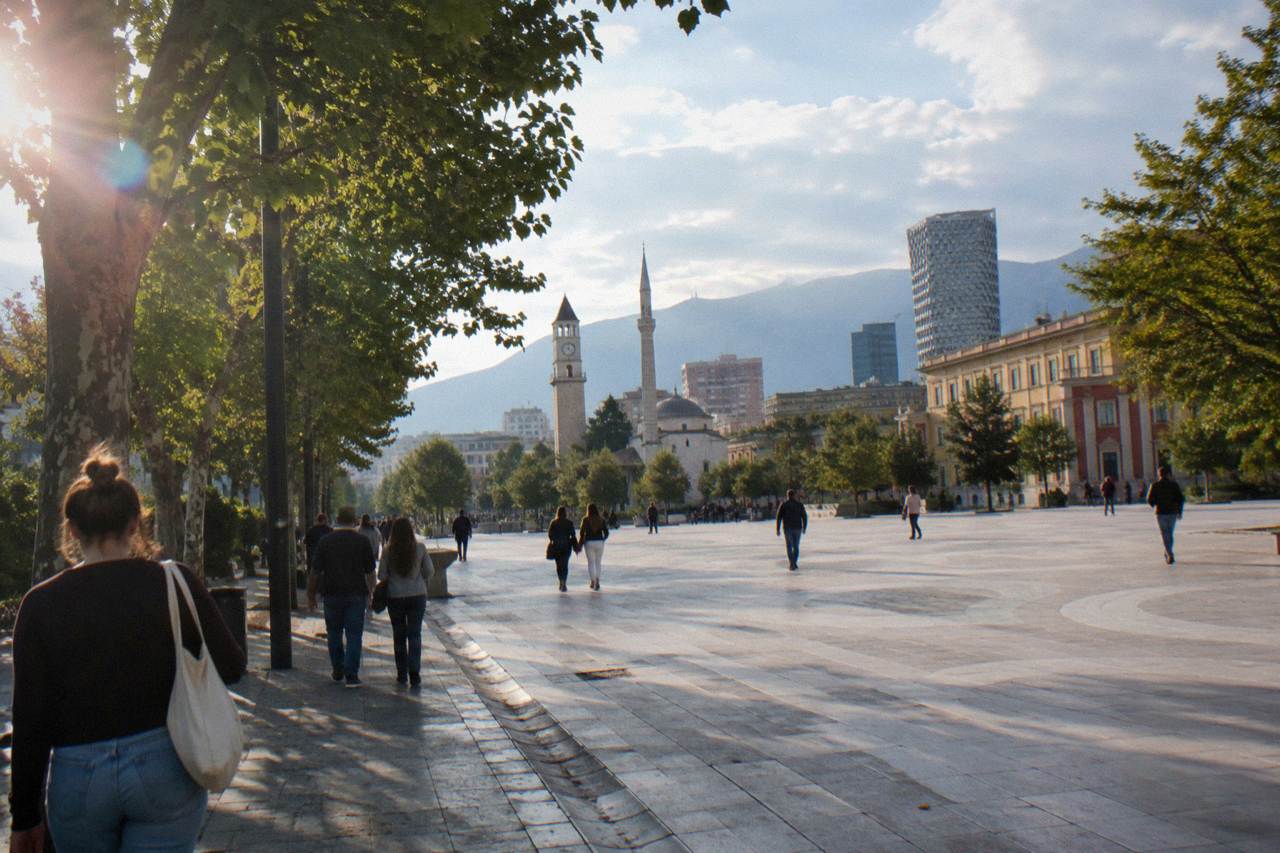
Albanian culture in Tirana blends Ottoman, Mediterranean and communist-era layers: the city was founded in 1614 by Sulejman Pasha, became Albania's capital on 11 February 1920 by decision of the Congress of Lushnja, spent 1944 to 1991 under communist rule, and today pairs mosques and churches with cafes, museums and a rebuilt public square. Tirana itself holds no UNESCO World Heritage listing, though four properties elsewhere in Albania do.
The city's own history page records the 1614 founding by Sulejman Pasha Bargjini, who built a mosque, a hamam, a bakery and an inn as the settlement's core. The Congress of Lushnja's decision of 11 February 1920 made Tirana the capital, first temporarily and then permanently, as the national news agency ATA recounts. Between those dates and after them, the city absorbed Austrian and Italian planning around Skanderbeg Square, decades of communist isolation, and a post-1991 construction boom. Culture here is visible in layers rather than in a single old quarter.
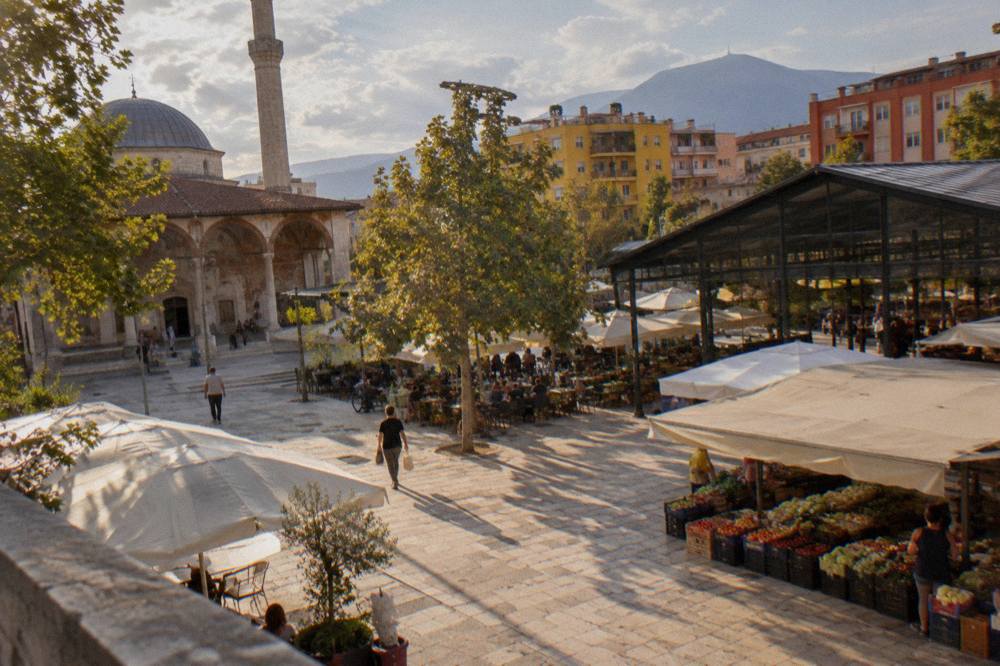
Religion is one place the layers show clearly. Albania has no state religion, and the 2023 census as reported by ATA found about 45.9 percent Muslim, about 8.4 percent Catholic and about 7.2 percent Orthodox, with large shares of respondents not declaring a denomination or a religion at all. On the ground that means the Et'hem Bey Mosque, finished in the years after the 18th century by Haxhi Et'hem Bey, and the Resurrection Cathedral about 0.2 km south of Skanderbeg Square, stand a short walk apart, alongside the Namazgah Mosque opened on 10 October 2024. The Tirana mosques and churches guide covers visiting each one.
A third layer is the communist period, which shapes etiquette more than visitors expect: people of Tirana of every age carry family stories from 1944 to 1991, and sites like the House of Leaves museum, about 0.2 km south-west of the square, and Bunk'Art 2, about 0.2 km south-east, document the surveillance state. The communist history in Tirana page traces the whole trail, and a guided walk with a local guide, like the history and culture walking tour, puts those stories in context.
The Cultural Layers At A Glance
| Layer | Where You See It In Tirana | What It Means For Visitors |
|---|---|---|
| Ottoman era (from 1614) | Et'hem Bey Mosque, Tanners' Bridge about 0.7 km east, Tirana Castle area | Modest dress at religious sites; layered city history |
| Interwar capital (from 1920) | Skanderbeg Square's ministries and boulevards | Grand axis south to Mother Teresa Square |
| Communist era (1944 to 1991) | Bunk'Art 1 and 2, House of Leaves, the Pyramid of Tirana | Sensitive family histories; guided context helps |
| Post-1991 city | Blloku cafe quarter, New Bazaar about 0.6 km east | Cafe culture, informal street life |
| Religious mix | Mosque, cathedral and Namazgah within a 15-minute walk | No state religion; sites sit close together |
How Should Visitors Greet People In Tirana?
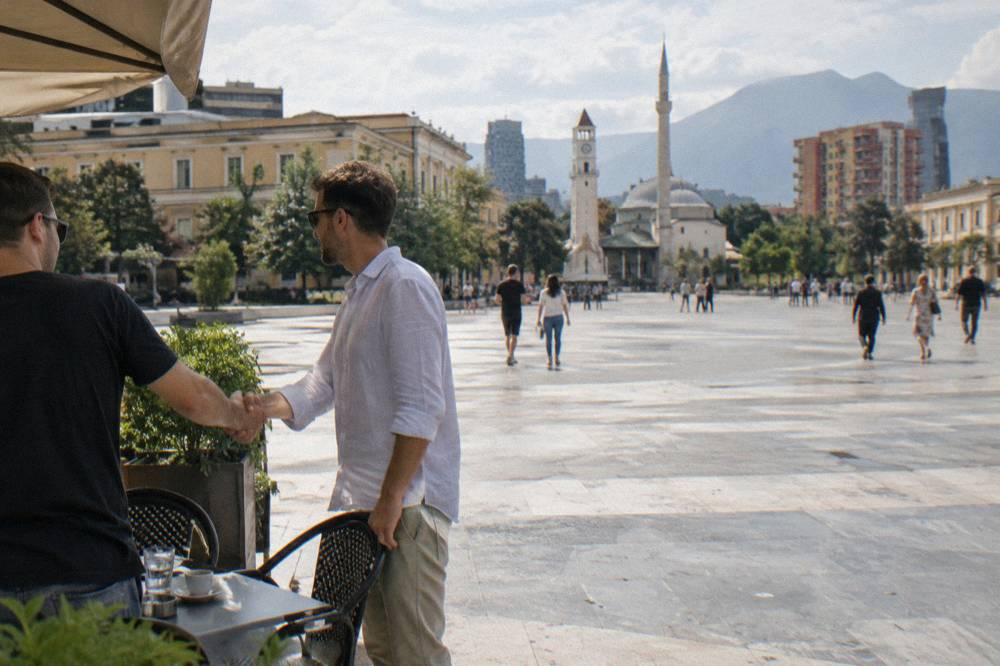
A simple hello works in any shop, cafe or taxi in Tirana: Përshëndetje is the standard Albanian greeting, Tungjatjeta is an alternative, and Faleminderit means thank you. No bowing, handshaking ritual or formal title is required; a plain greeting, please (Ju lutem) and thank you cover everyday politeness, and English works in central cafes and hotels.
The Wikivoyage Albanian phrasebook is the checked reference for the words themselves, and only those basics are worth carrying. What the census and everyday geography do tell you is that the city is mixed in faith and background, and a neutral, friendly register fits everywhere, from Skanderbeg Square to the family-run stalls of Pazari i Ri.
One gesture genuinely is different, and it deserves a line of its own. Visitors often report that in Albania an upward chin-lift or nod can mean no, while a side-to-side tilt or wobble can mean yes, the reverse of Western habit. The custom is widely described by guidebooks, so treat it as something to notice rather than a rule to master; when a reply matters, listen for the words Po (yes) and Jo (no).
Everyday Albanian Words For Visitors
| Albanian | English |
|---|---|
| Përshëndetje | hello |
| Tungjatjeta | hello (alternative) |
| Mirëmëngjes | good morning |
| Faleminderit | thank you |
| Ju lutem | please |
| Po | yes |
| Jo | no |
| Më falni | excuse me |
| Gëzuar | cheers |
| Mirupafshim | goodbye |
| Ujë | water |
| Faturën | the bill |
Beyond greetings, the practical courtesies are unremarkable in the best way: queue normally, greet on entering a small shop, and keep voices at cafe level. The culture page companion on Tirana coffee culture explains why the long coffee is the city's main social ritual, and why a visitor who sits down for one is participating in local life rather than wasting time.
What Should You Wear In Tirana?
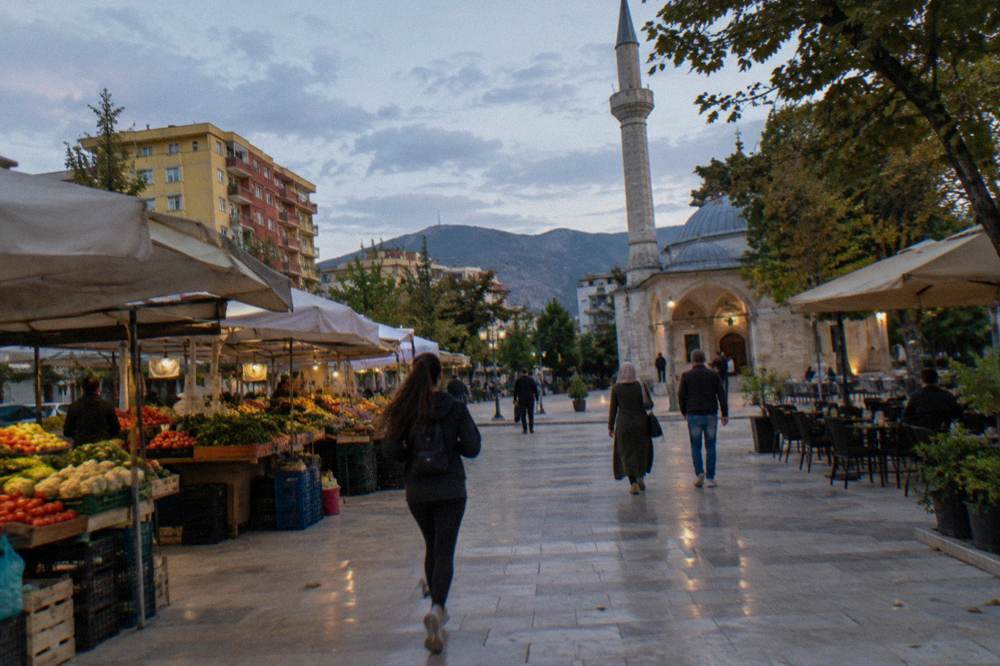
Tirana dress is modern European: there is no documented dress code for streets, cafes or restaurants, and visitors report wearing shorts and casual clothes without issue in summer, when ERA5 reanalysis for 1991-2020 puts the August mean high at 30.4 C. The one firm rule is at religious sites: cover shoulders and knees, women cover the head with a scarf, and shoes come off inside mosques.
The mosque guidance is the only sourced dress rule in the city, and it is courtesy guidance rather than a published regulation: the Et'hem Bey Mosque is free to visit outside prayer times, and modest dress applies at the Namazgah Mosque too. Winter changes the wardrobe rather than the etiquette: January averages a mean high of 10.8 C and a mean low of 2.3 C (ERA5 reanalysis, 1991-2020), with November the highest-rainfall month at 139 mm of rain, so layers and a rain jacket matter more than formality. The Tirana weather and best time to visit Tirana pages carry the full monthly figures.
Dress And Weather By Season
| Season | ERA5 Reanalysis 1991-2020, Tirana | What Visitors Typically Wear |
|---|---|---|
| Winter (Dec to Feb) | Mean highs 10.8 to 12.0 C; lows 2.3 to 4.0 C; 106 to 139 mm rain per month | Coat, layers, umbrella |
| Spring (Mar to May) | Highs 15.0 to 22.7 C; rain 89 to 117 mm | Light jacket, umbrella |
| Summer (Jun to Aug) | Highs 26.9 to 30.4 C; rain 31 to 51 mm | Shorts, light clothing; cover-ups for mosques |
| Autumn (Sep to Nov) | Highs 16.5 to 25.7 C; November rain 138.6 mm | Layers, waterproof from October |
Do People Speak English In Tirana?
English is common in central Tirana's hotels, cafes, museums and tour operators, though Albania as a whole sits only in the moderate band of the EF English Proficiency Index, so it is not universal: carry the basic phrases above for taxis, markets and older residents. Italian and Greek are also widely spoken in Albania, reflecting emigration and television, and Albanian is the official language.
The EF index placement is reported data and should not be stretched in either direction: nobody should promise that everyone in Tirana speaks English, and nobody should worry that nobody does. Menus in the centre are frequently bilingual, museum signage at Bunk'Art and the House of Leaves is in English, and eTransport, the national platform listing official bus lines and timetables, has an English interface. In smaller shops and on city buses, where a single ride costs about 40 lek paid in cash on board, Albanian is the working language and the phrase table above earns its place in a pocket.
Practical bilingual moments come up quickly for visitors: the airport bus runs 24/7 and hourly at 400 lek, and its stops are announced in more than one language. The getting around Tirana and Tirana airport to city centre pages handle those journeys in full, including the fact that Uber and Bolt do not operate in the city and local taxi apps fill the gap instead.
How Does Food Culture Work In Tirana?
Albanian food culture is built around shared tables and long meals: byrek is a layered filo pie, tave kosi is baked lamb with a yogurt and egg topping, fergese bakes peppers and tomatoes with cheese, qofte are seasoned meatballs, and raki is a fruit brandy often offered as a welcome. Meals are social events in Tirana, the cafe is the daytime institution, and Gëzuar is the word for cheers.
The dish descriptions come from established references, and the social habit is visible anywhere from the New Bazaar to Blloku. What is documented is that raki and coffee carry hospitality, that service is rarely added to the bill, and that no tipping percentage has a trusted source, so round the bill or not as you judge; the question has its own honest treatment on the tipping page elsewhere in this guide set. The full index of guides sits on Tirana Albania Travel Guide.
The four venues, each with a live official site, give a sense of the range: Era Blloku serves Albanian and Mediterranean dishes in Blloku; Artigiano is an Italian-Mediterranean restaurant with Blloku and centre locations; Padam is a boutique hotel restaurant on Rruga Papa Gjon Pali II; and Sophie Caffe is a local coffee chain. Each is named with a neutral clause only, since no rating or ranking is given for any venue.
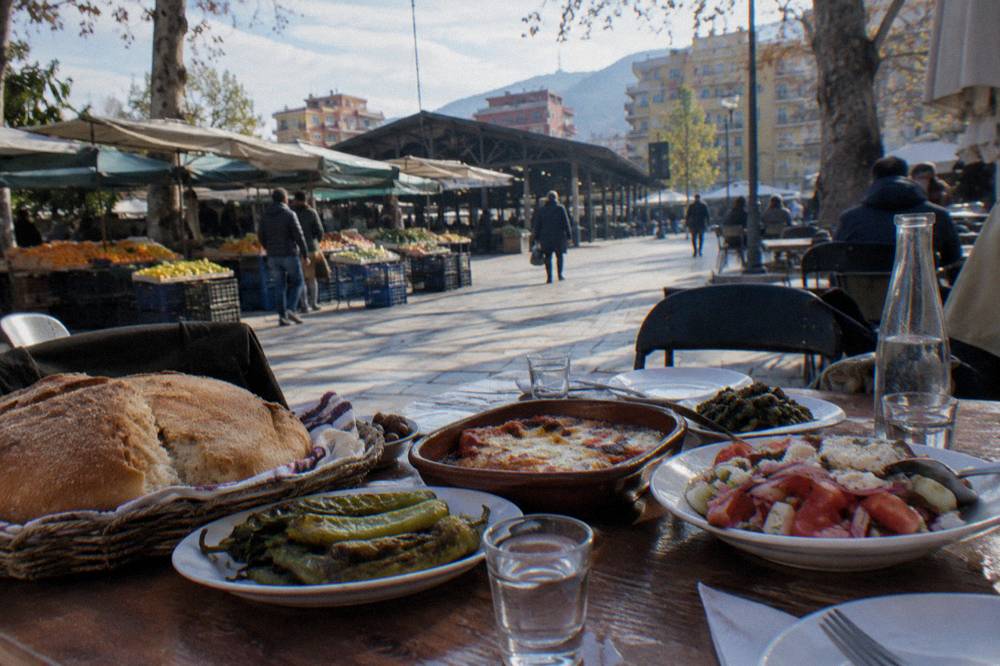
A food walk is the fastest culture lesson in the city: the Tirana food tour page explains the format, and the Albanian food guide covers the dishes and their regions in depth.
Dishes You Will Meet In Tirana
| Dish | What It Is |
|---|---|
| Byrek | Layered filo pie with cheese, spinach or meat fillings |
| Tave kosi | Baked lamb or chicken with rice under a yogurt and egg topping |
| Fergese | Baked peppers and tomatoes with cheese |
| Qofte | Seasoned grilled or fried meatballs |
| Raki | Fruit brandy, grape or plum, often offered to guests |
How Should You Behave At Mosques And Churches In Tirana?
Mosque etiquette in Tirana is simple and firm: visit outside prayer times, cover shoulders and knees, women cover the head, and shoes come off inside; entry to the Et'hem Bey Mosque is free, and the Namazgah Mosque is an active place of worship. At Orthodox churches, including the Resurrection Cathedral, quiet behaviour and modest dress are the expected courtesy, and there is no fee to stand respectfully.
The Et'hem Bey Mosque, about 0.2 km south-east of Skanderbeg Square, is the Ottoman-era survivor: it was spared in 1967, and on 18 January 1991 about 10,000 people entered it despite the authorities, a moment often cited as a crack in the communist regime's religious controls. Visiting hours are not published in any checked source, so go outside prayer times and let the caretaker's guidance stand. The Clock Tower beside it has about 90 steps, and its fee and hours should be confirmed on site. The Et'hem Bey Mosque and Great Mosque of Tirana pages carry the detail.
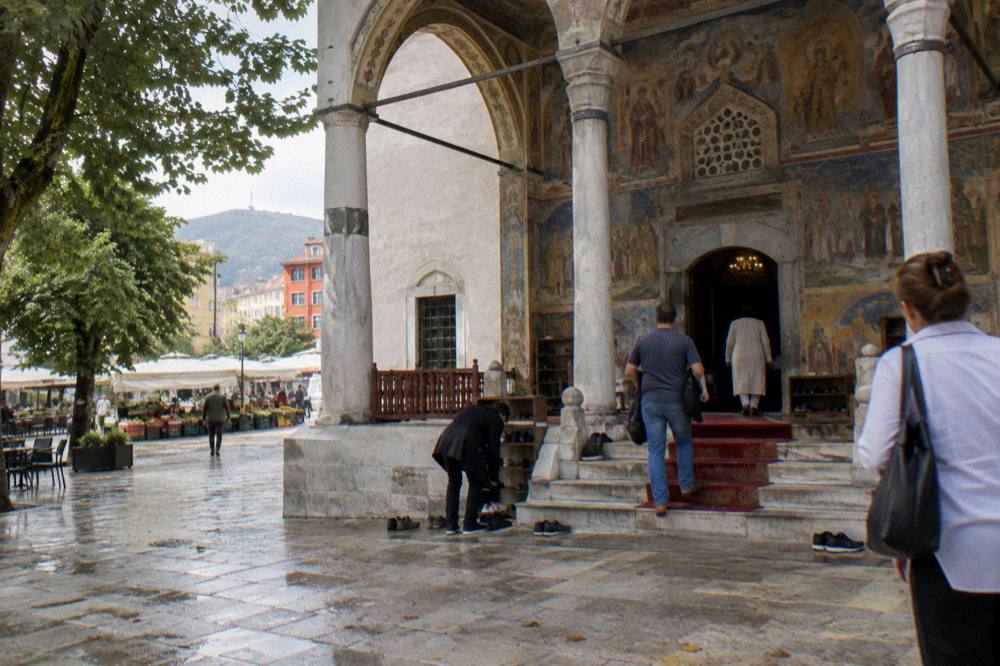
The religious geography is compact enough that etiquette is the only planning variable: the mosque, the Clock Tower and the National History Museum's facade share the square, the Resurrection Cathedral is about 0.2 km south, and the Namazgah Mosque about 0.6 km south-east. The National History Museum itself is closed for restoration until about March 2028, so its famous mosaic facade is the view from the square for now.
What About Money, Tipping And Everyday Politeness?
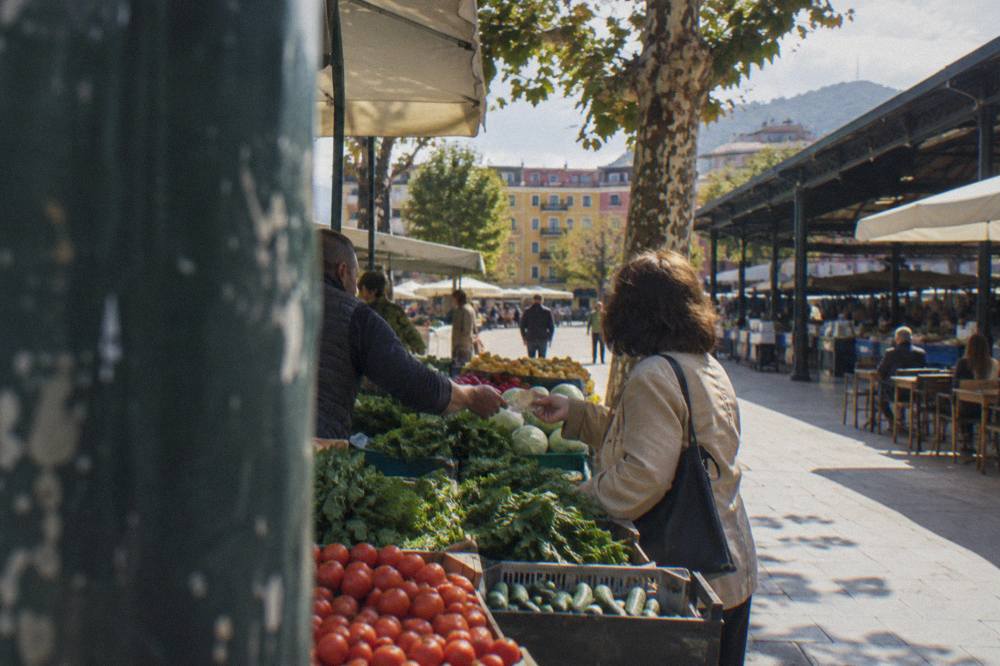
Everyday money etiquette in Tirana is cash-first: pay in lek, since the euro is not legal tender, carry small notes for buses and markets where a ride costs about 40 lek in cash, and use cards in hotels, larger restaurants and supermarkets where they are widely accepted. No tipping percentage has a trusted source, service is rarely added to the bill, and politeness norms are the ordinary European ones.
The Bank of Albania's official rate on 23 October 2026 was 1 euro to 90.74 lek, so "roughly 90 lek to the euro" is the working rule of thumb. Meal prices, coffee prices, hotel rates, taxi meter tariffs and tourist taxes vary from venue to venue, so check with each place directly. The Tirana prices and where to stay in Tirana pages carry the planning structure.
Two courtesies specific to the current moment are worth knowing rather than learning on arrival. First, demonstrations have been held in central Tirana since 13 October 2026, some violent, and the UK FCDO updated its travel advice on 15 October 2026 to advise avoiding them and checking local media; the Tirana Marathon was moved to 14 and 15 November 2026 as a result. Second, the emergency numbers are Police 112, Ambulance 127 and Fire 128. Both belong on any culture-and-etiquette page, because staying out of a political demonstration is also good manners.
Practical Etiquette Quick Reference
| Situation | The Courtesy |
|---|---|
| Entering a mosque | Shoes off, shoulders and knees covered, headscarf for women, outside prayer times |
| Greeting anyone | Përshëndetje, or a plain hello in central Tirana |
| Yes and no | Listen for Po (yes) and Jo (no); a chin-lift can mean no |
| Paying | Lek in cash for buses, markets, small cafes; cards widely taken in hotels and larger restaurants |
| Tipping | No set percentage; service is rarely added to the bill |
| Coffee and raki | Accepting a coffee or a small raki is ordinary hospitality; Gëzuar is cheers |
| Demonstrations | Avoid central gatherings; Police 112, Ambulance 127, Fire 128 |
Which Experiences Teach Tirana Culture Fastest?
The fastest culture lessons in Tirana are a guided walk through the Ottoman-to-communist centre, a food walk through Pazari i Ri and Blloku, and a communist-history tour that includes Bunk'Art 1 behind the Dajti cable car lower station: together they cover the city's language of squares, dishes and memories in a single visit, each with a local guide who translates context as well as words.
The guided options are not interchangeable. A history-and-culture walk covers daily life and the landmarks within a kilometre of Skanderbeg Square. A communist-era tour with Bunk'Art 1 adds the regime layer, at a museum open daily 09:30 to 17:30 since 1 June 2026 per its own website, where tickets are bought at the door because no price is published online. A food tour walks the bazaar and the cafe quarter tasting byrek and qofte with the stories that go with them. Pick by interest, not by ranking.
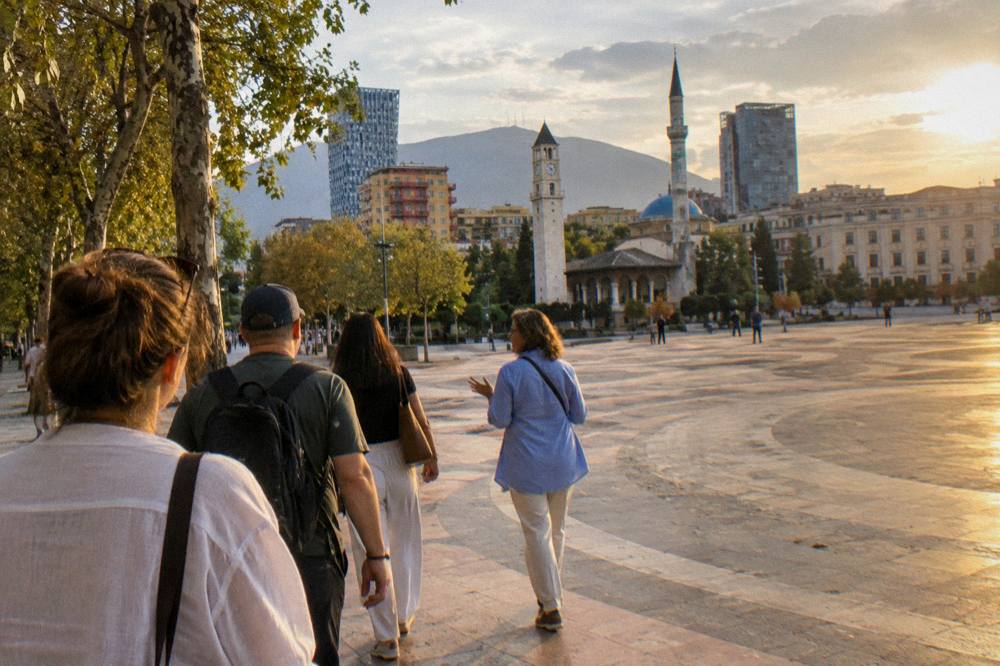
For planning the days around any of these, the things to do in Tirana page is the site's full roundup, and the Albania travel tips guide collects the practical basics, from type C and F plugs at 230 V to the Europe/Tirane time zone.
Common Questions About Albanian Culture And Etiquette
Do people in Tirana speak English?
English is common in central Tirana's hotels, cafes, museums and tours, and Albania places in the moderate band of the EF English Proficiency Index. It is not universal, so carry the basic phrases for markets, buses and taxis.
What does a nod mean in Albania?
Visitors often report that an upward chin-lift or nod can mean no, while a side-to-side tilt can mean yes, the reverse of Western habit. When the answer matters, listen for Po (yes) and Jo (no).
Can I wear shorts in Tirana?
Yes, on the street and in cafes there is no documented dress code, and summer mean highs reach 30.4 C in August (ERA5 reanalysis, 1991-2020). Bring a cover-up for mosques, where shoulders and knees must be covered and shoes come off.
Do you tip in Albania?
Service is rarely added to the bill, and rounding up or leaving something for good service is the practical norm visitors observe; decide locally.
Is Albania An Islamic Country?
Albania has no state religion. The 2023 census as reported by ATA found about 45.9 percent Muslim, about 8.4 percent Catholic and about 7.2 percent Orthodox, with large shares not declaring a religion or denomination.
How do you say thank you in Albanian?
Faleminderit means thank you. Other useful words include Përshëndetje (hello), Ju lutem (please), Po (yes) and Jo (no).
Albanian culture in Tirana rewards a little preparation and no anxiety: greet, dress modestly at religious sites, pay in lek, skip the demonstrations, and let a local guide turn the city's layered history into something you can read off the streets yourself.